How to Identify a Steelhead in the Fall
The crisp air and turning leaves of a Michigan fall bring an undeniable buzz of excitement to our rivers. For many anglers, this season means one thing: salmon. But right alongside those magnificent king and coho salmon, another incredible fish is making its way upstream, often causing a bit of confusion for even seasoned fishermen. Knowing how to definitively identify a steelhead in the fall can be a real game-changer, not just for the thrill of the catch but also for adhering to those all-important regulations that keep our fisheries healthy. This guide is here to walk you through the distinct characteristics that will help you tell a fall steelhead apart from its salmon cousins and resident trout, ensuring you know exactly what's on the end of your line.
Understanding Fall Steelhead: The Basics
When we talk about "fall steelhead" in Michigan, we're primarily referring to migratory rainbow trout that have spent time growing large in the Great Lakes and are now returning to their natal rivers. Unlike Pacific salmon, which often migrate into rivers in the fall to spawn and then die, steelhead are iteroparous—meaning they can spawn multiple times throughout their lives. This fundamental difference influences their behavior, appearance, and even where you might find them in the river.
Steelhead vs. Resident Rainbow Trout
One of the most common points of confusion stems from the fact that steelhead are, genetically speaking, rainbow trout. However, their life history makes them distinct in many ways. A resident rainbow trout, or "stream rainbow," lives its entire life in the river system. These fish are typically smaller, often more brightly colored with pronounced spots and a vibrant red lateral band because they haven't been subjected to the silvery, open-water camouflage that their migratory counterparts adopt. Their fins might also show more wear and tear from navigating rapids and structure in a confined river environment.
Fall steelhead, on the other hand, have spent years in the vastness of Lake Michigan or Lake Huron, feasting on baitfish and growing to impressive sizes. When they enter the rivers in autumn, they retain a lot of their sleek, torpedo-shaped body and a more silvery or bronze sheen. While they will develop a pinkish-red lateral stripe and often deeper coloration the longer they are in the river, they typically won't be as intensely colored as a resident rainbow of similar size. Think of it like a bodybuilder versus a marathon runner; both are strong, but their forms are optimized for different environments. It's a subtle but important distinction that often speaks to the fish's journey and growth.
Steelhead vs. Pacific Salmon: Chinook and Coho
This is where the real identification challenge comes in during the fall. Michigan's rivers are teeming with Chinook (King) and Coho (Silver) salmon during the autumn months, all making their upstream migrations. Telling these powerful fish apart from a steelhead is crucial.
Chinook salmon are generally the largest of the three, with a more robust, almost blocky body shape. Their coloration in the river can range from dark olive green to bronze or even almost black, especially on the back. A key identifier for Chinooks is their mouth: they typically have a black mouth and black gums. Their tail is also deeply forked and covered with small, irregular black spots, but these spots are often sparse or absent on the upper lobe.
Coho salmon are usually smaller than Chinooks but still substantial. They tend to have a more slender body than a King. In the river, their coloration can be quite brilliant, with bright red or maroon flanks, a dark back, and a silvery belly. The most reliable mouth identifier for Coho is their white or light-colored gums with a dark base where the teeth meet the gumline. Their tail is less forked than a Chinook's, and while it has spots, these are usually only on the upper lobe, and they tend to be fewer and larger than a steelhead's. It's truly like looking for subtle clues that tell a bigger story.
Distinct Physical Characteristics of Fall Steelhead
To truly master fall steelhead identification, you need to become a detective of fins, spots, and mouth coloration. These subtle details are often the most reliable tells. It’s not just about a glance; it’s about a closer look.
Body Shape and Fin Structure
Steelhead possess a truly elegant, streamlined, torpedo-like body. They are built for speed and power in open water, which translates into a sleek, elongated form even when they enter the rivers. Compared to salmon, their head often appears proportionally smaller in relation to their body size, giving them a more refined profile.
Their dorsal fin is relatively tall and pointed, not rounded or short like some salmon. The pectoral and pelvic fins are well-developed, aiding in their powerful swimming. But one of the most significant fin characteristics to observe is the tail, or caudal fin. A fall steelhead's tail is typically either square or very slightly forked. It's almost always straight across or has a very shallow indentation, distinctly different from the deeply forked tail of a Chinook salmon or the moderately forked tail of a Coho. This shape, combined with the spotting pattern, is often the giveaway.
Coloration and Markings
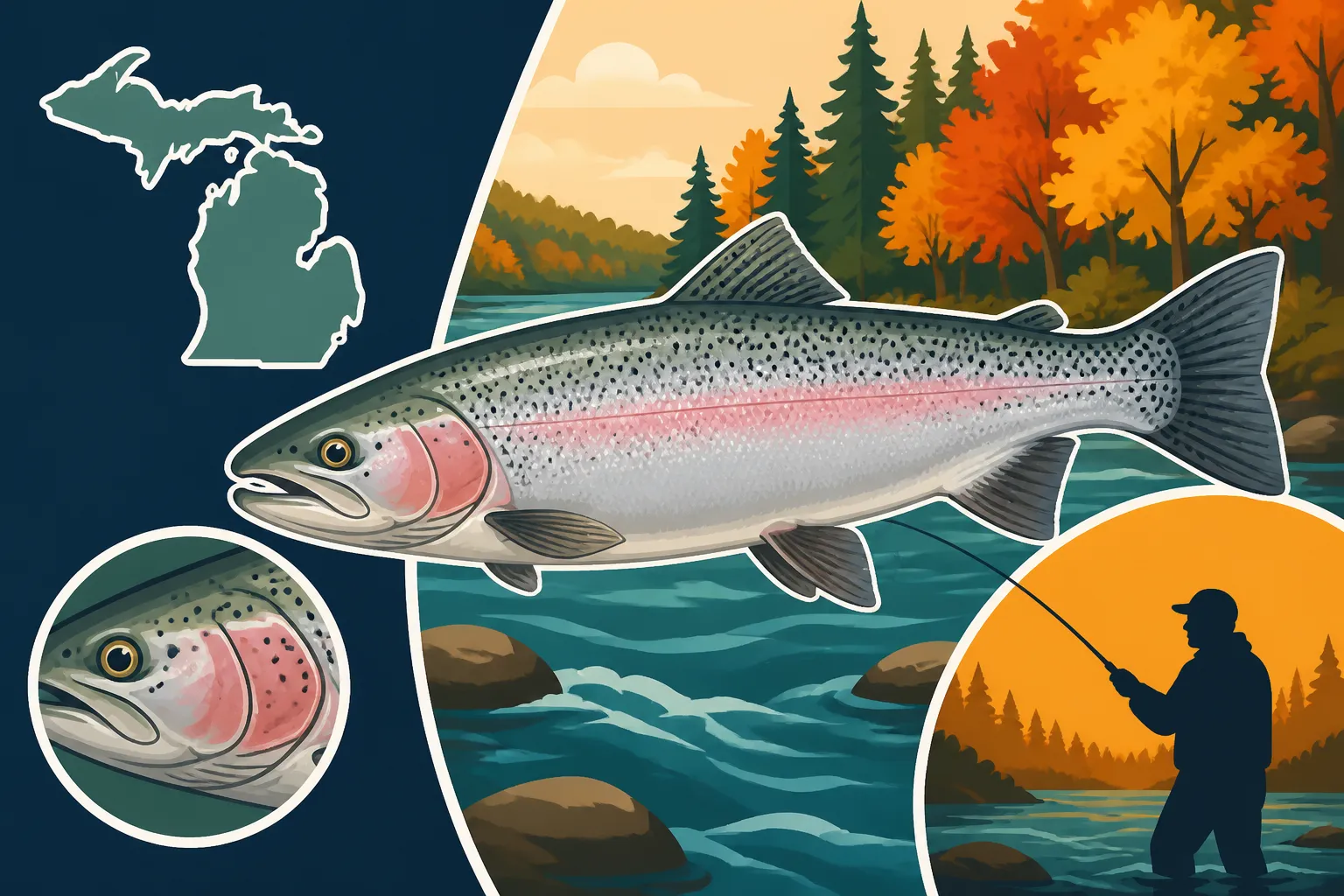
This is where steelhead truly shine, literally. While they may lose some of their bright chrome-like silver when they've been in the river for a while, fall steelhead still retain a distinct brilliance. Their back is typically a darker olive-green or grayish-blue, fading to bright silver or even a brassy gold on their flanks.
The hallmark of a steelhead is the pinkish-red lateral band running along its side, from the gill plate to the tail. This band can vary in intensity, from a faint blush to a vibrant, almost neon stripe, especially as they get closer to their spring spawning season. However, even in the fall, a hint of this distinctive color is usually present.
The most crucial identifier, however, is their spotting pattern. Steelhead are covered in small, distinct black spots on their back, dorsal fin, and crucially, all over their tail fin. These spots are generally numerous, round, and evenly distributed across both lobes of the caudal fin. This widespread, consistent spotting on the tail is a significant differentiator from salmon, which usually have fewer, larger, or irregularly shaped spots, often confined to only one lobe of the tail or largely absent from it. Keep an eye out for these "freckles" on the tail—they rarely lie. Sometimes, a quick search on Amazon for fish identification guides can provide detailed diagrams to help solidify these visual cues.
Mouth and Gill Plate Features
The mouth of a fish holds some of the most reliable identification clues, and steelhead are no exception. Carefully examining the mouth and gill plate area can clear up any lingering doubts.
When you gently open a steelhead's mouth, you'll almost always find that their mouth and gums are entirely white or very light-colored. There are no dark patches or black pigmentation inside the mouth or along the gum line, which is a stark contrast to both Chinook and Coho salmon. This "white mouth" is a classic steelhead characteristic.
The gill plate itself is smooth and reflective, often showing the same silvery or brassy tones as the flanks. There shouldn't be any rough patches or distinct striations that you might see on other species. The gills underneath are typically a healthy, vibrant red, indicating a strong, active fish, ready to fight another day after a successful catch and release. Understanding these subtle differences is key to proper Michigan Fishing Regulations Every Angler Should Know.
Behavioral Cues and Habitat in Autumn
Beyond the physical appearance, understanding a steelhead's typical behavior and preferred river habitats in the fall can also offer strong clues to their identity. They’re not just swimming; they’re moving with a purpose, and that purpose differs from other species.
Upstream Migration Patterns and Timing
Steelhead begin entering Michigan rivers as early as late August, with significant runs often starting in September and continuing through the fall and into winter. Unlike Chinook and Coho salmon, whose primary goal in the fall is to complete their spawning cycle before dying, fall steelhead are generally making a preliminary migration. They enter the rivers, often following the salmon runs to feast on loose salmon eggs, and will "hold over" in the river systems throughout the winter. Their actual spawning typically doesn't occur until the following spring, when water temperatures rise.
This means that while you might find them in similar sections of the river as salmon, steelhead often exhibit different behaviors. They might be more actively feeding on eggs or nymphs, whereas salmon are intensely focused on spawning. This prolonged residency in the river system also means they can become more deeply colored over time, but generally, their bright, silvery sheen persists longer into the fall compared to salmon. This difference in purpose is vital for understanding their presence and behavior in the fall river. For more on seasonal changes, consider Michigan Fishing Seasons Explained.
Preferred River Sections and Holding Water
Fall steelhead tend to seek out specific types of water in the rivers, often different from the redds (spawning beds) where salmon are actively laying eggs. They prefer cooler, well-oxygenated water with good current, but also access to deeper pools and structure for cover.
You'll often find fall steelhead in:
- Deep Runs and Pools: These provide refuge from strong currents and offer deeper, cooler water.
- Tailouts of Pools: The transition zone at the end of a deep pool, where the water begins to speed up again, is a prime feeding and holding area.
- Current Seams: The edges where fast water meets slower water are perfect ambush points for steelhead looking for drifting eggs or insects.
- Behind Large Structure: Boulders, log jams, and undercut banks offer excellent cover and a break from the main current.
- Below Rapids or Dams: These areas often concentrate fish as they push upstream, providing both oxygenated water and temporary resting spots.
While salmon will also utilize some of these areas, especially deeper pools, they are more strongly tied to shallower, gravelly riffles for spawning. If you're consistently finding fish holding in deeper, faster runs or current breaks away from obvious spawning activity, there's a good chance you're targeting steelhead. Knowing Best Rivers for Trout and Steelhead in Michigan can help you pinpoint ideal locations.
Practical Identification Tips and What to Look For
Identifying fish quickly and accurately, especially when you're excited and battling a strong one, takes practice. Here are some actionable tips and a summary table to help you become a fall steelhead expert.
Quick Visual Checklist on the Water
When you land a fish in the fall, take a moment for a quick visual inspection before deciding whether to keep or release. A few key points can clarify things instantly.
- Tail Spots: This is your primary go-to. If the tail fin is covered in small, distinct spots from top to bottom, it's almost certainly a steelhead.
- Mouth Color: Gently open the mouth. If it's all white or very light-colored inside, without any black pigmentation on the gums or tongue, that's another strong steelhead indicator.
- Body Shape: Is it sleek and torpedo-like, or more robust and thick-bodied? Steelhead are typically more slender.
- Lateral Band: Look for that pinkish-red stripe along the side, even if it's subtle.
- Overall Color: While variable, steelhead usually retain more silver or brassy tones compared to the often darker, more mottled salmon.
Remember, a quick glance might trick you, but a systematic check of these features will provide a much more accurate identification. Having a good fish net, perhaps one you ordered from Amazon, can help ensure the fish is held safely and calmly for a moment during identification.
Comparison Table: Fall Steelhead vs. Salmon
Here's a handy table summarizing the key differences you'll encounter in Michigan's fall rivers:
| Feature | Fall Steelhead | Chinook Salmon (King) | Coho Salmon (Silver) |
|---|---|---|---|
| Body Shape | Sleek, elongated, torpedo-like | Robust, thick, deep-bodied | More slender than Chinook, somewhat compressed |
| Overall Color | Silvery-bronze, dark back, pink lateral band | Dark olive to bronze/black, mottled | Dark blue/green back, silver sides, reddish flanks |
| Tail Shape | Square or very slightly forked | Deeply forked | Moderately forked |
| Tail Spotting | Numerous, small, distinct spots over entire tail | Irregular spots on both lobes, often sparse on lower, sometimes absent | Spots usually on upper lobe only, larger, fewer |
| Mouth/Gums | All white or light-colored | Black mouth, black gums | White/light gums, dark base/gum line |
| Dorsal Fin | Taller, pointed | Shorter, more rounded | Shorter, more rounded |
When in Doubt, Release
This is perhaps the most important tip of all. Michigan has specific Michigan Bag and Size Limits Explained for different species, and misidentifying a fish can lead to violations. If you're ever truly uncertain about whether you have a steelhead, a salmon, or even a different species of trout, the safest and most ethical practice is to release the fish unharmed. This ensures you comply with regulations and contribute to the health of the fishery. Catch-and-release techniques are crucial, especially for fish like steelhead that can spawn multiple times. Always handle fish gently, minimize their time out of water, and use wet hands to protect their slime coat. It's a small act that makes a big difference for the future of Michigan fishing. Getting the right gear, like a quality release tool, can be easily done via Amazon.
Understanding how to identify a steelhead in the fall isn't just about showing off your angling prowess; it's about respecting the fish and the regulations that protect them. With practice, these distinct characteristics will become second nature, allowing you to confidently identify these magnificent fish as they grace our beautiful Michigan rivers each autumn. Whether you're targeting them specifically or just happen upon one, knowing what you've caught adds another layer of enjoyment to your time on the water. For further reading, check out Rainbow Trout and Steelhead: What's the Difference.
Disclaimer
This article is for general informational purposes only and does not constitute professional advice. Laws, prices and regulations vary by location and change over time. Consult a qualified professional for guidance on your specific situation.