How to Catch Bass in Cold Water
The chill in the air and the cold snap in the water can make many anglers pack up their gear until spring, convinced that bass fishing in Michigan is a lost cause until warmer temperatures return. But let me tell you, friend, that's just not true! While bass certainly behave differently when the water gets cold, they are absolutely catchable, and in some ways, cold water fishing can be incredibly rewarding. This guide is all about helping you understand those wintertime bass behaviors and giving you the tools and techniques to find and catch them, even when the thermometer dips.
Understanding Bass Behavior in Cold Water
When the water temperature plummets, it's easy to assume that bass just vanish or go into some kind of suspended animation. While they definitely slow down, they don't disappear, and they still need to eat. The key to catching them is to understand how they adapt to the cold, and then adjust your approach accordingly.
Why Bass Slow Down in Winter
Think about how you feel on a cold winter day. You're probably not running marathons or burning a ton of energy, right? You're likely trying to stay warm and conserve energy. Bass are very much the same. As the water temperature drops below, say, 50-55 degrees Fahrenheit, their metabolism significantly slows down. This isn't just a slight change; it's a fundamental shift in their biology.
Their digestive processes become much slower, meaning they don't need to feed as frequently or as aggressively. A bass that might chase down a fast-moving crankbait three times in summer might ignore it completely in winter. They become less active, often moving only short distances to ambush prey rather than expending precious energy on long pursuits. This is why a slow, deliberate presentation is absolutely critical, a topic we'll dive into deeper shortly. They're trying to minimize their energy output while still getting enough calories to sustain themselves through the lean months. It's a survival strategy, plain and simple.
Prime Locations for Cold Water Bass
So, if bass are sluggish and trying to conserve energy, where do they go? They seek out areas where they can find stable conditions, often relating to structure and depth. These aren't necessarily the same shallow flats or weed lines where you crushed them in July.
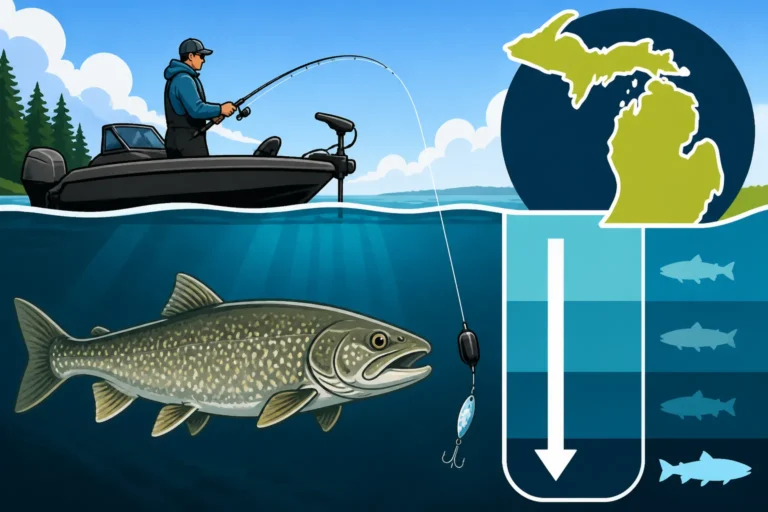
In cold water, bass will often gravitate towards the deepest available cover and structure in a body of water. This might include main lake points that drop off sharply into deep water, steep creek channels, deep humps, or rock piles that retain heat slightly better. Think about it: deep water tends to have a more stable temperature, even if it's cold. It doesn't fluctuate as wildly as shallow water with air temperature changes. Bass will stack up on these deep structures, sometimes in surprisingly tight schools, forming aggregations that are much more dense than you'd find in warmer months.
They also love transition areas – places where shallow water meets deep water. A perfect example would be a sharp drop-off near the mouth of a bay, or where a deep channel swings close to shore. These spots offer them quick access to deeper, more stable water if conditions worsen, but also a chance to move shallower if a sunny day warms up the top layers for a brief feeding window. For more on finding these fish, exploring guides like How to Fish Deep Structure for Walleye can offer transferable insights into understanding how fish relate to depth, even if it's for a different species. They might also be found tucked into the remaining green weed lines (often coontail or milfoil) that still hold oxygen and offer cover, or around standing timber in deeper coves.
Essential Cold Water Bass Fishing Techniques
Now that we know where they are and why they're acting like they are, let's talk about how to actually get them to bite. This is where your patience and precision really come into play.
Slow and Deliberate Presentations
Forget about speed reeling, aggressive jerking, or covering vast amounts of water quickly. Those tactics are typically for active, warm-water bass. In cold water, your motto should be "slow is the new fast." Bass aren't going to chase a bait down; they're going to inspect it, maybe nudge it, and only commit if it looks like an easy, high-reward meal.
This means you'll be employing techniques that keep your lure in the strike zone for an extended period, moving it with minimal action. Dragging a jig slowly across the bottom, barely twitching a jerkbait with long pauses, or slow-rolling a spinnerbait are excellent choices. Often, the bite won't feel like a classic "thump" you'd get in summer. It might be a subtle weight, a slight tick, or just your line going slack or moving sideways. You have to be incredibly attentive and often set the hook on anything that feels "different."
Finesse tactics really shine here. Drop-shotting, particularly with small, natural-colored worms or minnows, allows you to suspend a bait right in a bass's face without much movement. Jigging spoons can be vertically jigged over deep schools, offering a dying baitfish imitation that's hard for sluggish bass to resist. The key is to make it easy for them, almost like handing them a meal on a silver platter.
Lure Selection for Sluggish Bass
Choosing the right lure is paramount in cold water. You want baits that either imitate slow-moving or dying prey, or that can be worked with minimal action while still enticing a bite.
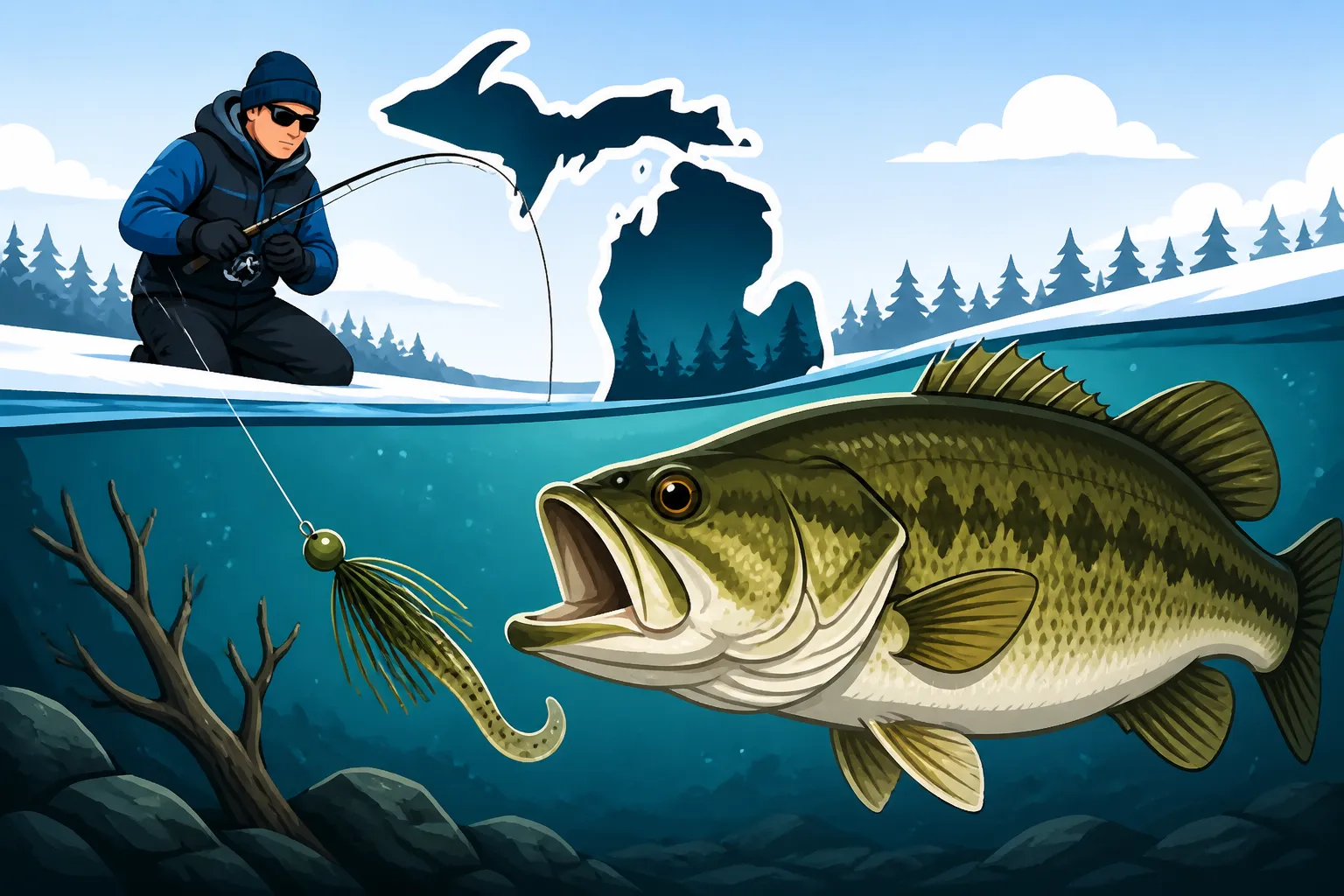
- Jigs: Football jigs or arkie-style jigs in darker, natural colors (black and blue, green pumpkin) are fantastic for dragging along deep structure. Tip them with a small craw or creature bait. The bulk provides a good meal, and the slow movement is irresistible. You might also want to look at a variety of weights, perhaps taking inspiration from a guide on Best Jig Weight for Walleye to understand how different weights perform in various depths and conditions.
- Blade Baits: These thin, vibrating lures like a Heddon Sonar or a Sebile Vibrato can be deadly. They have a tight wobble on the retrieve and can be jigged vertically, mimicking a struggling baitfish. The flash and vibration can trigger reaction strikes even from lethargic bass.
- Jerkbaits: Suspending jerkbaits are absolute cold-water champions. Cast them out, twitch them once or twice, and then pause for a very long time – sometimes 10, 20, or even 30 seconds. The lure hangs tantalizingly in the water, perfectly still, daring a bass to eat it. Natural baitfish patterns are usually best. For more on specific baits, checking out Best Crankbait for Smallmouth Bass might offer some good ideas, many of which can cross over to cold water scenarios, though perhaps with slower retrieves.
- Deep-Diving Crankbaits: While generally a power fishing technique, deep crankbaits can be slow-rolled along breaks and deep structure. Choose baits with a tight wobble rather than a wide, aggressive one. Again, natural colors are often the ticket.
- Soft Plastics: Tubes, grubs, and finesse worms rigged on a shaky head or drop shot are excellent. Work them painfully slow on the bottom. Colors like green pumpkin, watermelon, and brown are generally safe bets. Even a simple soft plastic grub on a small jig head, twitched occasionally, can be effective.
Table: Top Cold Water Bass Lures and Their Best Use
| Lure Type | Best Presentation | Target Depth | Primary Action |
|---|---|---|---|
| Suspending Jerkbait | Twitch, Pause (long), Twitch | Mid-depth to Deep | Dying baitfish, reaction strike |
| Football/Arkie Jig | Drag slowly on bottom, subtle hops | Deep structure | Crawfish/forage, easy meal |
| Blade Bait | Vertical jigging, slow retrieve with vibrations | Mid-depth to Deep | Vibrating baitfish, reaction |
| Deep Diving Crank | Slow retrieve, occasional bottom contact | Deep breaks | Subtle wobble, cover large area |
| Drop Shot | Stationary, slight rod tip quivers | Suspended/Bottom | Finesse, direct presentation |
You can find a wide array of these specialized cold-water lures and the appropriate tackle on sites like Amazon. Having a well-stocked tackle box is key, and getting ideas from general guides like Best Tackle Box Setup for Michigan Anglers can help you organize for specific cold water conditions.
Gear and Setup for Cold Water Success
Your fishing gear plays a crucial role in feeling those subtle cold water bites and effectively presenting your lures. Investing in sensitive, appropriate tackle will significantly improve your catch rate.
Rod, Reel, and Line Choices
When you're dealing with sluggish fish and subtle bites, sensitivity is king. You need to be able to feel every little tick, bump, or change in line tension.
- Rods: Opt for medium-heavy to heavy power rods, depending on the lure you're throwing and the cover you're fishing. More importantly, look for a rod with a fast or extra-fast action. This means the tip is very sensitive, allowing you to feel those light bites, while the backbone provides enough power to drive the hook home. Graphite rods are generally more sensitive than fiberglass. A good quality spinning rod, similar to what you might use for walleye, could be perfect, as detailed in a guide like Best Spinning Rod for Walleye.
- Reels: For baitcasting setups, a reel with a smooth drag and precise casting capabilities is essential. For spinning, a high-quality reel with a smooth retrieve will help you detect subtle bumps. Gear ratios aren't as critical in cold water since you're mostly working slowly, but a slightly slower retrieve ratio can help you maintain those painfully slow presentations.
- Line: This is where many anglers overlook a crucial detail. Fluorocarbon line is often the top choice for cold water bass fishing. It has low stretch, which enhances sensitivity, and it's nearly invisible underwater, a huge advantage when fish are wary. Its density also helps your lure sink faster and stay down in the strike zone. For applications where a little stretch is desired or in very clear water, monofilament might still have a place, but generally, fluorocarbon reigns supreme. Consider a pound test that matches your tackle and the size of bass you're targeting; heavier lines can sometimes hinder sensitivity. Also, be sure to match your line to your intended target, as is often discussed in advice like What Line Weight for Michigan Steelhead, which emphasizes line characteristics.
Electronics and Boat Positioning
In cold water, blindly casting is often a recipe for frustration. Modern electronics are invaluable tools for locating bass and presenting your lure effectively.
- Fish Finders and Mapping: Your fish finder, especially one with good side-imaging or down-imaging, becomes your best friend. Use it to scan for deep structure like humps, rock piles, and submerged timber. More importantly, look for baitfish schools and arcs on your screen that indicate bass. Once you pinpoint a school, you can drop a waypoint and precisely position your boat to cast to them. For more details on using these tools, articles like What Electronics Help Find Walleye offer great insights into how sonar can locate fish on structure. High-definition mapping is also crucial for identifying those deep contours and transition zones before you even launch your boat.
- Boat Positioning: Once you've found a promising area with your electronics, precise boat positioning is key. Use your trolling motor, especially one with GPS anchoring capabilities, to stay right on top of the structure or the fish school. This allows you to make repeated, accurate casts into the strike zone, which is vital when bass are holding tight to cover and reluctant to move. Drifting haphazardly might put you over fish for a moment, but consistent success comes from precise control.
Timing Your Cold Water Bass Trips
Even in cold water, there are better times than others to hit the lake or river. Understanding these nuances can significantly improve your chances of success.
Best Time of Day and Weather Conditions
Just like us, bass prefer stable and comfortable conditions, even if their "comfortable" is still pretty cold.
- Midday Warmth: In cold weather, the warmest part of the day, typically from late morning to mid-afternoon, is often your best bet. The sun has had a chance to penetrate the water, potentially raising the surface temperature by a degree or two in certain areas. Even a slight increase can trigger a feeding window for bass. Early mornings and late evenings, which are often prime in summer, tend to be much slower in winter.
- Stable Weather: Avoid sudden cold fronts immediately after they hit. A sharp drop in air temperature or pressure can shut bass down completely for a day or two. Instead, look for stable weather patterns, even if they're consistently cold. Overcast days can sometimes be good as they provide consistent light, but bright, sunny days can also be excellent, especially if the sun can warm up dark bottom areas.
- Post-Front Recovery: If a cold front has just moved through, give the fish some time to adjust. A day or two after the front passes, as the weather stabilizes, can be a great time to hit the water, as the fish may begin to feed again. General principles of fish activity based on time of day, as found in Best Time of Day to Catch Walleye, can be good reference points, even for bass.
Reading Water Temperature for Bass Activity
Small changes in water temperature can make a huge difference to cold water bass. A thermometer on your boat or even a handheld one is an essential tool.
- Small Temperature Changes Matter: While you might be looking for large temperature swings in summer, in cold water, even a degree or two can concentrate fish. Look for slight temperature increases in protected coves, areas with dark bottom composition that absorb sunlight, or near power plant discharges (where legal to fish). These warmer pockets can be bass magnets.
- Finding Warmer Pockets: Sometimes, you'll find small pockets of water that are just a tiny bit warmer than the surrounding lake. These could be in the back of a shallow, dark-bottomed bay that gets a lot of sun, or near a natural spring. These marginal temperature differences can make all the difference, providing a sanctuary for baitfish and, consequently, bass. Understanding how temperature impacts fish is fundamental, as discussed in How Water Temperature Affects Steelhead Runs, which highlights the sensitivity of different species to thermal changes. Keep a close eye on your electronics and even your own observations for these subtle clues.
Fishing for bass in cold water demands a shift in mindset and technique, but it can be incredibly rewarding. With fewer anglers on the water, you often have your chosen spots all to yourself. Embrace the slow, deliberate approach, use sensitive gear, and trust your electronics. You might just find that some of your biggest bass of the year come out of the chilliest water.
Disclaimer
This article is for general informational purposes only and does not constitute professional advice. Laws, prices and regulations vary by location and change over time. Consult a qualified professional for guidance on your specific situation.