How to Fish Deep Structure for Walleye
Oh, the elusive walleye! There's nothing quite like the thrill of hooking into one, but if you've spent frustrating hours casting shallow without a bite, you know how tricky these fish can be, especially when they decide to hang out in the deeper parts of a lake. Many anglers struggle to pinpoint where walleye hide once they leave the obvious weed beds or shallow flats. This guide is all about equipping you with the knowledge and techniques to confidently target walleye that have settled into deep structure, turning those challenging deepwater stretches into productive fishing grounds.
Understanding Walleye Behavior in Deep Water
Walleye are incredibly adaptable, and their behavior shifts significantly with environmental factors. When the water warms up or light conditions are bright, these light-sensitive predators often retreat to deeper, cooler, and darker haunts. This isn't just a temporary hideout; it's where they feed and live for significant portions of the year.
Why Walleye Go Deep
Several factors drive walleye to deeper waters, and understanding these can be your first step to finding them. First and foremost is water temperature. Walleye prefer cooler water, generally in the 60-70 degree Fahrenheit range. As surface waters heat up, especially during Michigan's warm summer months, walleye will seek out the thermocline – the layer where warm surface water meets cooler deep water. This layer is often rich in oxygen and baitfish, making it a prime location. Think about a hot August day on a large inland lake like Houghton Lake; the walleye aren't basking in the sun near the dock! They've gone down deep.
Another critical factor is light sensitivity. Walleye have large, light-gathering eyes that give them a distinct advantage in low-light conditions. Bright sunlight, especially when penetrating clear water, can be uncomfortable for them. They'll actively avoid it by dropping into deeper water or seeking shade under heavy cover. This means that on a sunny afternoon, a walleye might be 20, 30, or even 40 feet down, while at dawn or dusk, they might push up to 10-15 feet. Understanding this daily migration is key to success. Finally, baitfish movement plays a huge role. If the schools of shiners, ciscoes, or perch that walleye prey on are suspended over deep water or hugging deep structure, the walleye will follow. It’s always about finding the dinner table!
Identifying Key Deepwater Structures
You can't just cast anywhere in deep water and expect results; you need to understand what constitutes "structure" to a walleye. Deep structure refers to any feature on the lakebed that provides cover, ambush points, or concentrates baitfish in deeper water. This can include a variety of underwater formations.
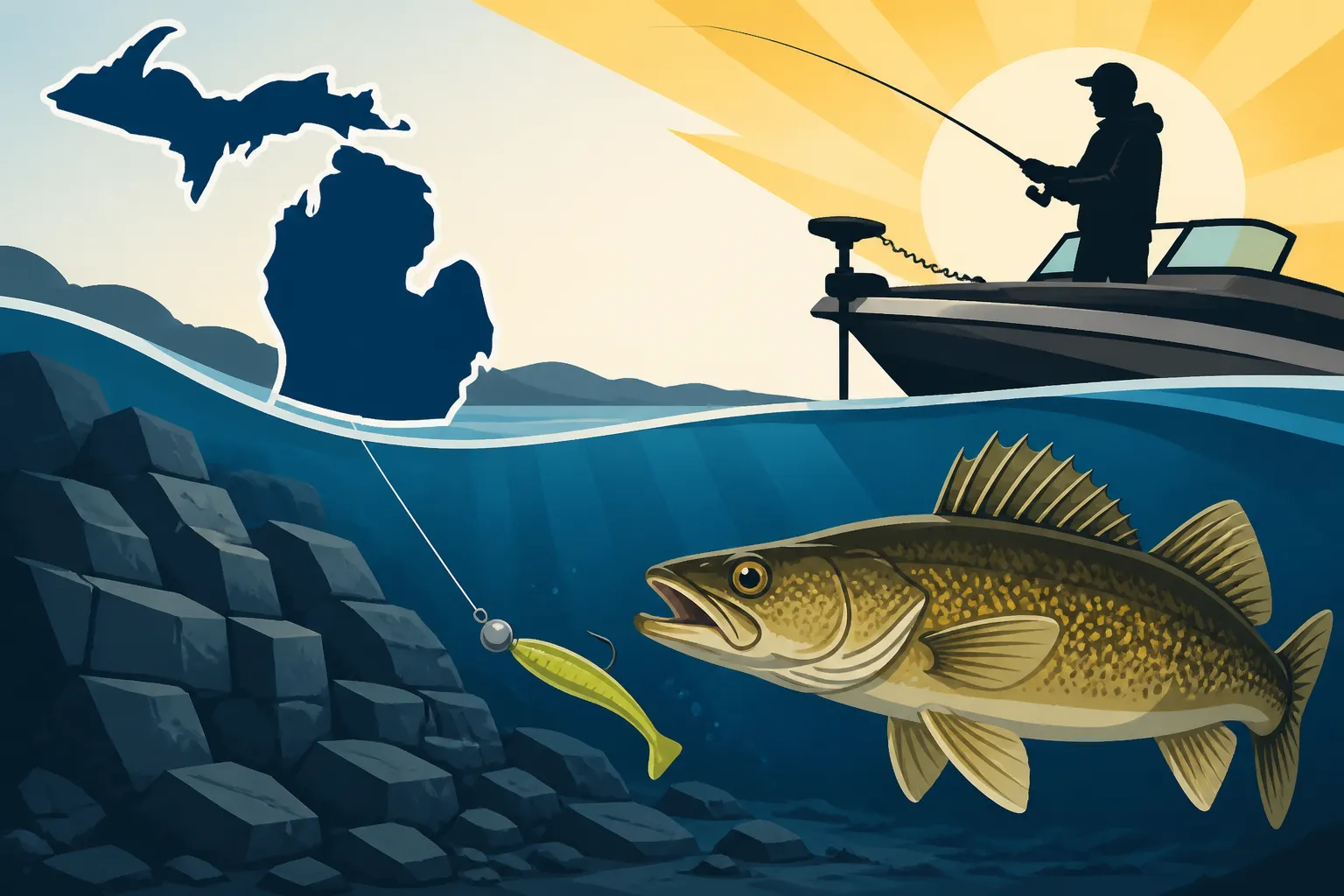
Humps and Submerged Islands are classic walleye magnets. These are elevated areas on the lakebed that don't break the surface. Walleye will often cruise the top of the hump or position themselves along the breaklines where the hump drops off into deeper water. They use these spots to ambush baitfish schooling around the structure. Think of them as underwater hills.
Ledges and Breaklines are equally important. A breakline is a sudden change in depth, like where a shallow flat abruptly drops into a deep basin. Walleye love to patrol these edges, moving up and down the breakline as conditions or baitfish dictate. They offer a quick escape to deeper water and access to both shallow and deep feeding grounds. Often, the best fishing is right on that lip where the depth quickly changes. You might even find walleye holding on the deep side of a breakline, using the sudden depth change to their advantage for ambushing prey.
Old River Channels and Deep Holes are also prime targets, especially in reservoirs or lakes formed from flooded river valleys. These old channels provide consistent depth and often have subtle contours that walleye relate to. Deep holes, on the other hand, are isolated depressions in an otherwise shallower area. They serve as natural holding areas, especially when fish are seeking refuge from adverse conditions or need to stage before moving into shallower feeding grounds. Locating these on your sonar can be a game-changer. Learning how to read the Michigan Fishing Regulations Digest will often give you hints on general lake depths.
Essential Gear for Deep Structure Walleye Fishing
When you're chasing walleye in deeper water, your everyday shallow-water tackle just won't cut it. You need specialized gear that offers sensitivity, power, and the ability to get your lures down to where the fish are holding. Investing in the right tools can make a world of difference.
Rods, Reels, and Line
For deepwater walleye, sensitivity is paramount. Those bites can be incredibly subtle, feeling like nothing more than a slight tick or added weight to your line. A good medium-light to medium-power spinning rod, typically 6'6" to 7'6" in length, with a fast or extra-fast action tip is ideal. The fast tip helps you detect those faint bites, while the backbone of the rod provides the power to set the hook and fight a strong walleye from depth. You want something that allows you to feel everything, from the bottom composition to a light pickup. You might find a wide selection of suitable rods on Amazon.
Pair that with a smooth, reliable spinning reel in a 2500 or 3000 series. A smooth drag system is crucial, especially when a good walleye decides to make a run. For line, I highly recommend a low-stretch option for maximum sensitivity. Braided line (10-20 lb test) is a fantastic choice as it has virtually no stretch, transmitting even the lightest bite directly to your rod tip. However, braid is visible, so always use a fluorocarbon leader (8-12 lb test, 3-6 feet long) tied with a reliable knot like an FG or Alberto knot. Fluorocarbon is nearly invisible underwater and offers excellent abrasion resistance against rough bottom structure. This setup allows for superior feel and solid hooksets, which are essential when you're fishing How to Jig for Walleye in Michigan in 30 feet of water.
Lures and Baits for Depth
Getting your offering down to deep-holding walleye requires specific lures and rigging. Forget those shallow-running crankbaits for a moment; we're talking about getting serious.
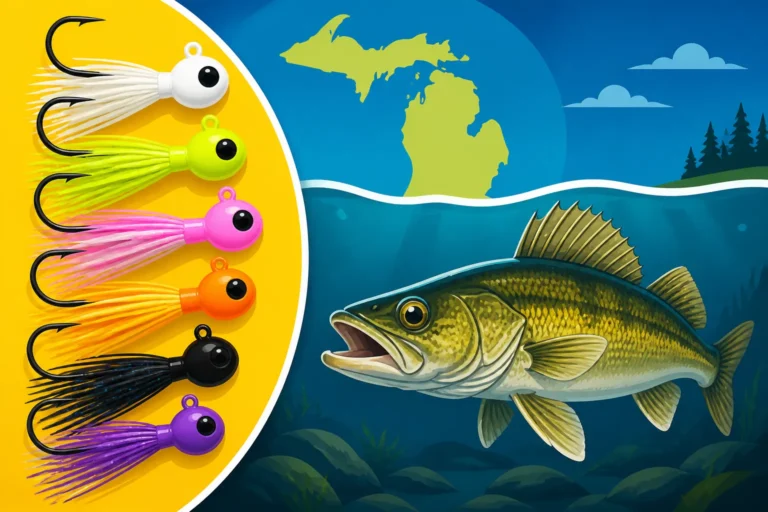
Jigs are a perennial favorite for deep walleye. From basic lead-head jigs tipped with plastic (grubs, paddletails, minnow imitations) or live bait (minnows, leeches, crawlers), to more specialized jigging spoons or blade baits. The key is to use a jig heavy enough to reach the bottom quickly and maintain contact without being so heavy it becomes difficult to work. Generally, 1/4 to 3/4 oz jigs are common, but you might go heavier in deeper water or strong currents. For blade baits, their vibration is key; they flutter and send out strong pulses, which walleye can detect with their lateral lines even in dark, deep water. When choosing a jig color, remember that the deeper you go, the less natural light penetrates, so contrasting or glow colors can sometimes outperform subtle hues, especially in murky conditions. You can learn more about Best Jig Color for Michigan Walleye for various situations.
Deep-diving crankbaits are indispensable when trolling for deep walleye. These lures are designed with long lips or bills that allow them to dive to impressive depths, sometimes 20 feet or more on their own. Names like Rapala Deep Husky Jerks, Berkley Flicker Shads, or Bomber Deep Long A's are common. Pair these with lead core line or snap weights to achieve even greater depths, sometimes down to 50+ feet. Trolling these allows you to cover vast areas of deep water, targeting suspended fish or those cruising over structure. On Amazon, you'll find a wide variety of these specialized crankbaits designed to reach those bottom-hugging walleye.
Finally, live bait rigs are incredibly effective, especially when walleye are finicky. A simple Carolina rig (sometimes called a slip-sinker rig) with a walking sinker, bead, swivel, fluorocarbon leader, and a hook tipped with a lively minnow, leech, or crawler, allows the bait to drift naturally near the bottom. This is fantastic for subtly presenting bait on deep flats or along breaklines. You can also use a slip bobber rig if the walleye are suspended just off the bottom over a specific deep spot, allowing you to present your bait at a precise depth. Live bait often triggers bites when artificials fail.
Electronics: Your Underwater Eyes
In deepwater walleye fishing, your boat's electronics are truly your most important tools. Without them, you're essentially fishing blind, hoping to stumble upon fish or structure.
A good fish finder is non-negotiable. Modern units offer incredible detail and functionality. 2D sonar will show you arches representing fish and the bottom contour. Learn to interpret these arches to distinguish baitfish from larger game fish. Down Imaging (or DownScan) provides a photographic-like view directly beneath your boat, making it easier to identify submerged timber, rocks, and the subtle contours of a deep ledge. This can be critical for understanding exactly what's beneath you.
Even more revolutionary for finding deep structure is Side Imaging (or SideScan). This technology allows you to scan wide areas to either side of your boat, revealing humps, rock piles, old riverbeds, and schools of fish that you might have otherwise missed. Imagine slowly moving over a deep flat and seeing a distinct rock pile 50 feet to your left – that's a spot you need to investigate! Combining these technologies helps you not only locate fish but also understand the specific structure they are relating to. Many anglers check Amazon for reviews on the latest fish finder models.
Beyond just finding fish, GPS and detailed mapping are essential for deepwater navigation and returning to productive spots. Modern units come pre-loaded with high-definition lake maps that show contours, depths, and sometimes even highlight common structure types. Marking waypoints on your GPS for fish activity, productive drifts, or specific pieces of structure will allow you to return to those "honey holes" time and time again. Learning What Electronics Help Find Walleye can dramatically improve your success rate.
Effective Techniques for Targeting Deep Walleye
Once you've geared up and understood where walleye generally want to be, it's time to talk about how to catch them. Deepwater fishing demands precision and a methodical approach.
Vertical Jigging
Vertical jigging is one of the most effective and direct methods for targeting deep walleye, especially when you've pinpointed a specific piece of structure or a school of fish on your electronics. The idea is to keep your lure as close to directly beneath your boat as possible, lifting and dropping it to entice a strike.
To execute this properly, boat control is absolutely critical. You need to position your boat directly over the fish or structure you're seeing on your sonar. In windy conditions, this might mean using a trolling motor with spot-lock capabilities to hold your position, or performing controlled drifts. Drop your jig directly down to the bottom, letting it hit, then imparting a lifting motion of a foot or two before letting it fall again on a semi-slack line. The bite often occurs on the fall. For lure choices, consider heavier jigs tipped with plastics or live bait, or blade baits. The vibration and flash of a blade bait can be incredibly effective in deep, dark water. You'll want to experiment with the retrieve speed and jigging height. Some days they want aggressive rips; other days, a subtle quiver is all it takes. This technique allows you to stay focused on a productive spot, making it a great way to catch a limit once you've found the fish.
Trolling Deep Diving Crankbaits
When walleye are scattered over vast areas of deep water or suspended off the bottom, trolling deep-diving crankbaits becomes an incredibly efficient search method. This technique allows you to cover a lot of water quickly and present your lures at precise depths.
For successful deepwater trolling, you'll need line counter reels to know exactly how much line you have out, and therefore, how deep your lure is running. Experiment with different crankbaits and line types to understand their specific diving depths. You might also use snap weights or lead core line to get your lures even deeper than their natural dive curve. When deploying, let out your line until the lure is at the desired depth, then maintain a consistent boat speed, typically between 1.5 to 2.5 mph, though this can vary. Watch your rod tips for the subtle wiggle that indicates the lure is running correctly, and for the sudden pull of a strike. If you're fishing a wider area, consider using Planer Boards for Salmon to spread out multiple lines, covering more water and reducing tangles, though they aren't always necessary for deep, direct trolling. Remember to pay attention to your speed and how it affects lure action; sometimes a slight acceleration or deceleration can trigger a strike.
Live Bait Rigs
Sometimes, artificial lures just aren't what the walleye are looking for, especially if they're pressured or less active. This is where live bait rigs truly shine, offering a natural presentation that's hard for a walleye to resist.
A classic deepwater live bait setup is the Carolina rig, also known as a bottom bouncer rig in some walleye circles. This rig keeps your bait just off the bottom while allowing the sinker to drag along, stirring up sediment and attracting attention. It's fantastic for drifting or slow trolling along deep breaklines or over humps. Thread a lively minnow, a plump nightcrawler, or a wriggling leech onto a hook, ensuring it can move naturally. For a more precise, suspended presentation, a slip bobber rig can be employed, particularly if you're targeting walleye you've marked suspended at a specific depth over deep structure. The slip bobber allows you to adjust your bait's depth with ease, and the bobber itself provides visual strike detection. Keep your baits fresh and lively, as this is often the key to enticing a bite from a hesitant walleye. This technique can be especially potent if you're trying to figure out Best Live Bait for Michigan Walleye in Spring when the fish might be staging in deeper sections of the lake before moving shallower.
Seasonal Considerations for Deep Walleye
Walleye fishing in Michigan isn't a static endeavor; it's a dynamic puzzle that changes with the seasons. Understanding these shifts, especially concerning deep water, is crucial for consistent success.
Summer and Early Fall Patterns
During the peak of summer, when Michigan's inland lakes and even the Great Lakes bays warm significantly, walleye reliably move to their deepwater refuges. This is often when you'll find them concentrated along deep breaklines, on humps, or suspended in the cooler waters of the thermocline. The light sensitivity that walleye exhibit pushes them deeper during bright sunny days. This makes summer an excellent time to focus your efforts on techniques like deep trolling with crankbaits or vertical jigging over known deep structure. Night fishing can also be highly productive as walleye often move shallower under the cover of darkness to feed, but during the day, they're typically down deep. This pattern holds true often into early fall as well, until water temperatures begin to drop consistently. When you're trying to figure out Best Summer Technique for Michigan Walleye, focusing on deep water presentations is usually a top strategy.
Transition Periods
The spring and late fall transition periods can be a bit more challenging, as walleye are often on the move. In spring, after ice-out and spawning, walleye will gradually migrate from shallow spawning grounds to deeper, more comfortable feeding areas. They might hold on transitional structure, like the first deep breakline off a spawning flat, before moving into their full summer deepwater patterns. This is often the time when they might be found relating to deep structure that is adjacent to shallower feeding areas.
As late fall approaches and water temperatures plummet, walleye will again start to transition. While some fish may move very shallow to feed on dying baitfish, many will remain deep, congregating in large schools over major deep structures before the winter freeze. They are essentially fattening up for winter. During these transition times, flexibility in your approach is key. You might need to cover both deeper and shallower edges of structure until you locate where the fish are concentrating. Understanding these subtle shifts in Best Time to Catch Walleye will give you a significant advantage, allowing you to adapt your deep structure fishing strategies accordingly.
Here's a quick look at some popular deepwater walleye techniques:
| Technique | Best Conditions | Preferred Lures/Bait | Pros | Cons |
|---|---|---|---|---|
| Vertical Jigging | Fish schooled on specific structure; calm to moderate | Heavy jigs (1/4-3/4 oz), blade baits, jigging spoons | Precise presentation, excellent feel, high hookup rate | Requires boat control, covers less water |
| Deep Trolling | Fish scattered over large areas; windy conditions | Deep-diving crankbaits, lead core, snap weights | Covers vast areas, consistent depth presentation | Less "feel" for bites, can be gear-intensive |
| Live Bait Rigs | Finicky fish, slow bite, specific depth | Minnows, leeches, nightcrawlers (Carolina/slip bob) | Natural presentation, often triggers hesitant bites | Requires live bait, slower fishing, less active search |
Disclaimer
This article is for general informational purposes only and does not constitute professional advice. Laws, prices and regulations vary by location and change over time. Consult a qualified professional for guidance on your specific situation.