Best Time to Catch Muskellunge in Michigan
There's a reason muskellunge are often called "the fish of 10,000 casts." They're notoriously elusive, and nothing is more frustrating than putting in countless hours on the water only to come up empty-handed. While patience, persistence, and the right gear are absolutely crucial, understanding when these magnificent predators are most active in Michigan waters can dramatically tip the odds in your favor. This comprehensive guide will walk you through the seasonal nuances, environmental factors, and essential strategies to help you connect with a trophy muskie.
Understanding Michigan's Muskellunge Seasons and Regulations
Before we even cast a line, it's vital to understand the foundational rules that govern muskie fishing here in Michigan. These aren't just suggestions; they're legal requirements designed to protect this incredible fishery. Ignoring them can lead to hefty fines and disappointment.
The Legal Fishing Season for Muskellunge
Michigan's muskie season generally opens in early June and runs through early March, though specific dates can vary by water body and region. For instance, the Great Lakes and connecting waters might have slightly different opening dates compared to some inland lakes. This extended season gives anglers a wide window of opportunity, but "open season" doesn't automatically mean "peak season." You'll want to consult the current Michigan Fishing Regulations Every Angler Should Know digest each year, as exact dates and any special regulations are printed there. It's really the angler's bible for staying on the right side of the law. Generally, the season is structured to allow the fish to complete their spawning rituals undisturbed in the spring. This conservation measure helps ensure healthy populations for future generations of anglers, which we all appreciate.
Minimum Size Limits and Catch Reporting
Muskellunge in Michigan typically have a very generous minimum size limit, often 42 or 50 inches on many waters, to ensure that only mature fish have the chance to reproduce several times before being harvested (if you choose to harvest one). It's a testament to the challenge and dedication required for muskie fishing that landing a fish of legal size is considered a major accomplishment. Most muskie anglers practice catch-and-release, which is highly encouraged to sustain these vulnerable populations. However, if you are lucky enough to harvest a legal-sized muskie, you absolutely must report it. Michigan has strict Michigan Muskellunge Harvest Reporting Rules that require anglers to register their catch within 24 hours. This data is critical for the DNR to monitor population health and make informed management decisions. Keep a measuring tape and camera handy, but always prioritize the fish's safety and quick release if you're not keeping it.
Peak Seasons for Targeting Muskellunge in Michigan
While muskie can theoretically be caught throughout their open season, certain times of the year offer significantly better odds due to their feeding patterns and activity levels. These peak windows are what many dedicated muskie anglers live for.
Spring Excitement: Post-Spawn and Early Summer
The period immediately following the muskie spawn, typically from early June through July, can be a fantastic time to target these fish. After the rigors of spawning, muskie are often hungry and aggressive, looking to quickly regain their energy stores. The water temperatures are steadily rising into their preferred range, which usually falls between 65 and 75 degrees Fahrenheit.
During this post-spawn phase, muskies often remain in relatively shallow water, especially around emerging weed beds, submerged timber, and rocky points. They might be a bit lethargic at first, but as the water warms, their metabolism ramps up, and they become more active. Anglers often find success casting medium-sized bucktails, twitchbaits, and shallow-running crankbaits. The fish aren't quite as prone to long, drawn-out chases as they are later in the year, so quicker, more erratic presentations can be effective. This early summer period is also part of the broader Michigan Spring Fishing Season Guide, which offers fantastic opportunities for many other species as well, but the muskie bite is definitely something special.
Summer Strategies: Weed Lines and Open Water
As Michigan's summer progresses into August, water temperatures continue to climb, and muskie often adjust their locations. In many inland lakes and even the Great Lakes, muskie will move to deeper, cooler water, or they'll seek refuge in the densest, most expansive weed beds that offer both cover and cooler temperatures. Think lush cabbage and lily pad fields, or offshore humps with thick vegetation.
Targeting muskie in summer can be challenging due to higher boat traffic, increased water temperatures (which can make fish more sluggish during the heat of the day), and the sheer amount of cover available to them. However, diligent anglers can still find success. Early mornings, late evenings, and even night fishing can be productive as the water cools slightly and muskie venture out from their daytime hideouts. Trolling large crankbaits and glide baits along deep weed edges or over open water humps is a popular technique for covering ground and locating active fish. For casting, anglers often opt for heavy bucktails, large topwater lures during low-light conditions, or bulky soft plastics worked slowly through weed pockets. It's a time for patience, persistence, and adapting your Michigan Muskellunge Fishing Techniques to the conditions.
Fall Frenzy: The "Muskie Run"
Without a doubt, late summer into fall is widely considered the absolute prime time to catch a trophy muskellunge in Michigan. As daylight hours shorten and water temperatures begin to drop from late September through November, muskie enter a "feeding frenzy." They know winter is coming, and they need to pack on calories. This drives them into an aggressive feeding pattern that can be incredibly rewarding for anglers.
During this "muskie run," these fish become much more active and willing to chase down large baits. They'll often move back into shallower areas or patrol distinct contours, rock piles, and points that offer easy access to baitfish. Cooler water temperatures invigorate them, making them powerful fighters. This is when many anglers switch to larger, heavier baits – massive crankbaits, oversized jerkbaits, and magnum bucktails are common choices. The cooler, crisper air of fall, combined with the vibrant autumn colors, also makes for an incredibly scenic and enjoyable fishing experience, even if the fish still live up to their elusive reputation. This period falls squarely within the later part of the Michigan Fishing Season Dates and Rules, leading up to the December and January ice-up, and it's a window that every serious muskie angler in Michigan anticipates.
Factors Influencing Muskellunge Activity Beyond the Calendar
While seasons provide a general framework, muskie, like all fish, are highly sensitive to their immediate environment. Understanding these subtler influences can help you pinpoint those brief windows of intense activity.
Water Temperature and Oxygen Levels
Water temperature is arguably the most critical factor influencing muskie activity. As mentioned, their preferred temperature range for optimal feeding is typically between 65 and 75 degrees Fahrenheit. Below this, their metabolism slows, making them more sluggish. Above it, they may become stressed and seek deeper, cooler water or dense shade. Sudden drops or spikes in temperature, often caused by cold fronts or extended heat waves, can temporarily shut down the bite.
Similarly, oxygen levels play a huge role. During the summer, in particular, a thermocline forms in many lakes, separating warmer, oxygen-rich surface water from colder, low-oxygen deep water. Muskie will often hold just above or within the thermocline, in the "comfort zone" where temperatures are ideal and oxygen is plentiful. Understanding how to read your electronics to find this zone can be a game-changer. Features like springs, inflowing rivers, or even strong winds can create localized areas of higher oxygen, attracting baitfish and, consequently, muskie.
Weather Patterns and Barometric Pressure
Muskie anglers often talk about "good muskie weather," and it's not always what you'd expect. While stable, overcast days with light winds are often preferred, muskie can sometimes be triggered by changing conditions. Approaching low-pressure systems, often accompanied by cloud cover, light rain, and rising humidity, can sometimes stimulate a feeding binge just before a storm hits. Conversely, a sharp cold front that brings high, clear skies and rapidly rising barometric pressure often results in a tough bite, as fish tend to become less active and more reluctant to feed.
Stable high pressure, especially if it's been present for several days, can sometimes lead to consistent fishing, but often not with the explosive activity seen before a front. Many anglers meticulously track barometric pressure changes, considering them a crucial indicator for when to hit the water. It's not an exact science, but understanding these macro weather patterns can definitely help you decide whether to grab your gear or wait for a more promising day.
Location, Location, Location: Specific Michigan Waters
Michigan is blessed with an abundance of fantastic muskie waters, and each one can have its own quirks. What works on one lake might not be as effective on another, and even within the same body of water, different areas can fish differently. For instance, the legendary Lake St. Clair Muskellunge Fishing is often a fantastic early-season producer due to its vast, shallow, and weed-filled nature, warming up quickly in the spring. Other waters, like certain areas of the Great Lakes or some larger inland lakes like those found in the list of Best Michigan Lakes for Muskellunge, might have better fall fishing opportunities as fish migrate to specific staging areas.
Here's a quick look at some general muskie water characteristics and how they might influence timing:
| Water Body Type | Characteristics | Best Time to Catch Muskie | Typical Techniques |
|---|---|---|---|
| Large, Shallow Lakes | Warm up quickly, abundant weeds, clear to stained water. | Early Summer (June-July), Fall (Sept-Oct) | Casting bucktails, twitchbaits, topwaters |
| Deep, Clear Lakes | Slower to warm, distinct thermoclines, often rocky structure. | Mid-Summer (July-Aug evenings), Fall (Oct-Nov) | Trolling deep cranks, jigging, casting large soft baits |
| Rivers | Current present, diverse structure (logs, rocks, bends). | Spring (post-spawn), Fall (Sept-Nov) | Casting bucktails, large spinnerbaits, jerkbaits |
| Great Lakes Bays | Large, variable depths, strong current influence. | Summer (trolling), Fall (near river mouths, deeper structure) | Trolling, heavy casting lures |
These are just general guidelines, of course. Local knowledge from fellow anglers, bait shops, and guides is always invaluable for dialing in the exact timing and tactics for specific spots.
Gear and Techniques for Muskellunge Success
Chasing muskie requires a specific kind of dedication and, let's be honest, a specific kind of gear. These aren't panfish, and your typical bass setup just won't cut it when a truly massive muskie decides to strike.
Choosing the Right Tackle
When it comes to muskie, "heavy-duty" is the name of the game. You'll need a stout baitcasting rod, typically 7'6" to 9' in length, with a heavy or extra-heavy action to handle the big baits and powerful fish. Coupled with that, a high-quality baitcasting reel with a robust drag system and a fast retrieve ratio is essential for managing heavy lures and quickly taking up line during a fight. Many anglers find a vast selection of purpose-built muskie rods and reels, often from reputable brands, on Amazon. Look for models specifically designed for muskie or saltwater applications that can stand up to the abuse.
Line choice is equally important. Most muskie anglers spool up with 65 to 100-pound test braided line. This high poundage isn't necessarily for breaking strength (though that helps!) but for its resistance to abrasion and its ability to cast heavy lures without digging into the spool. A heavy-duty fluorocarbon or wire leader (at least 80-pound test) is absolutely non-negotiable to prevent toothy muskie from biting through your mainline. For more general advice on selecting your setup, check out our guide on Best Rods and Reels for Michigan Fishing.
Lures and Presentations
Muskie lures are as varied and aggressive as the fish themselves. During the spring and early summer, smaller to medium-sized bucktails (think #5 to #8 blades), twitchbaits, and shallow-running crankbaits are often effective. As the water warms in mid-summer, anglers often size up, throwing larger bucktails, topwater lures (like walk-the-dog baits or prop baits) during low-light hours, and deep-diving crankbaits or glide baits for trolling deeper breaks.
The fall, as we discussed, is the time for truly massive baits. Huge bucktails with tandem blades, large jerkbaits that suspend or sink slowly, and enormous soft plastic swimbaits are par for the course. Colors can vary, but natural baitfish patterns, chartreuse, and bright, flashy colors often produce well. You can explore an incredible array of muskie lures and accessories on Amazon, with options to suit every season and fishing style. Remember, the presentation is key: a hard figure-eight at the boat, a sudden pause, or an erratic retrieve can often trigger a follow or strike from a hesitant muskie.
Safe Handling and Release Practices
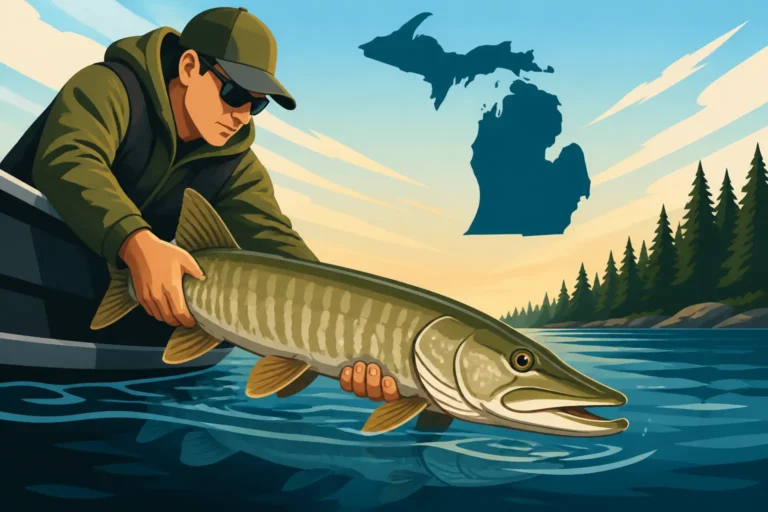
Because muskie are such a prized, yet fragile, resource, proper handling and release are paramount, especially given Michigan's emphasis on conservation. If you plan to release a muskie (and most anglers do), you need the right tools and knowledge to do so quickly and safely. A very large, knotless rubberized landing net is essential to cradle the fish and prevent damage to its fins and slime coat. Long-nosed pliers, bolt cutters (for cutting hooks if deeply swallowed), and a jaw spreader are also crucial for quickly and safely removing hooks.
Avoid handling muskie by their gills or eyes. Support their weight horizontally, and if you need a photo, do it quickly with the fish partially submerged if possible. Get it back in the water as fast as you can, supporting it until it swims away under its own power. You can find excellent quality landing nets, hook removal tools, and other safe handling gear on Amazon to ensure you're prepared. For a deep dive into how to protect these fish, read our guide on How to Catch and Release a Muskellunge.
Muskellunge Season and Activity Summary
To help visualize the prime windows and what influences them, here's a quick summary:
| Season | General Timing | Water Temperature Range (F) | Muskie Behavior | Optimal Conditions | Common Lures/Techniques |
|---|---|---|---|---|---|
| Spring/Early Summer | June – July | 60-70 | Post-spawn recovery, actively feeding to regain energy | Warming trend, stable weather, emerging weeds | Medium bucktails, twitchbaits, shallow cranks |
| Mid-Summer | July – August | 70-78 | Seek cooler water, dense cover; often nocturnal | Low light (dawn/dusk/night), stable heat, weed lines | Large topwaters, deep cranks (trolling), soft plastics |
| Fall Frenzy | September – November | 50-65 | Aggressive feeding to bulk up for winter | Cooling trend, approaching low pressure, clear water | Magnum bucktails, large jerkbaits, oversized soft baits |
| Winter | December – March | Under 40 (ice fishing) | Metabolism slows, less active, concentrated | Stable ice, mild days | Live bait (suckers), jigging large spoons |
Disclaimer
This article is for general informational purposes only and does not constitute professional advice. Laws, prices and regulations vary by location and change over time. Consult a qualified professional for guidance on your specific situation.