Best Kayak for Michigan River Fishing
There's nothing quite like the tranquility and challenge of paddling your own craft down a Michigan river, casting for trout, smallmouth bass, or even steelhead. But if you've ever tried to shove an oversized, clunky lake kayak into a tight river bend or found yourself constantly fighting the current in an unstable boat, you know the frustration is real. This guide is all about helping you navigate the sometimes-overwhelming world of fishing kayaks so you can choose the absolute best one for tackling Michigan's diverse river systems, ensuring your days on the water are filled with joy, not struggle.
Why Kayak Fishing Michigan Rivers is a Unique Experience
Kayak fishing on Michigan's rivers offers a completely different vibe than hitting the big lakes. It's a more intimate experience, allowing you to access nooks and crannies that larger boats simply can't reach. But with that intimacy comes a set of unique challenges that require specific kayak features to overcome.
The Allure of River Kayak Fishing
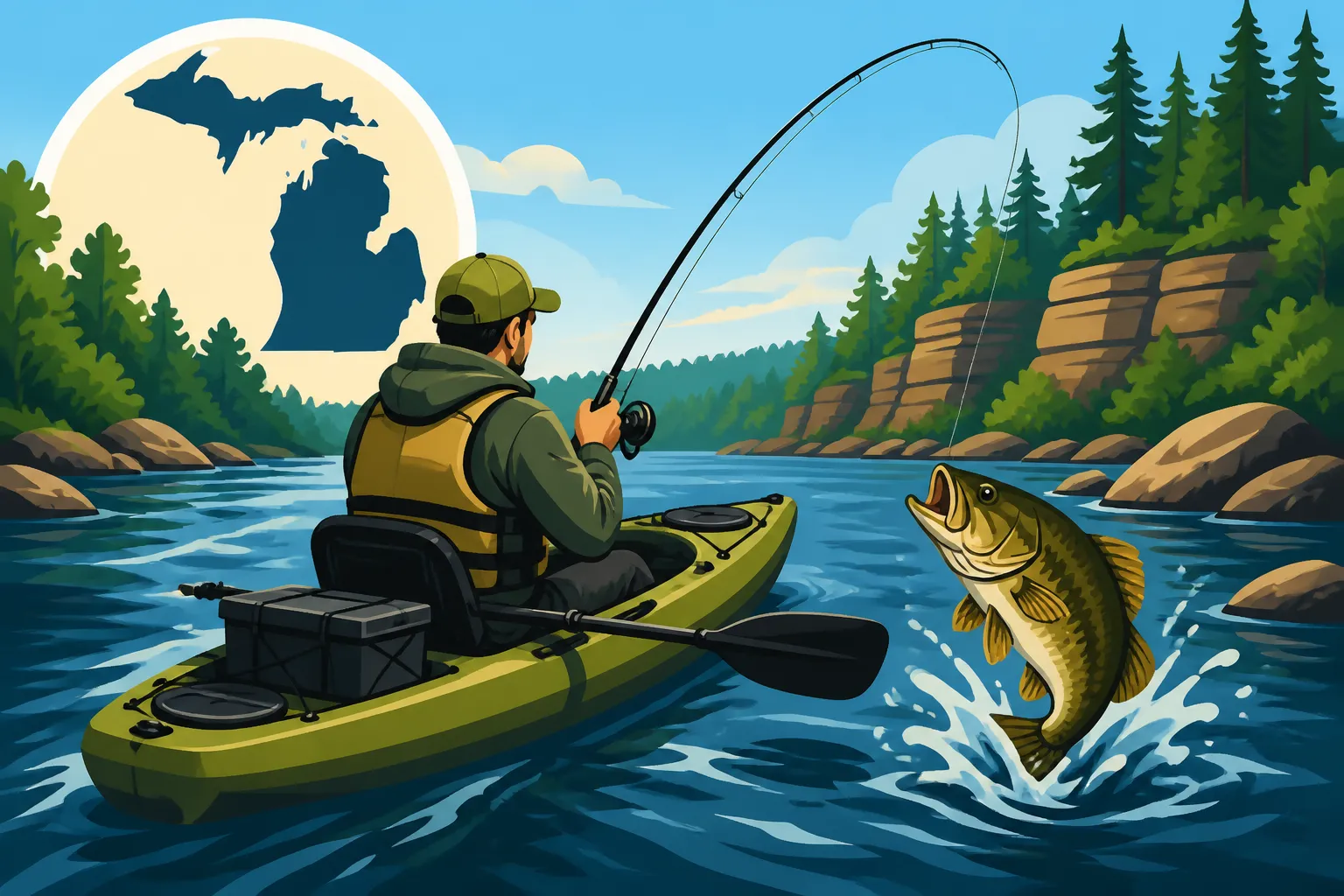
Picture this: you're quietly drifting down the Au Sable River, the sun dappling through the trees, your paddle barely breaking the surface. You can hear the gentle rush of water over rapids in the distance, and the only other sound is the soft hum of insects. Suddenly, a splash! A perfect cast, a solid hook-up, and you're fighting a feisty brown trout right from your low-profile perch. That's the magic of river kayak fishing. You get unparalleled stealth, the ability to explore small tributaries, and the sheer joy of being connected to the natural flow of the water. It’s a fantastic way to escape the crowds often found on larger bodies of water or at popular access points. Plus, paddling and fishing can be a great workout, combining exercise with your passion for angling.
Unique Challenges Michigan Rivers Present
Michigan's rivers, from the fast-flowing Manistee to the winding Kalamazoo, are as varied as the fish that swim in them. This variety presents some distinct challenges for kayak anglers. You'll encounter shallow riffles where too much draft means getting stuck, rocky stretches that demand durability, and swift currents that require excellent maneuverability and control. Fallen trees and log jams are common, necessitating a boat that can be easily portaged or navigated around. Unlike a wide-open lake, space is often at a premium, so a kayak that's easy to turn and can stop quickly is a huge asset. Think about fishing a tight bend on the Pere Marquette River; you need to be able to hold your position, make an accurate cast, and then quickly reposition as the current takes you. It's not just about getting from point A to point B; it's about actively fishing while managing river dynamics.
Key Kayak Features for River Angling in Michigan
When you're shopping for a kayak specifically for Michigan river fishing, you need to think beyond just "does it float?" The ideal river fishing kayak balances several critical design elements to enhance your experience and keep you safe.
Stability Versus Maneuverability: Finding Your Sweet Spot
This is often the biggest trade-off. A super stable kayak, usually wider and flatter-bottomed, is fantastic for standing up to cast or for bringing in a big fish without fear of tipping. However, that extra stability often comes at the cost of maneuverability. Wider kayaks are harder to turn quickly in tight river sections or swift currents. Conversely, a very nimble, narrower kayak might slice through the water beautifully, but you'll feel every wobble, especially when fighting a strong steelhead or reaching for your net.
For most Michigan river anglers, a good balance is key. You want enough stability to feel confident handling a fish or reaching for gear, but enough agility to navigate around obstacles and eddies. A length between 10 to 12 feet is often the sweet spot. Anything much longer might become cumbersome in tight river bends, while anything shorter can feel slow and less efficient on longer stretches. When you're browsing options, check out the beam (width) – usually, anything over 30 inches offers decent stability without turning your kayak into a barge.
Hull Design Considerations for Diverse River Conditions
The shape of the kayak's hull plays a massive role in how it performs on the water. For rivers, you'll generally find two main types of hull profiles that influence performance:
- Pontoon-style or Tunnel Hulls: These often feature two parallel "pontoons" that create a flat, stable platform. They excel in primary stability (how stable it feels when you first get in) and are fantastic for standing up. This design makes them incredibly popular for anglers who want to sight-fish or cast with more power. The trade-off is often slightly less speed and more drag, but for slower to moderate currents or stretches of river with wider bends, they are excellent.
- V-Shaped or Modified V Hulls: These hulls are designed to cut through the water more efficiently, offering better secondary stability (how stable it feels when it's already tilted). They tend to track straighter and are generally faster. While perhaps not as ideal for standing, a modified V-hull can be a great choice for rivers with longer, straighter runs or for paddlers who prioritize speed and tracking. However, they can be more prone to snagging on rocks in very shallow water.
For Michigan rivers that often have varying depths, from deep pools to shallow riffles, a kayak with a relatively low draft is a huge plus. This means the boat doesn't sit too deep in the water, allowing you to glide over submerged rocks and logs that might stop a deeper-keeled vessel. A good compromise for many rivers might be a hybrid design that offers a relatively flat mid-section for stability, but with subtle V-shapes at the bow and stern for better tracking and current shedding.
Storage and Rigging Options: Your Mobile Fishing Platform
Your kayak isn't just a boat; it's your mobile fishing command center. Having adequate, well-thought-out storage and rigging options is paramount for a productive day on the river.
- Open Storage and Hatches: Sit-on-top kayaks inherently offer more open deck space, which is fantastic for gear accessibility. Look for models with a large tank well in the stern, often secured with bungee cords, perfect for a cooler, tackle crate, or dry bag. Forward hatches are great for storing items you want to keep dry and secure, like extra clothing, lunch, or electronics. Ensure these hatches are easy to open and close, even with wet hands.
- Accessory Rails and Mounting Points: Modern fishing kayaks often come equipped with gear tracks or universal mounting points. These are game-changers! They allow you to customize your setup with rod holders, fish finders, camera mounts, and other accessories without having to drill into your hull. Brands like Wilderness Systems and Old Town often integrate these features seamlessly. Being able to position your rod holders exactly where you need them for trolling or setting a secondary rod is incredibly valuable in the dynamic environment of a river. When you're searching for your ideal kayak, consider how easily you can add and remove accessories to suit different fishing conditions. You can often find a wide variety of compatible accessories at Bass Pro Shops or online through Amazon.
Types of Kayaks Best Suited for Michigan Rivers
Now that we've covered the crucial features, let's look at the different categories of kayaks and how they stack up for Michigan river fishing. Each type has its pros and cons, and the "best" choice really depends on your personal preferences and the specific rivers you plan to fish most often.
Sit-on-Top (SOT) vs. Sit-Inside (SINK) for Rivers
This is perhaps the most fundamental choice you'll make.
- Sit-on-Top (SOT) Kayaks: These are overwhelmingly popular for fishing, and for good reason. Your seating position is on top of the hull, making it incredibly easy to get in and out, which is a huge advantage if you need to portage around an obstacle or wade a shallow section. They are generally wider and more stable, allowing for easier casting and more comfortable movement. Water that comes over the bow or gunwales drains right out through scupper holes, keeping your cockpit dry. SOTs also offer ample deck space for tackle and gear. The downside? You're more exposed to the elements, and in colder Michigan weather or spring runoff, you'll feel the chill more keenly. However, for most three-season river fishing, an SOT is a fantastic choice.
- Sit-Inside (SINK) Kayaks: While less common for dedicated fishing, SINKs still have their place, especially for anglers who prioritize speed and protection from the elements. Your legs are enclosed within the hull, offering warmth and a lower center of gravity, which can feel more secure in rougher water or rapids. They are typically narrower and faster, making them efficient for covering long stretches of river. The challenge for fishing is the limited open deck space and the difficulty of getting in and out, especially if you need to quickly exit in a tricky situation. Rigging a SINK for fishing often requires more creative solutions for rod holders and storage. If you mostly fish clear, slow-moving rivers and prioritize paddling efficiency and comfort in cooler weather, a SINK might be an option, but for all-around river fishing, SOTs generally win out.
Pedal vs. Paddle Kayaks: Efficiency and Engagement
The propulsion system is another key consideration, especially on rivers where current management is critical.
- Paddle Kayaks: The traditional choice, paddle kayaks offer simplicity, lighter weight, and often a lower price point. You use a double-bladed paddle to propel yourself. This is great for navigating shallow areas where pedal drives might hit bottom, and it gives you a more direct connection to the water. Learning How to Read River Flow for Steelhead Fishing is essential with a paddle kayak to conserve energy. For shorter trips, tight spaces, or a more minimalist approach, a paddle kayak is excellent. Many anglers love the physical engagement of paddling.
- Pedal Kayaks: These have revolutionized kayak fishing, particularly on larger rivers or when you want hands-free fishing. Systems like Hobie's MirageDrive or Old Town's PDL Drive allow you to propel the kayak using your legs, leaving your hands free to cast, reel, or adjust your tackle. This is an enormous advantage when you're trying to hold position against a current, drift precisely, or fight a fish. Imagine holding your spot in a strong current on the Muskegon River while actively casting; a pedal drive makes that effortless. They are generally heavier and more expensive, and their drive systems can be vulnerable to shallow, rocky bottoms, although most can be retracted. For long days on the water, battling current, or maximizing fishing time, a pedal kayak is a serious contender.
Inflatable Kayaks: A Niche Option for Portability
Inflatable kayaks have come a long way from the flimsy pool toys of yesteryear. High-pressure drop-stitch technology makes modern inflatables incredibly rigid and durable, often rivaling hard-shell kayaks in performance.
- Pros for River Fishing: Their primary advantage is portability. They pack down small, making them ideal if you have limited storage space, need to car-top them easily, or plan multi-day trips with portages where you might not have vehicle access. They are also incredibly durable and resistant to punctures from rocks, often bouncing off obstacles that would ding a hard-shell. Many inflatables have a very low draft, making them excellent for shallow rivers.
- Cons for River Fishing: While much better, they still don't offer the same level of rigidity as a hard-shell, which can slightly reduce paddling efficiency. Rigging options might be more limited, and setting them up takes a bit more time with inflation and deflation. However, for anglers prioritizing easy transport and shallow-water access, a robust inflatable like those from Sea Eagle or NRS can be a surprisingly effective choice for Michigan rivers.
| Kayak Type | Pros for Michigan Rivers | Cons for Michigan Rivers | Best Use Case |
|---|---|---|---|
| Sit-on-Top (SOT) | High stability, easy entry/exit, open deck space, good drainage | Exposed to elements, can be slower than SINK | General river fishing, standing to cast, warmer weather |
| Sit-Inside (SINK) | Fast, efficient, protected from elements, good in colder weather | Limited space, harder entry/exit, less open rigging | Covering long distances, colder weather, focus on paddling efficiency |
| Pedal Kayak | Hands-free fishing, great current management, less fatigue | Heavier, more expensive, drive system vulnerable in shallows | Larger rivers, fighting current, long fishing days, hands-free casting |
| Paddle Kayak | Lighter, simpler, less expensive, good in extreme shallows | Requires constant paddling, hands occupied | Shorter trips, very shallow/rocky rivers, minimalist approach |
| Inflatable Kayak | Portable, durable, low draft, easy storage | Less rigid, longer setup time, limited rigging | Remote rivers, limited storage, air travel, rocky rapids |
Essential Gear and Accessories for River Kayak Fishing
Once you've picked your perfect kayak, you're only halfway there! Outfitting your vessel with the right gear and accessories is crucial for safety, comfort, and maximizing your fishing success on Michigan's rivers. Don't skimp on these additions – they make a world of difference.
Safety First: PFDs and Other Essentials
Safety is never optional, especially when navigating unpredictable river currents. The most important piece of gear you'll own is a well-fitting Personal Flotation Device (PFD).
- Choosing the Right PFD: Don't just grab any old life jacket. Look for a fishing-specific PFD. These are designed with angler needs in mind, featuring pockets for small tackle boxes, pliers, and even a drink holder. They often have higher backs to prevent bunching up against your kayak seat. Always wear your PFD, even on calm days. Rivers can be deceptive, and a sudden capsize in cold water or strong current is a serious risk. Check out Life Jackets and Michigan Boating Safety Rules to ensure you're compliant and safe.
- Beyond the PFD: A whistle is essential for signaling, and a small first-aid kit, securely stored in a dry bag, is a must for minor cuts and scrapes. A rescue throw bag, containing a length of rope, can be invaluable for helping a fellow paddler or even self-rescue. A good headlamp or flashlight is vital if you plan to be on the water near dusk or dawn. For Michigan rivers, especially during cooler months, appropriate clothing, often including Best Waders for River Fishing, is critical to prevent hypothermia if you do end up in the water. Remember, Michigan Boating Laws for Anglers covers more than just licenses; it includes important safety equipment too.
Anchoring and Positioning Systems for River Currents
One of the biggest challenges in river fishing from a kayak is controlling your drift and holding position. Trying to cast accurately while simultaneously battling a strong current with your paddle is a recipe for frustration.
- Anchor Systems: While traditional anchors have their place, a small grapnel anchor or a drift sock (also known as a drift anchor or sea anchor) is often more effective in rivers. A grapnel anchor is great for holding in rocky or sandy bottoms, but make sure it has a release system so you don't get permanently snagged on a submerged log. A drift sock deploys behind your kayak and creates drag, slowing your drift significantly and allowing you to fish a section of river much more thoroughly. For the ultimate control, a robust anchor trolley system is a game-changer. This allows you to deploy your anchor from either the bow or stern of your kayak, keeping you oriented correctly to the current and the fishing lane. For more in-depth advice, check out Best Anchor for River Fishing.
- Pole Anchors/Shallow Water Anchors: For shallow to moderate depths, a pole anchor (like a Power-Pole Micro or a homemade version with a fiberglass pole) can be incredibly effective. You simply plunge the pole into the riverbed to quickly stop and hold your position. This is fantastic for fishing a specific eddy, seam, or undercut bank.
Rod Holders and Storage Solutions: Keeping Your Gear Organized
Efficient gear management is critical in a kayak, where space is limited and everything needs to be secure yet accessible.
- Adjustable Rod Holders: While many fishing kayaks come with flush-mount rod holders, external, adjustable rod holders (often mounted to gear tracks or scupper holes) are invaluable for trolling, holding a secondary rod, or simply getting your rod out of the way while you're paddling or re-tying. Look for sturdy models that can be easily adjusted for angle and height. Companies like Scotty and Ram Mounts make excellent options that can be found at local shops or online.
- Tackle Management Systems: Forget the giant tackle box. For kayak fishing, smaller, modular tackle boxes that fit into a crate or specialized bag are much better. A milk crate outfitted with rod holders and bungee cords is a classic, inexpensive solution. Some kayaks even have built-in tackle storage or trays. The goal is to keep your most-used lures, baits, and tools within easy reach without creating clutter that could snag a line or get in the way. Don't forget a pair of line cutters or pliers easily accessible on your PFD or a lanyard. Having your Best Rods and Reels for Michigan Fishing secured but ready for action is key. If you're into fly fishing on rivers, consider specialized solutions for your Best Fly Fishing Gear for Trout Rivers as well.
Disclaimer
This article is for general informational purposes only and does not constitute professional advice. Laws, prices and regulations vary by location and change over time. Consult a qualified professional for guidance on your specific situation.