Best Boat Electronics for Michigan Great Lakes Fishing
Fishing the vast and often unpredictable waters of Michigan's Great Lakes can be an incredible experience, but it also comes with its unique set of challenges. Without the right technological companions on board, you might find yourself struggling to locate fish, navigate safely through changing conditions, or even communicate effectively in an emergency. This comprehensive guide will walk you through the essential boat electronics that will not only enhance your fishing success but also ensure a safer and more enjoyable time on these magnificent waters.
The Indispensable Role of Boat Electronics on the Great Lakes
When you're out on Lake Michigan, Lake Huron, or even the formidable Lake Superior, you quickly realize these aren't your typical inland ponds. The sheer size, depth, and rapidly changing weather patterns demand a level of preparedness that goes beyond a good rod and reel. Boat electronics aren't just fancy gadgets; they're vital tools that transform a hopeful fishing trip into a strategic and successful endeavor. Think of them as your eyes, ears, and brain on the water, providing information you simply can't get otherwise.
Navigating Vast and Challenging Waters
Imagine a thick fog rolling in on Lake Huron, or trying to find a specific underwater structure miles offshore on Lake Superior without a reliable navigation system. It's a daunting thought, right? The Great Lakes are notorious for their sudden weather shifts, and their expansive nature means visual landmarks are often nonexistent. Having accurate, real-time navigation is not a luxury; it's a necessity. It helps you confidently steer through unfamiliar territory, return safely to port even in low visibility, and pinpoint those elusive fishing hot spots you've marked. Without a solid electronic suite, you're essentially driving blind in a constantly moving, sometimes treacherous, environment.
Enhancing Safety and Confidence
Beyond finding fish, the primary concern for any angler on the Great Lakes should be safety. Electronic systems play a monumental role in this. A reliable chartplotter can warn you of shallow reefs or submerged hazards, while a marine radio provides a lifeline to shore or other vessels if trouble strikes. Having this technology on board instills a much-needed sense of confidence, allowing you to focus on the fishing itself rather than constantly worrying about getting lost or encountering unforeseen dangers. Knowing you have the tools to navigate safely and call for help if needed can make all the difference, especially when you're exploring new areas as outlined in our Michigan's Great Lakes Fishing Guide.
Essential Electronic Devices for Great Lakes Anglers
Alright, let's dive into the core components that should be on every Great Lakes angler's boat. These aren't optional extras; they're the foundational pieces of your electronic puzzle that will dramatically improve your fishing game and overall safety.
Chartplotters and GPS Navigation Systems
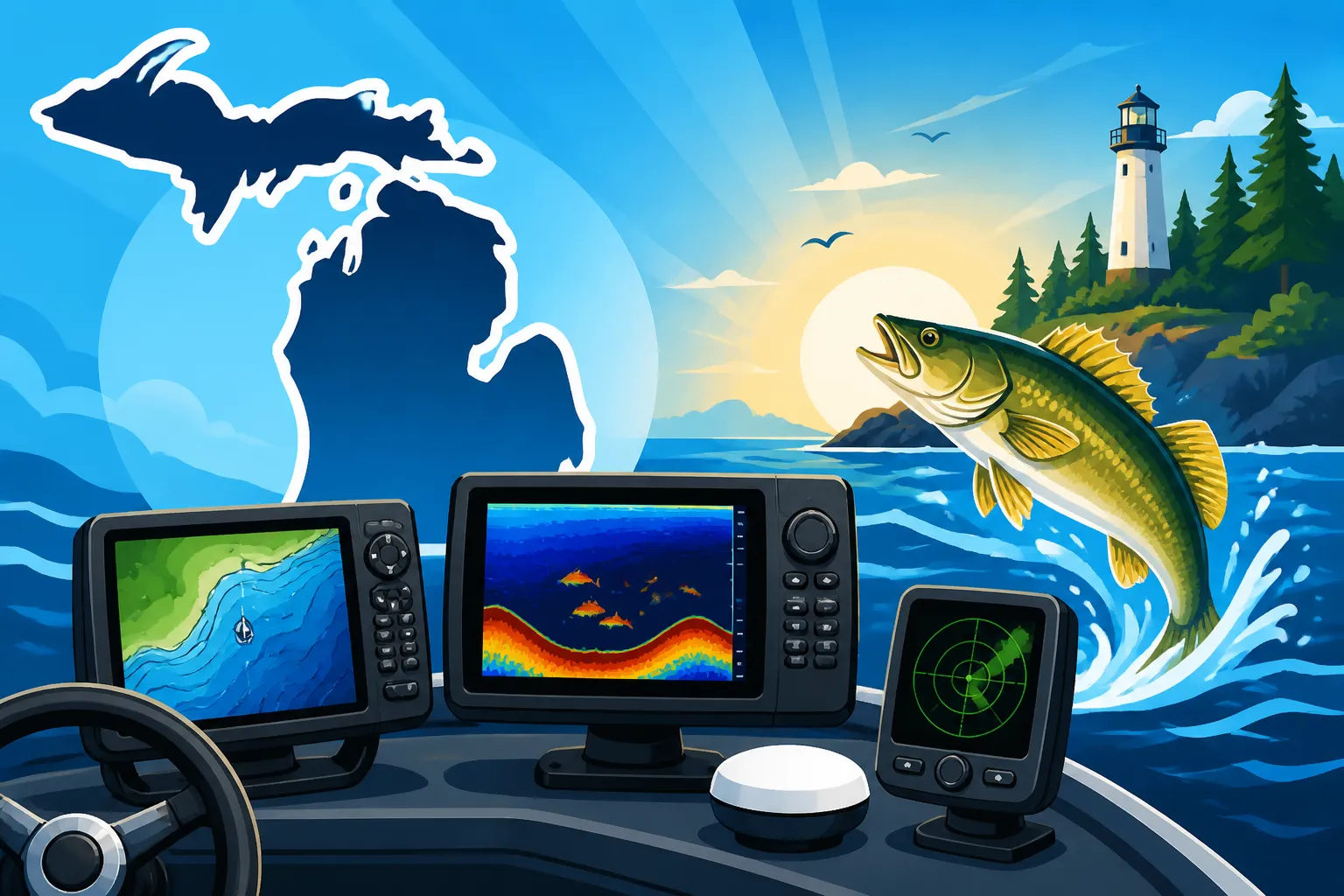
A chartplotter with integrated GPS is, without a doubt, the cornerstone of Great Lakes boat electronics. It's essentially a sophisticated map display that shows your boat's position in real-time, overlaid on detailed nautical charts. This isn't just for getting from point A to point B. On the Great Lakes, where depths can change dramatically and submerged structures are plentiful, a good chartplotter helps you avoid hazards, understand bottom contours, and precisely navigate to your favorite fishing spots. You can mark waypoints for secret reefs, productive shoals, or even where you last caught a trophy walleye.
Modern units often come pre-loaded with comprehensive charts of all the Great Lakes, providing depths, navigation markers, and even detailed shoreline information. The ability to see your track, plan routes, and instantly know your position is invaluable, especially when weather conditions deteriorate. If you're planning on How to Troll for Salmon on the Great Lakes, precise navigation and the ability to follow contour lines are absolutely critical for success. You can often find a wide selection of these devices at retailers like Bass Pro Shops, or browse different models and features online via Amazon.
Fish Finders and Sonar Technology
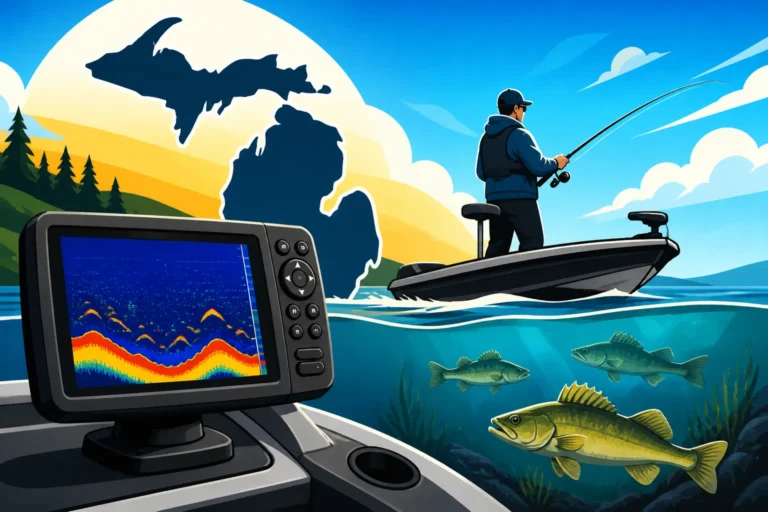
What's fishing without finding fish, right? A dedicated fish finder or a multifunction display (MFD) with robust sonar capabilities is your underwater eye. These devices use sound waves to detect objects beneath your boat, displaying them as arches (fish), lines (bottom contours), or solid masses (structure). For Great Lakes fishing, you'll want to look beyond basic models.
- 2D Sonar: This is the traditional view, showing you fish arches and bottom structure directly beneath your boat. High-frequency transducers provide excellent detail for target separation, helping you discern individual fish from bait balls.
- DownScan/ClearVü: This technology provides a picture-like view directly below your boat, making it incredibly easy to interpret structure like wrecks, rock piles, or weed lines. It's fantastic for identifying exactly what kind of cover fish are holding to.
- SideScan/SideVü: This is where things get really exciting for Great Lakes anglers. SideScan sonar lets you view wide swaths of water on either side of your boat, often up to hundreds of feet. Imagine slowly cruising over a flat, featureless bottom and suddenly seeing a school of salmon or a submerged timber pile 100 feet off to your port side. This dramatically increases your search efficiency and helps you locate those hidden honey holes. When you're searching vast expanses for elusive species, side-scanning capabilities become almost mandatory. Our article on Fish Finders for Michigan Boat Fishing goes into more detail on how these technologies can be a game-changer.
Marine Radios: Communication is Key
While not directly related to finding fish, a marine radio is a non-negotiable safety device for any vessel on the Great Lakes. Mobile phone service can be unreliable, especially when you venture further offshore or into more remote areas. A VHF (Very High Frequency) marine radio provides a direct line of communication with other boats, the Coast Guard, and shore stations.
In an emergency, you can broadcast a distress call (Mayday or Pan-Pan) that will be picked up by anyone within range, allowing for a much faster response than a potentially spotty cell signal. Beyond emergencies, marine radios are great for checking local weather forecasts, communicating with fishing buddies on other boats, or simply hailing other vessels. Look for a unit with DSC (Digital Selective Calling) capabilities, which allows you to send an automated digital distress signal with your boat's GPS coordinates, even if you can't speak into the mic. This added layer of safety provides immense peace of mind.
Advanced Electronics for Serious Great Lakes Fishing
Once you have your essential electronics covered, there are several advanced systems that can further refine your Great Lakes fishing experience, especially if you're serious about targeting specific species or spending long hours on the water.
Autopilot Systems and Trolling Motors with GPS
For many Great Lakes anglers, trolling is the most effective method for targeting salmon, lake trout, and walleye. Maintaining precise speed and direction for hours on end, often through currents or wind, can be exhausting. This is where autopilot systems or trolling motors with integrated GPS come into their own.
- Autopilot Systems: These systems connect to your boat's steering and GPS, allowing the boat to automatically follow a pre-programmed course or maintain a specific heading. This frees you up to manage lines, adjust lures, and focus on fish finders, rather than constantly steering. It's especially useful when trying to hit a specific contour or structure for a long period, like when you're Trolling for Chinook Salmon on Lake Michigan.
- GPS Trolling Motors: Many modern electric trolling motors, particularly those designed for freshwater, now feature integrated GPS capabilities. Brands like Minn Kota's i-Pilot or MotorGuide's Pinpoint GPS allow you to "anchor" electronically (Spot-Lock), automatically follow a contour line, or record and retrace paths. While often seen on bass boats for inland lakes, larger versions are increasingly popular on Great Lakes boats for precise bait presentation, particularly for walleye or smallmouth bass near shore. They offer incredible control and stealth.
Radar Systems for All-Weather Navigation
While a chartplotter is excellent for clear conditions, radar becomes invaluable when visibility drops due to heavy fog, rain, or darkness. A radar system transmits microwaves and detects their reflections off objects, displaying them on a screen. This allows you to "see" other vessels, navigation buoys, shorelines, and even storm cells, long before they become visible to the naked eye.
For Great Lakes fishing, where conditions can turn nasty quickly, radar is a significant safety upgrade. It allows you to navigate confidently when dense fog makes your chartplotter's visual reference points useless. Imagine having a clear picture of an approaching freighter in thick fog, or safely maneuvering back to port during a torrential downpour. While a considerable investment, for those who fish frequently in challenging conditions or venture far offshore, a reliable radar unit is a priceless asset.
Digital Monitoring Systems and Connectivity
Modern boat electronics are increasingly interconnected, creating a comprehensive digital ecosystem. Digital monitoring systems, often integrated into your MFD or accessible via a separate gauge display, provide real-time data on engine performance, fuel consumption, battery levels, and other crucial boat systems. This helps you keep an eye on your vessel's health, prevent breakdowns, and optimize efficiency.
Beyond monitoring, connectivity features are becoming standard. Wi-Fi and Bluetooth integration allow you to mirror your fish finder or chartplotter screen to a tablet or smartphone, giving you an extra display anywhere on the boat. Many systems also allow for easy software updates, chart downloads, and even integration with mobile apps for weather overlays or fishing logs. This level of connectivity keeps you informed and enhances your overall experience, turning your boat into a truly smart fishing platform.
Choosing the Right Electronics: Key Considerations
With so many options out there, selecting the best boat electronics can feel overwhelming. It's not just about picking the most expensive gear; it's about finding the right tools that fit your specific needs, fishing style, and budget.
Understanding Your Fishing Style and Target Species
Before you start browsing, take a moment to honestly assess how you fish and what you fish for.
- Offshore Trolling for Salmon & Lake Trout: If your passion is chasing big kings and steelhead miles offshore, then a robust chartplotter with detailed Great Lakes maps, powerful 2D/DownScan/SideScan sonar, and possibly radar and autopilot, will be paramount. You'll need reliable depth penetration and the ability to mark and return to specific thermocline breaks or bait schools. Best Trolling Rods for Michigan Salmon and Downriggers for Michigan Great Lakes Trolling often go hand-in-hand with these types of electronics.
- Walleye Fishing in Saginaw Bay or Lake Erie: Walleye often relate to structure and subtle depth changes. High-resolution DownScan and SideScan are excellent for finding rock piles, humps, or old river channels where walleye congregate. GPS trolling motors can be fantastic for precise presentations.
- Smallmouth Bass on Lake St. Clair: Here, shallow water detail and seeing individual fish around cover are key. High-frequency 2D sonar and crystal-clear SideScan will help you pick apart weed lines, rock gardens, and drop-offs where smallmouth ambush prey.
- Multi-Species Angler: If you do a bit of everything, look for versatile MFDs that offer a wide range of sonar options, robust navigation, and expandability to add features later.
Your primary focus dictates which features you should prioritize. Don't pay for advanced deep-water capabilities if you mostly fish shallow bays, and vice-versa.
Budgeting for Your Electronic Arsenal
Marine electronics represent a significant investment, but they are also investments that pay dividends in safety and fishing success. Prices can range from a few hundred dollars for a basic fish finder to several thousand for a fully integrated, multi-screen system with radar and autopilot.
Consider breaking down your purchases into phases if budget is a concern. Start with the absolute essentials: a reliable chartplotter/fish finder combo and a marine radio. You can always add more advanced features like radar or an autopilot later. Many brands offer different tiers of products, from entry-level to professional-grade, so you can often find something that fits your wallet. Don't forget to factor in installation costs if you're not doing it yourself, as well as the cost of transducers, wiring, and mounting hardware. Comparing prices and features on platforms like Amazon or checking out local marine electronics dealers, like those often associated with Bass Pro Shops, can help you make informed decisions.
Installation and Integration Considerations
Modern marine electronics are designed to work together, especially within the same brand ecosystem. When planning your setup, think about how different components will integrate. Many units offer NMEA 2000 networking, which allows various devices (GPS, fish finder, engine data, radar, autopilot) to share information over a single network cable. This simplifies wiring, reduces clutter, and allows all your devices to "talk" to each other, creating a much more powerful and cohesive system.
Consider the mounting locations carefully. Screens need to be visible from the helm and protected from excessive spray. Transducers need to be installed properly to get clear readings – often a professional installation is worth the investment here to avoid interference or poor performance. Think about power requirements and ensuring you have adequate battery capacity to run all your electronics for a full day on the water. A well-planned and integrated system will perform far better and be more reliable than a collection of disparate gadgets haphazardly installed.
| Electronic Device | Primary Function | Why it's Crucial for Great Lakes Fishing |
|---|---|---|
| Chartplotter/GPS | Navigation, Position Tracking | Essential for safely navigating vast, often featureless waters; avoiding hazards; marking and returning to exact fishing spots. |
| Fish Finder (Sonar) | Underwater Detection | Locates fish, identifies bait schools, reveals bottom structure (reefs, wrecks, drop-offs) which are critical for Great Lakes species. |
| VHF Marine Radio | Communication, Emergency Calls | Lifeline for safety in areas with unreliable cell service; vital for weather updates and communicating with other vessels or the Coast Guard. |
| Autopilot/GPS Trolling Motor | Hands-Free Steering, Course Holding | Enables precise trolling for extended periods; frees up angler to manage lines; critical for hitting specific contours or maintaining speed in current. |
| Radar System | All-Weather Visibility | Provides crucial awareness of other vessels, land, and weather patterns in fog, heavy rain, or darkness, significantly enhancing safety. |
Maintenance and Troubleshooting Tips for Marine Electronics
Having top-tier electronics is only half the battle; keeping them running smoothly on the Great Lakes requires consistent care and a basic understanding of troubleshooting. The marine environment is notoriously harsh on delicate electronics, with saltwater (even in the Great Lakes, some areas have higher mineral content that can be corrosive), UV exposure, vibration, and temperature fluctuations all taking their toll.
Protecting Your Investment from the Elements
Prevention is always better than cure when it comes to marine electronics.
- Covers and Enclosures: When your boat isn't in use, cover your sensitive electronics. Many units come with protective screen covers, but a full console cover or even a dedicated storage bag for removable units can make a huge difference in shielding them from UV rays and moisture. UV exposure can degrade plastic housings and screen coatings over time, leading to cracks and fogging.
- Freshwater Rinse: After each outing, especially if you've been in spray, give your units a quick wipe-down with a damp, soft cloth to remove salt residue and grime. While the Great Lakes are freshwater, mineral deposits and pollutants can still build up.
- Wiring and Connections: Regularly inspect all wiring for corrosion, fraying, or loose connections. Use marine-grade dielectric grease on electrical connections to prevent moisture ingress and corrosion. Secure all cables to prevent chafing from vibration. A single corroded wire can cause intermittent failures or complete system shutdowns.
- Software Updates: Manufacturers frequently release software updates for their units that improve performance, add new features, or fix bugs. Make it a habit to check for and install these updates, often downloadable from the manufacturer's website or through companion apps. Think of it like updating the software on your phone – it keeps everything running optimally.
Basic Troubleshooting for Common Issues
Even with the best care, sometimes electronics act up. Having a few basic troubleshooting steps in your mental toolbox can save you a lot of frustration and potentially a trip to the service shop.
- "No Power" or "Won't Turn On": This is often the simplest to fix. First, check your fuses. Marine electronics typically have an inline fuse on their power cable. Then, check all power connections at the battery and at the back of the unit. Ensure your battery isn't dead. If it's a new installation, double-check that the unit is wired to a switched power source.
- "No GPS Signal" or "GPS Fix Lost": First, make sure your GPS antenna (if external) has a clear view of the sky and isn't obstructed. Sometimes, simply restarting the unit can resolve a temporary glitch. Ensure your software is up to date, as older software can sometimes have issues with satellite acquisition. If the problem persists, the antenna or internal GPS module might be faulty.
- "No Sonar Reading" or "Garbled Display": This almost always points to an issue with your transducer or its connection. Check that the transducer cable is securely plugged into the unit. Inspect the transducer itself for damage or marine growth. Even a thin layer of slime can significantly reduce performance. Ensure the transducer is properly positioned and not being obstructed by turbulence from the boat's hull. Air bubbles passing over the transducer face are a common cause of poor readings, especially at higher speeds. Our article on Fish Finders for Michigan Boat Fishing has more specific tips on optimizing sonar performance.
- "Radio Not Transmitting/Receiving": Check your antenna connection – a loose or corroded antenna cable is a very common culprit. Ensure the antenna itself isn't damaged. Verify the power connection to the radio. Try switching channels and test with another boat if possible.
Remember, when in doubt, consult your owner's manual. They often have dedicated troubleshooting sections that can pinpoint specific issues. Knowing these basics will help you spend more time fishing and less time scratching your head over technical difficulties on the beautiful Michigan Great Lakes.
Disclaimer
This article is for general informational purposes only and does not constitute professional advice. Laws, prices and regulations vary by location and change over time. Consult a qualified professional for guidance on your specific situation.