Best Sunglasses for Sight Fishing
There's nothing quite as frustrating as standing on the shore of a beautiful Michigan lake or stream, knowing the fish are there, but being utterly unable to spot them beneath the shimmering surface. That frustrating glare, often amplified by our bright Michigan sun or even a cloudy day's reflection, can turn what should be an exciting visual hunt into a guessing game. This guide is here to cut through that visual noise, helping you understand why the right sunglasses are a game-changer for sight fishing and how to choose the best pair to give you that crucial edge on the water.
Why Regular Sunglasses Just Don't Cut It for Fishing
Many anglers, especially those new to sight fishing or just casual weekend warriors, assume any pair of sunglasses will do the trick. They quickly learn otherwise. While a cheap pair might offer some relief from the sun, they often fall spectacularly short when it comes to truly penetrating the water's surface. It's not just about dimming the light; it's about eliminating the reflections that obscure your underwater view.
The Glare Problem: Surface Reflections That Hide Fish
Imagine trying to peer into a shop window with the sun blasting directly onto it. All you see is a reflection of yourself and the street around you, right? That's exactly what happens on the water's surface. Light bounces off the water in all directions, creating a blinding sheen that acts like an opaque curtain, completely hiding any fish or structure below. This isn't just a nuisance; it's a fundamental barrier to effective sight fishing. Whether you're trying to spot a cruising smallmouth bass on Lake St. Clair Smallmouth Bass Fishing or trying to pick out a feeding trout in the clear currents of the Au Sable River, that surface glare is your biggest enemy.
This problem is exacerbated on bright, sunny days, but it's important to realize that glare isn't exclusive to intense sunlight. Even on overcast days, light scattering and reflections can significantly reduce underwater visibility. The sheer diversity of Michigan's waters, from the vast, open expanse of the Great Lakes to intimate inland rivers, means you'll encounter varying glare conditions. Without the proper technology, those subtle movements of a fish, or the tell-tale shimmer of its scales, remain invisible beneath the deceptive surface.
Color Distortion and Eye Strain: Beyond Just Seeing
Beyond the immediate problem of glare, many conventional sunglasses can actually distort colors, making it harder to distinguish fish from their natural environment. A fish's camouflage is designed to blend in, and if your lenses are altering how you perceive greens, browns, and grays, you're at a distinct disadvantage. What might look like a rock could actually be a trophy walleye, or a piece of submerged wood could be a lurking northern pike.
This color inaccuracy, combined with the constant struggle to peer through reflections, leads to significant eye strain and fatigue. After just a few hours on the water, your eyes can feel tired, dry, and sore. This discomfort detracts from the enjoyment of your fishing trip and diminishes your focus, which is crucial for successful angling. When you're trying to make precise casts or detect subtle bites, tired eyes are the last thing you need. It’s a vicious cycle: the harder you strain, the less you see, and the more exhausted you become.
The Magic of Polarization and Lens Technology for Anglers
This is where specialized fishing sunglasses truly shine. They aren't just tinted pieces of plastic; they incorporate advanced technology specifically designed to enhance your vision on the water. The key lies in understanding how these features work together to give you a clearer view into the underwater world.
Polarized Lenses: The Non-Negotiable Feature
If there's one non-negotiable feature for fishing sunglasses, it's polarization. Polarized lenses contain a special filter that blocks certain types of light waves – specifically, the horizontal light waves that create glare when they bounce off flat surfaces like water. Think of it like a venetian blind for your eyes, selectively blocking the "noisy" light while allowing the "informative" light to pass through.
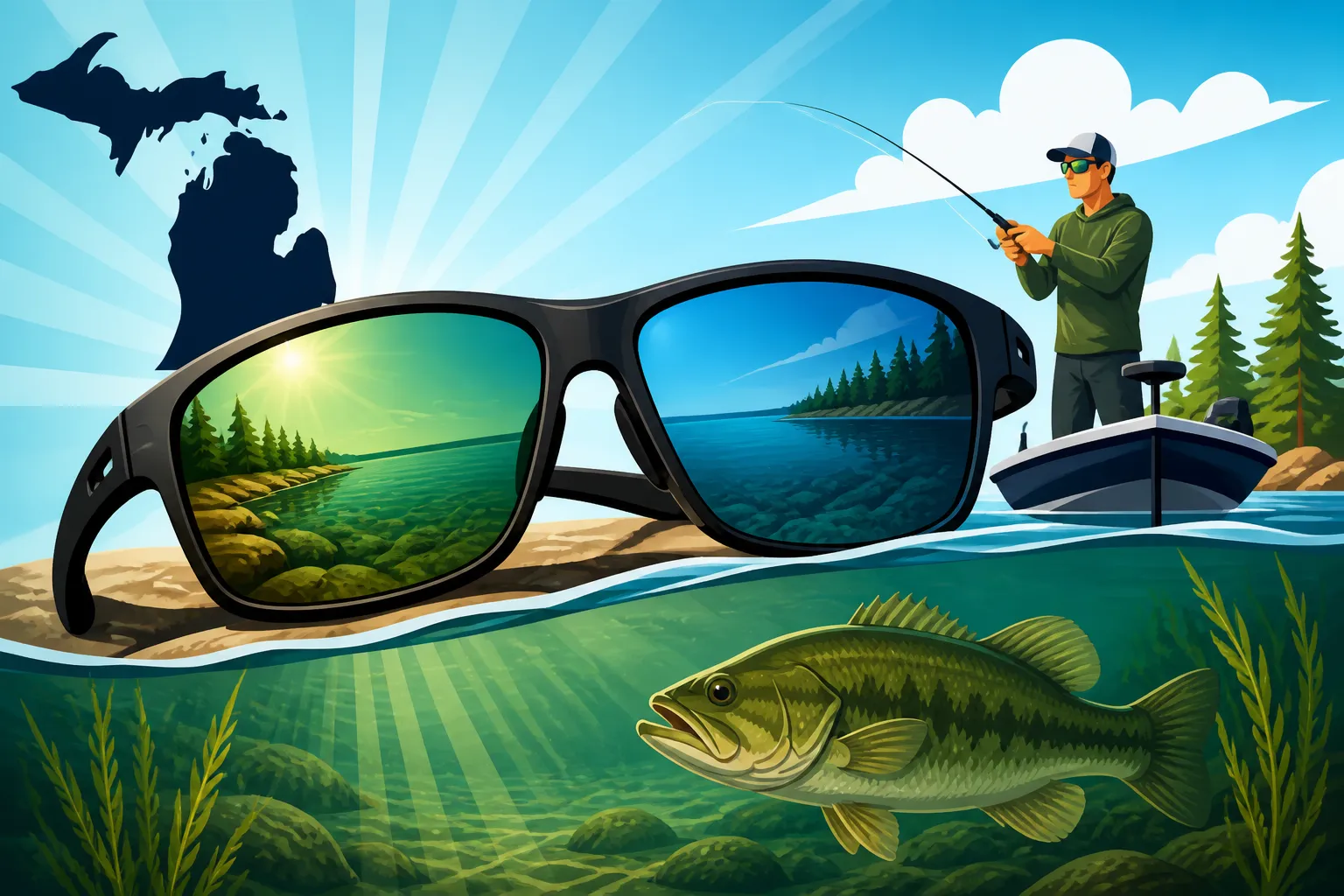
When you put on a good pair of polarized sunglasses, the immediate effect is often astonishing. The blinding glare on the water's surface simply disappears, allowing you to see objects, fish, and structure beneath the waves with incredible clarity. This isn't just a comfort feature; it's a tactical advantage that can dramatically increase your catch rate. You're no longer just casting blindly; you're actively hunting, watching how fish react to your lure, and identifying potential hotspots. For anyone serious about improving their fishing game in Michigan, whether on a vast lake or a small river, a truly polarized lens is an absolute must-have.
Lens Colors and Their Michigan Applications
The color of your polarized lenses isn't just a fashion statement; it plays a critical role in how well you see in different light conditions and water types. Different tints enhance contrast and manage light in unique ways, making some better suited for specific Michigan fishing scenarios. Choosing the right lens color can mean the difference between spotting a wary trout and casting blindly.
Let's break down some common lens colors and their ideal applications:
| Lens Color | Ideal Conditions | Michigan Application Examples |
|---|---|---|
| Gray/Smoke | Bright, sunny days; offshore | Excellent for open water on the Great Lakes (Lake Michigan, Lake Huron) when trolling for salmon and steelhead under a clear sky. Reduces overall brightness without distorting natural colors. |
| Amber/Brown | Variable light, cloudy days, shallow water, rivers | Boosts contrast in lower light conditions, making it easier to see structure and fish in stained or murky water. Great for river fishing on the Manistee or Muskegon, or exploring shallow bays on inland lakes. |
| Copper/Rose | Low light, overcast, dawn/dusk, sight fishing | Provides maximum contrast and depth perception, especially useful for spotting fish in challenging light. Perfect for stalking smallmouth in rocky clearings on Lake St. Clair or searching for brook trout in shaded streams. |
| Blue Mirror | Extremely bright, offshore, high glare | Often applied over a gray base, the blue mirror coating reflects intense light, reducing eye strain. Ideal for the brightest days on the wide-open waters of Lake Superior or when fishing offshore on Michigan's Great Lakes Fishing Guide. |
| Green Mirror | Medium light, inshore, diverse conditions | Typically over an amber/copper base, enhances contrast and cuts glare in a variety of environments. A versatile choice for everything from bass fishing on Houghton Lake to targeting pike in weed beds. |
Many experienced anglers carry multiple pairs or choose a versatile tint like amber or copper if they can only have one. For specific tasks like fly fishing for trout in a shaded Michigan stream, the contrast enhancement of copper can be invaluable. Conversely, if you're spending all day chasing salmon on Lake Michigan, the reduced eye fatigue from a gray lens with a blue mirror might be preferred. Think about where and when you fish most often, and pick a lens color that matches those typical conditions.
Material Matters: Durability and Clarity
The material your lenses are made from significantly impacts clarity, durability, and weight. In the rough-and-tumble world of fishing, where hooks fly and gear gets bumped around, robust lens materials are a big plus. You don't want your expensive sight fishing advantage to be ruined by a stray sinker or an accidental drop.
- Polycarbonate Lenses: These are the most common choice for fishing sunglasses due to their exceptional impact resistance. They are virtually shatterproof, which is a huge safety advantage when casting heavy lures or dealing with hooks. While generally clear, some cheaper polycarbonate lenses can suffer from slight optical distortion if not manufactured to high standards. They are also lighter than glass, making them comfortable for all-day wear. Many quality brands offer excellent polarized polycarbonate options that combine durability with impressive clarity.
- Glass Lenses: For the absolute highest optical clarity and scratch resistance, glass lenses are often considered the gold standard. They provide unparalleled distortion-free vision, which can be a huge benefit when you need to spot the most subtle movements under the water. However, glass lenses are heavier than polycarbonate and, while tough, can shatter or chip if dropped directly onto a hard surface. They also tend to be on the higher end of the price spectrum. If ultimate clarity is your top priority and you're mindful of care, glass can be a fantastic choice.
Regardless of material, look for lenses that have a good scratch-resistant coating. This is vital for maintaining clarity over time, as even minor scratches can become a frustrating distraction when trying to peer into the water. Regular cleaning with a microfiber cloth and lens cleaner, rather than your shirt tail, will help preserve any coating.
Finding the Right Fit and Features for Your Michigan Fishing Adventures
Once you understand the technical aspects of lenses, the next step is ensuring the sunglasses actually work for you. Comfort, coverage, and practical features are just as important as the polarization itself. After all, if they pinch your nose or constantly slip, you won't wear them, and they won't help you catch more fish.
Frame Styles and Coverage: Protecting Your Vision
The frame style and how much it covers your eyes are crucial for optimal performance and protection. When you're spending hours out on the water, you're not just dealing with glare from below; you're also battling sunlight from above and around the sides. Traditional, smaller fashion sunglasses often leave significant gaps, allowing light to sneak in and defeat the purpose of your polarized lenses.
- Wrap-Around Styles: These are typically the best choice for fishing. Wrap-around frames hug the contours of your face, providing excellent peripheral coverage. This design minimizes the amount of light that can enter from the sides, ensuring your eyes are fully shielded from glare and harsh UV rays. This is particularly important when Fishing From a Boat Without a License in Michigan or wading, where reflections can come from unexpected angles. Good coverage also helps protect your eyes from wind, spray, and even errant hooks, making your time on the water more comfortable and safer.
- Wider Temples: Frames with wider temple arms (the pieces that go over your ears) can further block side glare. Some models even feature integrated side shields, taking the protection to an even higher level. Consider how much time you spend in direct sunlight and on open water; the more exposed you are, the more coverage you'll appreciate.
Comfort and Retention: All-Day Wear on the Water
Fishing often involves long hours, dynamic movements, and exposure to the elements. Your sunglasses need to be comfortable enough to wear all day without becoming a distraction, and secure enough to stay on your face even when you're netting a feisty fish or leaning over the gunwale.
Look for lightweight frames, often made from durable nylon or composite materials, that won't feel heavy on your nose or ears. Rubberized nose pads and temple tips are fantastic features, as they help grip your skin, preventing the glasses from slipping when you sweat or get wet. Adjustable nose pieces can also be a godsend for finding that perfect, custom fit.
Beyond the glasses themselves, consider accessories for retention. A simple sunglass retainer strap (often called a "croakie" or "chums") can save your investment from an accidental dip in the lake. Many anglers wouldn't think of stepping into a boat or a river without one. When you're focused on the fishing, the last thing you want to worry about is your sunglasses tumbling into the water. Brands like Bass Pro Shops often have a wide selection of these essential accessories right alongside their eyewear.
Where to Find Your Perfect Pair
When it comes to purchasing fishing sunglasses, you have several excellent options, each with its own advantages. It often comes down to personal preference for trying things on versus convenience.
- Specialty Outdoor/Fishing Retailers: Stores like Bass Pro Shops are fantastic places to start. They typically have a dedicated eyewear section with knowledgeable staff who can explain the differences between models and help you try on various styles. You can feel the frames, test the fit, and often even step outside to see how different lens colors perform in actual sunlight. This hands-on approach is invaluable for ensuring comfort and fit, which are paramount for all-day wear. Plus, you can find a huge array of other gear, like the Best Tackle for Michigan Walleye Fishing, all in one trip.
- Online Retailers: Websites like Amazon offer an unparalleled selection of brands, styles, and price points. The convenience of shopping from home, coupled with detailed product descriptions and customer reviews, can help you narrow down your choices. While you can't physically try them on, many online retailers have generous return policies, allowing you to order a few pairs to test the fit and feel before committing. Just be sure to read reviews carefully regarding fit and perceived quality.
- Sporting Goods Stores: Larger sporting goods chains will also carry a selection of polarized sunglasses from various brands, often at competitive prices. They may not have the same depth of specialized fishing knowledge as a dedicated outdoor retailer, but they can still be a good option for finding reputable brands.
Ultimately, the best place to buy is where you feel most comfortable getting the right information and ensuring a good fit. Remember, you're investing in a piece of equipment that will enhance your fishing experience for years to come.
Caring for Your Investment: Making Your Fishing Sunglasses Last
Once you've found that perfect pair of polarized sunglasses, you'll want to protect your investment. Proper care isn't just about making them last; it's about maintaining their optical clarity, which is directly tied to their effectiveness on the water. A scratched, smudged lens is almost as bad as no polarized lens at all.
Cleaning and Storage: Essential Habits
The most common way sunglasses get damaged or lose their effectiveness is through improper cleaning. It's tempting to wipe them on your shirt, but doing so, especially when the lenses are dry, can grind tiny dirt and salt particles into the lens coating, causing irreparable scratches over time.
- Proper Cleaning Technique: Always rinse your lenses with fresh water first to remove any abrasive particles, especially after a day on the lake where salt spray or grit might be present. Then, use a dedicated lens cleaning spray or a drop of mild soap (like dish soap) and gently wipe them with a clean, soft microfiber cloth. Avoid paper towels or rough fabrics, as these can scratch. Always let them air dry or gently pat them dry with the microfiber cloth.
- Safe Storage: When you're not wearing your sunglasses, they should always be stored in a protective case. Most quality sunglasses come with either a hard case for maximum protection or a soft pouch that doubles as a cleaning cloth. Tossing them onto a boat deck, into a tackle box, or leaving them loose in a console can lead to scratches, bent frames, or worse. Make it a habit to put them back in their case immediately when you take them off.
Protecting from Scratches and Damage: Simple Precautions
Beyond cleaning and storage, a few simple habits can extend the life of your fishing sunglasses dramatically. These are common-sense measures that prevent the most frequent causes of damage.
- Avoid Placing Lenses Down: This might seem obvious, but it's a common mistake. Always lay your sunglasses with the lenses facing up if they're not in their case. This prevents direct contact with rough surfaces that can scratch the delicate lens coatings.
- Don't Leave Them in Hot Cars: Extreme heat, like that found inside a parked car on a sunny Michigan summer day, can actually damage lens coatings, warp plastic frames, or cause delamination in polarized lenses over time. Always take your sunglasses with you or store them in a climate-controlled area.
- Use a Retainer Strap: As mentioned before, a good retainer strap is cheap insurance. It keeps your glasses securely around your neck when you take them off and prevents them from falling into the water or onto hard surfaces when you're actively fishing. For river fishing, where one wrong step can send your gear downstream, it's particularly vital.
By treating your fishing sunglasses with the care they deserve, you're ensuring that your vision into Michigan's waters remains crystal clear for many seasons to come, helping you enjoy every moment on the water and, hopefully, land more fish!
Disclaimer
This article is for general informational purposes only and does not constitute professional advice. Laws, prices and regulations vary by location and change over time. Consult a qualified professional for guidance on your specific situation.