Best Technique for Pier Fishing Steelhead
There’s a special kind of thrill, and sometimes frustration, that comes with pier fishing for steelhead in Michigan. You’re standing out there, often with a biting wind or chilly spray, casting into what feels like an endless expanse of water, hoping to intercept one of these powerful, chrome-bright beauties as they stage for their spawning runs. It can feel like finding a needle in a haystack, but with the right approach and a bit of local know-how, you can significantly increase your chances of success. This comprehensive guide is going to walk you through the very best techniques for targeting steelhead from Michigan’s piers, turning those challenging conditions into opportunities for unforgettable battles.
Understanding Michigan's Steelhead Runs and Piers
Steelhead, which are essentially rainbow trout that migrate to the Great Lakes and then return to rivers to spawn, are truly magnificent fish. Their annual migrations are what bring them within casting distance of our beloved piers, but knowing when and where to intercept them is half the battle.
The Why and When of Pier Steelhead
Piers along Michigan's Great Lakes coastline, especially those near river mouths, become prime steelhead real estate during their migratory periods. These structures act as natural travel corridors and staging areas for steelhead preparing to enter their natal rivers or seeking cooler, oxygenated water. Think of them as aquatic rest stops or checkpoints.
The primary times to target steelhead from piers are during the fall run and the spring run.
- Fall Run: Starting typically in September and gaining momentum through October and November, steelhead begin to move in from the open lake, drawn by cooler water temperatures and the scent of spawning salmon eggs. While they might not be actively spawning yet, they're hungry and aggressive. This is a fantastic time for pier fishing, particularly after a good rain that raises river levels and discolors the water, which encourages fish to move closer to shore and into river mouths. For a deeper dive into this seasonal migration, check out our guide on Michigan's Fall Salmon Run Fishing, as steelhead often follow salmon into these areas.
- Spring Run: The true spawning run usually kicks off in March and continues through April and even into May, depending on water temperatures. As ice recedes and water warms, steelhead surge into rivers to spawn. Piers near these river mouths become hot spots as fish stage, waiting for the right conditions to enter. This is often when you'll find the biggest, brightest fish.
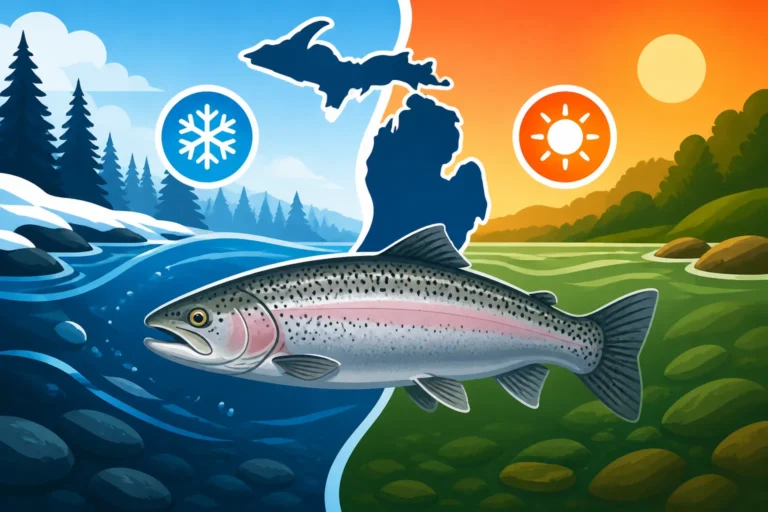
Water temperature is the critical factor. Steelhead are often most active in water temperatures ranging from the mid-30s to the low 50s Fahrenheit. Sharp drops in temperature, often caused by strong winds from specific directions, can push fish offshore, while stable or slowly rising temperatures can bring them in close. Keeping an eye on localized conditions and fishing reports (easily found through local tackle shops or online forums) can give you a significant edge. You can learn more about specific timing in our article on Michigan Steelhead Run Timing.
Reading the Water from a Pier
Pier fishing offers a unique vantage point that shore anglers often miss: elevation. From a pier, you can "read" the water differently, spotting subtle changes that indicate holding spots for steelhead.
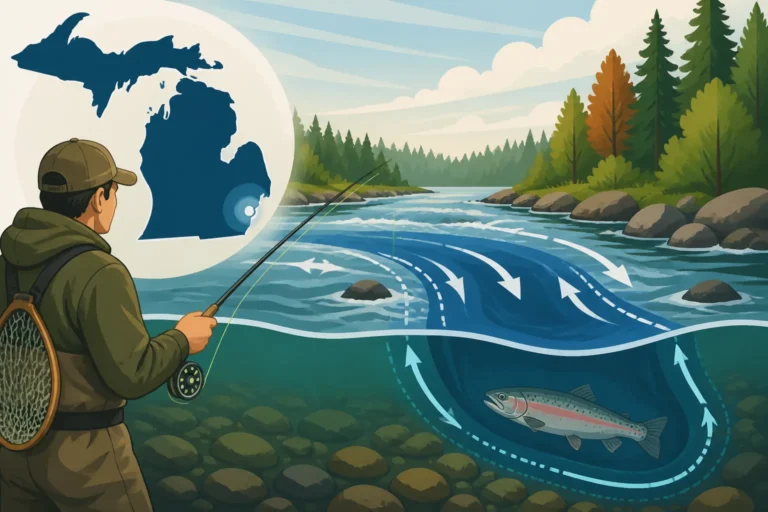
- Current Breaks and Eddies: Look for areas where the main current is disrupted by the pier pilings, rocky outcroppings, or sandbars. These create slack water pockets or eddies where fish can rest without expending much energy, waiting for food to drift by. Steelhead are ambush predators, and these current breaks are prime ambush points.
- Color Lines: Especially after a rain, you might notice distinct lines where murkier river water meets clearer lake water. Steelhead will often hold along these "color lines," using the turbidity for cover while still having access to cleaner water. These lines are also natural conveyer belts for bait and detritus.
- Depth Changes and Structure: While you can't see the bottom, you can often infer depth changes. Look for areas where the water looks darker, suggesting deeper water. Sometimes, you'll see visible structure like old cribbing, rocks, or even debris near the pier. These provide cover and food sources. Casting parallel to the pier, or fanning your casts to cover different depths and distances, is crucial. If there are other anglers, observe where they're catching fish; this can often point to a subtle seam or drop-off that you can't readily see.
It's a game of observation. Spend some time watching the water before you even make your first cast. Notice how the current behaves, where it slows down, and where it picks up. Look for any visible signs of baitfish or, even better, a steelhead rolling or jumping. These clues will help you decide where to focus your efforts.
Essential Gear for Pier Fishing Steelhead
Having the right tackle is non-negotiable when targeting a powerful fish like a steelhead from a pier. You need gear that can handle long casts, strong currents, and aggressive fights without faltering. Skimping on quality here can lead to heartbreak.
Rods, Reels, and Line Selection
The "meat and potatoes" of your setup directly impacts your casting distance, ability to control a fish, and overall fishing experience.
- Rods: For pier fishing, a longer rod is generally better. Think 9 to 12 feet, with a medium-heavy power and a fast action. The extra length allows for longer casts, especially critical when trying to reach distant feeding lanes or avoid the immediate pier structure. It also provides better line control, helping you steer a fish away from pilings and other obstacles. A longer rod also acts as a shock absorber, cushioning the powerful runs of a steelhead and preventing hook pulls. For more on rod choices, delve into Best Rod Length for Steelhead Fishing.
- Reels: A quality spinning reel in the 3000 to 4000 size range is a solid choice. It needs a smooth drag system, which is paramount when a steelhead decides to make a screaming run. Look for models with a good retrieve ratio and solid construction. Brands like Shimano, Daiwa, or Penn offer reliable options that can withstand the abuse of saltwater (or Great Lakes) environments. For specific recommendations, check out our guide on the Best Reel for Steelhead Fishing.
- Line: This is where things get a little nuanced.
- Mainline: Many anglers prefer 10-20 lb braided line for their mainline. Braid has no stretch, offering excellent sensitivity for detecting subtle bites and incredible strength for its diameter. Its thinness also helps with casting distance.
- Leader: Because braid is highly visible, you'll almost always want to tie on a fluorocarbon leader. Fluorocarbon is nearly invisible underwater, more abrasion-resistant, and has a similar refractive index to water. A 6-10 lb fluorocarbon leader, about 3-6 feet long, is usually sufficient. Connect your leader to your mainline with a strong knot like a FG knot or an Albright knot. For more details on line choices, refer to What Line Weight for Michigan Steelhead.
This combination gives you the best of both worlds: the strength and sensitivity of braid, and the stealth of fluorocarbon.
Terminal Tackle and Baits
This is where you get to customize your presentation to match the conditions and the steelhead's mood. Always have a variety on hand!
- Spawn Bags: These are often the go-to bait for steelhead. They mimic the eggs steelhead feed on. You can buy pre-tied spawn bags or make your own using mesh netting and cured salmon or trout eggs. Size matters; sometimes a dime-sized bag is key, other times a quarter-sized one is preferred.
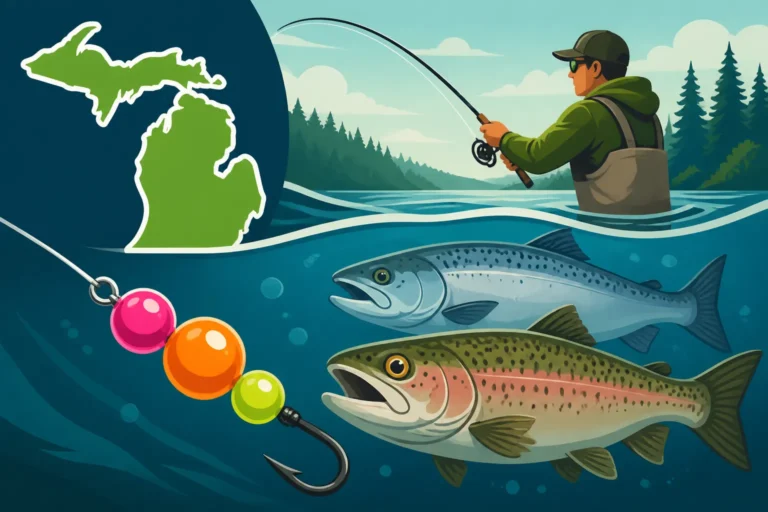
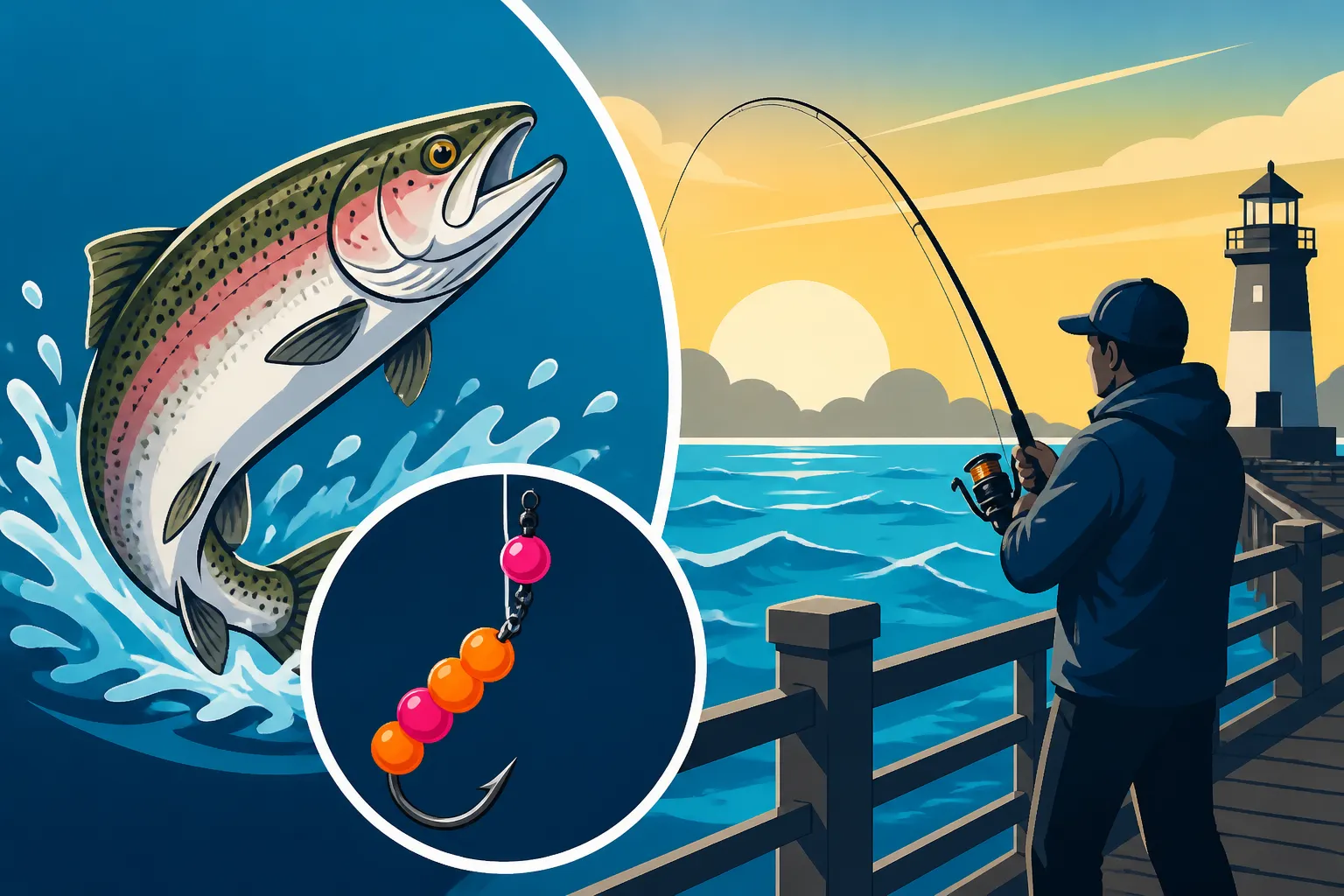
- Beads: Trout beads, typically made of plastic or glass, are another highly effective option. They are designed to imitate single salmon eggs. Rigged correctly, usually pegged about 1-2 inches above a small hook, they offer a very natural presentation. There's often a debate about what constitutes an artificial lure, and beads can sometimes be a point of discussion. For clarity, read our article on Is a Bead an Artificial Lure Under Michigan Trout Rules?. Many anglers find success with these, especially in clearer water.
- Jigs: Small marabou jigs or plastic grub jigs, tipped with a wax worm or minnow, can be deadly. Colors like pink, chartreuse, white, or black are often productive. The jig's action imitates wounded baitfish or insects, which can trigger an aggressive strike.
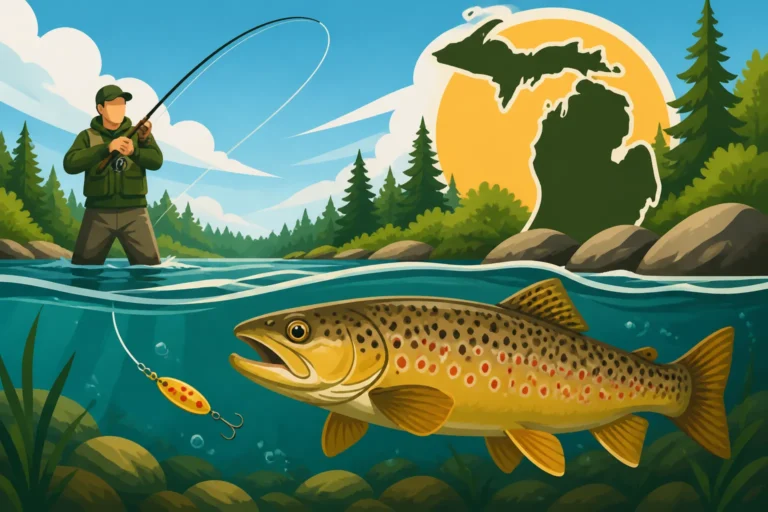
- Spoons and Wobblers: Casting spoons (like Little Cleos, Dardevles) or wobbling plugs (like Rapala Shad Raps or J-11s) can be very effective, especially in lower light conditions or when fish are aggressively feeding on baitfish. These lures cover water quickly and their flashy action can draw strikes from a distance. Look for chrome, gold, or bright colored options. You can find a vast selection of these on
Amazonif your local tackle shop doesn't have exactly what you're looking for. - Weights and Floats: You’ll need a selection of split shot and pencil weights for various rigging styles, along with slip floats (often called "bobbers") for float fishing. Slip floats are crucial as they allow you to fish at precise depths, which is often much deeper than a fixed bobber would allow.
Proven Techniques for Pier Fishing Steelhead
Now that you've got your gear sorted, let's talk about how to actually catch these elusive fish from a pier. Each technique has its time and place, and being versatile will increase your success.
Float Fishing (Bobber Fishing)
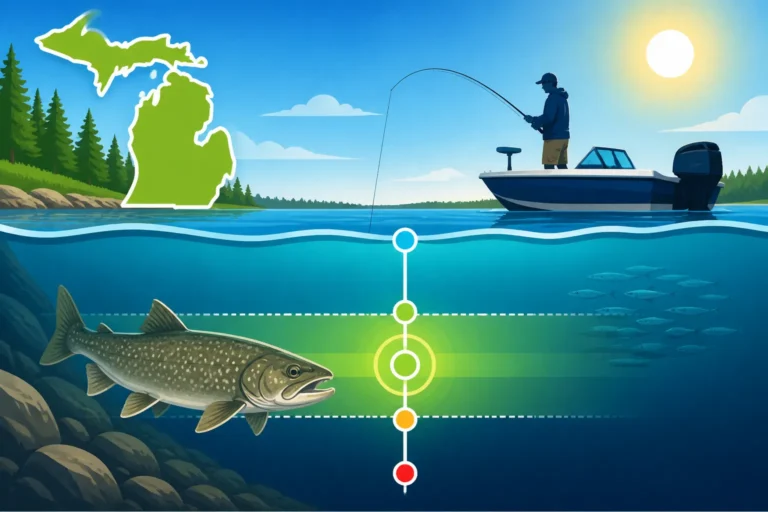
This is arguably one of the most popular and effective methods for pier fishing steelhead, especially when fish are staging in deeper water or along current seams. The goal is to present your bait naturally in the water column.
- Rigging: Start by threading your mainline through a slip knot (bobber stop), then a small bead, followed by your slip float. Below the float, tie on a swivel, and then your fluorocarbon leader. Attach your chosen bait (spawn bag, bead, or jig) to the end of the leader. Add enough split shot or pencil weight above the swivel to make your float stand up properly and drift naturally with the current without being pulled under. The key is to get your bait to drift at the same speed as the current, just above the bottom.
- Depth Setting: This is critical. You want your bait to be just above where the steelhead are holding, usually within a foot or two of the bottom. Use the slip knot to adjust your depth. If you're not getting bites, try adjusting the depth by a foot or so up or down. A good starting point is often to set it a few feet shallower than the estimated bottom depth and work your way down.
- Presentation: Cast upstream of where you expect fish to be and let your float drift naturally downstream through the target zone. Keep a slight bow in your line to maintain contact with the float without impeding its drift. Watch your float intently; any hesitation, dip, or sudden movement could be a bite. When it goes down, set the hook! Float fishing is excellent for covering a lot of water and presenting bait in a very natural, enticing way. For a more detailed look at this method, our guide on How to Float Fish for Steelhead provides excellent insights.
Casting and Retrieving Lures
When steelhead are actively chasing baitfish or you want to cover larger areas, casting and retrieving spoons, spinners, or plugs can be incredibly effective.
- Spoons: Cast your spoon out, let it sink to your desired depth (counting down can help with this), and then retrieve it with a steady or slightly erratic pace. Vary your retrieve speed and add occasional twitches or pauses to mimic a wounded baitfish. Chrome, silver, or gold spoons with a bit of orange or red can be very effective, especially on bright days. Brands like Kastmaster or Little Cleo have a proven track record. Many anglers stock up on a variety of colors and sizes through
Amazonto be prepared for any water conditions. - Spinners: In shallower areas or when fish are more aggressive, inline spinners (such as Mepps or Panther Martin) can work wonders. Cast them out and retrieve them steadily enough to keep the blade spinning. Again, varying the retrieve and adding subtle pauses can entice a strike.
- Plugs/Wobblers: These are often effective for mimicking minnows. Cast them out, let them dive, and retrieve with a consistent retrieve or a "crank and pause" motion. Some anglers will troll these from a boat, but from a pier, casting and retrieving works just fine. The dive depth of the plug is important; match it to the depth you expect fish to be holding.
The key to lure fishing is experimentation. Try different lures, colors, and retrieve speeds until you find what the fish are responding to.
Bottom Bouncing/Drift Fishing from a Pier
While often associated with river fishing, a modified version of bottom bouncing or drift fishing can be applied from a pier, especially in areas with a moderate current. This technique involves letting your bait tumble along the bottom, mimicking natural food items.
- Rigging: This usually involves a weight (often a slinky weight or a walking sinker) attached to a three-way swivel, with a leader extending to your hook and bait (spawn bag, bead, or piece of worm). The key is to use just enough weight to maintain intermittent contact with the bottom without getting continuously snagged.
- Current Considerations: Cast slightly upstream and let the current carry your bait along the bottom. You should feel your weight lightly tapping the bottom as it drifts. This "feel" is crucial for detecting bites, which often feel like a subtle tap or extra weight.
- Feeling for Bites: Because you’re in constant contact with the bottom, discerning a bite from a snag can be tricky. A steelhead bite often feels like a distinct thump or a sudden, heavy pull. If you feel anything out of the ordinary, set the hook with a swift, upward motion. This technique is often highly effective when fish are tight to the bottom in deeper channels or scour holes around the pier. For more on the concept, our guide on What Is Drift Fishing for Steelhead covers river applications, which can be adapted.
Strategies for Success and Safety
Beyond the specific techniques, there are overarching strategies and safety considerations that can make or break your pier fishing experience.
Timing and Conditions
Being at the right place at the right time with the right conditions is often the difference between a memorable day and a slow one.
- Best Time of Day: Early morning (dawn) and late evening (dusk) are often the most productive times for steelhead. These low-light conditions make steelhead feel more secure, and they are typically more active. During these periods, fish tend to move closer to shore and become more aggressive. Midday can be tough, especially on clear, sunny days.
- Weather and Water Conditions: Overcast days with a light chop on the water can be excellent, as the reduced light penetration helps conceal fish and breaks up their silhouette. Fresh onshore winds can push warmer surface water (and baitfish) towards the pier, sometimes triggering a bite. Conversely, strong offshore winds can push fish out. A slight increase in water flow from nearby rivers, often after a rain, can trigger significant pushes of steelhead. When rivers are blown out and muddy, the pier areas right at the river mouth where the dirtier water mixes with the clearer lake water can be phenomenal.
- Cold Water Considerations: Michigan winters mean cold water. During colder periods, fish might be lethargic, requiring slower presentations and smaller baits. Ice on the pier can also pose a significant safety hazard. Always check conditions before heading out, and remember that Best Time to Fish for Steelhead in Michigan will often highlight these seasonal and daily nuances.
Pier Etiquette and Safety
Pier fishing can sometimes be a crowded affair, and safety should always be your top priority.
- Sharing Space: Piers are public spaces, and you'll likely be sharing them with other anglers. Be mindful of casting lines, avoid crowding, and give fellow anglers ample space. If you're fishing with multiple rods, ensure they don't interfere with others.
- Hooking a Fish: When you hook a fish, it's customary to let other anglers know so they can reel in their lines and avoid tangles. Once you land a fish, be quick and efficient in unhooking or dispatching it, and then clear the area to allow others to continue fishing.
- Landing Fish: A long-handled landing net is an absolute must-have for pier fishing. You'll be high above the water, and trying to hoist a powerful steelhead up by the line is a surefire way to break your line or injure the fish. Look for nets with telescoping handles that extend 8-10 feet or more. Our guide on the Best Net for Landing Steelhead can help you pick the right one.
- Safety Gear: Piers can be slippery, especially when wet or icy. Wear appropriate footwear with good grip. In colder weather, dress in layers and consider waterproof outer shells. A personal flotation device (PFD) is always a good idea, especially if you're venturing out on less-protected areas of a pier or during rough conditions. A simple pair of polarized sunglasses from
Amazoncan also significantly improve your ability to spot fish and identify structure, while also protecting your eyes from stray hooks. Always be aware of your surroundings, especially large waves or slippery surfaces.
By combining the right gear, understanding the steelhead's movements, and employing these proven techniques with a healthy dose of patience and safety, you'll be well on your way to experiencing the incredible fight of a Michigan steelhead from the piers. Always remember to consult the latest Michigan Great Lakes Fishing Regulations Guide to ensure you're compliant with all rules and limits.
Disclaimer
Fishing regulations and conditions can change rapidly. Always consult the latest Michigan Department of Natural Resources (DNR) fishing guide before heading out on the water. This guide is for informational purposes only and does not constitute professional advice. Please fish responsibly and prioritize safety.