Best Month to Catch Chinook Salmon in Michigan
There's nothing quite like the electrifying pull of a Chinook salmon, often called "King salmon," on your line in Michigan. These powerful, silver torpedoes are a dream for many anglers, but knowing when to target them can feel like cracking a secret code. You might spend hours on the water during the wrong time, feeling frustrated when the bite just isn't there. This guide is here to unravel the mystery, pinpointing the best months and strategies to maximize your chances of catching these magnificent fish in Michigan's abundant waters.
The Thrill of the King: Understanding Chinook Salmon Seasons in Michigan
Michigan's Great Lakes, particularly Lake Michigan, are world-renowned for their Chinook salmon fishery. These fish are not native to the Great Lakes; they were introduced in the late 1960s to control invasive alewife populations and quickly became a prized sportfish. Their life cycle is a fascinating journey that dictates when and where anglers can find them, transitioning from offshore feeding frenzies to aggressive river spawning runs. Understanding this annual migration is key to successful King salmon fishing.
The Spring Fling: Early Season Opportunities
As the ice retreats and water temperatures begin their slow climb in late April and May, Chinook salmon start to become active. This early season can be incredibly rewarding, though it often requires specific techniques and a bit of patience. The salmon, fresh out of their winter doldrums, are primarily focused on feeding. They're trying to pack on weight, and while they might not be the massive brutes of the fall run, they are typically bright, chrome-colored, and fight with incredible vigor.
During this time, you'll usually find them deeper in the water column, often associated with temperature breaks and baitfish schools. Trolling offshore is the predominant method, with boats targeting depths anywhere from 40 to 100 feet of water, often with lines set much deeper. The fish are scattered, so covering a lot of water is essential. Anglers often experiment with different lure colors and sizes, as the salmon's preferences can change day-to-day. While many think of salmon fishing as a summer pursuit, the knowledgeable spring angler can often find consistent action, sometimes with less competition on the water.
Summer's Bounty: Peak Offshore Trolling Action
When June rolls around and into August, this is arguably the prime time for offshore trolling for Chinook salmon across Michigan's Great Lakes. The fish have settled into their summer patterns, following vast schools of baitfish like alewives, rainbow smelt, and emerald shiners. The thermocline – a distinct layer in the water where temperature changes rapidly – becomes incredibly important, as baitfish and salmon often congregate along its edges.
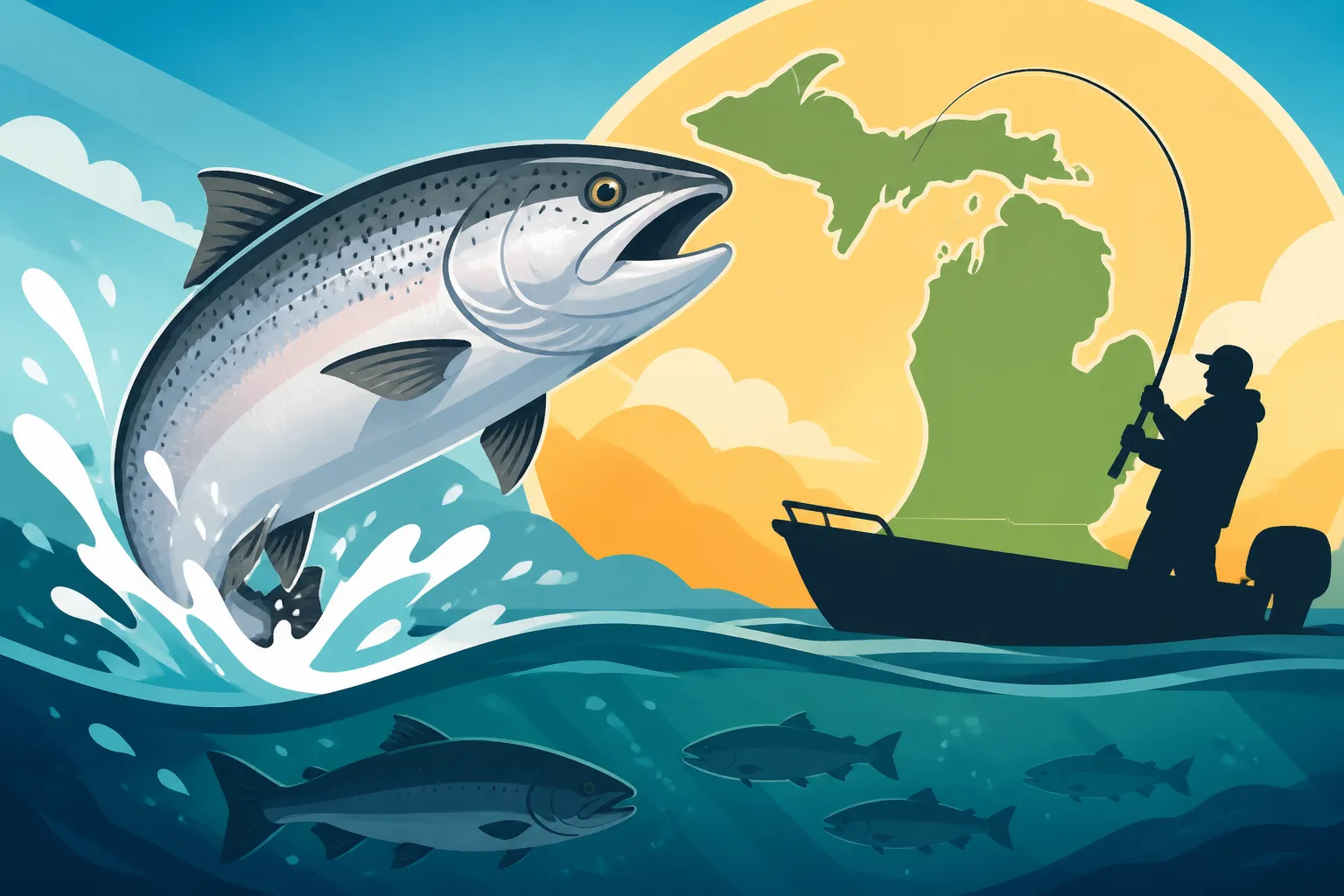
Anglers spend considerable time mapping this thermocline with their fish finders. Chinook salmon will be found throughout the water column, from just below the surface down to over 100 feet deep, depending on the lake, baitfish location, and daily conditions. Popular Michigan port cities like Ludington, Frankfort, and Manistee become bustling hubs, with charter boats and private anglers heading out before dawn. This is when the fish are at their fattest and strongest, putting on incredible aerial displays when hooked. Lake Michigan especially shines during these months, offering incredible opportunities for those prepared to troll deep and wide. Effective Trolling for Chinook Salmon on Lake Michigan often involves a spread of lines at various depths using downriggers, Dipsy Divers, and lead core lines, presenting a buffet of spoons and flasher-fly combinations.
The Grand Finale: Fall Spawning Runs and River Access
While summer offers fantastic trolling, the fall is when Chinook salmon complete their life cycle, returning to the rivers where they were stocked or hatched to spawn. This period, roughly from late August through October, presents a completely different, yet equally exhilarating, fishing experience, often drawing anglers from across the country.
August into September: Staging in Nearshore Waters
As August progresses and September begins, a noticeable shift occurs. The mature Chinook salmon, now heavy with eggs and milt, begin their migration from the deep offshore waters towards the mouths of Michigan's major salmon rivers. They "stage" in the cooler, shallower nearshore waters of the Great Lakes, waiting for the right conditions—usually a drop in water temperature or significant rainfall to raise river levels—to begin their push upstream.
During this staging period, salmon are still aggressively feeding, though their focus gradually shifts towards reproduction. They are vibrant, chrome-bright, and at their absolute peak in terms of size and fighting ability. This is a fantastic time for pier fishing, as salmon move close to shore, and for those who prefer to continue trolling but closer to river mouths. Harbors and breakwalls in places like Grand Haven, Muskegon, and St. Joseph become hotspots. Anglers casting large spoons or body baits from shore or small boats can intercept these powerful fish as they patrol the nearshore areas.
September and October: The Iconic River Runs
Once the salmon commit to their upstream journey, Michigan's rivers transform into a true angler's paradise. The Michigan's Fall Salmon Run Fishing is legendary. The Manistee River, Pere Marquette River, and the Little Manistee River, among others, fill with thousands of migrating Chinook. The fish, though beginning to darken in color as their bodies change for spawning, remain incredibly powerful.
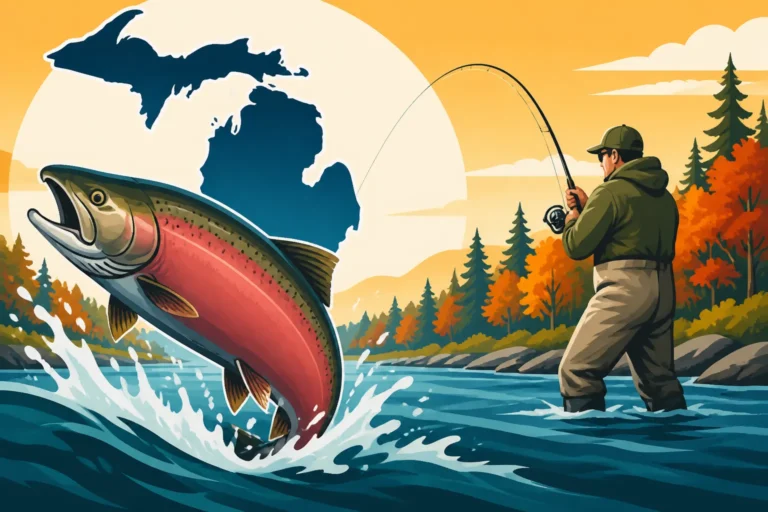
River fishing for Chinook requires different tactics. Drift fishing with spawn bags or beads under a float is incredibly effective, mimicking natural salmon eggs. Casting larger spoons, crankbaits, or even fly fishing with oversized streamers can also entice a strike from an aggressive King guarding its territory. This is an incredibly physical form of fishing, often involving wading in swift currents and battling powerful fish in tight quarters. Many anglers consider a big, fall-run river King to be the ultimate freshwater trophy. Just be mindful of local Michigan Fishing Regulations Every Angler Should Know as specific river rules can vary, and responsible catch and release practices are crucial, especially for wild-spawned fish.
Great Lakes Breakdown: Regional Hotspots and Timing
Michigan boasts an incredible diversity of fishing opportunities across its four Great Lakes. While Chinook salmon are present in several, some lakes and their specific regions are undeniably more productive than others.
Lake Michigan: The King Salmon Stronghold
Without a doubt, Lake Michigan is the premier destination for Chinook salmon fishing in Michigan. Its vast, deep waters and abundant baitfish populations provide the ideal habitat for Kings to thrive. The vast majority of Michigan's Chinook salmon harvest comes from this lake.
- Spring (May-Early June): Early season fish are often found off southern ports like St. Joseph and Holland, but also starting to show up further north near Grand Haven and Muskegon. Target temperature breaks and deep water.
- Summer (June-August): This is peak season across the entire western shoreline. Major ports like Ludington, Frankfort, and Manistee are renowned for their incredible summer fishing. The key is finding the thermocline and baitfish schools, which can be anywhere from 60 to 180 feet of water. Often, the best fishing occurs within 10 miles of shore, but sometimes the Kings push further out. Anglers rely heavily on electronics to find these fish.
- Fall (Late August-October): The staging and river runs dominate this period. The Grand River (Grand Haven), Manistee River, Pere Marquette River, and Betsie River are prime spawning destinations. Piers and harbor mouths along the coast become bustling spots as salmon gather before entering the rivers.
For anglers looking to get into serious King salmon action, Lake Michigan is the place to be. The sheer number of fish and the opportunities for trophy-sized specimens are unmatched. You might even want to check out the Michigan's Great Lakes Fishing Guide for a broader perspective on what these incredible waters have to offer.
Lake Huron and Lake Superior: Niche but Rewarding
While Lake Michigan holds the crown, Lake Huron offers some excellent, though often more localized, Chinook salmon opportunities. Lake Superior, due to its colder temperatures and different ecosystem, has a much smaller, almost negligible, Chinook population that is not typically targeted.
- Lake Huron:
- Summer (July-August): The waters of northern Lake Huron, particularly around Thunder Bay near Alpena and the Straits of Mackinac, can produce good numbers of Chinook salmon during the summer. They tend to follow baitfish schools here as well. Saginaw Bay, while famous for walleye, sometimes produces Kings near its mouth.
- Fall (September-October): Similar to Lake Michigan, fall sees Chinook staging and running into rivers like the Thunder Bay River. These runs are generally smaller in scale compared to Lake Michigan's behemoth runs, but still offer exciting river fishing. The Atlantic Salmon on Lake Huron are also a popular target in these areas during the summer months.
- Lake Superior: Chinook salmon are very rare in Lake Superior. The focus here is overwhelmingly on lake trout, coho salmon, and brook trout. Anglers targeting salmon in Lake Superior are usually after coho.
For those dedicated to finding Chinook, Lake Michigan is the clear choice. However, if you're in the Lake Huron area and keep an eye on local reports, you might just stumble upon some fantastic King salmon action.
Gear Up for Kings: Essential Tackle and Techniques
Catching Chinook salmon, whether offshore or in a river, demands robust gear and refined techniques. These fish are notorious for their powerful runs and head shakes, so being under-gunned is a recipe for heartbreak.
Trolling for Open Water Kings
When you're out on the vast expanse of the Great Lakes, covering water and presenting your lures at the right depth are paramount. This is where specialized trolling gear comes into play.
- Rods and Reels: You'll want sturdy, medium-heavy to heavy action trolling rods, typically 8 to 10 feet long, paired with robust line-counter reels. These reels are crucial for knowing exactly how much line you have out, which translates to your lure's depth. Brands like Daiwa, Shimano, and Penn offer excellent options.
- Line: Main lines are usually 20-30 lb monofilament or braid, often with a fluorocarbon leader for stealth. The choice depends on the specific setup (e.g., braid for downriggers, mono for lead core).
- Downriggers: These are essential for precisely presenting lures at specific depths, especially when the fish are deep. Systems like Cannon or Scotty are popular choices. You can dive deeper into Downriggers for Michigan Great Lakes Trolling to understand their operation.
- Planer Boards: For spreading lines out wide from the boat, covering more water. Offshore Tackle and Church Tackle are widely used.
- Lures: Spoons are king for Chinook. Popular brands include Dreamweaver, Michigan Stinger, and Warrior Lures. Colors vary by water clarity and sunlight, but metallic colors (silver, copper, gold), greens, blues, and glow patterns are often effective. Flasher-fly combinations, which create a "schooling" effect, are also deadly. You can find a vast array of these lures on Amazon, making it easy to stock up before your trip.
Success in offshore trolling often comes down to experimentation – varying speeds, depths, and lure combinations until you find what the fish are hitting. A diverse tackle box, packed with different colors and sizes of spoons and flashers, can make all the difference.
River Fishing Tactics for Aggressive Salmon
Once salmon enter the rivers, the game changes entirely. The focus shifts from covering vast distances to precise presentations in current, often in much shallower water.
- Rods and Reels: For river fishing, a medium-heavy spinning or baitcasting setup is common, often with rods between 7 and 9 feet. Many dedicated river anglers use longer "drift rods" (10-13 feet) for better line control when float fishing, or centerpin setups, which allow for incredibly natural, long drifts.
- Line: Strong braided mainline (20-30 lb) with a fluorocarbon leader (10-20 lb) is standard. For centerpin setups, lighter mono is often preferred for its drift properties.
- Baits and Lures:
- Spawn Bags: These mesh bags filled with cured salmon or trout eggs are incredibly effective, mimicking the natural food source.
- Beads: Small, brightly colored plastic or glass beads, often rigged to float just above a hook, imitate single salmon eggs.
- Spoons: Larger, heavier casting spoons in bright or natural colors can trigger aggressive strikes.
- Crankbaits/Plugs: Diving crankbaits that wobble and dive can be very effective, especially for fresh-run fish.
- Techniques:
- Drift Fishing: Using a float or bottom-bouncing rig to drift bait naturally downstream.
- Casting: Targeting runs, pools, and structure with spoons or crankbaits.
- Fly Fishing: Using heavy sink-tip lines and large, weighted streamers or egg patterns.
When fishing in rivers, especially during the fall run, practicing proper How to Catch and Release a Muskellunge techniques is vital, as is the use of appropriate Best Rods and Reels for Michigan Fishing for the task. Many river-run salmon are caught for sport and then released, particularly if they are wild-spawned or already dark and nearing the end of their life cycle. A good pair of waders and boots will also be essential if you plan to wade the rivers. You can easily find high-quality waders and other river fishing essentials on Amazon, ensuring you're ready for the chilly waters.
Michigan offers fantastic Chinook salmon fishing for much of the open water season, but the period from June through October generally represents the absolute peak. Whether you prefer the serene solitude of offshore trolling or the adrenaline-pumping action of river combat, understanding the salmon's annual journey will put you in the best position for success.
Michigan Chinook Salmon Peak Season Summary
| Season / Method | Best Months | Primary Location | Typical Fish Activity | Key Techniques |
|---|---|---|---|---|
| Spring Offshore Trolling | Late April – Early June | Deep water, temperature breaks in Lake Michigan | Post-winter feeding, scattered fish | Deep trolling, spoons |
| Summer Offshore Trolling | Mid-June – Mid-August | Lake Michigan (all ports), Northern Lake Huron | Aggressive feeding on baitfish, active | Trolling with downriggers, spoons, flasher-flies |
| Nearshore Staging | Late August – Early September | Lake Michigan river mouths, harbors, piers | Accumulating before river entry, still feeding | Nearshore trolling, casting spoons, pier fishing |
| Fall River Run | September – October | Major Michigan salmon rivers (Manistee, PM, Betsie) | Spawning migration, aggressive but darkening fish | Drift fishing (spawn, beads), casting spoons/crankbaits, fly fishing |
Final Thoughts and Further Resources
Chasing Chinook salmon in Michigan is an experience that hooks anglers for life. From the moment you feel that first violent strike to the intense battle to bring a King to the net, it's truly unforgettable. Remember to always have your valid Michigan Fishing License Guide for Residents and Nonresidents before you head out, and stay informed about current fishing reports and regulations from the Michigan Department of Natural Resources (DNR).
Whether you're planning a trip during the summer trolling peak or aiming for the intense fall river runs, being prepared with the right knowledge and gear will significantly enhance your chances of success. Good luck out there, and may your lines be tight!
Disclaimer
Fishing conditions, regulations, and fish behavior can change rapidly. This guide provides general information and recommendations. Always consult the latest Michigan Department of Natural Resources (DNR) fishing regulations and local advisories before heading out on the water. Ensure you have all required licenses and safety equipment. The author and publisher are not responsible for any incidents or losses incurred.