Winter Steelhead Run in Michigan Rivers
The biting cold and the stark beauty of a Michigan winter can often feel like a deterrent to many anglers, but for those who know, it's a secret season. Many folks hang up their rods once the leaves fall, missing out on some of the most challenging yet rewarding fishing opportunities of the year. This guide is dedicated to unraveling the mysteries of the winter steelhead run in Michigan rivers, offering insights, techniques, and preparation tips to help you embrace the chill and land that chrome beauty.
Understanding the Winter Steelhead Run
When we talk about steelhead in Michigan, we're really talking about rainbow trout that have migrated to the Great Lakes and then return to our rivers to spawn. While many associate "steelhead runs" with the vibrant chaos of spring and fall, the winter run is a unique, often overlooked phenomenon that holds its own special allure. It's a time of quiet solitude on the river, where patience and precision are rewarded.
Defining the Winter Run Phenomenon
The winter steelhead run isn't as defined by a distinct, massive push of fish like the fall or spring runs. Instead, it's more of a gradual, sustained presence of fish in the rivers. These are typically fall-run steelhead that have moved into the rivers, perhaps spawned, and are now holding over, or fish that are trickling in from the Great Lakes throughout the colder months. They might be resting in deeper pools, behind structure, or in slower currents, conserving energy in the frigid water. The exact timing can vary, but generally, the winter run picks up after the initial frenzy of the fall run subsides, usually from late November through February, before the larger push of spring fish begins. Understanding this subtle pattern is key to successful winter angling.
Factors Influencing the Winter Migration
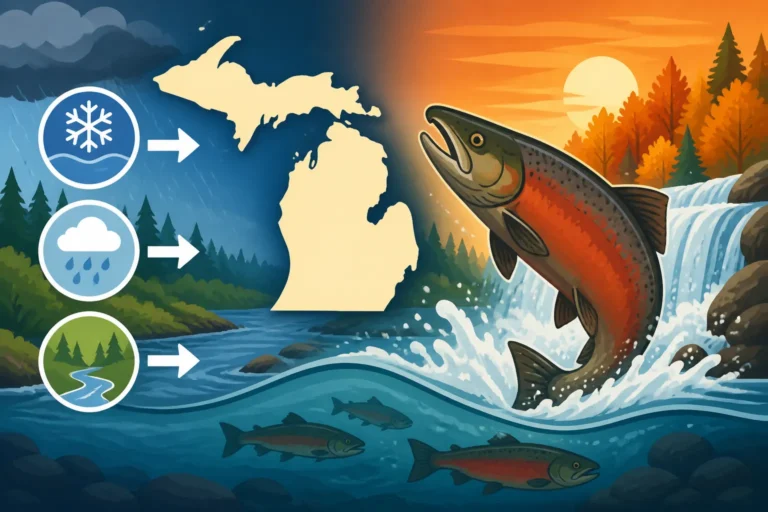
Several factors dictate the movement and behavior of winter steelhead. Water temperature is paramount; as river temperatures drop below 40 degrees Fahrenheit (around 4-5 degrees Celsius), steelhead become less active. They won't exert energy unnecessarily, so they'll seek out thermal refuge and slow down their metabolism. Snowmelt and rain can cause temporary spikes in water levels and clarity, sometimes triggering a fresh push of fish from the lakes, or simply changing where existing fish decide to hold. River conditions like clarity are also critical; extremely clear water makes fish skittish, while slightly stained water can offer comfort and better concealment for anglers. Oxygen levels remain stable in cold water, which is good for the fish, but their metabolic rate is lower, meaning they're not feeding as aggressively as they might in warmer months.
Key Differences from Fall and Spring Runs
Compared to the boisterous fall and spring runs, winter steelhead fishing demands a different mindset and approach. The fish are less aggressive, their strikes are often more subtle, and they're typically concentrated in specific, deeper holding areas. During the fall run, you might find fish aggressively chasing baits as they move upstream to stage for spawning. In spring, especially as water temperatures rise, fish become much more active, and post-spawn "dropbacks" are often eager to feed. Winter, however, is a game of finesse and stealth. The crowds are also thinner, offering a peaceful, solitary experience. You'll spend more time scouting, patiently working prime lies, and less time navigating other anglers. For a broader look at the annual movements, check out our guide on Michigan Steelhead Run Timing.
Prime Michigan Rivers for Winter Steelhead
Michigan is blessed with an abundance of coldwater rivers flowing into the Great Lakes, many of which host impressive steelhead runs. While some rivers are renowned for their fall or spring pushes, a select few truly shine during the frosty winter months, offering consistent opportunities for dedicated anglers.
Lower Peninsula River Hotspots
The Lower Peninsula boasts several premier rivers for winter steelhead. The Manistee River is perhaps one of the most famous, with a significant run that sees fish entering throughout the fall and holding over deep into winter. Anglers often target the stretches below Tippy Dam. The Muskegon River is another powerhouse, known for its consistent winter fishery, particularly in the lower sections closer to Lake Michigan. Both rivers offer extensive public access and a variety of holding water, from deep bends to slower runs. The Pere Marquette River, a federally designated wild and scenic river, is a fantastic option, though often requiring more specialized fly-fishing techniques due to its clearer, more technical waters. Further south, the Grand River near Grand Rapids and the St. Joseph River also see winter steelhead, especially after significant rainfall or slight warm-ups that encourage movement. These rivers, with their diverse bottom structures and varying flows, create ideal winter sanctuaries for these hardy fish.
Upper Peninsula Opportunities
While perhaps not as widely publicized as their Lower Peninsula counterparts, several Upper Peninsula rivers provide excellent winter steelhead opportunities, often with even less angler pressure. Rivers like the Carp River (near St. Ignace) or the Two Hearted River (immortalized by Hemingway) can hold good numbers of fish, though access can be more challenging due to deeper snow and remote locations. The fishing here is for the truly adventurous and self-sufficient angler, offering unparalleled solitude. The cold, stable temperatures of the Upper Peninsula can sometimes mean that fish move into rivers earlier and hold longer, presenting a unique, extended winter season for those willing to brave the elements. Always be sure to check local regulations and ice conditions, which can be more extreme up north.
Navigating Public Access Points
Accessing winter steelhead rivers often requires a bit more effort. Snow-covered roads, icy trails, and frozen parking areas are common. Always prioritize safety and consider purchasing a sturdy pair of traction devices for your boots – something you can easily find on Amazon – to prevent slips on slick banks. Many state-owned public land parcels, state game areas, and designated fishing access sites provide legal entry. It's always wise to consult the Michigan DNR website or local fishing maps for specific access points. Local bait shops are also invaluable resources for up-to-date conditions and specific spots that might be fishing well. Be mindful of private property boundaries and respect landowner rights; venturing onto private land without permission can lead to fines and loss of access for everyone. Familiarize yourself with all rules by reading up on Michigan Fishing Regulations Every Angler Should Know.
Essential Gear for Winter Steelhead Fishing
Winter steelhead fishing isn't just about bundling up; it's about having the right tools for the job. Cold temperatures can quickly turn a minor inconvenience into a major problem if your gear isn't up to snuff. Investing in quality equipment that performs in freezing conditions will make your day safer, more comfortable, and ultimately more successful.
Rods, Reels, and Line Choices
For winter steelhead, a sensitive yet powerful rod is crucial. Many anglers opt for a longer spinning or casting rod, typically 9 to 11 feet in length, with a medium-light to medium action. This length helps with line control, mending, and cushioning the fight of a powerful fish on lighter lines. Rods designed specifically for float fishing or drift fishing are ideal. A good quality reel with a smooth drag is non-negotiable, as cold conditions can make cheap drags sticky. Look for reels with larger arbors that help manage line memory in the cold. A 2500 to 4000 size spinning reel is a popular choice.
When it comes to line, a high-visibility monofilament or fluorocarbon main line in 8-10 lb test is common, often paired with a lighter fluorocarbon leader (6-8 lb test) for stealth. Fluorocarbon is especially good in clear winter water due to its low visibility and abrasion resistance. Remember that ice can form on your guides and line, so choose a line that handles cold well and carry a small bottle of guide de-icer.
Terminal Tackle and Baits
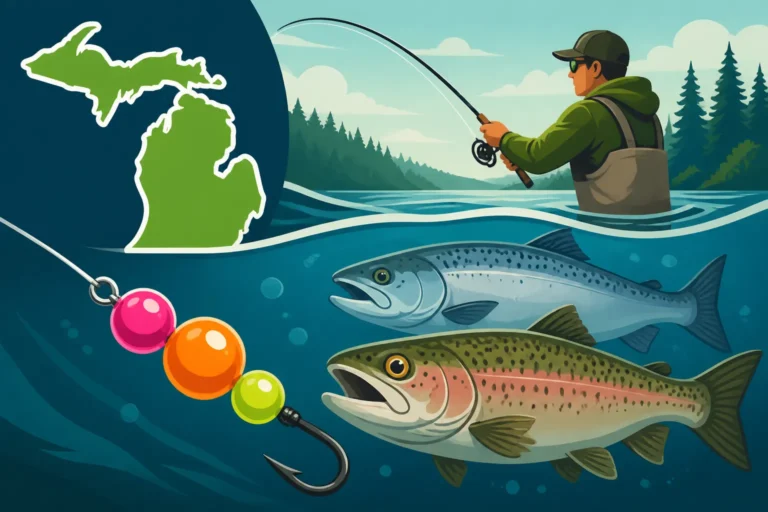
The subtle nature of winter steelhead bites demands small, natural presentations. Spawn bags are a perennial favorite, typically tied with cured salmon or steelhead eggs. Different colors (orange, pink, chartreuse) and sizes can be effective depending on water conditions. Beads, mimicking single salmon eggs, are incredibly popular, especially in clear water. Pair them with small, sharp hooks (size 10-14) and use enough split shot to get your offering to the bottom without snagging excessively. For those who prefer artificial lures, small jigs tipped with wax worms, maggots, or soft plastic baits can also tempt sluggish steelhead. The key is to keep your presentation natural and subtle, allowing it to drift freely with the current. This style of fishing often uses specific gear, which you can read more about in Bead Fishing for Trout and Salmon.
| Gear Type | Recommended Specification | Key Winter Consideration | Common Use Case |
|---|---|---|---|
| Rod | 9-11 ft, Medium-Light to Medium action | Length aids line control, sensitivity for subtle bites | Float fishing, drift fishing |
| Reel | 2500-4000 series, smooth drag, large arbor | Prevents sticky drag in cold, reduces line memory | All winter river techniques |
| Main Line | 8-10 lb Monofilament or Fluorocarbon, hi-vis (optional) | Handles cold, visibility for bite detection | Connects reel to leader system |
| Leader | 6-8 lb Fluorocarbon | Low visibility, abrasion resistance in clear, cold water | Stealth presentation to wary fish |
| Terminal Tackle | Small hooks (size 10-14), split shot, swivels | Matches small baits, allows natural drift | Attaching baits, achieving proper drift weight |
| Baits | Spawn bags, beads, small jigs, wax worms, maggots | Natural presentation, subtle appeal to less active fish | Attracting winter steelhead |
| Waders | Breathable, insulated (stockingfoot with wading boots) | Crucial for warmth and mobility in and out of the water | Staying dry and warm while wading |
| Outerwear | Layered, waterproof, windproof | Protection from wind chill, snow, and spray | Maintaining core body temperature |
| Traction | Cleated wading boots or ice cleats | Prevents slips on icy banks and submerged rocks | Safe navigation on slick terrain |
Winter Attire and Safety Gear
This is where many anglers fall short. Winter fishing demands serious attention to clothing and safety. Start with good base layers made of moisture-wicking material. Add insulating mid-layers like fleece or wool. Your outer layer must be waterproof and windproof – a good quality bib and jacket combo will be worth its weight in gold. Look for reputable brands on Amazon that offer features like reinforced knees and plenty of pockets. Don't forget insulated, waterproof gloves (with dexterity for tying knots), a warm hat that covers your ears, and a neck gaiter.
Your feet are critical: insulated, stockingfoot waders paired with quality wading boots that can accommodate thick socks are a must. Many anglers opt for wading boots with felt soles and additional studs or cleats for maximum traction on icy riverbeds and banks. Beyond clothing, safety gear includes:
- Ice picks: Worn around your neck, these can be life-savers if you break through thin ice.
- Wading staff: Provides stability on slippery river bottoms.
- First-aid kit: Essential for any outdoor adventure.
- A friend: Always fish with a buddy in winter conditions, or at least let someone know your plans and expected return time.
- Thermos with hot beverages: A little warmth from the inside out makes a huge difference.
Effective Techniques for Winter Steelhead
Catching winter steelhead is less about casting distance and more about precision, patience, and understanding the subtle nuances of their cold-water behavior. These fish aren't actively chasing; they're conserving energy, and you need to bring the bait to them in the most natural way possible.
Float Fishing and Centerpinning
Float fishing, often paired with a centerpin reel, is arguably the most effective technique for winter steelhead. This method allows you to present a bait naturally in the current, maintaining a drag-free drift that mimics a free-floating food source. The float acts as a strike indicator, making even the most delicate takes visible. You’re essentially suspending your bait (spawn bag, bead, jig) at the desired depth, just above the river bottom, letting the current carry it through known holding areas like deep pools, runs, and current seams.
A typical setup involves a long rod (11-13 feet), a centerpin reel (though a spinning reel can be used effectively), a main line, and a series of split shot or a pencil lead below your float to get the bait down. The key is to match your float size and weight to the current speed and depth, ensuring your bait travels at the exact same speed as the water around it. Centerpinning offers incredible line control for long, drag-free drifts, making it a favorite for many dedicated winter anglers. To dive deeper into this specialized method, read our guide on Centerpinning for Michigan Steelhead.
Bottom Bouncing and Drifting
When fish are really hunkered down and not moving much, or in heavier currents where float fishing becomes difficult, bottom bouncing or drift fishing can be productive. This involves using enough weight (often a slinky weight or pencil lead) to tick the bottom as your bait drifts downstream. The goal is to keep your bait in the strike zone, right where the steelhead are resting.
Anglers often use a three-way swivel or a simple dropper loop rig, attaching their main line to one eye, a short leader to their bait on another, and a breakaway leader with a weight on the third. This setup minimizes snags, as the weight is designed to break off if it gets hung up, saving your mainline and bait. This method is particularly useful in deeper holes or faster runs where steelhead might be holding close to the bottom, allowing you to thoroughly probe these areas. The bites can be extremely subtle – sometimes just a slight "tick" or added pressure – so a sensitive rod tip is paramount.
Fly Fishing in Cold Conditions
Fly fishing for winter steelhead is a truly refined art, demanding precision and a deep understanding of subsurface presentations. While many fly anglers target summer trout with dry flies, winter steelhead fly fishing is primarily a nymphing or "swinging" game. Indicator nymphing with heavy tungsten nymphs, egg patterns, or stoneflies can be very effective, mimicking the float fishing technique by allowing a drag-free drift near the bottom. The indicator (a small float) signals the subtle takes.
Another popular method is swinging large streamers or Spey flies, especially with two-handed Spey rods. This technique involves casting across the current and allowing the fly to swing downstream, presenting a broad profile to potentially entice a territorial strike. Sink tips are often used to get the fly down to the fish's level. Winter fly fishing requires extra attention to gear, including insulated waders and gloves, as stripping line and handling cold water can quickly lead to numb fingers. Always ensure you're geared up for the cold, and check out Fly Fishing Techniques for Michigan Steelhead for more details.
Navigating Michigan's Winter Fishing Conditions
Michigan winters are famously unpredictable, ranging from mild, overcast days to brutal blizzards and extreme cold. Successfully fishing for winter steelhead isn't just about knowing where the fish are; it's about being prepared for, and safely navigating, the ever-changing elements.
Ice and Water Temperature Considerations
One of the biggest challenges in winter is dealing with ice. River edges, back channels, and slower pools can develop thick ice, limiting casting and access. Even if the main current is open, floating ice chunks can make fishing nearly impossible, constantly fouling your line and gear. Always check current conditions before heading out. Local bait shops, online forums, and the Michigan DNR website are excellent resources.
Water temperature is the ultimate determinant of steelhead activity. Generally, as water temperatures dip into the low 30s (°F), steelhead become even more lethargic. Focus your efforts on the warmest parts of the day, usually mid-morning to late afternoon, and concentrate on slower, deeper holes or areas with current breaks that offer respite from the cold flow. These spots provide fish with thermal refuge and require less energy to hold. Avoid fishing directly after extreme cold snaps, as fish will be at their most inactive.
Safety on the Ice and Riverbanks
Safety in winter cannot be overstressed. Icy riverbanks are incredibly treacherous, and a slip can lead to a dangerous fall or, worse, immersion in frigid water. Always wear cleats or spikes on your wading boots for superior grip. Never wade unfamiliar water without a wading staff to probe depths and test footing. Be extremely cautious of shelf ice, which can extend far out from the bank but is often unstable and can break away without warning.
If you are fishing near open water that might have thin ice, always carry ice picks. Know the signs of hypothermia and frostbite, both for yourself and your fishing partners. Dress in layers, stay hydrated (warm drinks help!), and take frequent breaks to warm up. Cell service can be spotty in remote areas, so a satellite messenger or telling someone your itinerary is a smart move. Remember, a fish is never worth risking your life. For tips on extreme cold, you might even find useful information by looking into guides like Michigan Ice Fishing Guide, as many principles of cold-weather preparedness overlap.
Understanding River Flows and Clarity
River flow and clarity are dynamic variables that heavily influence winter steelhead success. High, murky water resulting from significant snowmelt or heavy rain can push fish into soft water eddies and make presentations challenging. In these conditions, brighter colored baits (like chartreuse or hot pink spawn bags) and heavier weights might be necessary to get your bait seen and down to the fish. Conversely, extremely low and clear water makes fish very wary. You'll need longer, lighter leaders and smaller, more natural bait presentations (such as single beads or natural-colored spawn).
Monitoring river gauges and flow rates (often available through USGS websites) can provide valuable insight. A steady, slightly elevated flow after a period of stable cold can sometimes trigger a small push of new fish from the Great Lakes or encourage existing fish to move within the river. Learning to "read the water" – identifying current seams, deep pockets, and subtle changes in flow – becomes an even more critical skill in winter, as these are the precise locations where steelhead will be holding.
Conservation and Ethical Angling Practices
The winter steelhead fishery is a precious resource, and as anglers, we have a responsibility to protect it for future generations. Ethical angling practices are paramount, especially when targeting these powerful, often vulnerable fish in cold water.
Catch and Release Best Practices
Many winter steelhead are wild fish, and even those that are hatchery-reared play a vital role in the ecosystem. Practicing responsible catch and release is fundamental.
- Minimize Fight Time: Use appropriate tackle (e.g., a good Best Rod Length for River Steelhead) to land fish quickly, reducing stress.
- Keep Fish in Water: Avoid removing fish from the water entirely, especially in freezing air temperatures. The cold air can damage their gills and eyes. Unhook them while they're still submerged.
- Wet Hands: Always wet your hands before handling a fish to protect its delicate slime coat.
- Barbless Hooks: Consider using barbless hooks, which make unhooking easier and cause less damage. If your hook isn't barbless, simply pinch the barb down with pliers.
- Support Body Weight: If you must momentarily lift the fish for a photo, support its body horizontally with both hands. Never hold a large fish vertically by the jaw; this can cause severe internal injuries.
- Revive Gently: If a fish is lethargic after the fight, hold it gently facing upstream in a mild current until it can swim away under its own power. Don't pump it back and forth; this can force water the wrong way through its gills.
Minimizing Impact on Spawning Grounds
Even in winter, some steelhead may be staging or actively spawning, particularly later in the season as it transitions into early spring. Redds (spawning nests) appear as clean, gravel depressions in shallower, flowing water. It is crucial to identify and avoid walking on these areas. Disturbance can destroy eggs and future fish populations. Be aware of your surroundings, and if you spot fish actively spawning, give them ample space. The goal is to enjoy the resource without disrupting the natural reproductive cycle. Respect the river and its inhabitants.
Respecting Other Anglers and Regulations
Winter rivers are often quieter, but it's still essential to practice good angling etiquette. Give fellow anglers plenty of space, especially when approaching a productive run. Don't crowd others, and communicate if you plan to move upstream or downstream through a shared area. Public access is a privilege, so keep the riverbanks clean by packing out all your trash, including discarded fishing line and bait containers.
Always stay updated on the latest Michigan Fishing Season Dates and Rules and specific regulations for the river you're fishing. These rules, including bag limits, size limits, and tackle restrictions, are in place to manage fish populations and ensure sustainable angling for everyone. Possessing a valid Michigan Fishing License Guide for Residents and Nonresidents is the first step in being a responsible angler. By adhering to these practices, we ensure that Michigan's incredible winter steelhead runs remain vibrant for generations to come.
Disclaimer
Please note that fishing conditions and regulations can change rapidly. Always consult the official Michigan Department of Natural Resources (DNR) website or the latest Michigan Fishing Guide before heading out. Safety should always be your top priority when fishing in cold weather conditions.