What Tackle Do You Need for Ice Fishing Perch
There’s nothing quite like the thrill of pulling a stringer of plump yellow perch through a hole in the ice on a crisp Michigan winter day. But let's be honest, showing up to the lake with just any old fishing rod and a handful of summer lures is a recipe for a cold, frustrating day. Perch ice fishing, while incredibly rewarding, demands specific tackle to truly maximize your success. This comprehensive guide will break down all the essential gear you need, from the sensitive rod in your hand to the specific baits that drive perch wild, preparing you for a productive and enjoyable outing on the hard water.
The Foundation: Rods, Reels, and Line for Perch Ice Fishing
Getting the right setup in your hands is the first crucial step to ice fishing success. Perch bites can be incredibly subtle in cold water, often feeling like nothing more than a slight weight on your line or a faint tap. Your gear needs to be dialed in for this sensitivity.
Rod Selection: Sensitivity is Key
When it comes to ice fishing for perch, sensitivity isn't just a buzzword; it's your direct link to the fish. You're not casting long distances or fighting massive fish, so the rod's primary job is to transmit even the faintest of bites to your hand.
- Action and Power: Look for ultra-light to light action rods. These rods bend significantly under minimal load, allowing them to telegraph those gentle perch strikes. The "power" refers to how much pressure it takes to bend the rod, and for perch, you want very little. A weak bite on a stiff rod feels like nothing, but on an ultra-light, it's a definite "thump."
- Length: Ice fishing rods are much shorter than open-water rods, typically ranging from 24 to 32 inches. This shorter length is practical for fishing inside a cramped ice shanty or kneeling by an open hole. A 28-inch rod is a popular all-around choice, offering a good balance of sensitivity and leverage.
- Material: Graphite rods are king for sensitivity, thanks to their stiff, lightweight properties. They transmit vibrations exceptionally well. Fiberglass rods are more durable and forgiving, often a good choice for beginners or if you're prone to bumping your rod around. Many high-end rods use a blend, with a sensitive graphite blank and a softer, more flexible tip section to absorb light bites.
- Tip Design: Pay close attention to the rod tip. A very soft, flexible tip (sometimes called a "spring bobber" integrated into the rod) will visibly show even the slightest inhale from a perch. This visual cue can be invaluable when fish aren't aggressively striking. You can find a fantastic selection of rods and reels at dedicated fishing retailers like Bass Pro Shops, or conveniently browse a wide array of options on Amazon, especially for specific jigging rods designed for subtle bites. For more specialized insights, check out our guide on Best Ice Fishing Rods for Cold-Weather Anglers.
Matching Reels: Smooth Drag and Cold Resistance
Your reel for perch ice fishing doesn't need to be a high-performance, long-casting marvel. Instead, focus on smooth operation and a reliable drag system, especially when dealing with light lines and potentially a surprise larger fish.
- Spinning Reels: These are the most common and versatile choice. Opt for a small, ultra-light spinning reel (sizes 500 or 1000). Ensure the bail flips easily and the handle turns smoothly, even in freezing temperatures. The drag needs to be consistent and easily adjustable with gloved hands, as fighting a good-sized perch on 2-pound test requires finesse.
- Inline Reels: Gaining popularity, inline reels are designed specifically for ice fishing. They prevent line twist, which is a common issue with spinning reels when using small, light jigs. Line twist can make your tiny jig spin unnaturally, deterring bites. Inline reels are often very sensitive and have a smooth, direct feel. The downside is they can be a bit more expensive and have a learning curve.
- Cold Weather Performance: Some reels are specifically designed with cold-weather lubricants and components that resist freezing, which can prevent sluggish performance or outright lock-ups when the mercury drops. When browsing, look for reels explicitly marketed for ice fishing.
Line Choices: Low Visibility and No Stretch
Your fishing line is the final critical link, and for perch, lighter is almost always better. Perch can be incredibly line-shy, especially in clear, cold water.
- Pound Test: Stick to 2 to 4-pound test line. Going heavier can significantly reduce your bites. While it might seem intimidating to fight fish on such light line, with a properly set drag and a sensitive rod, it's perfectly manageable for perch.
- Fluorocarbon: This is an excellent choice for perch ice fishing due to its low visibility (it's nearly invisible underwater) and low stretch. The lack of stretch enhances sensitivity, helping you feel those subtle bites. It's also quite abrasion-resistant, which is a plus when fishing around rough ice holes.
- Monofilament: A good quality monofilament line, particularly those designed for ice fishing, can also be effective. Mono has more stretch than fluorocarbon, which can act as a shock absorber against sudden runs. Ice-specific monofilaments are often treated to resist water absorption and freezing, keeping them more pliable in the cold.
- Braid with Leader: Some anglers use a very thin braided line (e.g., 4-6 lb test, which has the diameter of 1-2 lb mono) for extreme sensitivity and then tie on a 2-4 lb fluorocarbon leader. While sensitive, braid can freeze to your rod guides more readily than mono or fluoro, which can be annoying on extremely cold days. This setup is often preferred when fishing deeper water where sensitivity loss from line stretch is a concern.
Lures and Baits That Entice Michigan Perch
Once you've got your rod, reel, and line sorted, it's time to think about what you're presenting to the fish. Perch are opportunistic feeders, but having a variety of lures and baits can make a huge difference in cracking the code on a tough bite.
Jigs: The Bread and Butter of Perch Ice Fishing
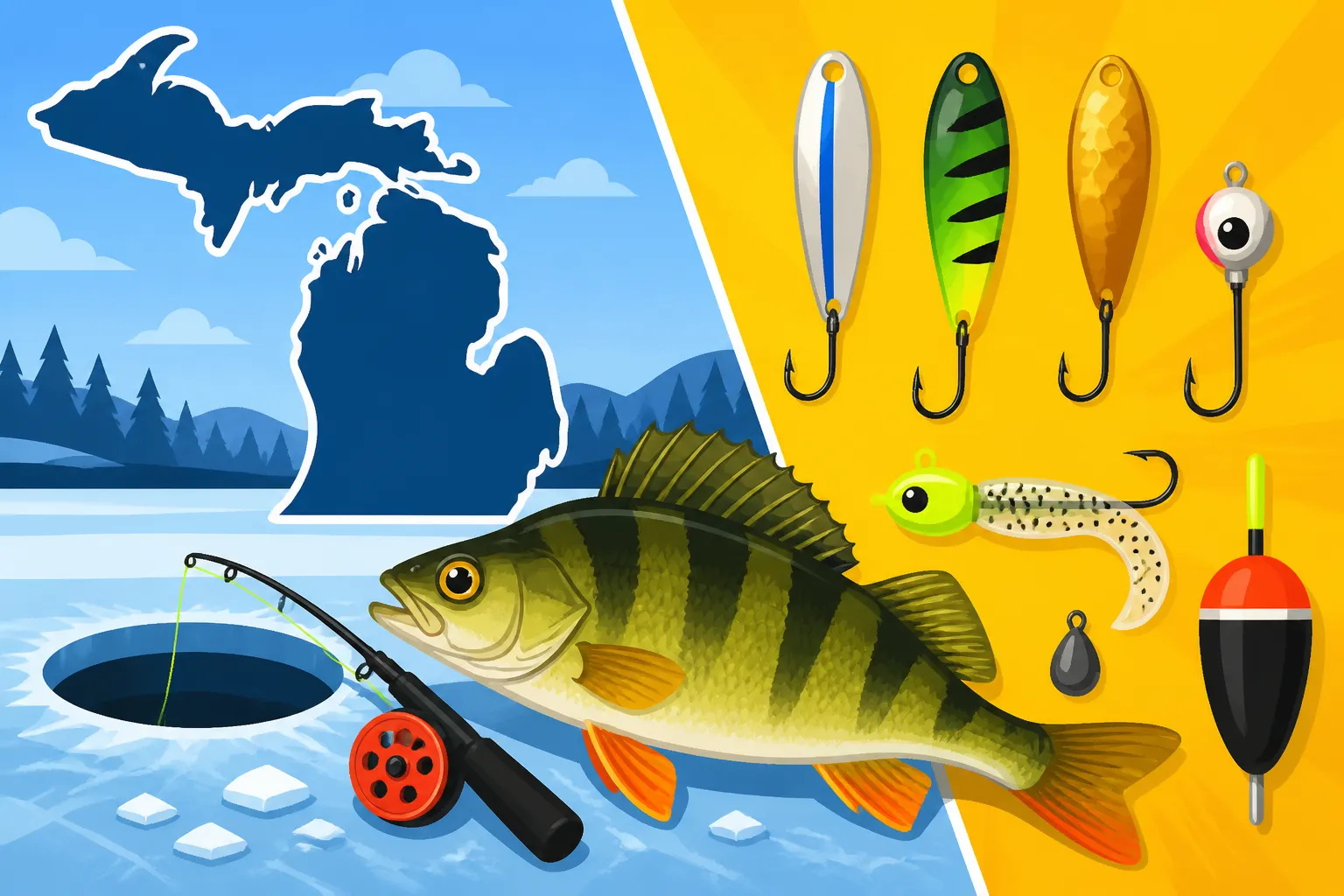
Jigs are undoubtedly the most popular and often the most effective lure for ice fishing perch. They come in an incredible array of shapes, sizes, and colors, allowing you to fine-tune your presentation.
- Types of Jigs:
- Teardrop Jigs: These classic jigs are versatile and come in many colors. Their simple design makes them easy to tip with bait.
- Horizontally Oriented Jigs (e.g., Fiska, Spoon-Jigs): These jigs hang horizontally in the water, mimicking small minnows or aquatic insects. They often have a small eyelet on the back to add a tiny hook or piece of bait.
- Tungsten Jigs: Tungsten is much denser than lead, allowing for a smaller profile jig that still gets down to depth quickly. This is crucial for reluctant perch who might be intimidated by a larger jig. Their compact size often makes them incredibly effective.
- Plastic-Body Jigs: Jigs with a small plastic body or tail (like a tiny grub or maggot imitation) can add extra appeal.
- Sizes: For perch, 1/32 to 1/16 ounce jigs are your sweet spot. Sometimes, even smaller 1/64 ounce jigs are necessary for extremely finicky fish or when targeting smaller perch.
- Colors: Start with natural colors like greens, browns, and black, as these often imitate aquatic insects and small prey. However, bright colors such as chartreuse, orange, pink, or glow-in-the-dark can be deadly, especially in stained water, low light, or to attract curious perch from a distance. Don't be afraid to experiment!
- Presentation: Jigs are incredibly versatile. You can gently quiver them, subtly lift and drop them a few inches, or even "dead stick" them (holding them perfectly still). Sometimes, pounding the bottom with your jig to stir up sediment can attract attention.
Spoons and Rattle Baits: Attracting from Afar
When perch are scattered, or you need to draw them in from a wider area, spoons and rattle baits are excellent choices. Their flash and vibration mimic fleeing baitfish or actively feeding schools, triggering a predatory response.
- Jigging Spoons: Small jigging spoons (like a Kastmaster, Swedish Pimple, or various slender flutter spoons) are excellent. Their erratic fall and flash can be irresistible. Many anglers tip the spoon with a small minnow head or a single wax worm for added scent and appeal.
- Rattle Spoons and Rattle Baits: These lures incorporate beads or lead shot inside their body, creating noise as you jig them. This extra acoustic appeal can be very effective in attracting perch, especially in low visibility conditions or when trying to draw them away from dense cover.
- Presentation: Spoons are generally fished with more aggressive lifts and drops than jigs. Lift the rod tip sharply 1-2 feet, then let the spoon flutter back down on a semi-slack line. Watch your flasher carefully; often, a perch will hit it on the fall.
The Power of Live Bait and Soft Plastics
Even the most high-tech lure sometimes can't beat the natural appeal of live bait. For perch, live bait is a consistent producer.
- Live Minnows: Small live minnows, such as fatheads or emerald shiners, are perch candy. You can hook them through the lip or just behind the dorsal fin on a small plain hook (#8 to #12) or tipped on a jig. Often, a tiny split shot a foot or so above the hook is enough weight to get them down. This is perfect for "dead sticking" a rod in a rod holder while you actively jig another hole.
- Worms and Larvae: Wax worms, spikes (maggots), and eurolarvae are incredibly effective and easy to use. They are usually tipped onto small jigs or plain hooks, adding scent, color, and a little wiggling action. They are particularly good for finicky perch.
- Soft Plastics: Tiny soft plastic baits, designed to imitate minnows, grubs, or insect larvae, can be surprisingly effective. They offer durability (you don't have to re-bait as often), and many are scented. Small "fry" or "panfish" style plastics in natural colors or glow patterns can be deadly when tipped on a tungsten jig.
- Choosing Your Bait: Live bait offers natural scent and movement, often out-fishing artificials on tough days. However, soft plastics are durable, convenient, and don't require keeping alive. Many anglers bring both, using plastics when the bite is hot and switching to live bait when fish are being shy. For a deeper dive into bait selection, check out our guide on Best Bait for Yellow Perch in Michigan.
Essential Accessories for a Successful Perch Trip
Having the right rod, reel, and bait is crucial, but a successful and comfortable ice fishing trip, especially in Michigan's winter, also relies on some key accessories.
Cutting Through the Ice: Augers and Skimmers
You can't catch fish through the ice if you can't get to the water! An auger is your indispensable tool.
- Auger Types:
- Manual Augers: Hand-cranked augers are lightweight and quiet, perfect for early or late ice when it's thinner (4-8 inches). They're also budget-friendly.
- Power Augers: For thicker ice or if you plan to drill many holes, a power auger is a game-changer.
- Gas/Propane Augers: Traditional workhorses, powerful but can be heavy and noisy.
- Electric Augers: Increasingly popular, electric augers are lighter, quieter, and produce no fumes. They run on rechargeable batteries, so ensure you have enough power for your trip.
- Hole Size: For perch, a 6-inch auger is often sufficient. It's easier to drill, reduces the amount of cold air coming up, and is plenty big enough for even trophy perch. If you might encounter larger pike or walleye, an 8-inch auger offers more versatility.
- Ice Skimmers/Ladles: After drilling your hole, slush and ice chips will accumulate. An ice skimmer is essential for clearing your hole, keeping your line free, and spotting any fish that come into view. They're cheap, but invaluable. Before you venture out, always prioritize safety and consult our article on How Thick Does Ice Need to Be to Fish in Michigan. For more information on auger selection, see Best Ice Augers for Michigan Ice Fishing.
Staying Warm and Comfortable: Shelters and Heaters
Michigan winters are no joke. Staying warm and out of the wind dramatically increases your enjoyment and your ability to focus on fishing.
- Ice Shelters:
- Flip-Over Shelters: These shelters are attached to a sled, making them easy to transport and set up. Simply "flip" them over for instant protection. They're great for mobile anglers.
- Pop-Up Shelters: These resemble tents and "pop up" quickly, offering ample space. They are very portable but require more effort to secure in windy conditions.
- Regardless of type, a good shelter provides a windbreak and helps trap heat. Many anglers find their fishing success improves dramatically when they can stay comfortable and focused, not shivering.
- Heaters: A portable propane heater is a godsend in cold weather. They can make a shanty incredibly comfortable, allowing you to shed heavy layers and feel bites better.
- Safety First: Always ensure proper ventilation when using any propane heater in a confined space to prevent carbon monoxide buildup. Carbon monoxide detectors are a wise investment for any ice shanty.
- Layering Clothing: Even with a heated shelter, dress in layers. You'll want to be able to remove or add clothing as temperatures and activity levels change. Waterproof outer layers are essential. Our article on Best Ice Shelters for Michigan Ice Fishing offers more insights on these vital pieces of gear.
Finding the Fish: Electronics and Visual Aids
Perch are notorious for schooling, and if you're not on top of them, you're likely not catching them. Electronics are a game-changer for finding and staying on fish.
- Flashers/Sonars: Brands like Vexilar, Marcum, and Humminbird make dedicated ice fishing flashers. These devices use sonar to show you what's directly beneath your hole in real-time: the bottom, fish, and your lure. Seeing how fish react to your bait allows you to adjust your presentation instantly. They are invaluable for identifying depth, structure, and most importantly, finding those perch schools.
- Underwater Cameras: While not as essential as a flasher, an underwater camera provides an amazing visual of what's happening down below. You can identify fish species, see how they're reacting to your bait, and observe bottom structure directly. It's a fantastic educational tool and can be incredibly fun, especially with kids.
- GPS: A handheld GPS unit or a GPS app on your smartphone (especially with lake contour maps) is vital for navigating the ice and finding specific structure like humps, drop-offs, or old weed beds that perch love. Marking productive holes or hazards can save you time and keep you safe. Check out our What Gear Do You Need to Ice Fish in Michigan guide for a broader look at essential equipment.
Setting Up and Strategies for Perch Ice Fishing
Having the right tackle is one thing; knowing how to use it effectively to target perch is another. With proper rigging, location scouting, and presentation, you'll be well on your way to a cooler full of yellow perch.
Rigging Up Your Perch Tackle
Attention to detail in your rigging can prevent lost fish and increase your hook-up ratio.
- Knots: For light lines, reliable knots are non-negotiable. The Palomar knot is excellent for tying on jigs and hooks, offering great strength with minimal fuss. The Improved Clinch knot is another solid choice. Practice these knots at home, so you can tie them confidently with cold fingers.
- Tipping Jigs: When using jigs, always consider tipping them. A single wax worm, a couple of spikes, or a small minnow head adds scent, taste, and a little extra wiggle that can seal the deal for a hesitant perch. Thread the bait on carefully so it hangs naturally and doesn't impede the hook point.
- Plain Hook/Minnow Rig (Dead Stick): For a dead stick, tie a small plain hook (#8 to #12) to your line. Crimp a small split shot about 6-12 inches above the hook. Hook a lively minnow through the back, just behind the dorsal fin, or through the lips. This allows the minnow to swim naturally and attract attention. Place this rod in a rod holder and let the minnow do the work while you actively jig another hole.
- Multiple Rods: Michigan regulations often allow anglers to fish with multiple lines (check current regulations for specific limits, usually two or three). This is a huge advantage for perch fishing. You can jig one rod and leave another on a dead stick with a minnow. This "one active, one passive" approach can double your chances and help you figure out what the fish prefer.
Locating Perch Hotspots
Perch are schooling fish, and finding them is often the biggest challenge. They rarely sit alone; if you find one, you're likely to find many.
- Structure is Key: Perch relate heavily to structure. Look for weed lines (especially green weeds still producing oxygen), transitions from soft to hard bottom, humps, points, and subtle drop-offs. If the lake has distinct features like these, that's where you should start your search.
- Depth Variations: Perch depth can change throughout the winter. Early ice, they might be shallower, relating to remaining green weeds. Mid-winter, they often move to deeper basins or congregating on deeper structure. Late ice can see them moving shallower again as ice deteriorates and oxygen levels change. Don't be afraid to drill holes at varying depths along a drop-off until you find their preferred zone.
- Drill and Move: This is perhaps the most important strategy for perch. Don't sit in one spot hoping they'll come to you. Drill a series of holes in a promising area (e.g., along a contour line or across a hump) and fish each hole for 5-10 minutes. If you don't get a bite, move to the next. Your flasher will be invaluable here, showing you if fish are present.
- Maps and Technology: Utilize lake maps (digital or paper) to identify contours, depths, and potential structure before you even step on the ice. Many excellent mapping apps are available for smartphones that provide detailed underwater topography. For ideas on where to start your search, consult our guides on Best Ice Fishing Lakes in Michigan and Michigan Yellow Perch Limit on Lake St. Clair. You might also find our article on Best Time to Ice Fish for Perch helpful for seasonal strategies.
Perch Presentation and Action
Once you've found the fish, how you present your lure makes all the difference. Perch can be aggressive, but often require a subtle touch.
- Start Aggressive, Then Slow Down: Begin with a more aggressive jigging motion (sharp lifts, pauses, repeated jigging) to attract attention. If fish show up on your flasher but don't bite, gradually slow down your presentation. Reduce the height of your lifts, shorten your quivers, and extend your pauses. Many times, a perch will hit a bait that's almost completely still.
- Subtle Jigging Motions: Often, tiny movements are most effective. Think of barely quivering the rod tip, just enough to make your bait dance slightly, or lifting it a mere inch or two and letting it settle. Sometimes, just holding the bait perfectly still (dead sticking) is the ticket.
- Watch Your Flasher: This is where your electronics earn their keep. Observe how fish react. Do they shoot up to your bait and then shy away? That might mean your lure is too big, your action is too aggressive, or your color is wrong. Do they slowly approach and then sit below your bait? Try a subtle lift, a tiny quiver, or a long pause. When you see a fish rise to your bait and then drop back down, often a subtle lift or a tap of the bottom can re-engage their interest.
- Bottom Pounding: Don't underestimate the power of "pounding the bottom." Drop your jig all the way to the lake bed and gently tap it, stirring up small clouds of sediment. This mimics a foraging minnow or insect and can trigger a curious perch to investigate.
Mastering these techniques and having the right tackle for the job will elevate your Michigan perch ice fishing game. It’s all about being prepared, persistent, and paying attention to those subtle cues.
| Rod Action | Sensitivity | Backbone | Best For | Typical Lure Weights |
|---|---|---|---|---|
| Ultra-Light | Excellent | Light | Small jigs, light bites | 1/64 – 1/32 oz |
| Light | Very Good | Medium-Light | Versatile jigging, spoons | 1/32 – 1/16 oz |
| Medium-Light | Good | Medium | Larger spoons, rattle baits, deeper water | 1/16 – 1/8 oz |
Disclaimer
This article is for general informational purposes only and does not constitute professional advice. Laws, prices and regulations vary by location and change over time. Consult a qualified professional for guidance on your specific situation.