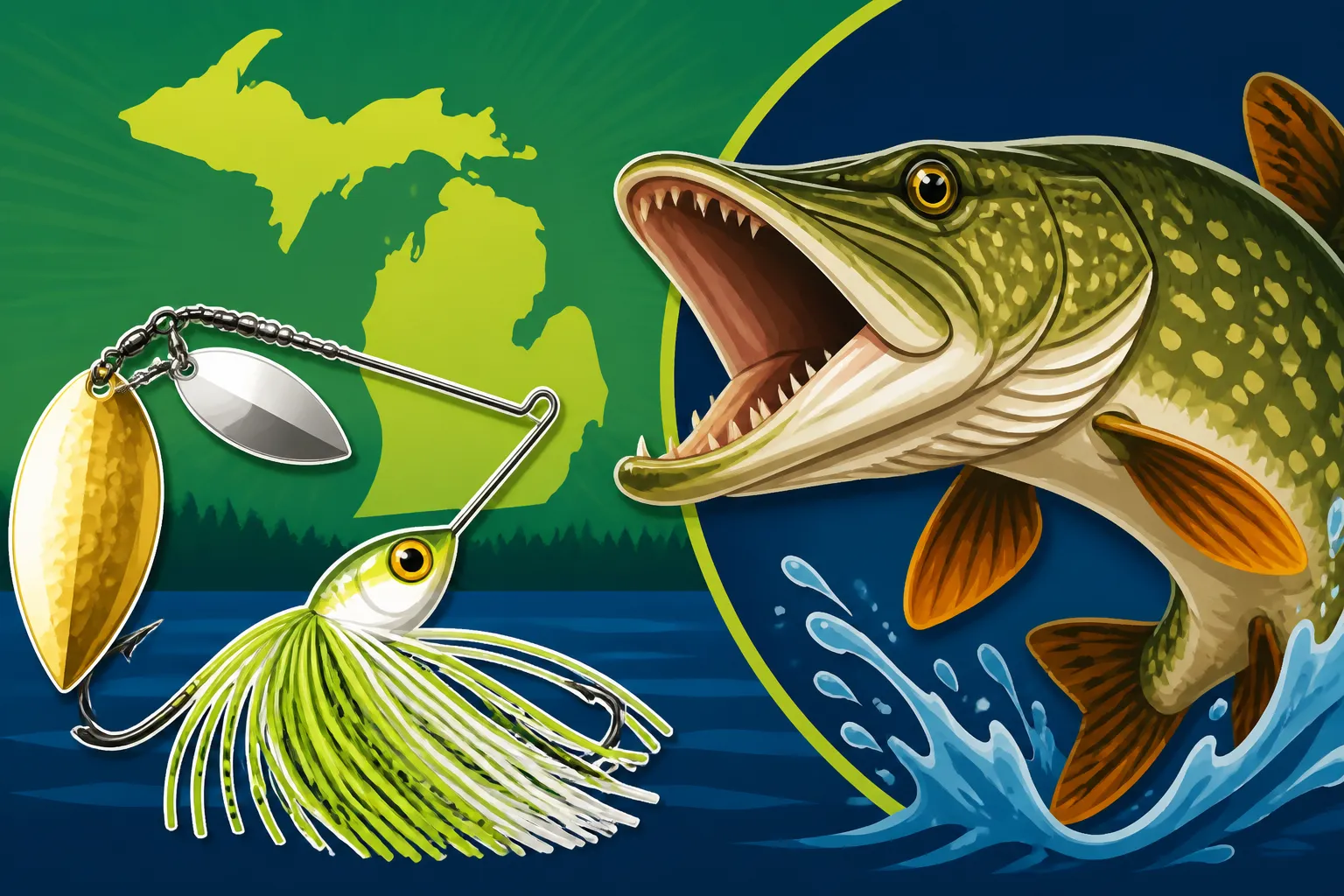
Best Spinnerbait for Pike
Michigan pike fishing can be incredibly rewarding, but sometimes it feels like those toothy predators are just playing hard to get. You've cast everything in your tackle box, from spoons to jerking baits, only to be met with frustrating silence. But what if there was one lure that consistently called to their aggressive nature, cutting through weeds and drawing vicious strikes? This guide is all about finding the best spinnerbait to help you conquer Michigan's pike waters, from the thickest cover to open stretches.
Understanding Michigan Pike and Their Preferences
Before we dive into the nitty-gritty of spinnerbait selection, it's crucial to understand the fish we're targeting. Northern pike in Michigan are ambush predators, known for their aggressive strikes and impressive size. Knowing where they live and what makes them tick is half the battle.
Where Michigan Pike Hide
Pike are masters of camouflage and surprise attacks. They love to lurk in areas where they can easily dart out and ambush unsuspecting prey. This means focusing your efforts around specific types of habitat. Think of a pike as a lazy hunter; they want the food to come to them, or at least be very easy to catch.
You'll often find them in relatively shallow waters, especially during warmer months, although larger pike might retreat to deeper, cooler spots in the dog days of summer. Prime locations include dense weed beds, which offer both cover for ambushing and cooler water. Look for lily pads, coontail, and even submerged grass flats. Fallen timber, submerged logs, and brush piles are also fantastic spots, providing structure for pike to hide behind. Even bridge pilings, rocky points, and sharp drop-offs can hold pike, particularly if there's an abundance of baitfish schooling nearby. In many of Michigan's inland lakes, like Houghton Lake or Black Lake, you can find vast expanses of these prime pike territories. They also love to hang around the edges of these structures, ready to explode onto anything that swims by. Michigan's Most Popular Fish Species provides a great overview of what you might encounter.
What Triggers a Pike Strike
Pike are opportunistic eaters, and their diet consists mainly of smaller fish, frogs, and even small mammals or ducklings if the opportunity presents itself. What truly triggers a pike to strike is a combination of instinct, hunger, and irritation. A spinnerbait, with its flashing blades and pulsating skirt, does an excellent job of tapping into all these triggers.
The flash and vibration mimic a distressed baitfish, drawing attention from a distance, even in murky water. The movement of the skirt suggests a live creature struggling to escape. Pike are incredibly territorial, so sometimes a lure that invades their space can provoke a vicious "reaction strike," even if they're not actively hungry. They simply don't want something else in their spot. Think about a minnow frantically trying to swim away, or a panfish darting through the weeds. A spinnerbait moving through their territory, creating commotion, is often too much for a pike to resist. It’s a primal reaction, making spinnerbaits incredibly effective for these aggressive fish. Northern Pike Fishing in Michigan goes into more detail about how to target these specific fish.
Key Spinnerbait Features for Michigan Pike
Not all spinnerbaits are created equal, especially when it comes to targeting pike. Understanding the nuances of their design can make a huge difference in your success rate.
Blade Types and Their Impact
The blades are the heart of a spinnerbait, providing the flash and vibration that attract pike. Different blade shapes create different actions and vibrations, making them suitable for various conditions.
- Colorado Blades: These are round, cupped blades that create a lot of thump and vibration, even at slow retrieve speeds. They also create a significant amount of lift, keeping the bait higher in the water column. Colorado blades are fantastic for fishing in murky water or low light conditions, as their strong vibration can be detected by pike from a greater distance. They're also excellent for fishing around heavy cover, as they tend to deflect off obstacles rather than snagging. If you're working a weed line on a cloudy day, a spinnerbait with Colorado blades is often your best bet.
- Willowleaf Blades: As their name suggests, these blades are long and narrow, resembling a willow leaf. They produce less vibration but create a lot of flash, mimicking a fleeing baitfish. Willowleaf blades are ideal for faster retrieves and clearer water, where visual appeal is more important. They also cut through the water with less resistance, allowing for deeper presentations or quicker retrieves. When pike are actively chasing bait in clear areas, willowleaf blades can be incredibly effective. Many anglers swear by a "tandem" setup, with one willowleaf and one Colorado blade, offering a balance of flash and thump.
- Indiana Blades: These blades are a hybrid between Colorado and willowleaf, offering a good balance of flash and vibration. They are tear-drop shaped and provide a moderate thump and flash. Indiana blades are a versatile choice when you're unsure which blade type to use or for general-purpose fishing. They can be retrieved at various speeds and work well in a range of water clarities. If you're just starting out or want a good "all-around" pike spinnerbait, one with Indiana blades is a solid choice. The choice of blade truly impacts how the pike perceives the lure, making this a critical decision.
Skirt Colors and Patterns
The skirt of a spinnerbait provides profile, movement, and color, all of which are vital for attracting pike. Matching the color to local forage or water conditions can significantly improve your chances.
In clear water, natural baitfish patterns like white, silver, grey, or light blues often perform best. These mimic shiners, minnows, or smaller panfish that pike feed on. If the water is slightly stained or cloudy, brighter, more contrasting colors can be effective. Chartreuse, lime green, orange, or even combinations like white and chartreuse stand out better in reduced visibility. Many anglers have great success with "firetiger" patterns (green, yellow, orange stripes) in stained water, as it's a color combination that often triggers aggressive strikes from various predatory fish.
For fishing in very dark or muddy water, or during dawn and dusk, black or dark purple skirts can create a strong silhouette against the lighter sky or water surface, making them easier for pike to see. Experimentation is key; sometimes, a completely unexpected color can be the hot ticket on a given day. Always consider the primary forage in the Michigan waters you're fishing and try to imitate it. Best Bait for Michigan Walleye can also give you ideas about how fish react to different colors.
Weight and Size Considerations
The weight and size of your spinnerbait dictate how deep it runs, how far you can cast it, and the overall profile it presents to the pike.
For shallower water, say 2-8 feet, lighter spinnerbaits (1/4 to 3/8 ounce) are usually sufficient. They allow for slower retrieves without sinking too quickly and are easier to work over submerged weed tops. If you're targeting deeper drop-offs, casting into open water, or fishing in current, heavier spinnerbaits (1/2 ounce to 1 ounce or more) will be necessary to reach and maintain the desired depth. Heavier baits also cast farther, which can be crucial when trying to reach distant cover or when pike are skittish.
The size of the spinnerbait's head and skirt should generally correspond to the size of the baitfish pike are feeding on. While pike aren't shy about hitting a huge lure, sometimes a more subtle, smaller profile can be more effective, especially if they are feeding on smaller perch or minnows. Conversely, if you know there are really large pike in the area, don't hesitate to throw a bigger, beefier spinnerbait – it might just be what they're looking for to justify the energy expenditure of an ambush. Adjusting both weight and size to conditions is a mark of a seasoned angler.
Top Spinnerbait Styles and Brands for Michigan Pike
When you walk into a Bass Pro Shops or browse online at Amazon, the sheer number of spinnerbaits can be overwhelming. But for Michigan pike, there are certain styles that consistently get results.
Classic Tandem Spinners for Versatility
The classic tandem spinnerbait, featuring two blades (often a Colorado and a willowleaf), is a workhorse for pike. This configuration offers the best of both worlds: the thumping vibration of the Colorado blade combined with the flash of the willowleaf. It's a versatile choice that can be effective in a wide range of conditions, from clear to slightly stained water, and can be retrieved at various speeds.
These spinnerbaits typically have a wire frame with a lead head, a soft plastic or silicone skirt, and one or two hooks. Many anglers prefer a single, larger hook for better hookups and less snagging, though some models come with a trailer hook already attached. Companies like Booyah, Strike King, and Terminator all make excellent tandem spinnerbaits that have proven themselves time and again on Michigan waters. They're designed to be weedless enough to be fished through cover, yet open enough to ensure solid hooksets when a pike strikes.
Heavy-Duty Spinnerbaits for Big Pike
When you're serious about targeting trophy pike, you need a spinnerbait that can withstand the abuse. Heavy-duty spinnerbaits feature stronger wire frames, larger and thicker blades, and often bigger, more robust hooks. These are built to handle the violent strikes and sharp teeth of truly massive pike.
Look for models that specify "musky" or "heavy duty" in their description, even if you're only targeting pike. While musky are a different species, the lures designed for them are perfectly suited for large pike. These baits often weigh an ounce or more and feature oversized skirts that provide a substantial profile in the water. They're excellent for targeting deep weed edges, open water trolling, or casting to known big fish haunts. Brands like Drifter Tackle (Musky Mayhem) or Mepps have lines of larger spinnerbaits that are incredibly effective. You can often find a good selection of these robust options at your local tackle shop or online, and for serious anglers, making sure you have a few of these in your arsenal is a must. Michigan Muskellunge Fishing Techniques offers insights into how similar aggressive fish are targeted.
Specialty Spinnerbaits
Beyond the traditional spinnerbait, there are a few variations that can be incredibly effective for pike, offering unique actions and presentations.
- Chatterbaits (Bladed Jigs): While not strictly spinnerbaits, bladed jigs like the Z-Man ChatterBait have a distinctive hex-shaped blade that vibrates wildly, creating an erratic, hard-thumping action that pike absolutely love. They combine the flash and vibration of a spinnerbait with the jigging action of a soft plastic, making them incredibly versatile. You can fish them through weeds, rip them off the bottom, or just steadily retrieve them. They create a very different sound and feel in the water, which can sometimes trigger strikes when pike are ignoring traditional spinnerbaits.
- Swim Jigs with Blades: Some swim jigs are designed with a small underspin blade or a belly blade, adding flash and vibration to an otherwise subtle presentation. These are excellent for fishing in lighter cover or when you want a more natural, subtle swim action with just a hint of attraction. They can be particularly effective when pike are feeding on smaller baitfish and a larger spinnerbait seems too aggressive. Think of these as a finesse spinnerbait, offering a different look and feel that can trick wary pike.
Techniques for Fishing Spinnerbaits for Michigan Pike
Having the right spinnerbait is only half the battle; knowing how to present it effectively is crucial. Pike can be finicky, and adjusting your technique can make all the difference.
Casting and Retrieving Strategies
The most common way to fish a spinnerbait for pike is through casting and retrieving. However, simply reeling it in isn't always enough. Varying your retrieve speed, adding pauses, and incorporating jerks can mimic a wounded baitfish, which is often irresistible to pike.
Start with a steady retrieve, just fast enough to get the blades spinning. Pay attention to how the lure feels in the water – you should be able to feel the blades vibrating through your rod. If you're not getting bites, try speeding up the retrieve, or conversely, slowing it down. Pike often hit during changes in speed. A popular technique is the "stop-and-go" retrieve: reel steadily for a few seconds, then pause briefly, allowing the spinnerbait to fall slightly, then resume reeling. This sudden change in action can trigger a reaction strike. Another effective method is to twitch your rod tip occasionally, making the spinnerbait dart erratically. For fishing around heavy cover, try a "burst" retrieve, reeling quickly to clear snags, then slowing down as you reach open pockets. Remember, the goal is to make the lure appear as a vulnerable, easy meal.
Targeting Specific Structures
Pike are structure-oriented fish, meaning they'll relate to some form of cover or change in the bottom. Your casting and retrieve should reflect this.
When fishing dense weed lines or lily pads, cast your spinnerbait right up to the edge or even a foot or two into the cover. Retrieve it just fast enough to keep it above the snags, letting the blades tick the tops of the weeds if possible. This creates commotion and often draws pike out of their hiding spots. For submerged timber or brush piles, cast beyond the structure and retrieve your spinnerbait so it bumps into or deflects off the wood. The sudden change in direction can often trigger a strike. If you're fishing along a sharp drop-off, cast parallel to the edge and let your spinnerbait sink, then retrieve it in a "lift and fall" pattern, mimicking a baitfish moving up and down the water column. In Michigan's Great Lakes, fishing near pier pilings or breakwalls can also be very productive. Best Lake Michigan Fishing Piers and Harbors highlights some great spots to try these tactics.
Seasonal Adjustments for Pike Fishing
Michigan's seasons play a huge role in pike behavior and where you'll find them. Adjusting your spinnerbait approach accordingly is key.
- Spring: As water temperatures rise, pike become very active and move into shallower bays, marshes, and weed beds to spawn. This is a prime time for spinnerbaits. Fish them slowly and deliberately through emerging weeds. Target the warmest, shallowest water you can find. A white or chartreuse spinnerbait can be especially effective now.
- Summer: During the heat of summer, large pike might move to deeper, cooler water, often relating to deeper weed lines, humps, and submerged timber. You'll need heavier spinnerbaits to reach these depths. In the early morning or late evening, they might still be found in shallower cover. When fishing during the day, focus on transition zones where shallow water meets deeper drop-offs.
- Fall: As water temperatures drop, pike become incredibly aggressive and feed heavily in preparation for winter. This is arguably the best time for big pike. They often move back into shallower areas, especially near rocky points, humps, and main lake weed beds. Faster retrieves and larger, more aggressive spinnerbaits can be highly effective. The fall colors can also be fantastic, mimicking dying baitfish. Best Time of Year to Fish in Michigan offers a complete breakdown of seasonal patterns.
Remember to consider your line choice too; a strong monofilament or fluorocarbon leader is essential to protect against those sharp pike teeth. You might also find a long-handled net useful for landing these toothy critters.
| Blade Type | Action / Vibration | Ideal Conditions | Retrieve Speed |
|---|---|---|---|
| Colorado | Strong thump, high lift | Murky water, low light, heavy cover | Slow to moderate |
| Willowleaf | High flash, subtle vibration | Clear water, open water, faster retrieves | Moderate to fast |
| Indiana | Balanced thump & flash, moderate lift | Versatile, mixed conditions, all-around choice | Slow to moderate |
| Tandem (Colorado/Willow) | Combines thump and flash | Versatile, good starting point, general use | Slow to moderate |
This article is for general informational purposes only and does not constitute professional advice. Laws, prices and regulations vary by location and change over time. Consult a qualified professional for guidance on your specific situation.