Best Planer Board Setup for Salmon
It's incredibly frustrating when you're out on the vast waters of Lake Michigan or Lake Huron, trying to troll for those elusive salmon, only to feel like your boat is scaring them away before your lures even get a chance. Traditional trolling spreads can be quite limited, keeping your lines too close to the boat and often right in the path of your engine's noise and shadow. This guide is all about overcoming that challenge by showing you how to set up and effectively use planer boards, allowing you to expand your fishing spread dramatically and drastically increase your chances of hooking into those magnificent Michigan salmon.
Understanding Planer Boards for Michigan Salmon Fishing
When you picture salmon fishing on the Great Lakes, you might imagine a boat cutting through the waves, a few rods sticking out, and perhaps a downrigger or two. But what if you could multiply that spread, putting lures in areas fish feel safer, further from the boat itself? That's precisely where planer boards come into play, revolutionizing how many anglers approach salmon.
Why Planer Boards are Essential for Salmon
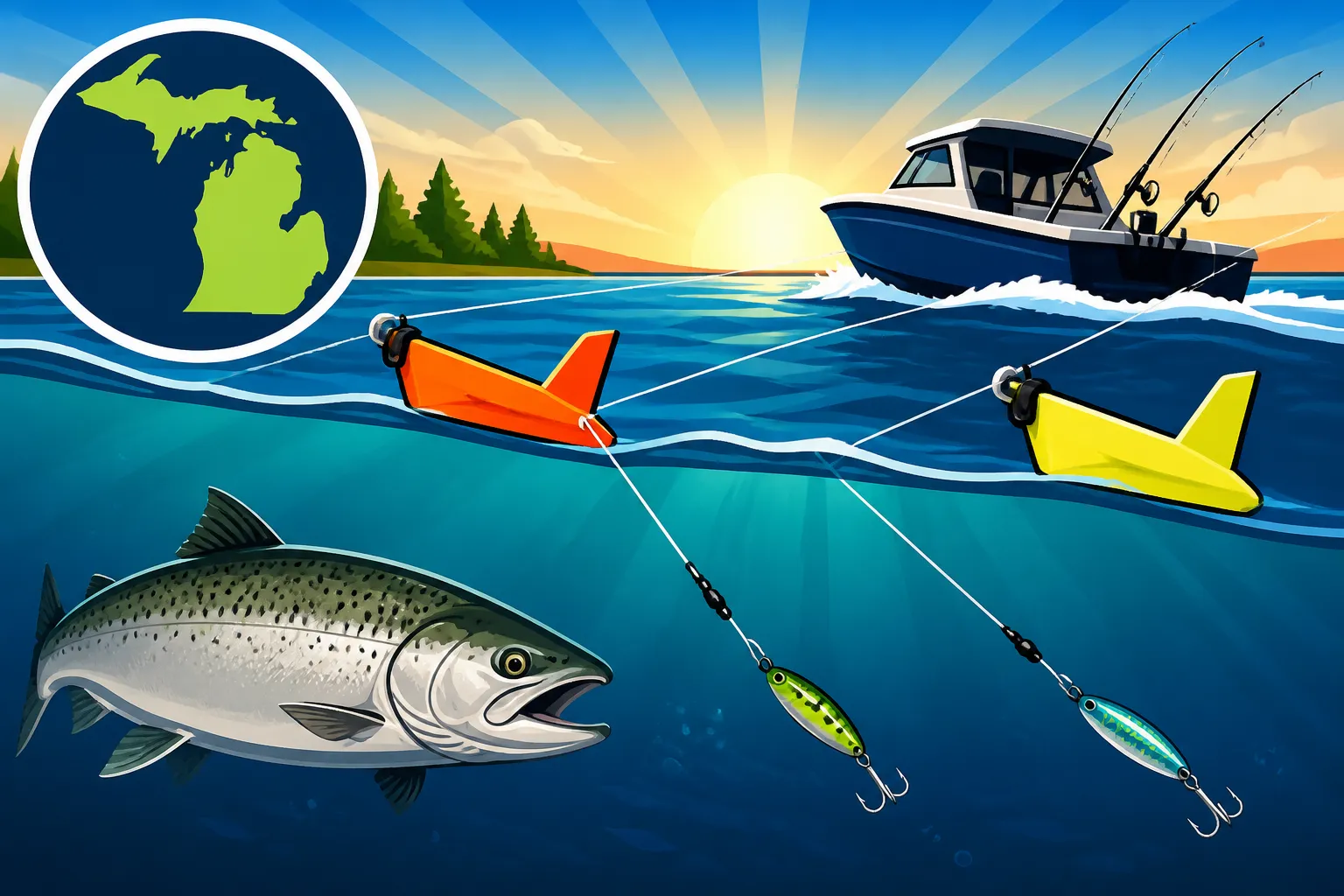
Salmon, especially the larger Chinook and Coho, can be incredibly wary. They've spent their lives avoiding predators, and a noisy boat passing directly overhead with lures trailing right behind it can send them scattering. Planer boards effectively act as a "sidekick" for your boat, carrying your fishing lines out wide, sometimes dozens of feet away from your main vessel. This creates a much broader trolling corridor, presenting your baits in undisturbed water. Think of it: instead of a narrow 20-foot path directly behind your boat, you can now cover a 100-foot-wide swath, greatly increasing the chances of crossing paths with a hungry salmon. It's like having multiple boats trolling simultaneously, but all from the comfort of your single vessel. This wider spread also significantly reduces line tangles, especially when you're running multiple rods at different depths and distances, which is crucial when targeting various salmon species like those mentioned in Michigan Salmon Species Explained.
Beyond just avoiding spooking fish, planer boards allow you to cover more varied water. You can hug a break line with one set of boards while another set runs deeper, or target schooling baitfish that might be holding a good distance from your boat. On a typical day out on Lake Michigan, for example, you might be trying to find a temperature break or a concentrated school of alewives. With a wide planer board spread, you can explore both sides of a potential fish-holding area simultaneously, efficiently locating where the salmon are actively feeding. This efficiency is paramount when you're on a limited time frame and want to make the most of your Best Time of Year to Fish in Michigan.
Types of Planer Boards: Inline vs. Mast Systems
When you dive into the world of planer boards, you'll quickly discover there are two primary types: inline boards and mast systems. Both serve the same fundamental purpose – to get your lines away from the boat – but they do so in different ways, each with its own advantages and ideal scenarios for How to Troll for Salmon on the Great Lakes.
Inline Planer Boards
Inline boards are exactly what they sound like: they clip directly onto your fishing line, and the line runs through the board. These are incredibly popular for their simplicity and ease of use, especially for smaller boats or anglers new to planer board fishing. When a fish strikes, the board often trips or releases from the main line, allowing you to fight the fish directly without the board interfering too much. They're typically smaller and more portable than mast systems, making them a great choice if you have limited boat space or primarily fish with fewer rods. You can buy these individually, making it easy to scale up your setup. Many anglers find them convenient for specific setups on Trolling for Chinook Salmon on Lake Michigan or Trolling for Coho Salmon on the Great Lakes.
| Feature | Inline Planer Boards | Mast Planer Board Systems |
|---|---|---|
| Setup Complexity | Simple, individual board clips onto line | Requires dedicated mast, reel, and tow lines |
| Boat Size Suitability | Excellent for smaller boats, adaptable to any | Best for larger boats with ample deck space |
| Number of Lines | Typically 1-2 lines per side of the boat | Can handle many lines (3-5+ per side) |
| Retrieval | Board often releases, fight fish directly | Requires reeling in tow line, then individual fishing lines |
| Cost | Generally lower initial cost for individual boards | Higher initial cost for complete mast system |
| Portability | Very portable, easy to store | Mast systems are less portable, fixed setup |
| Visibility | Smaller profile, can be harder to spot in waves | Larger boards, often with flags, highly visible |
| Target Depth | Can work for various depths with proper weighting | Excels at maintaining consistent shallow-to-mid depth spread |
Mast Planer Board Systems
Mast systems are a more robust and permanent solution, typically seen on larger Great Lakes charter boats or serious tournament rigs. These involve a mast mounted on the bow or cabin top of your boat, which holds a large, heavy-duty reel. From this reel, a thick "tow line" extends out to each side of the boat, connected to large, buoyant planer boards. Your individual fishing lines, each with its own specialized release clip, then attach to this main tow line. When a fish strikes, the clip releases, allowing you to reel in your fishing line while the planer board and main tow line remain deployed. This system allows for an incredible number of lines (sometimes 3-5 or more per side) to be run simultaneously, creating an absolutely massive spread. For serious multi-rod operations, especially when trying to pinpoint vast schools of bait and salmon, a mast system offers unparalleled coverage and stability, often used in conjunction with Downriggers for Michigan Great Lakes Trolling.
Assembling Your Ideal Planer Board Setup
Getting started with planer boards might seem a little daunting, but once you break it down, it's quite manageable. The key is understanding each component and how they work together to achieve that wide trolling spread for Michigan's magnificent salmon.
Key Components of a Planer Board System
Whether you opt for inline boards or a mast system, certain foundational elements are necessary for success. It's not just about the board itself; it's about the synergy of your rods, reels, line, and release clips.
Planer Boards: These are the stars of the show. For inline boards, you'll need sturdy, buoyant models designed to pull wide without diving. Brands like Off Shore Tackle and Church Tackle are very popular among Michigan anglers for their reliability and performance on the Great Lakes. For mast systems, you're looking at much larger, heavier-duty boards designed to withstand heavy waves and pull multiple lines.
Release Clips: These are crucial. For inline boards, the clips are built into the board itself, designed to hold your line securely until a fish strikes, then release or "trip" so you can fight the fish directly. For mast systems, you'll use specialized release clips that attach your fishing line to the main tow line. These clips need to hold firm against the drag of your lure but release cleanly when a salmon hits, sending your rod tip dancing. Anglers often keep a variety of clips on hand, as different conditions or line types might call for different gripping strengths.
Rods and Reels: While you can use your existing trolling setups, specialized rods can make a big difference, especially with inline boards. Longer, moderate-action trolling rods (like those often discussed in Best Trolling Rods for Michigan Salmon) provide a softer tip to absorb wave action and act as a shock absorber when a salmon slams your lure. They also help keep lines separated, reducing tangles. High-capacity line counter reels are non-negotiable, as they allow you to precisely deploy your lures to specific depths and distances, which is vital for replicating successful patterns.
Fishing Line: The type of line you use can impact how well your planer board performs and how effectively you fight fish. Many Great Lakes salmon anglers prefer monofilament or fluorocarbon for their stretch, which acts as another shock absorber, helping to prevent hooks from pulling free during violent head shakes. Some also use braided line for its sensitivity and strength, often adding a monofilament or fluorocarbon leader.
Selecting the Right Planer Boards for Great Lakes Salmon
Choosing the right planer boards for your Michigan salmon adventures boils down to a few critical factors: the size of your boat, the number of lines you plan to run, and the typical conditions you'll face on big water like Lake Michigan.
For most casual anglers or those with smaller boats (under 20 feet), inline planer boards are often the best starting point. They're easier to manage, less expensive to get into, and highly effective. When selecting inline boards, look for models with good buoyancy and a strong, reliable flag system. The flag is your visual indicator of a strike, and you want it to be easily seen, even in choppy water. Many popular options from brands you'd find at Bass Pro Shops or online at Amazon are specifically designed for the demands of Great Lakes trolling. Consider their "pulling power"—some boards are designed for lighter tackle, while others can handle heavier setups with larger spoons or magnum plugs.
If you're running a larger boat, frequently fish tournaments, or simply want to maximize your spread with many rods, a mast system is worth the investment. These systems provide superior stability in heavy seas and allow for an expansive, consistent presentation. The large boards associated with mast systems are incredibly robust and have impressive pulling power, easily handling multiple lines rigged with various baits. When evaluating mast systems, consider the height of the mast itself (taller masts can help keep lines clear of obstacles on deck), the quality of the reel system, and the durability of the boards. These systems are a significant investment, so thorough research is key to finding a setup that will reliably serve you for many seasons on Michigan's Great Lakes Fishing Guide.
Rigging and Deploying Your Planer Boards for Success
Once you've chosen your planer board system, the next step is getting everything rigged correctly and learning the art of deploying and retrieving your lines smoothly. This is where practice makes perfect, and avoiding tangles becomes an almost Zen-like pursuit.
Step-by-Step Guide to Rigging Inline Planer Boards
Let's focus on inline planer boards, as they're the most common starting point for many Michigan anglers. The process is straightforward, but attention to detail makes all the difference.
- Prepare Your Rod and Lure: First, get your fishing rod ready with the lure you intend to use. This could be a salmon spoon, a crankbait, or a flasher/fly combo. Let out enough line for your lure to achieve its desired running depth. If you're using a diving lure or a weighted setup, allow for that lead length. For example, if your spoon runs best 50 feet behind a Slinky weight, get that Slinky and spoon out to that mark. Use your line counter reel to track this distance meticulously. This precision is vital, as noted in discussions about various trolling techniques in Trolling Gear for Michigan's Great Lakes.
- Attach the Rear Clip: Many inline planer boards have two clips: one at the front and one at the rear. The rear clip often has a pin or a small rubber band to keep it from sliding too far up the line. Attach this rear clip to your fishing line, typically 10-15 feet in front of your lure. This helps distribute the pull on the line and keeps the board running true.
- Attach the Front Clip: Now, clip the front release clip onto your fishing line. This is the main attachment point that pulls the board away from the boat. Ensure it's clipped securely. For heavier lures or faster trolling speeds, you might need a clip with a stronger grip. Some anglers will even wrap the line once or twice around the clip's tension pad for extra hold.
- Pay Out Line and Deploy: With both clips attached, begin slowly paying out line. The planer board will start to pull away from the boat as it catches the water. Continue to let out line from your reel, watching the board as it moves further and further out. Your goal is to get it to your desired position in the trolling spread. Your line counter reel is your best friend here, telling you exactly how much line you have out from the rod tip to the board, and then from the board to the lure.
- Set Your Rod: Once the board is in position, place your rod in a sturdy rod holder, pointing it generally in the direction of the board. Ensure your drag is set appropriately – not too tight, but enough to set the hook when a salmon hits.
Mastering Deployment and Retrieval Techniques
Smooth deployment and retrieval are crucial for avoiding frustration and maximizing your fishing time. It’s an art form that gets easier with practice.
Deployment Best Practices:
- Start Close, Go Wide: When deploying multiple lines, start with the board closest to the boat, then work your way out. This minimizes tangles.
- Stagger Depths: Vary the depths of your lures as you deploy them. This helps avoid "cross-talk" between lines and presents lures at different levels in the water column. You might run a shallow-diving crankbait off the innermost board and a weighted spoon deeper off the outermost one.
- Consistent Boat Speed: Maintain a consistent boat speed during deployment. Erratic speeds can cause lures to foul or boards to dive unexpectedly. Think about the ideal speeds for Best Trolling Speed for Coho Salmon or Best Time of Day to Catch Walleye if you're mixing species.
- Watch for Fouls: Keep a keen eye on your lures as they enter the water. Sometimes a swivel gets hung up, or a hook fouls on the line. A quick check can save you a lot of grief later.
Retrieval Best Practices:
- Reverse Order: When retrieving, reel in the outermost board first, working your way back towards the boat. This is the reverse of deployment and, again, helps prevent tangles.
- Steady Pace: Reel in steadily. If you're bringing in an inline board and a fish hits, the board should typically "trip," meaning the front clip releases and slides down the line to the rear clip, reducing drag. You then fight the fish directly.
- Teamwork (if possible): If you have a fishing buddy, one person can handle the boat and help spot boards, while the other manages the rods. This makes the entire process much smoother.
- Organize Your Gear: Have a designated spot for your boards and clips once retrieved. This prevents them from getting tangled or damaged, especially if you're using various setups for different species or conditions, like those covered in Best Tackle Box Setup for Michigan Anglers.
Tips and Tricks for Maximizing Your Salmon Catch with Planer Boards
Planer boards are a powerful tool, but like any piece of specialized gear, getting the most out of them requires a bit of finesse and understanding of how to adapt to changing conditions.
Adjusting Your Spread and Depth
Successfully using planer boards for Michigan salmon isn't just about getting lines out wide; it's about making those lines productive. This means constantly thinking about your spread and the depths you're targeting.
Varying Your Spread:
Don't be afraid to experiment with how far out you run your boards. On some days, salmon might be hugging baitfish schools very wide from your boat, and you'll want your boards to be 50-75 feet out. On other days, especially if the water is murky or the fish are less spooky, a narrower spread might be sufficient. The beauty of planer boards is their flexibility. You can have one board running close to shore or a break line, and another far out in deeper water. This creates an incredibly effective search pattern, helping you locate where the active fish are holding.
Dialing in Depth:
Combine your planer boards with other depth-controlling mechanisms. For shallow to mid-depth trolling, lead core line or weighted steel line can be used with your planer boards to get lures down to specific depths. If you need to go deeper, especially for suspended salmon in the thermocline, mini-disks, jet divers, or even small diving planers can be deployed in front of your lure. These tools, sometimes referred to as 'diver disks', will pull your lure down to a calculated depth while your planer board keeps the line out to the side. Always remember to check your setup and ensure that the additional diving device isn't creating too much drag for your chosen planer board, preventing it from tracking correctly.
Reading the Water and Troubleshooting Common Issues
The Great Lakes are dynamic, and conditions can change rapidly. Being observant and knowing how to react will make you a much more successful planer board angler.
Reading the Water:
- Currents: Pay attention to currents. They can significantly affect how your planer boards track and how your lures perform. If one side of your spread is consistently getting hits, it might be due to a subtle current pushing bait or creating a feeding lane.
- Turbidity and Temperature: Look for changes in water color (turbidity) or surface temperature breaks. Salmon often congregate in these transition zones. Your wide planer board spread allows you to target both sides of such a break simultaneously.
- Bird Activity: Diving birds often indicate baitfish, which in turn attract salmon. If you see active birds, steer your planer board spread through that area.
- Electronics: Your fish finder is your best friend. Use it to mark bait schools and individual fish. Adjust your lure depths and planer board spread to intersect with what your electronics are showing you. This often involves fine-tuning your Downriggers for Michigan Great Lakes Trolling alongside your boards.
Troubleshooting Common Issues:
- Board Not Tracking Properly: If a planer board isn't pulling out wide or is diving erratically, first check your boat speed. Too fast or too slow can affect its performance. Next, inspect the board itself for damage or fouled lines. Ensure your lure isn't creating excessive drag for the board's design. Sometimes, simply adjusting the angle of the clip on the line can make a difference.
- Tangles: Tangles are the bane of every troller's existence. The best prevention is careful deployment and retrieval. If you're getting consistent tangles, consider staggering your lines further out or varying their depths more dramatically. Using longer rods for your outside lines can also help create more separation.
- Missed Strikes: If you're seeing your flag trip but not hooking up, it might be time to check your lure's action or adjust your trolling speed. Sometimes a salmon will just swat at a lure. Ensure your hooks are sharp, and consider changing lure size or color.
- Releasing Your Fish: When you get a strike on an inline board, the board should typically "trip" or release, allowing you to fight the fish. If it doesn't, a quick snap of the rod tip can often free it. If you're struggling to land a big Chinook, consider its powerful runs and dives, which are characteristic of Chinook Salmon in Michigan's Great Lakes.
Mastering planer board setups for salmon fishing in Michigan opens up a whole new world of opportunities on the vast waters of the Great Lakes. By understanding the different types of boards, meticulously setting up your gear, and then strategically deploying and fine-tuning your spread, you'll be well on your way to more productive and exciting days on the water. It takes practice, but the rewards of a wider, more effective trolling pattern are well worth the effort.
Disclaimer
This article is for general informational purposes only and does not constitute professional advice. Laws, prices and regulations vary by location and change over time. Consult a qualified professional for guidance on your specific situation.