Best Rods and Reels for Michigan Fishing
Choosing the right rod and reel can feel like navigating a labyrinth, especially here in Michigan where our fishing opportunities are incredibly diverse. From the vast, deep waters of the Great Lakes to the intricate web of inland rivers and tranquil smaller lakes, each environment and target species demands a specific kind of tackle. Many anglers feel overwhelmed by the sheer number of options, often ending up with gear that's either overkill for panfish or woefully underpowered for a trophy muskie. This comprehensive guide will break down the complexities of selecting the best rods and reels for every type of Michigan fishing adventure, ensuring you’re perfectly equipped for success and enjoyment on the water.
Decoding Rod and Reel Terminology for Michigan's Waters
Before diving into specific recommendations, let's untangle some of the common jargon you'll encounter when selecting rods and reels. Understanding these terms is crucial because they directly impact how a rod performs, how a reel casts, and ultimately, how effective your setup will be for the fish you're chasing in Michigan's diverse aquatic landscapes. Without this foundational knowledge, you might find yourself with a rod that feels sluggish or a reel that can't handle the fight.
Rod Action: Understanding Flex and Response for Different Fish Fights
Rod action refers to where along the blank a rod bends when pressure is applied. It's often described as fast, moderate-fast, moderate, or slow. A fast action rod bends mostly in the tip section, giving it a very sensitive feel and quick response. This sensitivity is fantastic for detecting subtle bites from wary walleye or trout, and the quick tip allows for rapid hook sets. Imagine feeling the slightest tap on your line when jigging for perch through the ice; a fast action rod translates that tap directly to your hand.
On the other hand, a moderate or slow action rod bends further down the blank, sometimes even into the butt section. These rods load up more slowly, distributing the bend more evenly throughout the rod. This "parabolic" bend can be incredibly forgiving when fighting larger, hard-fighting fish like salmon or steelhead, acting like a shock absorber against powerful runs and head shakes. It also excels at casting lighter lures and baits, giving you a smooth, gentle cast that won't tear soft baits. Think about casting a delicate spawn bag for river steelhead; a moderate action rod helps prevent the bait from flying off.
The choice of rod action depends heavily on your fishing technique and target species. For example, if you're drop-shotting for smallmouth bass on a clear inland lake, a fast action rod provides the sensitivity to feel the bottom and the quick hook set needed. But if you're trolling large crankbaits for Chinook salmon on Lake Michigan, a moderate action rod will absorb the violent strikes and deep runs without pulling hooks. Matching the action to your situation is a key step in building an effective fishing arsenal.
Rod Power: Matching Strength to Michigan's Diverse Species
Rod power, also known as rod weight or taper, refers to the rod's lifting strength or stiffness. It's typically categorized as ultralight, light, medium-light, medium, medium-heavy, heavy, or extra-heavy. This characteristic dictates the size of the line and lure a rod is designed to handle, and by extension, the size of the fish it can effectively subdue. Using a heavy power rod for panfish would be like using a sledgehammer to crack a nut – you wouldn't feel the fight and it wouldn't be much fun.
An ultralight or light power rod is perfect for small fish like bluegill, crappie, or brook trout in smaller streams. These rods are incredibly fun to fish with, as even a modest fish can put a significant bend in the rod, enhancing the fight. They are designed for very light lines (2-6 lb test) and tiny lures or baits. Imagine the thrill of catching a feisty sunfish on a tiny jig with an ultralight setup; it’s an absolute blast. Michigan's Most Popular Fish Species often include these smaller panfish, making ultralight gear a popular choice for many anglers.
Medium-heavy to heavy power rods are your workhorses for larger, stronger fish. This is the realm for species like walleye, northern pike, lake trout, and especially the mighty muskellunge. These rods are built to handle heavier lines, larger lures, and the immense power of these fish. When a massive muskie strikes, you need a rod with enough backbone to turn its head and keep it from burying itself in weeds or structure. A heavy power rod allows you to apply significant pressure without fear of breaking the blank, giving you the control needed to land true Michigan giants.
Reel Mechanics: Spinning, Baitcasting, and Beyond
The reel is your engine, providing line storage, drag, and retrieval power. In Michigan, the two most common types you'll encounter are spinning reels and baitcasting reels, each with distinct advantages. Spinning reels are perhaps the most popular and easiest to use, making them excellent for beginners and versatile for a wide range of fishing. They feature an open-faced spool and a bail that you manually flip to cast. They excel at casting lighter lures, making them ideal for everything from panfish on ultralight setups to bass and walleye on medium-light to medium power rods. Their ease of use means fewer tangles and more time fishing, which is always a win.
Baitcasting reels, on the other hand, require a bit more practice but offer superior control, accuracy, and power once mastered. The spool rotates during the cast, allowing for smoother line release and heavier lure delivery. They are particularly favored for techniques that involve precision casting, working heavy cover, or targeting large, aggressive fish. For instance, when casting large crankbaits for walleye or heavy spinnerbaits for northern pike, a baitcasting reel offers the brute strength and precise line control needed. They are also preferred for Michigan Muskellunge Fishing Techniques, allowing anglers to cast heavy lures designed for these predatory giants.
Beyond spinning and baitcasting, you'll also see specialized reels like fly reels for fly fishing (perfect for Fly Fishing Techniques for Michigan Trout Streams) and specialized trolling reels for big water applications. Trolling reels are often built for brute strength, high line capacity, and excellent drag systems to handle the sustained pull of large salmon or lake trout on the Great Lakes. The key is to match the reel to the rod and the intended application. For a good starting point, many anglers find reliable rods and reels at retailers like Bass Pro Shops or through online options available on Amazon, which often carry a wide selection for various budgets and needs.
Great Lakes Dominators: Rod and Reel Setups for the Big Water
Michigan's Great Lakes—Superior, Michigan, Huron, and Erie—offer some of the most spectacular fishing opportunities in North America. But this vastness and depth also present unique challenges, demanding specialized rod and reel setups capable of handling powerful fish, heavy tackle, and sometimes harsh conditions. Whether you're trolling offshore, casting from a pier, or jigging in a bay, having the right gear is non-negotiable for success. Michigan's Great Lakes Fishing Guide is a great resource for understanding these waters.
Trolling for Salmon and Lake Trout: Power and Precision
Trolling for Chinook salmon, Coho salmon, and lake trout on the Great Lakes is a high-stakes game that requires robust gear. You’re often dealing with powerful fish that can strip line at incredible speeds and dive deep, combined with the heavy weights (like downriggers or planer boards) needed to get your lures to the right depth. For this, most serious Great Lakes trollers opt for heavy-duty trolling rods, typically 7 to 10 feet long, with a moderate action that absorbs the shock of a strike and the sustained pull of a deep-diving fish. The length helps spread lines and manage multiple rods, while the moderate action prevents hooks from tearing out during a prolonged fight.
Matching these rods with specialized trolling reels is crucial. These reels, often conventional style, are built for high line capacity, holding hundreds of yards of heavy monofilament or braided line (20-40 lb test is common). They feature powerful, smooth drag systems that can withstand the intense runs of a 20-pound Chinook salmon. Line counters are also a common and extremely useful feature on these reels, allowing you to precisely replicate successful depths. Think of a scenario where you've just boated a beautiful lake trout at 75 feet; a line counter lets you send your next lure back to that exact depth with confidence. Investing in quality gear here, like those found at dedicated fishing shops, pays dividends in terms of durability and performance. Trolling for Chinook Salmon on Lake Michigan outlines specific techniques for this type of fishing.
Many anglers run multiple trolling setups, each designed for a different presentation—some for downriggers, others for dipsy divers, and still others for planer boards. Each setup might have a slightly different rod length, action, and reel capacity, but all share the common traits of strength and reliability. A broken drag or insufficient line capacity can quickly turn a potential trophy into a heartbreaking "one that got away" story. This is not the place to skimp on quality; your success and enjoyment depend on equipment that can stand up to the rigors of big water and big fish.
Pier and Shore Casting: Reaching Distant Fish
Fishing from piers and shorelines along the Great Lakes presents a different challenge: reaching fish that are often far offshore. This requires rods capable of long, powerful casts. Surf rods or specialized pier rods are typically 9 to 12 feet long, sometimes even longer, with medium-heavy to heavy power and a fast to moderate-fast action. The extra length provides leverage for casting heavy spoons, crankbaits, or bait rigs a considerable distance, allowing you to reach salmon, steelhead, and even brown trout that might be cruising beyond the immediate shoreline.
Spinning reels are generally preferred for pier and shore casting due to their ease of use and superior casting distance with heavier lines and lures. Look for large-capacity spinning reels (sizes 4000-6000 are common) that can handle 15-25 lb braided line, often with a fluorocarbon leader for abrasion resistance. A smooth, reliable drag system is paramount, as you could hook into a hard-charging steelhead that needs to make a long run. Imagine standing on a pier in Grand Haven, casting a spoon into a Lake Michigan chop, hoping for a chromer; a good long-casting setup makes all the difference in reaching that strike zone.
Having the right reel also means thinking about retrieval speed. When fishing spoons or heavy jigs, a faster retrieve ratio (e.g., 6.2:1) can be beneficial for covering water and imparting erratic action to your lure. However, if you're slow-rolling a spinnerbait or drifting natural bait, a slower retrieve (e.g., 5.1:1) might be more appropriate. Consider the types of lures you'll be using and adjust your reel choice accordingly. Brands like Penn, Shimano, and Daiwa offer excellent options that are often stocked at Bass Pro Shops or available for convenient purchase on Amazon.
Targeting Walleye and Perch in Bays and Harbors
While the Great Lakes are known for their big game, many anglers also flock to the protected bays and harbors for excellent walleye and yellow perch fishing. These areas often require a more finesse-oriented approach compared to offshore trolling. For walleye, a sensitive medium-light to medium power spinning rod, typically 6'6" to 7'6" in length with a fast action, is ideal. This setup allows you to feel the subtle "thump" of a walleye inhaling a jig or crawler harness, and the fast tip ensures a quick, solid hook set into their bony mouths. Michigan Walleye Fishing Techniques often emphasize this sensitivity.
For yellow perch, scaling down even further to a light power spinning rod, 6 to 7 feet long, is the way to go. Perch have notoriously soft bites, and an ultralight or light rod allows you to detect even the faintest nibble. Pair this with a small spinning reel (size 1000-2500) spooled with 4-8 lb monofilament or braided line, and you’ll have a deadly combination for these delicious panfish. Picture yourself on Saginaw Bay, jigging for perch; that sensitive rod tip is what tells you a school is nearby. Yellow Perch Fishing in Michigan focuses on these specific tactics.
Both walleye and perch setups benefit from a reel with a smooth, consistent drag, as both species, especially larger ones, can put up a surprisingly good fight. The ability to smoothly reel in line without twisting is also important, as you'll often be using lighter jigs and presentations. Whether you're casting soft plastics, vertical jigging, or slow-trolling crawler harnesses, the precision and sensitivity of these lighter setups make all the difference in connecting with these popular Michigan fish.
Inland Lake Warriors: Rod and Reel Choices for Michigan's Smaller Gems
Michigan is home to countless inland lakes, from sprawling bodies of water like Houghton Lake to smaller, more secluded ponds. These diverse environments support a fantastic array of fish species, each requiring a tailored approach to rod and reel selection. Choosing the right gear for these waters means considering everything from the aggressive strikes of a largemouth bass to the subtle nibbles of a bluegill. Michigan Inland Lakes Worth Fishing showcases some of these fantastic locations.
Battling Bass: Largemouth and Smallmouth Strategies
Bass fishing in Michigan's inland lakes can be incredibly varied, with largemouth often found in weedy, shallow areas and smallmouth preferring rocky points and deeper structure. For largemouth bass, especially when fishing heavy cover like lily pads or submerged timber, a medium-heavy power baitcasting rod, 6'6" to 7'6" in length with a fast action, is a go-to. This setup provides the backbone to pull fish out of thick vegetation and the sensitivity to feel strikes as your jig or soft plastic falls. Pair it with a baitcasting reel spooled with 15-20 lb fluorocarbon or braided line for strength and abrasion resistance. Smallmouth Bass Fishing in Michigan techniques might also benefit from specific setups.
For smallmouth bass, particularly when fishing clear water or open rock piles, many anglers prefer a medium power spinning rod, 6'9" to 7'3" in length, with a fast action. This setup allows for long casts with lighter presentations like Ned rigs, drop-shots, or small crankbaits, which are often key for tempting wary smallmouth. A spinning reel in the 2500-3000 size range, spooled with 8-12 lb braided line and a fluorocarbon leader, offers excellent casting distance and sensitivity. The lighter setup also makes the incredible fighting power of a Michigan smallmouth even more exhilarating.
Having a diverse tackle box is great, but having a diverse rod locker is even better for bass anglers. You might have one baitcaster rigged for flipping heavy jigs into cover, another for throwing spinnerbaits, and a spinning rod for finesse techniques. This allows you to quickly adapt to changing conditions and different presentations without re-tying constantly. Many anglers build their bass arsenal over time, often finding great deals on rods and reels suitable for bass on platforms like Amazon or in local tackle shops.
Panfish Pursuits: Ultralight Fun for Bluegill, Crappie, and Perch
There's something incredibly satisfying about reeling in a mess of Michigan panfish, whether it's fat bluegill, slab crappie, or tasty yellow perch. For these smaller, yet feisty, fish, ultralight or light power spinning rods are the absolute best. A rod between 5 and 6 feet long with a moderate-fast to fast action provides plenty of sensitivity to detect soft bites and makes even small fish feel like trophies. The bend in an ultralight rod against a feisty bluegill is pure joy.
Pair these delicate rods with the smallest spinning reels you can find, typically in the 500-1000 size range. These reels are designed for super light lines, often 2-4 lb test monofilament or fluorocarbon. The lighter line allows for incredibly natural presentations of tiny jigs, worms, or crickets, which panfish can be finicky about. The key here is not brute strength, but finesse and sensitivity. Think about a warm summer evening on a small Michigan pond, dropping a tiny jig next to a lily pad and feeling that almost imperceptible tap.
An ultralight setup makes fishing for panfish accessible and enjoyable for anglers of all ages, from seasoned veterans to young children just starting out. It teaches excellent fish-fighting skills, as you learn to play the fish and use the rod's flex rather than simply cranking it in. These setups are also incredibly versatile; while they excel at panfish, they can also provide thrilling action with smaller trout or even a surprised small bass.
Muskie and Pike: Heavy Hitters of the Inland Waters
For the truly monstrous fish that roam Michigan's inland lakes—the northern pike and the elusive muskellunge—you need gear that can withstand an absolute beating. These are not fish for the faint of heart, or for light tackle. For muskie and large pike, you're looking at heavy to extra-heavy power baitcasting rods, typically 8 to 9 feet long. The extra length provides leverage for casting enormous lures (often weighing several ounces) and for executing the critical "figure-eight" maneuver boatside. A strong backbone is essential to handle their violent head shakes and powerful runs. Michigan Muskellunge Fishing Techniques details these challenges.
Matching these behemoth rods with equally robust baitcasting reels is paramount. Look for specialized muskie reels that have high line capacity, massive gears, and an incredibly smooth, powerful drag system. These reels need to handle braided line in the 65-100 lb test range, which is necessary not just for the fish itself, but for the violent casting and retrieval of huge lures. A quality muskie reel is a significant investment, but it's one that will prevent catastrophic failures when you finally hook into a fish of a lifetime.
When you think about casting a foot-long jerkbait repeatedly for hours on end, you quickly realize the strain this places on both angler and equipment. The rod needs to be comfortable to cast all day, and the reel's gears need to be able to withstand the constant pressure. This isn't just about catching a fish; it's about pursuing a legend. Many anglers swear by specific muskie-oriented brands for these heavy setups, often found at dedicated tackle shops or specialty sections within larger stores like Bass Pro Shops.
| Species Category | Rod Power | Rod Action | Rod Length | Reel Type | Reel Size (Spinning/Baitcasting) | Common Line Test |
|---|---|---|---|---|---|---|
| Panfish (Bluegill, Crappie, Perch) | Ultralight / Light | Moderate-Fast / Fast | 5' – 6'6" | Spinning | 500 – 1000 | 2-6 lb |
| Trout (Stream) | Light / Medium-Light | Moderate / Fast | 6' – 7'6" | Spinning / Fly | 1000 – 2500 / 3-5 wt | 4-8 lb |
| Bass (Largemouth, Smallmouth) | Medium / Medium-Heavy | Fast | 6'6" – 7'6" | Spinning / Baitcasting | 2500 – 3000 / 100 – 200 | 8-20 lb |
| Walleye | Medium-Light / Medium | Fast | 6'6" – 7'6" | Spinning / Baitcasting | 2500 – 3000 / 100 – 200 | 8-15 lb |
| Steelhead / Salmon (Rivers) | Medium-Heavy / Heavy | Moderate-Fast | 8' – 13' | Spinning / Centerpin | 3000 – 4000 / 4.5" – 5.5" | 10-20 lb |
| Lake Trout / Salmon (Great Lakes Trolling) | Heavy | Moderate | 7' – 10' | Conventional Trolling | 20-30 size | 20-40 lb |
| Pike / Muskie | Heavy / Extra-Heavy | Fast | 8' – 9'6" | Baitcasting (Muskie Specific) | 300 – 400 | 65-100 lb |
River and Stream Specialists: Tackle for Flowing Water Challenges
Michigan's rivers and streams are a lifeblood for many anglers, offering everything from serene fly-fishing for trout to thrilling battles with migrating steelhead and salmon. Fishing in flowing water adds another layer of complexity to gear selection, as currents, obstacles, and the sheer power of river-dwelling fish demand specific rod and reel attributes. Understanding these nuances is key to effectively presenting your bait or lure and successfully landing fish in dynamic environments.
Steelhead and Salmon Runs: Handling Powerful Migrators
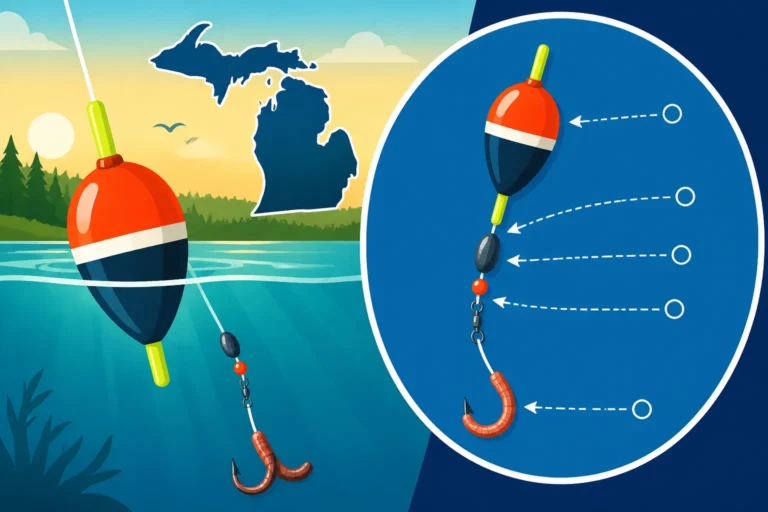
When the steelhead and salmon runs hit Michigan's rivers, anglers flock to the banks and boats with specialized gear designed for these powerful, anadromous fish. For steelhead, particularly when float fishing or "centerpinning," long rods are preferred—often 9 to 13 feet in length. These rods are typically medium-heavy power with a moderate to moderate-fast action. The extra length helps with line control in the current, protects light leaders, and provides superior shock absorption against the incredible runs and jumps of a fresh steelhead. How to Fish for Steelhead in Michigan covers many of these techniques.
Paired with these rods, many steelhead anglers opt for large spinning reels (3000-4000 size) spooled with 10-15 lb braided mainline and a fluorocarbon leader, or a specialized centerpin reel. Centerpin reels are a unique type of reel designed for ultimate drag-free drifts, allowing a float and bait to travel naturally with the current. While they have no mechanical drag system, the angler uses their hand on the spool to control line tension, offering an incredibly sensitive and direct connection to the fish. The choice between spinning and centerpin often comes down to personal preference and the specific technique being employed, but both demand reels with smooth casting capabilities and robust construction. For traditional spinning, Best Reels for Steelhead Fishing are paramount.
The fight of a Michigan river steelhead or salmon is legendary. These fish often use the current to their advantage, making powerful runs that test both angler and gear to their limits. Your rod and reel need to be able to handle this abuse, providing enough backbone to turn a fish away from snags and enough drag to prevent break-offs on blistering runs. Durability and reliability are key when you're battling a chrome torpedo in a swift Michigan river. Best Rods for Steelhead Fishing are long and strong for a reason.
Michigan Trout Streams: Delicate Presentations to Wary Fish
Michigan boasts an incredible network of trout streams, from tiny brook trout creeks in the Upper Peninsula to larger, famous rivers like the Au Sable and Pere Marquette. Fishing these waters for brown, rainbow, and brook trout often requires a much more delicate approach than for their larger salmonid cousins. For spin fishing, a light to medium-light power spinning rod, typically 6 to 7.5 feet long with a moderate to moderate-fast action, is ideal. This allows for precise casts of small spinners, spoons, or natural baits, and the sensitivity to feel subtle takes from wary trout.
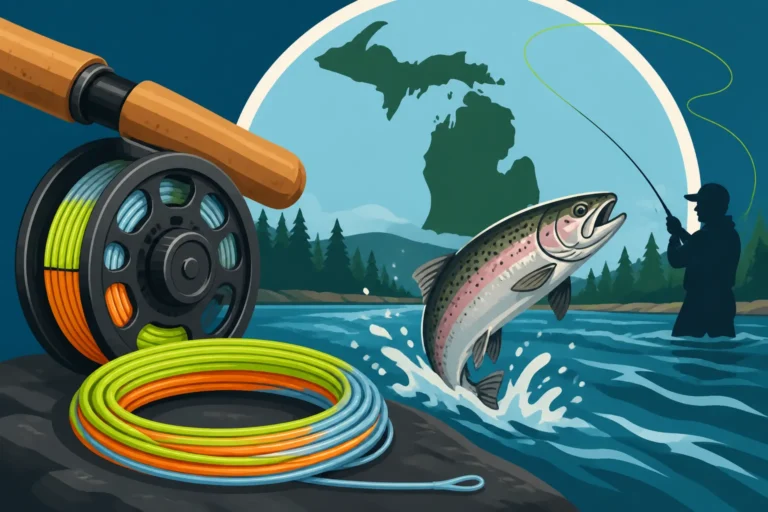
For fly fishing, which is incredibly popular on many Michigan trout streams, a lightweight fly rod is essential. A 3-weight to 5-weight fly rod, generally 7.5 to 9 feet in length, offers the finesse needed to present tiny dry flies, nymphs, or streamers accurately. These rods are designed to delicately load the fly line for presentation rather than casting heavy lures. Matching this with a corresponding fly reel and appropriate weight-forward fly line is critical for effective fly casting. Fly Fishing Techniques for Michigan Trout Streams delves into the art of this approach.
Regardless of whether you choose spin or fly gear, the emphasis for trout streams is on presentation and stealth. A rod that allows you to make accurate, quiet casts without spooking fish is far more valuable than one designed for brute force. The reel, particularly for spin fishing, should have a very smooth, light drag to protect delicate tippets when a surprisingly strong trout takes off. These setups are about the art of the catch, the subtle dance between angler and fish in a beautiful natural setting.
River Smallmouth: Power and Finesse in Current
Michigan's rivers are also fantastic for smallmouth bass, which are notorious for their aggressive strikes and incredible fighting ability, especially in current. Unlike their lake-dwelling cousins, river smallmouth use the current to their advantage, making even average-sized fish feel like giants. For targeting these hard fighters, a medium to medium-heavy power spinning or baitcasting rod, 6'6" to 7'6" long with a fast action, is a versatile choice. The fast action provides the sensitivity to feel rock transitions and subtle bites, while the power helps turn fish away from current-laden obstacles.
Many anglers prefer spinning setups for finesse presentations like tube jigs or drop-shots when fishing deeper holes or eddies. A 2500-3000 size spinning reel with 8-12 lb braided line and a fluorocarbon leader is excellent for this. However, if you're throwing larger crankbaits, spinnerbaits, or topwater lures in faster water, a baitcasting setup offers better control and power. A baitcasting reel in the 100-200 size range, spooled with 12-17 lb fluorocarbon, is perfect for these situations. The choice often depends on the specific lure and structure you're targeting.
The key to river smallmouth fishing is a balance of power and sensitivity. You need enough backbone to handle a fish that might weigh three pounds but fights like five, yet enough sensitivity to feel those light strikes in moving water. Your reel's drag system must be impeccable to handle sudden bursts of speed and keep the fish from breaking off on submerged rocks or logs. It’s a demanding but incredibly rewarding type of fishing, and the right gear makes all the difference in conquering these river gladiators.
Adapting Your Gear: Specialized Michigan Fishing Scenarios
Michigan's seasons and diverse aquatic environments often call for specialized adjustments to your rod and reel arsenal. From the frigid depths of winter ice fishing to navigating tight spots in a kayak, standard setups sometimes fall short. Understanding these unique needs allows you to optimize your gear for maximum effectiveness and enjoyment, ensuring you're prepared for whatever Michigan's waters throw your way.
Ice Fishing Rigs: Cold Weather Performance
When Michigan's lakes and bays freeze over, a whole new world of fishing opens up, but it requires a very specific approach to rods and reels. Ice fishing rods are considerably shorter than open-water rods, typically ranging from 24 to 48 inches. This short length is essential for fishing in the confines of an ice shanty or out in the open, allowing for precise jigging movements over a small hole. Rod power varies greatly depending on the target species, from ultralight for panfish to medium-heavy for walleye and pike. A sensitive tip is paramount for detecting the often subtle bites in cold water. Michigan Ice Fishing Guide offers a deep dive into this winter pastime.
Pairing these short rods with appropriate reels is crucial for cold-weather performance. Small spinning reels (500-1000 size for panfish, 2000-2500 for walleye/pike) are common, but you'll also see specialized "inline" ice fishing reels. These reels spool line directly off the top, preventing line twist, which can be a major issue with small jigs and light lines in freezing temperatures. Look for reels designed with cold-weather lubricants and larger handles for use with gloves. The drag system needs to be smooth and easily adjustable, even with numb fingers. For example, when targeting perch through the ice, an ultralight rod with an inline reel spooled with 3-4 lb fluorocarbon is a deadly combination for feeling those light bites and preventing line memory.
Beyond the rod and reel itself, consider how your line will perform in sub-freezing temperatures. Monofilament can get stiff and develop memory, while fluorocarbon handles the cold better. Braided line, while strong, can absorb water and freeze, making it difficult to use. Best Ice Fishing Rods for Cold-Weather Anglers are designed to resist freezing, offering specialized materials and guides to reduce ice buildup. Having the right cold-weather gear, including your rod and reel, significantly improves your comfort and success on the ice.
Kayak and Small Boat Angling: Compact and Versatile Setups
Kayak and small boat fishing in Michigan's inland lakes, rivers, and even calmer Great Lakes bays has exploded in popularity. This style of fishing demands compact, versatile, and often lighter gear that's easy to manage in tight spaces and allows for effective casting from a seated position. Rods typically range from 6'6" to 7'6" in length, with medium-light to medium power and a fast action. Shorter rods are easier to maneuver around kayak rigging and provide better leverage when fighting a fish close to the boat.
Spinning reels in the 2500-3000 size range are incredibly popular for kayak fishing due to their versatility, ease of use, and ability to cast a wide range of lures. Baitcasting reels are also a good option for anglers targeting larger bass or pike, offering better control when pitching into tight cover. Regardless of the reel type, look for models that are relatively lightweight and corrosion-resistant, as they are more likely to get splashed or even fully submerged in a kayak. Spool your reels with braided line, as its strength-to-diameter ratio and lack of stretch are invaluable for feeling bites and fighting fish from a kayak.
One critical aspect of kayak fishing is gear management. You often only have space for a few setups, so choosing versatile rods and reels that can handle multiple techniques and species is key. A single medium-power spinning rod might be used for casting crankbaits, jigging plastics, or even throwing a bobber rig. This multi-purpose approach saves space and keeps your deck uncluttered. Furthermore, having a rod leash or some form of tether for your rod and reel is a smart move, as losing a prized setup overboard in a small craft is a common and heartbreaking occurrence.
Essential Gear Complements: Line and Accessories
A great rod and reel are only as good as the fishing line spooled onto the reel, and the accessories that support your setup. The choice of line can dramatically impact casting distance, sensitivity, and fighting power, while a few key accessories can extend the life of your gear and make your fishing experience much more enjoyable. Don't overlook these crucial components, as they complete the system and directly influence your success on Michigan's waters.
The Right Line for the Job: Mono, Fluoro, or Braid
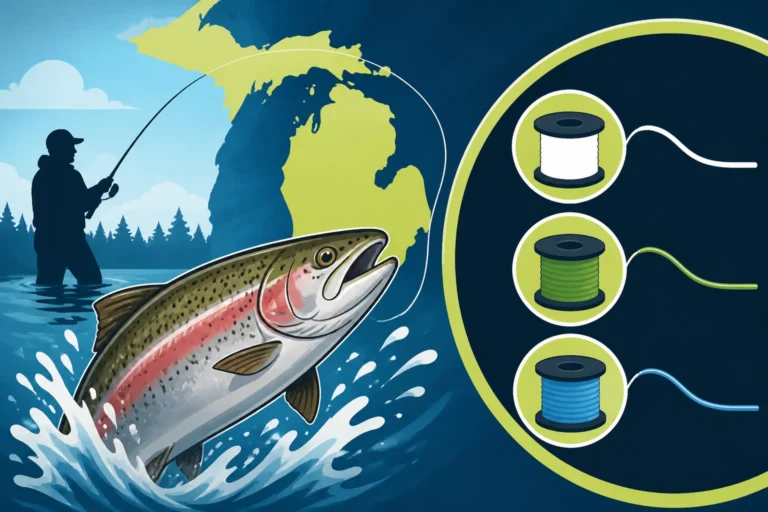
Choosing the right fishing line is as important as selecting the rod and reel itself. Each type of line—monofilament, fluorocarbon, and braided—has distinct characteristics that make it suitable for different situations in Michigan fishing. Monofilament (mono) is the traditional choice, known for its stretch, shock absorption, and affordability. Its stretch can be an advantage when using treble-hooked lures, acting as a buffer to prevent hooks from tearing out of a fish's mouth. It's also relatively easy to tie knots with and is very versatile, making it a good all-around choice for many inland lake and river applications, especially for panfish and trout.
Fluorocarbon (fluoro) is known for its low visibility underwater, abrasion resistance, and minimal stretch. It sinks faster than mono, which can be beneficial for getting baits down quickly, and its low stretch provides excellent sensitivity, making it a favorite among walleye and bass anglers using finesse techniques. Often, anglers will use braided line as a main line for its strength and sensitivity, then tie on a fluorocarbon leader for stealth and abrasion resistance, particularly in clear Michigan waters. This hybrid approach offers the best of both worlds.
Braided line (braid) offers incredible strength-to-diameter ratio, no stretch, and excellent casting distance. Its zero stretch translates to superior sensitivity, allowing you to feel every bump, bite, and bottom contour. This makes it a fantastic choice for techniques where feel is critical, like jigging for walleye or punching through heavy cover for largemouth bass. However, braid is highly visible and can be prone to wind knots if not spooled correctly. For many Michigan anglers, a braided mainline with a fluorocarbon leader is the go-to setup for everything from steelhead to bass, combining the benefits of strength and invisibility. When considering Best Tackle Box Setup for Michigan Anglers, line selection is a cornerstone.
Crucial Accessories for Rod and Reel Longevity
Beyond the main components, a few essential accessories can significantly contribute to the longevity and performance of your rod and reel. Rod socks or rod sleeves are simple but incredibly effective tools for protecting your rod blanks and guides from scratches and damage, especially when transporting multiple rods in a boat or vehicle. They prevent tangled lines and keep your graphite and fiberglass safe from accidental bumps.
Reel covers, particularly for baitcasting and conventional reels, offer protection from dust, dirt, and moisture when your gear isn't in use. While modern reels are built to be robust, keeping them clean and protected helps prevent internal corrosion and maintains smooth operation. Investing in a good quality tackle bag or box with dedicated rod and reel storage compartments can also go a long way in keeping your gear organized and protected, especially when moving between different fishing spots. Best Tackle Box Setup for Michigan Anglers definitely considers organization.
Finally, having a small reel maintenance kit with lubricating oil and grease is indispensable. Regular cleaning and lubrication of your reel's moving parts—especially the drag system and bearings—will ensure it performs flawlessly season after season. Even the best reels will eventually degrade if neglected. Think of it as preventative medicine for your tackle; a few minutes of care after each trip can save you from costly repairs or the disappointment of a reel failing at a crucial moment.
Protecting Your Investment: Rod and Reel Care and Maintenance
Your rods and reels are significant investments, not just financially, but in the memories they help create on Michigan's beautiful waters. Neglecting their care can lead to premature wear, performance issues, and ultimately, a shorter lifespan. A little routine maintenance goes a long way in ensuring your gear remains in top condition, ready for your next adventure, whether it's battling a trophy muskie or simply enjoying a peaceful day chasing panfish.
Routine Cleaning and Inspection After Every Trip
The most crucial aspect of rod and reel maintenance is a consistent routine after every fishing trip. Even if you only fished for a few hours in freshwater, your gear can accumulate dirt, grime, and environmental contaminants. Start by wiping down your rod blank, guides, and reel seat with a damp cloth to remove any debris. Pay special attention to the reel itself; sand, dirt, and salt residue (especially if fishing the Great Lakes or using live bait) can be incredibly abrasive and damaging to internal components.
For reels, a quick rinse with fresh water (never spray directly into the bearings or drag system) followed by a thorough drying is often sufficient. Use a soft cloth to meticulously dry all external surfaces. Inspect your rod guides for any chips, cracks, or loose inserts, as damaged guides can fray or break your line, leading to lost fish. Check your reel's drag system to ensure it's still smooth and not sticking. This quick inspection not only cleans your gear but also helps you identify potential problems before they become major issues on your next outing.
Taking care of your gear extends beyond just cleaning. It's also about storing it properly. Never leave rods bent or under tension, as this can weaken the blank over time. If possible, store rods vertically or horizontally on a rack, away from direct sunlight or extreme temperature fluctuations. This simple discipline ensures that your equipment is always ready for peak performance, year after year.
Winter Storage and Seasonal Prep
As Michigan transitions from open-water fishing to ice fishing, or even into the off-season, proper long-term storage of your rods and reels becomes essential. Before putting your gear away for several months, a more thorough cleaning and lubrication routine is recommended. Start by completely stripping any old line off your reels, especially monofilament which can develop memory and weaken over time. Clean the spool thoroughly. This is also a great opportunity to open up your reel (if you're comfortable and knowledgeable in doing so) to clean and re-grease the internal gears and lubricate the bearings. If not, a professional reel cleaning service before winter storage is a wise investment.
For rods, inspect every guide, tip-top, and the reel seat for any corrosion or damage. Repair or replace any worn components. Store rods in individual rod sleeves or cases to prevent them from rubbing against each other. For reels, loosen the drag completely before storage; this relieves tension on the drag washers and extends their lifespan. Store reels in a dry, temperature-controlled environment, ideally in a padded reel bag or case. Avoid storing them in damp basements or hot attics, as extreme temperatures and humidity can lead to corrosion and material degradation.
When spring rolls around and you're preparing for the Michigan Spring Fishing Season Guide, take the time to spool fresh line onto your reels, re-lubricate them lightly, and re-inspect your rods. This seasonal preparation ensures that when that first warm day hits, and you're ready to hit the water, your trusted rod and reel setups are just as ready as you are, performing optimally and giving you the best chance for success.
Disclaimer
This article is for general informational purposes only and does not constitute professional advice. Laws, prices and regulations vary by location and change over time. Consult a qualified professional for guidance on your specific situation.