How to Tell Smallmouth From Largemouth Bass
It’s a common scenario on Michigan’s waters: you’ve reeled in a beautiful bass, and as you hold it up, a question gnaws at you – is this a smallmouth or a largemouth? This isn't just a matter of curiosity; knowing the difference is crucial for adhering to specific regulations, understanding fish behavior, and ultimately, becoming a more successful angler. This guide will walk you through the distinct physical traits, preferred habitats, and behavioral patterns that will help you confidently identify smallmouth and largemouth bass every time you land one.
The Perplexing Predicament: Why Distinguishing Bass Matters
Every Michigan angler has been there. You're out on the lake or river, the sun is shining, and suddenly, your line goes taut. You fight it, you land it, and there it is – a chunky green fish with a fierce look. But then comes the moment of hesitation: "Is it a smallmouth or a largemouth?" You glance at your buddy, who shrugs, equally unsure. This isn't just about winning bragging rights; in Michigan, the regulations for these two popular bass species can differ significantly. Misidentifying your catch could lead to unknowingly violating size or creel limits, which is a headache no one wants.
Think about it: you've spent good money on your gear, from that perfect rod and reel combo to a tackle box overflowing with lures you picked up on Amazon. You've studied the local maps and planned your day. The last thing you want is for a simple identification error to put a damper on your trip, or worse, lead to a citation. Beyond the rules, knowing which bass you've caught tells you a lot about the water you're fishing and helps you refine your techniques. Are you in prime smallmouth territory, or have you stumbled upon a largemouth honey hole? The answer can dramatically change your approach for the rest of the day. It also helps you appreciate the incredible diversity of our Michigan fisheries, celebrating each species for its unique qualities and challenges.
Key Physical Characteristics to Look For
When you've got a bass in hand, there are a few tell-tale signs that will quickly give away its identity. These aren't subtle differences; once you know what to look for, you'll be identifying them like a seasoned pro. It really boils down to three main areas: the mouth, the dorsal fin, and the overall coloration and pattern. Let's break down each one.
Mouth Size and Jawline
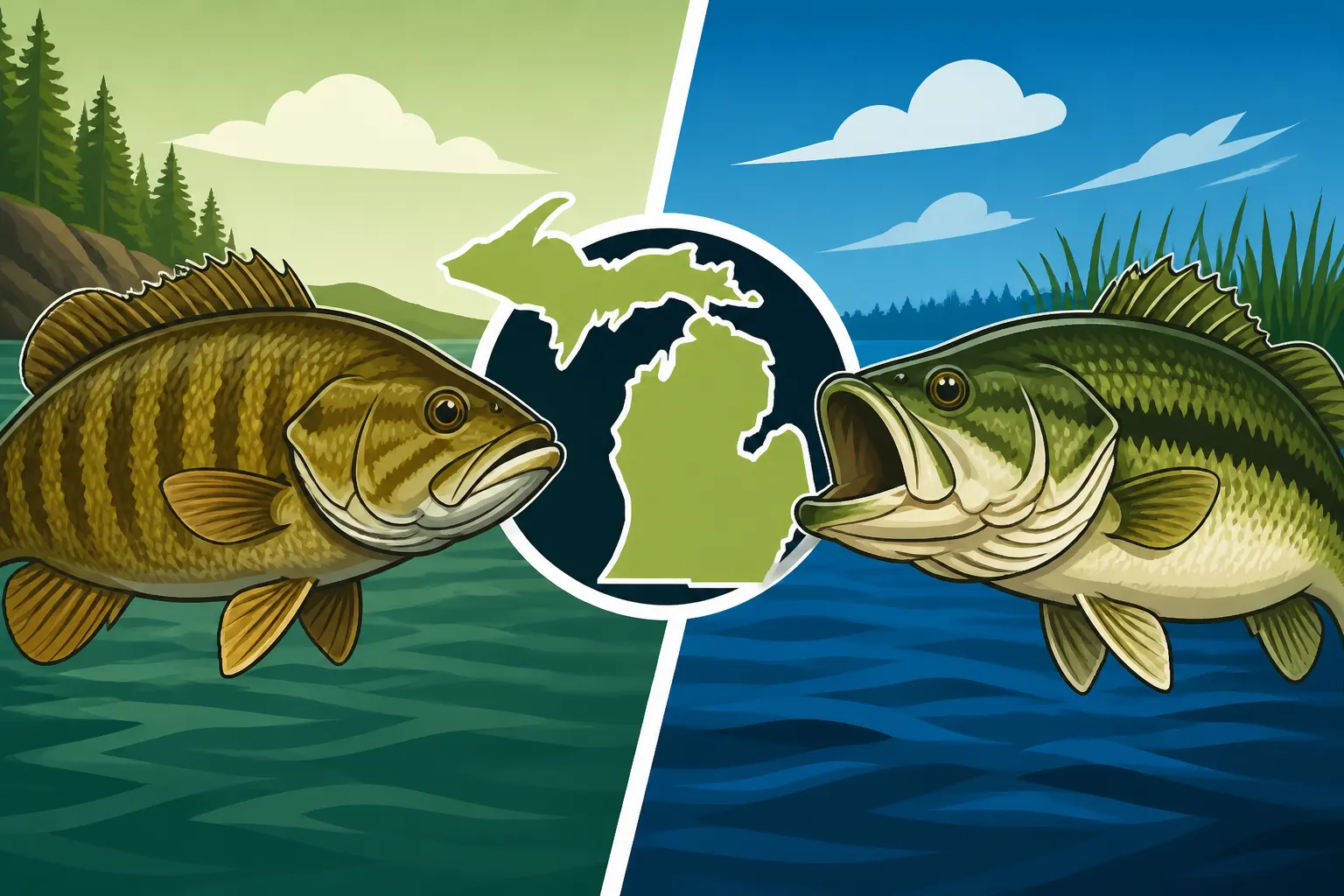
This is often the first and most obvious indicator. For a largemouth bass, if you imagine a vertical line drawn down from the back of its eye, its mouth extends well past that line when closed. Sometimes, it feels like their jaw just keeps going and going, giving them that classic "bucket mouth" appearance. It's truly a gaping maw, perfectly designed for engulfing prey whole, whether it's a frog, a baitfish, or even a smaller duckling in some extreme cases. When they flare their gills and open that cavernous mouth, it's quite a sight.
Now, for the smallmouth bass, the name truly is a clue. Their mouth, when closed, generally does not extend past that imaginary vertical line drawn from the back of the eye. It's a noticeably smaller mouth, more proportional to their head size. While still a formidable predator, they tend to feed on smaller prey items like crayfish, insects, and smaller minnows. This difference in mouth structure is a fundamental adaptation that influences where they live and what they eat, and it's your go-to identifier. Smallmouth Bass Identification in Michigan and Largemouth Bass Identification in Michigan go into even more depth on these features.
Dorsal Fin Separation
Another critical feature lies along their back: the dorsal fin. Both species have two dorsal fins, but how they are connected or separated is a huge clue. On a largemouth bass, the spiny front dorsal fin and the soft-rayed rear dorsal fin are almost completely separated by a deep notch. If you run your finger along their back, you'll feel a distinct, almost two-part fin structure. It's as if they have two distinct fins just barely touching, or in some cases, completely separated, creating a clear gap.
The smallmouth bass, on the other hand, has dorsal fins that are clearly connected, forming one continuous, albeit notched, fin. The notch between the spiny and soft-rayed parts is much less pronounced, making it feel like a single, unified fin when you run your hand over it. This might seem like a minor detail, but it's incredibly reliable. If you're ever in doubt about the mouth, check the dorsal fin. It's a subtle but consistent characteristic that rarely lies.
Coloration and Body Patterns
While coloration can vary wildly depending on water clarity, diet, and habitat, there are general patterns that hold true. Largemouth bass typically have a more uniform green coloration, ranging from a light olive to a deep, dark green. Their most distinguishing pattern is a prominent, often broken, horizontal dark stripe or band running along their side from gill plate to tail. This lateral line often looks like a series of blotches rather than a solid line, but it's always there in some form. Their bellies tend to be whitish or yellowish.
Smallmouth bass, often called "bronze-backs," usually display a more brownish or golden-bronze hue, sometimes even appearing yellowish-tan, especially those caught from clear, rocky waters. Instead of a horizontal stripe, they tend to have several distinct, dark vertical bars or blotches along their sides. These bars can be quite pronounced, almost tiger-striped, or they can be faded, but they are typically vertical, not horizontal. Their eyes often have a reddish or orange tint, which is another neat little detail. It's important to remember that a bass's color can change to blend in with its environment, so while helpful, always cross-reference with mouth and fin characteristics.
Here’s a quick comparison table to keep these key differences straight:
| Feature | Largemouth Bass | Smallmouth Bass |
|---|---|---|
| Mouth Position | Jaw extends past the back of the eye (closed) | Jaw does not extend past the back of the eye (closed) |
| Dorsal Fin | Deep, distinct notch, nearly separated two fins | Connected, continuous fin with a shallow notch |
| Body Color | Green, olive, with a prominent horizontal stripe | Brown, bronze, golden, with vertical bars/blotches |
| Eye Color | Typically dark | Often reddish or orange |
Habitat and Behavior Clues
Beyond the physical appearance, where you catch a bass and how it fights can offer additional strong hints about its identity. These environmental and behavioral distinctions are often rooted in their biological adaptations and preferred food sources. Understanding these tendencies not only aids in identification but also dramatically improves your chances of finding them in the first place.
Preferred Environments
Largemouth bass are true masters of the shallow, weedy, and often warmer waters. Think about those sprawling Michigan inland lakes like Houghton Lake or Lake St. Clair, or even slow-moving rivers with lots of cover. They love dense aquatic vegetation, lily pads, fallen trees, brush piles, docks, and any structure that provides ambush points. They thrive in murkier water and aren't afraid of a little sediment. If you're casting a weedless frog into a thick mat of lily pads, chances are you're in prime largemouth country. They are quite comfortable in water that is warmer and has less current. Houghton Lake Fishing Guide: Michigan's Largest Inland Lake is a great read for largemouth spots.
Smallmouth bass, on the other hand, are often found in cooler, clearer water, preferring rocky structures, gravel beds, and areas with current. You'll find them in the deeper, rockier sections of the Great Lakes (like Lake Michigan or Lake Huron), along ledges, reefs, and points, or in the faster-flowing, rocky stretches of rivers. They like to relate to hard bottom and will often hang out around boulders, rip-rap, and drop-offs. If you're fishing a clear, cold-water river with a lot of current, or a deep lake with rocky shoals, you're likely targeting smallmouth. This preference for structure and current also makes them incredibly fun to catch, as they are known for their strong fighting spirit. For specific smallmouth action, check out Lake St. Clair Smallmouth Bass Fishing.
Fighting Style and Behavior
You've hooked a fish, and the fight is on! Their fighting style can be a huge clue to what's on the other end of your line. Largemouth bass are often characterized by their initial powerful run, then their tendency to dive into heavy cover (like those lily pads or brush piles they love) or try to "jump and thrash" on the surface, often shaking their heads violently to throw the hook. They put up a good, solid fight, but it's often more about power and brute force close to their preferred cover.
Smallmouth bass are legendary for their acrobatic, never-say-die fighting style. They tend to make long, blistering runs, often jumping clear out of the water multiple times in a single fight. They're known for their relentless pulling and diving, making every catch an exhilarating experience. Many anglers will tell you that a smallmouth fights pound-for-pound harder than a largemouth. If your rod is bent over, and the fish is making repeated, dramatic jumps and strong, sustained runs in open water, you likely have a smallmouth on your hands. They truly live up to their reputation as fierce freshwater fighters.
Why Accurate Identification Boosts Your Michigan Bass Fishing Success
Beyond avoiding a fine, knowing your bass species unlocks a deeper understanding of fishing dynamics and drastically improves your chances of success on the water. It's about becoming a more thoughtful and effective angler, not just a lucky one. When you understand the nuances between these two incredible fish, you start to connect the dots in a way that elevates your entire fishing experience.
Firstly, understanding the species helps you follow the law. Michigan has specific Michigan Smallmouth Bass Daily Limit and Michigan's Combined Largemouth and Smallmouth Bass Limit regulations that can change by body of water or season. Imagine you’ve caught a beautiful bass that's on the cusp of a legal size limit. If you misidentify it, you could keep a fish that's too small for its species or release one that was perfectly legal. This is where those clear physical identifiers really come into play. It removes doubt and helps you fish responsibly, ensuring these populations remain healthy for years to come.
Secondly, identification informs your tackle and technique selection. If you're consistently catching smallmouth, you might want to switch to baits that mimic crayfish or minnows, and focus on presentations that work well in clear, rocky areas. Think about jigging tubes, drop shots, or crankbaits that dive to rocky ledges. The Best Technique for Smallmouth Bass on Lake St. Clair highlights some prime examples. Conversely, if largemouth are biting, you'll be throwing topwater frogs over weed mats, pitching jigs into thick cover, or working spinnerbaits through submerged vegetation. Your choice of lure, line, and even rod action can be optimized for the species you're targeting.
Finally, knowing the difference allows you to pattern fish more effectively. If you're catching largemouth in a shallow, weedy cove, you can deduce that other similar coves might hold more largemouth. If you're pulling smallmouth off a deep, rocky point, you'll seek out similar structures elsewhere on the lake. This insight transforms random casting into strategic fishing. You'll start reading the water with greater precision, understanding why certain areas hold certain fish, and making more informed decisions about where to cast next. This connection between identification, habitat, and behavior is the hallmark of a truly skilled Michigan angler. So, next time you feel that tug on your line, remember these tips, and you’ll not only know what you’ve caught but also why you caught it there! It makes every catch an exciting learning opportunity.
Disclaimer
This article is for general informational purposes only and does not constitute professional advice. Laws, prices and regulations vary by location and change over time. Consult a qualified professional for guidance on your specific situation.