Michigan Smallmouth Bass Daily Limit
It’s easy to get lost in the sea of fishing regulations here in Michigan, especially when you’re out on the water, excited about your next cast. One common area of confusion for anglers, myself included, often revolves around the specific rules for popular game fish like smallmouth bass. Understanding the nuances of daily limits, size restrictions, and how these apply across various lakes and rivers is absolutely crucial. This comprehensive guide will untangle the complexities of Michigan's smallmouth bass daily limit, along with minimum size requirements and other vital regulations, ensuring you're always fishing within the law and contributing to the sustainability of our amazing fisheries.
Understanding Michigan's Smallmouth Bass Daily Limits
When you're chasing bronzebacks across Michigan, whether it's on a sprawling Great Lake or a quiet inland waterway, knowing the daily limit for smallmouth bass is fundamental. It's not just about avoiding a ticket; it's about being a responsible angler who contributes to the health of our fish populations for years to come.
Statewide Daily and Possession Limits
The Michigan Department of Natural Resources (DNR) sets a statewide daily possession limit for bass, which includes both smallmouth and largemouth bass. Generally, anglers are allowed to keep a combined total of five bass per day. This "combined total" is key – it doesn't mean five smallmouth and five largemouth, but rather five total fish of either species in any combination. So, if you catch three smallmouth and two largemouth, you've hit your limit for the day.
The term "daily limit" refers to the number of fish you can legally harvest and keep in one calendar day. "Possession limit," on the other hand, refers to the maximum number of fish you can have in your possession at any given time, regardless of when they were caught. For bass in Michigan, the daily limit and possession limit are typically the same: five fish. This means you can't go out for three days, catch five bass each day, and come home with fifteen bass in your cooler or freezer unless specific circumstances (like legal storage at a non-fishing location) are met and documented. It's critical to understand that once you have your five bass for the day, your legal angling for bass for that day is effectively over if you intend to keep them. Many anglers, however, choose to continue fishing for fun, practicing meticulous catch-and-release techniques to avoid exceeding their limit while still enjoying the sport.
Specific Waterbody Exceptions and Seasons
While the general rule is five bass, Michigan's fishing regulations are anything but one-size-fits-all. Some specific waterbodies, or even particular sections of larger lakes, can have unique regulations that supersede the statewide rules. These exceptions are put in place by the Michigan DNR to manage specific fisheries, protect vulnerable populations, or enhance fishing opportunities. For instance, certain lakes known for trophy smallmouth potential might have more restrictive limits, like a lower daily bag limit or a higher minimum size.
These special regulations often coincide with specific seasons, such as a restricted period during the spawning season to give the bass a chance to reproduce undisturbed. A classic example can be found on parts of the Great Lakes or some of Michigan's larger inland lakes, where the smallmouth bass season itself might open later than the general bass season on other waters. You might find a lake in the Upper Peninsula that has a different smallmouth limit than a lake in the Lower Peninsula, or even a specific bay on Lake Michigan with its own rules. To avoid any unwelcome surprises, it’s imperative to check the official Michigan Fishing Regulations Guide or the Michigan's DNR Hunt Fish App for Licenses and Reporting before heading out to any unfamiliar water. These resources are updated annually and are the definitive source for any special regulations. Don't rely solely on what you heard from a buddy or an old pamphlet you found in your tackle box.
The Combined Bass Limit: Smallmouth and Largemouth Together
As we touched on, the "five bass" limit isn't just for smallmouth. It's a combined limit that includes both smallmouth bass and largemouth bass. This means if you're fishing a lake where both species thrive, like Lake St. Clair which is renowned for its excellent bass fishing, you need to keep track of your total catch of both species. Imagine you're having a fantastic day and catch four beautiful smallmouth bass. At this point, you only have one spot left in your combined limit. If your next fish happens to be a nice largemouth, you can keep it, and you've reached your five-bass limit. Any further bass, regardless of species, must be immediately released back into the water with as little harm as possible.
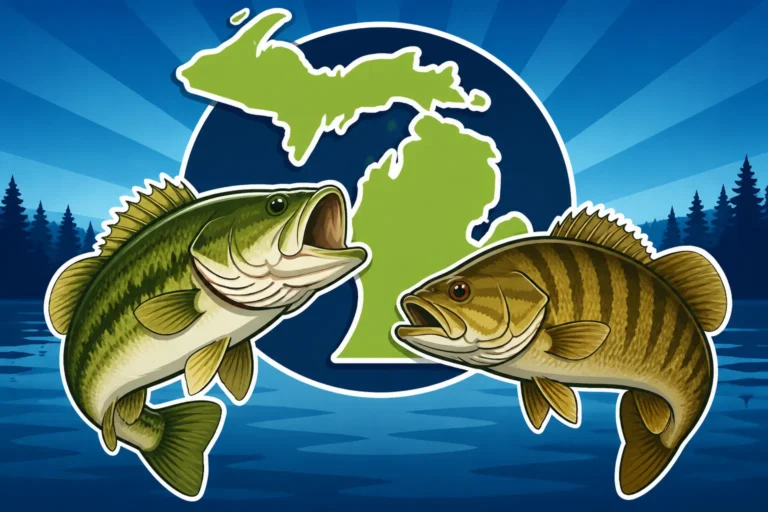
This combined limit underscores the importance of being able to accurately identify your catch. While smallmouth and largemouth bass share some similarities, they have distinct features. Smallmouth typically have a jaw that doesn't extend beyond their eye, vertical bars or blotches on their sides, and red eyes. Largemouth, on the other hand, usually have a jaw that extends past their eye, a prominent horizontal dark stripe along their side, and eyes that are typically not red. When you're actively fishing, especially when you're targeting bass, take a moment to confirm the species before making a decision on whether to keep or release it. Understanding this distinction is vital for adhering to the Michigan Smallmouth and Largemouth Bass Daily Limit and ensuring you don't inadvertently break the law.
Size Matters: Minimum Length Requirements for Smallmouth Bass
Beyond the daily limit, Michigan has strict rules about the minimum size a smallmouth bass must be before you can legally keep it. These size limits are one of the most effective tools for managing fish populations and ensuring the long-term health of the fishery.
Statewide Minimum Size Rules
For most waters in Michigan, the statewide minimum size limit for smallmouth bass is 14 inches. This means any smallmouth bass you catch that measures less than 14 inches from the tip of its snout to the end of its tail (with the mouth closed and tail squeezed) must be immediately released. The 14-inch minimum is designed to protect juvenile bass, allowing them to grow to a mature size and, most importantly, have at least one opportunity to spawn before being harvested. Protecting these fish through their first spawning cycle is critical for maintaining robust bass populations.
Think about a spring fishing trip on the Grand River. You're casting a small crankbait, and you feel a solid strike. After a good fight, you land a feisty smallmouth. Before you even think about putting it on a stringer, you reach for your measuring tape. If that fish comes up short, say 12 inches, it doesn't matter how perfect it looks or how much you want to keep it; it must go back. It's tempting to keep a "just barely" undersized fish, but those rules are there for a reason, and conservation-minded anglers respect them. Always err on the side of caution.
Catch and Immediate Release Guidelines
When you catch an undersized smallmouth bass, or any fish you intend to release, the method of release is just as important as the decision to let it go. Proper catch-and-release techniques drastically increase the fish's chances of survival. Here are some key practices:
- Handle with Care: Minimize handling the fish as much as possible. Avoid touching its gills or eyes. If you must handle it, do so with wet hands to protect its slime coat, which is vital for disease resistance.
- Quick De-hooking: Use needle-nose pliers or a de-hooking tool to remove the hook quickly. If the fish is deeply hooked, especially in the gills or throat, it's often best to cut the line as close to the hook as possible rather than tearing internal organs trying to retrieve it.
- Support Its Weight: If you lift the fish for a quick photo, support its body horizontally, especially larger fish, to avoid damaging its jaw or internal organs. Never hold a fish vertically by its jaw alone.
- Revive If Necessary: If the fish seems stressed or lethargic, gently hold it in the water, facing into the current, until it regains its strength and can swim away on its own.
These practices are crucial for the long-term health of the fish and the fishery. A fish that swims away healthy today can be caught another day, or even better, contribute to the next generation of smallmouth bass. Anglers looking for high-quality tools for catch-and-release can find a wide range of options, from specialized de-hookers to non-puncture fish grippers, readily available on platforms like Amazon.
How to Measure Your Catch Accurately
Getting an accurate measurement of your smallmouth bass is critical to ensure you're complying with the minimum size limit. A proper measurement can prevent you from accidentally keeping an undersized fish, which could lead to fines or penalties. Here’s how the Michigan DNR specifies you should measure fish:
- Total Length: Fish are measured from the tip of the snout to the farthest tip of the tail, with the mouth closed and the tail squeezed together (also known as "forked"). This "total length" measurement is the standard for most species, including smallmouth bass.
- Measuring Device: Always carry a reliable measuring device, whether it's a tape measure, a ruler, or a dedicated fish measuring board. Lay the fish flat on its side against the ruler, ensuring its mouth is closed against the zero mark. Gently squeeze the tail to get the maximum length.
- On the Spot: Measure the fish immediately upon catching it, especially if you suspect it's close to the legal limit. Don't wait until you're back at the dock, as misremembering a length or a fish shrinking slightly can happen.
Having a good, clear measuring tape or board as part of your essential gear makes this process simple and accurate. You can find durable, waterproof measuring tapes and specialty fish rulers on Amazon that are designed for quick and easy use on the boat or shore. Accuracy matters, so take the extra second to confirm the length before deciding its fate.
Why These Regulations Exist: Conservation and Management
Fishing regulations aren't arbitrary rules designed to make life difficult for anglers. They are carefully crafted management tools based on scientific research, population dynamics, and conservation principles. For smallmouth bass, these limits are essential for maintaining healthy, sustainable fisheries across Michigan.
Protecting Spawning Populations
One of the primary reasons for daily and size limits, as well as specific closed seasons, is to protect fish during their crucial spawning periods. Smallmouth bass typically spawn in the spring and early summer when water temperatures reach optimal levels. During this time, male bass guard nests, protecting the eggs and newly hatched fry from predators. Harvesting these fish, especially the larger, more mature individuals, during their spawning season can severely impact reproductive success.
By implementing a 14-inch minimum size, the DNR ensures that most smallmouth bass have the opportunity to spawn at least once, if not multiple times, before they become legal to harvest. This allows mature fish to contribute to the next generation, which is vital for the long-term health and abundance of the population. Imagine a scenario where there were no size limits: anglers might keep all fish, regardless of size, leading to a rapid depletion of breeding stock and, eventually, a collapse of the fishery. The rules on Michigan Fishing Season Dates and Rules are directly tied to these biological cycles, aiming to minimize disturbance during critical times.
The Role of the Michigan DNR
The Michigan Department of Natural Resources (DNR) plays a pivotal role in managing the state's fisheries, including smallmouth bass. Their fisheries biologists conduct extensive research, including population surveys, creel censuses (angler interviews to track catch rates and harvest), and habitat assessments. They monitor water quality, study fish diets, and track growth rates to gain a comprehensive understanding of bass populations in various waterbodies. This scientific data is the foundation upon which all regulations are built.
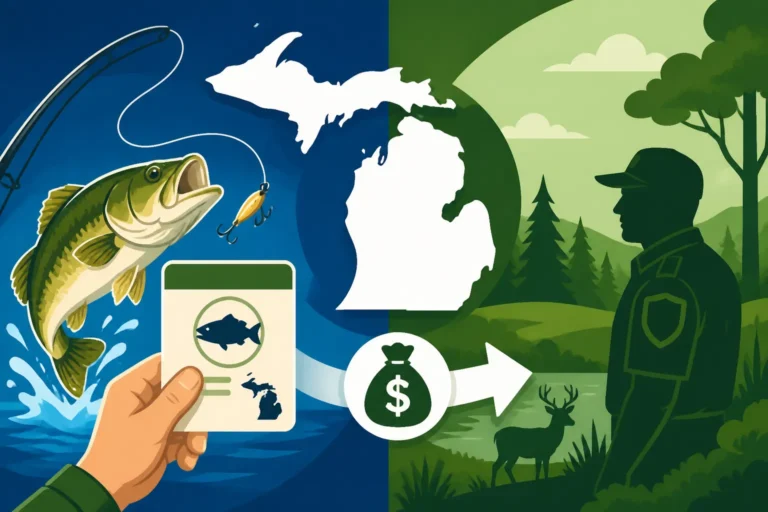
Based on this ongoing research and monitoring, the DNR proposes and implements regulations like the Michigan Bag and Size Limits Explained. They also consider public input through open houses, online surveys, and advisory committees. This collaborative approach ensures that regulations are not only scientifically sound but also reflect the interests and values of Michigan's angling community. The DNR's goal is always to balance recreational fishing opportunities with the imperative of conservation, ensuring that future generations can enjoy the same fantastic fishing experiences we have today. Every time you buy a Michigan Fishing License Guide for Residents and Nonresidents, a portion of that revenue directly supports these vital conservation efforts.
Angler Responsibility in Sustainable Fishing
Ultimately, the success of any fishing regulation hinges on the active participation and responsibility of individual anglers. We are all stewards of Michigan's natural resources, and adhering to regulations is the most fundamental way we can contribute to sustainable fishing. This responsibility extends beyond simply following the letter of the law. It includes:
- Ethical Practices: Practicing proper catch-and-release, especially for undersized or non-target species, demonstrates a commitment to the fish's well-being.
- Reporting Violations: If you witness illegal fishing activities, such as someone exceeding their daily limit or keeping undersized fish, reporting it to the DNR’s Report All Poachers (RAP) line helps protect the resource.
- Staying Informed: Actively seeking out and understanding the current regulations for the waters you plan to fish ensures you're always compliant.
- Minimizing Impact: Reducing litter, respecting private property, and practicing "leave no trace" principles contribute to a positive fishing environment for everyone.
By embracing these responsibilities, anglers become partners with the DNR in conservation, helping to ensure that Michigan's smallmouth bass populations remain healthy and abundant for years to come.
Staying Informed About Michigan Bass Regulations
Regulations can change, and what was legal last year might have a slight tweak this season. The onus is on the angler to stay current with the rules. Thankfully, Michigan provides several excellent resources to keep you in the loop.
Consulting the Michigan Fishing Guide
The absolute, definitive source for all Michigan fishing regulations is the official Michigan Fishing Regulations Guide. This annual publication details all statewide regulations, including seasons, daily limits, and size limits, as well as any specific exceptions for individual lakes, rivers, or Great Lakes zones. Every angler, regardless of experience level, should have access to the current year's guide.
You can typically pick up a physical copy for free wherever fishing licenses are sold, such as bait shops, sporting goods stores like those found through an Amazon search for local retailers, or DNR customer service centers. Even more conveniently, the entire guide is available as a PDF download on the Michigan DNR website. Make it a ritual to review this guide at the beginning of each fishing season, and always double-check the section for the specific waterbody you plan to fish, especially if it's not a common spot for you. Think of it as your angling bible; it holds all the answers. Checking the Reading the Michigan Fishing Regulations Digest is a critical step before any outing.
Using the DNR Hunt Fish App and Online Resources
In our modern age, staying informed is easier than ever thanks to digital tools. The Michigan DNR offers a fantastic mobile application, the Michigan's DNR Hunt Fish App for Licenses and Reporting, which is incredibly useful for anglers. This app allows you to:
- Purchase Licenses: Buy your fishing license directly from your smartphone.
- Access Regulations: View the current fishing regulations digest right on your device, making it easy to check limits and seasons on the go, even when you're already at the boat launch or on the water.
- Report Harvests: For species like muskellunge, you can report your catch directly through the app.
- Map Features: Explore public land and water access points.
Beyond the app, the Michigan DNR website (Michigan.gov/DNR) is a treasure trove of information. You can find detailed regulations, fishing reports, stocking information, and news releases about any upcoming regulatory changes. Before a trip, a quick check of the DNR website for your target lake or river can provide invaluable, up-to-the-minute information. It's especially useful for species like smallmouth bass, where regulations can be highly localized. For example, if you're planning a trip to the Best Time to Fish Lake St. Clair for Smallmouth Bass, you can quickly confirm the specific rules for that body of water.
Keeping Up with Regulatory Changes
It's a common misconception that fishing regulations remain static year after year. In reality, the Michigan DNR periodically updates rules based on biological assessments, changes in fish populations, environmental factors, and public feedback. These changes are usually announced well in advance of the new fishing season, which typically begins on April 1st. However, specific emergency closures or changes can happen at any time, though they are rare.
Always make it a habit to check the current year's regulations before your first fishing trip of the season, and certainly before venturing to a new body of water. A regulation change might be subtle, like a tweak in the size limit for a specific lake, or more significant, such as a season closure for a particular species. Staying informed means being proactive. Sign up for DNR email newsletters, follow their social media channels, or make it a point to revisit their website. This vigilance ensures you're always compliant, helping to maintain your good standing as a responsible angler and safeguarding Michigan's incredible fishing heritage.
Michigan Smallmouth Bass Regulations Overview
To help you keep track, here's a quick reference table for the most common smallmouth bass regulations in Michigan. Remember, always consult the official Michigan Fishing Regulations Guide for the most current and specific rules for your chosen fishing location.
| Regulation Category | Statewide Rule (General) | Notes & Exceptions |
|---|---|---|
| Daily Limit | 5 bass (combined Smallmouth & Largemouth) | Some specific waters may have lower daily limits. Check guide. |
| Possession Limit | 5 bass (combined Smallmouth & Largemouth) | Same as daily limit; total fish in possession. |
| Minimum Size Limit | 14 inches (total length) | Certain lakes or Great Lakes zones may have different minimum sizes (e.g., 12 or 18 inches). |
| Season Open Date | Generally Memorial Day weekend (late May) | Varies significantly by waterbody (e.g., Great Lakes zones often open earlier in May). Check guide. |
| Season Close Date | December 31st (for most waters) | Some specific waters may have year-round catch & immediate release seasons. |
| Gear Restriction | No specific gear restriction for bass, but general rules apply | Artificial lures, live bait, etc., generally permitted unless specified otherwise for certain waters or species. |
This table provides a snapshot, but it is not exhaustive. For instance, specific tactics using particular lures like a Best Crankbait for Smallmouth Bass or a Best Topwater Lure for Bass are generally fine, but always be aware of any local lure restrictions that might exist, especially in certain trout waters.
Disclaimer
Fishing regulations can change frequently. The information provided in this article is intended for general guidance only and should not be considered legal advice. Always consult the most current official Michigan Fishing Regulations Guide or the Michigan DNR website for the definitive and up-to-date rules before you go fishing. Your compliance with all applicable regulations is your responsibility.