How to Identify Atlantic Salmon on Lake Huron
It's incredibly exciting to be out on Lake Huron, waiting for that tell-tale tug on your line, but let's be honest, sometimes when you reel in a beautiful fish, a moment of confusion sets in. Is it a Chinook? A Coho? Or perhaps, the rarer and much-coveted Atlantic Salmon? With so many incredible salmon and trout species swimming Michigan's waters, especially in our magnificent Great Lakes, correctly identifying your catch can feel like a real challenge. This comprehensive guide is here to cut through that confusion, helping you confidently identify Atlantic Salmon in Lake Huron, ensuring you adhere to regulations and truly appreciate your unique catch.
The Allure and History of Atlantic Salmon in Lake Huron
Catching an Atlantic Salmon in Michigan is often considered a special achievement, a testament to conservation efforts, and a thrilling experience for any angler. Unlike their Pacific cousins that thrive in the Great Lakes, Atlantic Salmon have a more complex history in these waters, making their presence and proper identification even more significant.
A Return to Michigan Waters
For many years, Atlantic Salmon were a ghost of Michigan's past. While native to some North American waters, the Great Lakes strain was essentially extirpated due to habitat destruction and overfishing in the 19th and early 20th centuries. The current populations in Lake Huron are the result of concerted stocking efforts, primarily by the Michigan Department of Natural Resources (DNR), aiming to re-establish this magnificent game fish. These programs focus on creating a sustainable fishery, offering a diverse angling experience that complements the thriving Chinook and Coho salmon fisheries. It's a reminder that fishing in Michigan isn't just about catching; it's also about understanding the delicate balance and ongoing conservation work that makes these opportunities possible. Anglers often keep a keen eye on DNR updates regarding stocking efforts, as these can sometimes influence where these fish might congregate.
Why Identification Matters for Anglers
Accurate identification isn't just about showing off your knowledge; it's absolutely crucial for responsible angling. Different species have different bag limits, size limits, and even seasonal regulations. Misidentifying an Atlantic Salmon could lead to accidentally violating fishing laws, which no one wants. Beyond the legal aspect, knowing what you've caught allows you to appreciate its unique characteristics and understand its role in the ecosystem. It also helps contribute to data collection if you're participating in any creel surveys or voluntary reporting programs. A good waterproof field guide, easily found on Amazon, can be a lifesaver in these moments, providing quick visual references right on the water. Proper identification is a fundamental part of being a knowledgeable and ethical angler in Michigan. You can always check the Michigan Fishing Regulations Every Angler Should Know for the most up-to-date information.
Unpacking the Physical Hallmarks of Atlantic Salmon
When you've got a fish in your net, a quick glance might not be enough. To truly identify an Atlantic Salmon, you need to pay attention to a few key physical characteristics that set them apart from their Great Lakes relatives.
Body Shape and Overall Build
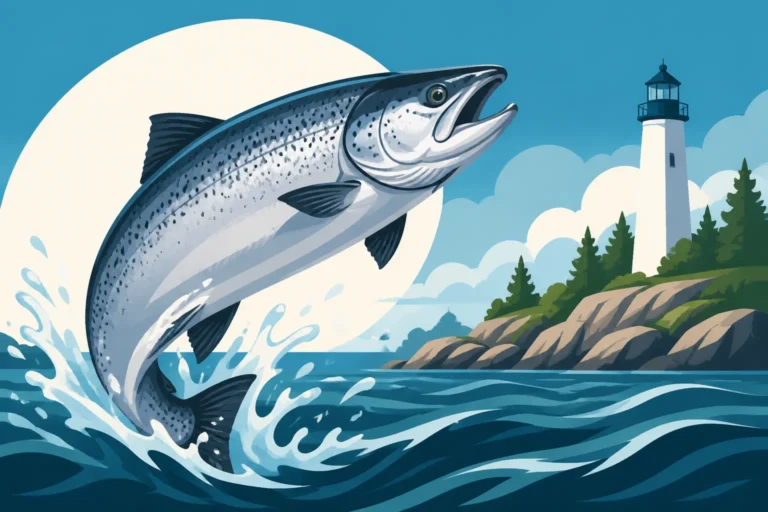
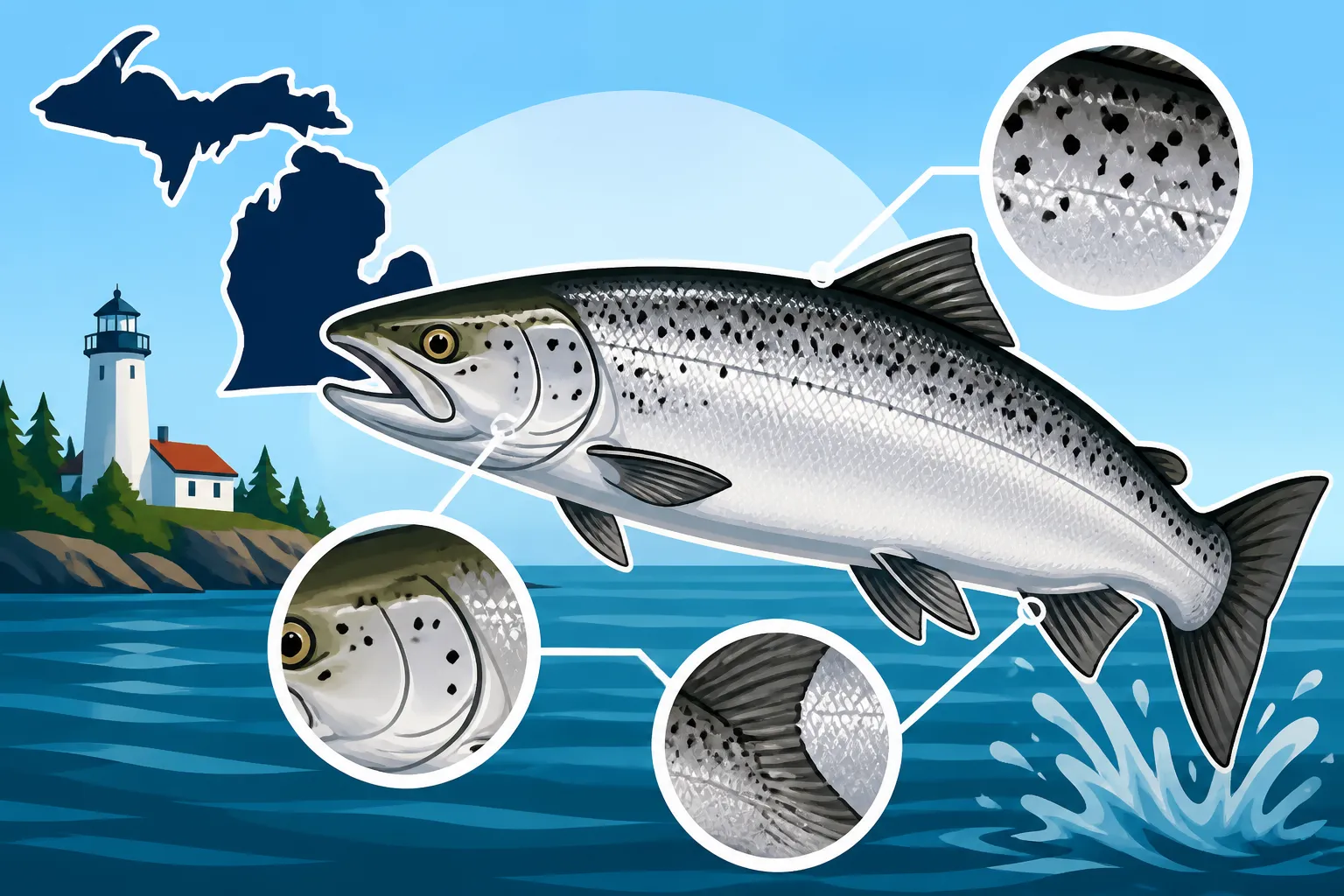
Atlantic Salmon generally possess a very streamlined, sleek, and torpedo-shaped body. They tend to be more slender than the somewhat deeper-bodied Chinook salmon, and often appear more graceful in the water. Their body tapers smoothly from the head to a relatively slender caudal peduncle (the narrow part of the body leading to the tail fin), suggesting speed and agility. While they can grow to impressive sizes, especially older, lake-dwelling Atlantics, they typically don't reach the sheer bulk of a trophy Chinook. When you hold an Atlantic, you'll often notice a more delicate, almost refined feel compared to the brute strength of a King Salmon.
Spotting Patterns and Coloration
This is one of the most reliable indicators. Atlantic Salmon in Lake Huron typically display sparse, small, dark spots, usually above the lateral line. Crucially, these spots are often X-shaped or irregular, not round, and are never found on the tail fin. The overall body color is a beautiful silver, sometimes with a greenish-blue or brownish hue on the back, fading to white on the belly. During their spawning runs into rivers, their coloration can change dramatically, becoming darker with reddish or bronze tones, but in Lake Huron itself, that chrome-bright silver is quite striking. If you see numerous spots covering the entire tail, you can almost certainly rule out an Atlantic Salmon.
Fin Characteristics to Observe
The fins also offer important clues. Look closely at the tail fin, or caudal fin: Atlantic Salmon have a distinctively forked tail, though it can become less pronounced and more square on larger, older individuals. The adipose fin, that small fleshy fin on the back between the dorsal fin and the tail, is present on Atlantic Salmon, as it is on all salmon and trout. Pay attention to the pectoral fins (the pair behind the gills); on Atlantic Salmon, they are often a dark color, sometimes even black, which can be a subtle but helpful distinguishing feature. This can differ from the lighter pectoral fins of some other salmonids.
Head-to-Tail Comparison: Atlantic Salmon vs. Lookalikes
The real challenge often comes when trying to differentiate between closely related species that inhabit the same waters. Lake Huron is home to several species that can be mistaken for Atlantic Salmon, but with a keen eye, you'll be able to tell them apart. It's always a good idea to refresh your knowledge by checking resources like the Michigan Salmon Species Explained guide.
Telling Atlantic Salmon from Chinook Salmon
Chinook salmon, often called King Salmon, are the largest and perhaps most famous salmon in Michigan's Great Lakes. Here's how to tell them from Atlantics:
- Size: Chinook generally grow much larger and have a more robust, powerful build. While Atlantics can be big, they rarely match the sheer mass of a mature King.
- Mouth and Gums: This is a definitive tell! A Chinook salmon will have a uniformly black mouth and gums. An Atlantic Salmon, on the other hand, will have a white or light-colored mouth with an unspotted tongue and light gums.
- Tail Spots: Chinook salmon have prominent spots on both lobes of their tail fin. Atlantic Salmon, as mentioned, have no spots on their tail.
- Anal Fin: Chinook typically have 15-17 rays in their anal fin, while Atlantics generally have 8-11. This requires a closer look but can be a good confirmatory sign.
- Lateral Line: The lateral line on a Chinook is usually darker and more pronounced than on an Atlantic.
Differentiating Atlantic Salmon from Coho Salmon
Coho salmon, also known as Silver Salmon, are another popular Great Lakes catch. They are often confused with Atlantics due to their similar silver coloration.
- Mouth and Gums: While Coho also have a dark mouth, it's typically only the gum line that is dark, with the rest of the mouth being white or gray. The teeth are often set in white sockets. Remember, Atlantic Salmon have an entirely white or light-colored mouth.
- Tail Spots: Coho salmon typically have spots only on the upper lobe of their tail fin, or very sparse spots on the lower lobe. Still, if you see any spots on the tail, it's not an Atlantic.
- Anal Fin: Coho generally have 12-15 rays in their anal fin, again different from the Atlantic's 8-11.
- Head Shape: Coho often have a slightly more blunt or rounded snout compared to the more pointed head of an Atlantic.
How to Distinguish from Lake Trout and Brown Trout
While less commonly mistaken, Lake Trout and Brown Trout also share Lake Huron and can sometimes be confused, especially by less experienced anglers. Here's how they differ:
- Lake Trout: These are characterized by their deeply forked tail, a longer, more slender body than some other trout, and distinctive light, worm-like markings (vermiculations) all over their dark gray or green body, including their head and fins. Their spots are lighter than the body color. Atlantic Salmon will be brighter silver with dark spots. For more on these incredible fish, check out Lake Trout Identification in Michigan.
- Brown Trout: Brown Trout typically have dark spots with light "halos" around them, especially on their sides, and some reddish-orange spots might be present. Their tail is usually square or only slightly forked, and they often have spots on the tail, unlike the Atlantic Salmon. Their overall coloration is often more brownish or bronze than the silvery Atlantic. You can learn more about them in Brown Trout in Michigan Rivers.
To make things easier, here's a quick comparison table:
| Feature | Atlantic Salmon | Chinook Salmon (King) | Coho Salmon (Silver) | Lake Trout | Brown Trout |
|---|---|---|---|---|---|
| Body Shape | Slender, streamlined, torpedo-like | Deep-bodied, robust, powerful | More slender than Chinook, slightly blunt head | Long, slender, deeply forked tail | More robust than Atlantic, slightly compressed |
| Mouth Color | White/light inside, light gums | Entirely black inside mouth and gums | Dark gums, white/gray mouth, white tooth sockets | White/gray inside, often irregular teeth | White/gray inside, prominent teeth |
| Tail Spots | None | Spots on both lobes, often covering the whole | Spots mostly on upper lobe, sparse if any below | Light, worm-like markings (vermiculations) on tail | Dark spots often on tail, sometimes with halos |
| Body Spots | Sparse, small, dark, often X-shaped, above lateral line | Dark spots all over body, round | Dark spots on back, sometimes on sides | Light, worm-like markings (vermiculations) | Dark spots with light halos, some reddish-orange |
| Tail Fin Shape | Forked (can be less pronounced on large fish) | Slightly forked to square | Slightly forked to square | Deeply forked | Square to slightly forked |
| Pectoral Fin | Often dark/black | Generally lighter | Generally lighter | Often mottled/marked | Can be varied |
Practical Tips for Anglers on Lake Huron
Knowing what to look for is half the battle; the other half is knowing how to apply that knowledge on the water, responsibly and effectively.
When and Where to Find Atlantic Salmon
Atlantic Salmon in Lake Huron are often found in cooler, deeper waters during the summer months, similar to other salmonids. They tend to cruise offshore structure, often feeding on baitfish like alewives. As fall approaches, they may begin to stage near river mouths for their spawning runs, but these runs are often less concentrated and dramatic than those of Chinook and Coho. Popular areas to target them in Lake Huron include the waters around northern Michigan, particularly near the deeper basins and rocky structures that provide cooler refuge. Areas near the Straits of Mackinac or the larger bays can also hold these elusive fish. Since they are stocked fish, their presence can be somewhat localized to areas benefiting from those programs. For general Lake Huron fishing advice, consider reading Michigan's Great Lakes Fishing Guide.
What to Do After a Catch
So, you've landed a fish that you suspect might be an Atlantic Salmon. Now what?
- Handle with Care: Always prioritize the fish's well-being. If you're not planning to keep it (which is often the case given their rarity and specific regulations), minimize its time out of the water. Use wet hands, a rubberized net, and avoid touching its gills or eyes.
- Confirm Identification: Use the tips above and perhaps a physical fishing regulations digest (or a downloaded version on your phone, easily found on Amazon) to confirm your identification. Be absolutely certain before deciding to keep or release.
- Check Regulations: Consult the Michigan Fishing Regulations Every Angler Should Know or Michigan Daily Bag Limits by Species for specific rules regarding Atlantic Salmon in Lake Huron. Regulations can include specific size limits, daily possession limits, and even tackle restrictions in certain areas or during certain times of the year. For instance, sometimes there are combined limits for trout and salmon species, as detailed in Michigan's Combined Trout and Salmon Possession Limit.
- Reporting (If Applicable): In some cases, fisheries biologists appreciate voluntary reporting of rare or stocked species like Atlantic Salmon. This helps them track populations and the success of stocking programs. Always check if there's a specific reporting mechanism or if talking to DNR personnel at boat launches would be helpful.
- Responsible Release: If releasing, gently return the fish to the water, facing it into the current until it swims away under its own power. Ensure it's fully revived before letting it go.
Catching an Atlantic Salmon from Lake Huron is a truly special moment, connecting you with a species that represents a successful conservation story. Knowing how to identify it properly only adds to the reward and ensures you're a responsible steward of Michigan's incredible fishing resources.
Disclaimer
This article is for general informational purposes only and does not constitute professional advice. Laws, prices and regulations vary by location and change over time. Consult a qualified professional for guidance on your specific situation.