Michigan Catfish Species Guide
There's a special kind of thrill that comes with landing a big fish, but for many anglers, the thought of tackling Michigan's catfish species can feel a bit murky. Maybe you've heard tales of monstrous flatheads or simply want to understand the difference between bullheads and channel cats. This comprehensive guide is here to clear the waters, helping you identify, locate, and successfully target these whiskered wonders across Michigan's diverse aquatic landscapes.
Understanding Michigan's Catfish Landscape
When you think of Michigan fishing, your mind might immediately jump to salmon leaping in the Great Lakes, or elusive trout in a pristine Upper Peninsula stream. And while those are certainly iconic experiences, let's not overlook the quiet, powerful presence of catfish that lurk in many of our state's waters. Catfish often get a bad rap or are simply underestimated, but they offer incredible sport and delicious table fare, making them a fantastic target for anglers of all skill levels.
The Appeal of Catfish in Michigan
Honestly, a lot of folks initially dismiss catfish. They might not have the flash of a leaping salmon or the mystique of a brook trout, but trust me, these fish are full of surprises. First off, they're generally pretty accessible. You don't always need a fancy boat or expensive gear to get into some great catfish action. Shore fishing, pier fishing, or even a simple kayak can put you on fish. Secondly, they fight hard. Hook into a decent channel cat or a big flathead, and you'll know you've got a challenge on your hands. Their powerful runs and stubborn dives are truly exhilarating. Finally, they're fantastic eating. Properly prepared, catfish filets are a culinary delight, making your angling efforts doubly rewarding. It's a great way to fill the cooler without breaking the bank or traveling too far from home.
General Characteristics of Catfish
What exactly defines a "catfish"? Well, the most obvious characteristic, and the one that gives them their name, is the presence of prominent barbels around their mouths. These aren't whiskers in the mammalian sense, but rather highly sensitive sensory organs that catfish use to locate food in murky waters, often along the bottom. Unlike most fish, catfish don't have scales; instead, their skin is smooth and tough, which makes them feel almost leathery to the touch. They also possess sharp, often serrated spines on their dorsal and pectoral fins. While not venomous in Michigan, these spines can deliver a painful poke, so always handle catfish with care, especially the larger flatheads and bullheads. Their mouths are typically wide, perfectly adapted for gulping down prey, and their eyes are relatively small, indicating their reliance on those barbels and their sense of smell in low-light or turbid conditions.
Channel Catfish: The Michigan Favorite
If you've fished for catfish in Michigan, chances are you've encountered a channel cat. These are arguably the most widespread and popular catfish species in the state, offering a fantastic balance of size, fight, and accessibility. They're often the first catfish species an angler encounters, and for good reason—they're plentiful and aggressive biters.
Identifying Channel Catfish
Identifying a channel catfish is usually pretty straightforward once you know what to look for. They typically have a sleek, elongated body with a distinctly forked tail, which is a key characteristic that separates them from flatheads. Their color can vary quite a bit depending on the water they live in, ranging from silvery-gray to olive-brown on their backs, fading to white or cream on their bellies. Younger channel cats, especially those from clear water, often have small, dark spots scattered across their sides, which tend to fade as they mature. They also have those signature barbels, usually eight of them: two long ones extending from the corners of the mouth, four shorter ones on the chin, and two near the nostrils. Their head is relatively small compared to their body, and their eyes are set fairly high on their head. You might notice they have a small, adipose fin, much like trout and salmon.
Where to Find Channel Catfish in Michigan
Channel cats are incredibly adaptable, which is why they thrive in so many of Michigan's diverse waters. You'll find them in large rivers like the Grand River, Kalamazoo River, and the Saginaw River system, often preferring deeper holes, slower currents, and areas with some kind of cover, such as fallen trees or undercut banks. They also do exceptionally well in many of our larger inland lakes, especially those with muddy or sandy bottoms and plenty of weed beds. Lakes like Houghton Lake, Muskegon Lake, and even parts of Lake St. Clair are known for their channel cat populations. The Great Lakes themselves, particularly the bays and shallower areas of Lake Erie and Lake Huron, can also hold impressive channel cats, especially near river mouths and harbor areas. Don't overlook municipal ponds and smaller impoundments; if it holds water and has some depth, there's a good chance channel catfish are present and waiting for a meal. For specific locations, checking resources like Michigan's Lower Peninsula Fishing Spots Guide or Michigan Inland Lakes Worth Fishing can give you a head start.
Best Techniques and Bait for Channel Cats
When it comes to catching channel catfish, variety is the spice of life, but some methods consistently outperform others. They are primarily bottom feeders, so presenting your bait near or on the bottom is key. A simple Carolina rig or a three-way swivel rig with a bell sinker works wonders. For bait, channel cats are notorious scavengers and have a keen sense of smell. Popular choices include cut bait (like pieces of oily fish such as shad or sucker), chicken livers, nightcrawlers, and commercially prepared "stink baits" or dough baits. Many anglers swear by the pungent aroma of chicken livers, letting them sit out in the sun for a bit to really "ripen" before heading out. Hot dogs, especially those soaked in garlic, are another surprisingly effective and easy-to-use option. For tackle, a medium-heavy spinning rod or baitcasting setup is ideal, spooled with 10-20 lb monofilament or braided line. You'll want sturdy hooks, often Kahle or circle hooks in sizes 2/0 to 5/0, depending on the size of the fish you're targeting. Many anglers find great deals on these essential items, from hooks to specialized stink baits, on platforms like Amazon, ensuring they're well-equipped for their next outing.
Flathead Catfish: The River Monster
Now, if you're looking for a real trophy, something that will truly test your tackle and your resolve, then the flathead catfish is your target. These are the true heavyweights of Michigan's catfish world, known for their immense size and powerful fights. They demand a different approach than channel cats, but the reward of landing one of these giants is unmatched.
Identifying Flathead Catfish
Flathead catfish are distinct from their channel cat cousins. The most obvious difference is right there in their name: a broad, flattened head, almost shovel-like, with small eyes set high up. Unlike the channel cat's forked tail, the flathead has a square or slightly rounded tail fin, which is another crucial identification point. Their body is typically a mottled yellow-brown to dark brown, often with dark blotches and a creamy white or yellow belly. This coloration provides excellent camouflage in the muddy, snag-filled waters they prefer. They have prominent, thick barbels, similar in number to channel cats, but often more robust. Their lower jaw usually protrudes slightly beyond the upper jaw, giving them a perpetually grumpy, formidable look. These are burly, powerful fish built for ambushing prey in strong currents. You can get a sense of the potential size of these brutes by checking out Michigan State Fish Records.
Prime Flathead Habitats in Michigan
Flathead catfish are creatures of current and cover. You won't typically find them in open, clean lakes. Instead, they prefer large, slow-moving rivers with deep pools, abundant woody debris, and stable banks. In Michigan, the Grand River is renowned for its trophy flathead fishery, especially in its lower stretches. The St. Joseph River and the Kalamazoo River also hold significant populations. They'll often tuck themselves into log jams, undercuts, and scour holes, waiting for an unsuspecting meal to drift by. These fish are ambush predators, so they need structure to hide in. Look for areas downstream of dams, around bridge pilings, or where tributaries meet larger rivers, creating current breaks and deep pockets. Understanding river dynamics and current flow is absolutely critical to locating these elusive giants.
Tackle and Tactics for Flatheads
Targeting flatheads requires heavy-duty gear. Forget your ultralight panfish rod; you'll need a stout, heavy-action rod (7-9 feet in length) paired with a robust baitcasting reel capable of holding 50-80 lb braided line, or heavy monofilament. This isn't just for fighting the fish; it's also for wrenching them out of the heavy cover they inhabit. For terminal tackle, a heavy-duty circle hook (7/0 to 10/0) is essential, tied to a strong fluorocarbon or monofilament leader (30-60 lb test) to resist abrasion from teeth and snags. Sinkers can range from 2 to 8 ounces or even more, depending on the current.
Unlike channel cats, flatheads prefer live bait. They are predators, not scavengers. The best baits are live bluegill, sunfish, suckers, or large shiners, typically 4-8 inches long. Check local regulations on baitfish size and species before using them. Present your live bait on the bottom, as close to structure as possible, and be prepared to wait. Flathead fishing often requires patience, as they can be less active than channel cats, especially during the day. Night fishing is often the most productive time for these nocturnal hunters. Many dedicated flathead anglers invest in specialized heavy-duty hooks and line, finding a wide selection available for purchase online through retailers like Amazon, ensuring their setup can withstand the power of these true river monsters. When fishing for these big guys, knowing your Michigan Fishing Regulations Every Angler Should Know is crucial, as is understanding specific bag limits for the species you might accidentally catch, which you can check in Michigan Daily Bag Limits by Species.
Bullhead Catfish: Small but Mighty (and Abundant)
While channel cats and flatheads get a lot of attention for their size, let's not forget the humble bullhead. These smaller, yet incredibly feisty, catfish are arguably the most common and accessible catfish species in Michigan. They're perfect for a casual afternoon of fishing, especially with kids, and they make for some surprisingly good eating too.
Black, Brown, and Yellow Bullheads: Key Differences
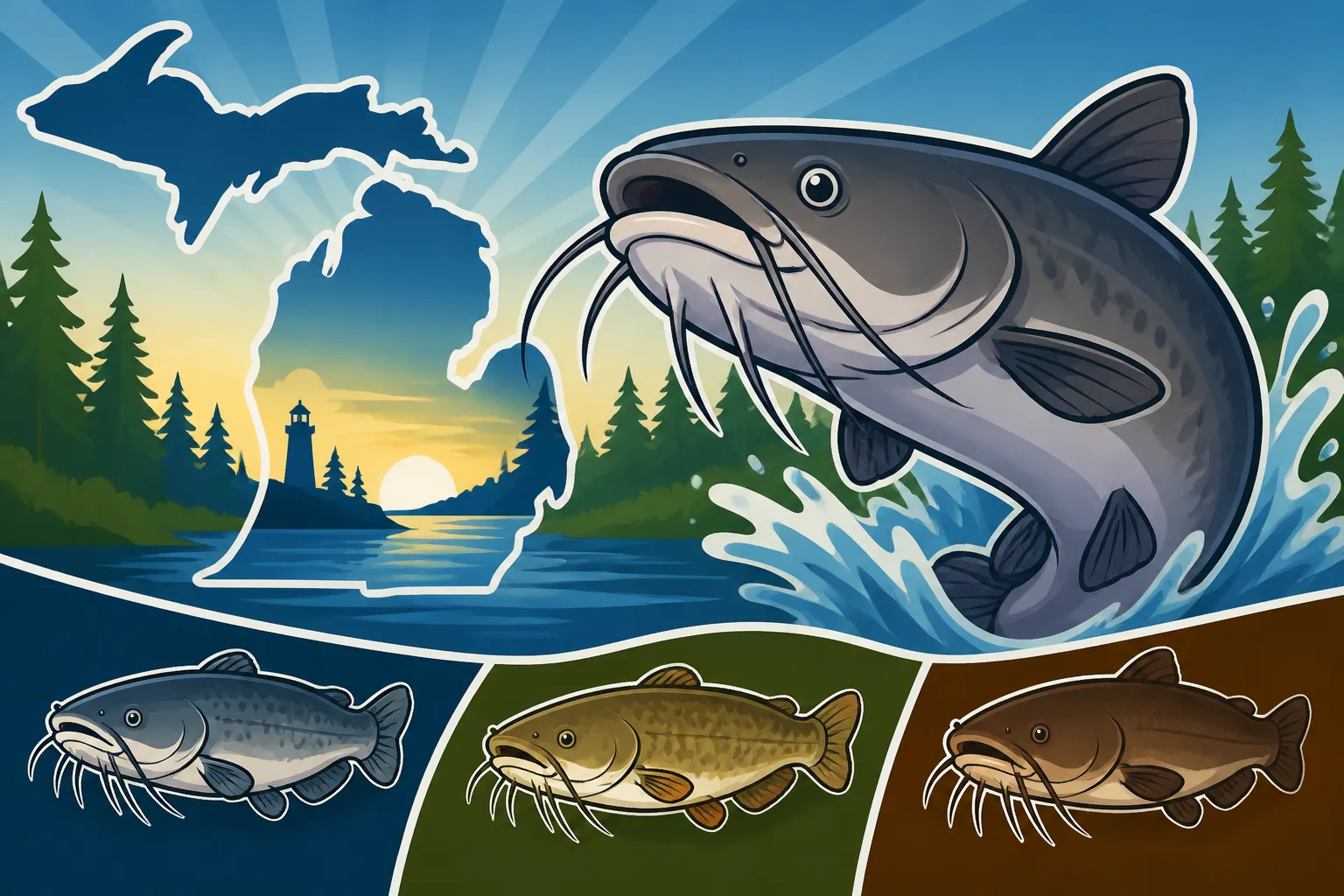
In Michigan, you're most likely to encounter three species of bullheads: the black bullhead, brown bullhead, and yellow bullhead. While similar in appearance, there are some subtle differences.
- Black Bullhead: Typically the smallest, with a dark, often mottled back and a yellowish belly. Its chin barbels are usually black. The most distinctive feature is that the membrane behind its dorsal fin (called the adipose fin) is completely free from the back.
- Brown Bullhead: Generally a bit larger than the black bullhead, with a brownish to olive-green back and yellowish or white belly. Its chin barbels are dark, but often mottled. The key difference from the black bullhead is that the membrane of its adipose fin is connected to its back. Its pectoral fins have strong serrations on the front edge of the spine.
- Yellow Bullhead: Often the brightest in color, with a yellow to olive-brown back and a bright yellow or white belly. Its chin barbels are distinctly white or pale yellow. It also has a connected adipose fin like the brown bullhead, but its pectoral fins have weak serrations or none at all on the front edge.
All three share the scale-less body and sharp pectoral and dorsal spines, so handle them all with care.
Common Habitats for Bullheads
Bullheads are the ultimate survivors, thriving in conditions that many other fish species wouldn't tolerate. You'll find them almost everywhere in Michigan, from small farm ponds and ditches to larger inland lakes and slow-moving rivers. They have a particular fondness for murky, shallow waters with soft, muddy bottoms and dense vegetation. Think overgrown ponds, slow sections of creeks, backwaters of larger rivers, and shallow bays of lakes. They can even tolerate lower oxygen levels than many other game fish, which is why they're often the dominant species in certain small, warm bodies of water. They're less picky about water quality and more about having access to food and shelter.
Simple Rigs and Baits for Bullheads
Catching bullheads is about as straightforward as fishing gets, making them an excellent target for beginners and families. A light to medium-light spinning rod and reel combo, spooled with 6-10 lb monofilament line, is perfect. You don't need anything fancy here. A simple rig with a small hook (sizes 6-2) tied directly to the main line, with a split shot or small sinker a foot or so above it, will do the trick. A bobber can be added if you prefer to fish suspended in the water column or want a visual strike indicator.
Bullheads are omnivores and will eat almost anything. Their incredible sense of smell makes them highly susceptible to smelly baits. Common choices include nightcrawlers, worms (they absolutely love them!), pieces of hot dog, corn, or even small pieces of bread. Chicken livers are also effective, though can be a bit messy. Fishing for bullheads is a fantastic activity for new anglers to practice their skills and experience the joy of a consistent bite. You can easily find all the simple tackle you'd need, from hooks to bobbers, and even bulk worms or bait holders, at local tackle shops or conveniently online, like on Amazon, preparing you for an enjoyable day on the water.
The Catfish Fishing Experience in Michigan
Whether you're after the subtle pull of a bullhead, the strong fight of a channel cat, or the brute force of a flathead, fishing for catfish in Michigan offers a unique and rewarding experience. It's often a more relaxed style of fishing, perfect for spending time by the water, but don't let that fool you into thinking it's not exciting when that line finally starts screaming!
Best Time of Year for Catfish
Catfish are generally warm-water fish, so the prime time to target them in Michigan is typically from late spring through early fall. As water temperatures rise, their metabolism increases, and they become much more active feeders.
- Spring (May-June): As water temperatures climb into the 60s Fahrenheit, catfish start to shake off their winter lethargy. This is an excellent time for channel cats as they begin to feed heavily before and during their spawning period. Flatheads will also start to become active. You can find out more about the overall fishing calendar in Michigan Fishing Seasons Explained.
- Summer (July-August): This is peak catfish season. The warmest water means active fish, often feeding throughout the day and into the night. Night fishing can be particularly productive for all species, as they move into shallower water to feed under the cover of darkness.
- Fall (September-October): As water temperatures begin to drop, catfish will often go on a final feeding binge before winter. This can be a fantastic time to catch some of the largest fish, particularly flatheads, as they bulk up for the cold months. Activity slows down significantly once water temperatures dip consistently below 50 degrees Fahrenheit.
While you can catch catfish in winter, especially bullheads through the ice in certain areas, their activity is greatly reduced compared to the warmer months.
Regulations and Limits for Catfish
Just like with any other fish species in Michigan, there are specific regulations you need to be aware of when targeting catfish. These rules are put in place to ensure healthy fish populations for everyone to enjoy. First and foremost, anyone aged 17 or older needs a valid Michigan fishing license to fish. This applies whether you're chasing monster flatheads or just pulling in pan-sized bullheads. You can get a full overview in Michigan Fishing License Guide for Residents and Nonresidents.
Beyond the license, there are often daily possession limits and sometimes even size limits, though catfish regulations tend to be more generous than those for popular gamefish like walleye or trout. For channel catfish, typically there isn't a minimum size limit, but there is a daily possession limit. Flathead catfish often have a more restrictive daily limit, and very occasionally a minimum size, especially in waters managed for trophy potential. Bullheads usually have the most liberal limits, often with no size minimum and a high daily possession limit. It’s absolutely critical to consult the most current Michigan Fishing Regulations Handbook, available from the Michigan DNR, or through their app, before you hit the water. This will ensure you're compliant with all the latest rules for Michigan Daily Bag Limits by Species and any other specific regulations for your chosen body of water.
Eating Your Catch: Preparing Michigan Catfish
One of the great joys of catching catfish is bringing them home for a delicious meal. Catfish are renowned for their firm, flaky, white meat, which has a mild flavor that stands up well to various cooking methods. Cleaning them can be a bit different due to their lack of scales and tough skin, but it's not difficult once you get the hang of it. Many anglers opt to skin them, which involves cutting around the head, then using pliers or a skinning tool to peel the skin off.
Once cleaned, catfish fillets can be fried, baked, grilled, or even smoked. Frying is a classic, with many Michigan families having their own secret batter recipes. A simple cornmeal crust with some seasoning is always a winner. For a healthier option, baking with lemon and herbs is fantastic. They also hold up well to grilling, especially if you wrap them in foil to keep them moist. Keep in mind that the flavor of the fish can be influenced by the water quality of where it was caught. Fish from cleaner, flowing waters often have a milder taste than those from muddy, stagnant ponds. Regardless of your preferred cooking method, a freshly caught Michigan catfish makes for a memorable meal, shared with family and friends after a successful day on the water.
| Catfish Species | Key Identification | Typical Size in Michigan | Preferred Habitat | Best Bait |
|---|---|---|---|---|
| Channel Catfish | Forked tail, spots (young), sleek body, dark barbels | 1-15 lbs, up to 30+ lbs | Large rivers, inland lakes, bays (muddy/sandy bottoms, cover) | Cut bait, chicken liver, nightcrawlers, stink baits |
| Flathead Catfish | Square/rounded tail, flat/broad head, protruding lower jaw, mottled brown/yellow, thick barbels | 10-50 lbs, up to 70+ lbs | Large, slow rivers with deep holes and heavy woody cover | Live bait (bluegill, sucker, shiner) |
| Bullhead Catfish | Square/rounded tail, small size, smooth body, adipose fin connected/free, chin barbels color variation | 0.5-3 lbs (rarely larger) | Ponds, slow creeks, shallow lakes (murky, muddy bottoms, vegetation) | Nightcrawlers, worms, hot dogs, corn, bread |
Disclaimer: This article is for general informational purposes only and does not constitute professional advice. Laws, prices and regulations vary by location and change over time. Consult a qualified professional for guidance on your specific situation.