Michigan Yellow Perch Size and Limit
There's nothing quite like the thrill of a yellow perch hitting your line, especially when you're out on the abundant waters of Michigan. But let's be honest, trying to keep track of all the different fishing regulations, especially when it comes to specific fish species and waterbodies, can feel like a full-time job. It’s easy to get turned around on what the legal size and possession limits are for yellow perch, particularly with special rules for places like Lake St. Clair. This comprehensive guide is here to clear up that confusion, diving deep into Michigan's yellow perch size and limit regulations so you can fish with confidence and stay on the right side of the law.
Understanding Yellow Perch in Michigan
Yellow perch are, without a doubt, one of Michigan's most beloved and sought-after fish. They’re a true freshwater delicacy, known for their distinctive golden-yellow bodies, dark vertical bars, and sweet, flaky white meat. For many Michigan anglers, a successful outing often means bringing home a cooler full of perch, destined for the frying pan. They are abundant, relatively easy to catch for anglers of all skill levels, and can be found in a huge variety of our state’s diverse aquatic environments, from the vast Great Lakes to our smaller, more intimate inland lakes and rivers.
Why Yellow Perch are a Michigan Favorite
From the bustling piers of Lake Michigan to the quiet coves of Houghton Lake, yellow perch hold a special place in the hearts of Michigan anglers. They’re an accessible fish, often schooling in large numbers, which means you can have a really active day on the water, whether you're fishing from shore, a boat, or even through the ice. There's something incredibly satisfying about reeling in one after another, especially when you're fishing with family or introducing kids to the sport. Their willingness to bite a variety of baits and lures makes them a fantastic target for beginners, while their sheer numbers provide seasoned anglers with plenty of action. Plus, who can argue with how delicious they are? They're often considered one of the best-tasting freshwater fish, making them a top choice for those looking to stock their freezer for a future fish fry.
For many, catching yellow perch isn't just about the meal; it's about the tradition, the camaraderie, and the pure joy of a bend in the rod. Whether you're dropping a line with minnows, worms, or small jigs, the anticipation of a perch bite is always high. They thrive in Michigan's cool waters and are a vital part of the food web, providing sustenance for larger predatory fish like walleye and northern pike, and of course, for us anglers too.
Identifying Yellow Perch: Key Characteristics
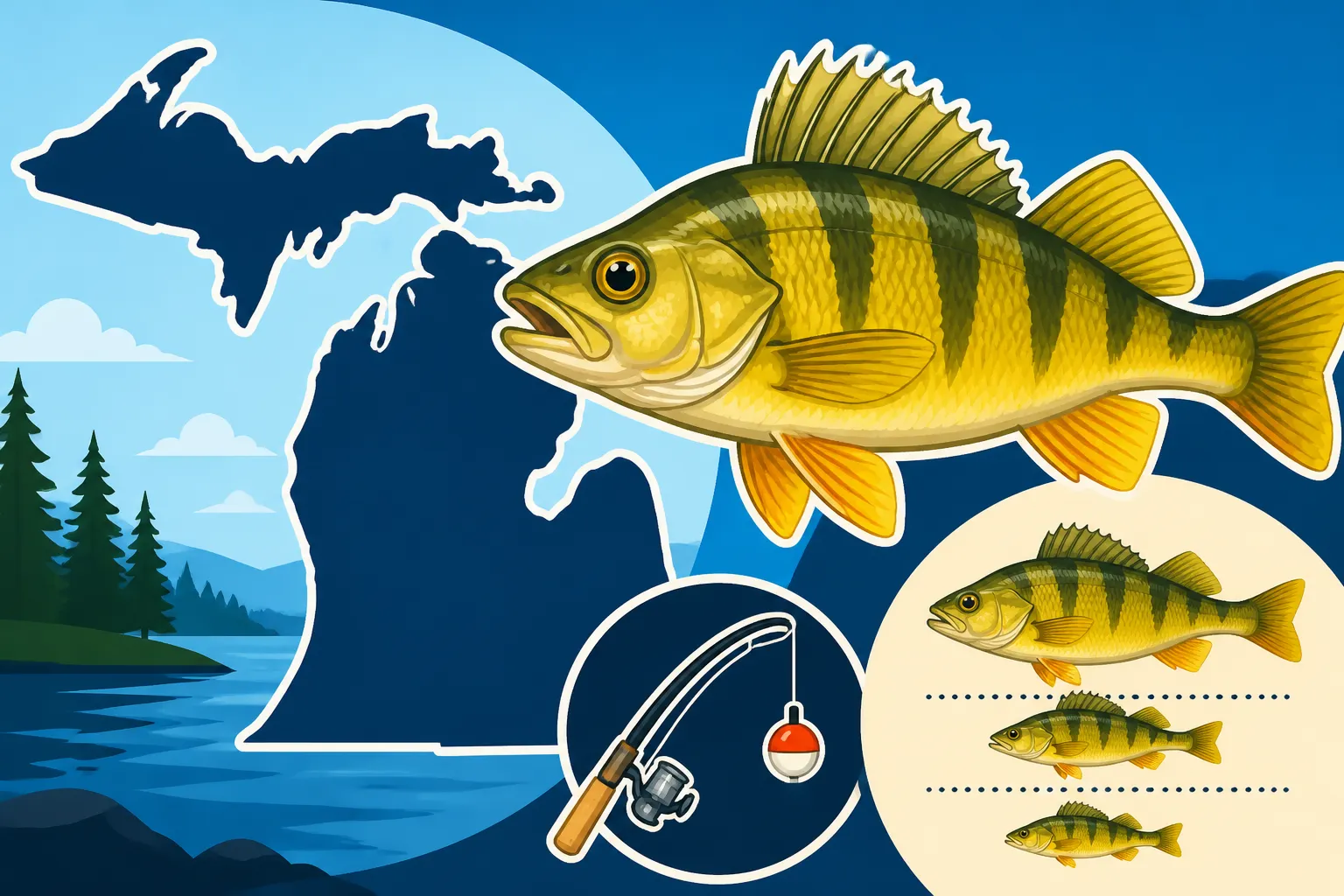
Before you even think about limits, it’s crucial to be able to properly identify a yellow perch. While they are generally distinct, especially when compared to some other panfish, proper identification ensures you're applying the correct regulations. The yellow perch (Perca flavescens) is typically recognizable by its striking brassy yellow to golden-yellow sides, usually marked with 6 to 8 prominent dark, vertical bars that extend from its back down towards its belly. Its belly is often white or pale yellow.
They have two dorsal fins; the first is spiny, and the second is soft-rayed. Look for the distinct orange to red lower fins, especially the anal and pelvic fins, which become more vibrant during spawning season. Their body shape is somewhat elongated and compressed laterally. Size can vary wildly depending on the water body and food availability, but a common catch might range from 6 to 10 inches, though larger "jumbo" perch can certainly be found. Yellow Perch Identification in Michigan offers a deeper dive into distinguishing these beauties from other species. Knowing these characteristics is your first step to legal and responsible angling.
Michigan's Statewide Yellow Perch Regulations
Okay, let's get down to the nitty-gritty of the rules. For the majority of Michigan's inland waters, the regulations for yellow perch are fairly straightforward, which is a welcome relief compared to some of the more complex rules for other species. However, "straightforward" doesn't mean "non-existent," and there are still important numbers you need to remember.
Statewide Daily Possession Limit
Across most of Michigan, anglers are allowed to keep a generous number of yellow perch. The statewide daily possession limit for yellow perch on most inland waters and parts of the Great Lakes is 25 fish per angler. This means that in a 24-hour period, you can legally harvest and possess up to 25 yellow perch. This limit is designed to allow anglers to enjoy a productive day on the water while still protecting the overall population from overfishing.
It's important to remember that this "daily possession limit" applies to the fish you have with you, whether they are in your livewell, cooler, or back at your campsite cleaned and filleted. If you're fishing for multiple days and decide to keep your catch, you need to be mindful that your total possession limit can't exceed the daily limit per day fished. For instance, if you fish for two days and the daily limit is 25, you cannot have 50 fish in your possession if you are still actively fishing or transporting fish from a multi-day trip where you fished on both days. Always check the Michigan Fishing Regulations Digest for the most current and specific wording on possession limits versus daily limits, as these terms are sometimes nuanced.
Statewide Minimum Size Limits: A Simpler Truth
This is where a lot of anglers get tripped up, because for many other species, there are strict minimum size limits. But here's the simpler truth for yellow perch: for the vast majority of Michigan's waters, there is no minimum size limit for yellow perch. Yes, you read that right! If it's a legal yellow perch, and you're within your daily bag limit of 25, you can keep it regardless of its length. This is different from species like walleye or bass, which often have specific length restrictions to protect younger fish and ensure they have a chance to spawn.
This "no minimum size limit" rule often surprises people, especially those who fish in states with different regulations. It's a testament to the robust populations of yellow perch in many of our Michigan lakes and rivers. However, this general rule has a very important exception, which we'll discuss next, and it's vital to know where these exceptions apply. Always assume there might be an exception, especially when fishing larger, well-known bodies of water, and consult the official regulations.
The Importance of Knowing Your Limits
Fishing regulations aren't just arbitrary rules; they're carefully crafted guidelines based on scientific data to ensure the sustainability of our fisheries. Violating these limits, whether knowingly or unknowingly, can lead to fines, confiscation of your catch, and even the loss of your fishing privileges. It's a pretty heavy price to pay for not taking a few minutes to confirm the rules.
Imagine you've had a fantastic day catching yellow perch, and you head home with a full cooler. A conservation officer stops you, and you confidently state you followed the 25-fish limit. But what if you were on a lake with a different, specific rule? Ignorance of the law is generally not a valid defense. That's why keeping a current copy of the Michigan Fishing Regulations Digest handy, either a physical copy or through the Michigan's DNR Hunt Fish App for Licenses and Reporting, is crucial. It’s your responsibility as an angler to know the rules for the specific waters you’re fishing. This knowledge not only keeps you out of trouble but also contributes to the conservation efforts that keep Michigan fishing so good for everyone.
Specific Waterbody Exceptions: Lake St. Clair and Others
While the general rule for yellow perch in Michigan is a 25-fish daily limit with no minimum size, there are very important exceptions. These exceptions are typically put in place to manage specific, heavily fished, or unique populations, and nowhere is this more prominent than on Lake St. Clair and the St. Clair River.
Lake St. Clair and St. Clair River: A Unique Scenario
Lake St. Clair is a legendary fishery, not just for its world-class smallmouth bass and muskellunge, but also for its abundant yellow perch. However, due to its popularity, intense fishing pressure, and cross-border management with Canada, Lake St. Clair (and the connecting St. Clair River) operates under a specific set of yellow perch regulations that differ significantly from the statewide standard. This is a crucial distinction that every angler planning to fish these waters needs to be aware of.
For yellow perch on Lake St. Clair and the St. Clair River, the daily possession limit is 25 fish per angler, which is consistent with the statewide limit. However, there is a very specific and critical 9-inch minimum size limit. This means any yellow perch you catch in these waters that measures less than 9 inches from the tip of its snout to the tip of its tail must be immediately and carefully released. This regulation is designed to protect younger perch, allowing them to grow to a larger size and contribute to the spawning population before being harvested. It's a measure aimed at maintaining the health and trophy potential of this incredible fishery.
Failing to adhere to this 9-inch minimum can lead to serious consequences. Imagine spending a glorious day on Lake St. Clair, catching what feels like a cooler full of keepers, only to have a conservation officer measure them and find half of them are under the 9-inch mark. That's a quick way to turn a great day into a frustrating and expensive one. Always have a reliable measuring device with you when fishing these waters; a simple, inexpensive tape measure or even a foldable ruler can be found easily on sites like Amazon. For more detailed information, make sure to check out Michigan Yellow Perch Limit on Lake St. Clair.
Other Local Rules and How to Find Them
While Lake St. Clair is the most prominent example, it’s not impossible for other specific water bodies to have unique regulations for yellow perch or other species. These localized rules are often implemented for specific conservation needs, experimental management, or to address unique biological factors within a particular lake or river system. For instance, a very small, heavily fished inland lake might have different limits if its perch population is struggling.
How do you find these elusive "other local rules"? Your go-to resource should always be the official Michigan Fishing Regulations Digest. This comprehensive document is updated annually and is available online as a PDF, through the DNR app, or in print at most places where fishing licenses are sold. Always check the "Exceptions" section of the digest, which is typically organized by county or specific waterbody. If you're planning a trip to a new or unfamiliar body of water, it's a good practice to quickly search for its name in the digest to ensure no surprises. Don't rely solely on what you hear at the local bait shop, as well-meaning as that advice might be; always cross-reference with the official source. This due diligence ensures you're fishing legally and contributing to the responsible enjoyment of Michigan's natural resources.
Here's a quick reference table for Yellow Perch Regulations:
| Waterbody Type | Daily Possession Limit | Minimum Size Limit | Notes |
|---|---|---|---|
| Most Inland Lakes & Rivers | 25 Fish | None | Standard Michigan regulation. |
| Lake Michigan, Lake Huron, Lake Superior | 25 Fish | None | Great Lakes generally follow statewide inland rules for perch. |
| Lake St. Clair & St. Clair River | 25 Fish | 9 Inches | Crucial exception. Must be 9 inches or longer to keep. |
| Other Specific Waters | Varies | Varies | Always check the Michigan Fishing Regulations Digest for exceptions. |
Why These Regulations Exist
It’s easy to look at fishing regulations and think they’re just there to make our lives harder, but that’s really not the case. Every regulation, especially those concerning size and bag limits, serves a critical purpose. They are developed by fisheries biologists and management teams who study fish populations, growth rates, spawning success, and angler harvest data. These rules are a fundamental tool in managing our precious aquatic resources, ensuring that Michigan’s fishing heritage remains vibrant for generations to come.
Protecting Perch Populations for Future Generations
The primary reason for any fish regulation is conservation. Yellow perch, while prolific, are not limitless. Without sensible harvest limits, a popular species like perch could be severely depleted by overfishing, especially in smaller, more accessible lakes. The 25-fish daily limit for most waters, coupled with no minimum size, allows for a healthy harvest of fish while preventing widespread overexploitation. It means that while you can take a good number of fish home for dinner, you’re not wiping out a local population.
For areas like Lake St. Clair, where a 9-inch minimum size limit is imposed, the specific goal is often to protect the "broodstock"—the sexually mature fish that are essential for successful spawning. By letting smaller fish grow past 9 inches, they have a better chance to reproduce at least once, or multiple times, before being harvested. This helps ensure a continuous cycle of recruitment into the fishery, meaning new generations of perch are born and grow, replenishing the population. This kind of nuanced management is how we sustain our fisheries, making sure our kids and grandkids can enjoy the same great fishing we do today.
Balancing Angler Opportunity with Conservation Needs
Crafting fishing regulations is a delicate balancing act. On one hand, you want to provide ample opportunity for anglers to enjoy their sport and harvest fish. On the other, you have a responsibility to conserve the resource. Fisheries managers are constantly analyzing data to strike this balance. They look at angler catch rates, the average size of fish being caught, the age structure of the population, and even environmental factors that might affect fish health and reproduction.
For yellow perch, the statewide regulations reflect a generally healthy and robust population. The generous daily limit of 25 fish acknowledges their abundance and popularity as a food fish, providing anglers with a rewarding experience. However, in specific areas like Lake St. Clair, where yellow perch can grow to impressive "jumbo" sizes and face significant fishing pressure from both Michigan and Canadian anglers, a size limit becomes necessary. This specific rule helps to manage expectations, protect larger, more mature fish, and maintain the quality of the fishing experience on these exceptional waters. It's a proactive approach to ensure that high-quality yellow perch fishing continues to thrive, rather than waiting until a population is in crisis to implement stricter measures. This balance is key to sustainable recreational fishing. Where Michigan Fishing License Money Goes also highlights how your license fees contribute directly to these conservation and management efforts.
Tips for Responsible Yellow Perch Angling
Understanding the regulations is just one part of being a responsible angler. How you handle your catch, measure your fish, and choose your gear also play significant roles in ensuring a healthy fishery and a positive experience for everyone. Let’s talk about some practical tips that go hand-in-hand with knowing your perch limits.
Measuring Your Catch Accurately
When there's a size limit, like the 9-inch minimum on Lake St. Clair, accurate measurement is non-negotiable. It's not just about avoiding a ticket; it's about respecting the conservation efforts. Here's how to do it right:
- Use a Reliable Measuring Device: Don't guess. Carry a sturdy, clearly marked measuring tape, ruler, or a specialty fish measuring board. You can find excellent, waterproof options that float on Amazon.
- Lay the Fish Flat: Place the fish on its side on the measuring device.
- Squeeze the Mouth Shut: Gently close the fish's mouth so it's not gaping open, as this can add extra length.
- Tail Fin Position: For most Michigan species, measurement is taken from the tip of the snout to the furthest tip of the tail. Gently squeeze the tail fin lobes together to get the maximum length. Avoid bending the fish significantly to gain an extra fraction of an inch; measure it naturally.
- Read Clearly: Read the measurement at the furthest point of the tail. If it's exactly on the line for the minimum size, it's usually legal. If it's a hair short, it's too short. When in doubt, let it go.
This might sound overly cautious, but a few small inaccuracies across many anglers can add up. Being precise not only protects you from violations but also shows respect for the fish and the regulations designed to sustain them.
Ethical Catch and Release for Oversize or Undersize Fish
Even if you’re planning on keeping fish for dinner, there will be times when you need to release a yellow perch. This could be because it’s under the size limit (like on Lake St. Clair), or perhaps it’s simply too small for your preference, even if it's technically legal. Practicing ethical catch and release ensures those fish survive to be caught another day, or to contribute to the spawning population.
- Minimize Handling Time: The quicker you get the fish back in the water, the better its chances of survival.
- Wet Your Hands: Always wet your hands before handling a fish. Dry hands can remove the fish's protective slime coat, making it vulnerable to disease.
- Support the Fish: Hold the fish horizontally, supporting its weight, especially if it's a larger one. Avoid holding it vertically by its mouth or gills, which can damage its internal organs or jaw.
- Remove Hooks Quickly: Use needle-nose pliers or a dehooking tool to remove the hook quickly and gently. If the fish is deeply hooked and removing the hook would cause significant damage, it's often better to cut the line as close to the hook as possible.
- Revive If Necessary: If a fish appears lethargic, hold it gently in the water, facing into a mild current, and allow water to flow over its gills until it regains strength and can swim away on its own.
Remember, every released fish is an investment in the future of our fisheries. Practicing these techniques is a sign of a truly skilled and responsible angler.
Gear Considerations for Perch Fishing
While yellow perch aren't typically known for being line-shredding giants, having the right gear can make a huge difference in your success and enjoyment. It also plays a role in effective catch and release.
- Light Tackle is Key: Perch have relatively small mouths, so light to ultra-light rods and reels are ideal. This kind of setup allows for sensitive bites and makes even a small perch feel like a great fight. Plus, it's easier to detect those subtle nibbles that often indicate a perch.
- Small Hooks and Baits: Size 6 or 8 hooks are often perfect for perch. Match them with small baits like wax worms, spikes, minnows, or small jigging spoons. Larger hooks or baits can result in missed bites or deep hooking, which makes catch and release much harder.
- Line Choice: Light monofilament or fluorocarbon line, in the 2-6 pound test range, is usually sufficient. Lighter line allows your bait to present more naturally and increases sensitivity.
- Measuring Device: As mentioned earlier, always have a reliable measuring device with you, especially if fishing on Lake St. Clair or other regulated waters. A retractable tape measure or a fold-out ruler is a must-have in your tackle box, easily purchased on Amazon.
- Forceps/Pliers: Small forceps or needle-nose pliers are incredibly useful for quickly and safely removing hooks from perch mouths, minimizing stress on the fish.
Having the right gear enhances your fishing experience and helps you comply with regulations, making your time on Michigan’s waters more productive and enjoyable. Best Bait for Perch and Best Bait for Michigan Walleye are great reads if you're looking for more specific recommendations on what to put on your hook.
Common Misconceptions and Clarifications
Even with clear regulations, rumors and misunderstandings can spread like wildfire among anglers. It’s vital to separate fact from fiction when it comes to Michigan’s yellow perch rules, particularly if you want to avoid a costly mistake or contribute to overfishing. Let’s tackle some of the most common misconceptions head-on.
"My Buddy Said…": Dispelling Rumors
We've all heard them: "My buddy said you can keep all the perch you want on this lake," or "I heard they changed the size limit to 7 inches everywhere now." While your fishing buddies often have good intentions, relying on hearsay for fishing regulations is a recipe for disaster. Regulations can change, and what applies to one lake might not apply to another, even if they're just a few miles apart.
One pervasive rumor revolves around the idea of a universal minimum size limit for perch across all of Michigan. As we've thoroughly covered, this is simply not true. The only widespread minimum size limit for yellow perch is the 9-inch rule specifically for Lake St. Clair and the St. Clair River. For the vast majority of other waters, if it's a yellow perch and you're under your 25-fish daily limit, it's fair game regardless of size. This doesn't mean you should keep every tiny perch, but legally, you could. Always consult the official DNR digest or app rather than relying on word-of-mouth. It’s the only way to be absolutely certain you’re adhering to the current law.
The Role of the Michigan DNR Digest
The Michigan Fishing Regulations Digest isn't just a boring book of rules; it's your definitive guide to legal angling in the state. Think of it as your most important piece of fishing gear, second only to your fishing license itself. Michigan Fishing Regulations Every Angler Should Know really emphasizes its importance.
- Official Source: This digest is the official publication of the Michigan Department of Natural Resources (DNR). All the information within it is legally binding and accurate.
- Annual Updates: Regulations can and do change year to year. The digest is updated annually, typically around March 1st, to reflect any changes in species limits, seasons, or special waterbody rules. Never rely on an outdated copy.
- Comprehensive Information: Beyond just yellow perch, it covers regulations for all fish species, general rules, spearing and netting rules, specific water body exceptions, bait regulations, and much more.
- Accessibility: You can pick up a physical copy wherever fishing licenses are sold (bait shops, sporting goods stores, DNR customer service centers), or access it digitally. The Michigan's DNR Hunt Fish App for Licenses and Reporting is an incredibly convenient way to have the most current digest, your license, and even reporting features right on your phone.
Making it a habit to review the digest, especially before fishing a new body of water or at the start of a new fishing season (which typically begins on April 1st for licenses, though regulations are often finalized earlier), will save you headaches and ensure you're a responsible and informed angler. Knowing the rules empowers you to make the most of Michigan's incredible fishing opportunities.
Disclaimer
This article is for general informational purposes only and does not constitute professional advice. Laws, prices and regulations vary by location and change over time. Consult a qualified professional for guidance on your specific situation.