Michigan Walleye Size and Bag Limits
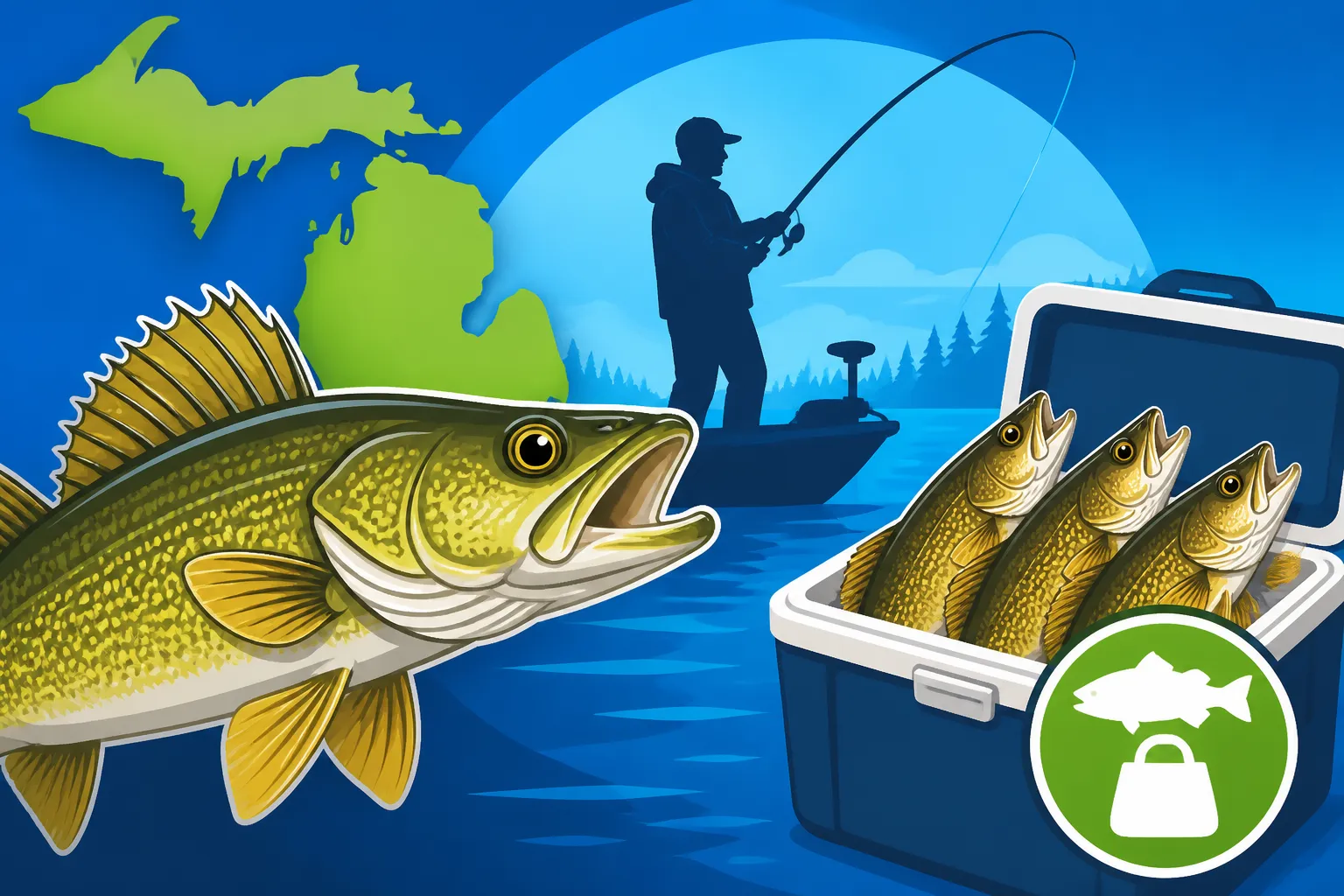
One of the most thrilling parts of fishing in Michigan is targeting walleye, those elusive, delicious fish that offer such a rewarding fight. But let's be honest, trying to keep up with all the rules can feel like navigating a maze blindfolded. You finally hook that beautiful walleye, and then the panic sets in: "Is it big enough? Can I keep it? What about the daily limit?" It's a common frustration, and nobody wants to inadvertently break the rules. This guide is here to clear up the confusion, walking you through Michigan's walleye size and bag limits so you can focus on the fishing, not the fear of a violation.
Understanding Michigan's Statewide Walleye Regulations
Michigan's Department of Natural Resources (DNR) works hard to manage our incredible walleye populations, and that means setting some foundational rules that apply across most of our waters. These regulations are designed to ensure that enough walleye survive to reproduce, keeping our lakes and rivers healthy for generations to come. It’s all about balance, and as anglers, we play a huge part in that.
The Standard Daily Possession Limit
When you're out on the water, the first thing many anglers think about is how many fish they can actually take home. For walleye in Michigan, there's a pretty standard daily possession limit that applies to most areas. Typically, you're allowed to keep a certain number of walleye per day, and this limit is crucial to respect. It's not just about what you catch and keep in your livewell; it's also about what you have in your possession once you've stopped fishing for the day or are heading home. This means if you had a great morning, went home, cleaned your fish, and then decided to go back out in the afternoon, any fish you caught in the afternoon would add to your total daily possession.
This statewide limit is usually quite consistent, making it easier for anglers who might travel between different lakes and rivers. However, as we'll discuss, some specific bodies of water might have their own nuanced rules, so it's always smart to double-check. The intent behind these limits is to prevent overfishing and distribute the harvest fairly among all anglers. Imagine if everyone could keep as many as they wanted; our walleye populations would dwindle fast! You can always find the most current figures in the official Michigan Fishing Regulations Digest, which you might even pick up while grabbing some new tackle on Amazon.
The Statewide Minimum Size Requirement
Beyond how many you can keep, there's also the question of how big they need to be. Michigan generally enforces a minimum size limit for walleye. This is incredibly important for the health of the fishery because it ensures that most walleye have a chance to spawn at least once, and often multiple times, before they're harvested. Younger, smaller fish are the future of the population, and letting them grow up is vital.
The statewide minimum size limit for walleye means that any fish you catch that doesn't meet this length requirement must be immediately released back into the water, unharmed. It can be a bummer to catch a beautiful walleye only to realize it's an inch too short, but following this rule is non-negotiable for sustainable fishing. Always have a reliable measuring device on hand. Many anglers keep a soft, flexible measuring tape in their boat or tackle box for quick and accurate checks. Knowing Michigan Walleye 15-Inch Minimum Size Limit is a good baseline, but remember, exceptions exist!
Navigating Specific Waterbody Exceptions
While statewide rules provide a solid foundation, Michigan's diverse waters mean that a one-size-fits-all approach isn't always best for every lake or river. Fisheries biologists regularly assess specific populations and habitats, sometimes leading to unique regulations tailored to certain areas. This is where things can get a little tricky, but understanding these nuances is key to being a responsible and successful angler. Always consult the official Michigan Fishing Regulations Every Angler Should Know before heading out.
Protected Slot Limits: What They Are and Where They Apply
One of the most common and sometimes confusing exceptions you'll encounter is a "protected slot limit." Unlike a simple minimum size, a slot limit specifies a range of sizes within which walleye cannot be kept. For example, a regulation might state you can keep walleye under 15 inches and over 23 inches, but anything between 15 and 23 inches must be released. The idea behind this is to protect the sexually mature, prime breeding-age fish. These "middle-sized" fish are often the most prolific spawners, and by protecting them, the DNR aims to boost population numbers and maintain genetic diversity.
Lakes or river sections known for their strong walleye fisheries, or those where management is focused on enhancing trophy potential, are often candidates for slot limits. For instance, you might find specific regulations like Michigan's Protected Walleye Slot Between 18 and 23 Inches on certain waters. It’s crucial to know if the water you’re fishing has a slot limit, as mistakenly keeping a fish within the protected slot can lead to significant penalties. Always read the specific regulations for your chosen fishing spot carefully.
Unique Minimum Size or Bag Limits in Specific Lakes
Beyond slot limits, some individual lakes or river systems might have entirely different minimum size limits or daily bag limits for walleye than the statewide standard. These variations are usually in place due to very specific local conditions. Perhaps a lake has a slow-growing walleye population, or maybe it's particularly prone to overfishing due to heavy pressure. In such cases, the DNR might impose a higher minimum size, a lower bag limit, or even a different season entirely, all designed to protect that particular fishery.
For example, a lake might have a 13-inch minimum or a 20-inch minimum, instead of the typical statewide rule. Similarly, the daily bag limit could be reduced from the standard number to, say, three walleye per angler. These unique rules are often highlighted in the Michigan Fishing Regulations Digest under the specific lake or river name. It’s not uncommon to find that Which Michigan Lakes Have Walleye Size Limit Exceptions are listed clearly, so you can plan accordingly. Always check the section for the specific body of water you intend to fish.
Boundary Waters: Great Lakes and Border Rivers
Michigan is blessed with an abundance of Great Lakes and shared border waters, and these areas often come with their own set of specific walleye regulations. Fishing on the Great Lakes, for instance, might have regulations that differ from inland lakes due to the vastness of the water, the migratory patterns of fish, and the sheer volume of anglers. These larger systems often have very robust walleye populations, but they also face unique environmental and fishing pressures.
Furthermore, if you're fishing a river that forms a border with another state or Canada, such as the Detroit River or parts of Lake Erie, you might encounter reciprocal agreements or specific rules that apply to those international or interstate boundary waters. This can include different size limits, bag limits, or even tackle restrictions, depending on which side of the invisible line you're fishing. It's really important to understand Michigan Great Lakes Fishing Regulations Guide and any specific rules for those shared waters. Don't assume that because you're in Michigan, the rules are the same as an inland lake fifty miles away.
Why These Regulations Matter: Conservation and Management
Sometimes, it might feel like the regulations are there just to make things complicated, but trust me, there's a deep, scientific reason behind every single rule. These aren't arbitrary decisions; they're the result of careful study and long-term planning by fisheries biologists. Understanding the 'why' behind the rules can help us all appreciate their importance and motivate us to be better stewards of Michigan's amazing fishing resources.
Protecting Spawning Stock and Future Generations
The most fundamental reason for size and bag limits is to protect the spawning stock of walleye. Without healthy adult fish able to reproduce, there's no future generation of walleye to catch. Minimum size limits, in particular, are designed to ensure that most walleye have the opportunity to spawn at least once, and ideally multiple times, before they're eligible for harvest. This means that when you release a short fish, you're not just following a rule; you're actively contributing to the sustainability of the population.
Consider a protected slot limit, for example. By safeguarding those prime, middle-sized walleye, we're protecting the most productive breeders in the fishery. These fish lay the most eggs and contribute significantly to the genetic health and resilience of the population. This forward-thinking approach ensures that there will be plenty of fish for your kids and grandkids to enjoy. It's a long game, and we're all players.
Promoting Quality Fisheries and Trophy Walleye
Beyond just survival, regulations also play a critical role in enhancing the quality of a fishery. Anglers often dream of catching a true trophy walleye, and effective size and bag limits help make those dreams a reality. By allowing fish to grow larger, these regulations foster populations where older, bigger fish are more common. This not only provides exciting opportunities for anglers but also creates a more robust and diverse ecosystem.
When a lake has a reputation for producing big walleye, it becomes a more desirable destination, which in turn can support local businesses and communities. Think about the impact of a world-class walleye fishery – it draws tourists, encourages tackle sales (which you can easily find on Amazon), and generally boosts the local economy. These regulations are a key component of that success, shaping the fishing experience and ensuring that Michigan remains a premier destination for Michigan Walleye Fishing Techniques and big fish opportunities.
How to Accurately Measure and Handle Your Catch
Okay, so you've landed a beautiful walleye! Now comes the moment of truth: Is it a keeper? Or does it need to go back to grow bigger? Getting this right is crucial, not just for compliance but also for the well-being of the fish you release.
Proper Measurement Techniques to Avoid Violations
Measuring a fish correctly is straightforward but requires attention to detail. The official method in Michigan (and most places) is to measure the fish from the tip of its snout (mouth closed) to the very end of its tail, with the tail compressed. This is often referred to as "total length." Don't measure to the fork of the tail, or let the tail fan out naturally – always compress it to get the longest possible measurement.
Here’s a step-by-step for accurate measurement:
- Lay the fish flat: Place the fish on a flat surface like a measuring board or a boat deck with a measuring tape.
- Close the mouth: Gently push the fish's snout against the measuring board's bumper or the starting point of your tape.
- Compress the tail: Pinch the two lobes of the tail together and extend them as far as they can go.
- Read the measurement: Note the length at the very tip of the compressed tail.
Having a good, clear measuring board is invaluable. You can find excellent options on Amazon, including those with a raised end to butt the fish's nose against for precision. Avoid trying to eyeball it or using a flimsy tape measure that might curve. When in doubt, always err on the side of caution. If it's borderline, release it. A little extra growth never hurt anyone, and it certainly won't hurt your wallet with a potential fine!
Best Practices for Catch-and-Release
For any walleye you intend to release, whether it’s undersized or within a protected slot, gentle handling is paramount. A fish that's released improperly is much less likely to survive, negating the conservation efforts of the regulations. We want those fish to swim away strong and continue their journey.
Here are some key catch-and-release tips:
- Minimize air exposure: Keep the fish in the water as much as possible. Even a few seconds of air exposure can cause stress and damage to their gills.
- Handle with wet hands: Dry hands can remove the fish's protective slime coat, making it vulnerable to disease. Wet your hands thoroughly before touching the fish.
- Support the fish horizontally: If you need to lift the fish for a quick photo or to remove a hook, support its body horizontally with one hand under its belly and the other near the tail. Avoid holding it vertically by the jaw, as this can damage internal organs, especially in larger fish.
- Use appropriate dehooking tools: Have needle-nose pliers or a dehooking tool ready to quickly remove hooks. Barbless hooks can make this even easier.
- Revive if necessary: If a fish seems sluggish after being released, gently hold it upright in the water and move it back and forth to force water over its gills until it swims away under its own power.
- Consider specialized gear: Some anglers opt for rubberized landing nets instead of traditional nylon nets, as they are gentler on fish scales and slime coats.
By following these practices, you're not just letting a fish go; you're giving it the best possible chance to thrive and contribute to Michigan's incredible walleye fishery.
Common Mistakes and How to Avoid Them
Even experienced anglers can sometimes fall into traps when it comes to understanding and following fishing regulations. It’s easy to make assumptions or misread a detail, especially when rules vary so much from one body of water to another. Let's talk about some of these common pitfalls and how you can steer clear of them.
Misinterpreting Regulation Digests
The Michigan Fishing Regulations Digest is your bible when it comes to fishing rules, but let's be honest, sometimes it can feel like reading a legal document. The biggest mistake anglers make is assuming they know the rules based on past experience or what their buddy told them. Regulations can and do change annually. What was true last year might not be true this year. For example, Michigan Fishing License Price Changes for 2026 might be a minor detail, but changes to size and bag limits can be significant.
To avoid misinterpretation:
- Always get the current year's digest: Whether you grab a physical copy from a bait shop or download the PDF, make sure it's the most up-to-date version. You can often find a link to the Michigan Fishing Regulations Digest PDF for 2026 on the DNR website.
- Read the general rules first: Understand the statewide walleye limits and seasons.
- Check specific waterbody rules: After understanding the general rules, always look up the specific lake or river you plan to fish. These are usually listed alphabetically. This is where you’ll find exceptions like slot limits or different minimum sizes.
- Pay attention to species-specific details: Walleye regulations are typically under their own section, but be mindful of rules that might apply if you're targeting other species alongside them.
- Use the DNR Hunt Fish App: The Michigan's DNR Hunt Fish App for Licenses and Reporting is an incredibly handy tool that puts the regulations right on your phone, making it easier to check on the go. It’s a great way to verify information quickly.
Don't skim. Don't guess. Take the time to properly review the regulations for your specific outing. It's a small investment of time that can save you a lot of headache (and potential fines) later on.
The Consequences of Exceeding Limits
Nobody wants to face a conservation officer on the water having made a mistake. Fishing without a license or exceeding limits carries real consequences, and ignorance of the law is generally not considered a valid excuse. These penalties are in place to deter violations and protect our natural resources. A friendly reminder to consult resources like What Happens if You Fish in Michigan Without a License for general penalties, though specific violations can vary.
Exceeding walleye size or bag limits can result in:
- Fines: These can range from moderate to substantial, depending on the severity of the violation (e.g., how many fish were over the limit, or how undersized they were).
- Confiscation of fish: Any illegally possessed fish will be seized.
- Confiscation of gear: In some cases, your fishing gear, including rods, reels, or even your boat, could be temporarily or permanently confiscated.
- Loss of fishing privileges: You could have your fishing license revoked or suspended, meaning you wouldn't be allowed to fish in Michigan for a certain period.
- Criminal charges: For severe or repeated violations, criminal charges are possible.
It's a serious matter, and it underscores the importance of being absolutely certain about the rules before you keep any fish. Always double-check your measurements and count your fish. If you're fishing with friends or family, make sure everyone understands the combined limits or individual limits that apply. Responsible angling isn't just about catching fish; it's about respecting the rules that keep the sport alive and thriving.
Summary of Michigan Walleye Limits
To help consolidate some of this information, here's a general overview of common walleye limits in Michigan. Remember, these are general and statewide rules. Always check the current Michigan Fishing Regulations Digest for specific waterbody exceptions before you head out!
| Regulation Type | Statewide General Rule | Common Exceptions/Considerations |
|---|---|---|
| Daily Possession Limit | 5 Walleye | Some specific lakes/rivers may have a lower limit (e.g., 3 walleye). |
| Minimum Size Limit | 15 inches | Many waters have a 13-inch or 18-inch minimum. Protected slot limits (e.g., 18-23 inches) are common. |
| Protected Slot Limits | Varies by waterbody | Typically protects prime breeding fish (e.g., 18-23 inches must be released). |
| Great Lakes | Often align with statewide, | Always check specific zones, especially for Lake Erie or shared border waters. |
| Season | Generally open year-round, | Specific inland waters may have closed seasons, especially during spawning. |
This table provides a quick glance, but it's no substitute for the full, detailed regulations found in the official digest.
Navigating Michigan's walleye size and bag limits might seem daunting at first, but with a little bit of homework and a commitment to responsible angling, you'll be well-equipped to enjoy our incredible fisheries. Always keep that current regulation digest handy, measure your fish accurately, and remember that releasing a short fish or one in a slot limit is a vital contribution to the future of walleye fishing. Tight lines, fellow anglers!
Disclaimer
This article is for general informational purposes only and does not constitute professional advice. Laws, prices and regulations vary by location and change over time. Consult a qualified professional for guidance on your specific situation.