What Is the Northern Pike Size Limit in Michigan
It can be incredibly frustrating to head out to your favorite Michigan lake or river, anticipating a day of battling those fierce Northern Pike, only to realize you're not entirely sure about the exact size limits or how many you can actually keep. Michigan's fishing regulations can feel like a labyrinth at times, with statewide rules, then special exceptions for specific lakes, and even different rules for different species! But don't worry, you're not alone in feeling this way. This guide is here to untangle the specifics of Northern Pike size limits in Michigan, making sure your next fishing adventure is both successful and fully compliant with the rules.
Decoding Michigan's Statewide Northern Pike Regulations
Let's start with the foundation: the general, statewide regulations for Northern Pike. This is your baseline, the rule of thumb that applies unless a specific water body states otherwise. It's designed to protect the overall pike population across the vast majority of Michigan's diverse waters, ensuring that these iconic fish continue to thrive for generations of anglers to enjoy.
The Standard Minimum Size and Daily Limit
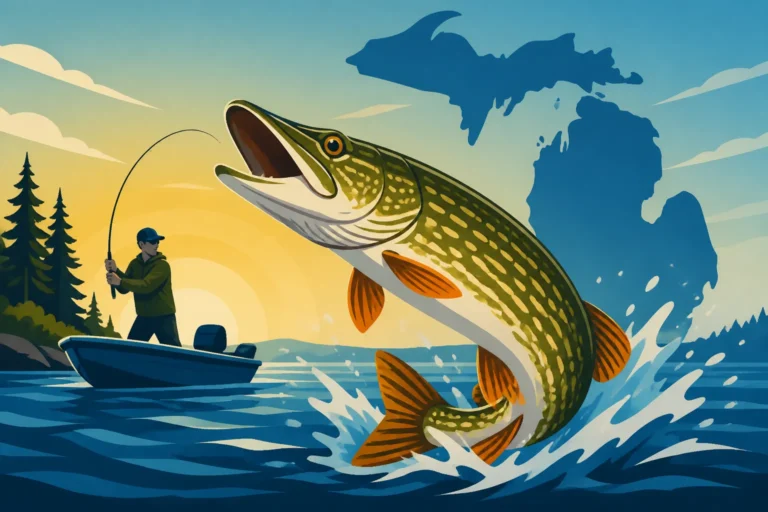
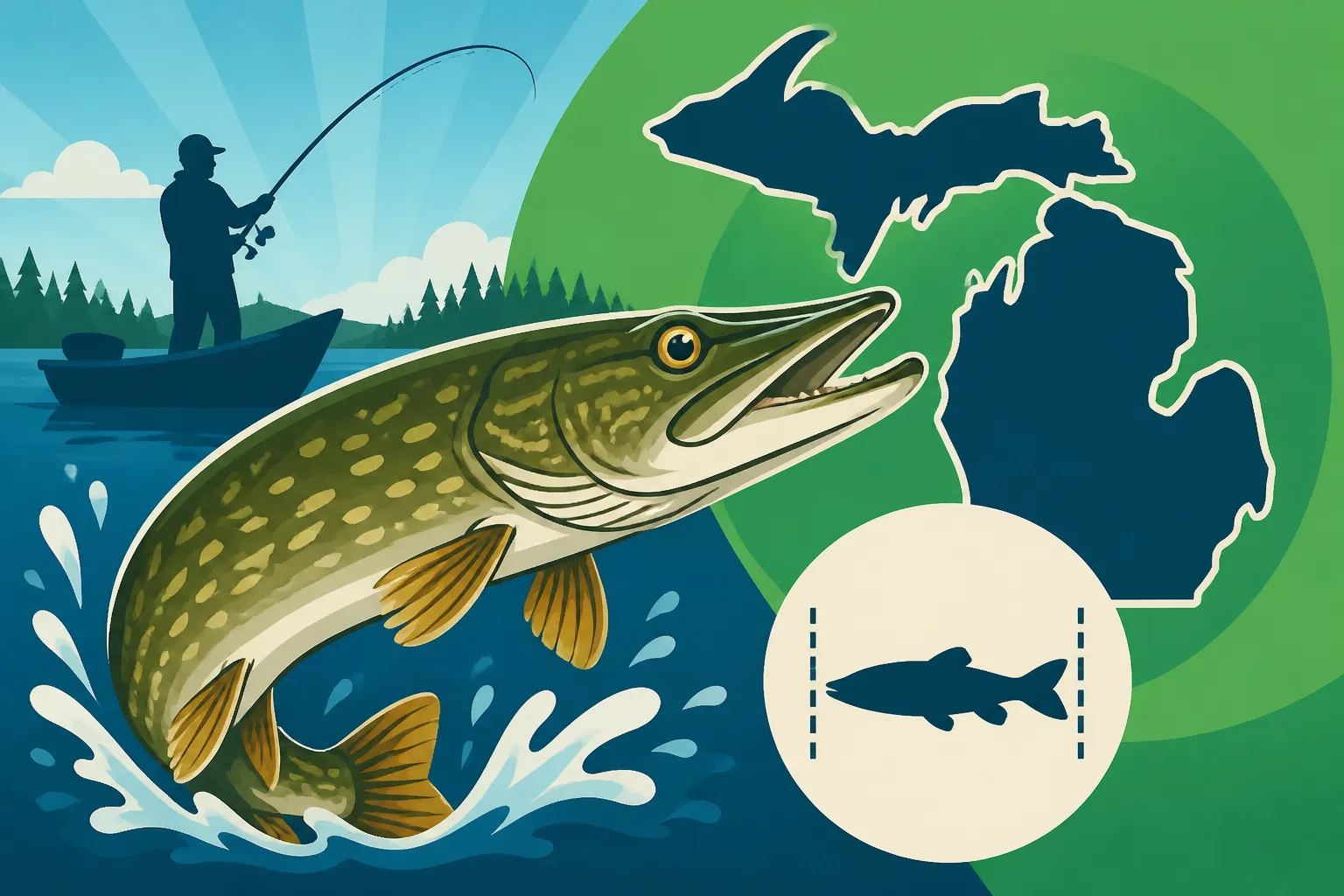
For most inland lakes and rivers in Michigan, the standard Northern Pike regulation is a minimum size limit of 24 inches and a daily possession limit of two fish. This means if you catch a pike shorter than 24 inches, it absolutely needs to go back into the water, even if it's the only fish you've caught all day. And once you've legally harvested two pike that meet the size requirement, your pike fishing for the day is done. You can continue fishing for other species, of course, but any additional pike you catch must be immediately released.
It's easy to assume one rule fits all, especially if you're primarily fishing familiar waters, but Michigan's waters are incredibly diverse, and so are its fish populations. That 24-inch minimum and two-fish daily limit is a general guideline, a starting point. Think of it as the default setting. Just like how you might have a default setting on your phone, but you customize individual apps, some lakes and rivers have their own "custom settings" when it comes to pike. This is where the real nuance, and sometimes the confusion, comes in. Always remember that this statewide rule is the floor, not necessarily the ceiling, for what you need to know before you cast.
Why Size and Bag Limits Matter for Northern Pike
These regulations aren't just arbitrary numbers conjured up by folks in offices; they're based on sound science and a deep understanding of fish biology. For Northern Pike, the 24-inch minimum size limit is crucial because it allows these fish to reach sexual maturity and spawn at least once, often multiple times, before they can be legally harvested. Protecting these larger, breeding-age fish is vital for ensuring a healthy, self-sustaining population. Imagine if everyone kept every small pike they caught – we'd quickly decimate the future breeding stock, leading to fewer and smaller pike for everyone in the long run.
Beyond reproduction, larger pike play a critical role as apex predators in their ecosystems. They help control populations of smaller, often more numerous, fish species, which in turn contributes to the overall health and balance of the aquatic food web. By encouraging the release of larger pike, we help maintain this ecological balance. The daily bag limit of two fish also helps distribute the harvest more equitably among anglers and prevents overfishing in popular spots. Ultimately, these rules, while sometimes feeling restrictive in the moment, are designed to ensure that Michigan's fantastic pike fishing remains robust and vibrant for years to come. It’s all part of the big picture of responsible Northern Pike Fishing in Michigan.
Navigating Water-Specific Northern Pike Rules and Exceptions
While the statewide regulations provide a good starting point, the truth is, Michigan is a state of nearly infinite fishing opportunities, and with that comes a lot of localized rules. It’s not uncommon to find that the lake you’re fishing might have a completely different set of regulations for Northern Pike than the river just a few miles down the road. This is where many anglers can get tripped up, and it's absolutely critical to understand how to find and interpret these special regulations.
The Critical Need to Check Specific Waterbody Regulations
Michigan's fisheries biologists work tirelessly to manage individual water bodies based on their unique characteristics. This means that factors like fish population density, habitat quality, historical catch rates, and even the presence of other predator species can influence specific regulations for Northern Pike. You might find one lake that, due to its high pike population, has a more liberal size limit or even no size limit at all, encouraging harvest to prevent stunting. Conversely, a lake known for producing trophy-sized pike might have a much stricter minimum size or even a slot limit to protect those larger, more valuable breeding fish.
For example, you might be used to the statewide 24-inch minimum, but then you decide to fish a specific lake in the Upper Peninsula, only to discover it has a 30-inch minimum for pike. Or perhaps you encounter a slot limit, which we'll discuss next. Not knowing these specific nuances can lead to accidental violations, which nobody wants. It’s a classic scenario where "ignorance of the law is no excuse," and frankly, it can be a real bummer to realize you've done something wrong unintentionally. This is why the statewide rule should always be treated as a general guide, and specific waterbody rules are your definitive source for the area you're actually fishing.
Your Go-To Resource: The Michigan Fishing Regulations Digest and DNR Tools
So, how do you keep track of all these variations? Your absolute best friend is the official Michigan Fishing Regulations Every Angler Should Know digest. This comprehensive guide, published annually by the Michigan Department of Natural Resources (DNR), details all the statewide rules and, crucially, lists every single water-specific exception by county. It's usually organized clearly, often by county, then by individual lake or river.
You can often pick up a physical copy of the digest wherever fishing licenses are sold, like at bait shops or sporting goods stores. For those of us who prefer digital access (or maybe forgot our paper copy at home!), the DNR also provides the digest as a downloadable PDF on their website. Even better, for modern convenience, many anglers find the Michigan's DNR Hunt Fish App for Licenses and Reporting incredibly useful. This app not only allows you to buy and store your fishing license digitally but often includes quick access to current regulations, making it super easy to check on the spot.
My personal advice? Even if you think you know the rules for a particular lake, give the digest a quick glance at the beginning of each new fishing season or whenever you plan to fish a new spot. Regulations can change, even if subtly, from year to year, and it’s better to be safe than sorry. The information is all there, laid out for you.
Understanding Protected Slot Limits
One particular type of water-specific regulation that can be confusing is the "slot limit." Instead of just a minimum size, a slot limit defines a range of sizes within which fish cannot be kept. For Northern Pike, this might mean something like "no pike between 24 and 34 inches can be harvested." Any pike smaller than 24 inches must be released, any pike within the 24-34 inch slot must be released, and only pike over 34 inches (or sometimes under 24 inches, depending on the specific slot) can be kept.
Why use slot limits? They are a powerful management tool designed to achieve specific conservation goals. For pike, a common goal is to protect the valuable breeding stock—those medium-to-large fish that are most reproductively active. By releasing fish within that "slot," biologists ensure that these prime breeders remain in the population to produce more fish. At the same time, some slot limits might encourage anglers to harvest smaller pike (below the slot) to reduce competition for food and allow the remaining fish to grow faster and healthier. This strategy can sometimes lead to an increase in trophy-sized fish over time.
It’s a bit more complex than a simple minimum size, but the intention is always to create a healthier, more balanced fishery. If you encounter a slot limit for Northern Pike, take an extra moment to understand it fully before you even make your first cast.
Best Practices for Measuring, Handling, and Releasing Pike
So you've checked the regulations, and you're ready to fish. But what happens when you land a Northern Pike? Knowing the rules is one thing, but actually implementing them responsibly is another. From correctly measuring your catch to ensuring a healthy release, there are crucial best practices every angler should follow.
Accurate Measurement is Key for Compliance
When you catch a Northern Pike, the moment of truth comes: is it a keeper? To answer that, you need to measure it accurately. The general rule for measuring fish in Michigan is to measure the total length from the tip of the snout to the furthest tip of the tail, with the fish laid flat. For many species, gently pinching the tail lobes together can give you the maximum length. It’s important to do this with the fish as still and flat as possible.
Having a reliable measuring device on your boat or tackle bag is non-negotiable. A simple tape measure works, but a dedicated fish measuring board is even better. These boards, often made of plastic or treated wood, have a fixed end to butt the fish's snout against and clear markings, making it quick and easy to get an accurate reading, especially when the fish is squirming. You can find a variety of these measuring boards on sites like Amazon, in different lengths and materials to suit your fishing style. Just imagine the stress of trying to hold a wriggling, toothy pike against a flimsy ruler – a solid measuring board is a game-changer. An accidental mismeasurement, even by an inch, could mean you've kept an illegal fish. Precision matters here.
Responsible Catch and Release for Oversized or Unwanted Pike
Whether a Northern Pike is too small, too large (in the case of a slot limit), or you simply choose to release it, practicing responsible catch and release is paramount. Pike are tough fish, but mishandling them can still cause undue stress and harm, reducing their chances of survival.
Here are a few tips for a healthy release:
- Minimize Air Exposure: Keep the fish in the water as much as possible. If you need to bring it aboard for a quick measurement or photo, do so quickly and efficiently.
- Wet Hands: Always wet your hands before touching a fish. Dry hands can remove the protective slime coat, making the fish susceptible to disease.
- Support Its Weight: When lifting a pike, especially a larger one, support its belly. Don't just hold it by the jaw. Pike have heavy bodies, and hanging them vertically can damage their internal organs or spine.
- Use De-hooking Tools: Northern Pike have sharp teeth! Trying to manually remove a hook can be dangerous for you and traumatic for the fish. Long-nosed pliers, a jaw spreader, or a specialized de-hooker are essential tools for safely removing hooks. If the hook is deeply swallowed, sometimes it’s better to cut the line as close to the hook as possible, as hooks will often dissolve or be passed by the fish.
- Revive If Necessary: If the pike seems sluggish upon release, hold it gently in the water, facing into the current, and move it back and forth to help water flow over its gills. Only release it when it can swim away strongly on its own.
Practicing careful catch and release for pike, especially the larger ones, is a significant contribution to conservation and helps maintain the health of Michigan's fisheries. These larger pike are often the prime breeders, so sending them back to do their thing is vital. This is a core part of being a good angler and understanding Northern Pike Identification in Michigan and their role in the ecosystem.
Essential Gear for Northern Pike Anglers
Having the right gear isn't just about catching fish; it's also about fishing responsibly and legally. For Northern Pike, a few key items will make your life much easier and ensure you're compliant with regulations.
- Measuring Board/Tape: As mentioned, this is critical for accurate length assessment. Look for durable, waterproof options. Many anglers find the rigid, plastic ones to be the most practical on the boat.
- Long-Nosed Pliers or Forceps: Absolutely essential for safely removing hooks from a pike's toothy mouth, protecting both your fingers and the fish.
- Jaw Spreader (Optional, but Recommended for Large Pike): These devices can hold a pike's mouth open, giving you better access to deeply set hooks, reducing stress on the fish during hook removal.
- Large Landing Net: A net with a wide hoop and rubberized, knotless mesh is ideal. It helps subdue the fish quickly, prevents it from thrashing on the boat deck, and protects its slime coat better than bare hands. For big pike, a net definitely falls under What Size Net Can You Use Fishing in Michigan. You can find excellent options for all these tools on Amazon, often with reviews from other pike anglers.
- Camera (Optional): If you plan to take a photo, have your camera ready to minimize the fish's time out of water.
Having these tools on hand isn't just about convenience; it's about being prepared for whatever you catch and ensuring you can adhere to all regulations, whether that means keeping a legal fish or releasing one safely.
Beyond the Basics: License, Identification, and Avoiding Common Mistakes
Beyond knowing the specific size limits, there are other fundamental aspects of fishing Northern Pike in Michigan that every angler needs to grasp. A lack of awareness in these areas can lead to complications just as easily as misinterpreting a size limit.
Do You Have the Right License?
This might seem obvious, but it bears repeating: you absolutely need a valid Michigan fishing license to fish for Northern Pike, or any other species, in Michigan's public waters. There are very few exceptions, such as during the designated Michigan Free Fishing Weekends Explained (usually one in February and one in June) or if you're under a certain age (check the current digest for specific youth rules).
Michigan offers a variety of license types, including annual licenses for residents and non-residents, and 24-hour licenses, which are often popular for visitors or those only fishing for a short trip. Understanding Michigan Fishing License Costs and Types Explained can help you choose the best option for your needs. Without a valid license, even if you perfectly adhere to every size and bag limit, you're fishing illegally, and that's a situation you definitely want to avoid. Always purchase your license before you head out, and keep your physical or digital copy readily accessible.
Northern Pike vs. Muskellunge: Knowing the Difference
One of the most common and potentially costly mistakes anglers make is confusing a Northern Pike with a Muskellunge (often shortened to "Muskie" or "Musky"). These two species are closely related and share similar body shapes and habitats, but their regulations are vastly different. Muskellunge generally have much stricter size limits (often 40-50 inches minimum) and much lower bag limits (often one fish per year, and that fish must be registered). Mistaking a muskie for a pike and keeping it can lead to significant fines and penalties.
So, how can you tell them apart? Here are the key distinctions, typically focusing on scale patterns on the cheek and gill cover, and coloration:
| Feature | Northern Pike | Muskellunge |
|---|---|---|
| Body Markings | Light (yellowish, bean-shaped) spots on a dark body background. | Dark (bars or spots) markings on a light body background. |
| Cheek Scales | Fully scaled on the cheek. | Upper half of cheek scaled, lower half scaleless. |
| Gill Cover Scales | Fully scaled on the gill cover. | Upper half of gill cover scaled, lower half scaleless. |
| Pores on Underside of Jaw | Usually 5 or fewer pores on each side. | Usually 6-9 pores on each side. |
Take a moment to study How to Tell a Muskellunge From a Northern Pike if you plan to fish in waters where both are present. It's a critical skill that could save you a lot of trouble! When in doubt, release the fish. A quick photo for later identification can also be a good idea, but the safest bet is to always return any fish you can't positively identify as a legal pike.
The Broader Impact: Violations and Conservation
Finally, it's important to remember that these regulations are not just about avoiding a ticket; they are fundamentally about conservation. Every regulation, from size limits to daily possession limits, is put in place to protect and enhance Michigan's fisheries. Violating these rules, whether intentionally or accidentally, undermines these conservation efforts.
The consequences of non-compliance can range from monetary fines to loss of fishing privileges. Michigan Fishing Violation Penalties and Fines can be steep, and nobody wants to spend their hard-earned money on a fine that could have been avoided with a little preparation. Beyond the personal cost, though, every illegal fish taken, especially a breeding-size Northern Pike, has a ripple effect on the ecosystem.
As anglers, we are stewards of the resource. By understanding and adhering to the Northern Pike size limits in Michigan, along with all other fishing regulations, we play a crucial role in ensuring that the thrill of catching these powerful fish continues for future generations. So, gear up, check those regulations, and enjoy your time on Michigan's beautiful waters!
Disclaimer
This article is for general informational purposes only and does not constitute professional advice. Laws, prices and regulations vary by location and change over time. Consult a qualified professional for guidance on your specific situation.