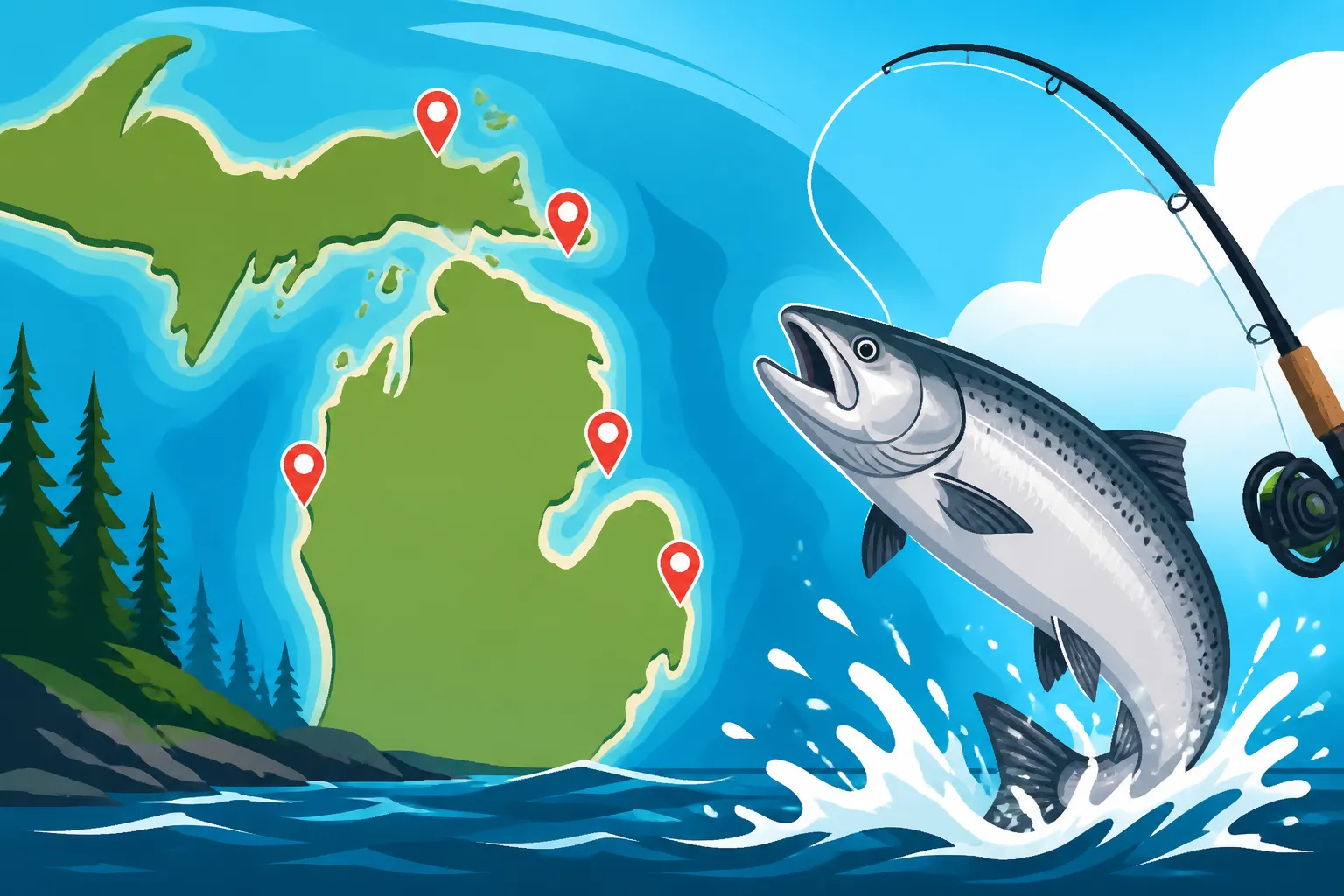
Best Spots for Atlantic Salmon on Lake Huron
Finding Atlantic salmon in Michigan can feel like searching for a needle in a haystack, especially when you consider how vast and diverse Lake Huron's waters are. Many anglers dream of catching these powerful, acrobatic fish, but don't know where to even begin their pursuit in the Great Lakes. This comprehensive guide will illuminate the specific hot spots on Lake Huron where Atlantic salmon are most likely to be found, helping you strategize your next fishing adventure and increase your chances of landing one of these magnificent fish.
Understanding Atlantic Salmon in Lake Huron
Atlantic salmon are a truly special fish in Michigan, offering a unique challenge and reward to anglers. Unlike their Pacific cousins that are prevalent in the Great Lakes, Atlantic salmon have a distinct life history and distribution, making them a prized catch. Knowing a bit about their journey and preferences in Lake Huron can significantly improve your fishing success.
A Brief History and Stocking Efforts
Atlantic salmon are not native to the Great Lakes. Their presence in Lake Huron is a direct result of dedicated stocking programs initiated by the Michigan Department of Natural Resources (DNR) and other agencies. The goal was to diversify the salmonid fishery and create a sustainable population of a species known for its thrilling fight and delicious flesh. Initial stockings date back decades, but consistent, strategic releases have been key to establishing the current fishery.
Historically, the St. Marys River, which connects Lake Superior to Lake Huron, has been a critical focus for these stocking efforts. This river system provides ideal cold-water habitat and an accessible area for growth before the fish venture into the broader expanse of Lake Huron. It's an incredible testament to conservation efforts that these non-native fish have found a niche here, thriving enough to draw anglers from all over. Understanding this history helps us pinpoint why certain areas consistently produce more Atlantic salmon than others; they tend to stay in or return to the areas where they were released or where conditions mimic their natural preferences.
Identifying Atlantic Salmon and Their Habits
Atlantic salmon ( Salmo salar ) are often confused with other salmon species, but they have distinct features. They typically have a more slender body profile than a Chinook, and their tail fin is less forked. On their sides, you'll notice fewer spots, and those present are usually X-shaped or irregular, mostly above the lateral line. Their mouth is smaller, and the upper jaw doesn't extend beyond the eye. When fresh from the Great Lakes, they possess a beautiful silvery sheen, often with a subtle bluish-green back.
Their habits in Lake Huron are quite interesting. Unlike Pacific salmon which die after spawning, Atlantic salmon can spawn multiple times, returning to rivers or suitable stream conditions. In Lake Huron, they are primarily pelagic, meaning they roam the open waters, often associating with schools of baitfish like alewives and smelt. They prefer colder, oxygen-rich waters, often found deeper in the water column during warmer months and shallower during cooler periods, especially near river mouths when they are staging to run upstream. These fish are powerful fighters, known for spectacular aerial displays once hooked, making them a true trophy for any angler. Understanding their diet and preferred temperatures is crucial for selecting the right lures and fishing depths.
Prime Locations for Atlantic Salmon on Lake Huron
When it comes to Atlantic salmon fishing on Lake Huron, location is everything. While these fish can roam widely, certain areas consistently offer better opportunities due to water temperature, baitfish availability, and proximity to stocking sites or tributary rivers. Focusing your efforts on these prime spots will dramatically increase your chances of success.
Northern Lake Huron's Hidden Gems
The northern reaches of Lake Huron are undeniably the heartland for Atlantic salmon in Michigan. This region offers the colder, clearer waters they prefer and is directly influenced by stocking programs in the St. Marys River system.
- St. Marys River and Its Mouth: This is arguably the most consistent producer of Atlantic salmon. Fish stocked here will spend time growing in the river or immediately offshore before migrating into the vastness of Lake Huron. The lower St. Marys River, especially around Neebish Island and downstream towards Drummond Island, is excellent. Anglers here often target them in spring and fall as they move in and out of the river. The complex current patterns and abundance of baitfish make it a feeding ground.
- Les Cheneaux Islands: Just south of the St. Marys River, this archipelago offers protected waters and numerous channels that can hold Atlantics. The cooler, deeper pockets around these islands, coupled with ample structure, provide ideal ambush points for these predatory fish. Popular spots include the channels between Marquette Island and the mainland, and areas around Cedarville. This is a fantastic place for both boat and even some shore fishing opportunities, depending on access.
- Straits of Mackinac: The waters near the Mackinac Bridge, where Lake Michigan and Lake Huron converge, are another prime area. The constant flow of cold, oxygenated water and the presence of diverse baitfish populations attract a variety of salmonids, including Atlantics. Deep water trolling here can be highly effective, especially when targeting fish that are transitioning between the two lakes or holding in deeper currents.
When exploring these areas, it's a good idea to consult local bait shops or charter captains, many of whom are listed on platforms like FishingBooker, for the most up-to-date information on where the fish are biting. Their local knowledge is invaluable.
Deep Water Haunts and River Mouths
Beyond the specific northern hotspots, Atlantic salmon also use larger patterns of movement within Lake Huron, often associating with deep-water structure and the mouths of larger tributary rivers.
- Offshore Depths: During the warmer summer months, Atlantic salmon will retreat to the deeper, cooler parts of the lake where water temperatures remain in their preferred range (typically 50-60°F). These offshore locations, often over pronounced underwater contours or drop-offs, can hold large schools of baitfish, attracting hungry Atlantics. Trolling with downriggers in these deeper sections becomes paramount. Identifying these thermal refuges and baitfish concentrations using sonar is key.
- River Mouths Along the Coast: While the St. Marys River is paramount, other significant tributaries that flow into Lake Huron can also attract Atlantic salmon, particularly during their pre-spawning migrations in late summer and fall. Rivers like the Au Sable River near Oscoda, or the Thunder Bay River near Alpena (which is detailed in our guide on Thunder Bay Fishing on Lake Huron), can see Atlantics staging near their mouths, although not in the same numbers as coho or Chinook salmon. These areas provide current and access to colder upwellings. Fishing in these zones often involves targeting the mixing waters where the river meets the lake, casting spoons or flies from shore or boat. Always check specific regulations for these river mouths, as rules can vary.
Techniques and Tactics for Landing Lake Huron Atlantics
Catching Atlantic salmon in Lake Huron often requires a blend of specific techniques, the right gear, and a good understanding of their behavior. These fish are known for their strong fights and sometimes subtle bites, so having your setup dialed in is crucial.
Trolling Strategies
Trolling is by far the most effective method for covering water and finding Atlantic salmon in Lake Huron, especially in the vast open waters they inhabit.
- Downriggers and Planer Boards: These are indispensable tools for presenting lures at precise depths and spreading out your lines. Atlantic salmon often suspend at specific depths, sometimes just above the thermocline. Downriggers allow you to place your lures right in the strike zone. Planer boards help you cover a wider swath of water, especially useful for running multiple lines without tangles. For more on this, check out our How to Troll for Salmon on the Great Lakes guide.
- Lures of Choice: When it comes to lures, spoons are king. Slim, erratic spoons like the popular Dardevle, Little Cleo, or Magnum Spoon in silver, blue/silver, green/silver, or orange/silver patterns often produce well. Stickbaits, such as Rapala or Bomber Long A, in natural baitfish colors or bright chromes can also be very effective, especially when fished closer to the surface or near river mouths. Flashers and dodgers paired with flies or small squids can add attraction, mimicking baitfish schools. Experiment with different colors and sizes until you find what the fish are keying in on that day.
- Speed and Depth: Trolling speed is critical. A general starting point is 2.0 to 3.0 mph, but sometimes subtle changes can make a big difference. Watch your fish finder for bait balls and active fish, and adjust your speed to trigger strikes. As for depth, start by locating the thermocline or areas where baitfish are concentrated. During summer, Atlantics might be 40-80 feet down, while in spring and fall, they could be much shallower, even in the top 20 feet of the water column. Don't be afraid to run lines at various depths until you find where they are feeding. Remember, proper Trolling Gear for Michigan's Great Lakes is essential for success.
For those looking to book a guided trip to learn these techniques firsthand, platforms like FishingBooker offer a wide selection of experienced charter captains who specialize in Great Lakes salmon fishing. They provide all the necessary gear and expertise.
River Mouth and Nearshore Approaches
While trolling dominates open water, river mouths and nearshore areas offer different, often more accessible, fishing opportunities for Atlantic salmon.
- Casting from Shore or Boat: In early spring or late fall, when Atlantics are congregating near river mouths, casting spoons or crankbaits from shore or an anchored boat can be productive. Work the areas where current brings baitfish into the river or where the river plume meets the lake. Early mornings and late evenings are often the best times for this method.
- Fly Fishing: For the dedicated fly angler, targeting Atlantic salmon can be an exhilarating experience, especially in the lower stretches of the St. Marys River or other river mouths. Large streamers mimicking baitfish, leeches, or even some flashy attractor patterns can entice strikes. A 7-9 weight fly rod is typically recommended for the power needed to handle these strong fish. Presentation is key, drifting flies naturally with the current or stripping streamers to imitate fleeing bait. For general techniques, refer to our guide on Fly Fishing Techniques for Michigan Trout Streams which can offer transferable skills.
- Bait Fishing: While not as common for Atlantics as it is for other species, sometimes natural baits can work. Live or cut bait, such as alewives or smelt, presented on a slip sinker rig or under a bobber, can be effective when fish are holding in specific areas near structure or river mouths. Always check the Michigan Fishing Regulations Every Angler Should Know for what baits are legal in specific waters.
Best Times to Target Atlantic Salmon
Timing is crucial when it comes to consistently catching Atlantic salmon in Lake Huron. Their movements and feeding patterns are heavily influenced by water temperature, baitfish availability, and seasonal changes.
Seasonal Breakdown for Success
Understanding the annual cycle of Atlantic salmon in Lake Huron can significantly improve your fishing strategy. This aligns closely with general Michigan Fishing Seasons Explained.
- Spring (April – June): As ice recedes and water temperatures begin to rise, Atlantic salmon become more active. They often move closer to shore and concentrate around river mouths, particularly the St. Marys River, where they've been stocked. Early spring can be excellent for casting from shore or shallow trolling with planer boards. As spring progresses and the lake warms, they'll start to spread out, following baitfish into slightly deeper water. This is a fantastic time for aggressive feeding as they shake off the winter doldrums.
- Summer (July – August): This is when Atlantics move into deeper, cooler offshore waters. Trolling with downriggers becomes the primary method, targeting depths where the water remains cool. Focus on offshore structure, baitfish schools, and temperature breaks. While they can be harder to locate in the vastness of the lake, once found, fishing can be spectacular. Mornings and evenings are often the most productive.
- Fall (September – November): As water temperatures begin to drop again, Atlantic salmon will start to migrate back towards shallower waters and river mouths, especially those where they were stocked, or rivers with suitable gravel for spawning. This is another prime time for aggressive feeders, and both trolling and casting can be effective. The fish are often fat and feisty, providing some of the best fights of the year. This period also coincides with other salmon runs, so make sure to double-check your target species and ensure you're following Michigan Fishing Regulations Every Angler Should Know specific to Atlantic salmon.
- Winter (December – March): While not a traditional open-water season, dedicated ice anglers can sometimes find Atlantic salmon, particularly in protected bays or the lower St. Marys River system. However, this is a less common pursuit, and anglers typically focus on other species. If you do venture out, be sure to have all the necessary ice fishing safety gear.
For a broader perspective on optimal fishing times, consult our guide on the Best Time of Year to Fish in Michigan.
Weather and Water Conditions
Beyond the seasons, daily weather and water conditions play a huge role in Atlantic salmon fishing success.
- Wind and Waves: A moderate chop on the water can actually improve fishing, as it breaks up light penetration and can make fish more aggressive. However, strong winds and large waves can make fishing unsafe and impractical, especially on a lake as large as Huron. Always prioritize safety and check marine forecasts before heading out. Charters listed on FishingBooker are usually excellent at navigating these conditions and will adjust trips accordingly.
- Water Temperature: This is perhaps the most critical factor. Atlantic salmon prefer water temperatures between 50-60°F. Using a fish finder with temperature readings is invaluable for locating these thermal sweet spots. During cold fronts, fish might go deeper or become less active, while stable weather with rising barometric pressure can often signal active feeding periods.
- Water Clarity: Generally, Atlantics prefer clearer water, which is typical of the northern parts of Lake Huron. However, slight turbidity near river mouths after a rain can sometimes concentrate baitfish and make the Atlantics more willing to strike. Experiment with brighter, more visible lures in slightly stained water and natural, subtle patterns in very clear conditions.
No matter the conditions, always ensure you have a valid Michigan Fishing License Guide for Residents and Nonresidents and are familiar with specific rules for Atlantic salmon.
Essential Gear and Best Practices
Having the right equipment and adopting responsible fishing practices are key to a successful and sustainable Atlantic salmon fishery on Lake Huron.
Rods, Reels, and Line
The fight of an Atlantic salmon is something to behold, so your gear needs to be up to the task.
- Rods: For trolling, a medium-heavy rod around 8.5 to 10.5 feet long with a moderate fast action is ideal. This length helps spread lines and absorb the shock of a strike. For casting from shore or boat, a 7-8 foot medium-heavy spinning or baitcasting rod will provide the necessary backbone and casting distance. If you're fly fishing, an 8-weight rod is a good all-around choice. More details can be found in our Best Rods and Reels for Michigan Fishing guide.
- Reels: A level-wind baitcasting reel with a good drag system and plenty of line capacity (at least 200 yards of 20-30 lb test) is perfect for trolling. For casting, a reliable spinning reel in the 3000-4000 series is suitable.
- Line: Braided line (20-30 lb test) is popular for its sensitivity and strength, often with a fluorocarbon leader (10-15 lb test) for abrasion resistance and invisibility. Monofilament (12-20 lb test) can also be effective, especially for top lines while trolling, as it offers some stretch.
Boats and Electronics
Your vessel and its electronic suite are critical for navigating Lake Huron and finding fish.
- Boats: For tackling Lake Huron's vastness and potential for choppy conditions, a stable, seaworthy boat is a must. Deep-V hull boats, often 18-25 feet or larger, are preferred by many serious salmon anglers. They offer the stability, space, and power needed for long days of trolling. For those interested, our guide on Best Boats for Michigan Fishing offers excellent advice. If you don't own such a boat, consider booking a charter through services like FishingBooker, which provides access to fully equipped vessels and experienced captains.
- Electronics: A quality fish finder with GPS and mapping capabilities is non-negotiable. It allows you to mark waypoints, identify baitfish schools, locate thermal breaks, and navigate safely. Modern units often combine side-imaging and down-imaging, giving you a comprehensive view of the underwater world.
Responsible Angling and Conservation
Atlantic salmon are a valuable resource, and responsible angling ensures their continued success.
- Catch and Release: While legal to harvest, many anglers practice catch and release for Atlantic salmon, especially larger, older fish. If you do release, handle the fish carefully with wet hands, minimize air exposure, and ensure it's revived before letting it go.
- Adherence to Regulations: Always carry your Michigan Fishing License Guide for Residents and Nonresidents and a copy of the current Michigan Great Lakes Fishing Regulations Guide. Pay close attention to bag limits, size limits, and any special regulations for Atlantic salmon, which can sometimes differ from other salmon species. The DNR updates these annually, so staying informed is crucial.
By combining knowledge of these prime locations, effective techniques, and a commitment to responsible fishing, you'll be well on your way to experiencing the thrill of Atlantic salmon fishing on Lake Huron.
Disclaimer
Fishing conditions and regulations in Michigan can change frequently. Always consult the latest Michigan Department of Natural Resources (DNR) fishing guide and local advisories before planning your trip. This guide is for informational purposes only and does not constitute legal advice.