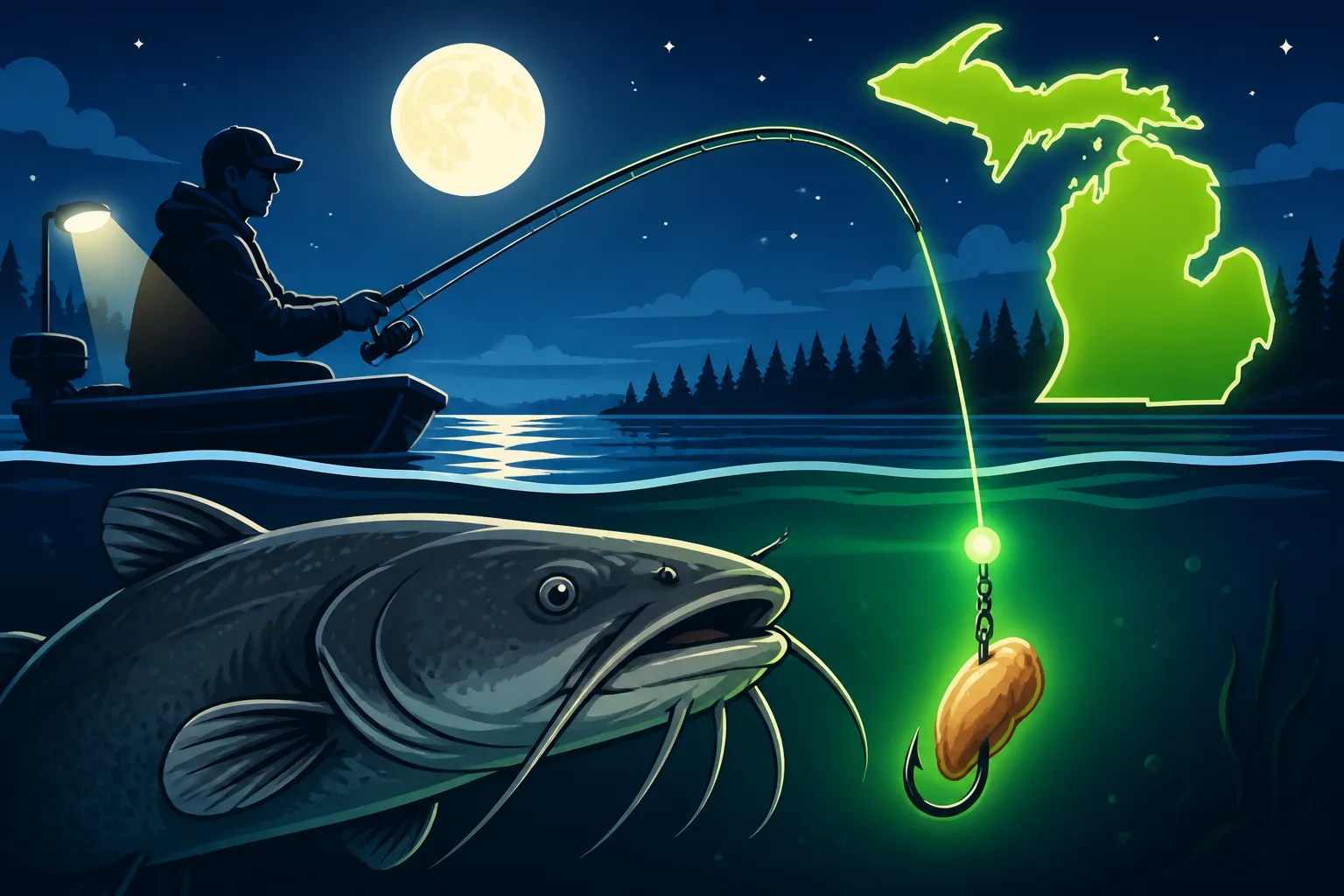
Best Technique for Night Fishing Catfish
Night fishing for catfish in Michigan offers a truly unique and often incredibly rewarding experience, but let's be honest, it can also be incredibly intimidating if you're not prepared. The quiet, the dark, the sounds of the water — it all changes after the sun goes down, and so do the fish. If you've ever felt frustrated trying to figure out how to effectively target those whiskered beauties when you can barely see your own hand, you're in the right place. This guide is all about equipping you with the best techniques for reeling in Michigan catfish under the cloak of darkness, turning those nighttime struggles into successful fishing adventures.
Why Catfish Dominate the Night Shift in Michigan Waters
You might wonder why catfish seem to become so much more active once the sun dips below the horizon. It's not just a myth; there are very real biological reasons why channel cats, flatheads, and even bullheads are prime targets for night anglers across Michigan. Understanding their nocturnal nature is the first step to successful night fishing.
Catfish Biology and Nocturnal Feeding Habits
Catfish are primarily nocturnal predators, meaning they're most active during the night. Their bodies are perfectly designed for hunting in low-light conditions. Unlike many other game fish that rely heavily on sight, catfish possess an incredible array of sensory tools that allow them to thrive in darkness. Their barbels, often called "whiskers," are packed with taste buds and touch receptors. These barbels act like highly sensitive antennae, allowing them to detect even the faintest scent trails and subtle vibrations of prey moving through the water. This means they can "taste" and "feel" their way to a meal without needing to see a thing.
Beyond their exceptional sensory organs, their eyes are adapted for low light, giving them an advantage over daytime species when the moon is high. They’re also less wary in the dark, feeling more secure to move into shallower feeding areas they might avoid during the day. This shift in behavior makes prime daytime spots sometimes completely dead at night, while overlooked areas suddenly become hotbeds of activity. Think of it as their office hours shifting – they clock in when most other fish are winding down.
Preferred Hunting Grounds After Dark
When the sun goes down, catfish often move from deeper, cooler daytime haunts into shallower water to feed. This is especially true in lakes, reservoirs, and slower-moving rivers. They’ll patrol flats, submerged weed lines, sandbars, and the edges of drop-offs, looking for an easy meal. In rivers, they'll often hold in current breaks, behind log jams, or in scour holes, waiting for food to drift by. These areas, which might seem too exposed or warm during the day, offer a smorgasbord of insects, crustaceans, and smaller baitfish under the cover of darkness.
For instance, on a big body of water like the Detroit River or parts of the Grand River, during the day you might find catfish holding in deeper channels. But come nightfall, they might push up onto adjacent flats or into slower side channels where they can more easily ambush prey. Knowing this allows you to adjust your approach and target these shallow, structure-rich areas with more confidence. The best strategy is to think about where their food sources hide and where they'd feel safe enough to hunt without being easily spotted by predators from above.
Essential Gear for a Successful Night Catfishing Trip
Going out on the water after dark demands a slightly different gear setup than your typical daytime excursion. You’re not just battling fish; you’re also contending with limited visibility. Having the right tools won't just make you more effective, it'll make your experience safer and more enjoyable. Fumbling around in the dark is no fun for anyone, and it can easily lead to dropped gear or missed opportunities.
Lighting Up Your Night: Headlamps and Lanterns
Without a doubt, proper lighting is your number one priority for night fishing. A good headlamp is absolutely indispensable. Look for one with a red-light option; red light preserves your night vision much better than white light, which can temporarily blind you as your eyes adjust. This is crucial for tying knots, rebaiting hooks, or unhooking a fish without losing your ability to see in the ambient darkness. Many reputable brands offer excellent headlamps that are waterproof and durable – you can often find a great selection on Amazon.
In addition to a headlamp, a small lantern can be incredibly useful for illuminating your immediate fishing area, especially if you're fishing from shore or a stationary boat. This provides a broader, more consistent light source for setting up gear, preparing bait, or just having a better sense of your surroundings. Again, look for lanterns with adjustable brightness and, if possible, a red-light mode. Just remember to keep direct white light pointed away from the water as much as possible, as it can spook fish.
Rods, Reels, and Line for Catfish in the Dark
For catfish, especially the larger flatheads and channel cats you might encounter in Michigan's rivers and lakes, you’ll want a robust rod and reel setup. A medium-heavy to heavy action spinning or baitcasting rod, typically 7 to 9 feet long, is ideal. This length provides good casting distance and enough backbone to handle powerful runs. Pairing it with a durable reel spooled with 15-30 lb monofilament or braided line will give you the strength needed to pull big cats out of cover. Braided line, with its lack of stretch, is particularly effective for feeling subtle bites in the dark.
When it comes to line, consider using a high-visibility line if you're using monofilament, as it can sometimes help you see line movement against a lighter background or with minimal light. However, many night anglers rely more on feel and auditory cues (like a rod tip dipping) than visual ones, so the material and strength are often more important than color. For heavy cover situations, a strong leader of fluorocarbon or heavy mono can prevent break-offs from abrasive structures.
Essential Accessories for Night Anglers
Beyond the core fishing tackle, a few key accessories will significantly improve your night catfishing experience:
- Rod Holders: Whether you’re on shore with bank spikes or on a boat with rail-mounted holders, sturdy rod holders are crucial. They keep your rods secure and allow you to set multiple lines, which is often a productive strategy for catfish.
- Net or Lip Grips: A large, sturdy landing net with a deep basket is essential for safely landing big catfish, especially flatheads with their powerful bodies. Alternatively, a good pair of fish lip grippers can be very helpful for controlling a feisty cat without getting barbed.
- Pliers/Hook Removers: Catfish have tough mouths and often swallow hooks deep. Long-nosed pliers or specialized hook removers are a must for safe and efficient hook extraction.
- Insect Repellent: Michigan nights can be buggy. Don't let mosquitoes or biting flies cut your trip short. A good insect repellent is a small investment that makes a huge difference. You can easily find various options on Amazon.
- Portable Chair/Bucket: Comfort is key during long waits. A comfortable, portable chair or a five-gallon bucket with a padded lid (which also doubles for gear storage) can make hours of sitting much more enjoyable.
- Extra Batteries: Always, always carry extra batteries for your headlamp and any other battery-powered gear. There's nothing worse than being plunged into darkness mid-bite.
- Small First Aid Kit: Accidents happen, especially in the dark. A basic first-aid kit with bandages, antiseptic wipes, and pain relievers is smart to have on hand.
Remember, organization is your best friend when night fishing. Keep your tackle box well-organized, and know exactly where everything is so you're not fumbling when a fish decides to bite. You might want to consider a tackle box with internal dividers that are easily visible or even glow-in-the-dark.
Top Baits and Rigs for Michigan Catfish at Night
Catfish are opportunistic feeders, but they do have preferences, especially when they're relying on smell and vibration in the dark. The right bait presented on an effective rig can make all the difference between a quiet night and a screaming reel.
The Allure of Stink Baits and Cut Bait
When it comes to tempting catfish in the dark, smell is king. Their incredible olfactory senses are heightened at night, making strong-smelling baits incredibly effective.
- Stink Baits: These concoctions, often made with cheese, blood, or other pungent ingredients, are designed to release a powerful scent trail in the water. They come in various forms: dip baits that you "dip" a spongy lure or tube into, and punch baits that you "punch" a treble hook into. Many anglers in Michigan swear by commercial stink baits, and there are countless recipes for homemade versions too. The key is to find one that emits a consistent, powerful odor. They work particularly well for channel catfish in both lakes and rivers.
- Cut Bait: This is often the go-to for larger channel catfish and especially flatheads. Freshly cut pieces of oily fish like shad, suckers, or even bluegill (where legal) are deadly. The blood and oils released from the cut flesh create an irresistible scent plume that catfish can track from a distance. Experiment with different sizes – sometimes a whole small fish fillet is best, other times just a chunk. Ensure your bait is fresh; rancid bait is less effective.
- Live Bait: While cut bait is fantastic, live bait can be equally, if not more, effective for flathead catfish. Small bluegill, sunfish, or suckers (again, check local regulations for baitfish legality) fished alive on a stout hook will often entice a massive flathead. The vibrations and distress signals of a live struggling baitfish are hard for a predatory flathead to ignore in the dark.
Effective Rigs for Night Catfishing
Simplicity is often best when fishing in the dark, as complex rigs can be a nightmare to tie and manage.
- Carolina Rig (Slip Sinker Rig): This is perhaps the most popular and versatile rig for catfish. It consists of a slip sinker (egg sinker or no-roll sinker) threaded onto your main line, followed by a bead (to protect the knot), and then tied to a barrel swivel. A leader, usually 12-24 inches long, is tied to the other end of the swivel, with your hook at the end of the leader. This rig allows the fish to pick up the bait and move off with it without immediately feeling the weight of the sinker, giving you a better chance to set the hook. It's excellent for presenting bait on the bottom in both current and still water.
- Three-Way Swivel Rig: Ideal for heavier current in rivers or when you want to suspend your bait slightly off the bottom. Tie your main line to one eye of a three-way swivel. To a second eye, tie a short leader (6-12 inches) with a pyramid sinker or bell sinker. To the third eye, tie a longer leader (18-36 inches) with your hook and bait. This keeps your bait stationary but allows it to drift enticingly in the current just above the bottom.
- Bobber Rig (for shallower water): In shallower lakes or slow-moving river sections where catfish might be cruising closer to the surface, a slip bobber rig can be incredibly effective. Set your bobber stop to suspend your bait just above the bottom or at a depth where you expect catfish to be feeding. A chemical light stick attached to the bobber makes it easy to see when a fish pulls it under. This is a particularly fun way to fish at night because the visual of the bobber disappearing is electrifying.
| Bait Type | Target Catfish Species | Scent/Action Profile | Best Rig Types | Pros | Cons |
|---|---|---|---|---|---|
| Stink Bait | Channel Catfish, Bullheads | Strong, pervasive odor; static presentation | Carolina Rig, Three-Way | High appeal to smell-driven cats; easy to deploy | Can be messy; requires specific bait holders (sponges) |
| Cut Bait | Channel Catfish, Flatheads | Blood & oil scent trail; some visual appeal | Carolina Rig, Three-Way | Very effective for larger cats; natural food source | Can be expensive; requires fresh bait |
| Live Bait | Flatheads | Vibrations, distress signals; active presentation | Carolina Rig, Three-Way | Irresistible to flatheads; targets trophy fish | Bait can be hard to acquire; regulations apply; less active for other species |
| Nightcrawlers | All Catfish Species | Moderate scent; wiggling action | Carolina Rig, Bobber Rig | Universally appealing; easy to find | Smaller catches; less effective for large trophy cats |
Choosing Your Hooks and Weights
Selecting the right hook size and style is vital. Circle hooks are a fantastic choice for night fishing because they dramatically reduce gut hooking. The fish hooks itself in the corner of the mouth as it pulls away, making for safer, easier releases, especially when you're fumbling with a flashlight. For channel cats, sizes from 2/0 to 5/0 are common, while flatheads often require much larger hooks, from 7/0 up to 10/0, depending on your bait.
Weights vary greatly depending on current and depth. In still water, a 1/2 to 1 oz egg sinker might be sufficient. In strong river currents, you might need pyramid sinkers or no-roll sinkers weighing 3 oz or more to hold your bait in place. Always carry a variety of weights to adapt to changing conditions. You want just enough weight to keep your bait where you want it without it constantly rolling or drifting out of the strike zone.
Picking Your Spot and Setting Up for Success
You've got your gear, you've got your bait, but where do you actually cast your line when the world is dark? Choosing the right location and setting up efficiently are paramount for a successful and safe night of catfishing.
Identifying Productive Nighttime Catfish Haunts
Michigan offers a plethora of fantastic catfishing opportunities, from its vast Great Lakes tributaries to its numerous inland lakes and slow-moving rivers. The key to finding a good spot at night often revolves around structure and current.
- Rivers: For flatheads and channel cats, look for deep holes, log jams, rock piles, and current seams in rivers like the Grand, Muskegon, or St. Joseph. Flatheads, in particular, love to ambush prey from heavy cover, so targeting submerged timber or undercut banks can be incredibly productive. Channel cats often congregate in slower moving pools just below riffles or dams. Areas where smaller creeks or drainage ditches enter a larger river can also be hotspots, as they wash in food.
- Lakes and Reservoirs: In Michigan's inland lakes and larger reservoirs, catfish often move to shallower flats, points, and humps after dark. Look for areas with a transition from hard bottom to soft bottom, or the edges of weed beds. A good rule of thumb is to fish the wind-blown side of a lake, as the wind pushes baitfish and other food sources towards those shores. On the Great Lakes, nearshore areas, harbors, and mouths of rivers can hold good numbers of channel cats. For instance, Saginaw Bay, Michigan, Walleye Fishing on Lake Huron is known for its walleye, but its tributaries and nearshore areas can also hold plenty of channel catfish at night.
- Piers and Docks: Public fishing piers and docks can be excellent spots for night catfishing, especially in urban areas or popular vacation spots. The lights from these structures can attract baitfish, which in turn attract catfish. Just be mindful of other anglers and respect any posted hours or regulations. Don't forget, you can also consider Fishing From a Boat Without a License in Michigan as long as you have your personal license if you choose to venture out further from shore.
Before you go, do some daytime scouting. Look for obvious structure, current breaks, and potential hazards. Knowing the terrain during the day will make navigating and fishing in the dark much safer and more effective. Check out resources like Best Places to Fish in Michigan to get ideas.
Setting Up Your Nighttime Fishing Station
Once you've picked your spot, a well-organized setup is key. Everything looks different in the dark, and what seems easy by day can become a frustrating challenge.
- Establish a Safe and Clean Area: Clear any tripping hazards around your fishing spot. Ensure you have ample space to cast and move around safely. If you're using a lantern, place it strategically so it illuminates your immediate area without casting shadows that might hide obstacles or spook fish.
- Rods in Position: If using multiple rods, space them out in sturdy rod holders. This allows you to cover more water and also makes it easier to tell which rod is getting a bite when you hear the drag scream.
- Bait and Tackle Within Reach: Keep your bait bucket, tackle box, and other essential tools (pliers, net) organized and within arm's reach. You don't want to be fumbling through a large bag or walking back and forth to your vehicle when a fish hits. Some anglers even use a small, organized "night kit" with just the essentials they'll need for quick re-rigging.
- Keep Noise and Light to a Minimum: While a lantern helps, try to keep unnecessary noise and bright, direct white light to a minimum once your lines are in the water. Catfish, though less sight-dependent, can still be spooked by sudden disturbances. Use your red-light headlamp for close-up tasks.
The Art of Detecting Bites in the Dark
Detecting a bite at night requires a different approach. You can't always rely on a visual twitch of your rod tip.
- Bells and Alarms: Small bells that clip onto your rod tip are a classic night fishing accessory. The distinct jingle when a fish takes the bait is unmistakable. Electronic bite alarms, which sense line movement and emit an audible beep, are also very popular, especially for those using multiple rods. You can even find combination headlamps and bite alarms to streamline your gear.
- Listening to Your Rod: With practice, you'll learn to listen to your fishing line and rod. A sudden "thump" or the distinctive sound of your drag peeling off line is a clear indicator.
- Feeling the Line: If you're holding your rod, pay close attention to the feel. Catfish bites can range from a subtle tap to a ferocious yank. With braided line, you'll feel every bump and nibble.
- Slack Line Fishing: For flatheads in particular, some anglers prefer to fish with a slightly slack line. When a flathead picks up the bait, it often swims off slowly, taking up the slack before putting a bend in the rod. This technique requires patience but can be incredibly effective.
Night fishing is an adventure, a time when the world slows down, and the fish behave differently. With the right techniques and gear, those long, quiet hours can turn into some of your most memorable Michigan fishing experiences. Just remember to always prioritize safety and be prepared for whatever the night brings. You can ensure you're always following the rules by checking the Michigan Fishing Regulations Every Angler Should Know.
Disclaimer
This article is for general informational purposes only and does not constitute professional advice. Laws, prices and regulations vary by location and change over time. Consult a qualified professional for guidance on your specific situation.