Best Technique for Winter Steelhead Fishing
Chasing Michigan steelhead in the dead of winter? It's a pursuit that calls to a special kind of angler, one who isn't afraid of numb fingers or frosty guides. If you've ever bundled up, faced the biting wind, and cast into a seemingly lifeless river, only to be met with no action, you know the frustration. This guide is dedicated to unlocking the secrets of winter steelhead, sharing the most effective techniques to help you connect with these incredible fish when the conditions are at their harshest.
Understanding Winter Steelhead Behavior in Icy Waters
Winter steelhead fishing isn't just about showing up with a rod; it's about understanding how these magnificent fish adapt to the brutal cold. Their behavior changes drastically compared to the warmer months, and recognizing these shifts is the first step to putting more fish in the net. You can't just fish like it's October; you need to think like a winter steelhead.
How Cold Water Affects Steelhead Metabolism
When river temperatures plummet, everything slows down for steelhead. Their metabolism drops significantly, meaning they don't need to feed as often or as aggressively as they do during warmer runs. This isn't to say they don't eat, but their energy levels are conserved, and they become much pickier about what they'll expend energy to chase. This metabolic slowdown impacts their activity levels, making them less prone to darting around and more inclined to hold in specific, low-energy spots. They're like us on a cold winter day – we want to stay cozy and not move unless absolutely necessary. Knowing this means your presentations need to be slower, more deliberate, and right in their face. It’s a game of inches, not feet, when water temperatures dip into the low 30s or even 40s.
They’re also more susceptible to sudden changes in water temperature or clarity. A cold snap or a sudden influx of muddy runoff from melting snow can completely shut down a bite. Conversely, a slight bump in water temperature, even just a degree or two, can sometimes trigger a short feeding window. Pay close attention to river conditions and forecasts; these nuances are far more critical in winter than at any other time of year.
Key Holding Lies in Winter Rivers
Because of their need to conserve energy, winter steelhead will seek out specific "holding lies" where they can expend minimal effort while still having access to potential food and cover. These aren't the fast, oxygen-rich riffles they might frequent in the fall. Instead, think about places that offer a reprieve from strong currents. Deeper pockets are paramount, especially those with slower currents. Look for areas behind large rocks, fallen trees, or along steep banks where the current is significantly reduced. These spots act like natural shelters, allowing fish to rest without fighting the flow.
Another prime location is the head or tail of a deep pool. The "head" is where the faster water transitions into the slower, deeper section of the pool, often creating a nice current break. The "tail" is where the water gradually shallows out and speeds up again, often creating a slightly deeper trough right before the next riffle. Often, the deepest part of the pool itself, especially towards the middle or along the seams, will hold fish. Don't overlook slower, inside bends where the river has carved out a deeper channel and the current is noticeably softer. These fish are looking for comfort, and comfort in a winter river means less work and more warmth.
Primary Winter Steelhead Fishing Techniques
Once you understand how winter steelhead behave, you can choose the most effective techniques to present your bait or fly. While some methods might work in warmer months, winter demands a slower, more precise approach. It's about getting your offering to the fish, not making the fish come to your offering.
Float Fishing with Beads and Spawn
Float fishing, especially with a long rod and a sensitive float (often called a "trotter" or "centerpin" setup), is arguably one of the most effective ways to target winter steelhead. The beauty of float fishing lies in its ability to present your bait naturally at the exact depth the fish are holding, keeping it in the strike zone for an extended period. This natural drift mimics the way natural food items would tumble downriver, making it irresistible to energy-conserving steelhead. For anglers looking to learn more about this approach, our guide on Float Fishing for Michigan River Steelhead offers a deeper dive into the specifics.
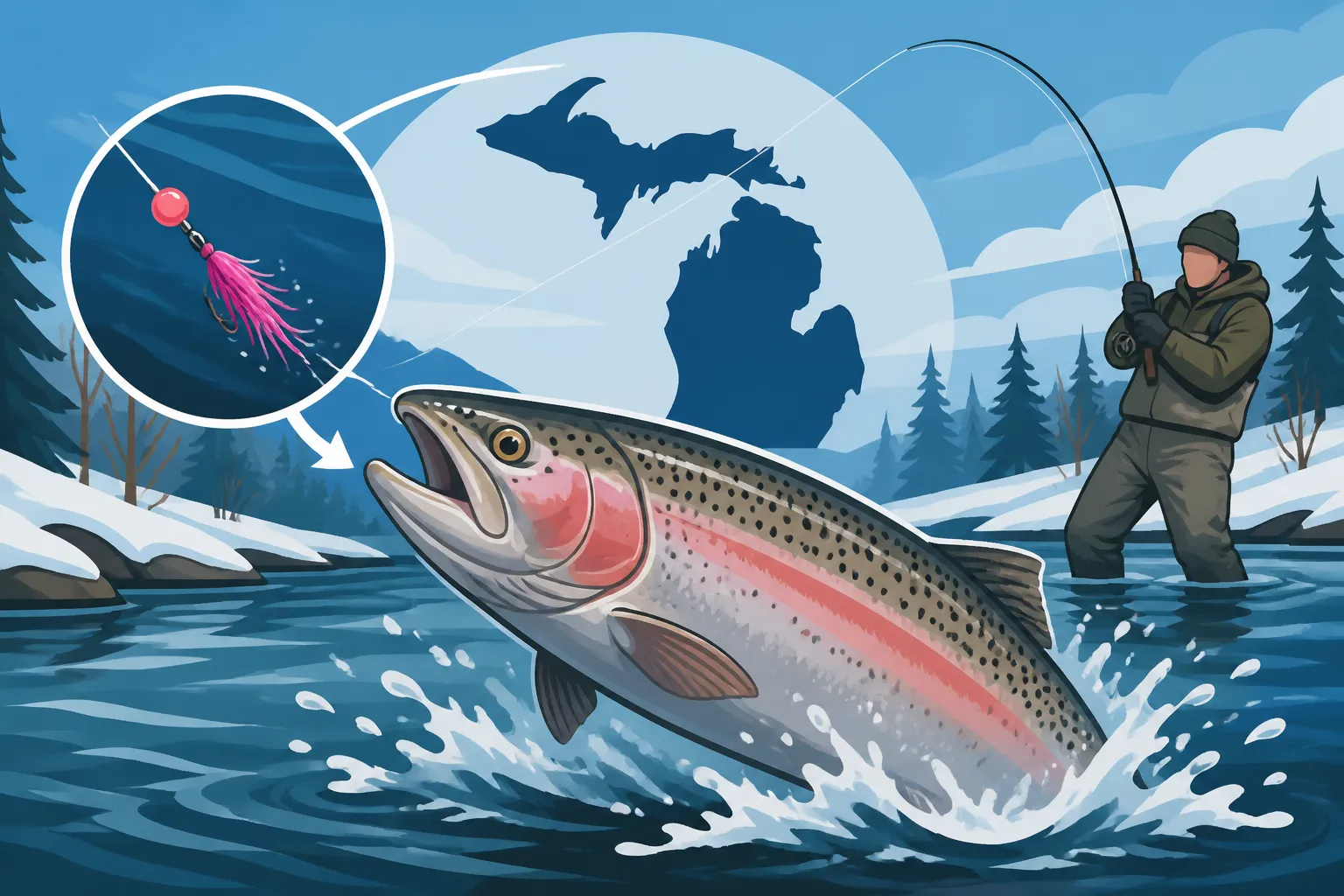
When it comes to bait, small, realistic offerings are key. Soft plastic beads, mimicking salmon or steelhead eggs, are incredibly popular and effective. They come in a variety of colors, and sometimes a subtle shift from orange to chartreuse can make all the difference. Real or imitation spawn bags, tied with just a few cured eggs, are also perennial favorites. These tiny morsels offer maximum protein with minimal effort for the fish. The trick is to ensure your float is perfectly weighted so that your bait drifts just above the riverbed, bouncing off occasional pebbles but not dragging. This keeps it in the steelhead's direct line of sight without snagging constantly. A truly balanced float will barely bob, signaling even the most delicate tap.
Bottom Bouncing and Drifting
Another highly productive technique for winter steelhead is bottom bouncing or drift fishing. This method involves using just enough weight to keep your bait ticking along the bottom, right where those lethargic steelhead are likely to be resting. Unlike float fishing, which uses a bobber, bottom bouncing relies on feeling the riverbed and subtle takes through your line. This is often done with a three-way swivel rig or a Slinky weight, allowing your bait to float or drift naturally a short distance behind the main weight.
Spoons, small plugs, and various types of jigs tipped with wax worms, minnows, or scented plastics are excellent choices for bottom bouncing. The key is to use the lightest weight possible that still allows you to maintain bottom contact without snagging excessively. Your presentation needs to be slow and controlled, moving at the speed of the current. You're trying to replicate a dislodged food item, not a sprinting minnow. It takes practice to distinguish between a bump on the bottom and a steelhead take, but when you master it, the rewards are immense. This technique is especially effective in deeper runs and pools where fish are hugging the bottom, unwilling to rise for a suspended bait. For gear specifics that complement this technique, consider exploring our advice on Best Rod Length for River Steelhead.
Winter Fly Fishing Tactics
For the dedicated fly angler, winter steelhead fishing presents a unique challenge and immense satisfaction. While traditional dry fly fishing is out of the question, nymphing and swinging flies can be incredibly productive. The name of the game is presenting a slow, deep, and often dead-drifted fly. Heavy nymphs, often weighted with lead wraps or tungsten beads, are essential to get your fly down quickly to the fish's level. Patterns that imitate eggs, stoneflies, caddis larvae, or even small baitfish are often effective. Colors tend to be more muted in winter, with natural browns, olives, and blacks often outperforming flashier patterns, though sometimes a small "hot spot" of orange or pink can trigger a bite.
Swinging flies, particularly larger spey flies or intruders, can also entice a winter steelhead. This technique involves casting across and downriver, allowing the fly to swing through a holding lie. The slow, seductive movement of a swung fly can often provoke a territorial strike from an otherwise uninterested fish. Success often hinges on finding the right depth and swing speed for the specific water you're fishing. Regardless of the method, precision and patience are paramount. Many anglers also find success using bead patterns on their fly rods, essentially adapting the float fishing technique to fly gear, a strategy explored in our article, Is a Bead Considered an Artificial Lure for Michigan Trout?.
Essential Gear for Cold-Weather Steelhead Success
When you're braving Michigan's winter elements, your gear isn't just about catching fish; it's about staying safe and comfortable. The right equipment can make the difference between an enjoyable, productive day and a miserable, short one. Don't skimp on quality when it comes to cold-weather angling.
Rods, Reels, and Line Choices
For winter steelhead, sensitivity and strength are equally important. You need to feel those subtle takes and have the backbone to fight a powerful fish in challenging conditions.
- Rods: Longer rods, typically 9 to 13 feet, are preferred for both float fishing and nymphing. A longer rod allows for better line control, easier mending, and softer landings of fish, especially when using lighter lines. For float fishing, a rod in the 11-13 foot range is ideal, often a medium-light or medium action to handle floats and provide good feel. When bottom bouncing, a slightly shorter, more sensitive rod, around 9-10 feet, with a fast action tip, can help detect those soft bites. You can find a wide selection of quality fishing rods on Amazon that are suitable for Michigan's rivers.
- Reels: For float fishing, a centerpin reel is the traditional choice, offering unparalleled line control and a truly free-spooling drift. However, many anglers also use spinning reels, particularly those with a smooth drag and good line capacity. For bottom bouncing or fly fishing, a reliable spinning reel or a robust fly reel (often a larger arbor for faster line pickup) is essential. The smooth drag system is non-negotiable for protecting light leaders against powerful steelhead runs.
- Line: Mainline choices often include monofilament or braided line. Braided line offers superior sensitivity and strength, but it's crucial to use a fluorocarbon leader in clear winter water, as braid can be very visible. Monofilament offers a good balance of stretch and knot strength. Leaders are almost always fluorocarbon, known for its invisibility underwater and abrasion resistance. In clear winter water, light leaders (6-10 lb test) are often necessary to entice wary fish, a testament to the importance of stealth. Our detailed guide on What Line Weight for Michigan Steelhead provides excellent recommendations.
Tackle and Baits for Winter Success
Beyond the rod and reel, your tackle box needs to be winter-ready. This means having a variety of weights, hooks, and bait options that cater to the slow, precise presentations required.
- Weights: Split shot, pencil lead, and Slinky weights are all essential. The key is to have a range of sizes to perfectly match the current and depth. Remember, you want to get down to the fish without over-weighting and hindering your natural drift.
- Hooks: Sharp, strong hooks are critical. For spawn and beads, small, sharp octopus or egg hooks (sizes #8 to #12) are typically used. For jigs, a quality jig head with a sharp, appropriately sized hook is important. Always check your hooks for sharpness, especially in winter when bites can be subtle.
- Baits:
- Beads: As mentioned, soft plastic beads in various sizes (6mm to 10mm) and natural colors like roe, peach, and clear are highly effective. Having a few "hot" colors like chartreuse or pink can also be beneficial on darker days.
- Spawn Bags: Small, dime-sized spawn bags made from fresh or cured salmon/steelhead eggs are a classic. Tie them tightly with spawn netting and use various colors of netting to see what the fish prefer.
- Jigs: Small marabou jigs or plastic tube jigs, often tipped with a wax worm or minnow, are excellent. Colors like black, white, pink, or chartreuse can be very effective.
- Minnows: Live or preserved minnows can be deadly, especially when fish are keying in on baitfish. Use them sparingly and ensure local regulations allow live bait.
This table provides a quick comparison of common winter steelhead techniques:
| Technique | Ideal Conditions | Key Advantages | Common Baits/Lures | Skill Level Required |
|---|---|---|---|---|
| Float Fishing | Clear to slightly stained water, moderate current, 3-8 ft deep | Natural drift, precise depth control, easy bite detection | Beads, spawn bags, small jigs tipped with bait | Intermediate |
| Bottom Bouncing | Deeper pockets, slower runs, slightly turbid water | Gets bait directly to bottom-hugging fish, good for current breaks | Jigs (tipped), small spoons, scented plastics, spawn bags | Intermediate |
| Nymphing (Fly) | Clear water, varied depths, subtle current | Natural presentation, versatile patterns, targets picky fish | Egg patterns, stoneflies, caddis, small streamers | Advanced |
| Swinging (Fly) | Moderate current, longer runs, fish active enough to chase | Aggressive strike inducement, covers water quickly | Intruders, spey flies, large streamers | Advanced |
Cold Weather Apparel and Accessories
Staying warm and dry is paramount. Hypothermia is a real danger, and being uncomfortable will quickly sour any fishing trip. Layering is your best friend.
- Base Layers: Start with moisture-wicking synthetic or merino wool base layers. Avoid cotton, as it loses its insulating properties when wet. Look for good options on Amazon.
- Mid-Layers: Fleece or down jackets provide excellent insulation. A good mid-layer traps warmth close to your body.
- Outerwear: A waterproof and windproof jacket and pants (or bibs) are essential. Michigan winters are notorious for their damp cold, and staying dry is as important as staying warm.
- Waders: Breathable chest waders are a must. Choose insulated waders or layer heavily underneath. Neoprene waders offer excellent warmth but can be bulky. Don't forget quality wading boots with good traction for slippery riverbeds. Check out our guide on Best Waders for River Fishing for more information.
- Extremities: Warm gloves or mitts (many anglers prefer fingerless gloves for dexterity), a warm hat that covers your ears, and thick, warm socks are crucial. Hand warmers and foot warmers can be game changers, tucking into pockets or gloves for quick relief.
Beyond clothing, consider a thermos with hot coffee or soup, a small towel to dry your hands, and a headlamp if you're fishing at dawn or dusk, as winter days are short. A sturdy landing net is also a good idea for safely handling these precious fish.
Location and Timing Strategies for Winter Success
Knowing the right techniques and having the best gear is only half the battle. You also need to know where and when to apply them. Winter steelhead fishing is often about patience and selecting your spots wisely.
Reading the Winter River for Steelhead
In the winter, reading the river takes on a whole new meaning. Steelhead are less likely to be scattered throughout a run; they'll be concentrated in specific, energy-efficient lies. Focus on the slower, deeper water. This includes the aforementioned deep pools, current seams, and areas behind structure that break the main flow. Imagine yourself as a fish trying to survive in icy water – where would you find refuge from the current, but still be able to ambush a passing meal?
Look for subtle changes in current speed and depth. Often, a river will cut a deeper channel along one bank, creating a slower, deeper trough. Downstream of major rapids or heavy current areas, fish will often stack up in the first available deep, slow water. Gravel runs that are typically productive in fall might be barren in winter unless they have a very deep, slow section. It’s a constant puzzle, but by applying the principles of energy conservation, you can significantly narrow down your search. Understanding How Water Temperature Affects Steelhead Runs can give you a significant advantage in reading the water effectively.
Optimal Conditions and Timing
Winter fishing often means dealing with short, cold days, but certain conditions can make a significant difference.
- Water Temperature: While cold, a slight bump in water temperature (even a degree or two) can spark a bite. This often happens during a period of unseasonably warm weather, or after a few days of sunshine. Conversely, a sudden drop in temperature can shut the bite down completely.
- Water Clarity: Clear water is typical in winter, which means fish can be extremely spooky. Longer leaders, lighter line, and stealthy approaches are crucial. If the water is slightly stained from a mild thaw, it can actually be a good thing, offering fish a bit more cover and making them less wary.
- Weather Patterns: Stable weather patterns are generally better than rapidly changing ones. A prolonged period of consistent cold is often better than wild temperature swings. Overcast days can sometimes be better than bright sunny ones, as bright sun can make fish more cautious in clear water.
- Time of Day: The middle of the day, when air temperatures are usually at their highest and the sun might offer some warmth to the water, is often the most productive. Don't feel the need to be out at dawn unless you're specifically targeting a morning bite that you know is happening. Mid-morning to late afternoon is often the sweet spot.
- Flows: Stable flows are usually ideal. Rising water from snowmelt can put fish off, as can rapidly dropping water. Ideal winter flows are often a bit lower and slower than fall, but with enough volume to keep fish comfortable. Knowing the Winter Steelhead Run in Michigan Rivers can help you anticipate better fishing windows.
Remember, winter steelhead fishing requires patience, persistence, and a willingness to embrace the elements. But the reward of a powerful, chrome-bright steelhead fighting in an otherwise dormant landscape is an experience unlike any other in Michigan.
Disclaimer
This article is for general informational purposes only and does not constitute professional advice. Laws, prices and regulations vary by location and change over time. Consult a qualified professional for guidance on your specific situation.