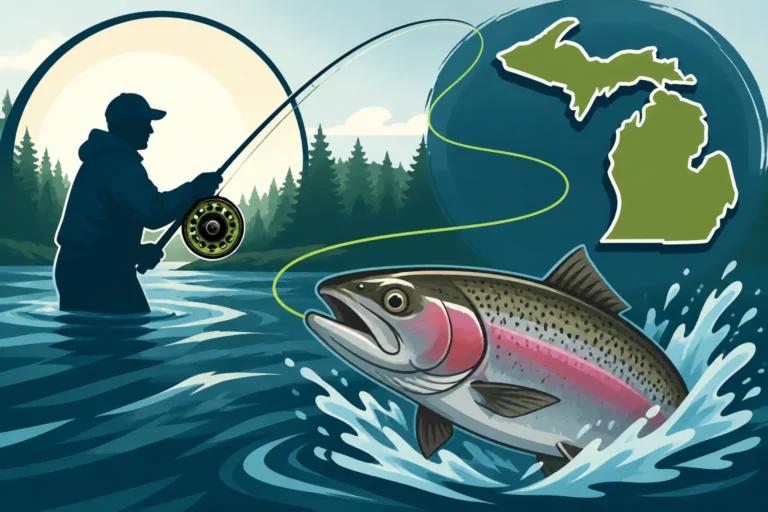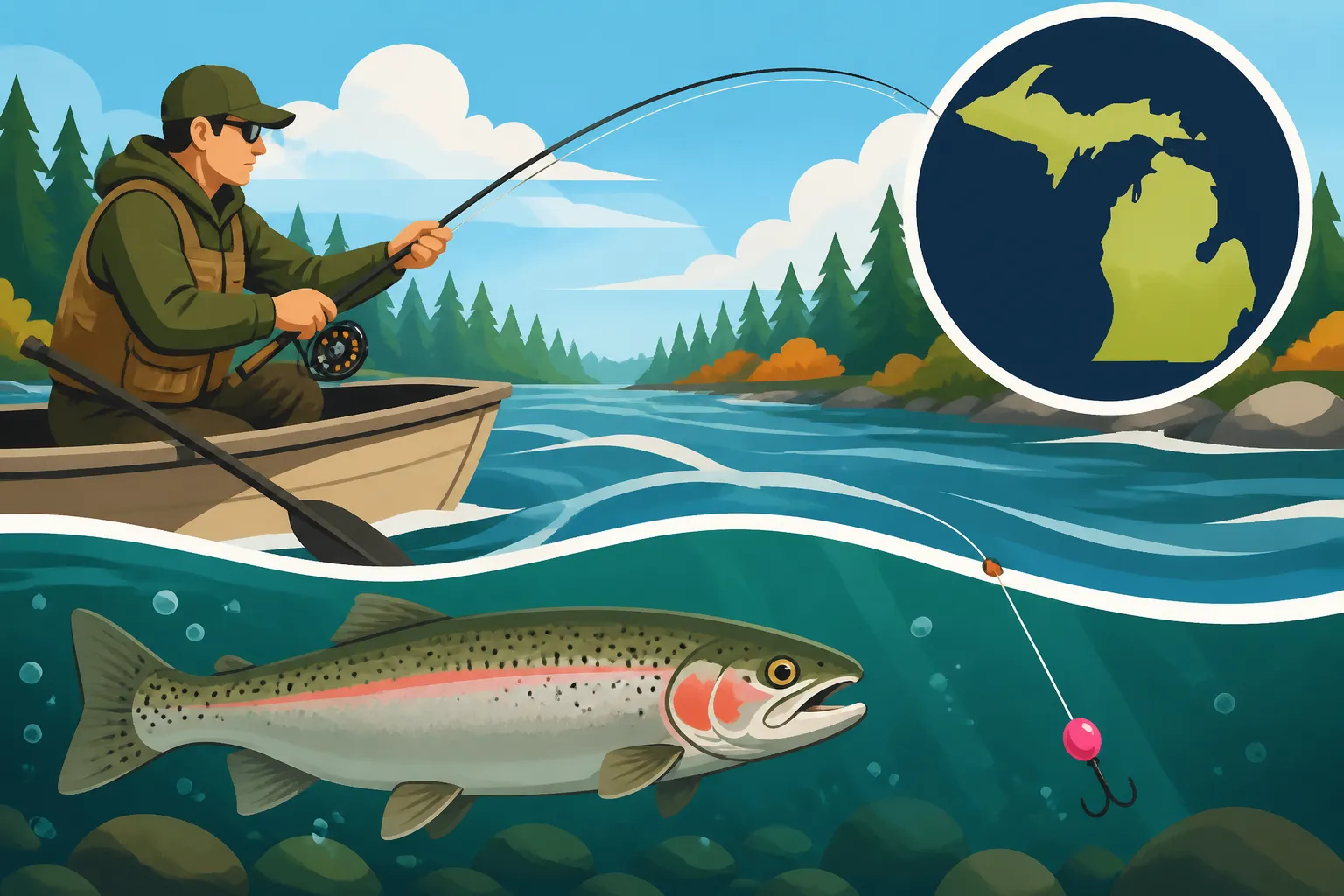
What Is Drift Fishing for Steelhead
There’s nothing quite as frustrating as seeing a prime stretch of Michigan river, knowing steelhead are holding there, but casting your usual lures and baits without so much as a nibble. These magnificent fish can be incredibly wary, especially in clear water or under heavy pressure, making them seem almost invisible. This guide will break down the art and science of drift fishing, a technique that allows you to present your bait in the most natural way possible, enticing even the most cautious steelhead into striking, and turning those frustrating outings into memorable catches.
Understanding Drift Fishing: A Natural Presentation
Drift fishing, at its heart, is all about mimicking nature. Imagine a steelhead sitting in a river current, waiting for food to come to it. They're not actively chasing after fast-moving prey most of the time; instead, they're opportunistically grabbing nymphs, eggs, or small baitfish that are carried along by the flow. Drift fishing aims to replicate this exact scenario, letting your bait float freely and naturally with the current, making it appear irresistible and completely unthreatening.
What Makes Drift Fishing So Effective for Steelhead
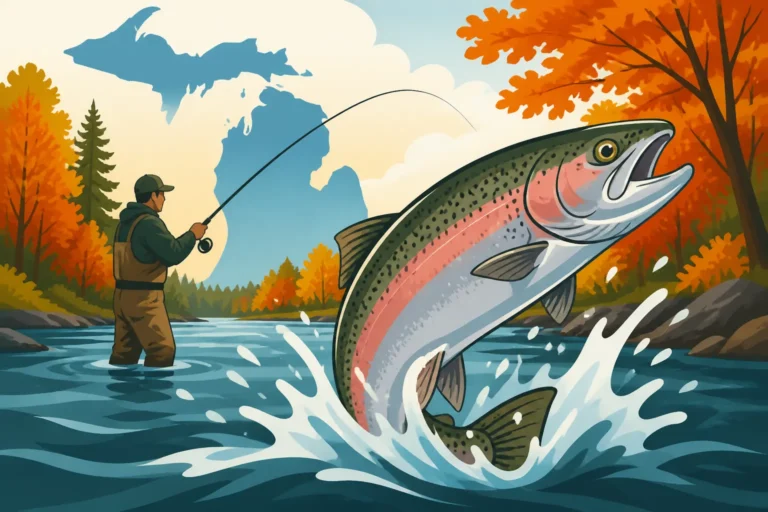
Steelhead, being anadromous rainbow trout, are incredibly keen-eyed and sensitive to vibrations and unnatural presentations. They spend most of their lives in the Great Lakes but return to rivers to spawn, becoming acutely aware of their surroundings.
- Natural Presentation: Unlike casting a spinner or jig that has its own action, a properly drifted bait moves at the exact speed of the current, making it indistinguishable from natural forage. This fools wary steelhead into thinking it’s a free meal.
- Covering Water Effectively: You’re not just casting to one spot. A long, controlled drift allows your bait to cover a significant section of the river, exploring deeper pockets, current seams, and structure where steelhead might be holding. This maximizes your chances of encountering a fish.
- Stealth and Subtlety: With light leaders and minimal tackle, your setup is less visible in the water. The bait moves quietly, without the splashing or unnatural movements that can spook a sensitive steelhead. This is particularly crucial in Michigan’s clearer rivers.
How Drift Fishing Differs from Other River Techniques
While there are many ways to fish a river, drift fishing stands apart from methods like fly fishing with nymphs (which is very similar in principle but uses different gear), or traditional spin fishing with hardware.
- Still Fishing: This involves casting a bait and letting it sit in one spot, often with weight to hold it down. While effective for some species, steelhead are often on the move or prefer a moving target, making still fishing less productive for them.
- Casting and Retrieving: This includes throwing spinners, spoons, or crankbaits and actively reeling them back in. This technique creates a lot of action and flash, which can trigger aggressive strikes from steelhead in certain conditions. However, it often requires more active fish and can sometimes be too aggressive for highly pressured or lethargic steelhead.
- Centerpinning: This is a specialized form of float-fishing that is essentially an advanced version of drift fishing. Centerpin reels, like those you might find on Amazon, offer incredibly free-spooling action, allowing for extremely long and natural drifts with minimal line resistance. While not strictly necessary for basic drift fishing, it's the pinnacle of the technique for many dedicated steelhead anglers. If you're looking to dive deeper into this specialized gear, exploring options for Centerpinning for Michigan Steelhead can be a game-changer.
The beauty of drift fishing lies in its simplicity and effectiveness. It asks you to observe the river, understand the current, and become one with the flow, letting nature do most of the work for you.
Essential Gear for Michigan Steelhead Drift Fishing
When it comes to drift fishing for steelhead, having the right gear isn't just about comfort; it's about maximizing your sensitivity to subtle bites and ensuring you can land these powerful fish. You don't need the most expensive equipment, but you do need gear that works together seamlessly.
Rods: The Backbone of Your Setup
A proper drift fishing rod is designed for sensitivity and shock absorption, crucial for detecting light bites and fighting strong fish on light line.
- Length: Longer rods, typically 9 to 13 feet, are preferred. The extra length allows for better line control, easier mending (adjusting your line to prevent drag), and longer, more controlled drifts. For deeper understanding, check out Best Rod Length for Steelhead Fishing.
- Action: A moderate-fast or moderate action is ideal. This means the rod bends mostly in the upper half or third, providing enough backbone to fight a fish but also enough flex to absorb sudden runs and protect lighter leaders.
- Power: Medium-light to medium power is typically sufficient. This allows you to cast lighter baits and feel subtle takes, while still having enough strength to handle a 5-15 pound steelhead in current.
Reels: Smoothness and Control
For drift fishing, a smooth drag and reliable retrieve are paramount.
- Spinning Reels: These are the most common and versatile choice for beginners and experienced anglers alike. Look for a 2500-4000 series reel with a smooth, consistent drag system. Brands like Shimano and Daiwa offer excellent options that you can often find on Amazon. The quick retrieve ratio isn't as critical as it might be for casting lures, but a good line capacity is important for longer drifts. You can learn more about finding the right one by exploring Best Reel for Steelhead Fishing.
- Baitcasting Reels (Low Profile): Some anglers prefer low-profile baitcasting reels for their precision casting and control, particularly when fishing heavier setups or larger rivers. However, they require more skill to avoid backlashes, especially with lighter baits.
Line: The Crucial Connection
Your line is the direct link to the fish, and a proper setup involves different types for different purposes.
- Mainline: 8-12 pound test monofilament or braided line is common. Monofilament offers some stretch, which can be forgiving when a steelhead surges, while braid provides superior sensitivity and casting distance. If using braid, a monofilament or fluorocarbon leader is almost always necessary for stealth.
- Leader Material: This is perhaps the most critical component. 6-10 pound test fluorocarbon leader is highly recommended. Fluorocarbon is nearly invisible underwater, extremely abrasion-resistant, and has minimal stretch, allowing for excellent feel. The length of your leader can vary, but 4-6 feet is a good starting point. Understanding What Line Weight for Michigan Steelhead is essential for balancing strength and stealth.
- Swivels: Small, high-quality barrel swivels (size 10-14) are used to connect your mainline to your leader. They help prevent line twist, especially when using floats.
Terminal Tackle: Delivering Your Bait
These small but mighty components ensure your bait gets to the fish naturally.
- Floats (Slip Bobbers): A critical component for suspending your bait at a specific depth and indicating bites. Slip bobbers are preferred because they allow you to fish any depth without being limited by your rod length. Look for sensitive, high-visibility floats.
- Split Shot: Non-toxic split shot weights are crimped onto your leader to get your bait down to the desired depth and maintain a natural drift speed. Start with smaller weights and add more as needed to match the current. A general rule is to add just enough weight so that your float stands upright and is slightly submerged, indicating optimal sensitivity.
- Hooks: Small, sharp, single hooks (size 6-12) are typically used. Circle hooks are also popular for their ability to hook fish in the corner of the mouth, aiding in catch and release.
- Weight Sinks (Bottom Bouncing): In scenarios where floats are impractical (e.g., very fast, deep water, or heavy wind), bottom-bouncing rigs are used. These involve a heavier weight (pencil lead, slinky sinkers) that drags along the bottom, keeping your bait in the strike zone.
Baits and Lures: The Enticement
Steelhead respond to a variety of offerings, and the best choice often depends on water conditions, time of year, and local preferences.
- Spawn Bags: These are small mesh bags filled with cured salmon or trout eggs, mimicking natural fish eggs. They are incredibly effective, especially during spawning runs. Learning how to properly prepare and rig them can be found in a guide like Best Spawn Bag Setup for Steelhead.
- Beads: Small, brightly colored plastic or glass beads are threaded onto your line just above the hook, imitating a single fish egg. Their versatility and effectiveness make them a staple for many drift anglers. For more details on this technique, check out Bead Fishing for Trout and Salmon.
- Jigs: Small marabou or chenille jigs, often tipped with a waxworm or piece of plastic, can be deadly when drifted.
- Worms: Live or artificial worms, such as Berkley Gulp! PowerBait, can be very effective, especially after heavy rains when worms might be washed into the river.
By carefully selecting and rigging your gear, you’re setting yourself up for success on the river. Many of these specialized items, from specific rod lengths to various types of terminal tackle, are readily available online through retailers like Amazon.
Mastering the Drift: Techniques and Strategies
Drift fishing isn't just about casting your line and letting it go; it's a dynamic, engaged process that requires constant attention and adaptation. The goal is to achieve a "dead drift," where your bait moves as if it were truly unattached and natural.
Reading the Water: Where Steelhead Hold
Understanding where steelhead position themselves in the river is fundamental to effective drift fishing. They’ll typically be in areas where they can expend minimal energy while having access to passing food.
- Current Seams: These are lines where two different currents meet, often forming a distinct ripple on the surface. Steelhead will often hold in the slower water of the seam, waiting for food to drift by in the faster current.
- Current Breaks: Any obstruction in the river — a large rock, a log, a submerged tree, or a change in depth — creates a break in the current. Fish will often sit in the calmer water behind these breaks.
- Deeper Pockets and Runs: While steelhead can be found in surprisingly shallow water, deeper sections of the river, especially those with a consistent current flow, are prime holding areas. Look for dark, uniform stretches of water.
- Riffles and Tailouts: The broken water of riffles can oxygenate the water and dislodge insects, making the tailout (the calmer water immediately downstream) a good feeding zone.
- Undercut Banks: These provide shelter and ambush points. If you can drift your bait close to an undercut bank, you stand a good chance.
Learning How to Read River Flow for Steelhead Fishing will significantly improve your ability to identify these productive areas.
Casting and Presentation: Starting Your Drift
The way you initiate your drift is crucial for success.
- Upstream Cast: Generally, you want to cast slightly upstream and across the current from your target zone. This gives your bait time to sink to the desired depth before it reaches the steelhead.
- Angle of Attack: Aim for an angle that allows your line to be as straight as possible downstream as your bait drifts. A common mistake is to cast too far across the river, which makes it harder to control your line and avoid drag.
- Feathering the Cast: Just before your weight hits the water, lightly feather the line with your finger. This helps straighten your leader and ensures your bait enters the water gently, minimizing splash and tangles.
Controlling the Drift: The Art of Mending
This is arguably the most challenging and important aspect of drift fishing. The goal is to prevent "drag," which occurs when your line moves faster or slower than your bait, pulling it unnaturally.
- Line Management: As soon as your float and bait hit the water, begin to manage your line. Keep your rod tip high, pointed generally at your float.
- Mending: This is the act of lifting your rod tip and flipping a loop of line upstream. This slack line then drifts downstream at the same speed as your float, allowing your bait to continue its natural drift. You'll often need to mend multiple times during a single long drift, especially in complex currents.
- Watching Your Float: Your float is your direct communication with your bait. Any unnatural movement – speeding up, slowing down, dipping, or moving sideways – often indicates drag. It also acts as your strike indicator. A subtle pause, a twitch, or a sudden disappearance of the float signals a bite.
- Keep Slack to a Minimum (But Not Too Little): You need enough slack to allow a natural drift, but not so much that you can't feel a bite or set the hook effectively. It's a fine balance that comes with practice.
Hook Setting and Fighting Steelhead
When that float dips, your heart will race!
- Immediate Hook Set: Unlike some species where you wait for the fish to "run with it," with steelhead, you want to set the hook immediately and firmly. A strong, sweeping upward motion of the rod is usually effective.
- Maintain Pressure: Steelhead are incredibly powerful. Once hooked, keep steady pressure on the fish. Let your reel's drag do its job, allowing the fish to run when it needs to, but reel in line whenever possible.
- Control the Fight: Try to steer the fish away from snags, logs, and other potential line-breaking structures. A long rod helps in guiding the fish.
- Land Quickly and Gently: The quicker you can land a steelhead, the less stressed it will be. Use a large, soft-mesh net to minimize damage to fins and slime coat.
Safety Considerations
River fishing, especially wading, comes with inherent risks.
- Wading Staff: Always use a wading staff for stability, especially in fast or unfamiliar currents.
- Felt-Soled Wading Boots: These offer superior grip on slippery river rocks. Considering Best Waders for Cold River Fishing is also important for comfort and safety in Michigan's often chilly waters.
- Buddy System: Whenever possible, fish with a friend.
- Know the River: Be aware of sudden drop-offs, deep holes, and strong currents. Never wade into water that is too deep or fast for your comfort level.
Optimizing Your Drift Fishing Success in Michigan
Michigan offers incredible steelhead opportunities, but conditions change constantly. Tailoring your drift fishing approach to the season and specific water conditions will significantly boost your success rate.
Seasonal Considerations for Steelhead Runs
Steelhead are present in Michigan rivers for much of the year, but distinct runs offer different challenges and rewards. You can learn more about Michigan Steelhead Run Timing to plan your trips effectively.
- Fall Steelhead Run: Starting as early as September and peaking in October and November, fall steelhead follow migrating salmon upstream, often feeding on loose salmon eggs. Water temperatures are cooling, and fish are aggressive. This is an excellent time for spawn bags and beads. Find more specific insights in Fall Steelhead Run in Michigan Rivers.
- Winter Steelhead Run: From December through February, fishing can be tough but incredibly rewarding. Steelhead move into deeper, slower pools to conserve energy. Bites are often very subtle. Light leaders and small presentations (beads, small jigs, tiny spawn bags) fished very slowly are key. Don't forget to bundle up and prepare for the elements; understanding Winter Steelhead Run in Michigan Rivers is crucial for this frosty pursuit.
- Spring Steelhead Run: March, April, and May see the primary spawning run. Fish are actively moving upstream to spawn, and post-spawn "drop-backs" are heading back to the lake, often feeding voraciously to recover. Water temperatures are rising, and fish can be found in a wider variety of water types. Spawn bags, beads, and even swung flies can be highly effective. How Water Temperature Affects Steelhead Runs plays a huge role in their activity.
Best Times of Day and Water Conditions
Like all fishing, timing and conditions are paramount.
- Dawn and Dusk: These low-light periods are often prime feeding times for steelhead, especially in clear water.
- Overcast Days: Reduced sunlight can make steelhead feel more comfortable and active in shallower water.
- Rising Water Temperatures: During cold periods, a slight increase in water temperature (even a degree or two) can trigger feeding activity.
- Post-Rain Events: A fresh shot of rain can increase river flow, dislodge food, and slightly stain the water, making steelhead less wary. However, too much rain can lead to blown-out, muddy conditions that are unfishable.
- Optimal Water Clarity: Steelhead prefer a slight stain to the water, which offers them cover but still allows them to see your bait. Gin-clear water can make them very skittish, requiring even lighter leaders and more subtle presentations.
Catch and Release Best Practices
Michigan's steelhead fishery thrives on responsible angling. Many anglers practice catch and release to preserve these valuable resources for future generations.
- Minimize Handling: Keep the fish in the water as much as possible. Avoid dragging it onto the bank or boat deck.
- Wet Hands: Always wet your hands before touching a fish to protect its delicate slime coat.
- Remove Hook Quickly: Use forceps or pliers to quickly and gently remove the hook. If the fish is deeply hooked, cut the line as close to the hook as possible.
- Support the Fish: Hold the fish gently upright in the current, supporting its belly, until it regains its strength and swims away on its own. Never hold a fish by its gills.
By understanding these nuances and adapting your approach, you'll not only become a more successful drift angler but also contribute to the long-term health of Michigan's incredible steelhead fishery.
| Baits/Lures for Drift Fishing Steelhead | Pros | Cons | Ideal Conditions |
|---|---|---|---|
| Spawn Bags | Highly effective, natural scent | Can be messy, sometimes illegal in certain areas | Fall/Spring spawning runs, stained water, active fish |
| Beads | Versatile, durable, mimics single eggs | No natural scent (unless added), can be overlooked | Clear water, subtle presentations, fish keying on eggs |
| Small Jigs (tipped) | Good action, can imitate insects or baitfish | Requires tipping with live bait/plastics | Slower currents, deeper pools, fish feeding on insects or small minnows |
| Artificial Worms (e.g., Gulp!) | Durable, scented, readily available | Less natural action than live bait | Stained water, post-rain, when live bait isn't available |
| Live Baits (e.g., Waxworms) | Very natural, strong scent | Delicate, easily lost, ethical concerns for some | Tough bites, slower water, when other baits fail |
Disclaimer
Fishing regulations in Michigan can change seasonally and by specific water body. Always consult the most current Michigan Fishing Regulations Handbook published by the Michigan Department of Natural Resources (DNR) before heading out. This guide is for informational purposes only and does not supersede official regulations.