How to Catch and Release a Muskellunge
Catching a magnificent muskellunge in Michigan is an exhilarating experience, a true bucket-list moment for many anglers. However, the thrill of the fight comes with a significant responsibility: ensuring the safe release of these incredible fish. Mishandling a muskie, even for a few extra seconds out of the water, can tragically lead to its demise. This comprehensive guide will walk you through the proper techniques and essential gear needed to successfully catch and release a muskellunge, giving these apex predators the best chance at long-term survival in our cherished Michigan waters.
Understanding the Mighty Muskellunge and Why Release Matters
Muskellunge, often called "muskie" by those who pursue them, are iconic freshwater game fish known for their formidable size, predatory nature, and elusive behavior. In Michigan, these fish hold a special place in the hearts of anglers, representing the pinnacle of freshwater angling challenges. They are a vital part of our aquatic ecosystems, helping to keep other fish populations in balance.
The Fragility of a Giant
Despite their fearsome appearance and powerful physique, muskies are surprisingly delicate when removed from their watery environment. Their large bodies put immense stress on their internal organs when supported horizontally out of water, and their gills are highly susceptible to damage from air exposure and rough handling. The lactic acid buildup during a prolonged fight can also lead to what's known as "delayed mortality," where a fish swims away only to perish hours or days later. This is why quick, careful handling and release are paramount, especially if you're not planning to keep the fish, which, for many trophy muskie anglers, is the standard practice. Even for those rare occasions where a muskie is harvested, understanding Michigan's one muskellunge per year rule and the Michigan Muskellunge Harvest Reporting Rules is crucial.
Michigan's Catch and Release Culture for Muskies
Michigan's angling community has largely embraced a strong catch and release ethic for muskellunge. This is not just a preference but a necessity for maintaining healthy populations of these slow-growing, long-lived fish. With minimum size limits often ranging from 42 to 50 inches on many bodies of water, most muskies encountered are below the legal harvest size anyway. Furthermore, it takes many years for a muskie to reach trophy status, making every safely released fish a potential future giant. This dedication to conservation ensures that future generations of anglers can also experience the thrill of battling these freshwater titans. It's important to remember that Is Catch-and-Release Muskie Fishing Legal Year-Round in Michigan?, and generally, it is, adhering to specific regulations.
Essential Gear for a Smooth Muskellunge Release
Before you even make your first cast for muskie, having the right tools on hand is non-negotiable. Trying to improvise with inadequate gear is a recipe for disaster, potentially harming both the fish and yourself. Investing in quality muskie release tools is perhaps the most important decision an angler can make when targeting these fish.
The Right Net and Hook Removers
A large, rubberized, knotless landing net is your first line of defense. The net should have a wide hoop and deep basket to fully encompass the fish without bending or breaking it. Rubberized mesh protects the muskie's delicate slime coat, fins, and eyes much better than traditional knotted nylon nets. Brands like Frabill and Beckman offer excellent muskie-specific nets. You can often find a great selection of these on Amazon. Once the fish is in the net, it's critical to keep its head submerged as much as possible to ensure continuous oxygen flow.
Next, you'll need a set of long, heavy-duty hook removers or pliers, ideally 12 to 16 inches long. These allow you to reach deep into the muskie's mouth to dislodge hooks without putting your hands too close to its sharp teeth. Forceps or needle-nose pliers are generally too small and flimsy for muskie hooks. A high-quality tool from a brand like Dr.ifter or Musky Mayhem is a smart investment.
Cutting Tools and Measuring Devices
Sometimes, a hook is too deeply embedded or awkwardly placed to remove safely with pliers. This is where heavy-duty, long-handled bolt cutters come into play. Having these on hand to quickly snip a hook shank, especially from a treble hook, can save precious time and prevent significant injury to the fish. Don't cheap out on these; they need to cut through thick wire.
For measuring, a large, non-abrasive measuring board or bump board is ideal. These allow you to quickly get a length measurement with minimal handling of the fish. Some anglers prefer a soft, flexible tape measure that can be laid against the fish while it's still in the net or in the water. Remember, speed and minimal contact are key to the muskie's survival. You can find robust measuring boards and flexible tape measures designed for large fish on Amazon.
Here's a quick overview of essential muskie release tools:
| Tool | Purpose | Key Features |
|---|---|---|
| Large Rubberized Net | Landing and securing fish, minimal slime coat damage | Wide hoop (36-40"+), deep bag, knotless, rubberized mesh, long handle |
| Long-Handled Pliers | Hook removal | 12-16 inches, heavy-duty construction, strong jaws |
| Bolt Cutters | Cutting hooks when necessary | Heavy-duty, long handles, capable of cutting large treble hooks |
| Measuring Board | Quick, accurate length measurement | Non-abrasive material, clearly marked, durable, large enough for trophy fish |
| Release Gloves | Hand protection for angler, minimal fish contact | Heavy-duty, cut-resistant, provides grip on slippery fish (optional but recommended) |
The Step-by-Step Guide to a Successful Release
Now that you're geared up, let's go through the process of safely releasing a muskie. Every second counts, so practicing these steps and having a plan before the fish is even hooked will drastically improve your success rate.
The Fight and Landing
When you hook a muskie, the fight can be intense and often prolonged. While it's exciting, try to land the fish as quickly and efficiently as possible without horsing it in. A lengthy fight can exhaust the fish, making it harder for it to recover after release. Once the fish is alongside the boat or close to shore, use your large rubberized net to scoop it up headfirst. Be decisive. Ensure the entire fish, especially its tail, is within the net to prevent it from flopping out and injuring itself or you. Keep the net in the water as much as possible.
Once secured in the net, it's a good idea to rotate the fish so it’s belly-up while still in the water, if possible. This often calms the muskie, making hook removal easier and safer. Don't be afraid to leave the fish in the net, in the water, for a few minutes if it's heavily exhausted from the fight. This gives it a chance to recover before handling. For those interested in deeper insights, you can explore guides on Best Tackle for Michigan Muskellunge.
Hook Removal and Measurement
With the muskie calmed in the net and mostly submerged, it's time to remove the hooks. This is where your long-handled pliers and bolt cutters become invaluable. Assess the situation quickly:
- If hooks are easily accessible: Use your pliers to firmly grasp the hook shank and back it out. If there are multiple hooks from a single lure, try to remove the most accessible ones first.
- If hooks are deeply embedded or in dangerous locations (gills, eyes): Do not hesitate to use your bolt cutters. Snip the hooks as close to the fish's mouth as possible, allowing the hook points to fall out. It’s far better to leave a small piece of metal in the fish (which will often rust out or be absorbed) than to tear its mouth or gills trying to force a hook out.
During this process, keep the muskie’s head submerged as much as possible. If you need to lift the head slightly for a better angle, do so only for a few seconds. For measurement, if you have a soft measuring tape, lay it on the fish while it's still in the net and submerged. If you need to use a bump board, wet the board thoroughly and quickly lift the fish onto it, ensuring one hand supports its belly and the other gently holds the tail. Avoid gripping its gills or eyes at all costs. Get the measurement and any photos in less than 30 seconds.
The Photo Opportunity
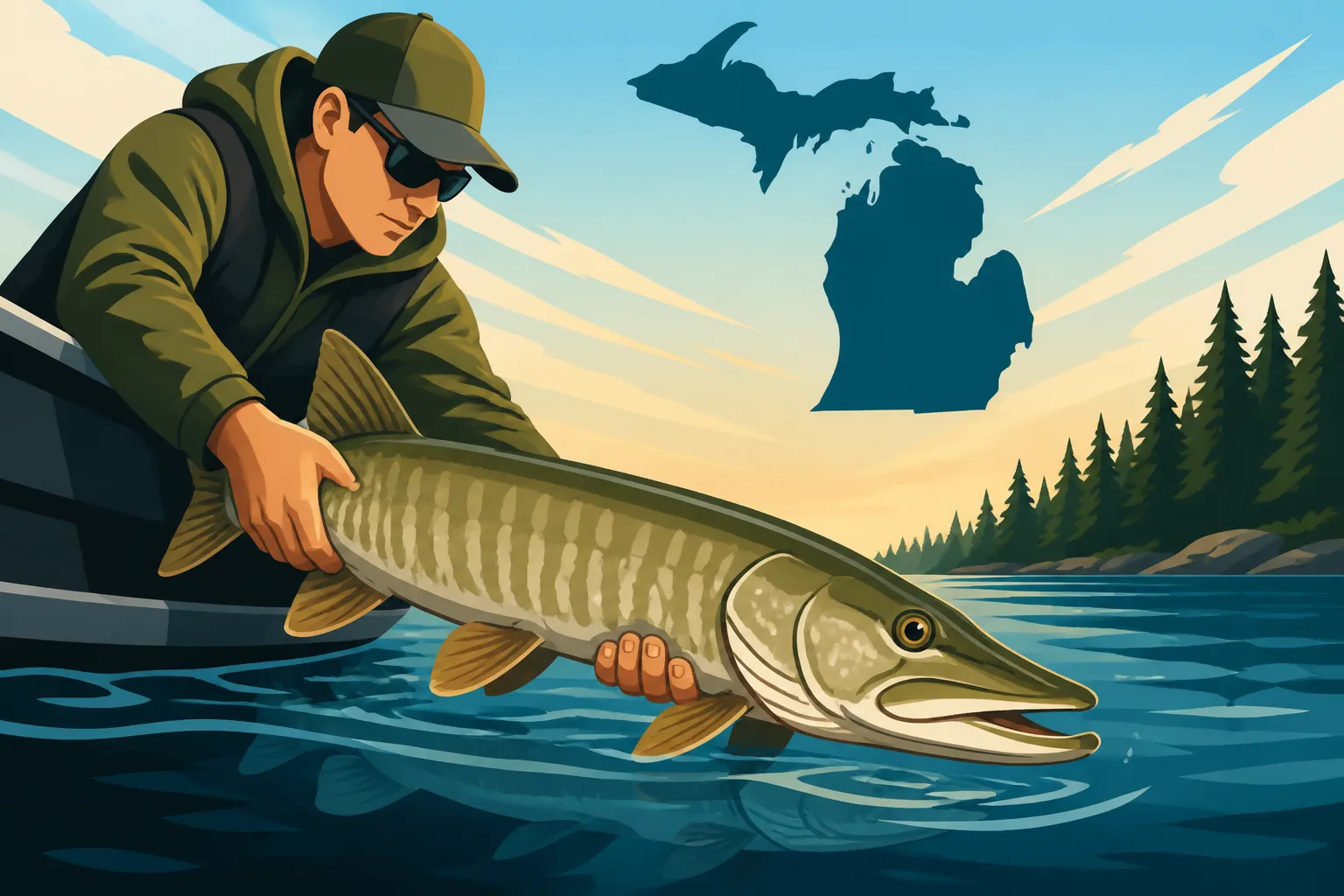
Everyone wants a photo with their trophy muskie, and that's understandable. But remember, the fish's health comes first. Keep the fish horizontally, supporting its entire body with both hands—one under the belly, one near the tail. Never hold a muskie vertically by its head or gills; this can cause severe internal damage. Keep it low to the water, ready for a quick return. Get one or two quick shots, then immediately return the fish to the water. Some anglers opt for an in-water photo, which is even better for the fish. For more tips on photography, a guide on How to Catch and Release a Muskellunge often emphasizes this.
After the Release: Ensuring Long-Term Survival and Reporting
The moment the muskie swims away isn't necessarily the end of your responsibility. There are still crucial steps to ensure its long-term survival and to contribute to Michigan's fisheries management.
Revival and Observation
Once you place the muskie back in the water, don't just let it go immediately. Support it gently in an upright position, especially in moving water (if available), allowing water to flow over its gills. This helps to revive it. If you're in still water, slowly move the fish back and forth to force water through its gills. Watch for signs of recovery: strong tail movements, firming up, and the ability to hold itself upright.
When the fish shows signs of strong recovery and tries to swim off on its own, gently release your grip. Continue to observe it for a moment, making sure it swims away strongly and doesn't roll over or struggle. A strong, purposeful swim-off is the best indicator of a successful release. This revival process might take a few minutes, so be patient.
Michigan's Muskellunge Reporting Requirements
In Michigan, certain muskellunge catches, even those released, require reporting to the Michigan Department of Natural Resources (DNR). Specifically, if you harvest a muskellunge, it must be registered within 24 hours. Even for catch-and-release, the DNR encourages reporting all muskellunge catches to aid in their research and management efforts. This information helps biologists understand population dynamics, growth rates, and angler effort.
You can often report your catch through the Michigan's DNR Hunt Fish App for Licenses and Reporting or on the DNR website. Details often include the length of the fish, the water body it was caught in, and whether it was harvested or released. This simple act of reporting is a valuable contribution to the future of muskie fishing in Michigan. For more information, consult the Michigan Muskellunge Catch Reporting Online System.
Remember, every muskie you encounter is a valuable resource. By following these guidelines, you're not only increasing its chances of survival but also upholding the integrity of the sport and contributing to the health of Michigan's incredible fisheries. Happy fishing, and may your muskie encounters be safe and memorable for both you and the fish!
Disclaimer
This guide provides general information for safe catch and release practices for muskellunge in Michigan. Fishing regulations, including size and possession limits, and reporting requirements, can change. Always consult the latest Michigan Fishing Regulations Digest or the Michigan Department of Natural Resources website for the most current rules and regulations before heading out on the water.