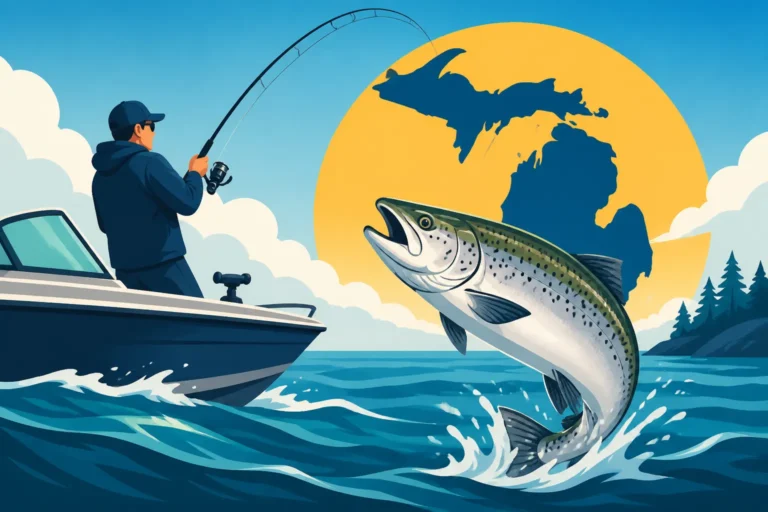
Trolling for Chinook Salmon on Lake Michigan
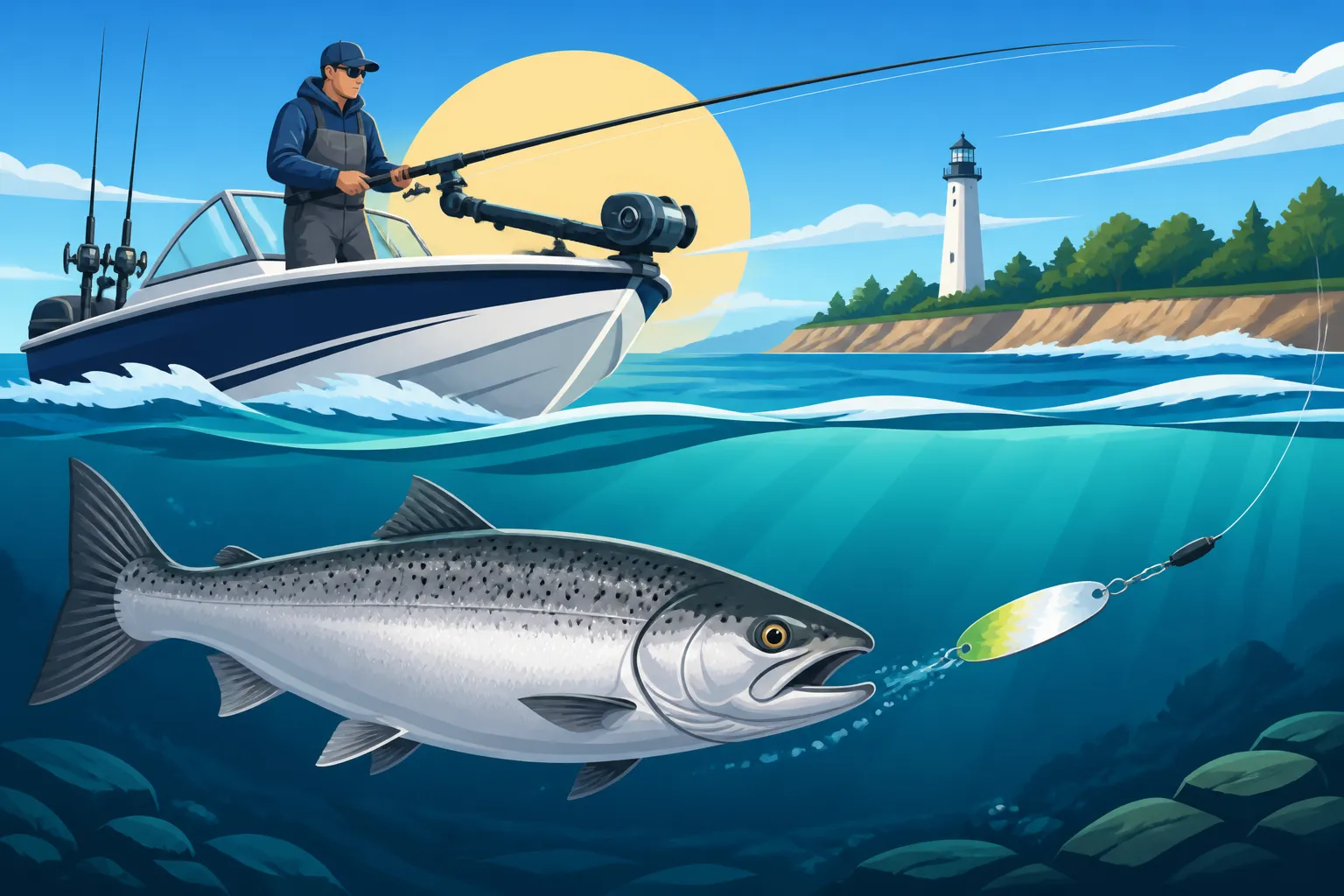
Trolling for Chinook salmon on Lake Michigan can feel like an overwhelming endeavor, especially when you're staring at a tackle shop wall or researching boat setups, wondering where to even begin. The sheer scale of the lake, coupled with the elusive nature of these powerful fish, often leaves anglers feeling a mix of excitement and apprehension. This comprehensive guide will strip away the confusion, offering a realistic, in-depth look at everything you need to know to confidently troll for Chinook salmon, turning those frustrations into successful, memorable days on Michigan's biggest inland sea.
Understanding Chinook Salmon Behavior in Lake Michigan
Before you even think about dropping a line, it's crucial to understand the fish you're targeting. Chinook salmon, often called "Kings," are apex predators in Lake Michigan, constantly on the move in search of food and optimal conditions. Their behavior dictates our strategies, from lure choice to depth.
Chinook Life Cycle and Forage Base
Chinook salmon in Lake Michigan are not native; they were introduced decades ago to help control invasive alewives and provide a sport fishery. They typically live for about 3-5 years, spending most of their lives growing rapidly in the open waters of the lake before returning to rivers to spawn and ultimately die. Their primary diet consists almost entirely of alewives, an invasive baitfish that makes up the bulk of their caloric intake. This reliance on alewives means that finding baitfish schools is often synonymous with finding kings. If the alewife population shifts or declines, so too will the Chinook. Understanding this fundamental relationship is key: find the food, find the fish. They're constantly chasing these schools, often feeding aggressively when conditions are right.
Where Chinook Salmon Hold in Lake Michigan
Throughout the year, Chinook salmon will occupy different zones within Lake Michigan. In the colder months and early spring, they might be found shallower, often within a few miles of shore, as they follow baitfish into warmer nearshore waters. As summer progresses and the lake stratifies, they tend to move deeper, concentrating around the thermocline – a distinct layer where warm surface water meets colder deep water. This thermocline acts like a highway or a ceiling for baitfish, which are temperature-sensitive, and thus for the salmon that feed on them. Areas with structure, like offshore humps, ledges, or even old river channels, can also concentrate baitfish and, in turn, salmon. Don't be afraid to study bathymetric charts of key areas like Grand Traverse Bay Fishing in Michigan or Lake Michigan Pier Fishing for Salmon to understand these underwater features.
Key Environmental Factors Influencing Chinook
Chinook salmon are incredibly sensitive to environmental changes. Water temperature is perhaps the most critical factor. They prefer cooler waters, typically in the 48-58°F range, which is why the thermocline becomes so important in summer. Current and wind patterns also play a huge role. Strong winds can create upwellings, bringing cold, nutrient-rich water (and baitfish) to the surface, making these areas prime fishing grounds. Conversely, calm, sunny days can push fish deeper or make them less aggressive. Light penetration, influenced by cloud cover and water clarity, also affects their behavior and lure preferences, with brighter colors often performing better in darker conditions or deeper water. Keep an eye on weather forecasts and water temperature reports; these insights are invaluable for predicting where the kings will be.
Essential Gear for Successful Lake Michigan Chinook Trolling
You simply can't target these powerful fish effectively without the right tools. Trolling for Chinook salmon requires a dedicated setup, more robust than what you might use for panfish or even inland bass. Investing in quality gear isn't just about catching more fish; it's about making the experience enjoyable and preventing lost fish due to equipment failure.
Rods, Reels, and Line Choices
For trolling on Lake Michigan, you'll want sturdy gear designed to handle the brute force of a King salmon and the drag of trolling equipment.
- Rods: Look for specialized trolling rods, typically 7-10 feet long, with a medium-heavy action and a forgiving tip. The longer length helps spread out your lines and absorb shock, while the action provides the backbone to fight a heavy fish and the flexibility to keep your lure running true. Brands like Daiwa and Shimano offer excellent options.
- Reels: Levelwind baitcasting reels are standard. They need to hold a substantial amount of line (at least 200-300 yards of 20-30 lb monofilament or braid) and have a smooth, reliable drag system. A line counter reel is practically mandatory for consistency, allowing you to replicate successful depths.
- Line: Most anglers use 20-30 pound test monofilament for mainline due to its stretch, which acts as a shock absorber. However, some prefer braided line for its sensitivity and strength, often adding a fluorocarbon leader for stealth. For different applications like lead core or copper, specialized lines are used, which we’ll discuss shortly. You can find a good selection of specialized fishing lines on Amazon. Remember that the type of line you spool on your Best Reels for Steelhead Fishing or trolling setup can significantly impact your success.
The Importance of Downriggers and Planer Boards
These aren't optional; they're fundamental to effective Lake Michigan trolling.
- Downriggers: These devices allow you to precisely control the depth of your lures. A heavy lead ball (typically 8-12 lbs) is lowered via a cable, and your fishing line is attached to the cable with a release clip. When a fish strikes, the line pops free, allowing you to fight the fish directly. Most serious salmon boats run 2-4 downriggers. They are essential for reaching the deep-holding Kings, especially when they're concentrated below the thermocline. Understanding How to Set Up Downriggers for Salmon Trolling is critical.
- Planer Boards: These are floating devices that pull your fishing lines away from the boat, creating a wider trolling spread. This allows you to run more lines simultaneously and cover a much broader area, which is incredibly effective when fish are scattered or holding in shallower, nearshore waters. Inline planer boards are common, as are mast systems with large offshore boards. Running different depths off your planer boards can also help you find the zone.
Lures, Baits, and Color Selection
Chinook salmon are opportunistic feeders, but they can also be incredibly finicky. Having a diverse tackle box is key.
- Spoons: Metal spoons are arguably the most popular and versatile lure for Chinook. They imitate fleeing baitfish and come in a dazzling array of sizes, shapes, and colors. Popular brands like Michigan Stinger, Dreamweaver, and Silver Streak are staples. Experiment with different flutter rates and profiles.
- Flasher/Fly Combos: This setup involves a large, reflective "flasher" or "dodger" that creates vibration and attraction, followed by a smaller, skirted "fly." The fly is typically tied with Mylar or synthetic hair and mimics a small baitfish. This combination is incredibly effective, especially when fished off a downrigger.
- Plugs/Stickbaits: Deep-diving crankbaits or plugs, like those from Rapala or J-Plug, can be highly effective, especially when fished at specific depths or near structure. They offer a different action and profile that can entice Kings that are ignoring spoons or flies.
- Meat Rigs: Some anglers use "meat rigs," which involve a cut bait (like an alewife or smelt) rigged to spin behind a flasher. This natural presentation can be deadly, particularly on challenging days.
- Color Selection: This is often hotly debated! General rules of thumb:
- Bright, fluorescent colors (chartreuse, orange, hot pink): Often good in low light, cloudy conditions, or stained water.
- Natural colors (blue/silver, green/silver, black/silver): Effective in clear water and sunny conditions.
- Glow lures: Essential for early morning, late evening, or very deep presentations.
- UV colors: Many modern lures incorporate UV properties to be more visible in a wider range of light conditions.
Having a variety of colors and patterns is far more important than clinging to one "hot" color.
Here's a quick comparison of common Chinook salmon lure types:
| Lure Type | Best Use Case | Action/Vibration | Target Depth Range | Pros | Cons |
|---|---|---|---|---|---|
| Spoons | All-around, versatile, mimics fleeing baitfish | Fluttering, erratic | Shallow to Deep | Very versatile, wide color/size range | Can twist line if not weighted properly |
| Flasher/Fly | Strong attraction, good in murky/deep water | Strong flash/vibe | Deep (off downrigger) | High visibility, highly effective | More complex to rig, specific action |
| Plugs/Stickbaits | Specific depth, strong swimming action | Wobbling, diving | Mid-depth to Deep | Realistic profile, can trigger aggressive strikes | Less versatile in depth, can be finicky |
| Meat Rigs | Natural presentation, effective on wary fish | Realistic spin | Deep (off downrigger) | Highly effective for stubborn Kings | Requires natural bait, more prep |
Mastering Trolling Techniques and Presentation
Once you have your gear ready, it's time to put it all together on the water. Trolling isn't just driving around; it's a careful dance of speed, depth, and lure presentation.
Trolling Speeds and Direction
The "right" trolling speed isn't a fixed number; it varies based on conditions, lure type, and how the fish are reacting. Generally, for Chinook salmon, you'll be aiming for speeds between 2.0 and 3.5 miles per hour (MPH), measured by GPS speed over ground.
- Slower Speeds (2.0-2.5 MPH): Often effective for flashers and flies, as it allows the flasher to work its magic and the fly to trail enticingly. Also good in very cold water or when fish are lethargic.
- Faster Speeds (2.8-3.5 MPH): Great for spoons, giving them a more erratic, fleeing action. Sometimes faster speeds are needed to trigger aggressive strikes from active fish.
- Direction: Pay close attention to how your boat direction affects your lures. Trolling with or against the current, or even quartering into waves, will change how your lures behave. Sometimes, turning into a wave will cause your downrigger weights to "pump," imparting extra action to your lures, which can often trigger a strike. Always observe which lines are getting hit to determine if a specific speed or direction is more productive.
Setting Depths and Spreads
Achieving the right depth and presenting a wide spread of lures are paramount for Chinook trolling.
- Depth: This is where downriggers shine. Most anglers start by targeting the thermocline, or just above or below it. If you're seeing baitfish at 60 feet on your sonar, start setting lines around that depth. Don't be afraid to stagger your depths by 5-10 feet with different downriggers (e.g., 55 ft, 60 ft, 65 ft). For Lead Core Fishing for Trout and Salmon and copper lines, the amount of line you let out will determine depth. Generally, 10 colors of lead core (100 yards) will get you to about 50 feet deep at standard trolling speeds, but this varies. For instance, How Deep to Troll for Lake Trout would involve different considerations than salmon.
- Spreads: A typical salmon boat will run a "full spread" of anywhere from 6 to 12 lines, sometimes more. This might include:
- 2-4 downriggers set at varying depths.
- 2-4 lines off planer boards, often utilizing lead core, copper, or long monofilament setups to achieve different depths and distances from the boat.
- 1-2 "Dipsy Divers" or "jet divers" – these are diving planers that take lures down and out to the sides.
- 1-2 "wire divers" or "Slide Divers" which use wire line and are great for getting down deep and wide.
A common setup for the Best Trolling Rods for Michigan Salmon would involve specialized rods for each of these applications. The goal is to cover as much of the water column and horizontal space as possible, figuring out where the active fish are holding.
The Art of the S-Turn and Controlled Chaos
Simply driving in a straight line isn't always the most effective strategy. Chinook salmon often respond well to changes in lure action.
- S-Turns: This is a crucial technique. By making wide, sweeping S-turns with your boat, the lures on the inside of the turn will slow down and drop, while the lures on the outside will speed up and rise. This change in speed and depth can often trigger a strike from following fish that might have been hesitant. Many strikes happen mid-turn.
- Controlled Chaos: Sometimes, varying your trolling pattern or introducing a little "chaos" can be beneficial. Briefly speeding up, then slowing down, or even executing a sharp turn (if your gear can handle it) can mimic erratic baitfish behavior or a predator attacking. It’s about presenting something that breaks the monotony and catches a Chinook’s eye. This isn't about being careless, but about deliberately creating fluctuations in your presentation.
Locating Chinook Salmon: Reading the Lake
Lake Michigan is vast, and finding these elusive kings is often compared to finding a needle in a haystack. However, with modern electronics and a keen eye for environmental clues, you can significantly narrow your search.
Interpreting Sonar and GPS Data
Your boat's electronics are your eyes underwater. Understanding how to use them effectively is a game-changer.
- Sonar/Fishfinder: This is your primary tool for seeing fish, baitfish, and the thermocline. Look for "arches" or "streaks" that indicate individual salmon, and dense clouds or balls of baitfish. Pay close attention to the depth at which baitfish are suspended; that's often where the salmon will be feeding. Also, identify the thermocline, which usually appears as a distinct, often blurry, horizontal line on your screen where the water temperature changes rapidly. Many newer fish finders from brands like Humminbird and Lowrance offer incredible clarity and detail, allowing you to interpret the underwater landscape with precision.
- GPS/Chartplotter: Use your GPS to mark waypoints where you've caught fish, seen bait, or observed favorable conditions. Over time, these waypoints will help you develop patterns and identify productive areas. Plotting trolling paths and repeating successful drifts are also invaluable. Record water temperatures, lure colors, and depths in your notes linked to GPS coordinates. This data becomes incredibly useful for future trips. Don't forget to track your Michigan's DNR Hunt Fish App for Licenses and Reporting data to correlate catches with specific locations and times.
Identifying Temperature Breaks and Current Lines
Beyond your sonar, visual cues on the surface and temperature readings are crucial indicators.
- Temperature Breaks: A sudden change in surface water temperature, either visually noticeable (a line where water color changes) or detected with a surface temperature gauge, often indicates a productive zone. These breaks can concentrate baitfish and, consequently, salmon. They might signify areas where warmer nearshore water meets colder offshore water, or upwellings are occurring.
- Current Lines/Rip Lines: These are often visible lines on the water's surface where currents converge, collecting debris, foam, and often baitfish. If you see birds actively feeding on such a line, it's a strong signal that bait is present, and salmon might be lurking below. Trolling along these lines can be highly productive. Paying attention to these subtle changes is part of becoming a seasoned Great Lakes angler.
Scouting and Pattern Development
Every day on Lake Michigan is a new puzzle. Successful anglers are constantly observing, adapting, and developing patterns.
- Start with a Plan, Be Ready to Adapt: Don't just motor out blindly. Review recent fishing reports, check weather and water conditions, and have a general area in mind. However, once you're on the water, be prepared to deviate from that plan. If your initial depths or colors aren't working, start making changes.
- Troll in Productive Areas: Once you get a strike or land a fish, don't leave the area immediately. Circle back, trying slightly different depths or angles. Salmon often travel in schools, and where you find one, there might be more. Keep an eye on your sonar for recurring baitfish or fish arches.
- Keep Detailed Records: Many successful anglers maintain a logbook. Record details like date, time, location (GPS coordinates), water temperature (surface and down at the lure), depth of strike, lure type, color, trolling speed, and weather conditions. Over time, this data will help you identify personal patterns and make more informed decisions on future trips. This commitment to data will turn random luck into repeatable success, making it easier to predict Best Time of Year to Fish in Michigan for specific species.
Navigating Seasonal Changes for Chinook Salmon
Chinook salmon behavior in Lake Michigan is heavily influenced by the seasons, meaning your tactics need to adapt throughout the year. What works in May might be completely ineffective in August.
Springtime Strategies Nearshore, Warmer Waters
As Lake Michigan begins to shake off the winter chill, Chinook salmon start to move into shallower, warmer waters, particularly those influenced by tributary runoff or protected bays. This is often an exciting time to target them, as they can be found relatively close to shore.
- Location: Look for temperature breaks and concentrations of baitfish in depths ranging from 20 to 80 feet. River mouths, like those of the Manistee River, the Grand River, or the St. Joseph River (all excellent for Michigan Steelhead Run Timing as well), often draw in bait and salmon. Harbor entrances and protected points are also prime spots. The key is finding that slightly warmer band of water that baitfish prefer.
- Tactics: Trolling spoons and plugs behind planer boards or off shallow-set downriggers (15-50 feet) can be very effective. Brighter, more aggressive colors often work well in the spring runoff and lower light conditions. Don't be afraid to experiment with faster trolling speeds to cover more ground and trigger reaction strikes from hungry fish. Early spring can also be good for fishing with lead core or copper lines off boards to get lures away from the boat noise and cover broad depth ranges without needing to go super deep. For example, some anglers effectively use Michigan's Spring Trout Opener Techniques to target other species in similar zones.
Summer Offshore Tactics Thermocline, Baitfish Schools
Summer is when Lake Michigan fully stratifies, and the thermocline becomes the most critical feature for finding Chinook. These fish move offshore to find their preferred cool temperatures and abundant alewife populations.
- Location: The vast majority of summer Chinook fishing takes place several miles offshore, anywhere from 80 to 200 feet of water or deeper. The fish themselves will be concentrated around the thermocline, which could be anywhere from 40 to 100 feet down, depending on the year and specific area. Look for large schools of baitfish on your sonar, often forming dense balls. These are the dinner bells for Kings. Specific areas like Lake Michigan Offshore Chinook and Coho Trolling are prime during this period.
- Tactics: This is prime time for downrigger fishing. You'll want to deploy multiple downriggers, setting them precisely at, just above, and just below the thermocline. Flasher/fly combinations become incredibly effective during this period, especially in natural baitfish colors (greens, blues, silvers). Spoons in various colors, including glows for deep presentations, are also staples. Utilizing Downriggers for Michigan Great Lakes Trolling and a full spread of divers and planer boards with lead core and copper is essential to cover the extensive depths and horizontal areas. Trolling speeds might be slightly slower for flashers, around 2.0-2.5 MPH, but spoons can still be run faster.
Fall Migration and River Mouth Approaches
As summer wanes and the days shorten, a primal urge takes over the mature Chinook salmon: spawning. This leads to a spectacular fall migration back towards their natal or stocked rivers.
- Location: Fish will begin to move from their offshore summer haunts towards the mouths of Michigan's rivers, such as the Grand River Fishing Near Grand Rapids, Michigan, or the St. Joseph River Steelhead Fishing in Michigan. They'll often stage off these river mouths, feeding heavily to build energy for their upstream journey. Depths can vary greatly, from relatively shallow (20-60 feet) right near the river mouth to deeper water just outside.
- Tactics: Trolling spoons and plugs in aggressive colors can still be very productive in these staging areas. As fish get closer to the rivers, they become more focused on spawning, and their feeding behavior can change. Some anglers will shift to more natural bait presentations or larger, more aggressive lures. This is often the time when you'll find some of the largest, most powerful Kings of the season. As they push further into the rivers, trolling becomes less feasible, and different techniques like casting or drift fishing take over, which is covered in topics like Michigan's Fall Salmon Run Fishing. Pay very close attention to local regulations during this sensitive period, as rules around river mouth closures or specific gear can apply.
Navigating the Legalities and Best Practices for Trolling
While the thrill of the catch is paramount, responsible angling and adherence to regulations are just as vital for preserving Michigan's incredible fishery. Ignorance of the law is never an excuse.
Understanding Michigan's Fishing Regulations
Before you even launch your boat, you absolutely must be familiar with the Michigan Department of Natural Resources (DNR) fishing regulations. These rules are put in place to manage fish populations and ensure sustainable angling for future generations.
- Licenses: Every angler, resident or nonresident, typically needs a valid Michigan fishing license. There are different types, including annual, 24-hour, and senior licenses. Make sure you have the correct one for yourself and anyone else fishing on your boat. You can easily purchase a Michigan Fishing License Guide for Residents and Nonresidents online through the DNR website or app, or at authorized retailers like many sporting goods stores, including those that sell items also available on Amazon.
- Bag and Size Limits: Chinook salmon, like most species, have specific daily possession limits and minimum size requirements. These can vary by water body and sometimes even by season. Always consult the most current Michigan Fishing Regulations Every Angler Should Know digest before heading out. Violating these rules can result in significant fines and loss of fishing privileges. For instance, knowing Michigan's Combined Trout and Salmon Possession Limit is critical when you might catch multiple species.
- Great Lakes Specific Rules: The Great Lakes often have unique regulations that differ from inland waters. This can include rules regarding snagging, the use of multiple lines, or specific zones. Ensure you understand Michigan Great Lakes Fishing Regulations Guide to avoid any issues.
- Fish Identification: Make sure you can accurately identify Chinook salmon from other salmonids like Coho salmon, Steelhead, or Lake Trout, as they often have different regulations. This is where resources like Michigan Salmon Species Explained and Michigan Trout Species Explained come in handy.
Best Practices for Sustainable Chinook Salmon Trolling
Catching fish is exciting, but practicing responsible angling ensures there are plenty of fish for everyone, year after year.
- Catch and Release: While many Chinook are kept for their delicious meat, practicing selective catch and release, especially for smaller or non-target fish, helps maintain healthy populations. If you plan to release a fish, handle it carefully. Keep it in the water as much as possible, use wet hands, and minimize its time out of the water. Avoid using gaffs on fish you intend to release.
- Barbless Hooks: Consider using barbless hooks or pinching down barbs on your lures. This makes hook removal easier and reduces harm to the fish, particularly for those you intend to release.
- Waste Management: Michigan's beautiful waters deserve to stay pristine. Always pack out everything you pack in. Dispose of fishing line, bait containers, and any other trash properly. Never dump refuse overboard.
- Respect Other Anglers: Lake Michigan is large, but popular fishing grounds can get crowded. Give other boats ample space, avoid cutting off trolling paths, and be courteous at boat launches. Communication via marine radio (VHF) is also a good practice for coordinating with nearby boats and staying safe on the water. Following Michigan Boating Laws for Anglers is about safety and respect.
- Boat Safety: Beyond fishing, boat safety is paramount. Ensure your vessel is in good working order, you have all required safety equipment (like Life Jackets and Michigan Boating Safety Rules, fire extinguishers, sound-producing devices), and you know how to use them. Always check the marine weather forecast before heading out, and if conditions deteriorate, don't hesitate to head back to shore.
Disclaimer
Fishing inherently carries risks, including but not limited to, changing weather conditions, personal injury, and equipment failure. The information provided in this guide is for informational purposes only and should not be considered a substitute for professional advice or personal judgment. Always prioritize safety, adhere to all local and state regulations, and ensure you have the necessary skills and equipment for your chosen fishing activity.