Fly Fishing Techniques for Michigan Trout Streams
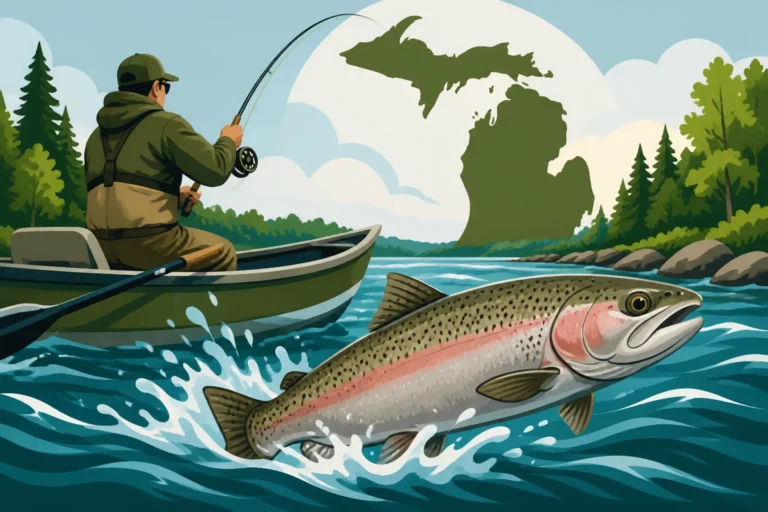
There’s nothing quite like the feeling of standing in a cool Michigan trout stream, the gentle hum of the water, the delicate flick of your fly line, and the hopeful anticipation of a rising trout. But let's be honest, getting to that point can feel daunting. From deciphering river currents to choosing the right fly from an overwhelming array, fly fishing for trout in our beautiful state presents a unique set of challenges. This guide is dedicated to demystifying those challenges, offering practical, in-depth fly fishing techniques to help you confidently navigate Michigan's trout streams and, hopefully, hook into some incredible fish.
Understanding Michigan Trout Streams
Michigan boasts an incredible diversity of trout waters, from tiny, brush-choked creeks hidden in the woods to wide, legendary rivers that draw anglers from across the globe. Each stream, even within the same river system, can have its own personality, currents, insect life, and fish populations, making it a constant learning experience. Truly understanding these nuances is the first step to becoming a successful fly angler in our state.
Types of Michigan Trout and Their Habitats
When you cast your line in Michigan, you're primarily targeting three species of trout: brown trout, rainbow trout (which include steelhead in their migratory form), and brook trout. Each has its own preferences for habitat and behavior, which influences how and where you might find them. Knowing these distinctions can dramatically improve your success rate.
Brown trout, originally introduced from Europe, are perhaps the most adaptable and often the wariest of Michigan's trout. They thrive in a wide range of stream conditions, from cold, clear spring creeks to warmer, fertile freestone rivers. Browns are notorious for their preference for cover—think undercut banks, logjams, deep pools, and overhanging vegetation. They're often found hugging the bottom in these protective spots, waiting for an easy meal to drift by. Their diet is incredibly varied, making them receptive to everything from tiny nymphs to large streamers. You can learn more about these fascinating fish in our article about Brown Trout in Michigan Rivers.
Rainbow trout, including their migratory counterparts known as steelhead, are strong fighters known for their acrobatic leaps. While some rainbows are stream-resident, many migrate to the Great Lakes and return to rivers to spawn. Resident rainbows often prefer faster, more oxygenated water than browns, frequently holding in riffles, runs, and the heads of pools where food is readily delivered. They’re opportunistic feeders, keying in on aquatic insects, crustaceans, and small fish. Steelhead, in particular, require specialized tactics, which you can explore in more detail in our guide on Fly Fishing Techniques for Michigan Steelhead. Understanding the differences between these life cycles is crucial, and you can delve deeper into this topic by reading Rainbow Trout and Steelhead: What's the Difference.
Brook trout, Michigan's only native trout species, are treasures of our colder, pristine waters, often found in smaller, spring-fed streams and the headwaters of larger river systems. They are particularly sensitive to habitat degradation and warm water, making their presence an indicator of excellent water quality. Brookies are less wary than browns or rainbows and often found near submerged logs, rocks, and current seams in these smaller streams. They typically don't grow as large as the other two species but offer beautiful coloration and aggressive takes, especially on dry flies.
Freestones vs. Spring Creeks: What's the Difference
Michigan’s trout streams generally fall into two broad categories: freestones and spring creeks. Each presents its own unique challenges and rewards for the fly angler, requiring different approaches to technique and fly selection. Understanding which type of water you’re on is fundamental to success.
Freestone rivers, like sections of the Manistee River Steelhead and Salmon Fishing in Michigan, are primarily fed by surface runoff from rain and snowmelt. This means their water levels and temperatures can fluctuate significantly with weather patterns. After a heavy rain, freestones might be high and turbid, while during a dry summer, they can become low and clear. This variability impacts insect hatches and fish behavior. Trout in freestones often hold in more defined structures like logjams, boulders, and deeper pools, seeking refuge from strong currents or low water conditions. Fly selection on freestones tends to be more diverse, mimicking the wider range of insects and forage available, and anglers often need to adjust their tactics more frequently.
Spring creeks, on the other hand, are fed predominantly by groundwater that emerges from springs. This results in remarkably stable water temperatures year-round – cool in summer, relatively warm in winter. The Au Sable River Trout Fishing in Michigan is a prime example of a world-renowned spring creek system. This thermal stability leads to prolific and consistent insect hatches, making them a dry fly angler's paradise. However, spring creeks often run clear and slow, making trout incredibly wary. Long, delicate leaders, precise casts, and perfect drag-free drifts are often essential for success. Fish in spring creeks are often spread out, but once you locate them, they might be more consistently feeding in a particular manner due to the predictable insect activity.
Iconic Michigan Trout Rivers
Michigan is home to a wealth of renowned trout streams, each with its own character and legendary status among anglers. Knowing the general characteristics of these iconic rivers can help you plan your next adventure and understand what to expect.
The Au Sable River system, particularly its famous "Holy Waters" near Grayling, is perhaps Michigan's most celebrated trout fishery. This is a classic spring creek, known for its consistent hatches, clear water, and challenging but rewarding brown trout fishing. Anglers here often spend hours observing the water, waiting for specific hatches like Hendrickson mayflies or caddis, and then carefully presenting dry flies to rising fish. The river's slow, deliberate currents demand perfect presentations and stealth. It's a place where patience and finesse are paramount.
Another gem is the Pere Marquette River Fly Fishing in Michigan, a National Scenic River. While famous for its steelhead and salmon runs, its upper stretches hold fantastic populations of wild brown and rainbow trout. The "PM" is a freestone river, characterized by its gravel bottom, numerous logjams, and a mix of riffles, runs, and deeper pools. Its structure provides excellent cover for large trout. This river offers diverse fishing opportunities, from nymphing the runs to swinging streamers through woody debris, and it's particularly popular for its incredible fall fishing as trout become more aggressive.
The Manistee River is another major Michigan waterway that, while widely known for its formidable salmon and steelhead runs, also offers excellent trout fishing in its upper reaches. Above Tippy Dam, the river flows through a mix of public and private lands, providing both classic freestone sections and some spring-fed areas. The upper Manistee holds a strong population of brown trout, with some rainbows mixed in. Its varied character, from wide-open stretches to tighter, more intimate sections, offers a range of fly fishing experiences. Like the PM, it's a river that rewards exploration and adaptability, as trout can be found in a variety of holding water depending on the season and water conditions.
Essential Gear for Michigan Trout Fly Fishing
Having the right tools for the job can make a world of difference when you're out on the stream. Fly fishing gear can seem overwhelming with all the options, but for Michigan trout, focusing on a few key pieces will get you started and keep you well-equipped. It's about functionality, comfort, and reliability.
Choosing the Right Rod and Reel Setup
The heart of your fly fishing setup is your rod and reel. For trout fishing in Michigan, the ideal combination balances power, sensitivity, and casting performance, allowing you to present flies delicately while having enough backbone to fight a strong fish.
For most Michigan trout streams, especially those with moderate size like the Au Sable or smaller sections of the Pere Marquette, a 4-weight or 5-weight fly rod is a fantastic all-around choice. A 4-weight rod is excellent for lighter presentations, smaller flies, and protecting delicate tippets, making it ideal for picky trout on clear spring creeks. A 5-weight is a bit more versatile, handling slightly larger flies, wind, and bigger fish with ease, making it a good choice for general freestone river fishing. Rod length typically ranges from 8.5 to 9 feet. A longer rod can help with line control and mending on larger rivers, while a shorter one offers better maneuverability in brushy, tight streams. Many anglers find great deals on quality fly rods on Amazon, often with helpful customer reviews to guide their selection. If you're looking for more specific recommendations, our guide on the Best Fly Rod for Michigan Trout Streams can offer further insights.
Matching your reel to your rod weight is crucial for balance. For trout, the reel's primary function is to hold your line; the drag system typically only comes into play with larger fish or strong runs. A simple, well-built click-and-pawl or a disc drag reel that matches your rod's weight (e.g., a 4/5 weight reel for a 4 or 5 weight rod) is usually sufficient. Look for a reel that feels comfortable in your hand and balances the rod well. While high-end reels can be beautiful, a mid-range reel from a reputable brand will serve you perfectly well for trout fishing. The extra money is often better spent on a good quality fly line.
Line, Leader, and Tippet: The Critical Connection
The connection between your rod and your fly is a finely tuned system of lines and leaders, each component playing a vital role in presentation, casting, and conveying takes. Skimping here can lead to frustrating tangles and missed fish.
Your fly line is arguably the most important part of your setup, as it carries the weight and allows you to cast. For most Michigan trout fishing, a weight-forward (WF) floating line matched to your rod weight (e.g., WF5F for a 5-weight rod) is the standard. The weight-forward design helps load the rod for easier casting, while the floating nature keeps your line on the surface for dry fly presentations and makes mending easier for nymphing. High-quality fly lines have specific tapers that enhance casting accuracy and delicate presentations. While they can be an investment, a good fly line from brands like Scientific Anglers or Rio can significantly improve your fishing experience.
The leader is the clear, tapered monofilament or fluorocarbon section that connects your fly line to your tippet. Its tapered design helps transfer casting energy smoothly, allowing your fly to turn over delicately. For trout, a leader between 7.5 to 12 feet is common, with the longer end preferred for wary fish on clear water or when fishing small dry flies. The butt section (thick end) connects to your fly line, and it gradually tapers down to a finer tip.
Tippet is the final, un-tapered section of monofilament or fluorocarbon that you tie directly to your fly. It's the weakest point in your setup by design, meant to break before your leader or fly line if you get snagged or break off a fish. Tippet spools come in various diameters, indicated by an "X" rating (e.g., 5X, 6X, 7X). A higher X-number means a finer, lighter tippet, which is less visible to fish and allows for a more natural drift of smaller flies. For general Michigan trout fishing, 4X to 6X tippet is a good range. You'll often carry spools of various sizes to match your fly size and water conditions. Fluorocarbon tippet is often preferred for nymphing due to its invisibility underwater and faster sink rate.
Waders, Boots, and Safety Gear
Staying comfortable and safe on the water is just as important as your rod and reel. Michigan trout streams, even in summer, can be quite chilly, and slippery rocks and swift currents demand proper attire and safety precautions.
A good pair of waders is essential for staying dry and warm. Chest waders are the most versatile, allowing you to wade into deeper water. Breathable waders, typically made from GORE-TEX or similar fabrics, are a worthwhile investment as they prevent overheating in warmer weather while still providing warmth when layered underneath. Neoprene waders are warmer and cheaper but less breathable. Look for durable construction, reinforced knees, and comfortable suspenders. You can find a wide range of waders on Amazon, often with detailed descriptions and customer reviews to help you compare. For specific guidance, check out our piece on Best Waders for River Fishing.
Wading boots, worn over your waders, provide crucial traction. Felt soles are excellent on slick, mossy rocks, but they can transfer invasive species and are banned in some areas. Rubber soles with studs or sticky rubber are a more environmentally friendly and increasingly popular alternative, offering good grip on a variety of surfaces. Make sure your boots are comfortable, provide ankle support, and have good drainage. Always wear a wading belt with your waders. This isn't just to keep water out if you fall; it also creates an airlock that prevents your waders from filling completely with water, which can be extremely dangerous in strong currents.
Beyond waders and boots, consider a few other safety items. A wading staff can be invaluable for navigating slippery bottoms or fast currents, providing stability and helping you probe depths before stepping. Polarized sunglasses are essential for spotting fish and reading water, while also protecting your eyes from errant flies. A hat offers sun protection and adds another layer of eye protection. A small first-aid kit, a whistle, and knowing your route can further enhance your safety, especially when fishing in more remote areas.
Reading the Water Like a Pro
The most skilled fly anglers aren't just great casters; they're expert water readers. They understand where fish hold, why they hold there, and how currents behave. This intuitive understanding of the aquatic environment is often what separates a good day from a great day on the stream.
Identifying Prime Trout Lies
A "lie" is any spot in the stream where a fish can comfortably hold, conserving energy while having access to food and cover. Learning to identify these prime locations is a critical skill for any Michigan trout angler. Trout are generally lazy; they want to expend the least amount of energy possible for the maximum caloric reward.
One of the most common prime lies is directly in front of or behind any form of current break. This could be a large boulder, a log, or even a subtle seam where fast water meets slow water. Fish will position themselves in the slower water, darting out into the faster current to snatch drifting food items before retreating to their less strenuous holding spot. Look for these "cushions" of slower water. Undercut banks are another fantastic lie, particularly for larger brown trout. These banks provide overhead cover from predators, deep water for security, and often harbor abundant invertebrate life. Cast your fly as close to the bank as possible, allowing it to drift naturally into or along the undercut.
Deep pools also hold fish, especially in warmer weather or when fish are spooked. The deeper water provides cooler temperatures and a sense of security. However, not all parts of a deep pool are equal. Look for subtle current lines, submerged structure within the pool, or the head (where the water enters) and tail (where it exits) of the pool. The head often brings in fresh food, while the tail can be a staging area for fish moving up or downriver. Don't overlook the turbulent water below waterfalls or rapids either; these areas are highly oxygenated and can hold surprisingly large fish willing to fight the current for a meal.
Understanding Current Dynamics
Current is the lifeblood of a trout stream, constantly delivering food, oxygen, and shaping the environment. Understanding its dynamics—how it flows, how it interacts with structure, and how it affects your fly—is fundamental to effective fly fishing.
When you look at a river, you'll notice different speeds of water. The fastest current is typically in the center and just below the surface in deeper sections, while slower currents are found along the banks, behind obstructions, and near the bottom. These varying speeds create "seams" – lines where fast water meets slow water. Trout often position themselves in the slower side of a seam, facing upstream, allowing the faster current to deliver food directly into their feeding lane. Presenting your fly along these seams, allowing it to drift naturally with the current, is a highly effective strategy.
Eddies are another key current feature. These are areas where the current flows upstream or in a circular motion, often found directly behind large obstructions or in bends of the river. Eddies can accumulate food and provide a low-energy holding spot for trout. However, casting into eddies requires careful line management to avoid "drag"—where your fly line is pulled by different currents, causing your fly to move unnaturally. Mending your line, which involves flipping a loop of fly line upstream or downstream to counteract conflicting currents, becomes a critical skill here to achieve a drag-free drift.
Spotting Structure and Cover
Beyond current, physical structure and overhead cover are vital elements that define good trout habitat. These features provide protection from predators, shelter from harsh weather, and concentrated food sources. Training your eye to spot these elements will guide your casts.
Submerged logs, fallen trees (logjams), and root wads are absolute magnets for trout. They provide significant cover, break up currents, and often harbor a rich ecosystem of aquatic insects. Large brown trout, especially, love to tuck themselves deep within these woody structures. Approaching these areas stealthily and making accurate casts is paramount, as getting snagged is a constant risk. However, the reward can be a trophy fish that wouldn't dare expose itself in open water. Remember to use a strong enough tippet when fishing around heavy cover to have a chance at pulling a fish out.
Large rocks and boulders also create excellent holding lies. Similar to logs, they create current breaks, forming pockets of slower water where trout can rest. The rough surfaces of rocks also provide habitat for insect nymphs and larvae, creating a local food source. Look for fish positioned just downstream of these boulders or in the deeper scour pools they create. Overhanging vegetation, such as cedars or willows along the bank, offers shade and concealment from aerial predators. Terrestrial insects like grasshoppers, ants, and beetles often fall from these branches into the water, providing an easy meal for opportunistic trout. Casting tight to these overhanging branches can be challenging but is often where the biggest fish lie in wait.
Mastering Common Fly Fishing Techniques
Fly fishing is an art form with many different strokes. While the core idea is to present an imitation of a trout's food, the specific techniques vary greatly depending on what the fish are eating, water conditions, and the type of water you're fishing. Mastering a few key techniques will equip you for almost any situation on a Michigan trout stream.
Dry Fly Presentation and Drag-Free Drifts
For many, dry fly fishing is the quintessential fly fishing experience—watching a trout rise to sip your imitation from the surface. But it's also one of the most challenging, requiring precision and a perfect presentation.
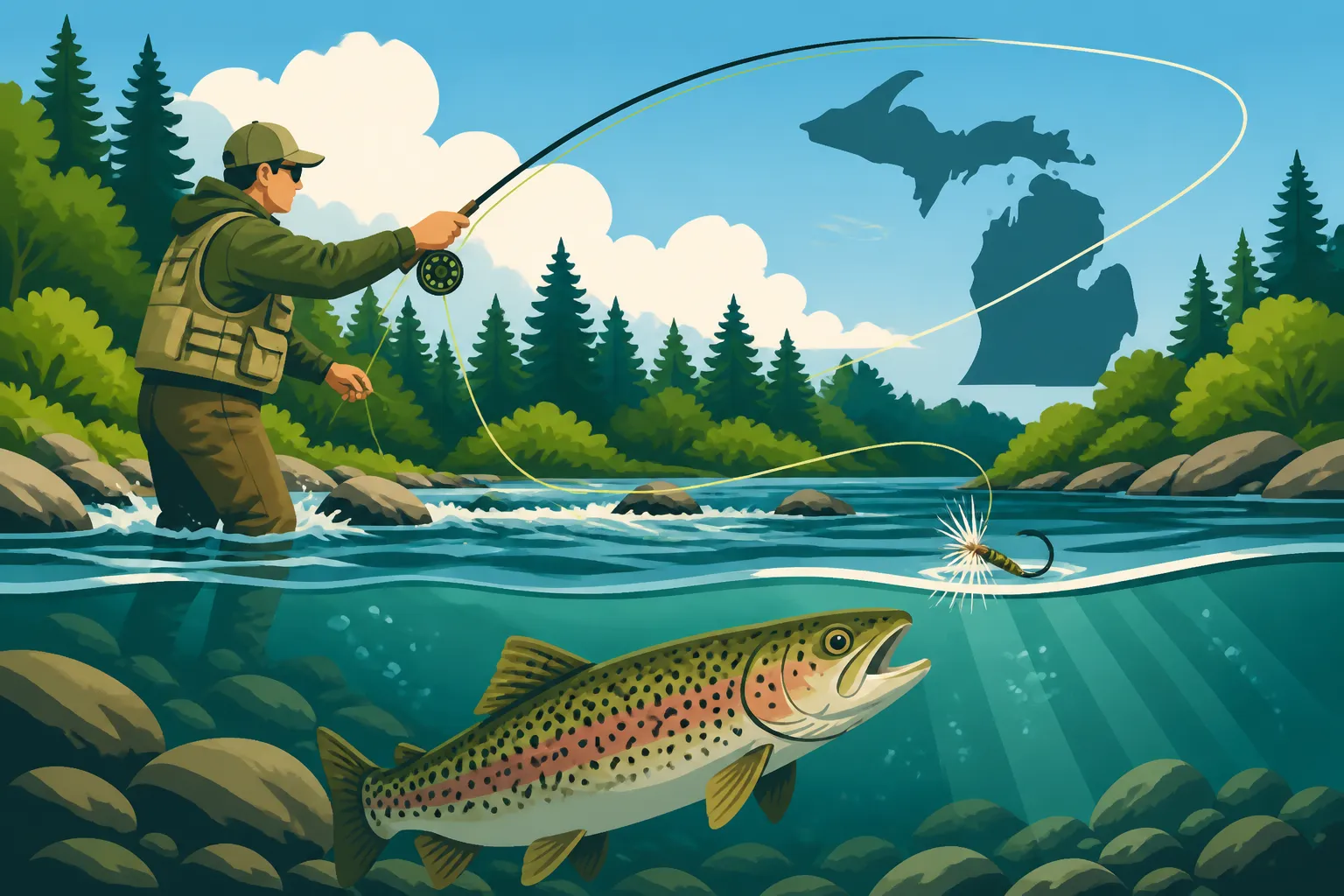
The goal of dry fly fishing is to present your artificial fly on the surface of the water in a way that perfectly mimics a natural insect. This means getting a "drag-free drift." Drag occurs when your fly line is pulled by different currents, causing your fly to move unnaturally, skittering or skating across the surface. A natural insect, floating freely, won't do this. To achieve a drag-free drift, you need accurate casts that land your fly gently and your line in a position that allows it to float at the same speed as your fly for as long as possible. This often involves casting "across" multiple current seams.
Mending is your primary tool for achieving a drag-free drift. After your cast, as your fly line lands on the water, you'll often see different sections of the line being pulled by different currents. Mending involves quickly flipping a loop of your fly line upstream or downstream with your rod tip, without moving your fly, to reposition the line so it drifts naturally with the fly. For an upstream mend, you flip a loop upstream to slow down the line closest to you. For a downstream mend, you flip a loop downstream to speed up the line closest to you. Practice is key here, as every cast and every current situation demands a slightly different mend. When you see a trout rise, aim to cast a few feet upstream of the rise, allowing your fly to drift naturally into the fish's feeding lane.
Nymphing Strategies for Subsurface Success
While dry fly fishing captures the imagination, nymphing – presenting flies that imitate the subsurface larval or pupal stages of aquatic insects – is often the most productive way to catch trout, especially when fish aren't actively rising. Trout spend the vast majority of their lives feeding beneath the surface.
The core principle of nymphing is getting your fly down to the fish's feeding level and allowing it to drift naturally with the current, just like a real nymph. This often requires adding weight to your leader or fly line, or using weighted flies. There are several popular nymphing techniques. "Indicator nymphing" is perhaps the most common. You attach a small strike indicator (think of it as a specialized bobber) to your leader, setting its depth to position your nymph near the bottom. The indicator signals strikes, even subtle ones, and helps you track your drift. It's crucial to use enough weight (split shot or weighted flies) to get your nymph to the correct depth, but not so much that it constantly snags the bottom.
"Euro Nymphing," or "tightline nymphing," is a more advanced technique that has gained immense popularity for its effectiveness. Instead of an indicator, anglers use a long, specialized leader with a sighter (a colored section of monofilament) that acts as a visual strike detector. The rod tip is held high, keeping almost all the fly line off the water, creating a direct connection to the flies. This allows for incredibly sensitive strike detection and precise control over the depth and speed of the nymph's drift. It's particularly effective in faster, broken water where traditional indicators might struggle. Regardless of the method, the key to successful nymphing in Michigan is getting your fly to the trout's feeding zone and ensuring a drag-free presentation that mimics the natural movement of nymphs in the current.
Streamer Fishing for Aggressive Takes
When trout are feeling aggressive, particularly larger brown trout, streamer fishing can be an incredibly exciting and effective technique. Streamers imitate baitfish, leeches, or other larger prey items, enticing predatory strikes rather than subtle sips.
Streamer fishing generally involves casting a larger, often weighted, fly and actively retrieving it through the water column. Unlike dry flies or nymphs that rely on natural drifts, streamers are "fished" by stripping the line in various patterns – short, quick strips; long, slow pulls; or erratic retrieves – to make the fly dart and swim like a distressed baitfish. This active presentation triggers the trout's predatory instincts. You're not waiting for a fish to feed passively; you're provoking a chase. This technique is often effective in larger pools, along undercut banks, around logjams, or in deeper runs where bigger fish might ambush prey.
The retrieve matters greatly. Experiment with different strip speeds and pauses. Sometimes a quick, jerky retrieve will entice a strike, while other times a slow, deliberate retrieve with long pauses will be more effective, especially in colder water. Many anglers use sink-tip or full-sinking fly lines to get their streamers down to the desired depth quickly, especially when targeting fish in deep holes or fast currents. Streamer fishing can be physically demanding, requiring heavier rods and more forceful casting, but the reward of a powerful strike from a big trout is often well worth the effort. It's particularly productive in the early spring, late fall, and even through the winter months when trout are focused on larger meals.
Selecting the Right Flies for Michigan Trout
The sheer variety of fly patterns available can be overwhelming, leading to the common angler's dilemma of having a fully stocked fly box and still feeling like they don't have "the right one." However, for Michigan trout streams, understanding the local insect life and having a selection of reliable patterns will serve you well.
Hatch Matching and Local Insect Life
The most effective way to select flies is often through "hatch matching"—identifying the natural insects currently emerging or active on the water and then choosing a fly pattern that closely imitates them. Michigan's trout streams are famous for their prolific aquatic insect hatches.
Mayflies are perhaps the most iconic group of insects for trout anglers. Key Michigan mayfly hatches include the Hendrickson (early spring), Sulphur (late spring/early summer), Brown Drake (late spring/early summer, especially on the Au Sable), Hexagenia (the "Hex" hatch, typically late June/early July on specific rivers, bringing up huge trout), and the tiny Tricos (late summer/early fall). Each species has a specific size, color, and emergence time. When you see trout rising, try to observe the natural insects on the water. What color are they? How big? Are they floating upright (dun) or spent (spinner)? This observation helps you choose the correct imitation.
Caddisflies are another crucial food source, and their hatches can be incredibly intense, often appearing as a flurry of skittering adults on the water. Unlike mayflies, caddis pupae actively swim to the surface to emerge. This means both caddis pupa (nymph) patterns and adult caddis dry flies are effective. Stoneflies, particularly in their nymphal stage, are large, meaty meals for trout and are present year-round, especially in larger freestone rivers. Midges are tiny, ever-present insects that can provide consistent action, especially in winter or on technical spring creeks where fish are highly selective. Paying attention to "what's bugging" the fish will always lead to better fly selection.
Go-To Generalist Patterns
While hatch matching is ideal, sometimes there's no obvious hatch, or you simply want a reliable fly that consistently catches fish. Having a collection of versatile, generalist patterns in various sizes and colors is essential for Michigan trout.
For dry flies, patterns like the Parachute Adams, Elk Hair Caddis, and Stimulator are incredibly versatile. The Parachute Adams can imitate a wide range of mayflies, caddis, and even midges, making it a universal pattern. The Elk Hair Caddis is fantastic for imitating adult caddis and can be skittered or dead-drifted. The Stimulator, a larger, bushier pattern, works well to imitate stoneflies, large caddis, or even grasshoppers, and is excellent for turbulent water or when prospecting. Having these in sizes from #12 to #18 will cover most dry fly situations.
For nymphs, the Hare's Ear, Pheasant Tail, and Prince Nymph are absolute classics that imitate a broad spectrum of aquatic insects. The Hare's Ear is a buggy, impressionistic pattern that suggests a variety of mayfly and caddisfly nymphs. The Pheasant Tail is a slimmer, more realistic imitation, often effective for smaller mayfly nymphs. The Prince Nymph, with its white biots, is a flashier attractor pattern that often triggers strikes even when no specific hatch is occurring. Having these in weighted and unweighted versions, in sizes #10 to #18, will be incredibly effective. Consider patterns like the Copper John or Zebra Midge for additional flash or smaller presentations.
For streamers, Woolly Buggers, Sculpin patterns, and Clouser Minnows are excellent choices. The Woolly Bugger is perhaps the most versatile streamer, imitating everything from leeches to baitfish. Carry them in black, olive, brown, and white, in sizes #4 to #10. Sculpin patterns, often tied with deer hair heads, mimic the bottom-dwelling sculpins that are a key food source for large trout. Clouser Minnows, originally designed for saltwater, are also deadly on trout, especially in white or olive/white combinations. These generalist patterns, readily available from retailers and online stores like Amazon, will ensure you always have something reliable to tie on.
Seasonal Fly Selection Advice
Michigan's seasons dramatically influence the behavior of trout and the types of insects available. Adapting your fly selection to the time of year is crucial for consistent success.
In spring (April-May), after the cold winter, trout are often eager to feed. This is when some of the biggest mayfly hatches occur, like the Hendrickson and early caddis. Nymphing with larger stonefly or caddisfly nymph patterns can be very effective early in the season when water is colder and higher. As water temperatures rise, look for emerging mayflies and caddis. Streamer fishing can also be productive as trout actively pursue baitfish to regain energy lost over winter. This is also when the inland trout season opens in many areas, a detail you can learn more about in When Does Trout Season Open in Michigan.
Summer (June-August) brings warmer water and can mean lower flows on some freestone rivers. Early mornings and late evenings are often the best times to fish dry flies as aquatic hatches occur. During the heat of the day, trout will seek cooler, deeper water, making nymphing or streamer fishing in pools and undercut banks more effective. Terrestrial insects – grasshoppers, ants, and beetles – become extremely important as they fall into the water. Having a selection of hopper, ant, and beetle patterns can be a game-changer. Small, subtle patterns are often needed on clear, low water.
Fall (September-November) is a favorite time for many Michigan trout anglers. Cooler temperatures mean trout become more active and aggressive, feeding heavily in preparation for winter. Many species of trout also begin their spawning rituals. This is an excellent time for streamer fishing, as large trout become territorial and predatory. Nymphing with egg patterns or larger stonefly nymphs can also be very effective, especially near spawning beds (though remember to be respectful and avoid targeting actively spawning fish). Late-season mayfly and caddisfly hatches can still provide dry fly opportunities, especially on warmer days.
Winter (December-March) offers a quiet, often challenging, but rewarding experience. With colder water, trout metabolism slows, and they often hold in deeper, slower pools. Midges become the dominant insect activity, and small midge pupa and larva patterns (like Zebra Midges) are often the most productive. Nymphing slowly and deeply is the primary technique. Streamer fishing can also work, but with a much slower retrieve. While inland trout seasons often close or become catch-and-release only, Michigan's Great Lakes Year-Round Trout Season means fishing for migratory trout in their tributaries is still an option, often requiring different, more robust gear.
Seasonal Strategies for Michigan Trout Streams
Beyond just selecting flies, understanding how trout behavior changes with the seasons is critical. Each season presents its own challenges and opportunities, demanding a shift in your approach, from where you fish to how you present your fly.
Spring Opener Tactics and Early Season Challenges
The spring opener, typically the last Saturday in April for Michigan's inland trout streams, is a highly anticipated event. After a long winter, trout are often hungry, but the early season also brings variable and often challenging conditions.
Water temperatures are usually quite cold, and stream flows can be high from snowmelt and spring rains. This means trout will often be holding in slower, deeper water, close to the bottom, seeking refuge from strong currents and conserving energy. Nymphing is almost always the most productive technique during the early spring. Focus on dead-drifting larger, weighted nymph patterns that imitate stoneflies, caddis larvae, or large mayfly nymphs. These provide a substantial meal for lethargic fish. Consider using a strike indicator set deep enough to ensure your flies are bouncing along the bottom.
Another effective tactic in early spring is streamer fishing. Larger trout, especially brown trout, are often opportunistic and willing to chase a baitfish imitation. Fish streamers aggressively through deep pools, along undercut banks, and around logjams. Target transition areas where slower water meets faster water. Weather can be unpredictable, so be prepared for cold temperatures, rain, and even snow. Dress in layers, wear good waders and warm socks, and always prioritize safety in cold water conditions. Remember to check the Michigan Fishing Regulations Every Angler Should Know, as rules can vary by stream section.
Summer Low Water and Terrestrial Fishing
Michigan summers, particularly July and August, can present some of the most technical fly fishing challenges, especially on freestone rivers where water levels may drop significantly. However, they also offer unique opportunities, particularly with terrestrial patterns.
As water temperatures rise and flows decrease, trout become more sensitive to stress and more selective in their feeding. During the hottest parts of the day, trout will seek thermal refuge in cooler, oxygenated water – often in deeper pools, below springs, or in shaded areas. Fishing during the early morning and late evening, when water temperatures are at their coolest and aquatic insects are more active, is often the most productive. Use long leaders and fine tippets (5X-7X) for delicate presentations, as trout in clear, low water are incredibly wary.
Summer is prime time for terrestrial fishing. Grasshoppers, ants, beetles, and crickets frequently fall into the water from streamside vegetation, becoming easy meals for opportunistic trout. Casting a foam hopper pattern or a smaller ant imitation tight against an overhanging bank can elicit explosive strikes. Pay attention to what's happening on the bank—if you see grasshoppers jumping, tie one on! Dry-dropper rigs (a dry fly with a small nymph suspended beneath it) are also highly effective in summer, allowing you to cover both surface and subsurface feeding lanes. Always practice good catch and release techniques during warm summer months, as trout can be more vulnerable to stress.
Fall Spawning Runs and Aggressive Trout
Fall, from September through November, is a truly magical time to be on Michigan's trout streams. Cooler temperatures invigorate trout, and many species begin their spawning migrations, leading to some of the most aggressive fishing opportunities of the year.
Brown trout, in particular, become highly territorial and aggressive as they prepare to spawn. This makes them excellent targets for streamer fishing. Large, flashy streamers stripped through deeper pools, around woody debris, and near known spawning gravel can provoke powerful, instinctual strikes. While targeting actively spawning trout on their redds (spawning beds) is generally frowned upon and often illegal, fishing adjacent to these areas for non-spawning trout that are feeding on dislodged eggs can be very effective.
Beyond streamers, nymphing with egg patterns can be extremely productive, especially in areas where trout are staging or recovering from spawning. Stonefly and larger caddisfly nymph patterns also continue to be good choices. The crisp fall air and vibrant autumn foliage add to the experience, making it a favorite season for many anglers. Remember to respect the spawning process and avoid disturbing the fish on their redds. Focus on intercepting fish that are actively feeding or moving, rather than those engaged in reproduction. This helps ensure healthy future fish populations.
Ethical Angling and Conservation Practices
Fly fishing is more than just catching fish; it's about connecting with nature and fostering a deep respect for the aquatic environment. Practicing ethical angling and conservation is paramount, ensuring that Michigan's trout streams remain vibrant for future generations.
Best Catch and Release Practices
For the vast majority of trout fishing in Michigan, especially on quality trout streams, practicing catch and release is highly encouraged and often mandated by specific regulations. Proper handling ensures the fish you release has the best chance of survival.
Minimize the fight time. While it's fun to battle a strong trout, a prolonged fight can exhaust a fish, making it less likely to recover. Use appropriate tackle that allows you to land the fish relatively quickly. Once landed, keep the fish in the water as much as possible. Trout cannot breathe air, and even a few seconds out of water can cause significant stress and damage to their gills. If you need a photo, prepare your camera beforehand and quickly lift the fish, snap the picture, and return it to the water immediately. Avoid touching the fish with dry hands, as this can remove their protective slime layer, making them vulnerable to disease. Wet your hands thoroughly before handling.
When removing the hook, use a hemostat or needle-nose pliers to quickly and gently back out the hook. If the fish is deeply hooked, especially in the gills or esophagus, it’s often best to simply cut the leader as close to the fly as possible. The hook will eventually rust away, and this often causes less trauma than trying to remove a deeply embedded hook. After releasing, gently hold the fish upright in the current, facing upstream, until it regains its strength and can swim away on its own. Do not squeeze the fish or drag it through the water. Watch for strong tail kicks as a sign of recovery. These practices are critical for maintaining healthy fish populations, especially in catch-and-release only sections.
Understanding Regulations and Protecting Resources
Michigan has a comprehensive set of fishing regulations designed to protect and enhance its fisheries. It is every angler's responsibility to understand and adhere to these rules. Ignorance is not an excuse, and violations can carry significant penalties.
Before heading to any Michigan trout stream, always consult the most current Michigan Fishing Regulations Every Angler Should Know. These regulations are updated annually and are available online through the Michigan Department of Natural Resources (DNR) website or in physical digests from license retailers. Pay close attention to specific rules for the body of water you intend to fish. Many trout streams have special regulations, such as tackle restrictions (e.g., artificial lures only, single-pointed hooks), specific size limits, or catch-and-release only sections. For instance, some rivers may have different opening dates for trout season, and the overall Michigan Fishing License Guide for Residents and Nonresidents will outline what you need to legally fish.
Beyond regulations, being a good steward of the environment means minimizing your impact. Pack out everything you pack in, including all trash, broken leader material, and old tippet. Don't leave discarded fishing line, as it can be deadly to wildlife. Avoid trampling streamside vegetation, and try to walk in established paths or directly in the stream to minimize erosion. Be mindful of potential invasive species; clean, drain, and dry your gear (waders, boots, boats) thoroughly between fishing trips to prevent their spread. Supporting organizations that work on habitat restoration and conservation, such as Trout Unlimited, also contributes to protecting these invaluable resources.
Stream Etiquette and Respect for Fellow Anglers
The tranquility of fly fishing is often one of its greatest appeals. Maintaining that peaceful atmosphere and showing respect for others on the water is a vital part of the experience.
When you arrive at a popular access point, take a moment to observe if other anglers are already fishing nearby. Always give fellow anglers ample space, especially when they are actively fishing a run or a pool. A general rule of thumb is to give at least 100 feet of space, or more if possible. If you need to pass someone, wade far out into the stream or walk well up on the bank, making as little noise and disturbance as possible. Never wade directly in front of or behind an angler who is actively fishing, as this can disturb the fish they are targeting.
Communication is key. If you're unsure if a section of water is being fished, a friendly "Are you working this stretch?" or a wave can help clarify. Avoid loud noises, splashing, or shining bright lights directly onto the water, especially during low-light fishing. If you see someone struggling, offer help or advice respectfully, without being intrusive. Most fly anglers are happy to share knowledge, but unsolicited criticism is rarely appreciated. Remember that we all share these precious resources. A little courtesy goes a long way in ensuring everyone has an enjoyable and respectful experience on Michigan's trout streams.
Navigating Michigan's Diverse Trout Waters
Michigan offers an incredible tapestry of trout streams, each with its own character, challenges, and rewards. From the renowned "Holy Waters" to the wilder sections of larger rivers, knowing what to expect from different systems can significantly enhance your fishing trip.
Fly Fishing the Au Sable River System
The Au Sable River, particularly its mainstream and several of its celebrated branches (North Branch, South Branch, East Branch), is often considered the birthplace of American dry fly fishing and remains a world-class trout fishery.
The Upper Au Sable, especially the "Holy Waters" above Burton's Landing, is a classic spring creek environment known for its consistently cold, clear water and prolific insect hatches. This section is predominantly catch-and-release, flies-only water, making it a true test of skill and patience. Anglers here often spend time patiently observing for rising fish, then making delicate, drag-free presentations with small dry flies, particularly during the famous Hendrickson, Sulphur, and Hexagenia hatches. Stealth is paramount, as the clear water makes trout incredibly wary. Long leaders (9-12 feet) and fine tippets (5X-7X) are often necessary. Further details can be found in our comprehensive guide on Au Sable River Trout Fishing in Michigan.
Downstream, the river widens and deepens, offering more diverse fishing opportunities. While dry fly fishing remains prominent, nymphing and streamer fishing become increasingly effective in these larger sections, especially when no visible hatch is occurring. The Au Sable also has a significant population of brown trout, many of which grow to impressive sizes, particularly in the lower stretches and during the evening hours. Fishing at night with large mice or streamer patterns is a popular, albeit challenging, way to target these trophy fish. Access points are plentiful, but some of the best fishing is found by wading or floating in a drift boat or canoe, quietly moving between runs and pools.
Exploring the Pere Marquette River
The Pere Marquette River, or "PM," is another jewel of Michigan fly fishing, famous for its steelhead and salmon, but equally renowned for its excellent populations of resident brown and rainbow trout in its upper sections.
The upper Pere Marquette, particularly above Baldwin, flows through dense forests and is designated a National Scenic River. This section is a freestone river, characterized by a gravel bottom, numerous logjams, and a mix of riffles, runs, and deeper pools. These diverse features create abundant lies for trout, offering varied fishing opportunities. While the PM is also subject to migratory runs, its resident trout population is robust. Nymphing with stonefly and caddisfly imitations is often productive, especially in the faster runs and around woody debris. Streamer fishing can also be highly effective for larger brown trout, particularly in the deeper, slower pools. Our guide on Pere Marquette River Fly Fishing in Michigan offers specific techniques for this river.
The PM also has areas with special regulations, including "flies only" sections and bait restrictions, so always double-check the current regulations before you go. This river is a fantastic place for anglers who enjoy a bit of adventure, navigating through varied currents and exploring classic trout water. Like the Au Sable, it’s a river best experienced by wading or drifting quietly, allowing you to thoroughly work the productive runs and pockets. The river's character changes significantly from its headwaters to its mouth on Lake Michigan, so understanding which sections hold trout and which are primarily migratory fish channels is key to planning a successful trip.
Tackle the Manistee River's Trout Sections
While often overshadowed by its reputation as a premier salmon and steelhead river, the upper reaches of the Manistee River, particularly above Tippy Dam, hold a strong and often overlooked trout fishery.
The Manistee River above Tippy Dam offers a varied landscape, with sections that resemble classic freestone rivers and others influenced by spring flows. This creates a rich habitat for both wild and stocked brown trout, along with some resident rainbows. The river here is wide in places, with a mix of gravel runs, deep bends, and complex woody debris structures. These features provide ample cover and feeding lies for trout, including some impressive specimens. Nymphing is a highly effective technique throughout the season, with a focus on stoneflies, caddis, and larger mayfly nymphs. Streamer fishing is also very productive, especially when targeting larger brown trout hiding in the deeper, darker water.
Dry fly fishing on the Manistee can be excellent during specific hatches, particularly caddis and various mayflies, though it might not always be as consistent as on dedicated spring creeks. Anglers often find success by focusing on structure—fishing tight to logs, undercut banks, and current seams. Access along the upper Manistee is good, with several public access points and boat launches. Floating in a drift boat or raft allows you to cover significant water and target less pressured fish. Remember that this river also sees heavy migratory runs, so always be aware of the specific species you are targeting and the regulations that apply. Our comprehensive guide on Manistee River Steelhead and Salmon Fishing in Michigan can give you insights into the river's wider ecology.
Disclaimer
The information provided in this guide is for general informational purposes only and is not intended as legal advice regarding Michigan fishing regulations. Fishing rules and regulations are subject to change by the Michigan Department of Natural Resources (DNR) and can vary significantly by location, season, and species. It is the sole responsibility of each angler to consult the most current official Michigan Fishing Regulations Digest and obtain the necessary Michigan Fishing License Guide for Residents and Nonresidents before engaging in any fishing activities. Always prioritize safety, respect wildlife, and practice ethical angling.