Where to Fish for Lake Trout on Lake Michigan
Lake Michigan is a vast, incredible fishery, but for many anglers, its sheer size can feel overwhelming, especially when you're specifically hoping to hook into a hard-fighting lake trout. It's easy to spend hours staring at a sonar screen or trolling aimlessly, feeling like you're searching for a needle in an aquatic haystack. This comprehensive guide is here to cut through the confusion, revealing the prime locations, effective techniques, and crucial regulations to make your next Lake Michigan lake trout adventure a roaring success.
Understanding Lake Michigan's Lake Trout Dynamics
Before we dive into specific spots, it's really helpful to understand a bit about lake trout themselves and how they behave in a massive body of water like Lake Michigan. These aren't your typical panfish; they're cold-water predators with specific preferences that dictate where you'll find them. Knowing their habits is half the battle, trust me!
Habitat and Preferred Depths
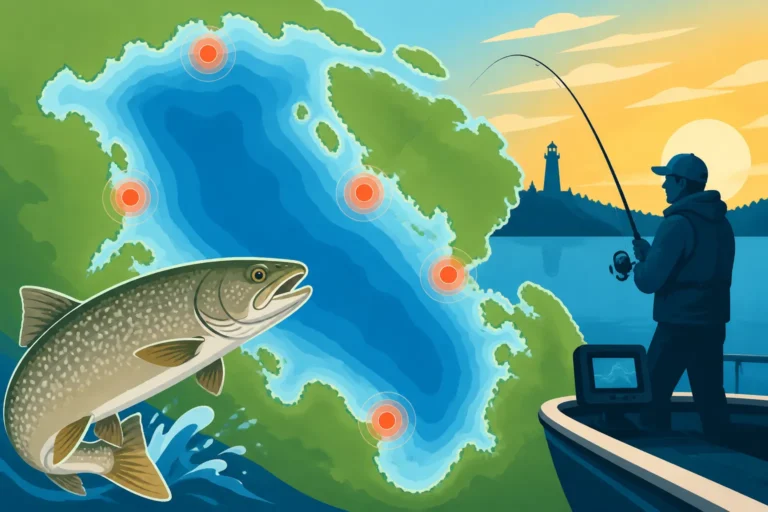
Lake trout, or "lakers" as many of us affectionately call them, are true denizens of the deep. They thrive in cold, oxygen-rich waters, typically preferring temperatures between 40-55°F (4-13°C). In Lake Michigan, this often means you'll be targeting them in depths ranging from 50 to over 200 feet, sometimes even deeper, depending on the time of year and available forage. They are closely associated with underwater structure—think deep drop-offs, submerged humps, rock piles, and old river channels. These features provide them with ambush points for prey like alewives, smelt, and sculpin, as well as crucial thermal refuge. If you're out on the water, looking for sharp breaks or deep-water contours on your sonar is always a good starting point. Understanding how to use your electronics to identify these deep-water structures is paramount to consistent success.
Seasonal Movements and Feeding Patterns
Lake trout don't just sit in one spot year-round; their movements are highly influenced by water temperature and the availability of their favorite snacks.
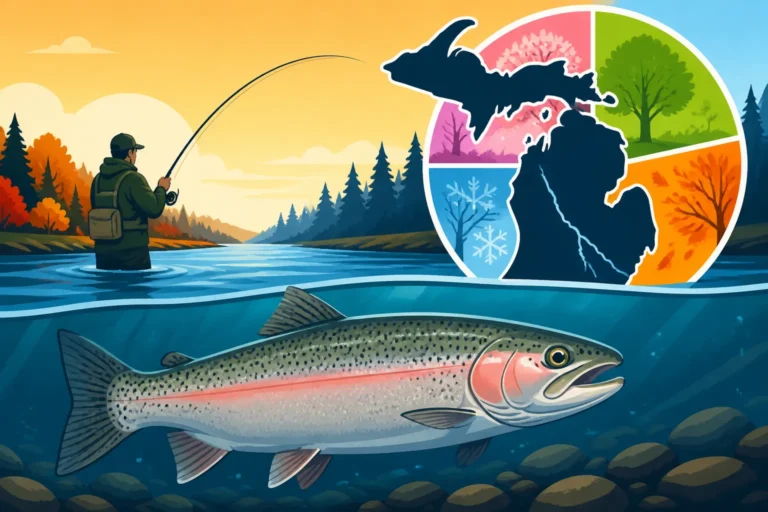
- Spring (April-May): As the ice recedes and surface waters begin to warm, lake trout often move into shallower depths, sometimes as shallow as 30-60 feet. This is when the baitfish, like alewives, are also moving closer to shore to spawn, and the lakers follow them. This nearshore activity can offer some fantastic fishing opportunities, especially for smaller boats that might not venture far offshore later in the season.
- Summer (June-August): This is when lake trout head for the coolest, deepest parts of the lake. They'll hug the thermocline (the layer where warm surface water meets cold deep water) or go even deeper, seeking those preferred cold temperatures. You'll often find them suspended over incredibly deep water, or holding tight to bottom structure in 80-200 feet. This is prime time for deep-water trolling.
- Fall (September-November): As the lake water cools, lakers begin to stage for their spawning ritual, which typically occurs over rocky shoals and reefs in October and November. During this time, they can become more aggressive and move shallower again, similar to spring. They'll be found in depths from 30-80 feet, aggressively feeding before and during the spawn. This period can offer some of the most exciting fishing for truly large fish.
- Winter (December-March): While ice fishing is less common for lake trout on the main body of Lake Michigan due to unpredictable ice conditions, they remain active in deep water. In certain protected bays or harbors that freeze over safely, ice anglers might target them. However, for most, winter means waiting for spring.
Keeping track of the Michigan Fishing Seasons Explained can help you align your efforts with these natural movements, ensuring you're targeting fish when and where they're most likely to be found.
Key Characteristics of Lake Michigan Lake Trout
Lake Michigan lake trout are a majestic species. They typically have a sleek, torpedo-shaped body with a deeply forked tail, varying in color from silver-gray to dark green or even brown, often adorned with light, irregular spots. While they can grow to impressive sizes—the Michigan state record stands at over 61 pounds—most anglers encounter fish in the 5-15 pound range. They are notorious fighters, especially in deep water, making long, powerful runs that will test your tackle and your stamina. Before you head out, make sure you're familiar with Lake Trout Identification in Michigan so you can properly identify your catch and adhere to regulations.
Prime Lake Trout Hotspots on Lake Michigan
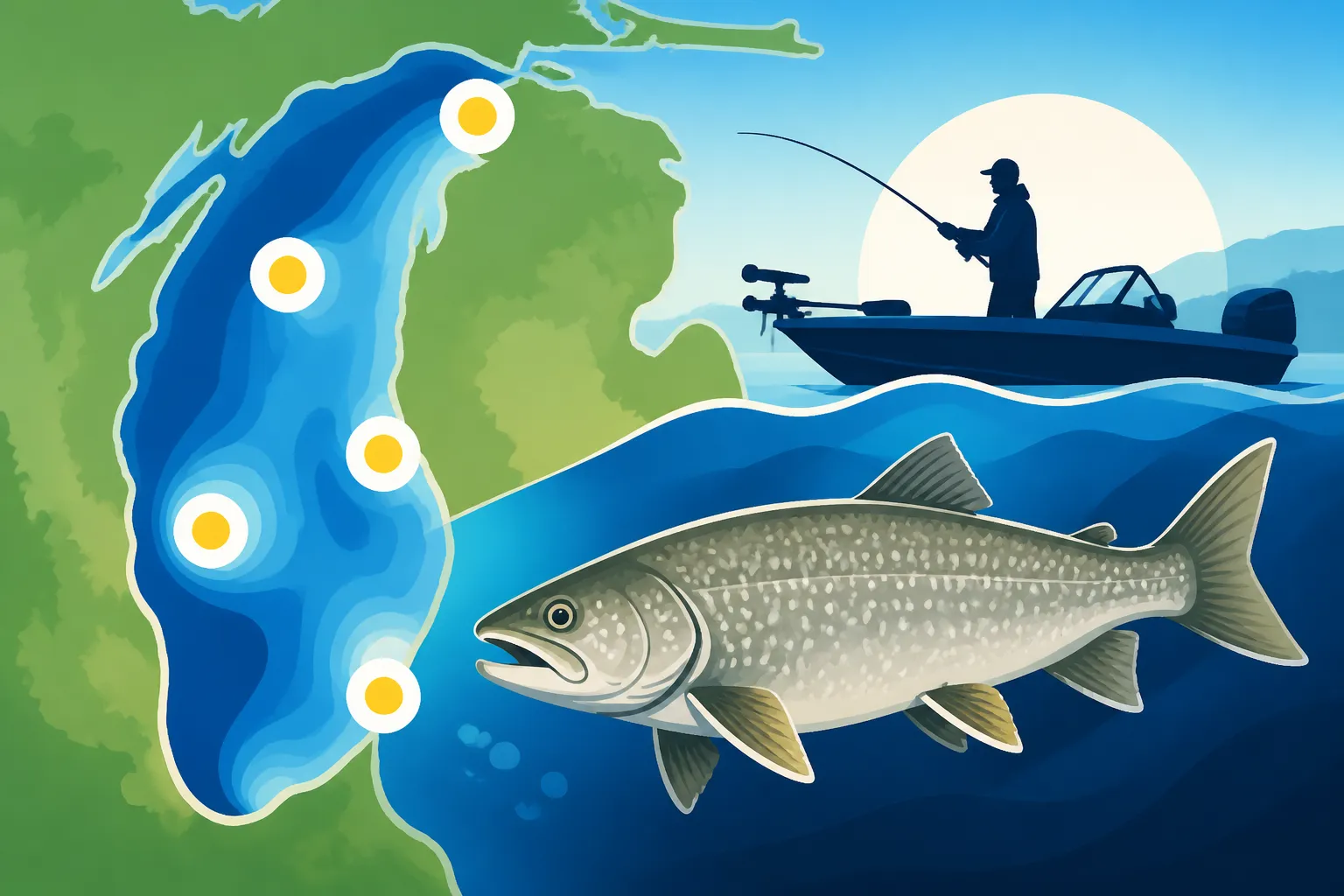
Lake Michigan's coastline is extensive, stretching from the Indiana border all the way up to the Mackinac Bridge. While lake trout are present throughout the lake, certain areas consistently produce better catches due to favorable habitat, baitfish concentrations, and management efforts. When planning a trip, exploring options on platforms like FishingBooker can give you a great overview of charter availability and local insights in these prime areas.
Northern Michigan Havens
The northern reaches of Lake Michigan, particularly around the Grand Traverse Bays and the surrounding coastline, are renowned for their cold, deep waters and excellent lake trout fishing.
- Grand Traverse Bay (East and West Bays): The deep waters of both East and West Grand Traverse Bays are classic lake trout territory. These bays offer immense depths, sometimes exceeding 600 feet, with plenty of underwater structure, including steep drop-offs and submerged points. In spring and fall, lake trout can be found shallower, often in 50-80 feet of water near Traverse City. During summer, they move into the deeper sections, often suspended over 100-200 feet of water, chasing baitfish. The sheer volume of cold water here makes it a year-round laker factory. Many anglers launch from Traverse City itself or from public access points further north like Northport.
- Charlevoix: Just north of the Grand Traverse Bays, Charlevoix offers direct access to very productive lake trout grounds. The waters immediately offshore feature excellent deep-water contours and proximity to prime spawning grounds. Anglers here often find success trolling offshore structure or along the deeper transitions. It's a great option for those looking for a slightly less crowded experience than some of the larger port cities.
- Petoskey and Little Traverse Bay: While Little Traverse Bay isn't quite as deep as Grand Traverse Bay, its connection to the main body of Lake Michigan provides ample opportunity. Petoskey offers convenient launching points, and the deep water begins relatively close to shore. During the cooler months, the bay itself can hold fish, while in summer, a short run out into the main lake will put you over excellent lake trout habitat.
These northern areas are not only productive but also incredibly scenic, making the fishing experience even more enjoyable.
West Michigan Productive Zones
Moving down the western coast of the Lower Peninsula, several key ports stand out for their consistent lake trout action. These areas are characterized by significant river mouths that draw baitfish and game fish alike, creating rich ecosystems.
- Ludington: Ludington is a powerhouse Great Lakes port, famous for its salmon and steelhead, but also a top-tier lake trout destination. The deep waters offshore of Ludington, particularly to the north and south of the harbor, hold abundant lake trout. The structure left by glacial activity and the proximity to the Manistee River mouth contribute to a thriving baitfish population. Anglers here often target lakers in 80-150 feet of water during the summer months, often alongside Chinook and Coho salmon.
- Manistee: Similar to Ludington, Manistee benefits from the significant Manistee River, which attracts vast schools of baitfish. The offshore waters here are deep and cold, providing ideal lake trout habitat. Many charters operate out of Manistee, offering guided trips specifically targeting lakers or mixed bags of salmon and trout. The area consistently produces quality fish, especially during the summer deep-water bite.
- Muskegon: The waters offshore of Muskegon are also highly productive for lake trout. Muskegon Lake connects directly to Lake Michigan, and the depths beyond the pier heads quickly drop into prime lake trout territory. Local knowledge is key here, as current seams and baitfish movements can influence where the fish are holding. Many anglers will head northwest from the harbor, looking for deep structure and temperature breaks.
These west Michigan ports are well-equipped with marinas, tackle shops, and experienced charter captains, making them excellent choices for a dedicated lake trout trip.
Southern Lake Michigan Opportunities
Even in the southern stretches of Lake Michigan, where the waters might seem slightly warmer, excellent lake trout fishing can still be found. These areas tend to be busier, but the fish are certainly there.
- Saugatuck/Holland: These popular tourist towns also offer access to great fishing. The deep-water trench that runs parallel to the Michigan shoreline extends down to this region. Lake trout here still seek those deep, cold areas during summer, often in 100-200 feet of water. Spring and fall can offer closer-to-shore opportunities as baitfish move in. If you're coming from southern Michigan or nearby states, these ports offer convenient access to the fishery.
- St. Joseph/Benton Harbor: Further south, St. Joseph provides a gateway to productive Lake Michigan waters. While more known for its salmon runs, the deep, cold water offshore still harbors a healthy population of lake trout. Anglers frequently encounter lakers while targeting other salmonoids, making it an exciting mixed-bag fishery. Knowing the deep water breaks and current lines is crucial here.
Choosing the right port often comes down to your proximity and what kind of facilities you're looking for. All these areas offer excellent opportunities for catching Michigan's Most Popular Fish Species.
Techniques and Strategies for Lake Michigan Lake Trout
Catching lake trout on Lake Michigan usually involves specialized techniques due to their deep-water habits. It's not typically a cast-and-retrieve game from shore (though some pier fishing for lake trout can happen during brief spring/fall movements, it's rare compared to boat fishing).
Trolling Deep with Downriggers and Planer Boards
Trolling is, without a doubt, the most common and effective method for targeting lake trout on Lake Michigan. It allows you to cover vast amounts of water and present your lures at precise depths for extended periods.
- Downriggers: These are essential for deep-water lake trout. A downrigger uses a heavy cannonball weight (often 8-12 pounds) on a wire cable to send your lure down to a specific, precise depth. Your fishing line is clipped to the downrigger release, and when a fish strikes, the line pops free, allowing you to fight the fish directly without the weight. You can set multiple downriggers at different depths and distances from the boat to cover a wide section of the water column. Knowing How Deep to Troll for Lake Trout is crucial, and experimenting with different depths around the thermocline or structure is often the key.
- Planer Boards: While downriggers get your lures deep, planer boards spread your lines out horizontally away from the boat, covering an even wider path. This is particularly useful when you want to run more lines or target fish that might be shy of the boat's prop wash. Many anglers use inline planer boards or mast-style systems to run lines with lead core or copper wire out to the sides, often targeting shallower depths or specific depths above the downrigger spread.
- Lead Core and Copper Line: These specialized lines are designed to sink on their own, allowing you to achieve specific depths without downriggers. Lead core line has a lead center surrounded by a braided sheath, while copper line is solid copper wire. Both are metered in colors (lead core) or lengths (copper) to help you estimate depth based on trolling speed. They are often used in conjunction with planer boards to spread out additional deep-fishing presentations. For a deeper dive into trolling, you might want to look at a guide on Trolling for Chinook Salmon on Lake Michigan as many of the principles apply to lake trout.
A typical trolling spread might include several downriggers at varying depths (e.g., 80, 100, 120 feet), a couple of lead core lines off planer boards, and perhaps a copper line directly behind the boat. This extensive setup covers a wide array of depths and spreads, maximizing your chances of finding actively feeding fish. Having the right Best Boats for Michigan Fishing, especially a sturdy craft capable of handling Great Lakes conditions, is a must for this kind of fishing.
Jigging and Vertical Presentation
While trolling is king, jigging can also be highly effective for lake trout, especially if you're marking fish on your sonar directly beneath the boat or want to target specific pieces of structure.
- Vertical Jigging: This involves dropping heavy jigs or spoons directly down to the depth where you're marking fish and working them aggressively. Large jigging spoons like Crippled Herrings, Swedish Pimples, or tube jigs are popular choices. The technique involves a sharp lift of the rod, followed by a controlled fall, allowing the lure to flutter and entice a strike. This is often done while drifting slowly or using a Minn Kota trolling motor with spot-lock to hold over specific spots.
- Drop-Shot Rigs: For more finicky fish or when you want a more subtle presentation, a heavy drop-shot rig with a live minnow (if legal and available) or a soft plastic bait can be very effective. This allows you to keep your bait directly in the strike zone without it constantly moving or swinging.
Jigging can be a very active and rewarding way to catch lakers, offering a direct connection to the fish and often leading to some vicious strikes.
Choosing the Right Gear and Baits
Having the right tackle is non-negotiable for Lake Michigan lake trout.
- Rods and Reels: For trolling, you'll want stout, medium-heavy to heavy action trolling rods, typically 8-10 feet long, paired with large, robust baitcasting or level-wind reels capable of holding 300+ yards of 20-30 pound monofilament or braid. These reels need strong drags to handle powerful fish in deep water. For jigging, a shorter (6'6" to 7'6") heavy spinning or baitcasting rod with a fast action, paired with a high-capacity reel, is ideal.
- Line: For downriggers, 20-30 pound monofilament is common for your main line, with a 20-25 foot fluorocarbon leader (15-25 lb test) between your main line and lure for invisibility and abrasion resistance. For lead core or copper, specific backing and leaders are used. Braided line (30-50 lb test) is excellent for jigging due to its sensitivity and lack of stretch.
- Lures: Lake trout respond well to a variety of lures:
- Spoons: Large trolling spoons like Stingers, Dreamweaver Magnums, Silver Streaks, or Michigan Stinger spoons in metallic colors (silver, copper, gold) or vibrant patterns (blue/silver, green/silver, chartreuse) are incredibly effective.
- Plugs/Stickbaits: Deep-diving crankbaits or stickbaits like Rapala Down Deep Husky Jerks, ThunderStick, or J-Plugs can also be deadly, especially for larger fish.
- Flasher/Dodger Combos: Often, a flasher or dodger (an attractor that creates flash and vibration) is used in front of a shorter leader (12-24 inches) with a fly or squid imitation. This combination is a classic for drawing in deep-water fish.
- Jigs: Heavy tube jigs (4-8 inches), grub jigs, or large metal jigging spoons (Crippled Herring, Swedish Pimple) are perfect for vertical jigging.
Make sure your tackle box is well-stocked, and consider what you might need based on the depth you plan to fish. You'll want to ensure you have a good selection of Best Lures for Muskellunge as many of these larger, aggressive lures also work for lake trout.
Navigating Regulations and Best Practices
Fishing on Lake Michigan, especially for a prized species like lake trout, comes with specific rules and responsibilities. It’s crucial to be aware of and follow all regulations to ensure sustainable fishing for everyone.
Michigan's Lake Trout Regulations
Michigan has detailed regulations for fishing its waters, and Lake Michigan's Great Lakes fishery is no exception. These rules are put in place by the Michigan Department of Natural Resources (DNR) to manage fish populations, prevent overfishing, and ensure healthy ecosystems.
- Fishing License: First and foremost, you absolutely need a valid Michigan fishing license. Whether you're a resident or a nonresident, you'll need one, and there are different types, including annual and 24-hour options. If you're wondering which one is right for you, check out the Michigan Fishing License Guide for Residents and Nonresidents. You can easily purchase these online through the Michigan DNR website or through many local tackle shops and sporting goods stores.
- Bag and Size Limits: Lake trout have specific daily possession and minimum size limits, which can sometimes vary by location or season. For instance, there might be different rules for certain management zones on Lake Michigan versus inland lakes. These limits are designed to protect younger fish and ensure enough mature fish remain to spawn. It's imperative to consult the latest Michigan Fishing Guide (available online as a PDF from the DNR) or refer to resources like Michigan Bag and Size Limits Explained before you head out. These regulations are updated annually, so always double-check.
- Special Regulations: Be aware of any special regulations that might apply to specific areas or times of year. For example, some areas might have bait restrictions or catch-and-release only periods. While lake trout generally don't have as many complex season openers as some other species, understanding the nuances of Michigan Great Lakes Fishing Regulations Guide is vital.
Always keep a copy of the current regulations digest with you when fishing, either a physical copy or the digital version on your phone. Ignorance of the law is never an excuse, and fines for violations can be steep.
Sustainable Fishing and Conservation
As passionate anglers, we all have a role to play in preserving the incredible fishing opportunities Lake Michigan provides. Lake trout populations have faced challenges in the past, including overfishing and the impact of invasive species like sea lamprey, but robust management and stocking programs have brought them back.
- Practice Catch and Release Wisely: If you plan to release fish, especially larger ones, do so quickly and carefully. Minimize their time out of the water, handle them with wet hands, and support their body weight. If they've come from very deep water (over 50 feet), they may experience barotrauma (swim bladder issues). While fizzing (venting the swim bladder) is a controversial technique, it can sometimes help. However, the best practice is to release fish quickly and gently.
- Respect Spawning Grounds: During the fall spawning season, lake trout congregate on specific rocky reefs and shoals. While fishing is generally permitted, be mindful of these areas and consider releasing fish you catch from them to help ensure successful reproduction.
- Support Conservation Efforts: A portion of your fishing license fees goes directly to supporting fisheries management, research, and stocking programs in Michigan. This includes efforts to control invasive species and enhance habitat for native fish like lake trout. This is how Where Michigan Fishing License Money Goes. When you buy a license, you're directly contributing to the health of the fishery.
- Dispose of Waste Properly: Always pack out what you pack in. Leave no trace, and consider picking up any litter you find along the way. This keeps our beautiful waterways clean and healthy for fish and fellow anglers.
By following these guidelines and staying informed, we can all contribute to the long-term health and vitality of Lake Michigan's lake trout fishery. If you're looking for an ethical and successful trip, considering a guided experience booked through a platform like FishingBooker often connects you with captains who are deeply committed to sustainable practices.
Best Times and Locations for Lake Trout on Lake Michigan
To give you a quick overview and help you plan your trip, here’s a summary of prime locations and the best times to target Lake Michigan lake trout.
| Location Category | Prime Fishing Area | Best Time of Year | Typical Depths (Feet) | Notes |
|---|---|---|---|---|
| Northern Michigan | Grand Traverse Bay (East/West) | Spring, Summer, Fall | 50-200+ | Excellent deep-water habitat, clear water. Look for deep structure and thermocline. |
| Charlevoix | Spring, Summer, Fall | 60-180 | Great access to main lake structure, often less crowded than Traverse City. | |
| Petoskey / Little Traverse Bay | Spring, Fall (closer), Summer (main) | 50-150 | Productive when fish move shallower, otherwise offshore. | |
| West Michigan | Ludington | Summer, Fall | 80-150 | Renowned port with strong laker numbers, often caught alongside salmon. |
| Manistee | Summer, Fall | 80-160 | Similar to Ludington, benefits from river mouth baitfish concentrations. | |
| Muskegon | Summer, Fall | 70-140 | Productive offshore waters; local knowledge of current seams and baitfish crucial. | |
| Southern Lake Michigan | Saugatuck / Holland | Summer | 100-200 | Deeper water trench parallels shore, requires longer runs to deep water. |
| St. Joseph / Benton Harbor | Summer | 90-180 | Primarily salmon grounds, but lakers are consistently present in deep water. |
Remember, the "best time" is often a guideline, and fish behavior can change based on weather, bait movements, and water conditions. Always check local fishing reports or consider hiring a professional guide, many of whom can be found and booked through sites like FishingBooker, for the most up-to-date information.
Disclaimer
Please note that fishing regulations, including licensing requirements, bag limits, and size restrictions, are subject to change. Always consult the most current Michigan Department of Natural Resources (DNR) fishing guide or website before heading out to fish. This article is for informational purposes only and does not constitute legal advice regarding fishing regulations.