Best Fishing Spots on the Au Sable River for Brown Trout
If you've spent countless hours dreaming of battling a hefty brown trout in Michigan, chances are the Au Sable River has already danced in your thoughts. This legendary waterway, often shrouded in a mix of reverence and mystique, can feel intimidating to navigate, especially when you're specifically hunting those elusive, often large, brown trout. This guide is here to demystify the Au Sable, breaking down the prime locations and offering practical advice so you can confidently plan your next brown trout adventure.
Why the Au Sable River is Michigan's Brown Trout Haven
The Au Sable River isn't just a trout stream; it's the trout stream for many in Michigan, a true gem for anglers pursuing wild brown trout. What makes this river so exceptional for these wily fish, capable of growing to impressive sizes, lies in a perfect storm of environmental factors and a long-standing conservation ethic.
Ideal Habitat and Coldwater Fishery
The Au Sable boasts an incredibly stable flow and consistently cold water temperatures, thanks to its numerous coldwater springs and groundwater inputs. Brown trout thrive in these conditions, preferring water temperatures between 50 and 65 degrees Fahrenheit. The riverbed is a mosaic of gravel, sand, and larger rocks, providing excellent spawning grounds and crucial cover. Deep pools, undercut banks, and complex woody debris are abundant, offering perfect hiding spots for larger, predatory browns to ambush their prey. This variety of structure, combined with a healthy insect population for food, creates a robust ecosystem where brown trout can not only survive but also grow to truly remarkable sizes. The river’s pristine condition and the surrounding forest also contribute to its stable environment, minimizing temperature fluctuations and runoff that can harm trout populations.
A Rich History of Fly Fishing and Conservation
The Au Sable's legacy as a premier trout fishery dates back over a century, intimately tied to the birth of fly fishing in the Midwest. This deep tradition has fostered a strong conservation ethos among anglers and local communities. Organizations like Trout Unlimited and the Anglers of the Au Sable have been instrumental in protecting and restoring the river, advocating for sensible regulations, habitat improvement projects, and catch-and-release practices. This dedication means the river is managed not just for today's anglers but for future generations, ensuring the health and vitality of its wild brown trout population. Many of the techniques and approaches used here have been passed down through generations, making it a place where angling heritage runs deep.
Navigating the Au Sable: Key Sections for Brown Trout
The Au Sable River is a long and winding waterway, stretching for over 130 miles. To effectively target brown trout, it's crucial to understand the distinct characteristics of its various sections, as each offers a different experience and specific challenges.
The Legendary Holy Waters
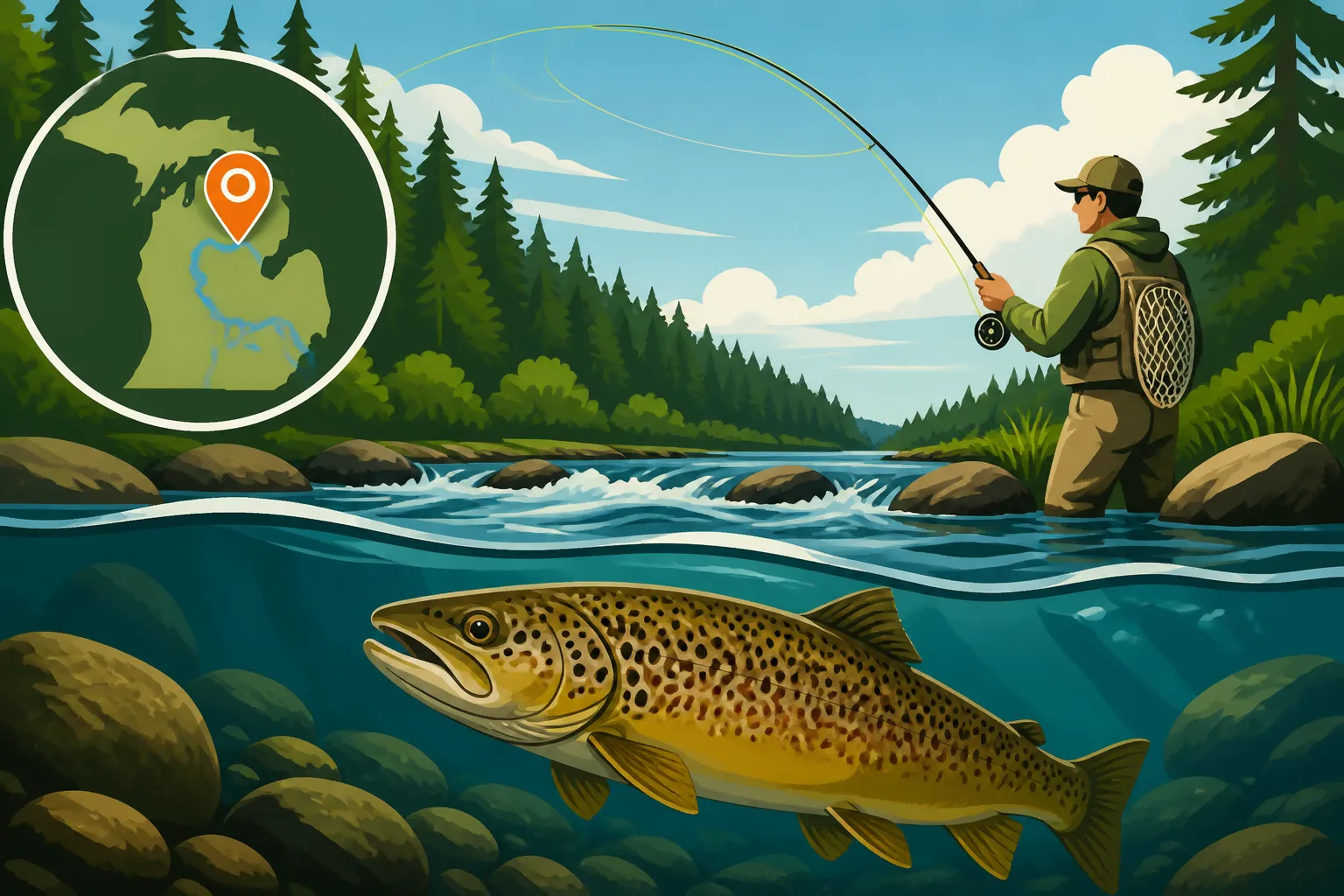
Perhaps the most famous stretch, the "Holy Waters," refers to a roughly nine-mile section of the Au Sable River’s Mainstream, beginning below the historic Burton's Landing and extending downstream towards Wakeley Bridge. This area, nestled within state forest land, is renowned for its exceptional water quality, consistent flows, and significant populations of large, wild brown trout. It's often considered the spiritual home of fly fishing in Michigan.
Access in the Holy Waters is primarily walk-in, with several designated access sites like the one at the end of the well-known "Road to Nowhere." This forces anglers to truly earn their fish, exploring the river on foot and often wading for miles. The river here is characterized by a mix of riffles, runs, and deep, slow pools. Undercut banks, fallen timber, and overhanging vegetation provide prime lies for big brown trout. This section is strictly regulated, often with special tackle restrictions (e.g., artificial flies only) and specific catch-and-release rules to protect its trophy-class fish. Anglers often find success here with delicate dry fly presentations during hatches, nymphing deep runs, and stripping streamers near cover, especially during low-light conditions. Many anglers hire local guides found through platforms like FishingBooker to help navigate these hallowed, yet challenging, waters effectively.
The Mainstream Below Mio Dam Pond
As the Au Sable flows downstream from Mio, past the Mio Dam, the character of the river begins to change. The Mio Dam Pond itself, while technically part of the Au Sable system, is more of a lake environment and presents different fishing opportunities. Below the dam, the river becomes wider and experiences slightly warmer temperatures compared to the pristine Holy Waters. This section, particularly from Mio down to the Alcona Dam impoundment, still holds excellent brown trout but also sees a greater mix of other species like rainbow trout and even some smallmouth bass in the warmer stretches.
This area is generally more accessible for wading and also offers more opportunities for floating in drift boats or kayaks. You'll find a broader range of techniques being employed here, from fly fishing to traditional spin fishing with artificial lures. Deep holes and strong currents are prevalent, and brown trout often tuck into areas with substantial cover. Searching for fish with streamers or larger nymphs can be highly effective, especially when targeting the more aggressive brown trout that inhabit these waters. It’s also a fantastic place to practice your cast without the intense pressure found upstream.
The Lower Au Sable: Oscoda to Lake Huron
Once the Au Sable passes through the various impoundments and hydro-electric dams (Alcona, Loud, Five Channels, Cooke, Foote Dams), it transforms into a much larger river as it approaches Oscoda and eventually empties into Lake Huron. This lower river section, particularly the stretches below Foote Dam, is a completely different fishery. While still holding resident brown trout, it becomes more famous for its anadromous runs of Chinook and Coho salmon, and steelhead (migratory rainbow trout) during their respective seasons.
For brown trout, the lower Au Sable can be a fantastic option, especially during the colder months when many of the migratory fish are present. Brown trout in this section are often larger, having access to more abundant forage and growing quickly. They tend to be more piscivorous, feeding on baitfish, so tossing larger streamers, spoons, or crankbaits can be very productive. Access is plentiful with numerous public boat launches and shore fishing opportunities, particularly near Oscoda. The wider, deeper channels mean boat fishing is more common here. While the focus often shifts to salmon and steelhead, don't overlook the resident brown trout that lurk in the deeper pools and eddies. For current conditions, checking the Michigan DNR's latest "Michigan Fishing Regulations Digest PDF for 2026" is always a smart move to understand species-specific rules for this dynamic section of the river.
Prime Brown Trout Hotspots and Access Points
Knowing the general sections is one thing, but pinpointing specific locations within those stretches can make all the difference. The Au Sable has many well-known and lesser-known honey holes, each offering its own unique appeal.
The "Road to Nowhere" and Upstream Areas
In the heart of the Holy Waters, the "Road to Nowhere" (officially Parmalee Road) offers one of the most popular access points. From here, you can head upstream or downstream into some of the most productive brown trout water on the river. Upstream, you'll encounter a mix of classic Au Sable riffles and slower, meandering sections. Pay close attention to current seams, logjams, and any structure that breaks the current. These are prime ambush points for brown trout.
Further upstream, towards Burton's Landing, the river is even smaller and more intimate. This section demands stealth and precise casting. The browns here, while not always the biggest, are wild and incredibly wary. They've seen it all. Look for deep pockets under cedar trees or where the bank is severely undercut. During a strong insect hatch, these smaller, tighter waters can come alive with rising fish, offering some of the most challenging and rewarding dry fly fishing experiences you can imagine. Remember, respecting private property and being mindful of other anglers is paramount in these popular, yet peaceful, stretches.
Stephan Bridge and Beyond
Downstream from the Holy Waters, the area around Stephan Bridge provides another excellent access point. This section begins to widen slightly and offers a good mix of wading and opportunities for drift boat access. Below Stephan Bridge, the river features more pronounced bends and deeper runs, often punctuated by large submerged logs. These logjams are goldmines for brown trout, offering both cover and feeding lanes.
Many anglers target the outside bends of the river, where the current carves out deeper troughs, creating ideal holding water. The gravelly runs connecting these deeper sections are also crucial. This area experiences strong insect hatches, particularly caddis and various mayflies, making it an exciting place for dry fly fishing during the warmer months. As you continue downstream past the Stephan Bridge area, the fishing pressure tends to lessen slightly, and you might find more solitude while still encountering quality brown trout. This is a great place to fish if you want to avoid the crowds that can sometimes gather upstream.
Below Mio Dam – Au Sable River Natural Area
Immediately below the Mio Dam, the Au Sable River Natural Area offers exceptional fishing. This section is known for its dramatic changes in depth and current, featuring numerous boulders and extensive woody debris. The aerated water coming through the dam creates a vibrant ecosystem, supporting a healthy population of brown trout that are often actively feeding.
Access points are available, though some require a bit of a hike. Anglers often focus on the faster runs and deep pools directly below the dam, where trout capitalize on disoriented baitfish and insects. Streamer fishing can be particularly effective here, mimicking the larger prey that bigger brown trout often key in on. It’s a powerful section of the river, so being mindful of currents and safe wading practices is essential. While you're there, consider checking out other areas for Au Sable River Trout Fishing in Michigan.
Here’s a quick overview of some prime Au Sable sections for brown trout:
| River Section | Primary Characteristics | Best Techniques | Typical Brown Trout Size | Accessibility | Key Regulations |
|---|---|---|---|---|---|
| Holy Waters | Pristine, intimate, heavily structured, cold spring-fed | Dry fly, nymphing, small streamers | 12-20 inches, trophy potential | Walk-in only | Artificial flies only, often catch-and-release, specific season dates |
| Mio Dam Pond Tailwaters | Aerated, faster currents, rocky, good structure | Streamers, nymphs, spin lures | 10-18 inches, good numbers | Walk-in, some boat access | Artificial lures/flies, general trout regulations |
| Lower Au Sable (near Oscoda) | Wider, deeper, warmer, strong migratory runs | Large streamers, spoons, crankbaits | 15-25+ inches, potential monsters | Boat access, shore | Mixed regulations, open to various methods, check specific sections |
Essential Tips for Targeting Au Sable Brown Trout
Fishing for brown trout on the Au Sable is a nuanced art. These fish are famously cunning and can be incredibly selective. Success often comes down to understanding their behavior, adapting your techniques, and respecting the river's unique environment.
Best Techniques for Wary Browns
For the Au Sable's resident brown trout, especially in the upper and middle sections, finesse is often key. Fly fishing remains the most popular and often most effective method, especially during prolific insect hatches. Dry fly fishing, matching the hatch with accurate presentations, can lead to exhilarating takes from surface-feeding browns. Many anglers use patterns like Sulphurs, Hexagenia (Hex), Isonychia, and various caddis imitations. For those interested, diving deeper into Fly Fishing Techniques for Michigan Trout Streams can significantly improve your odds.
When fish aren't rising, nymphing is a consistently productive technique. Drifting imitations of aquatic insects like stoneflies, caddis larvae, and mayfly nymphs near the bottom, often with a strike indicator, can entice lethargic browns. Streamer fishing, particularly during low light conditions (dawn, dusk, or overcast days), can be deadly for larger, more aggressive brown trout. Retrieving larger baitfish imitations through deep pools and along undercut banks can provoke a powerful strike. If you're using conventional gear, small spinners like Mepps or Panther Martin, or small crankbaits that mimic baitfish, can also be effective when cast accurately into holding water. For any of these methods, a reliable Best Rods and Reels for Michigan Fishing setup can make a huge difference in presentation and fish-fighting capability.
Seasonal Considerations and Prime Times
The Au Sable offers brown trout fishing opportunities year-round, but specific seasons shine for different reasons.
- Spring (April-May): This is when many anglers eagerly await the opening of Michigan's inland trout season. The fish are often hungry after winter, and early hatches like Hendrickson and caddis can provide excellent dry fly action. Water levels can be higher due to snowmelt, making wading more challenging but creating new fishable lies. This is a fantastic time for nymphing and streamer fishing as well. If you're wondering When Does Trout Season Open in Michigan, it's generally the last Saturday in April for inland streams.
- Summer (June-August): Famous for its "Hex Hatch" in early summer, this period can offer incredible dry fly fishing, particularly at dusk and into the night when the largest brown trout come out to feed. Warmer water temperatures in some sections might push fish into colder spring-fed areas, but overall, summer is prime time for insect activity. Night fishing for large browns with mice patterns or large streamers can be exhilarating.
- Fall (September-November): As water temperatures cool, brown trout become more active, feeding aggressively in preparation for winter and their spawning season. This is a prime time for streamer fishing, as browns are often focused on larger meals. The fall colors along the river also make for a breathtaking fishing experience.
- Winter (December-March): While challenging, winter fishing can yield some of the largest brown trout. Fish are slower and less active, but a well-presented nymph or small streamer on warmer winter days can still fool a trophy. Ice fishing can also be productive on the wider, slower sections or impoundments.
Remember, brown trout are especially active during low-light conditions. Dawn and dusk are often the most productive times to be on the water, regardless of the season.
Understanding and Adhering to Regulations
Michigan's fishing regulations, especially on a revered river like the Au Sable, are complex and subject to change. Always consult the most current Michigan DNR fishing guide before you head out. These regulations are designed to protect the resource and ensure sustainable fishing for future generations. For a detailed overview, check out the main guide on Michigan Fishing Regulations Every Angler Should Know.
Key aspects to pay attention to include:
- Catch-and-Release vs. Harvest: Many sections, particularly the Holy Waters, are designated "Type 1" or "Type 2" waters with specific catch-and-release rules or slot limits for trout. This means you might be required to release all trout, or only keep fish within a certain size range.
- Tackle Restrictions: Some special regulation waters only permit artificial flies, while others allow artificial lures. Live bait is often prohibited in these sensitive sections.
- Season Dates: While some parts of the Great Lakes and specific rivers like the Au Sable have extended or year-round seasons for certain species, inland trout regulations are often very specific.
- License Requirements: Always ensure you have a valid Michigan fishing license. Whether you're a resident or a non-resident, the rules apply. You can learn more about this in the guide on Michigan Fishing License Guide for Residents and Nonresidents.
- Special Considerations: If you're fishing from a boat, be aware of specific motor restrictions, especially in the quiet water areas. If you're not from the area, consider booking a guide through a service like FishingBooker; they are experts in local regulations and can ensure you're compliant.
For serious anglers targeting brown trout, learning How to Catch Brown Trout in Michigan Rivers will cover more than just techniques, often touching on ethical angling practices important on rivers like the Au Sable.
Equipping Yourself for Au Sable Success
Having the right gear is crucial for enjoying your time on the Au Sable and increasing your chances of landing a magnificent brown trout. From your waders to your leader, every piece of equipment plays a role.
Rods, Reels, and Lines
For fly anglers, a 9-foot, 5-weight fly rod is a versatile choice for most of the Au Sable, capable of handling dry flies, nymphs, and smaller streamers. If you plan to throw larger streamers or fish the lower, wider sections of the river, a 6- or even 7-weight rod might be more appropriate. Pair this with a matching reel and a weight-forward floating line. For nymphing, a specialized nymphing line or a longer leader setup can be beneficial. Many anglers also carry a sink-tip line for effective streamer fishing.
Spin anglers will find a light to medium-light spinning rod, around 6 to 7 feet in length, to be ideal. Pair it with a high-quality spinning reel spooled with 4-6 pound test monofilament or fluorocarbon line. Fluorocarbon is especially good for its low visibility and abrasion resistance. Remember, stealth and presentation are key, so lighter lines are generally preferred. A topic like Best Rod Length for River Steelhead could also provide some transferable insights into rod choices, even though the species differs.
Leaders, Tippets, and Flies
For fly fishing, a quality tapered leader, usually 9-12 feet long, ending in a tippet of 4x, 5x, or even 6x (depending on fly size and water clarity), is standard. Brown trout can be incredibly leader-shy, so fine tippets are often necessary. Carry a variety of tippet spools to adjust as conditions demand.
When it comes to flies, the Au Sable's brown trout respond to a wide array.
- Dry Flies: Sulphurs (size 14-18), Hendrickson (12-14), Caddis (14-18), Isonychia (10-14), Tricos (20-24), Hexagenia (8-10, for the famous hatch), and general attractor patterns like a Parachute Adams or Elk Hair Caddis are staples.
- Nymphs: Prince Nymphs, Pheasant Tails, Hare's Ears, Stoneflies, and Perdigon Nymphs in various sizes (10-18) are excellent choices.
- Streamers: Woolly Buggers, Sculpzillas, Sex Dungeons, and various baitfish imitations in olive, black, white, and brown colors (size 2-8) are effective, especially for larger browns.
- Terrestrials: During late summer, patterns like Hopper-Droppers, Ants, and Beetles can be very productive.
It’s always a good idea to chat with local fly shops in towns like Grayling or Mio for up-to-the-minute hatch information and recommended patterns. This local knowledge is invaluable.
Waders and Essential Accessories
Wading is integral to fishing the Au Sable. A good pair of breathable chest waders and comfortable wading boots with felt or rubber soles (often studded for extra grip) are non-negotiable. The river bottom can be slippery, so proper footwear is vital for safety. Many anglers even consider specialized Best Waders for River Fishing to ensure comfort and durability in the demanding conditions of the Au Sable.
Beyond that, a few other accessories are critical:
- Polarized Sunglasses: Essential for spotting fish, reading water, and protecting your eyes.
- Net: A quality landing net with a rubber bag is crucial for safely handling and releasing brown trout.
- Forceps or Pliers: For hook removal, minimizing stress on the fish.
- Thermos: For hot coffee on cold mornings or cold water on warm days.
- Insect Repellent: Especially important during summer hatches.
- First-Aid Kit: For any minor mishaps.
- Floatant/Desiccant: For keeping your dry flies riding high.
- Stream Thermometer: To monitor water temperatures, which can greatly influence trout behavior.
Having reliable gear not only makes your trip more enjoyable but also contributes to responsible angling practices, particularly when it comes to the safe handling and release of Michigan's treasured brown trout.
Disclaimer
Fishing conditions and regulations in Michigan can change. Always consult the latest Michigan Department of Natural Resources (DNR) fishing guide or website for the most current rules and updates before heading out on the water. This information is for general guidance only and should not be considered legal or definitive regulatory advice.