Best Fishing Spots on the Grand River in Michigan
Trying to figure out the best fishing spots on a river as massive and diverse as Michigan's Grand River can feel like a daunting task. It's not just a big river; it transforms dramatically from its headwaters all the way to Lake Michigan, offering a dizzying array of habitats and fish species. This guide is here to break down those complexities, helping you pinpoint exactly where and when to drop your line for the best chances of success on this incredible waterway.
Navigating the Grand River's Fishing Opportunities
The Grand River, Michigan's longest river, is a true powerhouse for anglers. But its sheer length and varying characteristics mean that what works in one section might not work in another. Understanding these differences is key to unlocking its full potential, whether you're after a trophy steelhead or a mess of panfish.
Understanding the River's Diverse Sections
From its humble beginnings as a small stream in the state's interior, the Grand River grows steadily, eventually becoming a wide, powerful waterway that empties into Lake Michigan at Grand Haven. This journey dictates everything from water temperature and flow to the types of fish you'll encounter.
The upper reaches, closer to Jackson and Lansing, are typically narrower, often slower, and more akin to traditional inland rivers. Here, you'll find good populations of smallmouth bass, northern pike, and a variety of panfish like bluegill and crappie. As the river progresses through cities like Grand Rapids, it widens considerably, becoming a major migration route for anadromous species. This section is characterized by dams, rapids, and deeper pools, offering entirely different challenges and rewards. Finally, the lower river, from Grand Rapids to Lake Michigan, experiences a strong influence from the Great Lakes, becoming a highway for salmon and steelhead, particularly during their spawning runs. Each section demands different approaches, from casting into tight pockets in the upper river to battling powerful currents near the Great Lakes.
Seasonal Fishing Hotspots
The Grand River truly shines as a four-season fishery, but understanding the seasonal movements of its fish is paramount. What's hot in spring might be dead in fall.
- Spring: As the ice recedes and waters warm, the spring steelhead run kicks into high gear, especially in the sections downstream of the 6th Street Dam in Grand Rapids and all the way to the mouth at Grand Haven. These chrome beauties are moving upstream to spawn, and they offer some of the most exciting battles of the year. Beyond steelhead, hungry walleye begin to stage in deeper pools and channels, making them a prime target. Later in spring, as water temperatures stabilize, smallmouth bass become very active, particularly in rocky areas and current breaks. You can find detailed information on Michigan's Spring Fishing Season Guide, which perfectly captures the excitement of this time of year.
- Summer: The summer months are fantastic for warm water species. Smallmouth bass are everywhere, aggressively hitting topwater lures, crankbaits, and soft plastics. Northern pike are active in weed beds and slower sections, while panfish provide consistent action in backwaters and quieter stretches. The lower river still holds resident trout and salmon that didn't return to the lake, providing opportunities for those willing to put in the effort.
- Fall: This is arguably the Grand River's most famous season, as Chinook and Coho salmon begin their monumental journey upstream from Lake Michigan. The entire river from Grand Haven to the 6th Street Dam becomes a mecca for salmon anglers. Following closely on their heels are the early waves of the fall steelhead run in Michigan rivers, drawn by the salmon eggs. Walleye also become more active as temperatures drop, feeding heavily before winter. You can read more about the Michigan Steelhead Run Timing to prepare for this incredible season.
- Winter: While many anglers pack it in, the Grand River still offers opportunities, particularly for steelhead. The winter steelhead run in Michigan Rivers can be fantastic, especially during thaws. Focus on slower, deeper pools where fish conserve energy. Ice fishing on some of the quieter backwaters and embayments can also produce pike, walleye, and panfish, though the main river rarely freezes completely due to current.
Key Fishing Locations Along the Grand River
Let's dive into some specific, tried-and-true spots that have earned their reputation on the Grand River. Knowing these areas can save you a lot of time and frustration.
Grand Rapids Urban Core
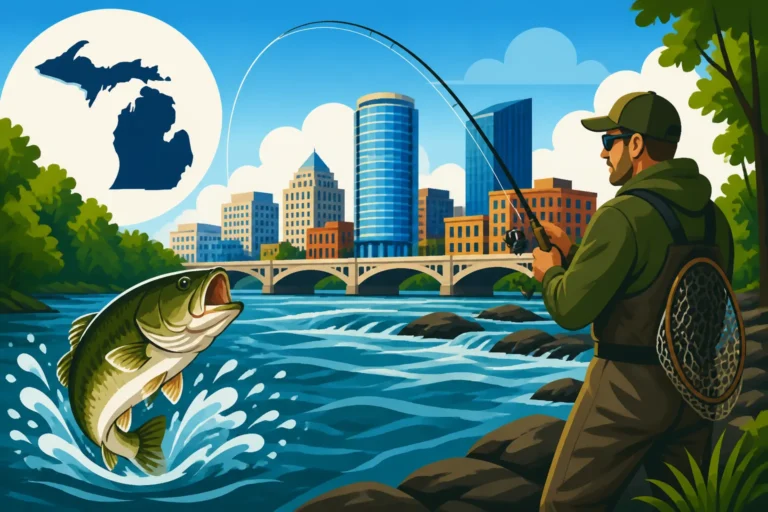
The stretch of the Grand River flowing through downtown Grand Rapids is incredibly unique. It's a vibrant urban fishery that attracts thousands of anglers, especially during the migratory runs.
The Fish Ladder Park is perhaps the most iconic spot. Designed by sculptor Joseph Kinnebrew, this artistic fish ladder allows salmon and steelhead to bypass the 6th Street Dam. Anglers line the banks and observation platforms during the fall salmon run, casting into the churning water below the dam or targeting fish as they navigate the ladder. It's a truly spectacular sight, even if you're not fishing, and provides phenomenal access right in the city. Just a bit further upstream, the 6th Street Dam itself is a major bottleneck for migratory fish. Below the dam, the currents are strong, and fish stack up, offering some of the best opportunities for boat and shore anglers alike. It's common to see anglers jigging, drifting spawn, or tossing spoons and crankbaits here. Be mindful of crowds, especially on weekends, and always check local regulations as specific rules might apply to fishing near the dam. The river walk and numerous bridges also offer excellent vantage points and access for shore anglers targeting smallmouth bass during the warmer months. These urban areas are well-known for their accessibility, but also for their fishing pressure. If you're planning a trip, consider exploring local guide services to help navigate the specifics, perhaps looking up options on FishingBooker for a guided trip.
Downstream Towards Lake Michigan
As the Grand River approaches Lake Michigan, the influence of the Great Lakes becomes undeniable. This is prime territory for large migratory species.
The Grand Haven channel and the river mouth are phenomenal hotspots, especially from late summer through fall. As salmon and steelhead push into the river, they stage in these deeper waters before making their upstream journey. Trolling, casting spoons, or drifting spawn are popular and effective methods here. Numerous piers jut into Lake Michigan at Grand Haven, offering fantastic opportunities for pier fishing for salmon, particularly during low light hours. Many charter boats operate out of Grand Haven, specializing in targeting Chinook and Coho salmon both in the river and out on Lake Michigan. These waters also hold good numbers of lake trout and brown trout that venture into the lower river. Remember to check the Michigan Great Lakes Fishing Regulations Guide, as rules can differ significantly from inland waters. The currents near the mouth can be very strong, so good gear and an understanding of the conditions are crucial for safety and success.
Upstream and Inland Sections
Beyond the hustle and bustle of Grand Rapids, the Grand River offers a more tranquil, yet equally rewarding, fishing experience. These upstream sections are often overlooked but hold a wealth of diverse species.
Near Lansing, the river still provides excellent fishing, particularly for smallmouth bass, northern pike, and various panfish. The river here is generally calmer, with more natural cover like fallen trees, rock piles, and submerged vegetation. Kayak and canoe anglers find these sections particularly appealing for their peaceful atmosphere and excellent float fishing opportunities. Several city and county parks offer public access points for shore fishing or launching small boats. Sections around Ionia and Portland, for instance, are known for strong smallmouth populations. Anglers often target these areas with spinnerbaits, soft plastic jigs, and topwater lures during the summer. While not typically known for the massive salmon and steelhead runs of the lower river, some migratory fish do make it this far upstream, especially smaller "skipper" steelhead in the spring. These areas are also great for those looking for a quiet day out, perhaps bringing the family to enjoy the Michigan Youth Fishing License Rules.
Species to Target and Best Techniques on the Grand River
The Grand River’s diverse ecosystem supports a wide range of fish, each with its own preferred habitat and feeding habits. Knowing what you’re after and how to catch it will greatly improve your success.
Salmon and Steelhead Runs
These powerful anadromous fish are the superstars of the Grand River, drawing anglers from across the Midwest. Their sheer size and fighting ability make them a prime target during their annual migrations.
- Chinook (King) and Coho Salmon: The fall is prime time for Chinook and Coho. As they enter the river from Lake Michigan, they're aggressively feeding before their spawning ritual. Popular techniques include skein fishing (drifting salmon egg sacs under a float), casting large spoons (like Daredevles or Little Cleos) or crankbaits (such as Rapalas or Storm Wiggle Warts), and back-trolling plugs from a boat in deeper channels. Many anglers also use fly fishing techniques for Michigan Steelhead and salmon, swinging large intruders or egg patterns. Once they move upstream and begin to stage below dams, they become more focused on spawning. This is where drift fishing with small egg imitations, single eggs, or beads (be sure to check if a bead is an artificial lure under Michigan trout rules) becomes incredibly effective. The sheer number of fish in the Grand Rapids urban core can be overwhelming, but patience and perseverance pay off.
- Steelhead (Rainbow Trout): Steelhead, which are essentially migratory rainbow trout, offer excellent fishing throughout the fall, winter, and spring. The Grand River sees two main runs: a fall run that follows the salmon, and a larger spring run when fish move up to spawn. For river steelhead, float fishing with spawn bags, beads, or jigs is incredibly popular and effective. This involves using a centerpin or spinning reel setup to drift your presentation naturally with the current. Many anglers also employ centerpinning for Michigan steelhead, a specialized technique that allows for incredibly long, natural drifts. Another effective method is drift fishing Michigan rivers for steelhead using bottom-bouncing rigs with spawn or worms. For those who prefer a more active approach, casting small spinners or spoons can also entice a bite. Steelhead are known for their acrobatic jumps and powerful runs, making them a thrilling catch.
Walleye, Smallmouth Bass, and Pike
Beyond the glamour of the salmon and steelhead, the Grand River offers fantastic opportunities for these popular resident game fish.
- Walleye: These delicious fish are present throughout the Grand River, though they are particularly sought after in the lower river and areas with deeper pools and current breaks. Spring and fall are peak times. Jigging techniques for Michigan walleye with soft plastics, traditional lead head jigs tipped with minnows, or blade baits is a go-to method. Many anglers also find success trolling crankbaits (like Berkley Flicker Shads or Rapala Shad Raps) along deeper contours or river channels, especially from a boat. Live bait, such as nightcrawlers or minnows on a slip-sinker rig, can also be very effective, especially during low light conditions or at night. If you're looking for the best bait for Michigan walleye, minnows and nightcrawlers are hard to beat.
- Smallmouth Bass: Pound for pound, smallmouth bass are one of the hardest fighting fish in the river. They thrive in the Grand River's rocky sections, current breaks, and areas with submerged timber. Summer is prime time for smallmouth. Casting techniques for smallmouth bass using crankbaits (smallmouth love diving crankbaits in crawfish patterns), spinnerbaits, tube jigs, and soft plastics (like senkos or creature baits) are highly effective. Topwater lures fished around cover during dawn and dusk can provide explosive strikes. Fly anglers also have a blast targeting smallmouth with poppers and streamers. The Michigan Smallmouth and Largemouth Bass Daily Limit applies to these fantastic fighters.
- Northern Pike: These toothy predators are prevalent in the slower, weedier sections and backwaters of the Grand River. They are ambush predators and will readily strike at large spinnerbaits, spoons, and topwater lures, particularly during the warmer months. Live bait, such as large shiners or suckers, fished under a bobber or on a quick-strike rig, can also be very effective. Look for them lurking near lily pads, submerged logs, and dense aquatic vegetation.
Panfish and Other Species
Don't overlook the abundance of panfish and other species that call the Grand River home. They offer fun, consistent action, especially for beginners or those seeking a more relaxed fishing experience.
Bluegill, crappie, and rock bass are plentiful in the calmer bays, oxbows, and slower stretches of the river, especially upstream of Grand Rapids. Light tackle, small jigs, worms, or crickets under a bobber are all you need for a day of panfish fun. Catfish, both channel and flathead, also inhabit the Grand River, particularly in the deeper, muddier sections. They are often targeted at night with smelly baits like cut bait, chicken livers, or prepared stink baits. These diverse opportunities make the Grand River a truly versatile fishery for any angler.
Practical Tips for a Successful Grand River Fishing Trip
A successful day on the Grand River involves more than just knowing where the fish are; it also means being prepared, understanding the local scene, and respecting the environment.
Access Points and Public Land
The Grand River, especially in its more populated sections, benefits from numerous public access points, though some can be crowded.
In Grand Rapids, beyond the famous Fish Ladder Park, various stretches of riverwalk and city parks provide shore access. For boat anglers, public launches are available in Grand Rapids (e.g., Riverside Park) and more frequently downstream towards Lake Michigan, including multiple launches in Grand Haven. Upstream, townships and cities like Lansing, Portland, and Ionia maintain parks with river access, sometimes offering kayak/canoe launches. Always look for designated parking and access points, and be respectful of private property. Websites like the Michigan DNR's interactive map are excellent resources for locating boat launches and public fishing areas. Remember that even if you're fishing from a boat, you still need to adhere to the Michigan Fishing License Guide for Residents and Nonresidents.
Safety and Regulations
The Grand River, particularly in its wider and faster sections, demands respect. Currents can be strong, especially near dams and during high water events.
- Wear a life jacket: This is non-negotiable, especially for boaters, kayakers, and waders in swift current.
- Be aware of wading conditions: River bottoms can be slippery and uneven. Good wading boots with felt or stud soles, along with a wading staff, are highly recommended. If you're planning on doing a lot of wading, investing in the best waders for river fishing will pay dividends.
- Check water levels and flows: Heavy rains can drastically change river conditions, making some areas unsafe to wade or navigate.
- Know the regulations: Michigan fishing regulations every angler should know are annually updated, so always consult the latest Michigan Fishing Regulations Digest PDF. Pay close attention to special regulations for specific stretches of the Grand River, including bag limits, size limits, and tackle restrictions. For instance, the Michigan Walleye Size and Possession Limits might have exceptions in certain zones.
Charter and Guide Services
For those new to the Grand River or looking to maximize their time on the water, hiring a local fishing guide can be an invaluable investment. These professionals have years of experience, intimately know the river's nuances, and understand current fish movements and effective techniques.
A guide can provide all the necessary gear, teach you specialized techniques like float fishing or jigging for walleye, and take you directly to productive spots that might be difficult for an unfamiliar angler to find. This is especially true during the intense salmon and steelhead runs where specific drifts and presentations are key. You can easily find reputable Grand River fishing guides by searching online or using platforms like FishingBooker, which connects anglers with experienced local captains. Even just a half-day trip can provide a wealth of knowledge that will benefit your future endeavors on the river. Plus, it’s a fantastic way to learn without having to invest in all the specialized gear upfront.
Grand River Fishing Hotspots at a Glance
Here’s a quick overview of some of the prime locations and what you can expect:
| Location | Primary Species | Best Season | Key Techniques | Notes |
|---|---|---|---|---|
| Fish Ladder Park | Salmon, Steelhead, Smallmouth Bass | Fall (Salmon), Spring (Steelhead), Summer (Smallmouth) | Drift fishing, Spoon/Crankbait casting, Jigging | Urban access, can be crowded |
| 6th Street Dam (below) | Salmon, Steelhead, Walleye | Fall, Spring, Winter | Float fishing, Jigging, Drifting Spawn | Strong currents, boat & shore access |
| Grand Haven Channel/Mouth | Salmon, Steelhead, Lake Trout, Walleye | Late Summer, Fall, Spring | Trolling, Pier fishing, Casting Spoons | Great Lakes influence, charter hub |
| Upstream (Lansing area) | Smallmouth Bass, Northern Pike, Panfish | Summer, Spring, Fall | Casting artificials, Live bait, Fly fishing | Quieter, more natural river feel |
| Rogue River Confluence | Steelhead, Brown Trout | Spring, Fall, Winter | Fly fishing, Float fishing | Tributary, excellent for trout/steelhead |
This table provides a snapshot, but remember that fish are constantly moving, and conditions change. Always be prepared to adapt!
Disclaimer
Please note: Fishing regulations, seasons, and access points can change. Always consult the latest Michigan Department of Natural Resources (DNR) regulations before heading out on the water. This guide is for informational purposes only and does not constitute legal advice. Adhere to all local, state, and federal laws.