Grand Traverse Bay Salmon Fishing
Navigating the expansive waters of Grand Traverse Bay to find those elusive salmon can feel overwhelming, especially with its unique geography and ever-changing conditions. Many anglers, even seasoned ones, struggle to pinpoint the best spots or techniques to consistently hook into these powerful fish. This comprehensive guide is here to demystify Grand Traverse Bay salmon fishing, offering you insider tips on where, when, and how to maximize your chances for a successful and memorable trip.
Understanding Grand Traverse Bay's Unique Salmon Fishery
Grand Traverse Bay isn't just another pretty Michigan lake; it's a deep, cold, and incredibly diverse fishery that holds some magnificent salmon and trout. Its distinct characteristics play a huge role in where fish gather and how you should approach your angling adventure.
The Bay's Geography and Depth
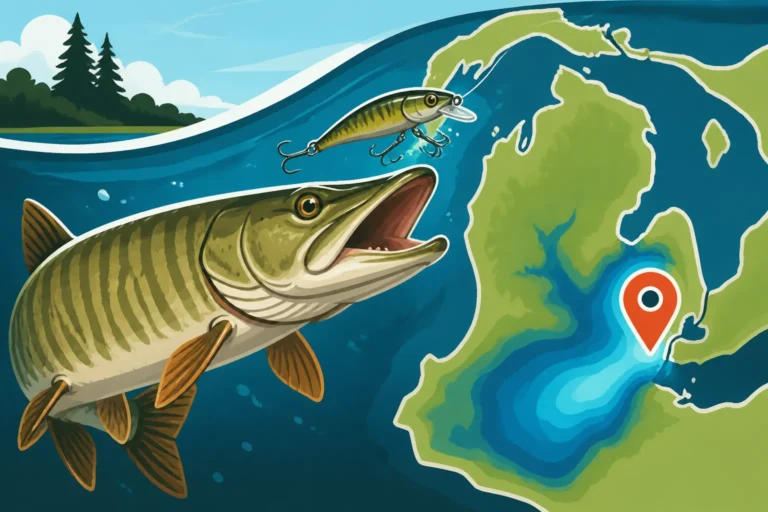
Imagine a giant "V" shape cutting into the Lower Peninsula—that's Grand Traverse Bay, split into the East and West Arms by the Old Mission Peninsula. Both arms plunge to impressive depths, with the West Arm reaching over 600 feet and the East Arm close to 400 feet. This deep, cold water is absolutely crucial for salmon, especially during the warmer summer months. Unlike many shallower inland lakes, the bay provides a consistent cold-water refuge that salmon and lake trout need to thrive. These depths also mean that fish can suspend at various levels, following baitfish schools, which makes locating them a bit of a challenge but also incredibly rewarding once you crack the code. The sheer size of the bay, roughly 32 miles long and 10 miles wide at its mouth, also means you'll rarely feel crowded, even on busy weekends.
Salmon Species You'll Find Here
While many people specifically think of salmon, Grand Traverse Bay is really a multi-species coldwater fishery. You'll primarily be targeting Chinook (King) salmon and Coho (Silver) salmon, often alongside abundant Lake Trout.
- Chinook Salmon: These are the kings of the Great Lakes, known for their incredible size and fierce fighting ability. They are the most sought-after salmon species in the bay, growing large and putting up an epic battle. You'll find them scattered throughout the deeper parts of the bay for much of the open water season, moving closer to tributary mouths as their spawning season approaches in late summer and fall. To learn more about these powerful fish, check out our guide on Chinook Salmon in Michigan's Great Lakes.
- Coho Salmon: While typically smaller than Chinooks, Coho salmon are renowned for their acrobatic jumps and spirited fights. They are often found in the upper water column and provide excellent action, especially in the spring and early summer. If you’re interested in targeting these silver bullets, our article on Coho Salmon Fishing in Michigan offers fantastic tips.
- Lake Trout: These native Great Lakes residents are almost always a welcome bycatch when targeting salmon in Grand Traverse Bay. They thrive in the cold, deep waters and can grow to impressive sizes. Often, the same techniques and depths used for salmon will put you on schools of lake trout, adding another exciting dimension to your trip.
Understanding these key species and their preferences is your first step to a successful outing on Grand Traverse Bay.
Best Times and Seasons for Grand Traverse Bay Salmon Fishing
Timing is everything when it comes to salmon fishing, and Grand Traverse Bay is no exception. While salmon are present year-round, certain seasons offer distinct advantages and target species. Knowing when to hit the water can make all the difference.
Spring and Early Summer Opportunities
As the ice retreats and the waters begin to warm slightly in spring, usually from April through June, Grand Traverse Bay becomes a fantastic spot for early-season salmon and trout. During this time, the surface waters are still cool enough, and baitfish like alewives are often congregating in shallower areas before dispersing into deeper waters. This means that both Coho salmon and smaller, "feeder" Chinook salmon can be found relatively high in the water column, often within the top 50 feet.
Anglers often focus their efforts closer to shorelines or near the mouths of rivers where spring run-off might attract fish. This is a great time for fast action, as the fish are hungry and aggressive after the long winter. Light trolling setups, using smaller spoons and plugs, are particularly effective. If you're planning your spring fishing adventure, our guide on Michigan's Spring Fishing Season Guide can provide even more valuable insights into this exciting time of year.
Peak Summer Action and Fall Runs
The summer months, particularly July and August, are prime time for targeting the bigger Chinook salmon in Grand Traverse Bay. As the surface waters warm, these larger fish retreat to the cooler, deeper parts of the bay, often suspending over depths of 100 feet or more, but holding at various levels between 40 and 100 feet down, depending on baitfish and thermocline. This is when the serious trolling gear comes out, with downriggers and planer boards being essential to present lures at precise depths.
By late August and into September and October, the focus shifts to the dramatic fall salmon runs. The mature Chinook and Coho salmon begin their migration towards the rivers where they were stocked to begin their spawning journey. This period, leading up to and during the actual river runs, offers some of the most intense and rewarding fishing. Salmon will stage near river mouths, like the Boardman River, before making their push upstream. This is a thrilling time for anglers, as these fish are at their largest and most powerful. For an in-depth look at this incredible phenomenon, be sure to read our guide on Michigan's Fall Salmon Run Fishing.
Here's a quick overview of the best times to target different species:
| Species | Best Season | Primary Location | Common Depths |
|---|---|---|---|
| Coho Salmon | Spring, Early Summer | Upper water column | 15-50 feet |
| Chinook Salmon | Summer, Fall | Deep water, near river mouths | 40-100+ feet |
| Lake Trout | Year-round | Deep water, near bottom | 80-200+ feet |
Top Techniques and Gear for Success
Fishing Grand Traverse Bay effectively means adapting your techniques and having the right equipment for deep, open water and powerful fish. Forget the bobber and worm for these beauties; we're talking about serious setups.
Trolling Strategies and Lure Selection
Trolling is undeniably the most effective method for salmon fishing in Grand Traverse Bay. It allows you to cover vast amounts of water and present multiple lures at varying depths, mimicking schooling baitfish.
- Downriggers: These are indispensable for consistently getting your lures down to the precise depths where salmon are holding. You'll often run multiple downriggers off the back of the boat, stacking lines at different depths to find the active fish.
- Dipsy Divers and Lead Core: These devices help take lures down without the need for a cannonball weight, allowing you to cover more horizontal ground away from the boat's prop wash. Dipsy divers dive when pulled, and lead core line sinks due to its lead center.
- Planer Boards: For spreading out your lines and covering an even wider swath of water, planer boards are a game-changer. These keep your lures far to the sides of the boat, presenting them to fish that might be spooked by the boat's presence. Our article on Trolling for Chinook Salmon on Lake Michigan offers excellent strategies that apply directly to Grand Traverse Bay. For Coho, you might want to delve into Trolling for Coho Salmon on the Great Lakes.
When it comes to lures, spoons are a perennial favorite. Brands like Dreamweaver, Michigan Stinger, and Warrior Lures are popular choices. Experiment with various sizes and colors, paying attention to what the baitfish are doing and the water clarity. Flashers and flies are another deadly combination, especially for Chinook salmon. Plugs, particularly in the fall, can also be highly effective. A good charter captain, easily found on platforms like FishingBooker, will have a vast array of tackle and the experience to know what's working on any given day.
Essential Gear for Great Lakes Salmon
Beyond the boat and the trolling gear, having the right rods, reels, and electronics can significantly improve your chances.
- Rods and Reels: You'll want sturdy, medium-heavy action trolling rods, typically 8 to 10 feet long, paired with robust baitcasting reels spooled with 20-30 lb monofilament or braided line. The longer rods help absorb the shock of a strike and spread out lines more effectively. If you're keen to upgrade your setup, our guide on Best Rods and Reels for Michigan Fishing provides detailed recommendations.
- Line Weight: For mainline, 20-30 pound test monofilament is common for its stretch and shock absorption, especially with aggressive salmon strikes. Some anglers prefer braided line for its sensitivity and strength, often using a fluorocarbon leader for stealth.
- Electronics: A reliable fish finder (sonar) is absolutely critical for locating baitfish schools, marking salmon, and identifying the thermocline. GPS navigation is equally important for marking productive spots, tracking trolling paths, and safely navigating the bay, especially in low light or fog. Radar can also be a valuable safety tool, particularly on larger boats venturing further out.
Remember, salmon fishing on the Great Lakes involves specialized gear. If you're just starting out or only plan a few trips a year, considering a charter service found on sites like FishingBooker might be a more cost-effective way to experience this exciting fishery without the upfront investment in equipment.
Access Points and Charter Fishing Options
Getting on the water in Grand Traverse Bay is relatively straightforward, whether you're bringing your own boat or opting for a guided experience. Knowing your options will help you plan your trip seamlessly.
Public Boat Launches and Shore Fishing Spots
Grand Traverse Bay offers numerous public boat launches that provide excellent access to both the East and West Arms.
- Traverse City: The Traverse City State Park boat launch, located right on the East Bay, is a popular choice, offering ample parking and multiple ramps. For access to the West Bay, public launches like the Elmwood Township Marina are conveniently located. These urban launches put you right into the heart of the action.
- Elk Rapids: On the East Arm, the Elk Rapids Harbor Marina provides access to the northern parts of the East Bay, often a great starting point for those looking to fish away from the immediate city bustle.
- Northport: For those looking to explore the very northern reaches of the West Bay, the Northport Harbor offers excellent facilities.
Shore fishing opportunities for salmon in Grand Traverse Bay are somewhat limited due to the deep, steep drop-offs along much of the shoreline. However, during the fall salmon runs, piers and harbor areas, especially around Traverse City, can offer a chance to catch salmon staging before they enter rivers. The mouth of the Boardman River, for instance, attracts many anglers during this time. For more general tips on pier fishing, even though it focuses on Lake Michigan, our guide on Best Lake Michigan Fishing Piers and Harbors can offer some relevant strategies. While challenging, catching a big King salmon from shore during the run is an experience you won't soon forget!
Hiring a Fishing Charter
For many, especially those new to Great Lakes salmon fishing or visiting from out of state, hiring a fishing charter is hands down the best way to experience Grand Traverse Bay's salmon fishery.
- Expert Knowledge: Charter captains are on the water almost daily and possess an intimate knowledge of where the fish are, what they're biting on, and the ever-changing conditions of the bay. They know the depths, the thermoclines, and the seasonal patterns better than anyone.
- All Gear Provided: A huge advantage of a charter is that all the specialized trolling gear, rods, reels, and tackle are provided. This saves you the significant expense and hassle of acquiring and maintaining your own high-end equipment. Plus, they'll have the right lures for the day. Our guide, Do Charter Boats Provide Gear in Michigan?, can give you a clear picture of what to expect.
- Safety and Convenience: Charter boats are equipped with all necessary safety gear and are operated by licensed professionals. You can relax and focus on fishing while the captain handles navigation, boat operation, and finding the fish.
Finding a reputable charter is easier than ever. Websites like FishingBooker allow you to browse numerous local captains, read reviews, compare prices, and book your trip with confidence. Many excellent captains operate out of Traverse City and Elk Rapids, ready to put you on the fish. Booking through a trusted platform ensures a professional and enjoyable experience, making your Grand Traverse Bay salmon fishing dream a reality.
Disclaimer
Fishing laws and regulations, including license requirements, bag limits, and size restrictions, are subject to change. Always consult the latest Michigan Department of Natural Resources (DNR) fishing guide or website before heading out on the water. This article is intended for informational purposes only and does not constitute legal advice.