Where to Troll for Chinook Salmon on Lake Michigan
The excitement of hooking into a powerful Chinook salmon on Lake Michigan is a feeling unmatched, but knowing where to even begin your trolling adventure can feel like trying to find a needle in an impossibly vast haystack. It's frustrating to spend hours on the water, burning fuel, without a single strike, when you know these magnificent fish are out there. This comprehensive guide will pull back the curtain on the prime trolling locations for Chinook salmon across Lake Michigan, breaking down the strategies by season and specific geographic areas to help you target these kings of the Great Lakes effectively.
Understanding Chinook Salmon Movement on Lake Michigan
Chinook salmon, often affectionately called "Kings" by anglers, are truly the apex predators of Lake Michigan. Their movements are largely dictated by water temperature, the location of their primary food source—alewives—and their lifecycle, particularly the pre-spawn staging. If you want to consistently find success trolling for them, you need to understand these factors and how they shift throughout the year. It's not just about picking a spot; it's about understanding why they're there.
The Influence of Water Temperature and Thermocline
Chinook salmon are cold-water fish, generally preferring water temperatures ranging from the mid-40s to the low 50s Fahrenheit. On a massive body of water like Lake Michigan, these temperatures aren't static; they change constantly with the seasons and even daily weather patterns. In the spring, after the ice recedes, the entire water column is relatively cold, and salmon can be found shallower. As summer progresses, the sun heats the surface, forming a distinct layer called the thermocline. This is a crucial transition zone where warmer surface water meets colder deep water, and it's often where the baitfish, and consequently the salmon, will congregate. The depth of this thermocline can vary significantly, from 30 feet down to 80 feet or more, and it's vital for anglers to locate it using their sonar. A good fish finder isn't just for seeing fish; it's for seeing the water conditions where the fish will be.
Following the Alewife Migration
The primary forage for Chinook salmon in Lake Michigan is the alewife. These small, silvery baitfish move throughout the lake in large schools, often driven by their own search for comfortable water temperatures and plankton. When you're out on the water, your sonar isn't just looking for big arcs that indicate salmon; it's also scanning for dense clouds or streaks that signify baitfish schools. Find the bait, and you're much closer to finding the Kings. If you're not seeing any signs of bait, it's often a good indication that you need to adjust your depth, move to a different area, or even change your trolling pattern. Savvy anglers constantly monitor their electronics, looking for the tell-tale signs of life beneath the surface.
Pre-Spawn Staging and River Mouth Concentrations
As late summer transitions into early fall, a dramatic shift occurs in Chinook behavior. Driven by their reproductive instincts, mature salmon begin their migration towards the rivers where they were stocked or naturally reproduced. This period, known as the pre-spawn staging, sees salmon congregating near river mouths and harbor entrances, preparing to run upstream. During this time, they become incredibly aggressive, feeding heavily to build energy for the strenuous journey ahead. Trolling in these staging areas can be incredibly productive, often in shallower water than during the peak summer months. It's a different game entirely, requiring adjustments in lure choice and trolling speed as the fish are focused on a different mission. You'll find that knowledge about Michigan Fishing Season Dates and Rules becomes particularly important during this critical period.
Key Trolling Locations Across Lake Michigan
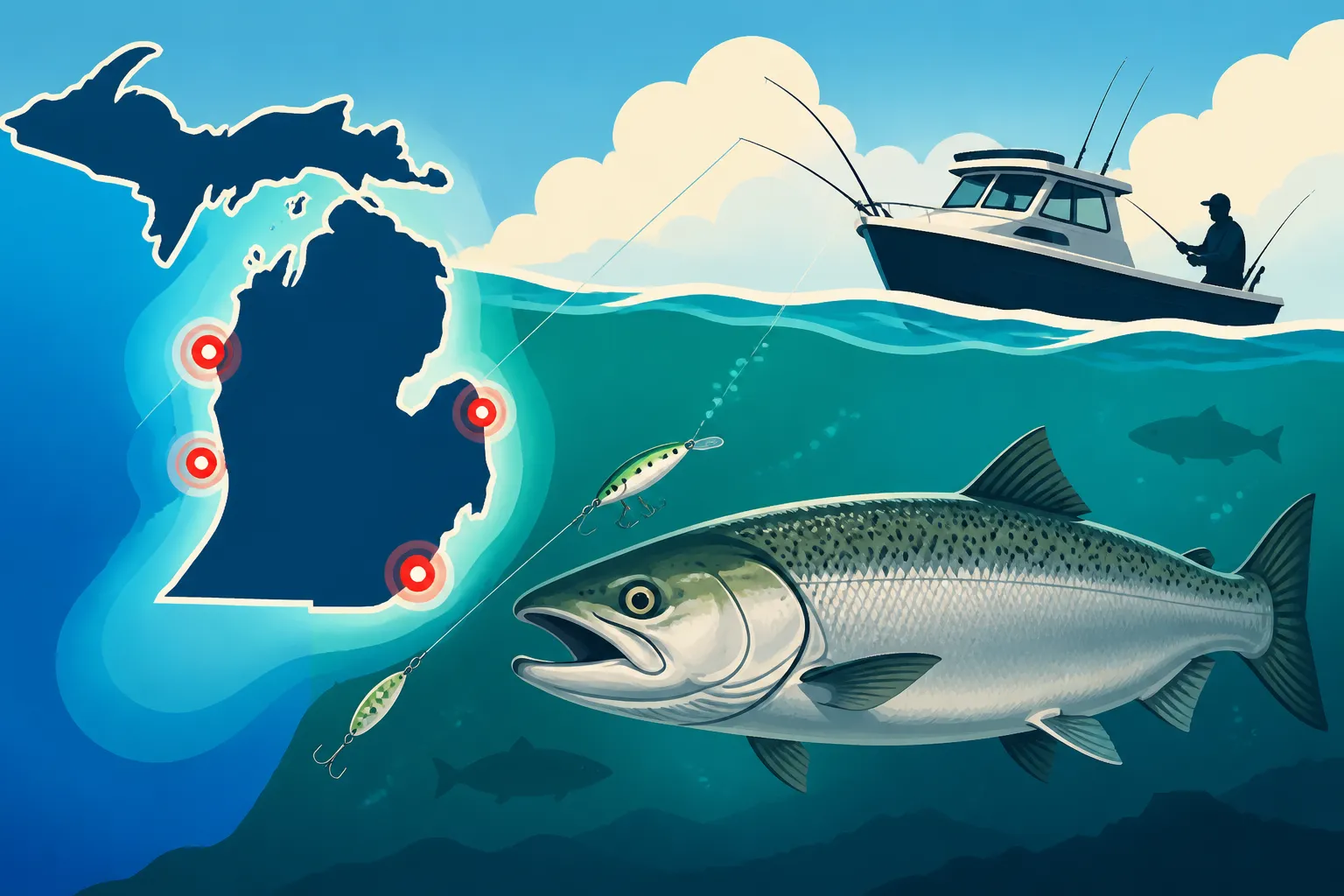
Lake Michigan is an expansive body of water, offering incredible Chinook salmon fishing opportunities from its southern reaches all the way up to the Straits of Mackinac. While salmon can be caught almost anywhere along the Michigan coastline, certain ports and their surrounding waters consistently stand out as prime trolling grounds due to their deep-water access, consistent baitfish presence, and proximity to major river systems. Understanding these regional hotspots can significantly improve your chances of success.
Southern Lake Michigan Hotspots
The southern part of Lake Michigan, particularly from the state line up through the Grand Haven area, offers fantastic early-season action and can hold fish throughout the summer. Ports like St. Joseph, South Haven, Saugatuck, and Holland are popular launch points.
- St. Joseph/Benton Harbor: This area is well-known for its early spring Chinook fishing. As the water warms slightly near shore, salmon move in to feed on baitfish. Anglers often find success trolling in 30-60 feet of water, especially near the St. Joseph River mouth. Later in the summer, heading out to deeper waters, often 80-150 feet down over 150-300 feet of water, becomes the norm as the thermocline sets up. The St. Joseph River itself becomes a major draw during the fall run.
- Holland/Grand Haven: These central Lake Michigan ports are incredibly popular. Early spring can see good action within a few miles of shore, sometimes as shallow as 20 feet if bait is present. As summer progresses, the action moves offshore, with boats often traveling 5-15 miles out to target Kings in 80-160 feet of water, often over much deeper depths. Structure like the "shelf" areas and sudden depth changes can concentrate fish. For those looking to hire local expertise, platforms like FishingBooker can connect you with experienced charters operating out of Grand Haven.
Central Lake Michigan Legends
Moving north, the central Michigan coast is legendary for its Chinook fishery, with iconic ports that are synonymous with big Kings. Manistee and Ludington are often cited as some of the best fishing towns in Michigan for a weekend trip.
- Muskegon: While known for its incredible walleye and perch fishing in the bay, offshore Muskegon offers fantastic Chinook opportunities. Similar to Grand Haven, early season can be nearshore, but mid-summer sees boats making significant runs offshore. The transition areas where the Muskegon River empties into Lake Michigan are key during the fall run.
- Ludington: Often considered one of the top ports on Lake Michigan for salmon. Ludington benefits from deep-water access very close to shore and the influence of the Pere Marquette River. Early in the season, action can be found north and south of the harbor in 40-80 feet of water. Peak summer trolling often involves working depths of 90-180 feet, following the thermocline. The "Ludington Pumped Storage Plant" discharge often creates temperature breaks that concentrate fish. Learning How to Set Up Downriggers for Salmon Trolling is essential for effectively fishing these depths.
- Manistee: Just north of Ludington, Manistee is another world-class Chinook fishery. The Manistee River is one of Michigan's premier salmon rivers, and the staging grounds outside its mouth are phenomenal in late summer and early fall. During the summer, offshore trolling, often targeting depths of 100-200 feet over 300+ feet of water, is highly productive. Anglers often work "the shelf" or other significant underwater structures. Many charter operations in Manistee specialize in targeting these offshore Kings, and a quick search on FishingBooker can help you find a reputable guide.
Northern Lake Michigan Gems
The northern reaches of Lake Michigan, while requiring a bit more travel for some, offer truly spectacular and often less pressured fishing, especially as the summer heats up.
- Frankfort/Platte Bay: This area, with its stunning Sleeping Bear Dunes backdrop, offers excellent Chinook fishing, particularly from late spring through early fall. The deep waters of Platte Bay and surrounding areas hold abundant baitfish. Trolling in 60-120 feet of water is common in summer, with fish often suspended within the thermocline. The Platte River, a major salmon nursery, attracts large numbers of Kings during their migratory phase.
- Leland/Traverse City Area (Grand Traverse Bay): While Grand Traverse Bay itself is known more for lake trout and smallmouth bass, the waters just outside the bay, particularly around Leland and the Manitou Islands, offer good Chinook trolling. These areas can be fantastic in mid-to-late summer when other areas might be slowing down due to warmer inshore temperatures. Deep water is easily accessible, and offshore trolling in 100-250 feet of water is standard.
- Charlevoix/Petoskey: Further north, these ports provide excellent access to deep, cold water that consistently holds Chinook, even into September. The deep troughs and unique underwater topography around Beaver Island and other northern islands can concentrate bait and Kings. These areas are particularly productive later in the season as the cold water retreats north.
Seasonal Strategies for Trolling Chinook Salmon
The key to successful Chinook salmon trolling on Lake Michigan isn't just knowing where to go, but when to go and how your strategy needs to adapt to the changing seasons. The behavior of salmon, their preferred depths, and even their feeding patterns will shift dramatically from spring to fall. Understanding these nuances is crucial for any angler hoping to consistently put Kings in the boat. This is especially true when considering the Best Months for Salmon Fishing in Michigan.
Spring Fishing: Nearshore and Cooler Waters
As winter's grip loosens and the ice melts, the earliest Chinook action usually kicks off in late April and May in the southern parts of the lake. During this time, the entire water column is relatively cold, and salmon tend to be found in shallower, warming waters closer to shore, particularly near river mouths where they might be feeding on early baitfish or residual nutrients.
- Depths: Anglers often find success trolling in 20-60 feet of water, often within a mile or two of the shoreline. The goal is to find pockets of slightly warmer water where baitfish like alewives are congregating.
- Tactics: Since the water is often stained from spring runoff, brighter colors like chartreuse, orange, and even black-and-silver spoons can be highly effective. Flat lining, in-line planer boards, and shallow-set dipsy divers are excellent tools for covering this shallower water column. Speed is also important; slightly slower trolling speeds, around 2.0-2.5 mph, can be productive when fish are less active in colder water. This is also a time when you might encounter other species, so be familiar with Michigan's Combined Trout and Salmon Possession Limit.
- Ports: St. Joseph, South Haven, Holland, and Grand Haven are usually the first to heat up in the spring.
Summer Fishing: Offshore and Thermocline Tactics
By June and through August, Lake Michigan settles into its classic summer pattern. The surface waters warm considerably, forming a distinct thermocline, and the Chinook move offshore, following the cooler water and vast schools of alewives. This is when the deep-water trolling really comes into its own, and anglers often make long runs to find the fish.
- Depths: This is where your sonar becomes your best friend. The target depth for your lures will generally be within, just above, or just below the thermocline, which can range from 40 feet down to over 80 feet, often over water that is hundreds of feet deep. Anglers will often stack lines at various depths to find the productive zone. Using downriggers is absolutely critical for presenting lures at precise depths in the thermocline.
- Tactics: A full spread of gear is typically deployed, including multiple downriggers, dipsy divers, lead core, and copper lines, all run off of large planer boards to maximize coverage. Spoons in natural baitfish patterns (blue/silver, green/silver, black/silver) are popular, as are flies behind flashers or dodgers. Trolling speeds often increase to 2.5-3.0 mph to trigger reaction strikes.
- Ports: Ludington, Manistee, Frankfort, and even the northern ports like Charlevoix and Petoskey really shine during the summer months for consistent offshore action. Many anglers rely on charter services found through platforms like FishingBooker to experience this deep-water fishing.
Fall Fishing: River Mouths and Pre-Spawn Aggression
As late August rolls into September, the mature Chinook begin their final migration toward their natal rivers for spawning. This is the pre-spawn staging phase, and it brings a unique, often exhilarating, type of fishing.
- Depths: Fish move back towards shore, congregating near river mouths and harbor entrances. Trolling depths can vary widely, from shallow 15-foot flats to 60-foot deep channels, depending on the specific staging area. The fish are less concerned with the thermocline and more focused on the river entrance.
- Tactics: The Kings are aggressive and often strike out of territoriality or instinct. Large spoons in vibrant colors (chartreuse, orange, fire tiger), J-Plugs, or even large stick baits can be incredibly effective. Trolling speeds can range from slow (1.5 mph) to moderate (2.5 mph). Some anglers will even abandon trolling for casting techniques closer to river mouths. Be mindful of special regulations around river mouths during the spawning season.
- Ports: River cities like Manistee (Manistee River), Ludington (Pere Marquette River), St. Joseph (St. Joseph River), and Frankfort (Platte River) become focal points. This is prime time for the Fall Steelhead Run in Michigan Rivers as well, making for diverse fishing opportunities.
Here's a quick reference table for seasonal trolling strategies:
| Season | Primary Location Focus | Typical Trolling Depths | Effective Lure Colors | Key Tactics |
|---|---|---|---|---|
| Spring | Nearshore, River Mouths | 20-60 feet | Chartreuse, Orange, Black/Silver | Flat lines, In-line boards, Shallow dipsy, Slower speed |
| Summer | Offshore, Thermocline | 40-100+ feet (over deep water) | Natural baitfish, Blue/Silver, Green/Silver | Downriggers, Dipsy divers, Lead core, Copper, Planer boards, Faster speed |
| Fall | River Mouths, Staging Areas | 15-60 feet | Chartreuse, Orange, J-Plugs, Stick baits | Aggressive trolling, sometimes casting, variable speed |
Essential Gear and Techniques for Lake Michigan Chinook Trolling
Trolling for Chinook salmon on Lake Michigan is an art form that blends technology, precise gear selection, and a deep understanding of fish behavior. It's not just about dragging a lure behind the boat; it's about creating a complex spread that mimics a school of baitfish and entices these powerful predators. Getting your gear right is half the battle when chasing these magnificent fish. If you're new to the game, consider reading up on Best Boat for Lake Michigan Salmon Trolling.
The Importance of a Diverse Trolling Spread
A successful trolling spread for Chinook salmon usually involves presenting multiple lures at varying depths and distances from the boat. This maximizes your chances of intercepting fish that might be scattered or holding at different levels in the water column. Think of your boat as the central point of a fan, with lines radiating out and down.
- Downriggers: These are indispensable for precise depth control. They allow you to get heavy weights down to your desired depth and then release your fishing line so your lure swims freely at that exact depth. Most serious salmon anglers run at least two, often four or more, downriggers to cover different sections of the thermocline. Knowing How to Set Up Downriggers for Salmon Trolling properly is a game-changer.
- Dipsy Divers (Directional Planers): These round, disc-like devices dive and pull your line away from the boat, creating width in your spread. By adjusting their weight and angle, you can control both their depth and how far they track out to the side. They’re excellent for covering the upper and mid-water column outside of your boat's wake.
- Lead Core and Copper Line: These specialized lines are designed to sink on their own, with specific lengths of line equating to approximate depths at a given trolling speed. Lead core changes color every 10 yards, helping you gauge how much line is out. Copper line is much thinner but heavier, allowing it to reach greater depths with less line out. Both are crucial for covering various depths without the need for additional diving devices.
- Planer Boards: Large, offshore planer boards (like those from Church Tackle or Offshore Tackle) pull multiple lines out to the sides of your boat, expanding your trolling spread dramatically. This helps cover more water and gets lures into undisturbed water away from the boat's motor noise. Smaller, in-line planer boards can also be effective, especially in shallower water or when targeting fish closer to the boat.
Lure Selection and Presentation
Chinook salmon are aggressive, but they can also be finicky. Having a variety of lures and understanding how to present them is key.
- Spoons: Metal trolling spoons are arguably the most popular and versatile lures for Chinook. Brands like Dreamweaver, Warrior, and Michigan Stinger make a wide array of sizes and colors. Magnum spoons are popular for bigger Kings, while standard sizes work well across the board. Color choice can be critical; generally, natural baitfish patterns (blue/silver, green/silver, black/silver) excel in clear water, while brighter colors (chartreuse, orange, fire tiger) can be deadly in stained water or on overcast days.
- Flasher/Dodger Combos with Flies: Flashers and dodgers are not lures themselves but attractors. They create flash, vibration, and erratic movement that mimics a struggling baitfish, drawing salmon in. Behind these attractors, a single-hook fly (often tied with Mylar and synthetic fibers) is deployed. These combinations are incredibly effective, particularly during summer.
- J-Plugs: These hard-bodied, diving lures have an erratic, wounded-baitfish action that can trigger ferocious strikes, especially from aggressive pre-spawn Kings. They are often fished near river mouths in the fall.
- Cut Bait: While less common for recreational trollers, some anglers swear by cut bait (like herring or alewife fillets) fished behind a dodger or flasher. The natural scent can be a major attractor, particularly when fish are less active.
Remember to keep your hooks razor-sharp and regularly check your leaders for nicks and abrasions. How Big Do Chinook Salmon Get in the Great Lakes can give you an idea of the size and strength of fish you'll be targeting, underscoring the need for robust tackle.
Navigational and Electronic Tools
Modern electronics have revolutionized Great Lakes salmon fishing.
- GPS and Chartplotter: Essential for navigation, marking productive waypoints (where you caught fish), and following precise contour lines or trolling paths. Many units include detailed lake charts.
- Fish Finder (Sonar): Beyond just finding fish, your sonar helps you locate the thermocline, identify baitfish schools, and spot underwater structure that might hold fish. A good, powerful unit with side-imaging or down-imaging can give you a comprehensive view of the underwater world.
- Autopilot: While not strictly essential, an autopilot system can maintain a consistent trolling speed and direction, freeing you up to manage lines and net fish. Consistency in speed and direction is paramount for an effective trolling presentation.
Always consult the official Michigan Fishing Regulations Every Angler Should Know, and make sure your Michigan Fishing License Guide for Residents and Nonresidents is up to date before heading out on the water.
Disclaimer
Please remember that fishing conditions, regulations, and fish behavior can change rapidly. Always check the latest Michigan Department of Natural Resources (DNR) regulations before heading out. Fishing involves inherent risks, and it is crucial to prioritize safety on the water, including wearing appropriate personal flotation devices and checking weather forecasts. This guide is for informational purposes only and does not guarantee fishing success.