Michigan’s One Muskellunge Per Year Rule
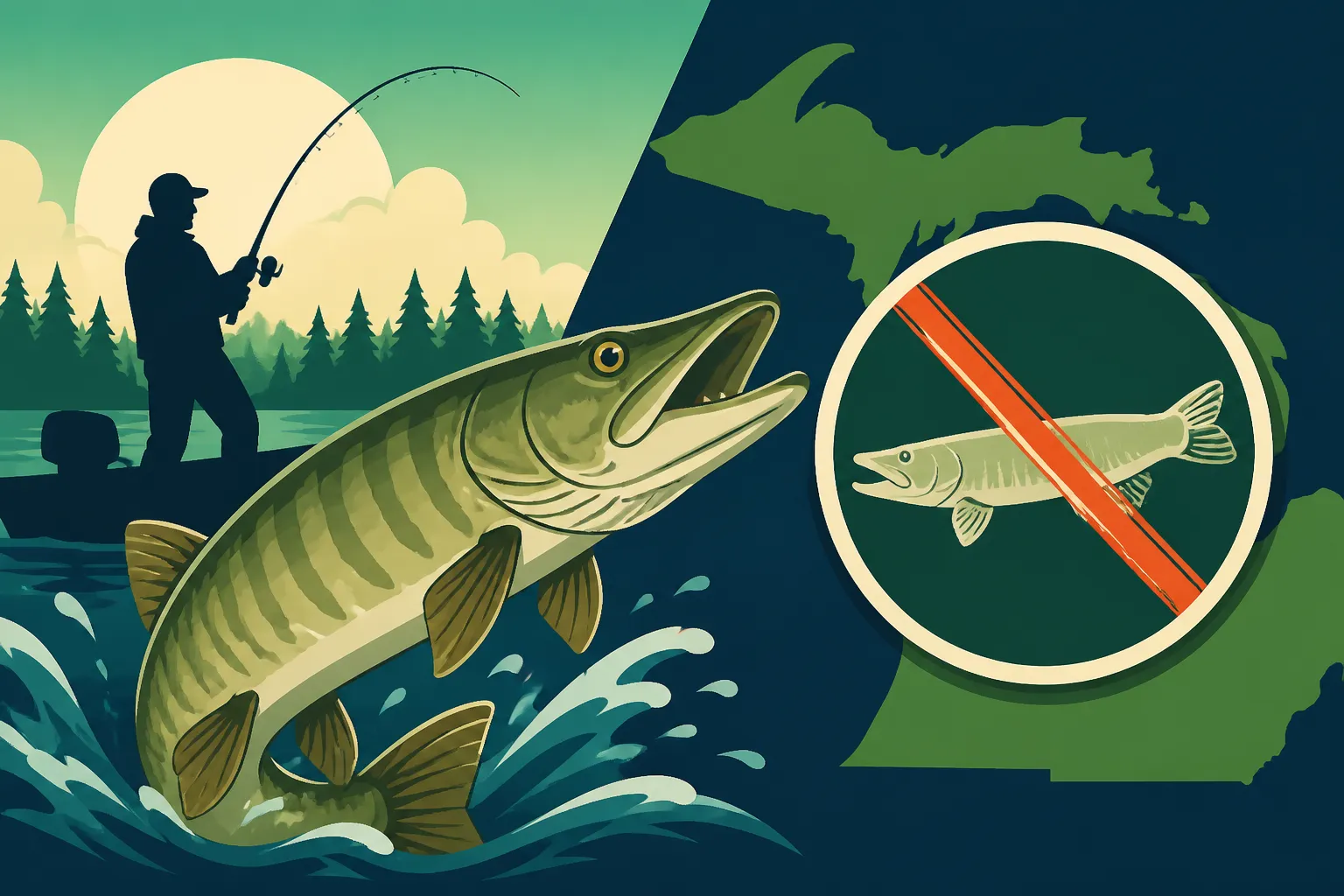
It can be incredibly frustrating to hit the water, finally land that dream fish, and then realize you’re not entirely sure about the rules surrounding keeping it. Especially when it comes to a majestic species like the muskellunge in Michigan, the regulations are precise, and misunderstanding them can turn a triumphant moment into a confusing one. This guide will walk you through Michigan’s critical "one muskellunge per year" rule, shedding light on why it exists, what it means for your fishing adventures, and how to navigate it responsibly to protect this incredible fishery for generations to come.
Understanding Michigan's Muskellunge Harvest Rule
Michigan’s fisheries are a precious resource, and managing them requires careful thought, especially for species like the muskellunge that are both highly sought after and vulnerable due to their slow growth and apex predator status. The "one muskellunge per year" rule is a cornerstone of this conservation effort, designed to sustain healthy populations while still allowing anglers the thrill of a lifetime catch.
The Annual Harvest Limit Explained
When the Michigan Department of Natural Resources (DNR) states "one muskellunge per year," they mean exactly that: you are permitted to harvest and possess one single muskellunge during the specified fishing license year. This isn't one per calendar year, but rather one during the period your fishing license is valid, which typically runs from April 1st through March 31st of the following year. So, if you manage to land a legal-sized muskie and decide to keep it in October, you cannot harvest another one until the next license year begins in April.
This strict limit might seem tough, especially for dedicated muskie anglers who spend countless hours chasing these elusive fish. However, it’s rooted in biological necessity. Muskellunge are long-lived, slow-growing fish. It takes many years for them to reach trophy sizes, and they don't reproduce in the same prolific numbers as some other species. If every angler kept multiple large muskies, the population simply wouldn't be able to sustain itself, and the incredible trophy fishery we have in Michigan would quickly disappear. The rule encourages anglers to consider carefully whether to keep their single permitted fish, often leading to a stronger catch-and-release ethic which is vital for muskie conservation.
Think of it like a very exclusive hunting tag. You get one shot, one opportunity for that specific species for an entire season. This makes every decision to harvest incredibly significant. It shifts the focus from accumulating fish to valuing each individual catch, fostering a deeper respect for the resource.
The Importance of the Angler's Fishing License Year
It's absolutely crucial to remember that the "one muskellunge per year" rule is tied to your individual Michigan fishing license year, not the standard calendar year. This small detail can trip up even experienced anglers if they're not paying close attention. Your Michigan fishing license typically becomes valid on April 1st and expires on March 31st of the following year. So, for example, if you purchased a license for the 2024-2025 season, it would be valid from April 1, 2024, to March 31, 2025. If you harvest a muskie on November 15, 2024, that’s your one for that license year. You wouldn't be able to legally harvest another until April 1, 2025, when your new license year begins (assuming you renew your license, of course).
This continuity ensures consistent management and data collection across angling seasons, rather than creating arbitrary cutoffs mid-season. It’s important to understand the details of when your license starts and ends, which you can easily find on your license itself or by checking the Michigan DNR website. For more details on license costs and types, you might want to read our guide on Michigan Fishing License Costs and Types Explained. Also, don't forget to check out Michigan's Fishing License Year Runs April to March for a full breakdown. Knowing this specific timeframe is key to staying compliant and avoiding any unfortunate situations where you mistakenly harvest a second fish within the same license period. Always verify the dates on your license; it’s your responsibility as a Michigan angler!
Why the "One Muskellunge Per Year" Rule Matters
This seemingly strict regulation isn't about limiting your fun; it's a vital tool for ensuring that Michigan's muskie fishery remains vibrant and healthy for future generations. Understanding the biological reasons behind the rule can help anglers appreciate its importance and become even better stewards of the resource.
Protecting Michigan's Trophy Muskellunge Fishery
Muskellunge are the true titans of Michigan’s freshwater ecosystems. They grow to impressive sizes, often exceeding 40 or even 50 inches, and are considered one of the ultimate freshwater trophies. However, reaching these sizes takes a significant amount of time – often 10 to 20 years or more. A single mature female muskie can lay tens of thousands of eggs, but very few of those will survive to adulthood. This makes large, breeding-age muskies incredibly valuable to the overall health and sustainability of the population.
If harvest limits were higher, or if there were no annual limit, the pressure on these larger, older fish would be immense. Anglers, understandably, would often prefer to keep a big trophy fish. But removing too many of these crucial breeders, or simply too many fish in general, would lead to a rapid decline in the population's ability to reproduce and maintain itself. The "one muskellunge per year" rule, combined with strict size limits, acts as a safeguard. It encourages catch-and-release for the vast majority of muskie encounters, allowing those fish to continue growing, contributing to the gene pool, and providing thrilling fishing opportunities for many years. This strategy helps maintain Michigan's reputation as a premier destination for muskie fishing.
The Slow Growth and Longevity of Muskies
Unlike many other popular game fish that mature quickly and reproduce frequently, muskies have a much different life history. They are among the longest-lived freshwater fish, with some individuals reaching ages well over 20 or even 30 years in the wild. This long lifespan means they take a long time to reach sexual maturity and even longer to grow into the behemoths anglers dream of catching. A 40-inch muskie might be 10 years old, while a 50-inch fish could be 15-20 years old or more.
Because of this slow growth rate and impressive longevity, muskie populations are particularly susceptible to overharvest. It takes an incredibly long time for a population to recover if too many fish are removed. The annual limit ensures that the cumulative impact of angler harvest remains sustainable, preventing the depletion of critical age classes. It's a testament to the DNR's commitment to scientific fisheries management, recognizing that a species with such unique biological characteristics requires unique protective measures. When you release a muskie, especially a large one, you're not just letting that fish go; you're investing in the future of Michigan's entire muskie fishery.
Practical Implications for Anglers
Understanding the "one muskellunge per year" rule is one thing, but knowing how it practically affects your fishing trips, gear choices, and responsibilities as an angler is another. This rule impacts everything from how you plan your season to the tools you carry.
Mandatory Catch Reporting Requirements
Deciding to harvest your one muskellunge for the year comes with a crucial responsibility: mandatory reporting. In Michigan, if you keep a muskellunge, you are legally required to register your catch with the DNR within 24 hours. This isn't just a suggestion; it's a critical component of the management strategy. The information collected from these reports – including date, location, length, and sometimes even weight – provides invaluable data to fisheries biologists. This data helps them monitor population health, assess the impact of fishing pressure, and make informed decisions about future regulations and stocking programs.
There are a few ways to report your muskie harvest. You can often do it online through the DNR's website, or sometimes through their dedicated app, the Michigan DNR Hunt Fish App for Licenses and Reporting. Some areas might also have designated reporting stations. It's important to have a plan for reporting before you even go fishing for muskies. Imagine landing a 50-inch fish, deciding to keep it, and then realizing you have no way to report it within the 24-hour window because you're miles from cell service or a reporting station. That stress is completely avoidable! For more detailed instructions, make sure to check out our guide on How to Register a Muskellunge Catch in Michigan and Michigan's 24-Hour Muskellunge Reporting Requirement. Always ensure you have a reliable measuring device on hand; many anglers opt for large, bump-board style measuring tools, which you can easily find on Amazon, that allow for quick and accurate measurements while minimizing stress on the fish.
Planning Your Muskie Fishing Season
The "one muskie per year" rule fundamentally changes how many anglers approach their season. For most, muskie fishing becomes an almost entirely catch-and-release endeavor, with the intention of harvesting only if a truly exceptional, possibly once-in-a-lifetime fish is caught. This mentality is actually a good thing for the fishery. It means you can spend countless days targeting muskies, enjoying the challenge and the thrill of the fight, without the pressure of needing to fill a creel.
When you do decide to keep a muskie, it often marks the end of your muskie harvesting for the license year, but not necessarily the end of your fishing. Many anglers who harvest their one fish continue to target muskies, knowing that all subsequent catches must be immediately released. This approach fosters a strong conservation ethic and provides plenty of opportunities to hone your skills and enjoy the pursuit. It's a good idea to mentally prepare for this before your season begins. Will you only keep a state-record contender? Or perhaps one that meets a personal best size? Having this conversation with yourself, or your fishing buddies, ahead of time can make the decision easier when that moment of truth arrives.
Beyond the Annual Limit: Other Important Muskellunge Regulations
While the "one muskellunge per year" rule is primary for harvest, it's just one piece of the puzzle when it comes to responsible muskie angling in Michigan. There are several other critical regulations designed to protect these magnificent fish that every angler must be aware of.
Statewide Minimum Size Requirements and Special Regulations
The annual limit works hand-in-hand with minimum size requirements. In Michigan, the statewide minimum size limit for muskellunge is 42 inches. This means that any muskie shorter than 42 inches, regardless of whether you’ve already harvested one for the year, must be immediately released. This high minimum size ensures that most muskies have several years to mature and spawn multiple times before they become legal to harvest, further contributing to population stability.
However, it gets a little more specific. Certain waters in Michigan have even higher minimum size limits, reflecting targeted management strategies for those specific fisheries. For instance, on Lake St. Clair, the St. Clair River, the Detroit River, Thornapple Lake, and Lake Hudson, the minimum size limit for muskellunge is a whopping 50 inches. This higher threshold on these renowned muskie waters is a testament to their exceptional trophy potential and the desire to protect those truly giant fish. Knowing these lake-specific rules is non-negotiable. Always check the current Michigan Fishing Regulations Digest or the DNR website for the latest details before heading out, especially if you're exploring new waters. You can learn more about specific regulations in our article on Michigan Fishing Regulations Every Angler Should Know, or even more specifically for great lakes, refer to Michigan Great Lakes Fishing Regulations Guide.
Here's a quick comparison of general and special muskie size limits:
| Water Body / General Area | Minimum Size Limit | Annual Harvest Limit | Reporting Requirement |
|---|---|---|---|
| Statewide Inland Waters | 42 inches | 1 per license year | Within 24 hours |
| Lake St. Clair | 50 inches | 1 per license year | Within 24 hours |
| St. Clair River | 50 inches | 1 per license year | Within 24 hours |
| Detroit River | 50 inches | 1 per license year | Within 24 hours |
| Thornapple Lake | 50 inches | 1 per license year | Within 24 hours |
| Lake Hudson | 50 inches | 1 per license year | Within 24 hours |
It's paramount to carry a reliable, sturdy measuring device that can handle large fish. Many experienced muskie anglers prefer rigid bump boards, some extending to 60 inches, to get accurate measurements quickly without harming the fish. These are widely available, including on Amazon, and are an essential part of a responsible muskie angler's toolkit.
The Catch-and-Immediate-Release Mandate
Even beyond the single annual harvest and minimum size limits, Michigan has specific rules regarding catch-and-release practices for muskies. In many muskie waters, particularly those with higher trophy potential or specific conservation goals, there’s a strong emphasis on catch-and-immediate-release for all muskellunge. This means that if you catch a muskie, even if it's legal size and you haven't harvested your one for the year, you are still required to release it quickly and safely back into the water. This typically applies to designated waters or specific seasons where management prioritizes population growth and trophy potential above harvest.
Catch-and-immediate-release is a fundamental principle of modern muskie fishing. These fish are powerful, and the fight can exhaust them. Proper handling is critical to their survival after release. This includes minimizing air exposure, using large, knotless landing nets (often specifically designed for muskie), employing long-nosed pliers or jaw spreaders for hook removal, and never handling the fish by its gills or eyes. Heavy-duty, cut-resistant gloves, also found on Amazon, are highly recommended for handling these toothy predators safely for both you and the fish. The goal is to get a quick measurement, a photo if desired, and then back into the water without undue stress. Remember, it's not just about releasing the fish; it's about releasing it alive and healthy. For more insights on this, read our article about Catch-and-Immediate-Release Rules for Muskellunge.
When you prioritize the health of the fish over a prolonged photo session, you're contributing directly to the vitality of Michigan's muskie fishery. Every healthy released fish has the potential to grow larger, spawn more, and be caught again, enhancing the fishing experience for everyone.
Disclaimer
Please remember that fishing regulations are subject to change. While this guide aims to provide the most current and accurate information available, it is always the angler's responsibility to consult the official Michigan Department of Natural Resources (DNR) fishing regulations digest or their website before heading out on the water. This content is for informational purposes only and should not be considered a substitute for the official legal regulations.