What Counts as an Artificial Lure Under Michigan’s Trout Rules
Anglers often find themselves scratching their heads over Michigan's fishing regulations, especially when it comes to what constitutes an "artificial lure" in trout waters. This seemingly simple definition can be a minefield of confusion, leading to accidental violations and frustrated fishing trips. You might think a plastic worm is obviously artificial, but what if it's scented? What about those popular fishing beads? This comprehensive guide will meticulously break down Michigan's rules, clarifying precisely what is and isn't allowed when you're targeting trout with artificial presentations, so you can fish with confidence and stay on the right side of the law.
Decoding Michigan's Artificial Lure Definition for Trout
Michigan's fishing regulations are designed to protect and enhance the state's diverse fisheries, and trout waters often have the most specific and, let's be honest, sometimes confusing rules. The core intent behind "artificial lure" regulations, particularly in designated trout streams, is to reduce fish mortality and maintain a more sporting angling experience. Understanding this underlying philosophy can help clarify some of the seemingly arbitrary distinctions.
The Core Concept: No Natural or Organic Bait
At its heart, an artificial lure, under Michigan's trout rules, is something that is not natural bait and does not contain organic, naturally occurring components designed to attract fish through scent or taste. This means anything that was once alive, or derived directly from a living thing, is generally out. Think of it this way: if a fish in the wild would naturally consume it as part of its diet, it's likely considered natural bait.
This distinction immediately rules out a whole host of popular fishing enticements. Live worms, crickets, grasshoppers, and other insects are definitely out. Minnows, whether live or dead, are also prohibited. Perhaps less obvious to some, but equally important, are fish eggs (including salmon or trout eggs, even if cured), corn, cheese, and dough baits like PowerBait or Berkley Gulp! products, which are designed to mimic natural food sources with added scent and flavor. These items are highly effective but are unequivocally classified as natural bait, making them illegal in "artificial-lure-only" trout waters. The goal is to make fish strike out of aggression or curiosity, not hunger for a readily available food source.
DNR's Official Stance and Interpretation
The Michigan Department of Natural Resources (DNR) clearly outlines what constitutes an artificial lure in its annual fishing guide, which you should always have on hand, either physically or digitally. You can find comprehensive details in the latest edition of the Michigan Fishing Regulations Every Angler Should Know digest. The DNR defines an artificial lure as "a man-made device constructed of metal, plastic, wood, or other non-edible materials, which does not attract fish by taste or smell." This definition is crucial because it highlights two key elements: man-made, non-edible materials, and the absence of taste or smell attractants.
It's important to recognize that these regulations aren't uniform across all Michigan waters. Many lakes and rivers allow for a broader range of baits and lures. However, for designated trout streams, quality trout management areas, and specific river sections, the rules become much stricter. These special regulations are often implemented to protect wild trout populations, which are particularly susceptible to deep hooking and handling stress when natural baits are used. Therefore, if you're venturing into waters known for their trout, always double-check the specific regulations for that body of water in the latest guide. This will prevent any unpleasant surprises and ensure you're fishing legally and responsibly.
Exploring the Components of a Legal Artificial Lure
So, if natural baits are out, what exactly is in? Understanding the permissible materials and how they're constructed is key to selecting legal artificial lures for those pristine trout waters. It's not just about what it looks like, but what it's made of and how it functions.
Materials and Construction: What's Allowed?
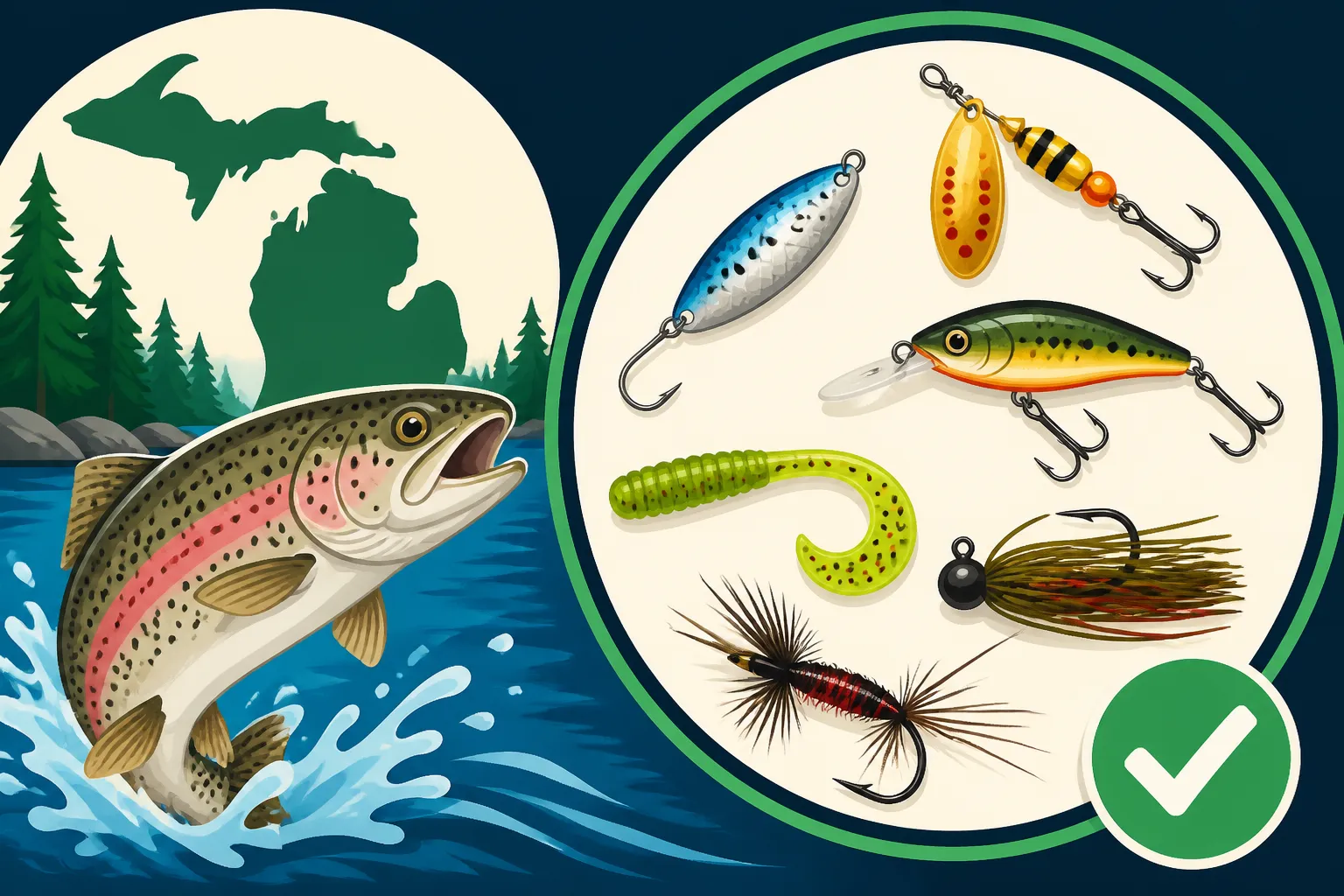
When we talk about artificial lures, we're generally referring to presentations crafted from materials that are synthetic, inert, and non-organic. This includes a wide array of options that anglers have come to rely on for enticing trout. Metal, in its various forms, is a primary component, giving us classic spoons that flutter and flash, or spinners with blades that rotate to create vibration and visual appeal. Companies like Mepps, Rooster Tail, and Panther Martin have built their reputations on these effective metal lures, which are readily available on platforms like Amazon.
Plastic is another dominant material, used in everything from hard-bodied crankbaits and jerkbaits that imitate baitfish to soft plastic worms, grubs, and creature baits. The key with soft plastics in artificial-only waters is that they must not be scented or flavored. Wood is sometimes used, particularly in the construction of certain traditional crankbaits or topwater plugs, and it’s perfectly acceptable as long as it’s not treated with a natural fish attractant. Feathers, synthetic hair, and threads are the building blocks of countless fly patterns, from dry flies that float on the surface to nymphs and streamers that imitate aquatic insects or baitfish. Rubber and silicone are also common in skirts for jigs or as components in soft plastics. All these materials share a common trait: they do not decompose in water and lack any inherent natural scent or taste that would attract fish based on their olfactory senses. They rely purely on visual appeal, vibration, and movement to trigger a strike.
Hooks and Additions: The Fine Print
The type of hook you use and any modifications or additions to your lure are also under scrutiny in artificial-only trout regulations. While many lures come equipped with treble hooks, it's increasingly common for special regulation areas, particularly those focused on catch-and-release, to mandate single, barbless hooks. This isn't just a suggestion; it’s a rule designed to further reduce harm to fish, allowing for easier, quicker, and less damaging releases. Some anglers proactively switch out factory treble hooks for single barbless hooks on all their trout lures to be compliant with any special regulations they might encounter. You can often find replacement hooks and tools for this on Amazon or at your local tackle store.
Crucially, the moment you attach anything natural or organic to an otherwise artificial lure, it ceases to be "artificial" in the eyes of the law. This means no tipping your spinner with a piece of worm, no adding a live minnow to your jig, and no putting a salmon egg on your fly. Even a small piece of natural material can lead to a violation in artificial-only waters. The purity of the artificial presentation is paramount. The intent is that the fish strikes based on the lure's action and appearance, not because it smells or tastes like food. This level of detail in the regulations is why it's so important to fully grasp the rules outlined in the annual Reading the Michigan Fishing Regulations Digest.
Navigating the Murky Waters: Beads, Scents, and Imitations
While the general definition of an artificial lure seems straightforward, certain items and methods often cause confusion, blurring the line between legal artificial presentations and prohibited natural baits. Anglers frequently question the legality of beads, scented plastics, and hyper-realistic imitations. Let's clear up some of these common gray areas.
The Bead Debate: Are They Artificial?
Ah, the fishing bead – a tiny, often colorful, yet surprisingly controversial piece of tackle. Generally speaking, beads made of plastic, glass, or metal are considered artificial. They are man-made, non-edible, and by themselves, do not possess natural scent or taste. Anglers often rig them above a hook, mimicking a single fish egg drifting in the current, especially effective for steelhead and trout.
However, the "bead debate" arises when beads are used in conjunction with other elements or when they themselves are modified. For instance, if a plastic bead is impregnated with a natural fish scent, it would likely fall under the category of a scented bait, making it illegal in artificial-only zones. Similarly, using a plain plastic bead, but then adding a dollop of scent gel or a piece of natural roe to your hook beneath it, would also render the entire setup illegal. The spirit of the law aims to prohibit methods that primarily attract fish through smell or taste. While a plastic bead alone is usually fine, if you find yourself questioning whether your setup truly constitutes an artificial lure, you might want to review more specific guidelines on topics like Is a Bead an Artificial Lure Under Michigan Trout Rules?. Always consider the entire presentation, not just one component, when assessing compliance.
Scented Lures and Liquid Attractants
This is one of the most common pitfalls for anglers accustomed to fishing general regulation waters. Many modern soft plastic lures, like those from Berkley Gulp! or PowerBait, are specifically designed to be scented and flavored to attract fish through their sense of smell and taste. While incredibly effective in many situations, these products are explicitly not considered artificial lures under Michigan's trout rules for artificial-only waters. The moment a lure is infused with or coated in a natural fish attractant (like an amino acid-based gel or spray), it crosses the line into the "bait" category.
This also extends to liquid attractants that anglers might apply to their otherwise artificial lures. Spraying a fish-attracting scent onto your spinner, spoon, or fly would render it illegal in artificial-only areas. The rationale is clear: if the fish are primarily attracted by smell or taste rather than just the visual presentation and action of the lure, it defeats the purpose of the "artificial lure only" designation, which is designed to reduce deep hooking and ensure a more challenging pursuit. Always check the packaging of your soft plastics; if it boasts about "natural scent" or "flavor," save it for waters where natural bait is permitted.
Realistic Imitations and Their Limits
The angling market is full of incredibly realistic imitations – flies that look exactly like specific insects, crankbaits that perfectly mimic baitfish, and soft plastics that replicate worms or crawfish with astonishing detail. As long as these imitations are constructed solely from artificial, non-organic materials and are not scented or flavored, they are generally considered legal artificial lures in designated trout waters. The visual realism itself is not the disqualifying factor.
The line is drawn, once again, at the presence of natural or organic components and scent. A plastic worm, even one that wiggles and looks exactly like a real worm, is an artificial lure if it's just plastic. However, if that same plastic worm is infused with a fish attractant or has a bio-degradable, edible component, it would be illegal. The focus is on the composition of the lure and its primary method of attraction, not merely its appearance. Anglers can still enjoy the challenge of "matching the hatch" with finely crafted artificial flies or targeting aggressive trout with highly realistic minnow imitations, provided they adhere to the material and scent guidelines.
Why Michigan Implements Artificial-Only Regulations
It might seem like an unnecessary complication to have "artificial-only" regulations, especially when you’re just trying to enjoy a peaceful day on the water. However, these rules are far from arbitrary. They are carefully considered conservation tools put in place by the Michigan DNR to serve critical ecological and recreational purposes, ultimately ensuring the long-term health of our cherished trout fisheries.
Conservation and Reduced Mortality Rates
One of the primary drivers behind artificial-only regulations is the significant reduction in fish mortality, particularly for species like trout and steelhead. When a fish strikes a natural bait—be it a worm, a minnow, or a salmon egg—it often engulfs the bait deeply, swallowing the hook far down its throat or into its stomach. This is especially true for hungry or aggressive fish. When an angler then tries to unhook a deeply-hooked fish, the damage to vital organs can be severe, leading to high post-release mortality, even if the fish swims away initially.
Artificial lures, on the other hand, are typically struck more aggressively and are often hooked in the mouth, lips, or jaw. Because there's no natural food source involved, fish are usually reacting to the lure's movement or flash, resulting in a more superficial hook set. When combined with barbless hooks (which are often mandated in artificial-only zones), the risk of injury is drastically reduced. A quick twist of the hook, and the fish can be released with minimal trauma, significantly increasing its chances of survival. This is absolutely critical in sensitive environments supporting wild trout populations, where every fish counts for sustainable management. For more on protecting these precious species, understanding topics like Michigan's Combined Trout and Salmon Daily Limit can also be very helpful.
Enhancing the Sporting Challenge
Beyond the crucial conservation aspect, artificial-only regulations also serve to enhance the sporting challenge of trout fishing. These rules promote a "fair chase" ethic, where the angler's skill in presentation, reading the water, and understanding fish behavior becomes paramount. You're not relying on the fish's natural urge to feed on an easy, scented meal; instead, you're trying to fool it with an imitation. This makes the catch feel earned and elevates the experience for many anglers.
Imagine floating a carefully tied dry fly over a rising brown trout on the Au Sable River – it requires precision, stealth, and an understanding of insect hatches. Or casting a small spinner into a riffle, working it just right to trigger a strike from a wary brook trout. These are highly skilled endeavors. By eliminating natural bait, the playing field is leveled, forcing anglers to develop and refine their techniques. This creates a more engaging and ultimately more rewarding experience, fostering a deeper connection between the angler and the environment. This emphasis on skill and challenge helps manage fishing pressure by making it a more focused pursuit, rather than simply harvesting fish, ensuring the quality of the fishing experience for all.
Practical Scenarios for Michigan Trout Anglers
Navigating Michigan's fishing regulations can sometimes feel like solving a complex puzzle, especially when you factor in the varying rules for different bodies of water. For trout anglers, it's not enough to just know what an artificial lure is; you also need to know where and when those rules apply. Ignoring these nuances can quickly turn a relaxing day into a costly mistake.
Differentiating General vs. Special Regulation Waters
The most critical step for any Michigan trout angler is to understand that not all waters are regulated equally. Most of Michigan's vast network of lakes and rivers operate under "general regulations," where natural bait is typically allowed for most species. However, Michigan also boasts numerous "Designated Trout Streams" or specific sections of rivers, often marked as "Quality Trout Management Areas," that have unique, stricter rules. These special regulations are usually clearly outlined in the annual Michigan Fishing Regulations Digest, often with maps or specific descriptions of river stretches.
For example, a stretch of the Pere Marquette River might be designated "flies-only" or "artificial-lure-only" with additional stipulations like mandatory catch-and-release or barbless hooks. Meanwhile, a few miles downstream, the same river might revert to general regulations. It's not uncommon to see signs posted at access points for these special areas, but relying solely on signage is risky; the digest is the ultimate authority. Before you even tie on your first lure, make it a habit to consult the most current regulations for the specific body of water you intend to fish. This proactive approach ensures you're compliant and helps protect the fragile ecosystems these rules are designed to conserve. Many of Michigan's premier trout streams, often featured in guides like Michigan Rivers for Trout and Steelhead in Michigan, will have these specific regulations in place.
Gear Selection for Artificial-Only Zones
When you know you're heading into an artificial-lure-only trout water, your gear selection becomes paramount. This isn't the time to grab your general-purpose baitcaster loaded with a chunk of nightcrawler. Instead, you'll want to focus on a specialized tackle assortment that adheres strictly to the rules. Small spinning rods and reels, typically in ultralight or light action, paired with light monofilament or fluorocarbon line (4-8 lb test) are popular choices for casting small spinners (think sizes #0 to #3), tiny spoons (like Kastmasters or Dardevles), and miniature crankbaits (such as Rapala countdowns or small Rebel craws).
Fly anglers will be in their element, as flies are the quintessential artificial lure. You’ll need appropriate fly rods, reels, and lines, suitable for delicate presentations. If you're interested in refining your setup, checking out resources on Best Fly Fishing Gear for Trout Rivers can offer fantastic insights. For general artificial lure fishing, having a separate, dedicated tackle box or tray specifically for "artificial-only" gear can prevent accidental use of scented baits. Many anglers buy tackle organizers from Amazon to keep their artificial lures meticulously separated and easily accessible. Remember, even if you’re using an artificial lure, checking for barbless hook requirements or catch-and-release mandates for your specific location is crucial. Some of the most productive techniques for these waters are detailed in articles like Michigan's Spring Trout Opener Techniques and When Does Trout Season Open in Michigan, which often focus on artificial presentations.
Maintaining Compliance and Enjoying Your Trout Fishing
Fishing in Michigan should be a joyful and fulfilling experience, not one clouded by anxiety over unknowingly breaking the law. Staying informed and exercising common sense are your best tools for ensuring compliance, allowing you to focus on the thrill of the catch and the beauty of Michigan's natural waters.
The Importance of the Current Regulation Digest
I cannot stress this enough: the official Michigan Fishing Regulations Digest is your bible. Rules can and do change annually, even for specific stretches of water. What was legal last year might not be this year, or vice versa. Relying on anecdotes from a buddy or memories from a decade ago is a recipe for trouble. The Michigan DNR publishes an updated digest every year, usually available online as a PDF on their website, at license retailers, or through their convenient DNR Hunt Fish App. This app is a game-changer, giving you instant access to all regulations, maps, and even the ability to buy licenses right from your phone.
Before every fishing trip, especially if you're venturing to a new spot or haven't fished for a while, take a few minutes to review the relevant sections. Pay close attention to the General Regulations, then scroll down to the "Special Regulations by County" section, or look for specific river system rules. These sections often contain the precise details about artificial lure only zones, tackle restrictions, and harvest limits for trout. Make it a routine, just like checking the weather or packing your snacks. Being well-informed is not just about avoiding a ticket; it's about being a responsible steward of Michigan's fisheries, ensuring they remain vibrant for generations to come. For example, knowing the nuances of Michigan's Great Lakes Year-Round Trout Season versus inland stream regulations is critical.
When in Doubt, Don't Use It
Despite all the guides and regulations, there might still be moments of uncertainty. Perhaps you have a new lure that claims to be unscented but has a faint chemical smell, or you're unsure if a particular rigging style for a bead falls under the spirit of the artificial lure rule. In these situations, the best advice is simple: when in doubt, don't use it. It's far better to err on the side of caution and choose a lure that is unequivocally artificial than to risk a citation and potentially harm a fish.
Conservation officers are out there to enforce the rules and protect the resource. While most are reasonable, they expect anglers to be knowledgeable. Ignorance of the law is generally not considered a valid excuse. A simple fine can range from a couple hundred dollars to much more, plus court costs, and repeat offenses can lead to loss of fishing privileges. Is that really worth the risk for a questionable lure? Stick to proven, clearly artificial options like traditional spinners, spoons, crankbaits, or flies, and you'll eliminate most of the ambiguity. This common-sense approach allows you to fish stress-free and truly enjoy your time outdoors. Just like ensuring you have your Michigan Fishing License Guide for Residents and Nonresidents in order, clarity on your tackle is paramount.
Checking Local Ordinances
While the Michigan DNR sets statewide fishing regulations, it's also worth remembering that some local municipalities, parks, or specific private land owners might have additional, more restrictive rules. While these don't typically supersede state law on public waters, they can dictate access, parking, or even additional restrictions on certain activities, sometimes including specific types of fishing.
For instance, a city park might have a pond that allows fishing, but with a "no live bait" rule to prevent the spread of invasive species, even if the state rules for that water body would otherwise permit it. Similarly, some private landowners who allow access to streams on their property might have their own stipulations (e.g., "flies only, barbless hooks"). It's always a good practice to look for local signage or inquire with park authorities or landowners if you're fishing in a new area that falls under local jurisdiction. While less common for the broader "artificial lure" definition on major trout streams, being aware of this possibility ensures you're respectful of all rules, local and state, and ensures you have a smooth and enjoyable fishing experience. Remember, license fees contribute to conservation, so understand Where Michigan Fishing License Money Goes and fish responsibly.
Essential Lure Types for Artificial-Only Trout Waters
When you're restricted to artificial lures for trout in Michigan, it’s not about limiting your fun; it’s about refining your technique and choosing the right tools for the job. Thankfully, there’s a diverse and highly effective arsenal of lures that fit the bill.
| Lure Type | Description | Ideal Conditions | Target Species/Technique |
|---|---|---|---|
| Spinners | Metal body with a rotating blade, creating flash and vibration. | Riffles, runs, clear water; good for active fish. | Aggressive Rainbow Trout, Brown Trout, Brook Trout (casting/retrieving) |
| Spoons | Thin, curved piece of metal that wobbles and flashes like an injured baitfish. | Deeper pools, currents, varying retrieves. | Larger Brown Trout, Lake Trout (casting/trolling) |
| Crankbaits | Hard-bodied, lipped lures that dive and wobble, imitating baitfish. | Deep holes, slower currents, structure. | Brown Trout, Smallmouth Bass (casting/trolling) |
| Flies | Hand-tied imitations of insects, baitfish, or other food sources using feathers, fur, and synthetic materials. | Varies by pattern: surface (dry), mid-column (nymph), deep (streamer). | All Trout species (fly casting/drifting) |
| Soft Plastics | Unscented plastic worms, grubs, or minnows (rigged on jig heads or weighted hooks). | Slow currents, still water, targeting wary fish. | Trout, Panfish (jigging/drifting) |
Disclaimer
The information provided in this guide is for general informational purposes only and is not intended as legal advice. Fishing regulations can change frequently and vary by specific location. Always consult the most current Michigan Department of Natural Resources (DNR) Fishing Guide or their official website for the most accurate and up-to-date regulations before heading out to fish. Failure to do so may result in fines or penalties.