Michigan Walleye Size and Possession Limits
It can feel like you need a law degree just to understand Michigan's fishing rules, especially when it comes to popular species like walleye. The constantly changing numbers for size limits, daily possession, and those tricky protected slots can turn a relaxing fishing trip into a stressful puzzle. This guide is here to untangle the complexities of Michigan's walleye size and possession limits, helping you fish confidently and stay on the right side of the regulations.
Understanding Michigan's Walleye Regulations
Navigating the world of fishing regulations can often feel like trying to catch a greased walleye – slippery and hard to pin down. You're out there on the water, excited for a bite, and the last thing you want is to accidentally break a rule because the information wasn't clear. Michigan's Department of Natural Resources (DNR) works hard to manage our fisheries sustainably, and that means specific rules for popular game fish like walleye. These aren't just arbitrary numbers; they're carefully calculated to ensure healthy populations for generations to come.
The Importance of Size and Possession Limits
At its heart, fishing is about stewardship. Size and possession limits exist for a really good reason: to protect the long-term health of the walleye population. Think about it this way: if everyone kept every walleye they caught, regardless of size, we'd quickly deplete the breeding stock. Size limits, like the common 15-inch minimum, ensure that walleye have a chance to mature and spawn at least once, contributing new generations to the fishery. It's a critical component of conservation that allows fish to reproduce before they end up on your dinner plate. These regulations help maintain ecological balance and provide for a sustainable angling experience for everyone.
Possession limits, on the other hand, prevent overharvesting by individuals. It's easy to get caught up in a hot bite, but without a daily limit, a few anglers could significantly impact a local population in a short amount of time. The DNR sets these limits based on biological surveys, angler harvest rates, and the overall health of specific walleye populations in different lakes and rivers. By adhering to these limits, you're not just following the law; you're actively participating in the conservation efforts that keep Michigan a premier fishing destination. It truly benefits all anglers when we respect these rules, ensuring there are plenty of walleye for everyone, year after year.
Where to Find the Most Current Information
The biggest frustration for many anglers is knowing where to find reliable, up-to-date information. Regulations can change, and what was true last year might be different this season. Thankfully, the Michigan DNR provides several excellent resources. Your absolute best friend in this regard is the annual Michigan Fishing Regulations Digest. You can usually pick up a physical copy wherever you buy your Michigan Fishing License, or you can download a PDF version directly from the DNR website. I always recommend having a physical copy or the PDF saved on your phone, because cell service isn't always reliable out on the lake or river.
Beyond the digest, the DNR website is a fantastic resource, often updated with news and emergency regulations. They also have an incredibly useful tool called the Michigan's DNR Hunt Fish App for Licenses and Reporting. This app is a game-changer, allowing you to access regulations, purchase licenses, and even register your big catches right from your smartphone. While a general guide like this is helpful, always double-check the latest digest or the DNR app for the most precise rules for the specific body of water you'll be fishing. Remember, ignorance of the law is no excuse, and a quick check can save you from potential fines or even losing your fishing privileges. For a comprehensive overview, you should also check out our guide on Michigan Fishing Regulations Every Angler Should Know.
Statewide Walleye Size and Daily Possession Limits
Michigan is blessed with incredible walleye fishing across its vast network of lakes and rivers. From the expansive Great Lakes to countless inland gems, there's always a new spot to explore. However, with this abundance comes the need for consistent, clear regulations to protect this prized species. While specific waters often have their own unique rules, there are some fundamental statewide regulations that serve as the baseline for nearly all walleye fishing in Michigan. Knowing these general guidelines is the first step to a compliant and successful fishing trip.
Minimum Size Requirements You Can't Ignore
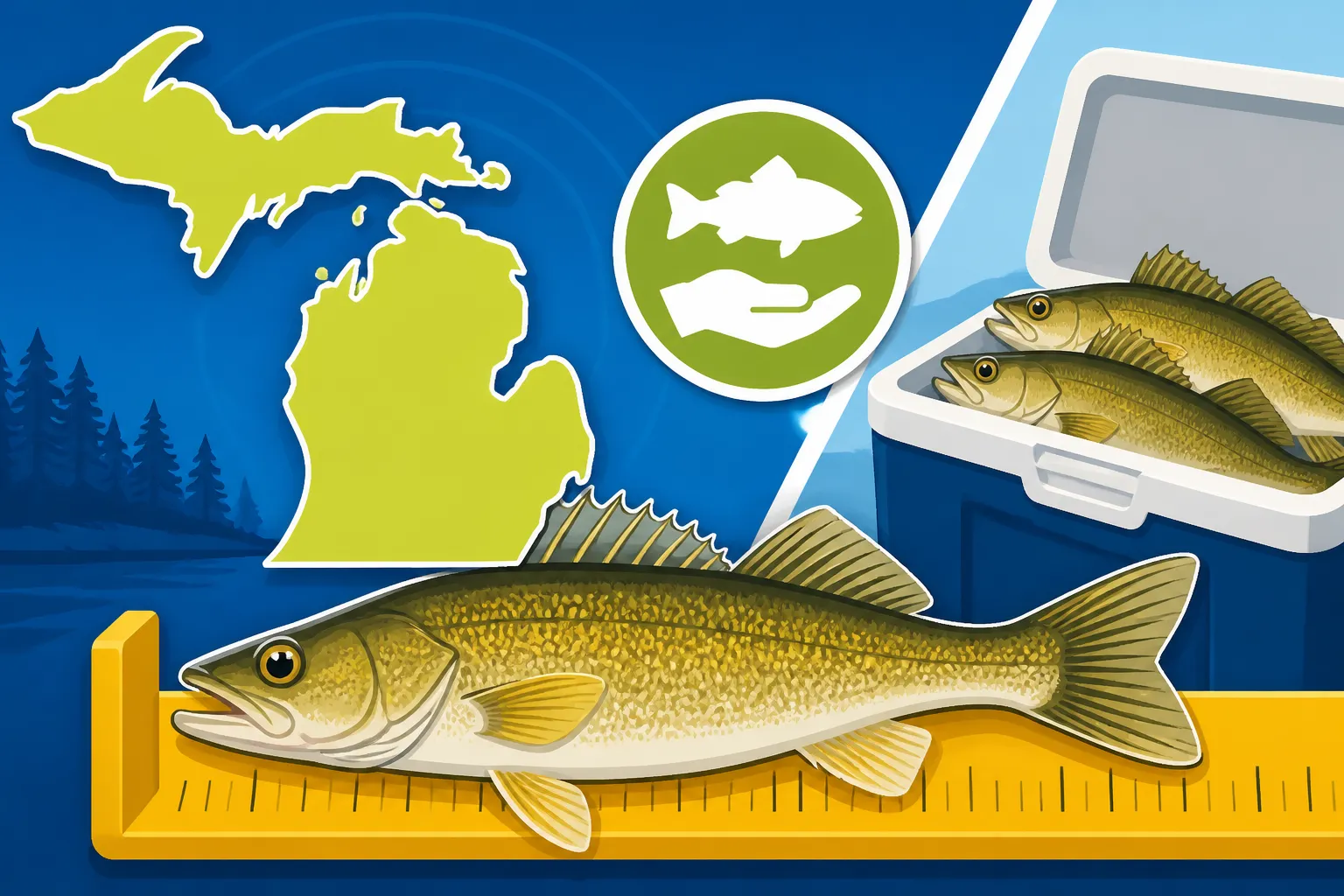
For most of Michigan's waters, the golden rule for walleye is a 15-inch minimum size limit. This means any walleye you catch that measures less than 15 inches from the tip of its snout to the tip of its tail (with the tail compressed) must be immediately released back into the water. This regulation, often detailed in articles like Michigan Walleye 15-Inch Minimum Size Limit, is vital because it gives walleye a chance to reach sexual maturity and contribute to the next generation before they're harvested. Releasing smaller fish isn't just a legal requirement; it's an investment in the future of the fishery, ensuring there are plenty of larger, trophy-sized walleye for years to come.
There are, of course, exceptions to this rule, which we'll dive into more in the next section. But for the vast majority of Michigan's inland lakes and rivers, that 15-inch mark is your go-to reference. Always have a reliable measuring device on hand. You can find durable, easy-to-read measuring boards on Amazon, which makes quick work of checking your catch. It’s better to be safe than sorry; if you're not absolutely sure your fish meets the minimum, err on the side of caution and release it.
Daily Bag Limits for a Successful Outing
Beyond the size, you also need to keep a close eye on your daily bag limit, which dictates how many walleye you can legally keep in a 24-hour period. For most Michigan waters, this limit is 5 walleye per day. This means that once you've kept five walleye that meet the minimum size requirement, you must stop fishing for walleye for the remainder of that day, even if the bite is red hot. This statewide limit is crucial for distributing the harvest among anglers and preventing localized depletion. It's all about sharing the resource and ensuring everyone has a fair chance at a good day on the water.
It's important to note that the daily bag limit applies to your personal take, not the boat's total. If you're fishing with friends, each person who is licensed and actively fishing can keep their own limit of 5 walleye. However, once a fish is in the livewell or on a stringer, it counts towards someone's possession limit. Clear communication within your fishing party is key to avoiding any misunderstandings or accidental over-limits. For more details on daily limits across various species, check out our guide on Michigan Daily Bag Limits by Species.
Understanding the "Protected Slot Limit" Concept
Here's where things can get a little more nuanced, and where many anglers feel the most confusion: the protected slot limit. While the statewide minimum is 15 inches and the daily bag is 5 fish, some specific bodies of water also implement a "protected slot limit." This regulation means that walleye within a certain size range cannot be kept and must be immediately released. For example, some lakes might have a 15-inch minimum, but also a protected slot from 18 to 23 inches. This would mean you can keep fish under 18 inches (as long as they are 15 inches or larger), and fish over 23 inches, but not fish that fall between 18 and 23 inches.
The purpose of a protected slot limit, often discussed in resources like Michigan's Protected Walleye Slot Between 18 and 23 Inches, is usually to protect larger, prime spawning-size females. These bigger fish are often the most prolific breeders, and by safeguarding them, the DNR helps ensure robust reproduction and a healthy population for the future. It's a targeted conservation strategy that allows for harvest of smaller, younger fish while preserving the genetic potential of the bigger ones. Always check the specific regulations for the lake or river you're fishing, as slot limits can vary significantly and missing this detail can lead to a violation.
Special Walleye Regulations on Specific Waters
While the statewide regulations provide a good baseline, Michigan's diverse aquatic ecosystems necessitate specific rules for different bodies of water. The walleye populations in the vast Great Lakes, for instance, face different pressures and grow at different rates than those in smaller, shallower inland lakes or winding rivers. Ignoring these localized rules is a common mistake that can lead to disappointment or, worse, a citation. This is why it's crucial to consult the regulations for your exact fishing location before you even cast a line.
Great Lakes Walleye Exceptions
Fishing Michigan's Great Lakes for walleye is an incredible experience, offering opportunities for truly massive fish. Because these immense waters behave differently than inland lakes, their walleye populations are managed with tailored regulations. For example, some areas of Lake Erie, which is renowned for its walleye fishery, might have different daily possession limits or even size limits compared to other Great Lakes or inland waters. Historically, Lake Erie has sometimes seen higher daily possession limits during peak seasons due to its robust population, but these can change based on annual stock assessments.
It’s not just Lake Erie; parts of Lake Huron, especially Saginaw Bay, and even sections of Lake Michigan, may also have unique walleye rules. These specific regulations are designed to manage these large, shared fisheries effectively, often in coordination with neighboring states and Canada. Always, always verify the current regulations for the specific Great Lake you plan to fish, including specific bays, harbors, and river mouths that feed into them. These details are critical and will be prominently featured in the Michigan Fishing Regulations Digest under the Great Lakes sections. Our Michigan Great Lakes Fishing Regulations Guide has even more information.
Inland Lake and River Specific Rules
Moving away from the Great Lakes, you'll find an even wider array of localized walleye regulations on Michigan's thousands of inland lakes and rivers. Many popular walleye destinations, such as Houghton Lake, Lake St. Clair, or the Muskegon River, might have their own distinct size or possession limits, or even unique protected slots. These variations usually stem from specific management goals for that particular body of water. For instance, a lake might have a more restrictive slot limit if the DNR is trying to boost the population of larger, breeding-size walleye after a few challenging years.
Conversely, some smaller, less productive lakes might have no minimum size limit at all, or a slightly different daily bag limit, if the goal is to manage a high-density, slower-growing population. Rivers, with their unique flow patterns and spawning habitats, can also present distinct rules. It’s not uncommon for a section of a river to have different rules than the lake it flows into or out of. This hyper-local approach to management means that a good fishing map or a thorough check of the DNR digest for your specific lake or river system is non-negotiable. Knowing these nuances can make the difference between a legal catch and a regretful release. When you're looking for Michigan Walleye Daily Possession Limit information, make sure you're looking at the right section for your chosen water.
Boundary Waters: What You Need to Know
Michigan shares some incredibly productive fishing waters with neighboring states and Canada, particularly in the Great Lakes system and border rivers. These "boundary waters" often come with their own set of complex regulations, as they are typically a blend of rules from both jurisdictions. For instance, fishing the Detroit River or St. Clair River, which border Canada, requires anglers to be acutely aware of which country's waters they are in and the corresponding regulations. The general rule of thumb is that if you are fishing in Michigan waters, you follow Michigan's rules, but it can get complicated if you cross invisible lines.
The same applies to waters shared with Wisconsin, Ohio, or Indiana, primarily in the Great Lakes. While Michigan's general walleye regulations might apply up to the state line, the rules on the other side could be completely different regarding size, bag, or season. Always carry maps that clearly delineate state and international boundaries if you plan to fish near them. When in doubt, it’s best to err on the side of caution and adhere to the more restrictive regulations, or simply fish well within clearly defined Michigan waters. This intricate situation is often detailed in a section on Michigan's Boundary Water Fishing Rules Explained within the fishing digest.
| Water Body | Minimum Size Limit (inches) | Daily Possession Limit | Protected Slot Limit (inches) | Notes |
|---|---|---|---|---|
| Most Inland Lakes & Rivers | 15 | 5 | N/A | Standard statewide rules, check specific lakes/rivers for exceptions. |
| Lake Erie (Michigan Waters) | 15 | 6 | N/A | Specific Great Lakes rules may vary seasonally. |
| Saginaw Bay (Lake Huron) | 15 | 5 | N/A | Check specific zones for potential variations. |
| Lake St. Clair | 15 | 6 | N/A | Shared with Canada, be aware of international boundary. |
| Specific Lakes (e.g., Croton) | 15 | 5 | 18-23 | Slot limits protect larger spawners. Always check specific lake rules. |
Note: This table provides a general overview. Always consult the most current Michigan Fishing Regulations Digest for the specific body of water you intend to fish, as rules can change annually.
Why Walleye Regulations Vary Across Michigan
The patchwork of walleye regulations across Michigan isn't designed to confuse anglers; it's a carefully crafted system based on ecological principles and localized management needs. It can certainly feel frustrating when you have to check a different set of rules for almost every major body of water, but there's a good reason for it. Understanding why these variations exist can actually help you appreciate the complex work that goes into managing Michigan's world-class fisheries and empower you to be a more informed and responsible angler.
Protecting Spawning Stocks
One of the primary drivers behind varying regulations is the need to protect walleye spawning stocks. Walleye are spring spawners, typically laying their eggs in shallow, rocky areas of rivers or lakes shortly after ice-out. The timing and success of these spawning runs can vary significantly from one water body to another due to differences in water temperature, habitat availability, and current fish population health. For instance, the walleye in a colder, northern Upper Peninsula lake might spawn later than those in a warmer Lower Peninsula river. This difference in reproductive timing is why you might see varying season openers, such as when Walleye Season Open in Michigan's Lower Peninsula versus Walleye Season Open in Michigan's Upper Peninsula.
Minimum size limits, and especially protected slot limits, are often implemented to safeguard these vital spawning fish. A 15-inch minimum ensures that most walleye have a chance to spawn at least once. A protected slot, like the 18-23 inch one we discussed, specifically targets and protects those larger, more mature female walleye that contribute significantly to egg production. These variations ensure that local populations have the best chance to reproduce successfully, leading to strong year classes and a sustainable fishery for the future.
Managing Regional Fisheries
Michigan's immense size and diverse geography mean that its walleye fisheries are not a monolithic entity. What works for the abundant walleye of Lake Erie won't necessarily be appropriate for a smaller, isolated inland lake with limited natural reproduction. The DNR manages these regional fisheries based on localized data, including population surveys, growth rates, habitat quality, and angler harvest pressure. This adaptive management approach means that regulations are constantly being evaluated and adjusted to best suit the conditions of a particular area.
For example, a lake that has seen a recent decline in walleye numbers due to habitat degradation might implement more restrictive limits or a complete catch-and-release policy for a period, aiming to rebuild the population. Conversely, a highly productive lake with a booming population might have more liberal limits to encourage harvest and prevent overpopulation of smaller, slower-growing fish. These regional variations, sometimes outlined in Michigan Statewide Minimum Size Limits, are a testament to the DNR's commitment to fine-tuning management strategies to specific ecological contexts, rather than a one-size-fits-all approach that could harm vulnerable populations or underutilize healthy ones.
The Role of Ecosystem Health
Ultimately, walleye regulations are deeply intertwined with the overall health of the aquatic ecosystem. Factors such as water quality, the presence of invasive species, the availability of prey fish, and even climate change can all influence walleye populations and, by extension, the regulations designed to manage them. For instance, the introduction of invasive species like zebra mussels or round gobies can impact walleye food sources or alter their habitat, prompting the DNR to reassess harvest limits.
Similarly, changes in water temperature or flow regimes can affect spawning success and the survival of young walleye. When the DNR identifies these ecological shifts, they often respond by adjusting regulations to mitigate negative impacts or capitalize on positive changes. This holistic approach means that every regulation you encounter, no matter how specific, is part of a larger strategy to maintain a balanced and resilient ecosystem. Being mindful of your impact on the environment, from proper waste disposal to preventing the spread of invasive species, is just as important as adhering to the size and possession limits when contributing to the long-term health of Michigan's walleye fisheries.
Essential Tools for Staying Compliant
Nobody wants to accidentally break a fishing regulation, especially not when the intent is to enjoy Michigan's beautiful waters. The key to staying compliant, beyond knowing the rules, is having the right tools and practices in place. From accurately measuring your catch to properly handling fish you intend to release, a little preparation goes a long way in ensuring your fishing trip is both enjoyable and responsible.
Measuring Your Catch Accurately
When that walleye comes over the side of the boat, excitement can sometimes lead to quick, imprecise measurements. But that 15-inch minimum isn't a suggestion; it's a strict rule. You absolutely need a reliable, visible measuring device. A good, rigid measuring board is ideal, especially for longer fish like walleye, as it allows for consistent measurements. Soft tape measures or flexible rulers can be prone to errors, especially on a rocking boat. Place the fish on its side with the snout against the bump stop, and compress the tail to get the accurate length.
If you’re a serious walleye angler, investing in a high-quality bump board, like those you can find on Amazon, is well worth it. Many experienced anglers even mark their net handles or a part of their boat with the common minimum sizes (e.g., 15 inches) as a quick reference. Remember, the measurement is usually "total length," which means from the tip of the snout to the furthest tip of the tail, with the tail compressed. Always be certain of your measurement; if it's close, it's safer to release the fish.
Proper Fish Handling for Release
A significant number of walleye caught will be under the legal size limit or fall within a protected slot, meaning they must be released. How you handle these fish is critical to their survival. Improper handling can cause "delayed mortality," where a fish swims away but dies later due to stress or injury. First and foremost, minimize the time the fish is out of the water. Have your camera and measuring device ready before you even bring the fish into the boat.
Use wet hands or wet gloves when handling fish to protect their protective slime coat. Avoid squeezing the fish's belly or gills. If the hook is easily accessible, remove it quickly with needle-nose pliers or a hook-remover tool. If the fish is deeply hooked, especially in the gills or throat, it's often best to cut the line as close to the hook as possible rather than trying to remove it, as this can cause more internal damage. Gently lower the fish back into the water, allowing it to recover on its own. For more on this, check out our guide on Michigan Walleye Fishing Techniques.
Keeping Track of Your Limits
It's easy to lose count when the fish are biting, especially if you're fishing with multiple people or keeping different species. To avoid accidentally exceeding your Michigan Walleye Daily Possession Limit, it's a good practice to have a system for keeping track. A simple stringer for kept fish works well for visual confirmation. Some anglers use clickers or even a small notepad to record each legal fish kept. If you're targeting multiple species, remember that each species will have its own daily limit, and exceeding any one of them is a violation.
When fishing in a group, clearly communicate who is keeping which fish. Designate one person to manage the livewell if multiple anglers are contributing to it, ensuring everyone knows the running tally. Don't assume someone else is keeping track. A moment of clarity at the beginning of the trip can prevent a headache later. Being organized and meticulous about your count is a hallmark of a responsible angler and helps ensure you stay compliant with all the rules.
Tips for Responsible Walleye Fishing
Being a responsible angler goes beyond just following the letter of the law regarding size and possession limits. It encompasses a broader commitment to conservation, ethical practices, and fostering a positive experience for everyone who enjoys Michigan's waters. When we all adopt these habits, we contribute to a healthier environment and a more vibrant fishing community for years to come.
Catch and Release Best Practices
As we've touched on, many walleye you encounter will need to be released. Mastering catch and release best practices is an invaluable skill that ensures the fish you return to the water have the best chance of survival. Beyond minimizing air exposure and using wet hands, consider the type of tackle you're using. Barbless hooks can make hook removal much easier and quicker, reducing stress on the fish. You can easily pinch down the barbs on most hooks with a pair of pliers.
Also, be mindful of the fight time. While it's exciting to battle a big walleye, prolonged fights, especially with light tackle, can exhaust a fish to the point of no return. Try to land fish efficiently, especially in warmer water where oxygen levels are lower. If a fish is struggling to swim away after release, gently hold it upright by the tail in the water, facing into the current, until it regains its strength and can swim off on its own. These small actions make a huge difference in fish survival rates.
Reporting Violations and Concerns
No one likes to be the "tattle-tale," but reporting serious fishing violations is a crucial part of protecting our fisheries. If you witness someone clearly and intentionally breaking regulations—like keeping undersized walleye, exceeding bag limits, or using illegal fishing methods—it's important to report it. These actions can have a significant negative impact on local fish populations and are unfair to all the anglers who follow the rules.
The Michigan DNR has a Report All Poaching (RAP) hotline and an online reporting system. You can find this information in the fishing digest or through the DNR's website. Provide as much detail as possible: date, time, location, description of the individuals and their boat/vehicle, and the nature of the violation. You can remain anonymous. While it might feel uncomfortable, you are acting as a steward for Michigan's natural resources, helping to preserve them for future generations.
Being a Good Steward of Michigan's Waters
Finally, responsible walleye fishing extends to being a good steward of the entire aquatic environment. This means leaving no trace behind—packing out all your trash, including discarded fishing line, bait containers, and any other litter. Monofilament line, in particular, can be incredibly dangerous to wildlife if left in the water. Consider bringing a separate bag specifically for trash on every outing.
Beyond litter, be respectful of private property, other anglers, and local communities. Launch your boat responsibly, avoid disturbing nesting birds or other wildlife, and keep noise levels down, especially in residential areas. These actions, while not strictly "regulations," contribute to a positive angling culture and ensure that Michigan's beautiful fishing spots remain pristine and accessible for everyone to enjoy. It's about preserving not just the fish, but the entire experience of fishing in the Great Lakes State.
Disclaimer
The information provided in this guide is intended for general informational purposes only and does not constitute legal advice. Fishing regulations in Michigan are subject to change by the Department of Natural Resources (DNR) and can vary significantly by location and time of year. While we strive to provide accurate and up-to-date information, it is the sole responsibility of the angler to consult the most current official Michigan Fishing Regulations Digest or the Michigan DNR website and app before engaging in any fishing activity. Failure to comply with current regulations may result in fines or penalties.