Best Rod Holder for Trolling
Oh, the joy of trolling! There’s nothing quite like the anticipation of a rod bending violently, signaling a strike, especially when you’re out on Michigan's vast waters. But let's be honest, trying to juggle multiple rods, keep an eye on your lines, and steer the boat, all while hoping a rogue wave doesn't send your expensive gear overboard, can be a real headache. This guide is all about cutting through that frustration and helping you find the absolute best rod holders for your trolling setup, ensuring your rods are secure and your focus remains on the fish.
Why Reliable Rod Holders Are Non-Negotiable for Trolling in Michigan
If you've spent any time trolling, you know that a rod holder isn't just a luxury; it's an essential piece of equipment. In Michigan, with our incredible diversity of fisheries, from the mighty Great Lakes to countless inland lakes and rivers, the demands on your gear are substantial. You need a system that can handle anything from a feisty walleye tugging on a shallow crankbait to a massive Chinook salmon hammering a spoon deep behind a downrigger.
The Strain of Michigan's Diverse Fisheries
Consider the immense power of a 20-pound King salmon hitting a bait in Lake Michigan. That strike isn't just a gentle tap; it's an explosive force that can wrench a rod right out of an inadequate holder, sending it to the bottom of the lake. Or imagine a monstrous muskie, a true freshwater predator, deciding your lure looks tasty while you’re trolling on Lake St. Clair. The initial run from these fish can be astonishing, and a flimsy rod holder simply won't cut it. You need something engineered to absorb that shock and hold your rod firm until you can get to it.
Beyond the initial strike, the constant vibration from your boat's motor, combined with waves and current, puts a continuous strain on your rods and holders. A quality holder needs to grip your rod securely, preventing it from twisting, bouncing out, or rattling itself loose over hours of trolling. Whether you're targeting Michigan Walleye Fishing Techniques on Saginaw Bay or How to Troll for Salmon on the Great Lakes, the right holder provides peace of mind and protects your investment.
Safety and Convenience on the Water
Let’s talk practicality. Trolling usually means running multiple lines at once. Trying to hold even two rods for hours on end is exhausting and inefficient, let alone four, six, or even eight lines that some Great Lakes anglers run. Rod holders free up your hands to steer, adjust your speed, monitor your electronics, and even grab a sandwich. This hands-free operation drastically improves your comfort and overall safety, allowing you to focus on navigation and fishfinding.
Furthermore, a good rod holder protects your rods and reels. Instead of lying on the deck where they can get stepped on, scratched, or even roll off the boat, they are cradled safely. This is especially important for expensive setups designed for species like muskie or deepwater lake trout. When you’re spending good money on Best Rods and Reels for Michigan Fishing, you want them to last, and a proper rod holder is key to their longevity. It prevents them from being banged around, reducing wear and tear, and ensuring they’re ready for the next big bite.
Types of Trolling Rod Holders: A Deep Dive
The world of trolling rod holders offers a surprising array of options, each with its own benefits and ideal applications. Understanding these differences is crucial for selecting the best fit for your boat and fishing style. It’s not a one-size-fits-all situation, and what works perfectly for one angler might be a total headache for another.
Flush Mount Rod Holders
Flush mount rod holders are often seen on larger boats, especially those designed for offshore or Great Lakes trolling. These holders are permanently installed by drilling a hole into the gunwale (the upper edge of the boat's side) and recessing the holder so it sits "flush" with the deck. They come in various angles, typically 0, 15, or 30 degrees, which dictates how far the rod angles out from the boat.
The biggest advantage of flush mounts is their clean, integrated look and rock-solid stability. Once installed correctly, they become an integral part of your boat's structure, offering incredible strength for handling powerful strikes from salmon or lake trout. You won't find them wiggling or twisting under pressure, which is a common concern with less robust options. The downside, however, is the permanent modification to your boat. Drilling holes can be daunting for some, and once they're in, changing their position isn't easy. They’re also less adjustable in terms of angle than some other types, meaning you need to carefully consider your ideal trolling spread before installation. For those who want a minimalist look and maximum strength on a boat primarily used for serious trolling, these are often the go-to.
Clamp-On and Rail Mount Rod Holders
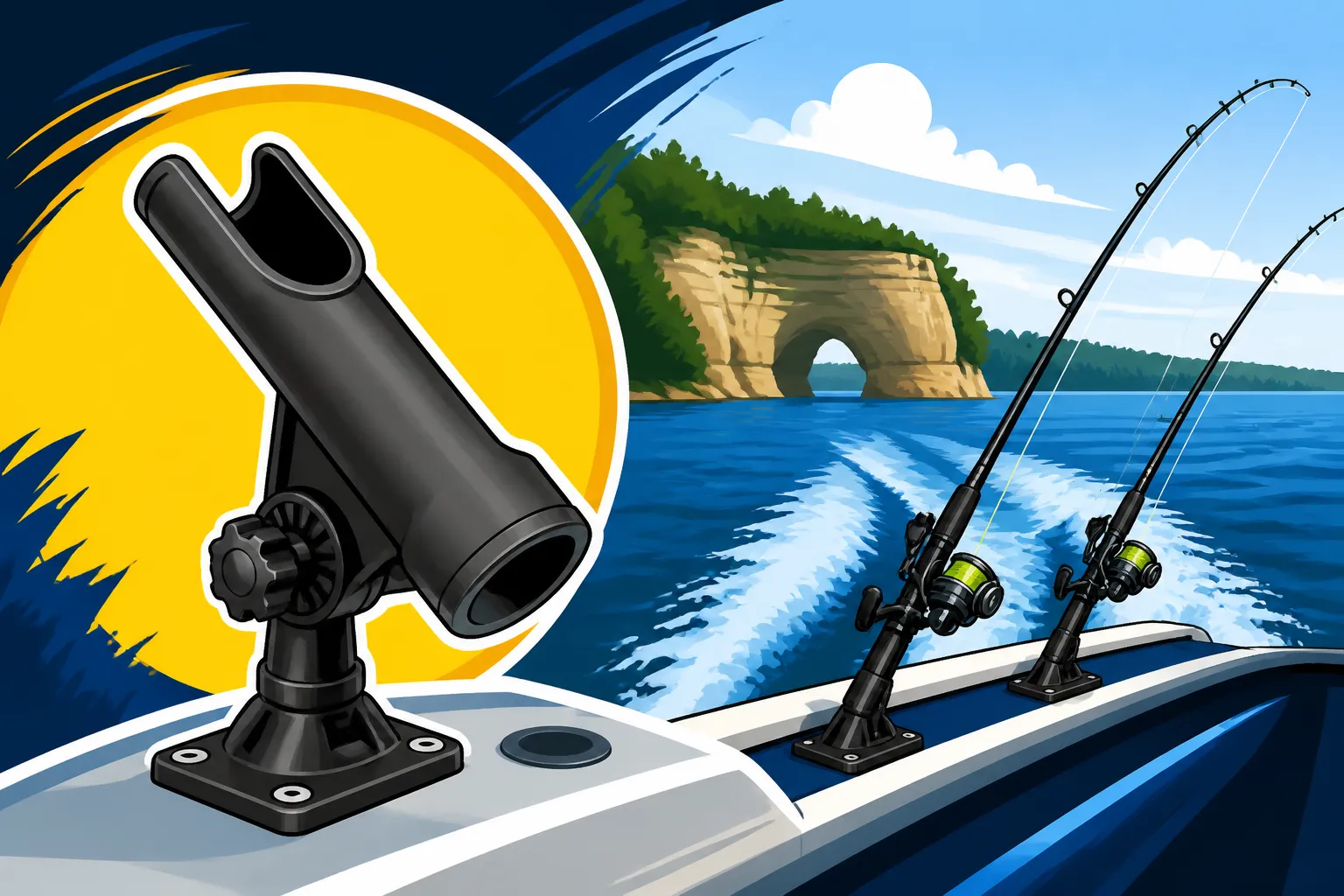
These types of rod holders are incredibly popular due to their versatility and ease of installation. Clamp-on holders attach directly to the boat's gunwale, while rail mount holders secure themselves to existing rails or stanchions around the boat. They don't require any drilling, making them an excellent choice for smaller boats, rental boats, or anglers who prefer not to make permanent modifications.
The primary benefit here is flexibility. You can move them around your boat as needed to adjust your trolling spread, or remove them entirely when not in use. They come in a wide range of designs, many offering excellent adjustability for both vertical and horizontal angles, allowing you to fine-tune your rod position for different lures and trolling techniques. This adjustability is vital for managing lines when using Trolling Gear for Michigan's Great Lakes, such as planer boards or specific diving baits. However, not all clamp-on or rail mount holders are created equal. Cheaper models can slip, flex, or even break under the stress of a large fish. Investing in a robust, well-constructed model, often made from heavy-duty aluminum or reinforced composite, is essential for reliable performance. Ensure the clamping mechanism is strong and secure, and that the holder's material can withstand Michigan's diverse weather conditions, especially if you fish the corrosive Great Lakes.
Track Mount Rod Holders
Track mount systems have revolutionized rod holder placement for many anglers, particularly those with modern multi-species boats or those who prioritize adaptability. These systems involve installing a track (usually aluminum) along the gunwale or transom of your boat. Once the track is in place, you can then attach various accessories, including rod holders, to it. The beauty of a track system is the ability to slide, remove, and re-position your rod holders anywhere along the track with minimal effort.
This level of adjustability is unmatched. You can easily modify your trolling spread on the fly, adding or removing holders, or shifting their positions to avoid tangles or optimize for different species or conditions. Need to run four rods off one side for walleye? No problem. Want to switch to two larger holders for muskie on the other side? A quick slide and click, and you're set. Many popular brands like Bert's Custom Tackle or Traxstech specialize in these track systems, offering a vast ecosystem of compatible accessories. While the initial installation of the track involves drilling, it's a one-time effort that opens up a world of customization. You can find a huge selection of these systems and individual rod holders at places like Bass Pro Shops, making it easy to build out your ideal setup.
Gimbal Mount and Deck Mount Rod Holders
Gimbal mount rod holders are often associated with serious offshore big-game fishing, but they have their place in Michigan too, particularly for those targeting larger Great Lakes species or handling exceptionally heavy gear. These holders are designed to insert into an existing rod holder in your boat's gunwale or transom, but they feature a wider, stronger base and are often built to accommodate larger, heavier trolling rods. They can also come as standalone deck mount units, bolted directly to a flat surface.
The "gimbal" feature refers to the cross-pin at the bottom of the holder, which engages with the gimbal butt of a fishing rod, preventing the rod from rotating in the holder. This is crucial when battling powerful fish that can twist a rod around, putting immense strain on the angler and the holder itself. These are typically the most robust and heavy-duty options available, often constructed from stainless steel or anodized aluminum. They provide superior strength and stability, making them ideal for those running heavy Downriggers for Michigan Great Lakes Trolling or chasing big lake trout and salmon. While perhaps overkill for panfish, for dedicated trophy hunters, the added security and strength are invaluable.
Key Features to Look for in a Quality Trolling Rod Holder
Choosing a rod holder isn’t just about picking one off the shelf; it’s about understanding the nuances of design and construction that translate into reliability and performance on the water. When you're dealing with Michigan's diverse and often challenging fishing conditions, certain features become absolutely critical.
Material and Construction: Durability Matters
The material a rod holder is made from is paramount, especially when fishing the Great Lakes where corrosion from saltwater (though freshwater, the large bodies act similarly) and constant exposure to elements can quickly degrade inferior products.
- Stainless Steel: This is the gold standard for strength and corrosion resistance. Marine-grade stainless steel (like 316L) is incredibly durable and can withstand years of abuse, salt spray, and UV exposure without rusting or breaking down. It's often found in flush mount and gimbal mount holders designed for heavy-duty applications. While more expensive, the longevity often justifies the cost.
- Anodized Aluminum: Lightweight, strong, and corrosion-resistant, anodized aluminum is a popular choice, especially for track mount systems and high-end clamp-on holders. The anodizing process creates a protective layer that helps it resist oxidation, making it ideal for continuous outdoor use. Look for thick-walled, robust aluminum, as thinner extrusions can bend or flex under stress.
- Heavy-Duty Composite/Reinforced Nylon: Modern composites are surprisingly strong and lightweight. These plastic-based materials are impervious to rust and often incorporate fiberglass or carbon fiber for added strength. They are a good mid-range option, offering a balance of durability and affordability. However, cheap, flimsy plastic holders are usually a recipe for disaster; always look for "heavy-duty" or "reinforced" in the description. You'll find a wide variety of materials and construction styles available from online retailers like Amazon, often with customer reviews that can give insight into real-world durability.
Adjustability and Angle Options
The ability to adjust your rod holders is incredibly important for effective trolling. Different species, lures, and water conditions often require specific rod angles to present your bait optimally and manage your lines.
- Vertical Adjustability: Being able to tilt your rod up or down is crucial. A higher angle can keep your line out of the water further, which is useful when running planer boards or trying to avoid obstacles near the boat. A lower angle might be better for reducing drag or keeping the rod tip closer to the water's surface for subtle bites. Many holders offer multiple detent positions or a friction-based system for precise angle control.
- Horizontal (Rotational) Adjustability: The ability to rotate your rod holder side-to-side allows you to fan out your lines, creating a wider trolling spread. This is essential for preventing tangles when running multiple lines, especially when turning the boat. Track mount systems excel here, allowing you to slide and swivel holders with ease.
- Combination Adjustability: The best rod holders offer both vertical and horizontal adjustments, often with quick-release mechanisms or sturdy locking knobs that make on-the-fly changes simple and secure. This versatility means you can adapt your setup for Michigan's Combined Trout and Salmon Daily Limit trolling on Lake Huron one day, and switch to a tighter spread for walleye on an inland lake the next.
Security and Rod Retention
The whole point of a rod holder is to hold your rod. You don't want to turn around to find your rod bouncing out or, worse, completely gone.
- Deep Cradle Design: A deep, U-shaped cradle helps to secure the rod butt, preventing it from jumping out during violent strikes or rough water. Shallow cradles are a red flag, especially for larger species.
- Locking Mechanisms: Many rod holders feature some form of locking collar or strap that positively secures the rod in place. Some designs have a spring-loaded pin that slides over the rod handle, while others use a simple bungee or hook. This is particularly important for species like muskie, where the initial strike can be incredibly aggressive. For instance, when targeting muskie with Best Lures for Muskellunge, their violent head shakes can easily dislodge a rod from an unsecured holder.
- Rod Leash Attachments: While not a feature of the holder itself, many serious anglers will add a rod leash – a short cord that tethers the rod to the boat or holder. A good rod holder will have an integrated loop or point where a leash can be easily attached, offering an extra layer of security and safeguarding your gear.
Ease of Installation and Removal
While some anglers prefer permanent installations, the ease of installation and removal greatly impacts user experience and versatility for most.
- Tool-Free Adjustments: The ability to adjust angles or positions without needing a wrench or screwdriver is a huge plus. Look for large, ergonomic knobs or levers that are easy to manipulate, even with cold or wet hands.
- Quick-Release Bases: For clamp-on or track mount systems, quick-release bases allow you to rapidly remove the rod holder from its mounting bracket. This is fantastic for transport, storage, or for quickly reconfiguring your boat for different activities. It also means you can easily store expensive rod holders securely when you're not on the water, reducing the risk of theft or damage. Many of these convenient options are readily available from major fishing retailers like Bass Pro Shops.
Choosing the Right Rod Holder for Your Michigan Trolling Adventures
Navigating the options can feel overwhelming, but by considering your specific boat, target species, and trolling style, you can narrow down the choices and invest in rod holders that truly enhance your fishing experience here in Michigan. It's about making smart choices for your unique needs.
Matching Holders to Your Boat Type
Your boat is the foundation of your trolling setup, and its design heavily influences the best rod holder choice.
- Small Aluminum Boats/Jon Boats: These boats often have limited gunwale space and may not be ideal for drilling. Clamp-on or rail mount holders are usually the best bet, offering flexibility without permanent modification. Look for compact designs that won't interfere with your limited deck space. Many smaller fishing boats also benefit from simple, robust designs that can be easily set up for targeting panfish or a few walleye.
- Deep-V Aluminum or Fiberglass Multi-Species Boats: These are the workhorses of Michigan's inland lakes and Great Lakes tributaries. They often have wider gunwales, making them excellent candidates for track mount systems. Tracks allow you to maximize your trolling spread, easily accommodating multiple rods for different techniques, such as running What Line Weight for Michigan Steelhead on the Manistee River or pursuing bass on Lake St. Clair. The adjustability is key for adapting to various fishing scenarios throughout the year.
- Larger Great Lakes Trolling Boats (Fiberglass Cruisers, Offshore Boats): These vessels demand the most robust solutions. Flush mount rod holders are common for their integrated strength and clean profile, often complemented by heavy-duty gimbal mount holders or track systems for maximum versatility. When you’re running large spreads with Downriggers for Michigan Great Lakes Trolling for Chinook salmon, you need unwavering strength and confidence in your gear. These boats often have ample space for multiple holders, allowing for complex trolling patterns.
Considering Your Target Species and Trolling Style
The fish you chase and how you chase them dictate the strength and features you'll need in your rod holders.
- Salmon and Trout on the Great Lakes: These powerful fish demand heavy-duty rod holders that can withstand violent strikes and prolonged fights. Anglers often use downriggers and planer boards, requiring holders that can be angled precisely to spread lines effectively. Stainless steel or heavy-duty aluminum track mounts are popular here, allowing for quick adjustments to your spread as conditions change. The initial runs from a Great Lakes king can easily rip a less substantial holder clean off your boat.
- Walleye on Inland Lakes and Bays (e.g., Saginaw Bay): Walleye fishing can involve a mix of techniques, from flat-lining crankbaits to bottom bouncing. Versatility is key. Track mount or sturdy clamp-on holders with good adjustability allow you to fine-tune angles for different lures and depths. You might not need the extreme heavy-duty strength required for salmon, but solid construction and good rod retention are still crucial. Michigan Walleye Fishing Techniques often involve specific rod positions, making adjustability a huge advantage.
- Muskellunge (Muskie) on Lakes St. Clair, Thornapple, etc.: Muskie are known for their massive size and aggressive strikes. Your rod holders for muskie need to be exceptionally strong, with reliable locking mechanisms to prevent your rod from being pulled out during a crushing strike. Gimbal-style holders or extra-heavy-duty track mounts are often preferred. Anglers targeting muskie often run very large, heavy baits, and the sudden impact from one of these toothy predators requires gear that simply won't budge. Michigan Muskellunge Fishing Techniques are about power and precision, and your rod holders should reflect that.
Budget and Brand Considerations
Like all fishing gear, rod holders range widely in price and quality. While it's tempting to go for the cheapest option, this is one area where cutting corners can lead to lost gear and missed opportunities.
| Rod Holder Type | Pros | Cons | Best Use Case |
|---|---|---|---|
| Flush Mount | Extremely strong, clean aesthetic, permanent mount | Permanent installation (drilling), less adjustable | Larger boats, Great Lakes trolling, dedicated setups |
| Clamp-On/Rail Mount | No drilling, highly portable, versatile | Can slip if not robust, may not be as strong as fixed mounts | Smaller boats, kayaks, temporary setups, adaptability |
| Track Mount | Highly adjustable, versatile system, easy repositioning | Requires track installation (drilling), initial investment | Multi-species boats, adaptable trolling spreads |
| Gimbal/Deck Mount | Maximum strength, prevents rod rotation, heavy-duty | Bulky, specialized for heavy tackle, often boat-specific | Offshore/Great Lakes big game, heavy downriggers |
When it comes to purchasing, you'll find a massive selection at dedicated fishing retailers. Bass Pro Shops has a comprehensive inventory, often with staff who can provide hands-on advice and show you various models. For sheer variety, competitive pricing, and a wealth of customer reviews, online retailers like Amazon are fantastic resources. You can browse countless options, compare features, and read about other anglers' experiences, which can be invaluable when making your decision. Remember, a slightly higher investment in a quality rod holder now can save you the much larger cost of a lost rod and reel later.
Disclaimer
This article is for general informational purposes only and does not constitute professional advice. Laws, prices and regulations vary by location and change over time. Consult a qualified professional for guidance on your specific situation.