What Size Boat Needs a Title in Michigan
It's easy to get lost in the sea of regulations when you're just trying to enjoy a peaceful day out on the water, especially when it comes to figuring out what paperwork your trusty vessel actually needs. Many Michigan anglers and boat owners find themselves scratching their heads, wondering if their boat needs a title, a registration, or both. This guide is here to clear up that confusion, specifically addressing the question of what size boat in Michigan actually requires a title, so you can focus on casting lines instead of deciphering bureaucratic lingo.
Understanding Michigan's Boat Titling Basics
Navigating the world of boat ownership in Michigan can feel a bit like trying to read a map with half the details smudged. You know you need something for your boat, but distinguishing between registration and titling often trips people up. The core of it all boils down to size and how your boat is powered.
The Critical 20-Foot Rule: What It Means for You
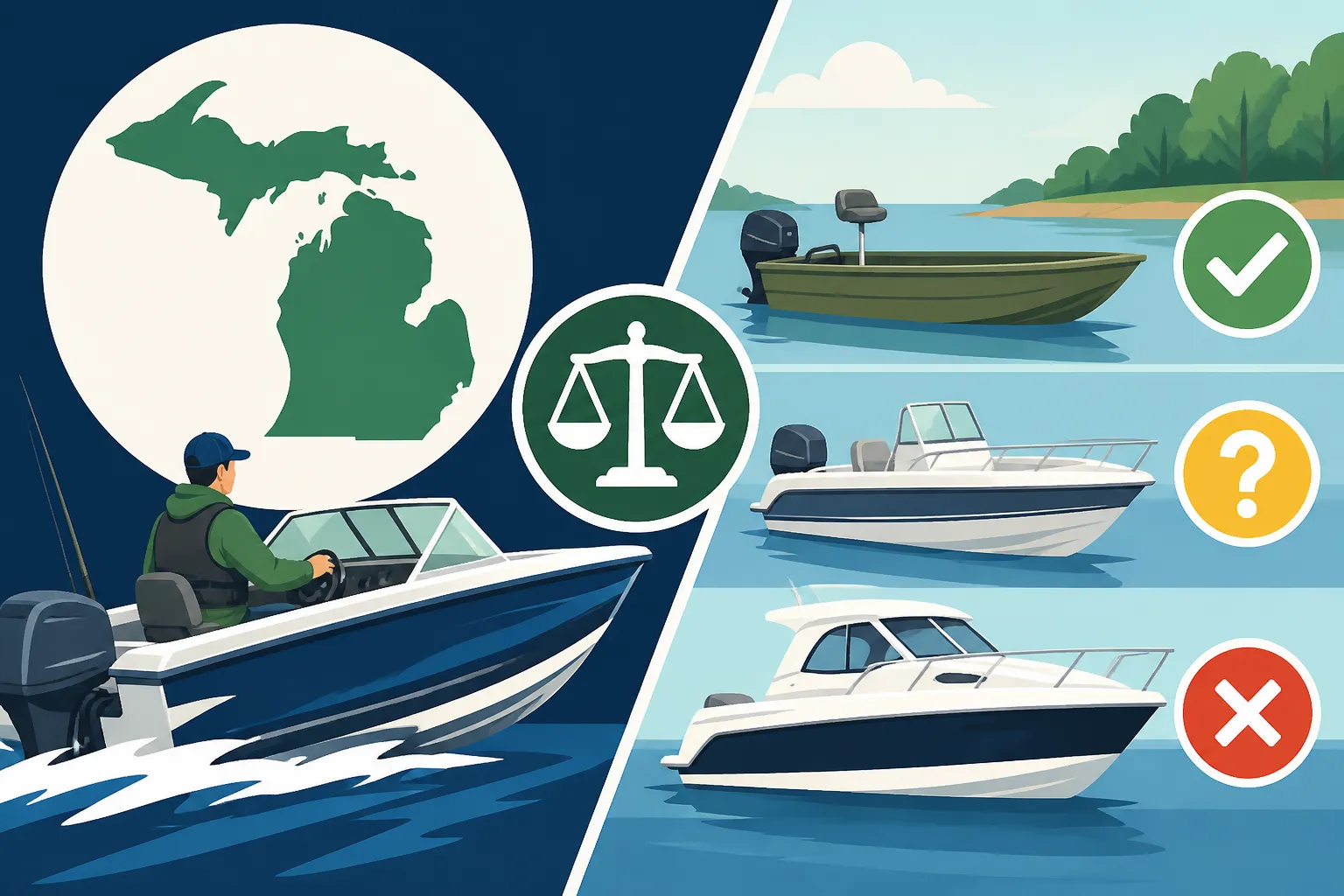
Let's cut right to the chase: in Michigan, the critical benchmark for boat titling is the 20-foot rule. If your boat measures 20 feet or more in length, and it's powered by a motor (either an inboard or an outboard), it must have a Michigan title. This isn't just a suggestion; it's a legal requirement that establishes clear ownership, much like a title for a car. Think of it as the birth certificate for your larger, motorized vessel.
This rule applies whether you've got a sleek cruiser, a spacious pontoon, or a formidable fishing boat designed for the Great Lakes. For example, if you're eyeing that 22-foot offshore fishing rig that could comfortably tackle Lake Michigan's unpredictable waves, you absolutely need a title. It's the state's way of tracking who owns these larger assets, aiding in preventing theft and ensuring smooth transfers of ownership when it's time to sell or pass it down. Without a title, proving you're the rightful owner of a significant investment like a larger boat can become an absolute nightmare, making sales difficult and recovery efforts if stolen almost impossible. You can dive deeper into this specific rule with our guide on Michigan Boat Titling Requirements Over 20 Feet.
When a Title Isn't Required: Exemptions and Gray Areas
Now, just because a larger, motorized boat needs a title doesn't mean every watercraft does. Michigan recognizes that not all vessels are created equal, and many smaller craft are exempt from the titling requirement. This is where a lot of the confusion often arises, as people often conflate titling with the separate requirement for registration.
Generally speaking, boats under 20 feet in length are exempt from titling, unless they are documented with the U.S. Coast Guard. This covers a vast array of popular fishing and recreational boats, including most bass boats, runabouts, smaller pontoons, and aluminum fishing boats you might use on your favorite inland lake. For these smaller, non-Coast Guard documented vessels, ownership is typically established through a bill of sale, which is still incredibly important to keep on hand.
Beyond size, other types of watercraft are also typically exempt from titling, regardless of length. These include:
- Non-motorized vessels: Canoes, kayaks, rowboats, stand-up paddleboards, and similar unpowered craft. Even if you slap a small electric trolling motor on your kayak, it generally won't suddenly require a title (though it might need registration, which is a different beast entirely). Many anglers enjoy Kayak Fishing in Michigan and appreciate this flexibility.
- Sailboats without an auxiliary motor: Pure sailboats that rely solely on wind power are generally exempt. If they have an engine, even for emergencies, the 20-foot rule might come into play.
- Watercraft that are part of the inventory of a manufacturer or dealer: These are considered commercial stock, not privately owned vessels for recreational use.
- Government-owned vessels: Boats owned by the state or federal government.
It's crucial to remember that "no title required" doesn't necessarily mean "no paperwork required." For instance, even though your 16-foot fishing boat doesn't need a title, if it's motorized, it almost certainly needs to be registered with the Michigan Secretary of State. This leads us to our next crucial distinction.
The Difference Between Registration and Titling
This is probably the biggest source of frustration for boat owners. You've just bought a new-to-you boat, you're excited to hit the water, and then you realize there are two potential sets of paperwork, each with its own rules and processes. It feels like jumping through hoops, but understanding the fundamental difference between titling and registration is key to staying compliant and avoiding headaches down the line.
Why Both Matter for Michigan Boaters
Titling is primarily about establishing legal ownership of a vessel. It's a one-time process when the boat is new or when ownership is transferred. The title document proves who the legal owner is, similar to a car title. This is particularly important for larger, more valuable assets, which is why Michigan only requires it for motorboats 20 feet and longer (or Coast Guard documented vessels, regardless of size). If your boat is stolen, or if there's a dispute over who truly owns it, the title is your ultimate proof. It's also essential if you ever need to get a loan for the boat, as lenders will require a title to secure their interest.
Registration, on the other hand, is about obtaining permission to operate your vessel on Michigan waters. It's typically an annual or triennial process (in Michigan, it's every three years) that involves paying a fee and getting a registration certificate and decals. The primary purpose of registration is to ensure that boats operating on public waters can be identified. This helps law enforcement, aids in search and rescue operations, and provides funding for marine safety and conservation efforts. Almost all motorized vessels, regardless of length, require registration in Michigan. This includes personal watercraft (PWCs), boats with electric trolling motors, and even larger vessels that also require a title. You can read more about what's involved in Michigan Boat Registration Requirements.
Here's a quick comparison:
| Feature | Boat Titling (Michigan) | Boat Registration (Michigan) |
|---|---|---|
| Purpose | Establishes legal ownership | Grants permission to operate on public waters |
| Requirement | Motorboats 20 ft. or more, or Coast Guard documented | Most motorized vessels (with exceptions like kayaks) |
| Frequency | One-time (or upon ownership transfer) | Every three years (renewal required) |
| Proof | Title certificate | Registration certificate & decals |
| Where to apply | Michigan Secretary of State | Michigan Secretary of State |
| Impacts | Loans, sales, theft recovery | Operation legality, identification, emergency response |
As you can see, they serve distinct, yet equally important, roles. You could have a boat that needs registration but not a title (like a 17-foot bass boat), or a boat that needs both (like a 25-foot Great Lakes salmon charter). Understanding this distinction is key to being a responsible and law-abiding boater in Michigan.
The Process: How to Title Your Michigan Boat
So, you've determined your boat needs a title. What's next? The process isn't overly complicated, but it does require attention to detail and the right documentation. Generally, you'll handle boat titling (and registration) through the Michigan Secretary of State.
-
Gather Your Documents:
- Manufacturer's Statement of Origin (MSO) or Certificate of Origin (MCO): If your boat is brand new, this document from the manufacturer is crucial. It's essentially the boat's "birth certificate."
- Previous Title: If you're buying a used boat that was previously titled, you'll need the original title, properly signed over to you by the previous owner. Ensure all lien releases are clearly marked if applicable.
- Bill of Sale: A detailed bill of sale is always a good idea, whether buying new or used. It should include the boat's make, model, year, Hull Identification Number (HIN), purchase price, and the names, addresses, and signatures of both the buyer and seller. This protects both parties.
- Proof of Identity: Your Michigan driver's license or state ID.
- Payment: Be prepared to pay the titling fees, sales tax (if applicable), and registration fees if you're registering at the same time.
-
Complete the Application:
- You'll fill out a Vessel Application (Form TR-5200, or a similar version provided by the Secretary of State). This form covers both titling and registration. You can often download this form online or pick one up at any Secretary of State branch office.
-
Visit the Secretary of State:
- Take all your documents to a Michigan Secretary of State branch office. They will verify your paperwork, process your application, and collect the necessary fees.
- If everything is in order, they will issue you a temporary registration (if applicable) and mail your official title and permanent registration decals within a few weeks.
- Remember, you'll also be applying for registration at the same time if your boat is motorized. Make sure you understand the requirements for Where to Display Michigan Boat Registration Numbers and decals.
Important Note for Out-of-State Purchases: If you purchase a boat from another state and bring it to Michigan, you'll follow a similar process. You'll need the out-of-state title (if one existed), a bill of sale, and proof of any sales tax paid in the other state to avoid paying it again in Michigan (though you might have to pay the difference if Michigan's rate is higher).
Practical Implications for Anglers and Boat Owners
Knowing the titling rules isn't just about avoiding a fine; it has real-world consequences for your ability to use, sell, and protect your investment. As an angler, your boat is often your gateway to those prized fishing spots, and you want to ensure that gateway is secure and compliant.
Buying and Selling Boats in Michigan: Title Considerations
When you're involved in buying or selling a boat that's 20 feet or longer (or Coast Guard documented), the title becomes the single most important document in the transaction.
As a Buyer:
- Insist on a Clear Title: Never buy a titled boat without receiving a properly executed title from the seller. A title ensures that the person selling the boat is the legal owner and has the right to transfer it to you. Without it, you could be buying a stolen boat or one with undisclosed liens, leaving you with a costly headache and no legal claim to your new purchase.
- Check for Liens: A title will typically show if there are any outstanding liens (like a loan from a bank) against the boat. Ensure these are released by the lender before you complete the purchase. The seller should provide a lien release document or have it marked off on the title itself.
- Verify the HIN: Always match the Hull Identification Number (HIN) on the title to the HIN physically present on the boat. This helps confirm you're buying the correct vessel and that the title hasn't been tampered with.
- Bill of Sale is Key: Even with a title, a comprehensive bill of sale is crucial. It details the transaction, including the date, price, and condition "as-is," protecting both parties. Many boaters find templates for bills of sale online through reputable sites or even general e-commerce platforms like Amazon or local suppliers like Bass Pro Shops might have guides or forms available.
As a Seller:
- Have Your Title Ready: If your boat is 20 feet or longer and motorized, you must have a clear title in your name. If you've lost it, you'll need to apply for a duplicate title with the Secretary of State before you can sell the boat.
- Sign and Date Properly: When you sell, you'll need to sign the title over to the new owner in the designated spots. Make sure to date it accurately.
- Provide a Bill of Sale: Always create a bill of sale, even for cash transactions. This serves as a record of the sale and helps protect you from future disputes.
Ignoring these steps can lead to severe legal and financial repercussions, turning a dream purchase into a costly nightmare.
Financing, Insuring, and Recovering Your Vessel
The presence (or absence) of a title also significantly impacts other aspects of boat ownership:
- Financing: If you plan to finance the purchase of a larger boat through a bank or credit union, they will almost always require a title. The title serves as collateral for the loan, with the lender often holding it until the loan is paid off. Without a title, securing financing for a boat 20 feet or longer is virtually impossible.
- Insurance: While you can often insure smaller, non-titled boats with a bill of sale, having a clear title for a larger vessel makes the insurance process smoother and more secure. In the event of a total loss or theft, your title provides undeniable proof of ownership, which is essential for processing a claim and receiving your payout. Imagine trying to prove you owned a $50,000 fishing boat after it sank, with only a handwritten note from the seller. A title makes that proof simple.
- Theft Recovery: Unfortunately, boat theft is a reality. If your boat is stolen, having a title on file with the state, linked to its unique HIN, greatly assists law enforcement in identifying and recovering your vessel. Without a title, tracing ownership can be much more challenging, making recovery efforts significantly harder. This is a huge reason why the state requires titles for larger, more valuable boats.
Avoiding Common Titling Mistakes and Penalties
Michigan wants you to enjoy its beautiful waters safely and legally, but they also have rules in place to ensure fair ownership and responsible boating. Making mistakes with your boat's title can lead to unnecessary stress and financial penalties.
- Forgetting to Title a Required Boat: The most common mistake is simply not titling a boat that meets the 20-foot motorized requirement. You might mistakenly think registration is enough, but they are separate. If caught operating a titled-required boat without a title, you could face fines, or worse, have your boat impounded.
- Delayed Titling: Don't drag your feet! After purchasing a titled boat, Michigan law typically requires you to transfer the title into your name within 15 days. Failing to do so can result in late fees.
- Incorrect Information: Make sure all information on the title application (HIN, owner name, address, etc.) is accurate. Errors can cause delays and require additional trips to the Secretary of State to correct. Double-check everything before you submit.
- Lost or Damaged Titles: Keep your original boat title in a safe place. While you can apply for a duplicate, it's an extra step and often comes with a fee. Avoid carrying the original title on your boat where it could be lost or damaged. Keep a copy, but the original should be secure.
- Confusing Titling with Registration: As we've discussed, these are distinct. Even if your boat is titled, it still needs to be registered and display current decals if it's motorized and operating on public waters. Many boats need both. Our articles on Michigan Fishing License Guide for Residents and Nonresidents and Michigan Fishing Regulations Every Angler Should Know can help you understand the broader regulatory landscape.
Staying on top of your boat's titling requirements ensures peace of mind. It means you're legally sound, your investment is protected, and you can truly relax when you're out chasing that trophy walleye or simply enjoying a sunset cruise. Don't let paperwork be the thing that keeps you from Michigan's incredible fishing opportunities.
Disclaimer
This article is for general informational purposes only and does not constitute professional advice. Laws, prices and regulations vary by location and change over time. Consult a qualified professional for guidance on your specific situation.