Best Tackle Box Setup for Muskellunge
Ah, the mighty muskellunge! There's nothing quite like the thrill and utter heartbreak that comes with chasing these incredible predators in Michigan waters. Many anglers, myself included, have felt the crushing disappointment of a snapped line, a bent hook, or a lure simply torn to shreds after hooking into what felt like a submarine. It's a harsh reminder that ordinary tackle just doesn't cut it. This comprehensive guide is dedicated to helping you build the ultimate tackle box setup for muskellunge fishing, ensuring your gear is as ready for the fight as you are.
The Unforgiving Reality of Muskie Fishing: Why Specialized Tackle is Non-Negotiable
Chasing muskellunge isn't just another fishing trip; it's a dedication, a quest for a fish often called "the fish of 10,000 casts." And if you're going to put in that kind of effort, your tackle needs to be absolutely dialed in. The sheer power, size, and razor-sharp teeth of a muskie will expose any weakness in your setup, often at the most crucial moment.
The Muskie's Reputation: A Tackle-Busting Powerhouse
Let's face it, muskies are apex predators. They grow to incredible sizes in Michigan's abundant waters, often exceeding 40 or even 50 inches. When one of these giants decides to strike, it's not a gentle peck; it's an explosion of power, a violent head shake, and a test of every single component from your line to your lure. Many anglers learn this the hard way: a standard bass setup with lighter line and hooks is simply not designed to withstand that kind of abuse. I've personally seen treble hooks straightened like paper clips and split rings opened wide after a brief but intense battle.
The frustration is real when you feel that solid thud, the line goes taut, and then suddenly, nothing. You reel in to find a mangled hook or a leader frayed to oblivion. This isn't just bad luck; it's often a sign that your tackle wasn't up to the challenge. Investing in specialized, heavy-duty gear isn't a luxury when it comes to muskie fishing; it's a necessity. It’s about being prepared for that one opportunity that might come after hours of casting.
Beyond the Lure: What a Muskie-Ready Tackle Box Really Means
When we talk about a "tackle box setup for muskellunge," we're not just discussing the lures. We're talking about a holistic approach to preparing for these toothy critters. It encompasses everything from the physical box itself – its size, durability, and organizational capacity – to the specialized tools required for safe handling, and of course, a robust selection of baits. Think of it as a carefully curated war chest, each item chosen specifically to stand up to the rigors of muskie angling.
A muskie tackle box isn't just a container; it's a mobile command center. It needs to be able to house oversized lures, heavy leaders, and a suite of tools without becoming a tangled mess. This often means foregoing smaller, compartmentalized boxes for larger, more open designs, or opting for soft-sided bags with robust utility boxes. The goal is efficiency and resilience, allowing you to quickly access what you need while protecting your valuable (and often expensive) muskie gear.
Building Your Lure Arsenal: Essential Muskellunge Baits
Muskies are aggressive, but they can also be incredibly finicky. Having a diverse array of lures in your tackle box is key to adapting to different conditions and moods. These aren't your average panfish lures; they're built for big fish and big strikes.
Power and Flash: Bucktails and Inline Spinners
Bucktails are, without a doubt, a staple in any muskie angler's tackle box. Their pulsating flash and vibration are irresistible to hungry muskies, mimicking fleeing baitfish. They come in various configurations, from single-bladed models that offer less resistance and can be retrieved faster, to massive double-bladed bucktails that create an enormous amount of thumping vibration and flash, truly calling out to muskies from a distance. Blades can be Colorado, Indiana, or willowleaf shapes, each providing a different action and flash profile.
When choosing bucktails, don't shy away from the larger sizes. Lures in the 8 to 12-inch range, even longer with trailers, are standard. Popular colors often include bright combinations like chartreuse and black, orange and black, or more natural patterns like white and silver. Anglers often carry a mix of bucktails with different blade sizes and colors to match varying water clarity, light conditions, and the muskie's mood. They are incredibly versatile, effective for both casting over shallow weed beds and trolling deeper breaks, especially when muskies are actively feeding. You'll find a massive selection of these from reputable brands, often available through retailers like Bass Pro Shops, which cater specifically to serious muskie anglers.
Diving and Gliding: Crankbaits, Jerkbaits, and Glide Baits
Crankbaits and jerkbaits are indispensable for targeting muskies at various depths. Large crankbaits, often 6-10 inches long, are designed to dive to specific depths, allowing you to present a bait directly into the muskie's strike zone, whether they're suspended over deep water or hugging a weed line. These lures typically feature strong polycarbonate lips that dictate their diving action and depth, and they come in a multitude of colors and patterns to imitate everything from perch to ciscoes. Some are silent, while others have internal rattles to create additional sound.
Jerkbaits, on the other hand, are typically retrieved with a "rip, pause, rip" action, creating an erratic, wounded-baitfish presentation that drives muskies wild. They can be suspending, floating, or sinking, allowing you to control their depth and hang time during the pause. These require a bit more angler input to impart their fish-catching action, but the results can be spectacular. Glide baits offer a similar, yet often slower, side-to-side swimming action, mimicking a large, wounded baitfish. They are fantastic for enticing following muskies that might be hesitant to strike a faster-moving lure, giving them a longer look at an easy meal. Always check the hooks on these factory lures, as upgrading to stronger, sharper trebles is a common practice among muskie anglers.
Surface Explosions: Topwater Lures
There's nothing quite like the heart-stopping excitement of a muskie exploding on a topwater lure. These baits are designed to stay on the surface, creating commotion that draws muskies up from below. Prop baits, walk-the-dog style baits, and even large poppers fall into this category. Prop baits have one or two propellers that churn water as you retrieve them, creating a distinct "plop-plop" sound and spray that screams "easy meal" to a muskie.
Walk-the-dog lures, like those from popular brands, require a rhythmic rod tip action to make them zig-zag enticingly across the surface. These lures are particularly effective in low-light conditions, over shallow weed beds, or during warm summer evenings. The sheer visual spectacle of a massive muskie breaching the surface to engulf a topwater lure is what keeps many anglers coming back for more. While not always the most productive in terms of numbers, the quality of the strike and the adrenaline rush make them a must-have in your tackle box for those perfect topwater conditions, especially on lakes like St. Clair.
Fortifying Your Connection: Critical Terminal Tackle for Muskies
Having the right lures is only half the battle. If your terminal tackle isn't up to snuff, all that effort and expense will be for naught. Muskies are masters at exploiting weaknesses, and a broken line or a bent hook is often the painful lesson learned.
The Lifeline: Heavy-Duty Leaders and Secure Connections
This cannot be stressed enough: you need heavy-duty leaders for muskellunge. A muskie's mouth is a formidable weapon, lined with rows of sharp teeth that will sever standard monofilament or fluorocarbon line like butter. Your leader is the last line of defense between the fish's mouth and your main line. Common choices include heavy fluorocarbon leaders (typically 80-150lb test) for invisibility and abrasion resistance, or wire leaders (titanium or stainless steel) for ultimate bite protection. Many anglers prefer fluorocarbon for casting applications due to its flexibility and less obtrusive nature, while wire is often favored for trolling or in situations where bite-offs are a constant concern.
Leaders should typically be 12-18 inches long to ensure the muskie doesn't accidentally get its teeth on your main line during a fight or thrashing boat-side. Equally important are the connecting components: heavy-duty swivels and snaps. Forget the small, light-gauge snaps you use for bass fishing. You need robust, high-quality ball-bearing swivels to prevent line twist (especially with bucktails) and strong, solid snaps or quick-release clips that can withstand the violent forces exerted by a muskie. Always double-check these connections before every outing and inspect them frequently during fishing for any signs of weakness or fatigue.
Hooking Power: Upgrading Hooks and Robust Split Rings
Many factory lures, even expensive ones, often come equipped with hooks that are simply not strong enough for magnum muskies. This is a common point of frustration, but it's easily remedied. Anglers frequently upgrade their treble hooks to heavier gauge, stronger, and sharper models. Brands that specialize in muskie tackle will offer hooks specifically designed for the immense pressure of these fish. Look for hooks that are chemically sharpened for better penetration and feature a strong wire gauge to prevent straightening.
Similarly, the split rings connecting your hooks to the lure are another weak link if not chosen correctly. Standard split rings can open up under the stress of a muskie fight. Replace them with heavy-duty stainless steel split rings that have a higher breaking strength. It's a small detail, but these seemingly minor components are crucial to ensuring that once you get a muskie to strike, it stays connected all the way to the net. A quick check of your hooks and split rings should be part of your pre-trip routine.
Safe Handling Essentials: Tools for You and the Fish
Muskies are magnificent creatures, and responsible handling is paramount for their survival after release. This means having the right tools in your tackle box (or readily accessible on the boat) is not optional. The primary tools are long-nose pliers, hook removers, and jaw spreaders. Long-nose pliers, preferably at least 11 inches long, allow you to safely reach into a muskie's mouth to dislodge hooks without putting your hands too close to those teeth. Hook removers, often specialized tools with extended reach, provide even greater leverage and safety.
Jaw spreaders are critical for securing a muskie's mouth open, allowing you clear access to retrieve hooks, especially when the fish is thrashing. This protects both you from painful bites and the fish from unnecessary damage. Always remember the goal is a quick, clean release. Having these tools organized and within easy reach will make the process much smoother. Many anglers also carry a heavy-duty bolt cutter for emergencies, should a hook be deeply lodged and impossible to remove safely; in such cases, cutting the hook is the best option for the fish. For more on releasing these fish, see Catch-and-Immediate-Release Rules for Muskellunge.
Mastering Organization: Housing Your Muskie Gear
Muskie lures are notoriously bulky and often come equipped with oversized treble hooks that love to tangle. A well-organized tackle box isn't just about neatness; it's about efficiency, safety, and protecting your expensive investments.
Choosing the Right Tackle Box or Bag for Monster Lures
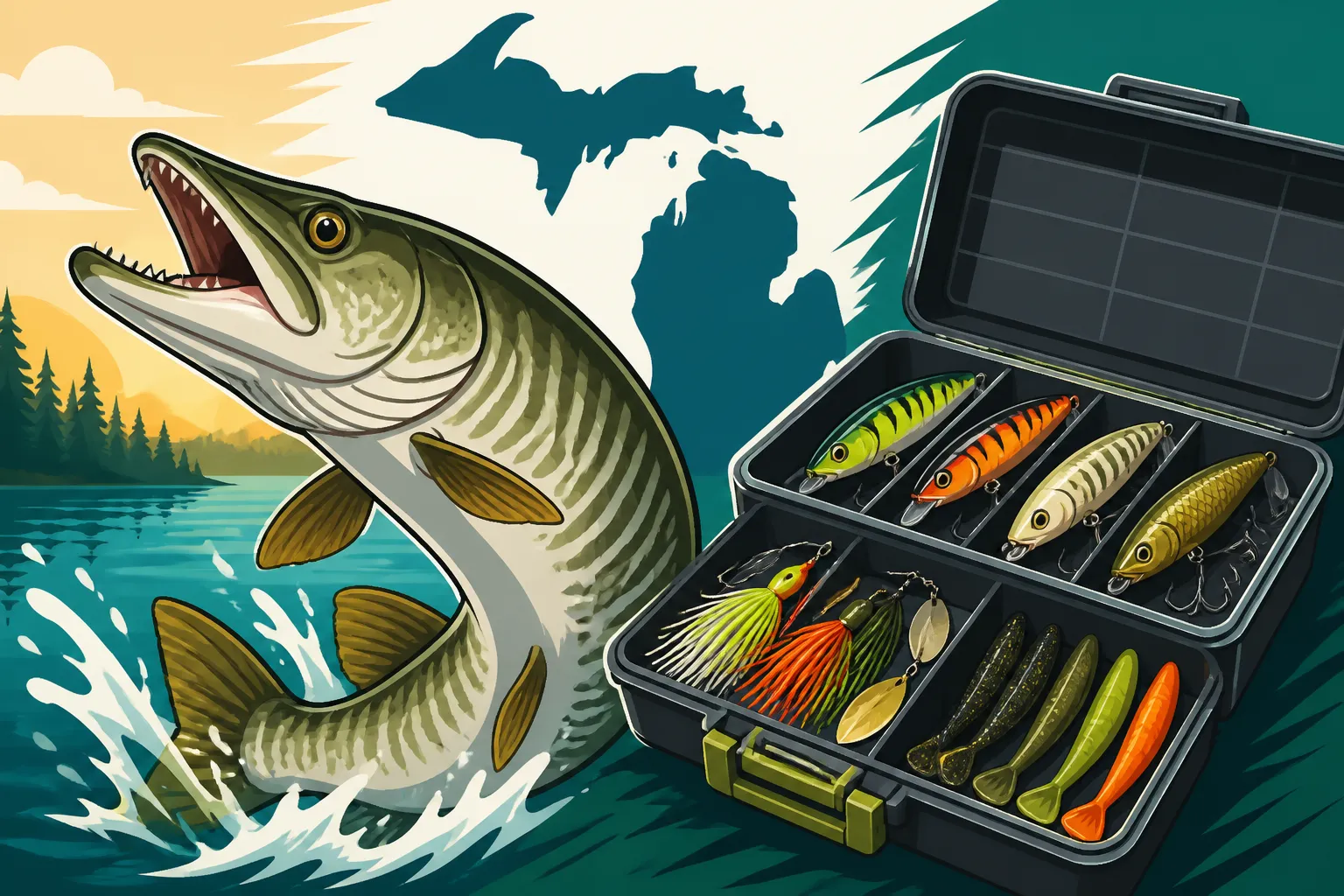
When it comes to muskellunge tackle, your average multi-tray tackle box simply won't cut it. These lures are big, they have huge hooks, and they take up a lot of space. Most muskie anglers opt for one of two primary solutions: large plastic utility boxes with adjustable dividers or soft-sided tackle bags that hold multiple utility boxes. The plastic utility boxes, often 3700 series or larger, are fantastic because you can customize the compartments to fit individual lures, preventing hooks from tangling with each other and keeping the lure's finish pristine. Look for robust, impact-resistant plastics and secure latches.
Soft-sided tackle bags are gaining popularity for their portability and flexibility. These bags typically come with multiple zippered compartments and pockets, designed to hold several individual utility boxes. This allows you to organize lures by type (bucktails in one box, crankbaits in another, etc.) and carry only what you need for a particular outing. Many anglers find these bags easier to transport and store in a boat, and they offer a bit more give than rigid plastic boxes. You'll find a wide array of excellent options for both types of storage at retailers like Bass Pro Shops or even online through Amazon, often with features like waterproof bottoms and padded shoulder straps.
Intelligent Layout: Keeping Your Muskie Tackle Accessible
The key to an effective muskie tackle setup is quick access. When a muskie follows your lure right to the boat, you need to be able to grab your figure-eight rod, or a landing net, without fumbling. Similarly, when you hook a fish, your release tools need to be immediately available. This means thinking strategically about your tackle box layout. Consider grouping similar lures together: all your bucktails in one section or box, all your jerkbaits in another. This prevents you from rummaging through a pile of baits when you know exactly what you're looking for.
For oversized lures that don't fit well in standard compartments, some anglers remove dividers entirely or use specialized deep utility boxes. Another strategy is to keep your most frequently used or go-to lures in the easiest-to-reach sections of your box or bag. Less frequently used, specialized baits can be stored a bit deeper. For terminal tackle like leaders, swivels, and spare hooks, dedicate a smaller, separate compartment or a small pouch within your bag to keep them organized and protected. The goal is to minimize clutter and maximize efficiency when every second counts on the water.
Beyond Baits: Supporting Gear for the Serious Muskie Hunter
While lures and terminal tackle are front and center, a successful muskie trip relies on a complete system of supporting gear. From the line on your reel to the net in your boat, every component plays a role in conquering these formidable fish.
Line Strength and Integrity: Your Unseen Connection
Your fishing line is the ultimate link between you and that muskie. For muskie fishing, heavy braided line is the standard. Most dedicated muskie anglers spool their reels with 80 to 100-pound test braided line. This isn't just for brute strength; it offers incredible abrasion resistance, has virtually no stretch (which means better hook sets and sensitivity), and has a smaller diameter than monofilament of similar breaking strength. This smaller diameter helps with casting distance and allows more line capacity on your reel, which is crucial for those long runs a muskie can make.
However, even braided line needs regular inspection. Check for nicks, fraying, or any signs of wear, especially after a tough fight or after fishing around heavy cover. If you notice any damage, it's best to cut back a few feet or respool if necessary. Carrying extra line, or at least a spare spool, is a smart move. Additionally, a sharp pair of line cutters or scissors is essential for cleanly trimming braided line, as it can be tough on standard clippers.
The Muskie Combo: Rods, Reels, and the All-Important Net
Your rod and reel form the backbone of your muskie setup. You'll need a heavy-duty casting rod, typically 8 to 9.5 feet long, with a fast action and a heavy power rating. This length helps with casting those oversized lures, provides better leverage during a fight, and aids in the "figure-eight" maneuver boat-side. The reel should be a robust, high-capacity baitcasting reel with a strong drag system. Look for reels designed for heavy freshwater applications, often labeled for muskie or saltwater use. The drag needs to be smooth and powerful enough to handle a muskie's powerful runs without locking up or failing.
Perhaps just as crucial as your rod and reel, if not more so, is a proper muskie landing net. This isn't your average trout net. You need a large, deep, rubberized net with a sturdy handle. The net hoop should be wide enough to accommodate a 50-inch fish, and the rubberized mesh is critical for protecting the fish's slime coat and preventing hooks from tangling, which can prolong the release process. A net with a telescoping handle is a bonus for reaching out to land a fish. For more specific net advice, check out Best Net for Landing Muskellunge.
| Lure Type | Primary Action | Ideal Conditions | Advantages | Considerations |
|---|---|---|---|---|
| Bucktails | Flash, vibration, fast retrieve | Active fish, clear to stained water | High visibility, covers water quickly | Can cause line twist, retrieve speed critical |
| Crankbaits | Diving, wobbling, steady retrieve | Targeting specific depths, trolling | Consistent depth, diverse patterns | Can snag easily, hooks may need upgrading |
| Jerkbaits | Erratic darting, suspending | Neutral fish, clear water | Mimics wounded baitfish, enticing pause | Requires angler input, can be slow to fish |
| Glide Baits | Smooth side-to-side glide | Fickle fish, clear water | Slower, natural presentation, long glides | Requires patience, specific retrieve style |
| Topwater Lures | Surface commotion, popping, walking | Low light, shallow water, active fish | Exciting visual strikes, draws fish up | Less effective in choppy water or deep areas |
Personal Safety and Preparedness on the Water
Muskie fishing means spending long hours on the water, often in remote locations, and dealing with potentially dangerous fish. Therefore, personal safety items should always find a place in your boat bag or a designated section of your tackle box. This includes basics like sunscreen, insect repellent, and a small first-aid kit for minor cuts, scrapes, or hook pokes. A good pair of polarized sunglasses is invaluable for spotting follows or submerged structure.
Beyond personal comfort, having a camera ready for a quick photo of that trophy muskie (before a swift release) is a great idea. Most importantly, always consider fishing with a partner, especially when targeting muskies. Landing and safely handling a large muskie by yourself can be challenging and sometimes dangerous. A second set of hands for netting, unhooking, and holding the fish for a picture makes the entire process safer and less stressful for both you and the fish.
Adapting to Michigan's Seasons and Rules for Muskie Success
Michigan offers incredible muskie fishing opportunities, from the vast expanse of Lake St. Clair to numerous inland lakes. However, success often hinges on understanding seasonal behaviors and, of course, strictly adhering to state regulations.
Seasonal Strategies: Matching Tackle to Muskie Behavior
Muskies, like most fish, change their behavior throughout the year, and your tackle box setup should reflect these shifts. In spring, after ice-out, muskies are often found in shallower, warming bays and near spawning areas. They can be sluggish, so smaller, slower-moving baits like glide baits, shallow-running crankbaits, or even smaller bucktails are often effective. Best Time to Catch Muskellunge in Michigan
As summer progresses and water temperatures rise, muskies become more active and aggressive. This is prime time for faster retrieves, larger bucktails, and exciting topwater action over weed flats and along drop-offs. Trolling large crankbaits and deep-diving lures becomes effective in deeper waters. In fall, muskies enter a pre-winter feeding frenzy, often called "the fall bite." This is when they pack on weight, becoming incredibly aggressive. Larger baits, including oversized crankbaits, jerkbaits, and even large soft plastics, are the go-to choices. Slow, methodical presentations with big baits can be incredibly productive during this period. For more specific fall tactics, refer to How to Catch Muskellunge in the Fall.
Navigating Michigan's Muskie Hotspots and Regulations
Michigan boasts some fantastic muskie fisheries. Lake St. Clair is world-renowned for its incredible muskie population, offering both numbers and trophy-sized fish. Inland lakes like Lake Hudson, Thornapple Lake, and some of the larger northern Michigan lakes are also excellent muskie destinations, often with specific size regulations. Before heading out, always consult the current Michigan Fishing Regulations Digest for the specific body of water you plan to fish.
Muskie regulations in Michigan are very specific, emphasizing catch-and-release to protect and grow this valuable fishery. There's often a strict minimum size limit, and typically a "one muskellunge per year" rule. Michigan's One Muskellunge Per Year Rule You also usually need to report your catch within 24 hours to the DNR, even if released, to aid in population monitoring. Michigan Muskellunge Harvest Reporting Rules Knowing these rules and having your measuring board, camera, and release tools ready ensures you're fishing legally and contributing to the health of Michigan's muskie fishery. For specific size limits, you might want to look at What Is the Michigan Muskellunge Size Limit or Michigan Lakes With a 50-Inch Muskellunge Minimum.
Disclaimer
This article is for general informational purposes only and does not constitute professional advice. Laws, prices and regulations vary by location and change over time. Consult a qualified professional for guidance on your specific situation.