How to Identify a Lake Sturgeon
It's an incredible feeling, isn't it? That moment when you hook into something truly powerful, a fish that pulls like a freight train and leaves you wondering what on earth is on the other end of your line. In Michigan, one of the most magnificent and mysterious creatures you might encounter is the lake sturgeon. They're prehistoric giants, but identifying them correctly can be tricky, especially for newer anglers. This comprehensive guide will walk you through the distinctive features of the lake sturgeon, help you differentiate it from other species, and explain why knowing your sturgeon is so vital for their protection and your peace of mind.
The Distinctive Look of a Lake Sturgeon: Key Physical Features
When you're out on the water, whether on one of the Great Lakes or a major river system, and you happen upon a large, unfamiliar fish, taking a moment to observe its physical characteristics is your first line of defense against misidentification. Lake sturgeon, with their ancient lineage, possess a suite of features unlike almost any other fish you'll encounter in Michigan waters. They truly are living fossils, and once you know what to look for, they're unmistakable.
Body Shape and Size: The Prehistoric Profile
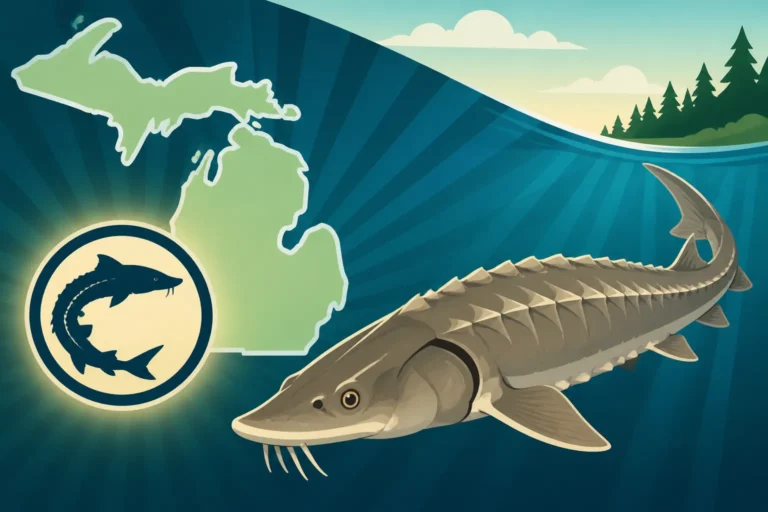
The most striking aspect of a lake sturgeon is its sheer size and unique torpedo-like body. These fish can grow absolutely massive, often reaching lengths of 5 to 7 feet, with some exceptional individuals exceeding 8 feet and weighing well over 200 pounds. Imagine reeling in something that could rival a person in height and weight! Their bodies are elongated, cylindrical, and tapered, giving them a streamlined appearance despite their bulk. Unlike many common game fish, they don't have scales in the traditional sense. Instead, their skin is tough and leathery, a testament to their armored heritage. This leathery texture is a key identifier – if it feels like thick, bumpy hide rather than smooth scales, you're on the right track.
Scutes: Nature's Armor Plating
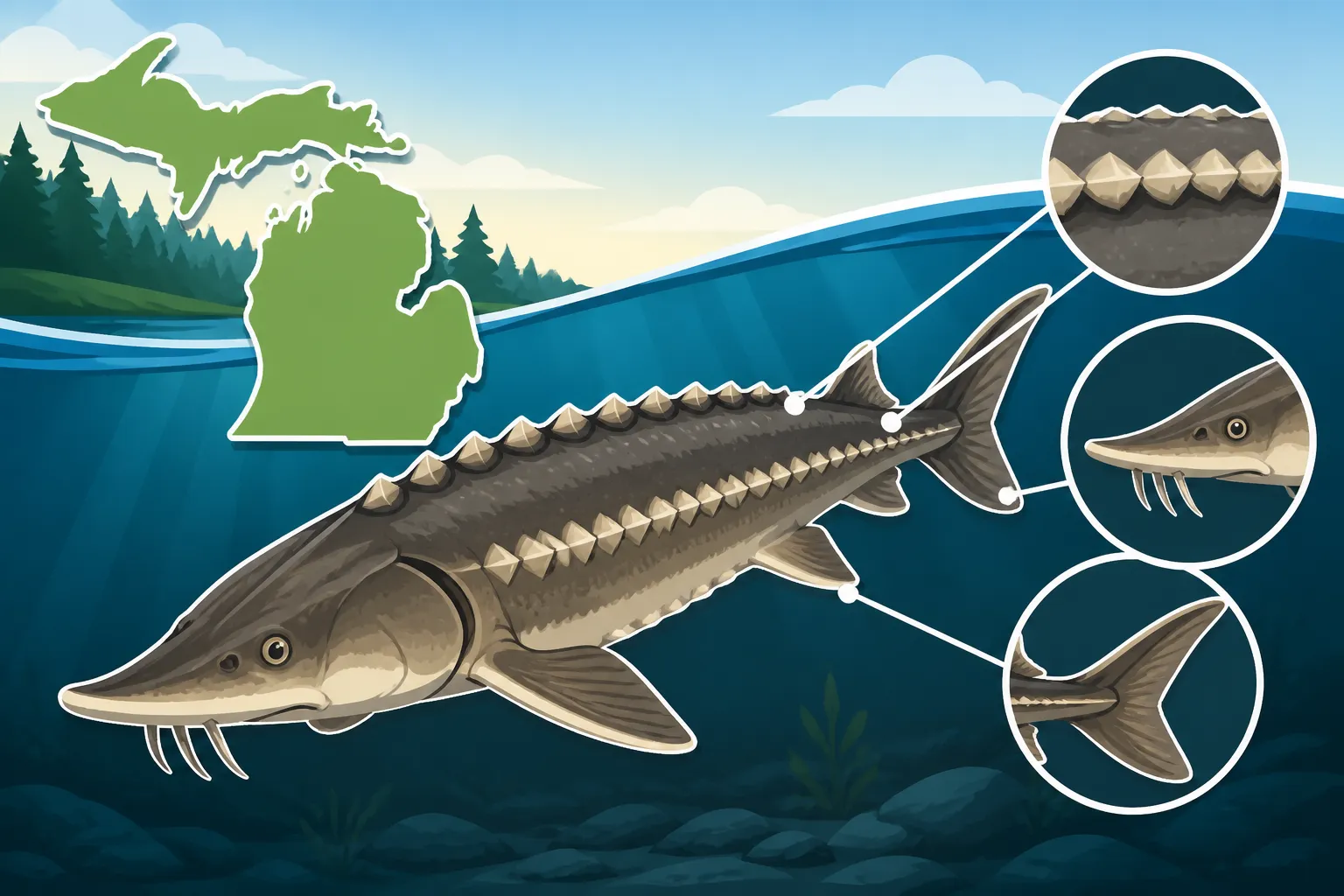
Perhaps the most definitive characteristic of a lake sturgeon, and indeed all sturgeon species, are the rows of bony plates, called scutes, that run along their bodies. These aren't just random bumps; they're distinctly arranged. You'll find five prominent rows of these scutes: one along the middle of the back (dorsal), one along each side (lateral), and two along the belly (ventral). These scutes are often lighter in color than the surrounding skin, especially on younger fish, and they can be quite sharp, particularly along the edges. Running your hand gently (and carefully!) along a sturgeon's side, you'll feel this distinct armor. This ancient feature serves as protection against predators, a design that has worked effectively for millions of years.
Mouth and Barbels: The Bottom Feeder's Toolkit
Flip a sturgeon over (gently, of course, if you're handling one) or observe its head, and you'll notice another unique set of features: its mouth and barbels. The mouth of a lake sturgeon is located on the underside of its head (ventral position), and it's protractible, meaning it can extend forward like a vacuum cleaner nozzle. This is perfectly adapted for its diet of bottom-dwelling insects, crustaceans, and small fish, which it sucks up from the lakebed. It lacks teeth in the conventional sense, further emphasizing its suction-feeding strategy.
Just in front of its mouth, you'll find four prominent, fleshy barbels. These are like highly sensitive whiskers that the sturgeon uses to feel and taste for food in the murky depths. They hang down in a distinct row, often described as looking like four little "feelers." The length, thickness, and precise arrangement of these barbels can even help distinguish between sturgeon species, though for Michigan anglers, they are a strong indicator of a lake sturgeon. Observing these barbels is crucial, as many other large fish in Michigan, like catfish, also have barbels, but they are typically arranged differently and the mouth structure will be distinct.
Tail and Fins: A Shark-Like Appearance
The tail of a lake sturgeon is another clue to its ancient lineage. It's heterocercal, which means the upper lobe of the tail fin is longer than the lower lobe, much like a shark's tail. This unique fin structure is less common among modern bony fish and is a clear indicator of a more primitive fish species. The other fins (dorsal, pectoral, pelvic, anal) are relatively small and set far back on the body, closer to the tail, which again contributes to its streamlined, almost shark-like appearance in the water.
Coloration: Blending with the Depths
Lake sturgeon typically exhibit a dull, often olive-brown to grayish-brown coloration on their backs and sides, fading to a lighter, sometimes yellowish or cream-colored belly. This drab coloration provides excellent camouflage against the dark, silty, or rocky bottoms where they spend most of their lives. While there can be some variation depending on the water clarity and substrate of a particular lake or river, the overall theme is one of earthy tones designed for concealment. You won't find bright, flashy colors on a sturgeon; they are masters of blending in. Many useful identification guides can be found on Amazon if you're looking for something comprehensive to take on your trips.
Where to Find Them: Habitat and Behavioral Clues
Knowing where lake sturgeon live and how they behave can greatly aid in their identification. These fish aren't just randomly distributed throughout Michigan; they prefer specific types of environments and exhibit predictable patterns that reveal their presence. Understanding their typical haunts helps narrow down what you might encounter.
Preferred Habitats: Rivers and Great Lakes Depths
In Michigan, lake sturgeon are primarily found in the Great Lakes and their major connecting rivers, such as the St. Clair River, Detroit River, and Saginaw River. They also inhabit larger inland lakes that are connected to these systems, like Black Lake. They are truly an anadromous species, meaning they spend much of their lives in large bodies of water (the Great Lakes) but migrate into rivers to spawn.
During their non-spawning periods, you'll typically find lake sturgeon in the deeper, cooler waters of lakes, often over rocky or sandy bottoms. They're benthic creatures, meaning they live on or near the bottom, constantly foraging for food. When they ascend rivers for spawning, usually in late spring to early summer, they seek out rocky shoals and gravel beds with moderate current. Observing a large fish in these specific environments, especially during spawning season, immediately raises the possibility of it being a lake sturgeon. You might even spot them breaching the surface, a truly spectacular sight, especially in rivers like the St. Clair, giving you a chance to see their distinctive profile.
Feeding Behavior: The Submerged Vacuum
As mentioned earlier, their subterminal, protractible mouth is perfectly designed for sucking up food from the bottom. This means they are not typically chasing down schools of baitfish in open water. Instead, they leisurely cruise along the bottom, using their sensitive barbels to detect prey hidden in the substrate. Their diet primarily consists of insect larvae (like midges and caddisflies), crayfish, snails, leeches, and occasionally small fish. If you're fishing near the bottom with baits attractive to these organisms, and you hook into something huge that stays deep and pulls like a tractor, it might just be a sturgeon. Unlike a fast-striking walleye or a thrashing bass, a sturgeon's fight is often characterized by sheer, unyielding power rather than quick runs.
Longevity and Slow Growth: A Patient Species
Lake sturgeon are incredibly long-lived fish. Females can live up to 150 years, and males around 55 years, making them one of the longest-living freshwater fish species in North America. They also grow very slowly, taking many years to reach maturity. This slow growth and long lifespan highlight their vulnerability to overfishing and habitat degradation, reinforcing why proper identification and careful handling are so critical. Encountering a sturgeon is a glimpse into a very old, very patient world. This slow life history means they can't quickly recover from population declines, making every individual fish incredibly valuable.
Lake Sturgeon vs. Other Michigan Fish: Avoiding Misidentification
While a lake sturgeon's features are unique, in the heat of the moment, with a large fish on the line, it's easy to jump to conclusions or confuse it with something else. Let's break down how to confidently distinguish a lake sturgeon from other species you might encounter in Michigan. This is where your field guide, perhaps one picked up from Amazon, really earns its keep.
Distinguishing from Other Sturgeon Species
Michigan waters primarily host lake sturgeon, but it's good to be aware of distinctions, even if other sturgeon are rare or not found in your specific fishing area.
- Shovelnose Sturgeon: While exceedingly rare in Michigan, mostly limited to the extreme southwestern lower peninsula's Mississippi River drainage, they are significantly smaller than lake sturgeon, rarely exceeding 30 inches. They also have a distinctly flattened, shovel-like snout (hence the name) and a fully armored tail filament, which the lake sturgeon lacks. Their barbels are also generally fringed, unlike the smooth barbels of the lake sturgeon.
- Atlantic Sturgeon: These are federally endangered and only historically present in a few Great Lakes tributaries connected to the Atlantic Ocean. If you somehow encountered one, its identification would be a momentous event for conservationists, but it's highly unlikely for an angler. They typically have a more pointed snout and are generally darker in color.
For most Michigan anglers, the distinction isn't between different sturgeon species, but rather between a lake sturgeon and other large fish.
Common Misidentifications and How to Avoid Them
Anglers sometimes confuse lake sturgeon with other large, bottom-dwelling fish, especially if only a fleeting glimpse is caught or if the fish is partially obscured.
| Feature | Lake Sturgeon | Large Catfish (e.g., Channel Catfish) | Large Carp (e.g., Common Carp) |
|---|---|---|---|
| Body Covering | Rows of bony scutes; leathery skin, no scales | Smooth, scaleless skin | Large, distinct scales (except Mirror/Leather Carp) |
| Mouth Position | Subterminal (underneath), protractible | Terminal or slightly subterminal, not protractible | Subterminal, protractible, often fleshy lips |
| Barbels | Four, smooth, in a row in front of mouth | Multiple (usually 8), distinct whiskers around mouth | Two small barbels at corners of mouth |
| Tail Fin | Heterocercal (upper lobe longer, shark-like) | Homocercal (forked, equal lobes) | Homocercal (forked or slightly emarginate, equal lobes) |
| Dorsal Fin | Single, far back, small | Single, often with a spine | Single, long base, often with a serrated spine |
| Coloration | Olive to grayish-brown, lighter belly | Gray to olive-brown, lighter belly | Brass to olive-green, lighter belly |
| Overall Impression | Ancient, armored, shark-like | Smooth-skinned, whiskered, robust | Scaly, deep-bodied, often with pronounced hump |
- Large Catfish (e.g., Channel Catfish, Flathead Catfish): Catfish also have barbels and can grow quite large, leading to confusion. However, catfish have smooth, scaleless skin, not bony scutes. Their mouths are typically terminal or slightly subterminal (at the front or just below), not strongly protractible like a sturgeon's. Catfish also have numerous barbels (typically eight on a channel catfish), while sturgeon only have four in a distinct row. The tail of a catfish is typically forked with equal lobes, not heterocercal.
- Common Carp: Carp can also grow very large and are strong fighters. They have large, distinct scales covering their body, which a sturgeon completely lacks. While carp have two small barbels at the corners of their mouth, they are much smaller and less prominent than a sturgeon's four barbels. Their mouth is also protractible but lacks the unique, vacuum-like structure of a sturgeon. Their body shape is generally deeper and more robust than a sturgeon's elongated form.
By paying attention to the unique combination of scutes, mouth, barbels, and tail, you can confidently identify a lake sturgeon and distinguish it from any other fish in Michigan waters. This knowledge is not just for bragging rights; it's essential for the well-being of this vulnerable species.
Why Proper Identification is Crucial for Conservation and Anglers
Encounters with lake sturgeon are rare and special. These magnificent fish were once abundant in the Great Lakes basin but faced severe declines due to overfishing and habitat loss in the late 19th and early 20th centuries. Today, they are a protected species in Michigan, and their conservation is a top priority. Knowing how to identify them correctly is not just a matter of curiosity; it's a legal and ethical responsibility for every angler.
Legal Protections and Regulations
Lake sturgeon are listed as a threatened or endangered species in many parts of their range, including Michigan. This means there are very strict regulations surrounding their interaction. In Michigan, lake sturgeon fishing is highly restricted, often limited to specific seasons, locations, and methods, usually with a mandatory catch-and-release policy. There are often special permits or tags required for any harvest, which is extremely rare and only allowed in very specific, limited fisheries, usually managed by tribal authorities. Misidentifying a lake sturgeon and attempting to keep it could lead to significant fines, confiscation of gear, and legal penalties. The Michigan Fishing Regulations Every Angler Should Know outlines these stringent rules.
Catch-and-Release Best Practices
Given their protected status, any lake sturgeon caught inadvertently must be handled with extreme care and released immediately. This is where identification becomes paramount. If you're unsure, treat it as a sturgeon:
- Keep it in the water: Avoid removing the fish from the water as much as possible, especially large ones. Their internal organs are not designed to support their massive weight out of water.
- Minimize handling: Use wet hands or gloves to minimize the removal of the protective slime coat.
- Remove hook quickly: Use long-nosed pliers or a dehooking tool to remove the hook with minimal damage. If the hook is deeply swallowed, cut the line as close to the hook as possible.
- Revive gently: If the fish seems sluggish, hold it gently in the current, facing upstream, until it regains its strength and swims away on its own.
- Report encounters: While not always mandatory for incidental catch-and-release, reporting encounters with sturgeon to the DNR can provide valuable data for population monitoring and conservation efforts.
Having the right gear for handling large fish, even if you're not targeting sturgeon, is a good idea. Large, knotless nets available on Amazon can help manage an unexpected big catch without harming the fish.
Contributing to Conservation Efforts
Every correctly identified and safely released lake sturgeon contributes to the recovery of this ancient species. State agencies and tribal governments work tirelessly to monitor sturgeon populations, restore spawning habitats, and educate the public. Your ability to correctly identify these fish supports these efforts by preventing accidental harvest and providing accurate data. Knowing the difference between a lake sturgeon and a common carp means you're acting as a steward for Michigan's unique aquatic heritage. Learning more about Michigan's native fish can be done by exploring resources like What Fish Are Native to Michigan.
The thrill of encountering a lake sturgeon is a truly unforgettable experience. By understanding their distinctive features, preferred habitats, and the critical importance of proper identification, you're not just becoming a more knowledgeable angler, you're becoming an active participant in the vital conservation of Michigan's living legends. The next time you're on the water, keep an eye out for these magnificent fish, and remember the responsibility that comes with sharing their waters. You can find more information on record-breaking fish in Michigan via Michigan's State Fish Records. For those interested in deeper insights into the Great Lakes species, Michigan's Great Lakes Fishing Guide offers a wealth of knowledge, and you can also learn about other large fish like the Muskellunge Fishing in Michigan. If you're curious about the specifics of sturgeon fishing, though rare, some information can be found under Is There Sturgeon Fishing in Michigan?.
Disclaimer
This article is for general informational purposes only and does not constitute professional advice. Laws, prices and regulations vary by location and change over time. Consult a qualified professional for guidance on your specific situation.