How Big Do Crappie Get in Michigan
One of the most satisfying experiences for any angler, especially those targeting panfish, is reeling in a truly respectable crappie. You've heard tales of "slab" crappie, those dinner-plate-sized beauties, and you might be wondering just how big crappie really get here in the Wolverine State. It's a valid question, because while catching a handful of small ones can be fun, landing a chunky crappie takes the experience to a whole new level. This guide will dive deep into the typical sizes you can expect, the factors that turn a small crappie into a monster, and how you can increase your chances of finding those elusive giants in Michigan's waters.
Understanding Crappie Size Expectations in Michigan
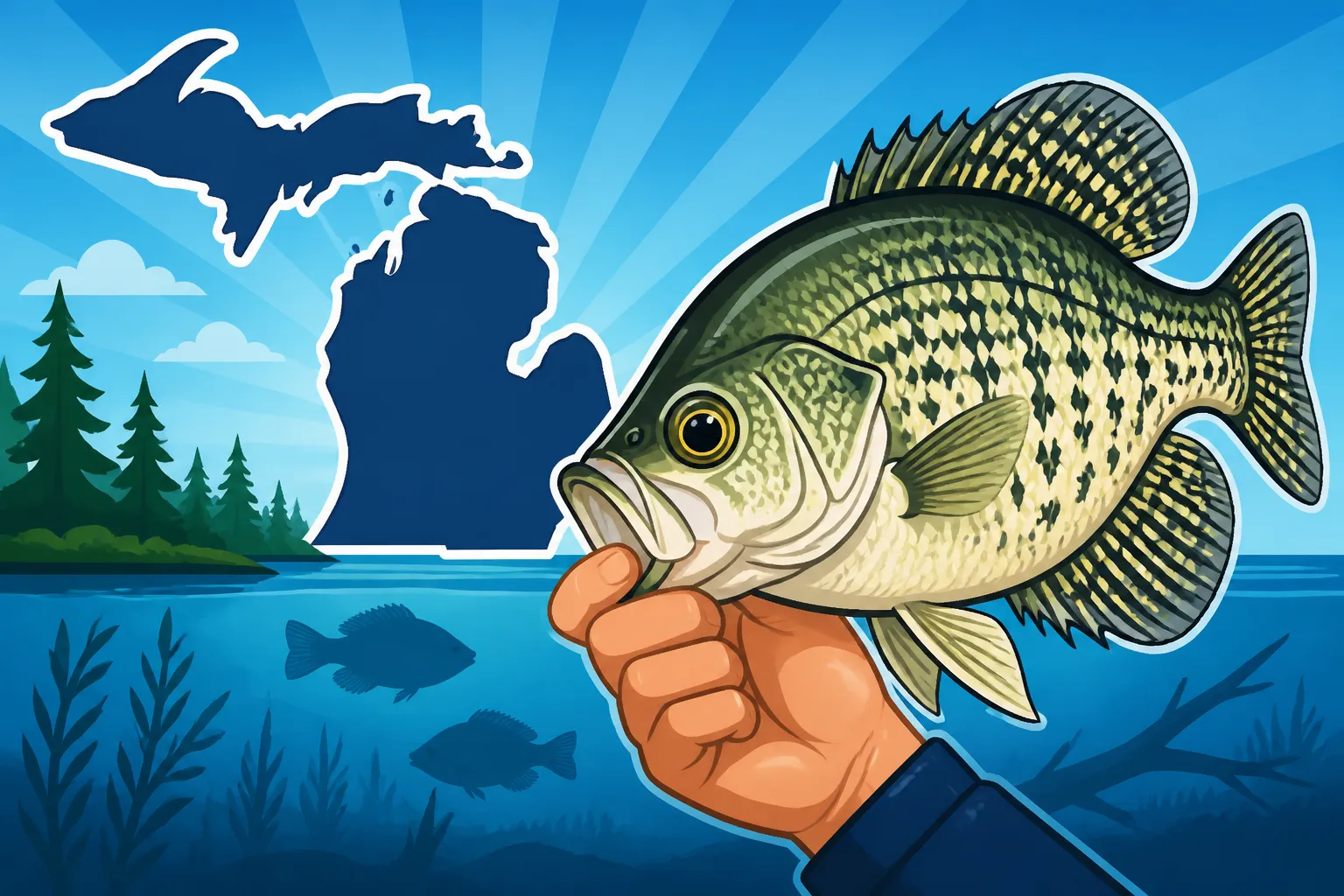
When you talk about crappie in Michigan, you're generally referring to two main species: black crappie and white crappie. Both are beloved panfish, known for their delicate, flaky white meat and their often-eager bite. However, their size can vary wildly depending on the body of water and a host of environmental factors.
Typical Crappie Sizes You'll Encounter
For the most part, if you're out crappie fishing in Michigan, you'll be catching fish in the 6 to 10-inch range. These are your bread-and-butter crappie, perfect for a fish fry and often found in healthy numbers. They're fun to catch, offer steady action, and are what most anglers consider a "good day" on the water.
- Average Catch: Many anglers consistently report catching crappie between 6 and 9 inches. These are often abundant, especially in lakes with good forage and structure. They provide a delightful bend to a light rod and are fantastic for introducing new anglers, particularly kids, to the joys of fishing. A typical school will have many fish in this size class.
- "Keeper" Size: While there aren't statewide minimum size limits for crappie in Michigan (always check local regulations, as exceptions do exist!), many anglers consider a crappie a "keeper" when it hits about 8 to 10 inches. At this size, there's enough meat to make filleting worthwhile, and they start to put up a slightly more substantial fight. When you're cleaning a mess of crappie, these are the ones that really fill the pan.
- "Slab" Crappie: This is where the excitement really builds! A "slab" crappie in Michigan is generally considered to be anything 12 inches or larger. These are the fish that make your heart thump a little harder as they come out of the water. Catching a 12-inch crappie is a fantastic achievement, and many anglers will spend hours specifically targeting these larger specimens. They are thicker, heavier, and provide a much more robust meal.
- Trophy Crappie: True trophy crappie in Michigan can push 14 to 16 inches, and even larger in rare instances. These are the fish of legends, often caught in specific lakes known for their crappie populations or by anglers who've dedicated themselves to understanding crappie behavior. Landing a crappie of this magnitude is a memorable event, and it often means you've found a special spot with ideal conditions. These impressive fish have grown over many years, dodging predators and anglers alike.
To give you a clearer picture, here's a general guide to crappie sizes you might encounter:
| Crappie Size Category | Typical Length (Inches) | Description | Angler Expectation |
|---|---|---|---|
| Small / Juvenile | < 6 | Often released, may indicate overpopulation | Common, good for practice, usually released |
| Average | 6 – 9 | Most commonly caught size | Good action, easy to catch, often kept for eating |
| Good Keeper | 9 – 11 | Solid meal, respectable fight | Desirable, good numbers can make a nice fish fry |
| Slab | 12 – 13 | Excellent size, highly sought after | Thrilling catch, indicates healthy crappie population |
| Trophy | 14+ | Rare, impressive specimen | Lifelong memory, potential for state records |
Michigan also boasts an impressive state record crappie that measured over 18 inches, a testament to the potential of our waters. While most anglers will never catch a fish of that caliber, it certainly keeps the dream alive!
What Does "How Big Do Crappie Get in Michigan" Really Mean?
When people ask this question, they're not just curious about the absolute maximum length, but also about the realistic expectations for a typical fishing trip. It's about understanding the average size in a given lake and knowing what constitutes a "good" crappie versus an exceptional one. It also informs your gear choices; you don't need heavy tackle for average crappie, but a robust net and careful handling are crucial for those big slabs.
Factors Influencing Crappie Size
The size a crappie attains is not simply a matter of time. A multitude of factors, both environmental and biological, play significant roles in whether a crappie will grow into a true Michigan slab or remain a smaller, albeit feisty, fish. Understanding these elements can help you identify waters with better potential for larger crappie.
Water Body Productivity and Forage Base
This is arguably the most critical factor. Crappie need plenty of food to grow big. Lakes and rivers that are rich in nutrients and support a robust population of their primary prey—small minnows, insects, and crustaceans—will produce larger crappie.
- Nutrient-Rich Waters: Lakes with a healthy algal bloom (within reason, not excessive) often have a strong base for the food chain. This means more zooplankton and insects, which in turn feed smaller baitfish that crappie devour. If a lake is "sterile" or very clear with few nutrients, it's less likely to support a large population of big crappie.
- Abundant Baitfish: Crappie are opportunistic feeders, and as they grow, their diet shifts towards larger prey. A lake teeming with fathead minnows, shiners, and other small baitfish provides the fuel for crappie to pack on weight and length. Conversely, if baitfish populations are low, crappie growth will be stunted. Anglers often find that lakes with a good balance of different forage species tend to produce the best crappie. If you're looking for bait, local tackle shops or even online retailers like Amazon often have a good selection of minnow traps or artificial baits that mimic natural forage.
Population Density and Competition
Think of it like a buffet: if there are too many diners, everyone gets less food. The same applies to crappie.
- Overpopulation: In some Michigan lakes, crappie can reproduce so successfully that the population becomes too dense for the available food supply. This leads to a phenomenon known as "stunting," where the fish mature at smaller sizes because there simply isn't enough food to go around for every individual to reach its full growth potential. You might catch dozens of crappie in such a lake, but few, if any, will exceed 8 or 9 inches.
- Interspecies Competition: Crappie also compete with other panfish species like bluegill, perch, and even juvenile bass for food and habitat. If a lake has an exceptionally high population of, say, bluegill, it might negatively impact crappie growth. Balancing the fish community is key to promoting larger sizes in any given species. You might find a lake that excels in Bluegill and Crappie Fishing in Michigan but the average size of both might be smaller due to competition.
Age and Growth Rate
Like all fish, crappie grow throughout their lives, but their growth rate isn't constant.
- Slow Growth: Crappie in Michigan generally grow slower than their counterparts in warmer southern states. Our colder winters mean a shorter growing season, as fish metabolism slows down significantly in cold water. A 12-inch crappie in Michigan might be several years older than a similarly sized fish caught further south.
- Longevity: To reach trophy sizes, crappie need to live long enough. Lakes with good habitat (like submerged timber, brush piles, and weed beds) that offer protection from predators like northern pike and large bass, as well as light fishing pressure, allow crappie to live longer and therefore grow larger. Anglers who practice catch-and-release for the biggest slabs are also contributing to the potential for truly massive crappie in a lake.
Water Quality and Habitat
Healthy habitat is paramount for healthy, large fish.
- Clear, Oxygenated Water: Crappie thrive in water that is well-oxygenated and free from excessive pollution. While they can tolerate some turbidity, extremely muddy or polluted water can stress them and inhibit growth.
- Structure and Cover: Crappie are structure-oriented fish. They love to congregate around submerged trees, brush piles, weed lines, docks, and bridge pilings. These structures provide ambush points for feeding and protection from predators. Lakes with abundant and diverse submerged structures often hold larger crappie. If you're looking to enhance your fishing success, portable fish finders, often available on Amazon, can help you locate these crucial underwater structures.
Distinguishing Between Black and White Crappie
Michigan is home to both black crappie (Pomoxis nigromaculatus) and white crappie (Pomoxis annularis). While they share many similarities and often inhabit the same waters, there are subtle differences in their appearance, preferred habitats, and even their maximum size potential. Knowing how to tell them apart can sometimes give you clues about the specific environment you're fishing and what to expect.
Key Visual Differences
At a glance, both species are silvery with dark blotches, but upon closer inspection, the distinctions become clear.
- Dorsal Fin Spines: This is the most reliable way to differentiate them.
- Black Crappie: Typically have 7 or 8 dorsal fin spines.
- White Crappie: Almost always have 5 or 6 dorsal fin spines.
Counting these small spines is a definitive method, especially on larger fish where other features might be less distinct.
- Body Shape:
- Black Crappie: Tend to have a more rounded, deeper body, giving them a more "slab-sided" appearance.
- White Crappie: Often have a more elongated body, appearing somewhat torpedo-shaped compared to their black cousins.
- Coloration and Pattern:
- Black Crappie: Feature irregular, scattered black spots or blotches all over their body, giving them a "peppered" look. These spots don't form distinct vertical bars.
- White Crappie: Possess distinct vertical bars (usually 7-9 of them) along their sides. The black spots are typically less pronounced and often follow these bars. In some populations, these bars can be quite faded, making identification a bit trickier, but they are generally present.
- Snout and Mouth:
- Black Crappie: Tend to have a slightly more upturned snout.
- White Crappie: Their snout can appear more pointed, and their mouth tends to extend slightly further back past the eye.
Habitat Preferences and Behavior
While there's overlap, each species has slight preferences that can affect their growth and where you might find them. For more details on identification, check out How to Tell a Black Crappie From a White Crappie.
- Black Crappie: Generally prefer clearer, cooler water with more vegetation and structure. They are often found in weed beds, around submerged timber, and near other natural cover. They are a bit more tolerant of colder temperatures, which might give them a slight edge in some northern Michigan waters.
- White Crappie: Tend to be more tolerant of turbid (murky) water and often prefer larger, slower-moving rivers and open-water areas, though they will still use structure. They can often be found in waters that might be considered less "pristine" but still highly productive.
Size Potential: Is One Bigger Than the Other?
It's a common belief that white crappie generally grow larger than black crappie. While it's true that many state records for crappie are held by white crappie, the difference is often marginal and highly dependent on the specific body of water.
- Overall Trend: In Michigan, both species have the potential to grow into impressive "slabs." The record books might show a slight edge to white crappie in terms of maximum potential size, but in most angling situations, you're equally likely to find large individuals of either species if the conditions are right. A 15-inch black crappie is just as much a trophy as a 15-inch white crappie.
- Local Conditions Prevail: Ultimately, the local environmental factors like food availability, water quality, and population density will dictate the average and maximum size more than the species itself. Some lakes might produce exceptional black crappie, while others are known for their white crappie populations.
Fishing for Michigan's Crappie: Tips for Finding Bigger Ones
So, you're armed with knowledge about crappie sizes and what makes them tick. Now, how do you translate that into hooking into those larger Michigan crappie? It's often about strategy, patience, and sometimes, a little bit of specialized gear. If you're generally interested in panfish, our Michigan Panfish Species Guide has more broad information.
Timing is Everything: Seasons and Time of Day
Crappie are active year-round, but certain times offer better opportunities for bigger fish. If you're wondering about the best time to fish, a good starting point is Best Season to Catch Panfish in Michigan.
- Spring Spawn (April-June): This is arguably the most popular and productive time for crappie, as they move into shallower waters to spawn. They are aggressive and concentrated, making them easier to locate. Look for them in shallow bays, around submerged brush, and near docks where water temperatures are in the 50s and 60s Fahrenheit. The biggest females will be shallow before and after they lay their eggs.
- Summer (June-August): As waters warm, crappie often retreat to deeper, cooler water, often suspending over structure or deep-water humps. Early mornings and late evenings can be productive when they move shallower to feed. Night fishing under lights can also be incredibly effective, as baitfish are attracted to the light, bringing crappie with them.
- Fall (September-November): Crappie become more active again as water temperatures cool, feeding heavily to prepare for winter. They can often be found relating to deep structure or congregating in major basins, similar to summer patterns but sometimes shallower.
- Winter (December-March): Ice fishing for crappie is a hugely popular pastime in Michigan. They tend to school up tightly in deep basins or around submerged structure. While you might catch more numbers of smaller fish, dedicated ice anglers often pull out some impressive slabs during the hardwater season. For more about winter fishing, consult our Michigan Ice Fishing Guide.
Locating Crappie: Reading the Water
Crappie are nomadic schoolers, constantly on the move, but they are also highly reliant on structure and cover.
- Submerged Structure: This is crappie central. Look for fallen trees, brush piles, old dock pilings, rock piles, and artificial fish habitats. These provide cover, shade, and ambush points. Using a good fish finder can be invaluable for locating these hidden treasures. You can often find decent, budget-friendly options on platforms like Amazon.
- Weed Lines and Docks: In shallower waters, especially during spring and fall, crappie will hug the edges of weed beds and the shaded undersides of docks. Pitching a jig or minnow tight to these areas can yield big results.
- Open Water Suspension: In deeper lakes, especially during summer and winter, crappie will often suspend in the water column, sometimes far from the bottom, chasing schools of baitfish. A good fish finder is essential here to pinpoint their depth.
Baits and Lures for Bigger Crappie
While crappie will hit a wide variety of offerings, certain baits and lures tend to be more effective for enticing larger fish. For a deeper dive into bait, check out Best Bait for Michigan Crappie.
- Live Minnows: A live minnow, particularly a larger one, fished under a bobber or on a slip sinker rig, is often irresistible to big crappie. The natural movement is hard to beat.
- Small Jigs: Tiny jigs (1/32 to 1/16 ounce) tipped with a small plastic grub, tube, or even a piece of live bait are incredibly versatile. Colors like white, chartreuse, pink, and black are often productive. Experiment with jigging action—slow lifts and drops, or steady retrieves.
- Spinnerbaits and Crankbaits (Small): While less common for crappie, micro-spinnerbaits and very small crankbaits can sometimes trigger strikes from larger, more aggressive crappie, especially when they are actively chasing baitfish.
- Scented Baits: Adding a scent to your artificial lures can often give you an edge, especially in stained water or during slow bites. There are many commercially available scents that can be applied to jigs and plastics.
Tackle Considerations
You don't need heavy gear, but the right light tackle can make a difference.
- Rods: A light to ultralight spinning rod, 6 to 7 feet in length, provides the sensitivity to detect subtle bites and the backbone to handle larger fish. A fast action tip is ideal for jigging.
- Reels: A small, smooth spinning reel (500 to 1000 size) spooled with light line is perfect.
- Line: 2 to 6-pound test monofilament or fluorocarbon is generally sufficient. Braided line with a fluorocarbon leader can offer increased sensitivity and strength. Consider checking out various options on Amazon for the ideal line for your crappie setup.
- Bobbers: Slip bobbers are incredibly popular, allowing you to easily adjust your depth and present your bait precisely where the crappie are holding. For more on this, see Best Bobber Setup for Panfish.
- Hooks: Small, sharp hooks are key. #6 to #10 Aberdeen or Octopus style hooks work well. If you're using jigs, ensure they have quality, sharp hooks. Generally, a smaller hook is better for panfish; for specific advice, refer to What Size Hook for Panfish.
Advanced Techniques for Slabs
To consistently catch larger crappie, sometimes you need to think outside the box.
- Spider Rigging: This technique involves using multiple long rods (often 8-16 feet) extending out from the boat, each rigged with a separate bait or jig, covering a wide area. This is particularly effective for slowly trolling or drifting open water to find suspended schools of crappie.
- Side Imaging/Down Imaging Sonar: Modern fish finders with side imaging can be a game-changer for finding brush piles, submerged timber, and schools of crappie that traditional 2D sonar might miss. Learning to interpret these displays can significantly improve your success.
- Vertical Jigging: When crappie are schooled tightly, often under a boat or ice hole, vertical jigging small spoons or ice jigs (even during open water) can be deadly. Precision is key.
Remember, patience and persistence are your greatest allies. Even in the best crappie waters, the biggest fish can be elusive. Keep experimenting with locations, depths, and presentations, and eventually, you'll be rewarded with those Michigan slab crappie dreams are made of.
Disclaimer
This article is for general informational purposes only and does not constitute professional advice. Laws, prices and regulations vary by location and change over time. Consult a qualified professional for guidance on your specific situation.