How to Identify Atlantic Salmon on Lake Huron
Atlantic Salmon identification in Lake Huron helps anglers follow Michigan regulations and understand local conservation efforts.
Know what’s on the line.
Gamefish and panfish profiles — identification, behavior, feeding habits, and species-specific strategies for every catch.
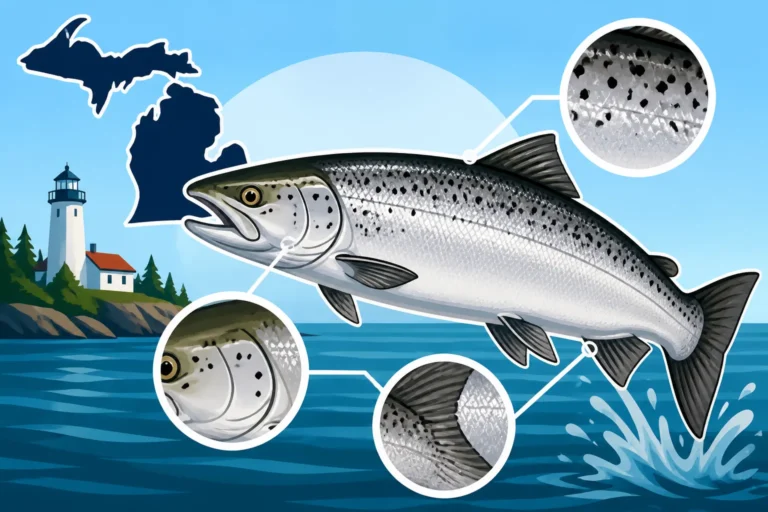
Atlantic Salmon identification in Lake Huron helps anglers follow Michigan regulations and understand local conservation efforts.
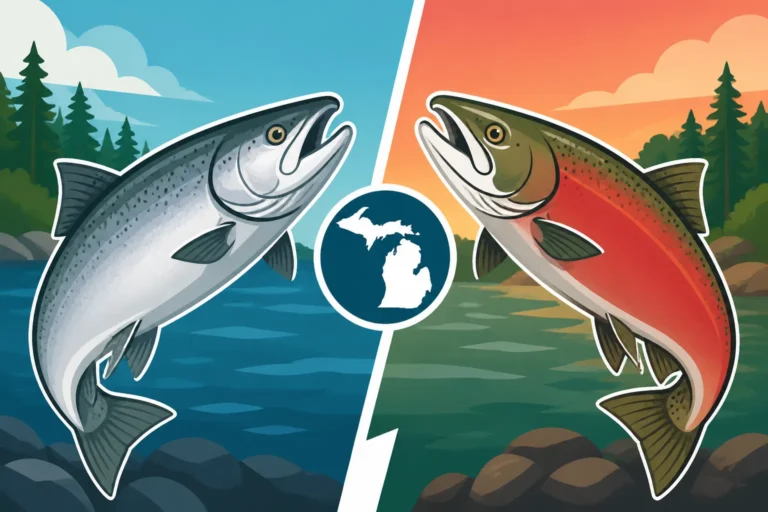
Chinook and Coho salmon identification details help Michigan anglers tell these two species apart by examining gums and tail spots.
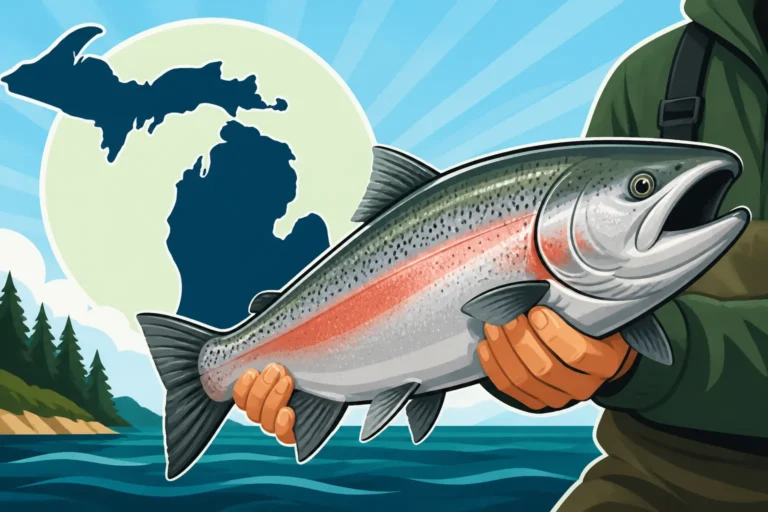
Michigan Coho salmon typical weights range from five to eight pounds, while the historical state record reaches 27.69 pounds.

Ray Hawn caught the 46-pound, 1-ounce state record Chinook salmon in Lake Michigan near the St. Joseph River mouth on August 12, 1978.
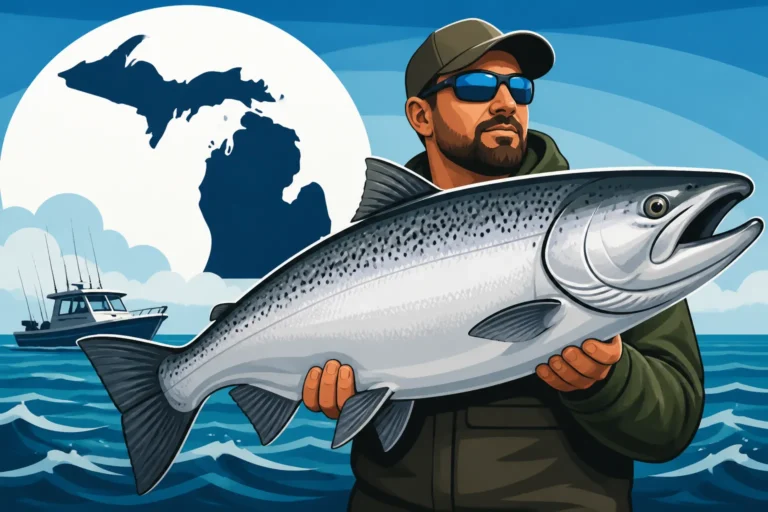
Chinook salmon in the Great Lakes typically weigh eight to thirty pounds, measuring twenty-eight to thirty-six inches long.
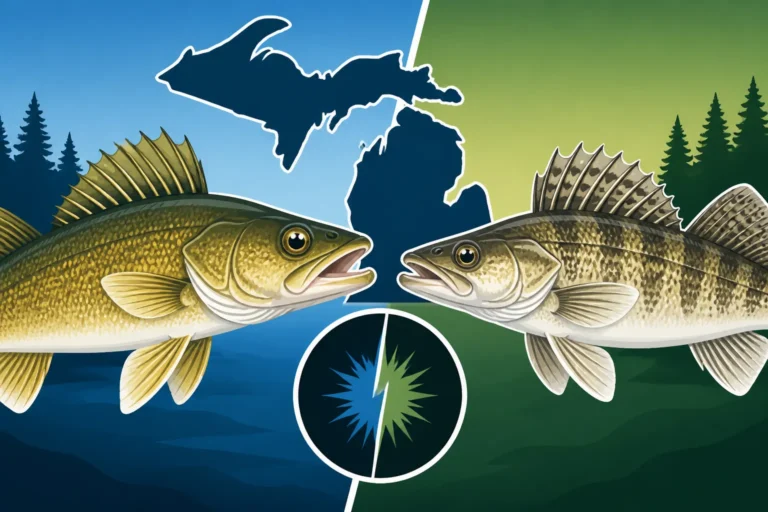
Walleye and sauger identification details for Michigan anglers, comparing dorsal fin spots, tail markings, and size differences up to 10 pounds.
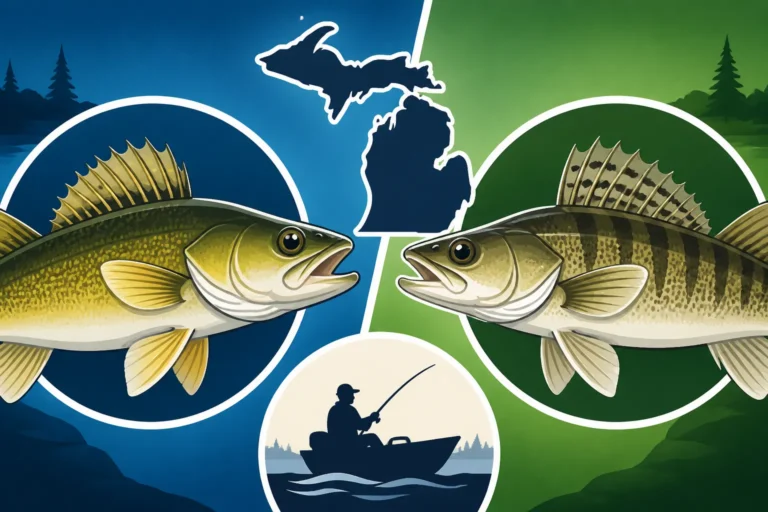
Physical traits of Michigan walleye and sauger help anglers follow state regulations and avoid Saginaw Bay fishing penalties.
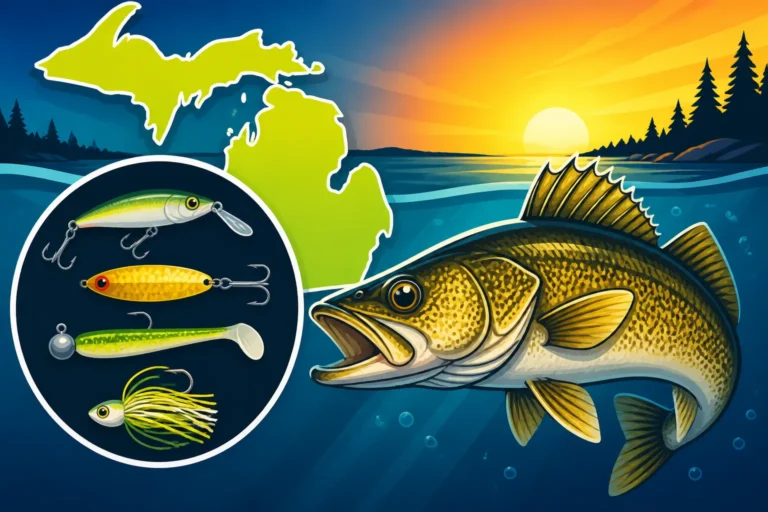
Michigan walleye behavior, seasonal patterns, and habitats determine the most effective lures for Great Lakes, inland lakes, and rivers.
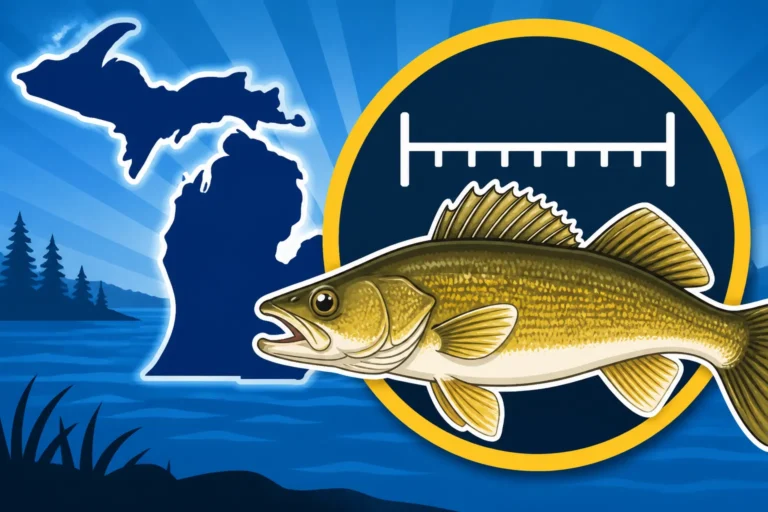
Michigan walleye fishing regulations, including the fifteen inch minimum size limit and daily bag limits for most waters.
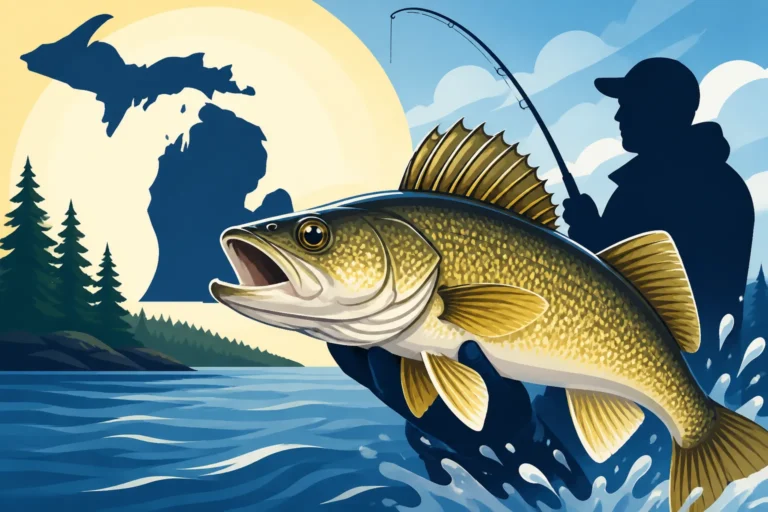
Michigan walleye sizes range from average catches of 15 to 22 inches up to trophy fish exceeding 30 inches and 15 pounds.