Best Life Jacket for Cold Water Boating
Few things can turn a fantastic day of fishing on Michigan's beautiful, abundant waters into a nightmare faster than an unexpected plunge into icy cold water. The bitter truth is that Michigan's lakes and rivers, even the Great Lakes, often maintain dangerously low temperatures long after the air warms up, and without the right personal flotation device (PFD), your chances of survival can plummet. This guide will walk you through everything you need to know about choosing the best life jacket specifically designed to keep you safe when boating in cold water.
Why Cold Water Fishing in Michigan Demands Specific Safety Gear
Michigan anglers are a hearty bunch, accustomed to dealing with all sorts of weather. But there's a unique and often underestimated danger lurking beneath the surface: cold water. Even on a sunny spring or fall day, the water temperature in many of our beloved fishing spots can be shockingly low, posing a significant threat if you accidentally find yourself overboard. It’s not just about staying afloat; it’s about surviving the immediate and long-term effects of cold exposure. Understanding these dangers is the first step to truly appreciating the need for specialized cold water safety gear.
The Shocking Truth of Cold Water Immersion
Imagine this: you're out on Lake Superior, maybe trying for some Lake Superior Brook Trout Fishing, the air is crisp, but the sun is shining. Suddenly, your boat capsizes or you slip off the deck. The moment you hit that frigid water, your body goes into what's called "cold water shock." This isn't just a shiver; it's an involuntary gasp for air, often followed by hyperventilation, a rapid increase in heart rate and blood pressure, and even disorienting panic. This initial shock can be so severe that it causes a person to inhale water and drown almost immediately, even if they are a strong swimmer. The cold can also quickly incapacitate your muscles, making it nearly impossible to swim or even tread water effectively. Within minutes, your strength and coordination can be severely compromised, making self-rescue incredibly difficult, if not impossible.
How Hypothermia Sets In
Beyond the initial cold shock, the relentless chill of Michigan's waters quickly leads to hypothermia. Hypothermia occurs when your body loses heat faster than it can produce it, causing your core body temperature to drop to dangerously low levels. This isn't just about feeling cold; it's a progressive and potentially fatal condition. In water below 60 degrees Fahrenheit (which is common for much of the year across Michigan, especially on the Great Lakes), significant heat loss can occur within minutes. As your body tries to conserve heat, blood flow to your extremities decreases, leading to numbness, loss of dexterity, and impaired judgment. You might start to shiver uncontrollably, become confused, experience slurred speech, and eventually lose consciousness. A standard life jacket keeps you afloat, but it does little to prevent this rapid heat loss, highlighting the need for a PFD designed with thermal protection in mind.
The Critical "1-10-1" Rule for Survival
To truly grasp the urgency of proper cold water protection, many safety experts refer to the "1-10-1" rule. This simple guideline outlines what you can expect in cold water:
- 1 Minute: You have approximately 1 minute to control your breathing and escape the immediate cold shock. This is where your involuntary gasp and hyperventilation take over. During this minute, you need to focus on getting your breathing under control, which is incredibly difficult in cold water.
- 10 Minutes: You have roughly 10 minutes of meaningful movement and muscle control. After this short window, the cold will start to severely impact your ability to perform simple tasks like putting on a life jacket (if you weren't wearing one), attempting to re-enter your boat, or even signaling for help.
- 1 Hour: You have about 1 hour before unconsciousness from hypothermia typically sets in. While this might seem like a long time, in the vastness of the Great Lakes or a remote inland lake, rescue might not arrive within this timeframe.
This "1-10-1" rule makes it clear: every second counts, and being prepared before an incident occurs is paramount. Wearing the right life jacket from the moment you step on the boat is not just a good idea, it's a life-saving decision. For more details on overall regulations, check out Michigan Fishing Regulations Every Angler Should Know.
Understanding Life Jacket Types for Michigan's Chilly Waters
Not all life jackets are created equal, especially when it comes to the unique challenges of cold water. While any US Coast Guard (USCG) approved PFD will provide flotation, certain types offer superior protection against the elements and are better suited for Michigan's colder fishing seasons. Knowing the differences can genuinely impact your survival if you end up in the water unexpectedly. This is a critical piece of gear that ties directly into Life Jackets and Michigan Boating Safety Rules.
Inherently Buoyant PFDs: Your Primary Cold Water Defense
Inherently buoyant PFDs are the traditional "foam-filled" life jackets that most people picture. They get their buoyancy from closed-cell foam materials sewn directly into the jacket, meaning they provide constant flotation without needing to be inflated. For cold water boating, these are often the best choice for several reasons:
- Instant Flotation: They work immediately upon contact with water, no action required from the wearer. This is crucial during cold water shock when your ability to react is severely impaired.
- Thermal Protection: Many inherently buoyant PFDs, especially those designed for colder conditions (often Type III or Type V), offer a degree of thermal insulation. The foam itself can act as a barrier against heat loss, and some models are constructed with thicker materials or even fleece linings to enhance warmth.
- Durability and Reliability: With no mechanical parts to fail, these PFDs are generally robust and reliable, requiring less maintenance than inflatable options.
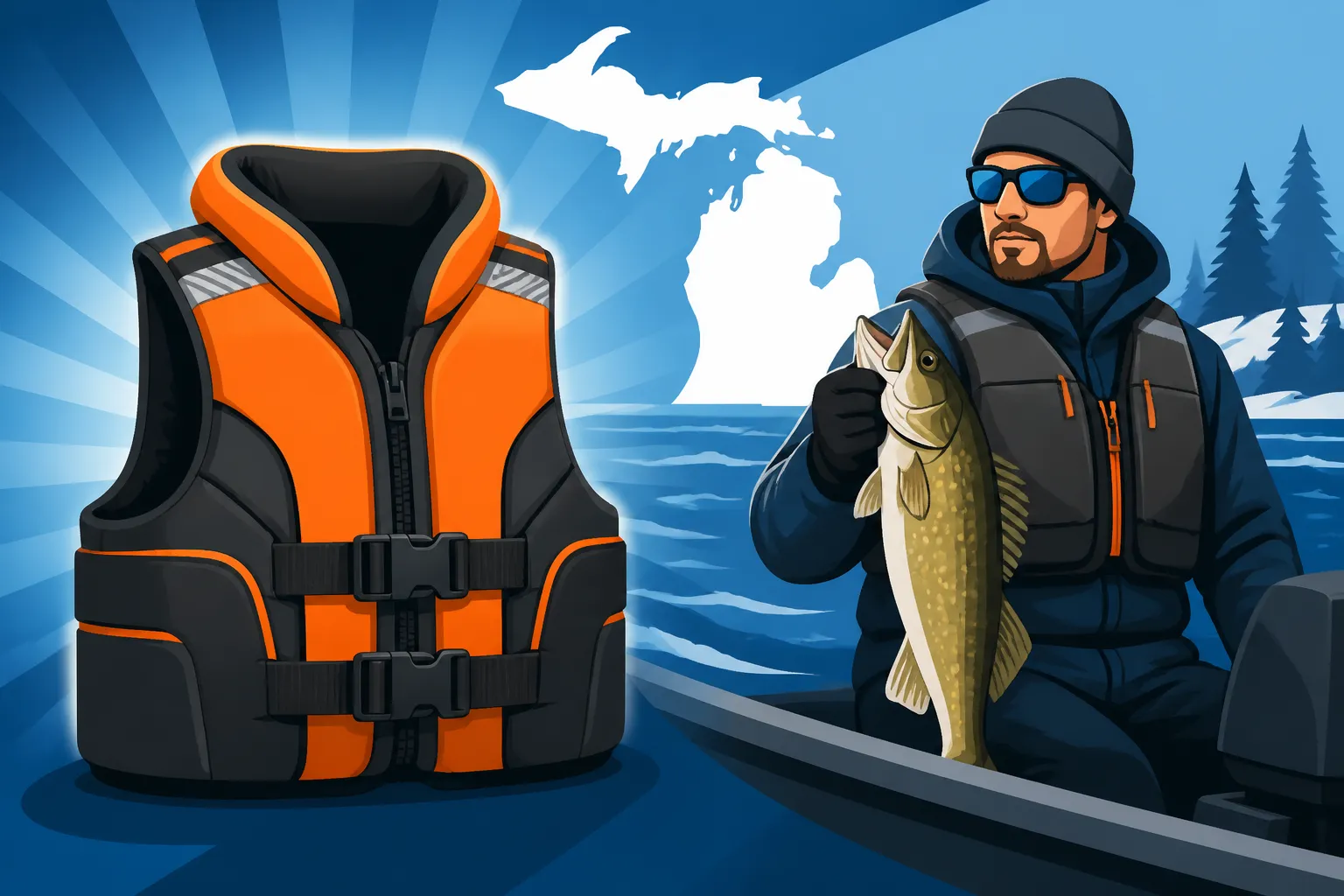
For anglers spending significant time on chilly waters, a Type III or Type V inherently buoyant PFD is often recommended. A "flotation coat" or "flotation suit" is an excellent example of a Type V PFD that offers both flotation and significant thermal protection, essentially being a warm winter coat that doubles as a life jacket.
Inflatable PFDs: Considerations for Cold Conditions
Inflatable PFDs are popular for their sleek, low-profile design, offering greater mobility and comfort for many anglers. They come in two main types:
- Manual Inflation: You pull a cord to deploy the CO2 cartridge.
- Automatic Inflation: They inflate automatically upon water immersion.
While convenient, inflatable PFDs have some crucial considerations for cold water use:
- Requires User Action (Manual): If you're hit with cold water shock and lose consciousness or become disoriented, you might not be able to pull the inflation cord.
- Delayed Inflation (Automatic): While automatic, there's still a slight delay, and some automatic models might not deploy correctly if submerged under heavy clothing.
- Limited Thermal Protection: Inflatable PFDs offer virtually no thermal protection until they are inflated, and even then, the inflated bladder provides only minimal insulation compared to a foam-filled jacket or suit.
- Maintenance: They require regular inspection of the CO2 cartridge and inflation mechanism, especially if exposed to harsh conditions.
For these reasons, while suitable for warmer waters or specific fishing situations, inflatable PFDs are generally not the primary recommendation for extreme cold water conditions unless specifically designed with additional thermal features. They can be a good choice as a backup or for very active fishing where mobility is paramount, but always be aware of their limitations in the cold.
Specialized Flotation Suits for Extreme Michigan Winters
For the dedicated ice angler or those venturing onto Michigan's Great Lakes in the dead of winter, a specialized flotation suit (often a Type V PFD) is the ultimate cold water safety gear. These are essentially full-body suits designed to provide maximum thermal insulation and inherent buoyancy.
- Superior Thermal Protection: Flotation suits are heavily insulated, designed to keep your body warm even after prolonged immersion in freezing water. Many are also waterproof, adding another layer of protection from the elements.
- Integrated Flotation: The entire suit is filled with flotation material, ensuring that if you go through the ice or fall overboard, you'll float high in the water, face up, without needing to don a separate life jacket.
- Enhanced Survival Time: By combining flotation and warmth, these suits significantly extend your survival time in dangerously cold water, giving rescue teams more time to reach you.
While bulkier and sometimes more restrictive than a standard life jacket, the trade-off in safety for extreme cold conditions is well worth it. They are essential for Michigan Ice Fishing Guide and offer peace of mind when fishing Michigan's larger, colder bodies of water.
Essential Features of the Best Cold Water Life Jacket
Choosing a cold water life jacket isn't just about picking one that floats; it's about selecting one with specific features that combat the unique dangers of frigid Michigan waters. You want a PFD that works with you, not against you, in an emergency. This goes beyond just meeting Michigan Boating Laws for Anglers; it's about proactive safety.
Prioritizing Thermal Protection and Insulation
When you're dealing with cold water, keeping your body temperature up is just as important as staying afloat. Look for life jackets that explicitly mention thermal properties:
- Insulation: Many cold water PFDs are built with thicker foam or additional layers of insulating material to reduce heat loss. Flotation coats are prime examples, as they combine a warm jacket with PFD capabilities. Consider the overall thickness and material composition. Is it something that would feel warm even when wet, or is it merely a thin shell?
- Wind and Water Resistance: A good cold water PFD should have a durable outer shell that resists wind and sheds water. This prevents evaporative cooling and keeps you drier, helping to maintain your core temperature. Materials like heavy-duty nylon or Cordura are common choices. Some suits even feature integrated hoods to protect your head, where significant heat loss can occur.
- Full Coverage: The more body surface area the PFD covers, the better its insulating properties. Flotation coats and suits offer the most comprehensive coverage, protecting your torso, arms, and even legs in some cases. A vest-style PFD, while offering flotation, leaves your arms and legs exposed to the cold, which can accelerate heat loss.
Ensuring Unrestricted Mobility and a Snug Fit
As an angler, you need to be able to cast, reel, and move freely around your boat or shoreline. A life jacket that hinders your movement is one you might be tempted not to wear, which defeats the entire purpose.
- Segmented Foam Panels: Modern PFDs, especially those designed for active use, often feature segmented foam panels. This allows the jacket to flex and bend with your body, providing comfort and preventing it from riding up or chafing. Try on different styles to see how they feel when you simulate casting motions.
- Adjustable Straps: Look for multiple adjustable straps (shoulders, sides, waist) that allow for a snug, customized fit. A properly fitting PFD should feel secure but not restrictive. It shouldn't ride up around your ears when you're floating in water, which is a common issue with ill-fitting jackets. Test the fit by lifting your arms – if it comes up past your chin, it's too loose.
- Ergonomic Design: Some PFDs are specifically cut for angling, with larger armholes, short waists to accommodate waders or seated positions, and strategically placed pockets. Brands often consider the needs of fishing when designing their jackets, so look for those tailored to anglers. For certain river fishing techniques, like Drift Fishing Michigan Rivers for Steelhead, having a PFD that allows for freedom of movement is paramount.
Crucial Safety Add-ons for Cold Water Environments
Beyond flotation and warmth, several additional features can greatly increase your chances of rescue and survival in cold water:
- Crotch Straps: These are absolutely essential for cold water PFDs. Crotch straps prevent the life jacket from riding up over your head when you're in the water, ensuring it stays properly positioned to keep your mouth and nose clear of the surface. Without them, even a well-fitting PFD can shift dangerously, rendering it far less effective.
- Whistle: A simple plastic whistle attached to your PFD can be a lifesaver. Shouting for help over wind and waves in cold water can quickly exhaust you and become impossible as hypothermia sets in. A whistle provides a sustained, piercing signal that carries much further.
- Reflective Tape: SOLAS (Safety Of Life At Sea) grade reflective tape patches on your PFD significantly increase your visibility, especially in low light conditions, fog, or at night. This is crucial for search and rescue efforts, making it easier for boats or aircraft to spot you.
- Attachment Points/Pockets: While not directly safety features, D-rings, loops, and waterproof pockets can be invaluable for attaching small safety items like a signaling mirror, strobe light, or a waterproof VHF radio for communication in an emergency. Being able to access these tools quickly without fumbling in the cold can make a difference.
Choosing, Sizing, and Maintaining Your Cold Water PFD
Now that you know why cold water PFDs are vital and what features to look for, let's talk about the practical aspects of getting one that's perfect for you and ensuring it lasts. It's an investment in your safety on Michigan's waters, so treat the selection process with care.
Finding the Right Fit for Optimal Safety
The importance of a proper fit cannot be overstated. An ill-fitting life jacket is a dangerous life jacket. It might keep you afloat, but if it rides up and covers your face, or if it's so loose that you slip out of it, it won't do its job effectively.
- Check Weight and Chest Size: Most PFDs are sized by user weight and chest circumference. Be honest with these measurements! Don't just grab your t-shirt size. Measure around the fullest part of your chest. If you're on the border between sizes, it's often better to size up slightly if the jacket is adjustable, as you can always tighten it down.
- Layering Considerations: Think about what you typically wear when fishing in cold weather. Will you have a thick sweater or a heavy jacket under your PFD? You'll need to account for that bulk when trying it on. Try the PFD on over your usual fishing attire to get the most accurate fit.
- The "Lift Test": Once you have the PFD on and all straps are tightened, have a friend gently lift the PFD by the shoulder straps. If it slides up over your chin or ears, it's too big or not adjusted correctly. You want it to stay firmly in place, allowing your head to remain above water. For those needing specific certifications, knowing this ensures compliance with Michigan Boating Safety Certificate Requirements.
Where to Purchase Quality Cold Water Life Jackets
When it comes to safety gear, it's worth investing in quality. Don't skimp on a life jacket that could save your life.
- Specialty Outdoor Retailers: Stores like Bass Pro Shops are excellent places to find a wide selection of PFDs, including specialized cold water options. Their staff often has expertise in boating and fishing gear and can help you with sizing and features. Being able to physically try on different models is a huge advantage. They often carry reputable brands known for marine safety.
- Online Retailers: Websites like Amazon offer an enormous variety of life jackets, often at competitive prices. The downside here is you can't try them on. If buying online, be meticulous with size charts, read reviews carefully, and understand return policies. Look for specific features mentioned above, like crotch straps, reflective tape, and USCG approval. Make sure to choose reputable brands rather than unverified sellers.
- Marine Supply Stores: Dedicated marine supply stores, especially in coastal towns around the Great Lakes, will often carry a selection of heavy-duty PFDs and flotation suits geared towards serious boaters and professional mariners, which are often excellent choices for extreme cold water use.
Remember, a PFD should be USCG-approved. Always look for the approval stamp or label.
Care and Inspection to Prolong Your PFD's Lifespan
Even the best life jacket needs regular care and inspection to ensure it remains effective. Neglecting your PFD can lead to its failure when you need it most.
- Regular Cleaning: After each use, especially in saltwater or murky freshwater, rinse your PFD with fresh water to remove dirt, salt, and fish slime. Hand wash with mild soap if needed, then air dry thoroughly out of direct sunlight. Never use harsh chemicals or machine wash, as this can damage the foam or fabric.
- Visual Inspection: Before every outing, give your PFD a quick once-over. Look for:
- Tears, rips, or punctures in the outer fabric.
- Frayed or damaged straps and buckles.
- Signs of mildew or sun fading, which can weaken the material.
- Crushed or compressed foam, indicating a loss of buoyancy.
- For inflatable PFDs, check the CO2 cylinder and indicator, and ensure all inflation mechanisms are free of debris.
- Proper Storage: Store your PFD in a cool, dry, well-ventilated place away from direct sunlight, extreme temperatures, and chemicals. Don't store it compressed under heavy objects, as this can damage the foam. Hanging it up is often the best option.
- Testing Buoyancy: Periodically, in a controlled environment, test your PFD's buoyancy. Put it on and jump into shallow water to ensure it supports you effectively. If it doesn't perform as expected, it's time to replace it.
Taking good care of your cold water life jacket means it will be ready to perform its life-saving duty whenever Michigan's unpredictable waters throw you a curveball. Being prepared for varying conditions across the state is crucial, whether you're fishing Michigan's Great Lakes Fishing Guide or smaller inland waters.
| PFD Type | Key Advantage for Cold Water | Key Consideration for Cold Water | Best Use Case |
|---|---|---|---|
| Inherently Buoyant Vest | Instant flotation, some thermal insulation | Limited thermal coverage (arms/legs exposed) | Spring/Fall boating, active fishing, universal use |
| Flotation Coat/Jacket | Excellent thermal protection, integrated flotation, warmth | Bulkier than vests, can restrict some extreme arm movements | Colder weather fishing, good mobility |
| Flotation Suit | Maximum thermal protection, full-body insulation/flotation | Heaviest/bulkiest option, least mobility | Extreme cold, ice fishing, offshore Great Lakes in winter |
| Inflatable PFD | Low profile, excellent mobility | No thermal protection until inflated, requires user action | Warmer water, active users, as a secondary option in cold |
Disclaimer
This article is for general informational purposes only and does not constitute professional advice. Laws, prices and regulations vary by location and change over time. Consult a qualified professional for guidance on your specific situation.