How to Tie a Tip-Up for Pike Fishing
There’s nothing quite like the thrill of seeing that flag shoot up on a cold Michigan winter day, signaling a hungry pike has taken your bait. But for many ice anglers, the setup can feel daunting, leading to missed opportunities or even lost fish to those razor-sharp teeth. This comprehensive guide will meticulously walk you through how to properly tie a tip-up rig specifically designed for Michigan pike, ensuring your next ice fishing adventure is filled with successful strikes and memorable catches.
Understanding the Michigan Pike and Why Tip-Ups Work So Well
Before we dive into the nitty-gritty of rigging, it's crucial to understand the target: the northern pike. These fish are true apex predators in Michigan's icy waters, and knowing their habits is the first step to outsmarting them with a tip-up.
The Aggressive Nature of Northern Pike
Northern pike, often just called "pike" here in Michigan, are notorious for their aggressive feeding behavior. They are ambush predators, meaning they typically lie in wait, camouflaged amongst weeds or structure, before launching a lightning-fast attack on unsuspecting prey. Their long, slender bodies and powerful tails allow for incredible bursts of speed. What sets them apart, though, are their formidable jaws, packed with hundreds of needle-sharp teeth angled backward to ensure anything they grab stays grabbed.
This aggressive nature is precisely why a tip-up presentation can be so effective. Unlike actively jigging, a tip-up offers a stationary, natural-looking bait that appeals to a pike's predatory instincts. When a pike strikes, it often engulfs the bait, giving the angler time to get to the tip-up. Many anglers focus on catching Northern Pike Fishing in Michigan as their primary winter target because of this exciting, visual bite.
The Mechanics of a Tip-Up and Its Advantages for Pike
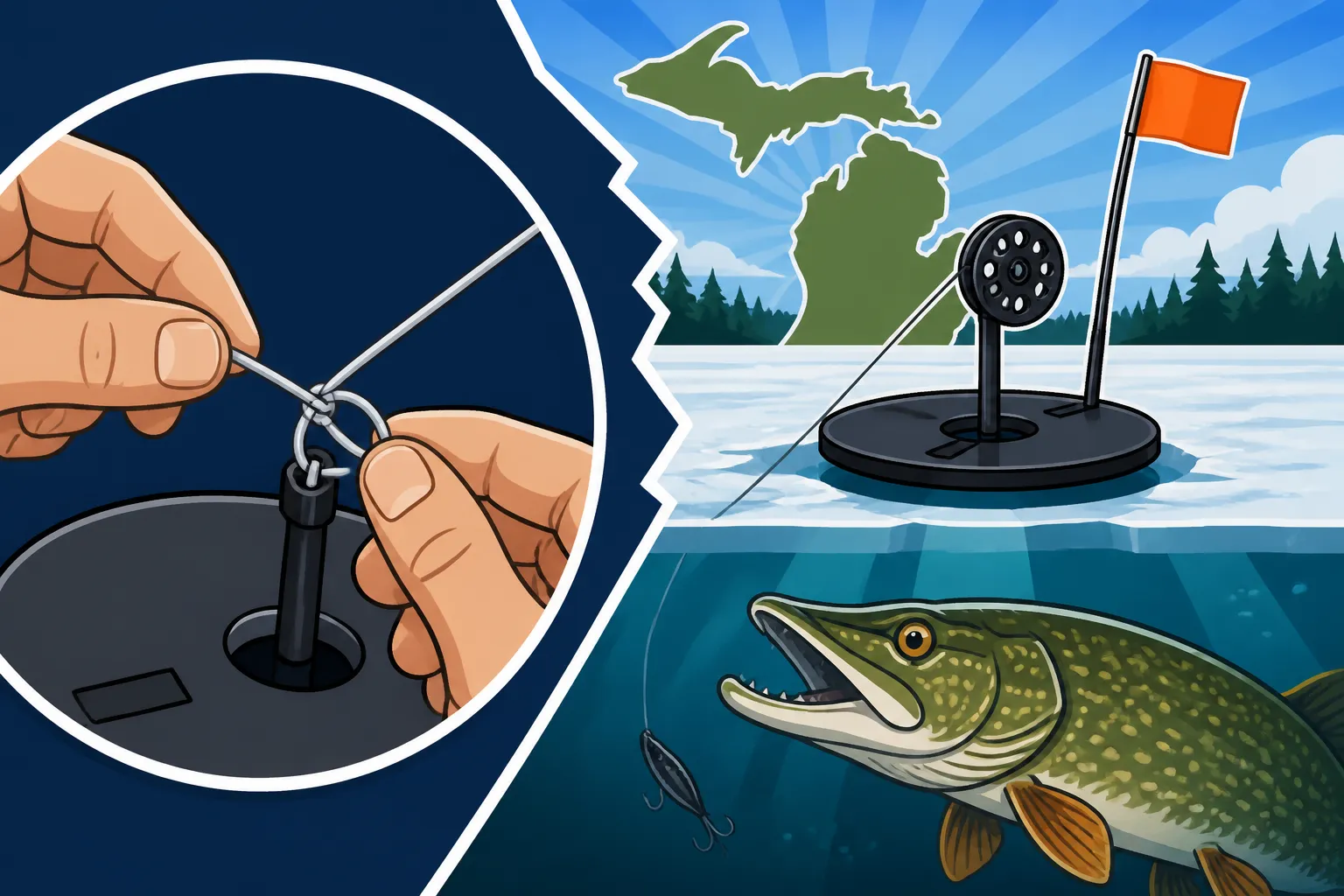
A tip-up is a deceptively simple piece of equipment. At its core, it's a device that suspends bait at a predetermined depth through an ice hole, featuring a visual flag that "tips up" when a fish takes the bait and pulls line. The line runs from a spool beneath the ice, up through the center of the tip-up, and down to your bait. When a fish pulls the line, it releases a trigger, causing the flag to spring into an upright position, alerting you to a bite.
The key advantages for pike fishing are numerous. Firstly, tip-ups allow you to cover a wide area. Michigan regulations typically allow for multiple lines per angler (check the latest Michigan Fishing Regulations Every Angler Should Know for specific limits, usually three lines per licensed angler, but it can vary). This means you can spread several tip-ups across a weed flat, along a drop-off, or at different depths, significantly increasing your chances of intercepting a cruising pike. Secondly, the passive nature of tip-ups means your bait looks completely natural, enticing even wary pike. You can use live or dead bait, offering options that can be irresistible to a hungry pike under the ice.
Essential Gear for Your Michigan Pike Tip-Up Setup
Having the right equipment is paramount for a successful pike tip-up setup. Skimping on quality here can lead to heartbreak when that trophy fish hits. You don't want to lose a true Michigan monster because of flimsy line or a cheap leader.
Selecting the Right Tip-Up and Line
When choosing a tip-up, you'll encounter a few main styles. Traditional wooden cross-style tip-ups are reliable and affordable. Insulated tip-ups, like those from HT Enterprises or Frabill, are fantastic for preventing your hole from freezing over in frigid Michigan temperatures, a common frustration for winter anglers. There are also thermal models that cover the entire hole. Many anglers swear by basic, rugged designs that stand up to the elements and rough handling. You can find a good selection of various tip-up styles on platforms like Amazon, offering convenience and often better prices than local shops.
For your main line, you need something robust. Heavy monofilament line, typically 20-30 pound test, is a popular choice due to its abrasion resistance and shock-absorbing qualities. However, many seasoned pike anglers opt for braided line of 30-50 pound test, which offers superior strength, sensitivity, and minimal stretch, allowing for a quicker hookset when you reach the tip-up. A quality braid from brands like PowerPro or Sufix can make a huge difference. While it's tempting to use lighter line, remember those pike teeth and the potential for snags around submerged weeds.
Choosing Leaders, Hooks, and Bait
This is where the rubber meets the road for pike fishing. Their teeth are no joke, and a direct encounter between your main line and a pike's maw means a guaranteed break-off.
-
Leaders: A good leader is non-negotiable.
- Steel Leaders: These are the most common and safest bet. They come pre-tied in various lengths (6-12 inches) and strengths (20-50 pound test). They are highly bite-resistant. You can purchase these ready-to-go from tackle shops or online retailers like Amazon.
- Fluorocarbon-Coated Steel Leaders: Offer a slightly less visible option than bare steel while still providing excellent protection.
- Heavy Fluorocarbon Leaders: Some anglers prefer heavy fluorocarbon (50-80 pound test) for its invisibility in clear water. While highly abrasion-resistant, it's not entirely bite-proof against a determined pike. Use this option with caution, or stick to steel for peace of mind.
-
Hooks:
- Treble Hooks: Sizes 2 to 4/0 are common for live bait. The multiple points increase the chance of a solid hookset.
- Single J-Hooks: Sizes 1/0 to 4/0 are excellent for dead bait or when you want a more streamlined presentation. Some anglers prefer single hooks for easier unhooking and reduced harm to fish, especially for catch and release.
- Quick-Strike Rigs: These are specialized rigs, often featuring two treble hooks (one near the head, one near the tail), designed to hook the pike quickly as it takes the bait, reducing the chance of deep hooking. They are particularly effective with larger dead bait.
-
Bait: Choosing the right bait can make or break your day.
- Live Minnows: Larger minnows like suckers, shiners, or golden shiners (4-8 inches) are ideal for pike. Their movement under the ice attracts attention. You can often purchase these from local bait shops across Michigan.
- Dead Bait: Smelt, ciscoes, or larger suckers are incredibly effective. The scent trail they release can draw pike from a distance. Often, dead bait can be legally used in areas where live bait rules are stricter, or it can be a more economical choice. Some anglers even cure their dead bait with special brines to enhance scent and durability.
The combination of a strong line, a bite-proof leader, and the right hook-and-bait combo is your secret weapon.
Step-by-Step Guide to Tying Your Pike Tip-Up Rig
Now that you have all your components, let’s put them together. A properly tied rig is essential for both enticing pike and ensuring you can land them.
Spooling Your Tip-Up
The first step, often overlooked, is properly spooling your tip-up. Your tip-up will have a main spool that sits below the water and holds your line.
- Attach the Line: Take your chosen main line (mono or braid) and tie it securely to the spool. An arbor knot or a double-overhand knot works well. Make sure it's snug so the line doesn't slip on the spool.
- Wind Evenly: Begin winding the line onto the spool. It's crucial to wind it evenly and with consistent tension. Too loose, and you'll get tangles or "bird's nests" when a fish pulls line. Too tight, and the line can develop memory coils, making it harder to deploy smoothly. Some anglers wear a glove and apply slight pressure to the line as it winds to maintain tension. Fill the spool almost to capacity, leaving enough room so that the line doesn't rub against the tip-up frame when deployed. Many tip-ups, especially those found on Amazon, will come with basic instructions, but an even wind is key for smooth operation.
- Secure the End: Once spooled, run the tag end of your line up through the eyelets or guides on your tip-up's shaft.
Attaching Your Leader and Hook
This section is vital for pike fishing, as their teeth can quickly cut through standard fishing line.
-
Main Line to Leader Connection:
- For braided main line, a strong knot like the Albright knot or a double uni-to-uni knot is excellent for connecting to your steel or heavy fluorocarbon leader. These knots maintain a good percentage of line strength and are relatively compact.
- For monofilament main line, a blood knot or uni-to-uni knot works well.
- Ensure the knot is cinched down tightly and trim any tag ends close.
- If using a pre-tied steel leader with a swivel, simply tie your main line directly to the swivel using an improved clinch knot or Palomar knot. This is often the easiest and most secure option.
-
Leader to Hook Connection:
- Most steel leaders come with a snap swivel on the end, allowing you to easily clip on your chosen hook.
- If you're tying your own leader or using heavy fluorocarbon, secure your treble or single hook with a strong knot like a Palomar knot or an improved clinch knot. For quick-strike rigs, these usually come pre-assembled, and you just attach the leader end to your main line or swivel. Remember, the quality of your knots directly impacts your ability to land fish, so practice them at home!
Baiting Your Hook for Maximum Appeal
How you present your bait can significantly impact your success rate. Pike are visual and scent-driven predators.
-
Live Bait Rigging:
- Dorsal Fin Hooking: For live minnows (like suckers), gently hook them just below the dorsal fin, being careful not to hit the spine. This allows the minnow to swim naturally, attracting attention, and keeps it alive longer.
- Lip Hooking: Alternatively, hook the minnow through both lips. This works well for more active minnows and keeps them swimming horizontally.
- The goal is to keep the minnow lively and natural-looking. Set your bait at various depths. Often, pike cruise along weed edges or near the bottom. Try suspending your minnow a foot or two off the bottom, or just above a weed bed.
-
Dead Bait Rigging:
- Single Hook Through Head: For dead bait (e.g., smelt), thread a single J-hook through the head and out the mouth. This keeps the bait straight and natural.
- Quick-Strike Rigs: These are ideal for dead bait, especially larger ones. They typically have one treble hook inserted near the head and another near the tail. This ensures a quick hookset as the pike begins to mouth or swim away with the bait, preventing it from swallowing the bait too deeply and making release easier. Many anglers targeting Northern Pike Fishing in Michigan swear by these rigs for their effectiveness.
- Scent Enhancement: For dead bait, consider injecting it with scent attractants or placing it in a brine overnight to intensify its appeal.
Once your bait is rigged, carefully lower it through the ice hole to your desired depth. Set the flag mechanism, ensuring there's just enough tension to hold the bait without triggering prematurely.
Strategic Placement and Managing Your Tip-Ups for Success
Knowing how to tie your rig is only half the battle; knowing where and how to deploy it is equally important. Pike are not randomly distributed across a lake.
Where to Set Your Tip-Ups on Michigan Lakes
Pike love structure, cover, and ambush points. When ice fishing in Michigan, focus your efforts on these key areas:
- Weed Beds and Edges: This is prime pike territory. Pike will lurk in healthy green weeds, waiting to ambush prey. Set your tip-ups along the deeper edges of weed beds or in pockets within the weeds. Lakes like Houghton Lake or parts of Saginaw Bay are famous for their extensive weed growth and abundant pike.
- Drop-offs: Areas where the bottom sharply declines from shallow to deeper water are highways for fish. Pike often patrol these transition zones. Place tip-ups at different depths along the drop-off to find the feeding zone.
- Shallow Bays and Flats: Early and late in the ice season, or on cloudy days, pike can be found in shallower bays, especially if there's remaining green vegetation.
- Inlets and Outlets: Moving water can concentrate baitfish, which in turn attracts pike. Look for river inlets or outlets on lakes, but always be cautious of ice conditions around current.
- Points and Submerged Islands: Any feature that breaks up the monotony of the bottom can hold fish.
When choosing where to drill your holes with your Best Ice Augers for Michigan Ice Fishing, consider spreading your tip-ups out to cover a good area. If you're allowed three lines, for instance, you might place one in a shallow weed pocket (8-10 ft), one along a deeper weed line (12-15 ft), and one on a nearby drop-off (15-20 ft) to see what depth the pike are active at. Using a portable fish finder can help you locate these structures and even spot pike or baitfish on the screen.
Monitoring Your Flags and Landing a Pike
This is the exciting part! Once your tip-ups are set, it's a waiting game.
- Patience and Observation: Keep a keen eye on your flags. When a flag goes up, don't just sprint over immediately. A common mistake is grabbing the line too soon. Often, a pike will grab the bait and run a short distance, then stop to turn the bait and swallow it headfirst. Give it a moment or two (count to 10-20, or until the line starts slowly moving again) before carefully approaching.
- The Approach: When you do approach, do so quietly. Heavy footsteps on the ice can send vibrations that spook fish. Carefully kneel down and grab the tip-up.
- Setting the Hook: With a smooth, steady motion, grab the line and feel for resistance. If you feel weight or a subtle tug, give a firm, upward sweep to set the hook.
- Fighting the Fish: A pike on a tip-up can be a powerful fight. Be ready for strong runs. Let the fish take line when it wants, using the palm of your hand to apply gentle pressure on the spool. Don't simply hand-line it in; this can lead to line breaks or pulling the hook. Work the fish slowly and steadily toward the hole. Keep an eye on the hole size—a big pike might require a wider hole!
- Landing and Handling: Once the fish's head is in the hole, reach in and grab it firmly by the gill plate (not the gills themselves, as this can injure the fish). A sturdy set of long-nose pliers or jaw spreaders (available on Amazon) is essential for safely removing hooks from a pike's toothy mouth. Remember, release any pike that don't meet Michigan's Michigan Daily Bag Limits by Species or your personal harvest goals with care to ensure their survival. Always be mindful of your Michigan Muskellunge Harvest Reporting Rules if you happen to catch a muskie, as their regulations are different and often require immediate release or specific reporting.
Common Pitfalls and Troubleshooting Your Pike Tip-Up Setup
Even with the best setup, ice fishing has its challenges. Being prepared for common issues can save you a lot of frustration.
Preventing Line Break-Offs and Tangles
Nothing sours an ice fishing trip faster than seeing your flag fly, only to reel in a frayed leader or a tangled mess.
- Leader Integrity: Always, always check your leader after every fish or after a prolonged period, especially if you've been fishing in areas with abrasive structure. Those pike teeth can nick even steel leaders over time. If you see any kinks, rust, or fraying, replace it immediately. It's better to lose a leader than a trophy fish.
- Hole Edges: Ensure your ice hole doesn't have sharp edges that can abrade your line. Use an ice chipper or the auger itself to smooth out any rough spots before deploying your tip-up.
- Line Management: When setting your tip-up or reeling in, always keep your line organized. Avoid letting it fall loosely onto the ice where it can freeze, knot, or get stepped on. Many anglers use a small bucket to contain their line during deployment and retrieval.
- Spring-Loaded Flags: If your flag is constantly springing up without a fish, check the tension setting. It might be too light, or your bait might be too lively. Adjust the trigger mechanism to require a bit more pull.
Dealing with Finicky Pike and False Flags
Sometimes the pike just aren't cooperating, or your flags seem to be teasing you.
- Adjusting Bait Depth: If you're not getting bites, experiment with depth. Pike might be hugging the bottom, suspending higher, or cruising just under the ice. Try setting one tip-up deep, one mid-depth, and one shallower.
- Changing Bait: Sometimes, pike are particular. If live bait isn't working, switch to dead bait, or vice versa. Change the size of your minnow. Larger pike might prefer a larger meal.
- Scent Attractants: For dead bait especially, applying a strong fish attractant can make a huge difference, drawing in pike that might be less active.
- Environmental Factors: Consider the time of day, weather, and light conditions. Pike are often more active during dawn and dusk, or on overcast days. Bright sun can push them deeper or into denser cover. If the bite is slow, consider moving your tip-ups to different locations around the structure or a new spot entirely using your Michigan Ice Fishing Guide knowledge.
- False Flags: These are often caused by current, heavy wind, or a very active live minnow. If the flag goes up but the line isn't running, slowly approach and investigate. It might just be your bait setting it off, or a smaller fish bumping it. If it’s a constant issue, try a heavier minnow or slightly adjust the trigger tension.
| Leader Type | Pros | Cons | Ideal Use |
|---|---|---|---|
| Braided Steel (multi-strand) | Excellent bite resistance, flexible | Can kink, visible in clear water, may fray | General pike fishing, all water conditions |
| Single Strand Steel | Extremely tough, very bite resistant | Stiff, highly visible, prone to kinking | Large pike, heavy cover, dead bait |
| Fluorocarbon-Coated Steel | Good bite resistance, lower visibility | Can be less flexible than pure braid steel | Clear water, wary pike |
| Heavy Fluorocarbon (50-80 lb) | Nearly invisible, good abrasion resist. | Not truly bite-proof for pike, less safe | When extreme stealth is paramount (risky) |
Ultimately, tying a tip-up for pike in Michigan is about combining the right gear with smart strategy. A little preparation and attention to detail will greatly improve your odds of that thrilling flag-up moment.
Important Disclaimer
Please note that fishing regulations, including license requirements, bag limits, and gear restrictions, are subject to change. Always consult the latest Michigan Department of Natural Resources (DNR) fishing guide or website before heading out on the ice to ensure you are in compliance. This guide is for informational purposes only and does not constitute legal advice. While this guide provides useful information, remember that Michigan Fishing License Guide for Residents and Nonresidents details are essential for legal fishing.