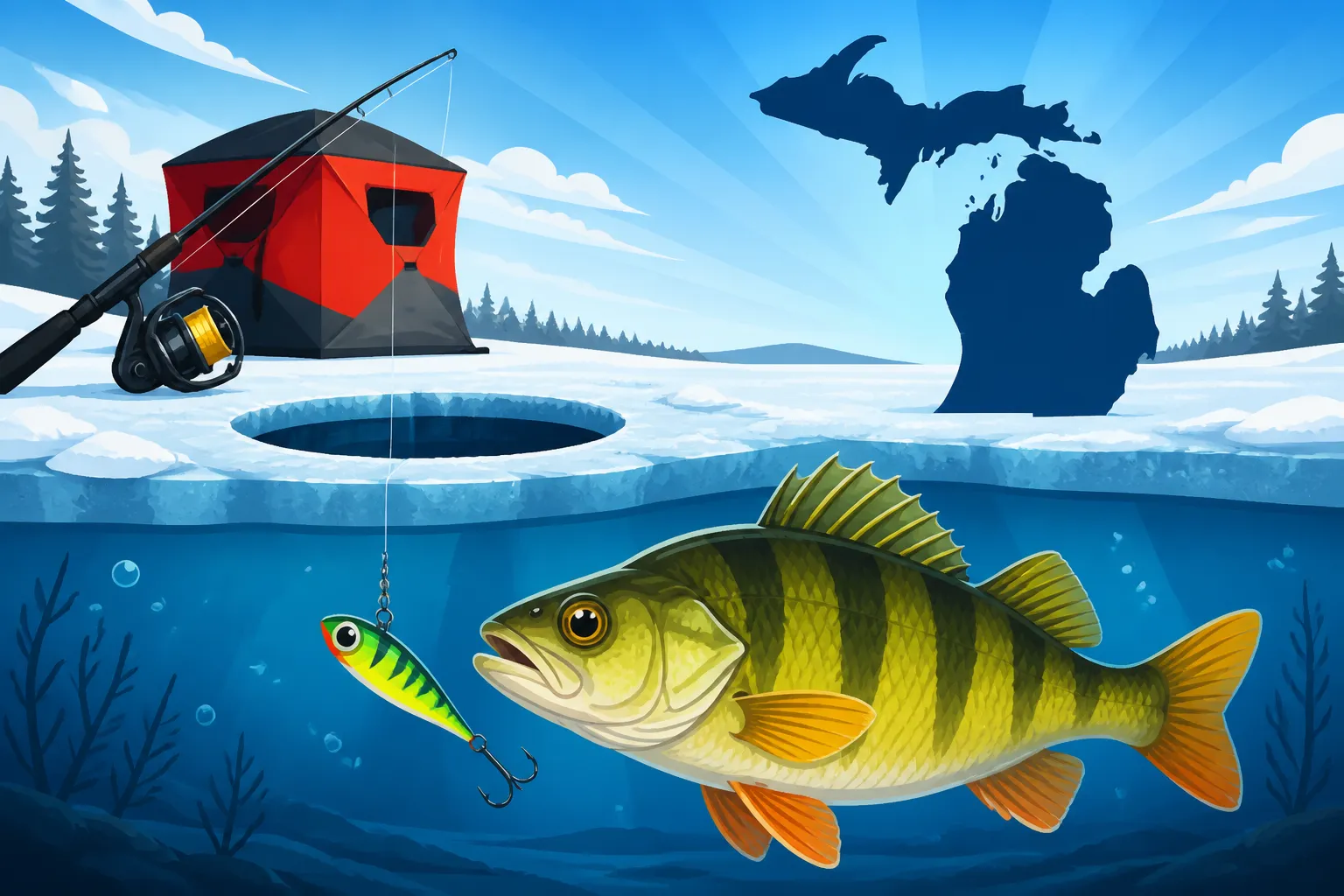
How to Catch Perch Through the Ice in Michigan
Michigan's winter wonderland offers some truly incredible ice fishing opportunities, but anyone who has spent hours staring down a hole knows that coaxing perch to bite through the ice can be an exercise in patience and frustration. Those vibrant yellow-bellied beauties seem to vanish sometimes, leaving you wondering if they've packed up for Florida. This comprehensive guide is designed to cut through that mystery, arming you with the knowledge and tactics to consistently locate and land more yellow perch on Michigan's frozen lakes and rivers this winter.
Understanding Perch Behavior Under the Ice
Catching perch through the ice isn't just about drilling a hole and dropping a line; it's about understanding their underwater world in the winter. Perch are incredibly adaptable, but their movements and feeding patterns shift dramatically once the water turns cold and a blanket of ice forms overhead. Knowing these behaviors is your first step to success.
Where Perch Go in Winter
When the water chills and ice caps Michigan's lakes, perch aren't just swimming around aimlessly. They typically migrate to specific areas that offer a combination of food, cover, and comfortable water temperatures. This usually means you'll find them holding near structure or in certain depth ranges, often forming schools.
Many anglers assume deep water is always the answer, and while perch certainly inhabit deeper basins, especially during mid-winter, they also relate heavily to shallow structure. Green weed beds, for instance, remain oxygenated and provide shelter for baitfish and invertebrates – a perch's primary diet. Look for these healthy weed lines, especially where they transition into deeper water or alongside subtle drop-offs. Submerged humps, points, and even old river channels are also prime real estate for schooling perch. On massive bodies of water like Lake St. Clair or Saginaw Bay, perch might be found cruising vast mud flats, using subtle changes in bottom composition as their "highways." The key is that they are rarely suspended in open, featureless water; they are almost always near something.
When Perch Are Most Active
Just like us, perch have their preferred times for a meal. While you can catch them throughout the day, recognizing their peak feeding windows can significantly increase your catch rate. Generally, dawn and dusk are prime times for many fish species, and perch are no exception. As the light changes, they tend to become more active, venturing out from cover to feed.
However, perch can also have strong mid-day bites, especially if conditions are right. Overcast skies, stable barometric pressure, or a sudden slight warming trend can spark a feeding frenzy even in the middle of the day. Conversely, bright, sunny days with high pressure often lead to a "mid-day lull" where perch become more hesitant. Don't be discouraged if the bite slows; sometimes a slight change in lure, bait, or presentation is all it takes to trigger a reaction. Pay close attention to the beginning and end of the ice season, too. The "first ice" and "last ice" periods, when fish are still adjusting or beginning to become more active before the thaw, can often provide some of the most consistent and aggressive perch bites of the entire winter.
Essential Gear for Ice Fishing Perch
Having the right tools for the job makes all the difference when you're battling Michigan's winter elements and trying to fool finicky perch. From what you hold in your hand to how you get through the ice, every piece of gear plays a crucial role in your success.
Rods, Reels, and Line Selection
When it comes to ice fishing for perch, sensitivity is paramount. These fish can be incredibly subtle biters, especially in cold water. You'll want a light-action ice fishing rod, typically between 24 and 30 inches long, with an extremely sensitive tip. This "noodle" tip will telegraph even the faintest tap or the slightest bend when a perch breathes on your bait. Brands like Thorne Bros. or St. Croix offer excellent options, but even more affordable setups found on Amazon can work well for beginners.
Pair your sensitive rod with a small, lightweight spinning reel, usually a 500 to 1000 series. These reels are designed for light line and offer a smooth drag, which is essential when you hook into a larger perch that might make a surprising run. As for line, this is where many anglers have strong preferences. Monofilament line (2-4 lb test) is a common choice for its stretch, which can act as a shock absorber for light bites, and its invisibility in clear water. Fluorocarbon (also 2-4 lb test) offers even more invisibility and less stretch, providing increased sensitivity. Some anglers opt for a thin braided line (4-6 lb test, equivalent to 1-2 lb mono diameter) for maximum sensitivity, often adding a short fluorocarbon leader for stealth. The key is light line, as perch can be line-shy, especially in clearer waters like Higgins Lake.
Lures, Bait, and Presentation
The world of ice fishing lures for perch is vast, but a few standbys consistently produce. Small jigs are the bread and butter. Teardrop jigs, often tungsten for their dense weight in a small profile, are fantastic for getting down to the fish quickly. Swedish Pimples, slender spoons with a flashy action, are also incredibly effective, especially tipped with live bait. Other popular options include smaller versions of Rippin' Raps or other rattle baits, which can call fish in from a distance, and tiny panfish plastics that mimic insects.
When selecting colors, consider the water clarity. In clear water, natural colors like silver, gold, or green often excel. In stained or murky water, brighter colors such as chartreuse, orange, or glow-in-the-dark can be much more visible to the fish. Almost universally, tipping your artificial lure with a piece of live bait drastically increases your odds. Minnows, wax worms, and spikes are the top choices. A small minnow hooked lightly through the back, or two or three wax worms threaded onto a jig, provides natural scent and movement that perch find irresistible. The presentation is key: gentle lifts, subtle twitches, and long pauses are often more effective than aggressive jigging, especially for hesitant biters. Sometimes, just letting the bait sit perfectly still (dead sticking) on a separate rod nearby can entice a bite when active jigging fails. You can find a vast array of these specialized ice fishing lures and baits, from Best Bait for Perch to various jig styles, readily available on Amazon, making it easy to stock up before hitting the ice.
Finding Perch: Electronics and Augers
You can't catch fish if you can't find them, and modern electronics have revolutionized ice fishing for perch. A good flasher or fish finder is an invaluable tool. Devices like those from Vexilar or Humminbird's Ice Helix series allow you to see your lure, any fish in the water column, and the bottom in real-time. This not only helps you determine the depth perch are holding at but also allows you to gauge their reaction to your presentation – are they rising to it? Ignoring it? This immediate feedback is critical for adjusting your technique on the fly.
To cover water and punch enough holes to locate those schooling perch, a reliable ice auger is essential. Hand augers are lightweight and affordable, perfect for thinner ice or limited hole drilling. Gas-powered augers are fast and powerful but can be heavy and noisy. Electric augers, such as those from Strikemaster or Ion, offer a fantastic compromise: they're quiet, environmentally friendly, and powerful enough to bore through significant ice thickness with ease. You can certainly find excellent deals on electric augers and related accessories on Amazon, ensuring you're ready to drill efficiently. Remember, success often means drilling many holes and moving frequently until you intercept a school of fish. For more on the specifics of winter fishing, check out our guide on Michigan Ice Fishing Gear Guide.
Effective Techniques for Ice Fishing Perch
Once you've got your gear dialed in and an understanding of perch behavior, it's time to put it all together on the ice. Ice fishing for perch isn't just about waiting; it's an active process of searching, presenting, and adapting.
Aggressive Search and Drill Patterns
The biggest mistake many ice anglers make is parking themselves in one spot and hoping the fish come to them. For perch, especially, this is a recipe for a slow day. Perch are schooling fish, and those schools are often on the move, chasing bait or seeking new feeding grounds. Your best bet is an aggressive search strategy.
Start by targeting promising areas identified through your understanding of winter perch habitat – green weed edges, subtle humps, or drop-offs. If you have a lake map with contours, study it beforehand to pinpoint these features. Once on the ice, don't be afraid to drill a grid pattern of holes across a likely area. For example, drill holes every 10-20 yards in a line, then another line parallel to it, creating a "search grid." Or, if you find one good spot, fan out around it in a star pattern. Spend just 5-10 minutes at each hole, dropping your flasher down to check for fish. If you see fish but no bites, try a different presentation. If you see nothing, move on quickly. This "run and gun" approach, especially at the start of your day, vastly increases your chances of intercepting an active school. Remember, you're not just fishing a spot; you're looking for the spot where the perch are currently feeding.
Mastering the Jigging Motion
The way you present your lure and bait is crucial for tempting wary perch. Unlike some more aggressive species, perch often prefer subtle movements. Start by dropping your jig or spoon to the bottom, then reel up a foot or two. Your jigging motion should be subtle: small lifts, gentle twitches, and extended pauses. Think of it as mimicking a struggling insect or a dying minnow.
Experiment with different cadences. Sometimes perch want a sharp snap followed by a long pause. Other times, a rapid series of tiny twitches is the ticket. Often, the bite will come on the pause, as the lure is slowly falling or sitting still. Pay very close attention to your rod tip. If it twitches, dips slightly, or feels unusually heavy on the lift, set the hook! Another highly effective technique is to use two rods if regulations allow. One rod can be actively jigged, while the other is set up as a "dead stick" – simply hanging motionless with a live minnow or a jig tipped with spikes. Many times, the most finicky perch will ignore the active presentation and pick up the motionless offering. For more detailed jigging techniques, consider our deep dive into Ice Fishing Techniques for Perch.
Setting Up and Staying Warm
Enduring Michigan's bitter winter temperatures requires proper preparation, not just for comfort but for safety and endurance. Being cold and miserable is a surefire way to cut your fishing trip short, losing out on valuable fishing time.
Invest in quality ice fishing clothing, including insulated boots, layered waterproof outer shell, and warm headwear and gloves. A portable ice shelter, whether a lightweight pop-up shanty or a more substantial flip-over model, is a game-changer. Brands like Clam, Eskimo, and Otter make excellent shelters that can be set up quickly and provide crucial protection from wind, snow, and frigid air. Inside, a small propane heater (always with proper ventilation!) can make a world of difference, keeping you warm enough to stay focused on the fishing rather than shivering. You can find a wide range of insulated apparel, portable heaters, and ice shelters designed for extreme cold on Amazon, ensuring you're prepared for whatever Michigan's winter throws at you. Remember to bring a warm beverage, plenty of snacks, and perhaps a comfortable chair. A warm angler is a patient angler, and patience often pays off with perch.
Michigan-Specific Perch Ice Fishing Tips
Michigan's diverse waterways offer phenomenal perch fishing, but understanding local nuances and regulations is key to a successful and legal outing.
Top Perch Ice Fishing Lakes in Michigan
Michigan is blessed with an abundance of fantastic perch fisheries, offering opportunities for anglers across the state. Some lakes consistently stand out for their yellow perch populations and ice fishing accessibility.
Lake St. Clair is arguably one of the best perch fisheries in North America, known for its sheer numbers of jumbo yellow perch. Anglers flock to its expansive shallow flats and weed edges, particularly near the shipping channels and popular bays like Anchor Bay. Another powerhouse is Saginaw Bay on Lake Huron, offering excellent perch fishing, especially from January through March. Anglers here often target perch over its vast, nutrient-rich mudflats. In the Lower Peninsula, Houghton Lake, Michigan's largest inland lake, provides consistent perch action, often found near its many weed beds and drop-offs. Further north, Higgins Lake is renowned for its clear waters and deeper perch, while Burt and Mullett Lakes in the northern Lower Peninsula also hold healthy populations. Up in the U.P., Lake Gogebic is a popular destination, yielding impressive catches of jumbo perch. Each of these lakes presents unique challenges and rewards, but they all share the potential for a memorable perch ice fishing experience. For a broader look at prime winter spots, check out our guide to the Best Ice Fishing Lakes in Michigan.
Navigating Regulations and Seasons
Before you even step onto the ice, it's absolutely crucial to familiarize yourself with Michigan's specific fishing regulations. The Michigan Department of Natural Resources (DNR) publishes an annual fishing guide that outlines all the rules. This includes statewide daily bag limits for yellow perch, which are generally generous (25 per day), but also special regulations for specific bodies of water. For instance, Michigan Yellow Perch Limit on Lake St. Clair may have unique provisions, and it's your responsibility to know them.
Beyond species-specific rules, always ensure you have a valid Michigan Fishing License Guide for Residents and Nonresidents on hand. While children under 17 generally don't need a license, adults absolutely do. The ice fishing season in Michigan typically runs from December through March, or whenever safe ice allows. However, certain areas or species might have slightly different opening or closing dates, so a quick check of the DNR's official guide is always a smart move. Ignorance of the law is never an excuse, and violations can result in hefty fines. For a complete overview, be sure to read our detailed article on Michigan Fishing Regulations Every Angler Should Know.
Safety on the Ice
Ice fishing is an incredibly rewarding winter activity, but it comes with inherent risks, primarily related to ice safety. Never take chances with ice thickness. The general rule of thumb for safe ice is:
| Activity | Minimum Ice Thickness |
|---|---|
| Single person | 4 inches |
| Group of people | 6-8 inches |
| Snowmobile/ATV | 8-12 inches |
| Small car/truck | 12-15 inches |
Always measure ice thickness periodically as you venture out, especially on unfamiliar bodies of water or early and late in the season. Carry a spud bar or an auger to check ahead of you. Always fish with a buddy, and inform someone on shore of your plans and expected return time. Essential safety gear includes ice picks worn around your neck (for self-rescue), a throw rope, and a life jacket or personal flotation device, especially when fishing alone or in questionable conditions. Avoid areas with currents, pressure cracks, or unusually dark or discolored ice, as these can indicate weak spots. Even on well-trafficked lakes, conditions can change rapidly. For more detailed information on staying safe, consult our guide on How Thick Does Ice Need to Be to Fish in Michigan. Prioritizing safety ensures you can enjoy many seasons of successful perch fishing.
Disclaimer
Fishing conditions and regulations in Michigan can change. Always consult the latest Michigan Department of Natural Resources (DNR) fishing guide for the most up-to-date rules, regulations, and advisories before heading out on the water. Ice conditions can be unpredictable; always prioritize safety and check ice thickness before venturing out.