Tip-Up Fishing for Michigan Pike
There’s nothing quite like the crisp, silent mornings of ice fishing in Michigan, where the chill in the air is quickly forgotten with the promise of a flag snapping up against the white landscape. For many anglers, the ultimate prize beneath the ice is a feisty northern pike, known for its aggressive strikes and thrilling fights. If you’ve ever dreamt of experiencing that rush, but felt overwhelmed by the gear or techniques, this comprehensive guide is for you, breaking down everything you need to know to successfully target Michigan pike with tip-ups.
Understanding Michigan Pike for Tip-Up Success
Before you even step foot on the ice, having a good grasp of northern pike behavior and their preferred habitats is absolutely crucial for increasing your chances of success. These toothy predators don't just swim anywhere; they have specific preferences that savvy ice anglers learn to exploit.
Pike Behavior and Habitat Under Ice
Northern pike, often simply called "pike," are true ambush predators. Even under a blanket of ice, their predatory instincts remain sharp. They are highly structure-oriented fish, meaning they'll relate to anything that provides cover from which they can launch a surprise attack on unsuspecting prey. This includes dense weed beds, submerged timber, rock piles, and sharp drop-offs. When ice fishing, you'll often find them lurking on the edges of these features, rather than out in open water.
Their metabolism does slow down somewhat in the colder water, which can make them less active than in summer, but don't let that fool you. Pike still need to eat, and they are opportunistic feeders. A well-presented bait, especially a lively one, can be irresistible. They're also quite territorial, often holding to specific areas that offer them a good hunting advantage. Understanding this means you're not just drilling holes randomly; you're strategically placing your baits in the pike's living room.
Ideal Pike Fishing Locations in Michigan
Michigan is incredibly blessed with an abundance of waters that hold fantastic populations of northern pike. When looking for ideal locations, you want to focus on lakes or larger river backwaters that have a good mix of shallow, weedy areas and deeper drop-offs. Pike thrive in waters that have ample aquatic vegetation, which serves as both cover for them and forage for their prey.
You'll find excellent pike fishing throughout the state. In the northern Lower Peninsula, lakes like Houghton Lake, Black Lake, and Mullett Lake are renowned for their pike populations. Moving into the Upper Peninsula, you might explore waters like Lake Gogebic or Indian Lake. Even some of the larger bays on the Great Lakes, such as Saginaw Bay on Lake Huron or Grand Traverse Bay on Lake Michigan, can offer fantastic pike opportunities in shallower, protected areas, especially during early or late ice. For a more detailed look at where these toothy critters reside, you can always check out a dedicated guide to Michigan Lakes for Northern Pike to help narrow down your options.
Essential Gear for Michigan Pike Tip-Up Anglers
Heading out onto the hardwater without the right equipment is a recipe for frustration, or worse, an unproductive and even unsafe day. For targeting pike with tip-ups, there's a specific arsenal of gear that every serious angler should consider.
Choosing the Right Tip-Ups
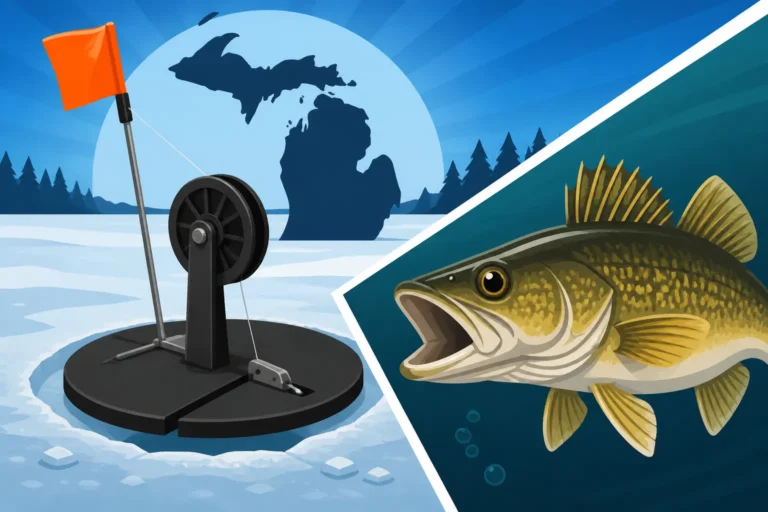
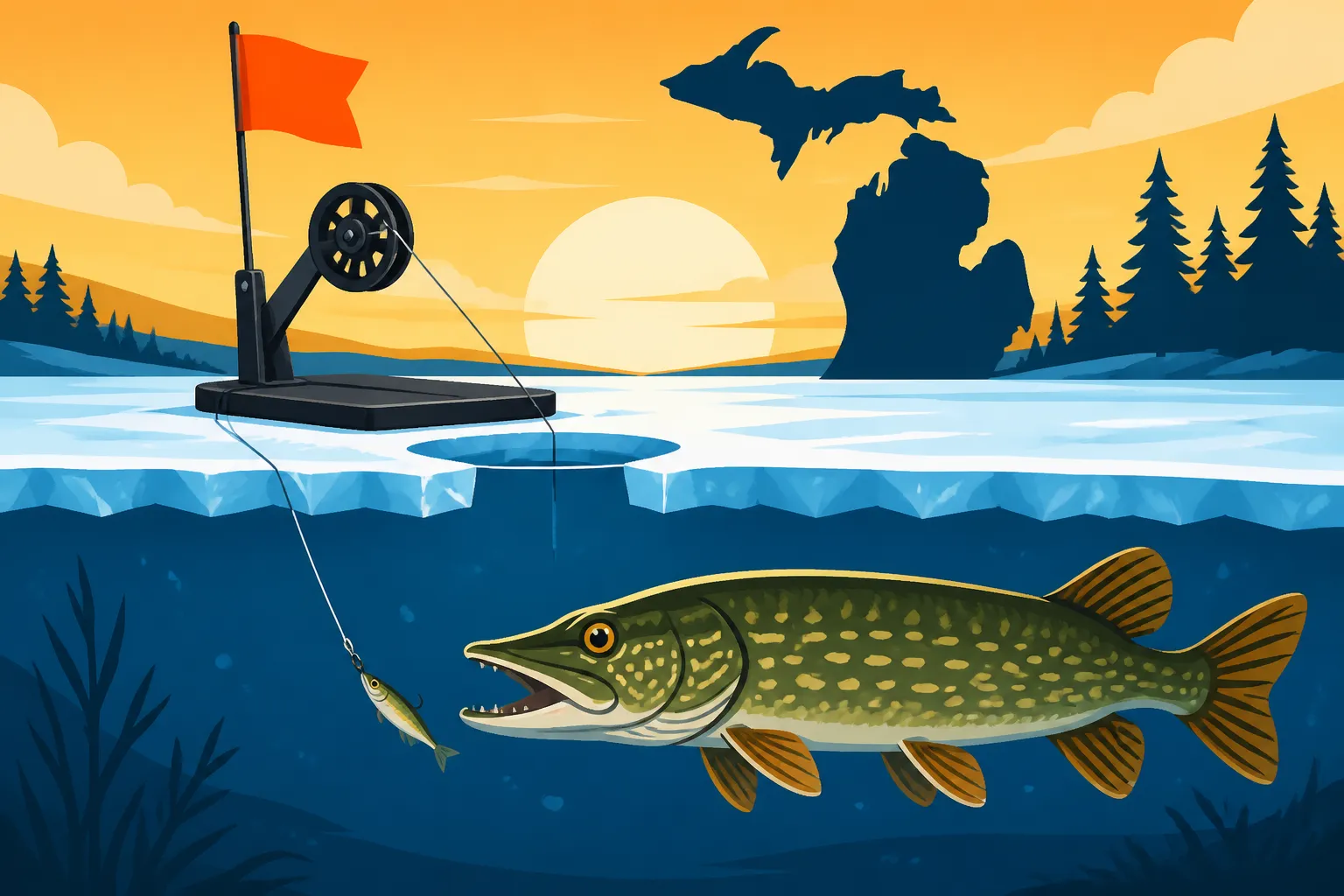
Tip-ups are essentially passive fishing devices that alert you to a bite by raising a flag. There are several styles, each with its own advantages. The most common is the traditional wooden cross-style tip-up, which is durable and effective. Then there are thermal tip-ups, often made of plastic, which cover the fishing hole to prevent it from freezing over, a huge plus on really cold days. Some advanced models even feature a "windlass" design that can jig the bait automatically with the wind. When choosing, consider durability, how easily they deploy, and the visibility of the flag against the snow and ice. You want a flag that stands out! Many anglers find reliable options by browsing on Amazon, where a wide range of styles and brands are available.
Regardless of the type, make sure your tip-ups are sturdy enough to withstand Michigan's winter elements and the powerful pull of a large pike. The spool on the tip-up should hold plenty of line (at least 100 feet of your chosen mainline), and the trigger mechanism should be sensitive enough to detect a bite but not so sensitive that it's constantly tripping in the wind. Learning How to Tie a Tip-Up for Pike Fishing correctly is just as important as the tip-up itself, ensuring your rig is ready for action.
Line, Leader, and Hooks
For your main line on a tip-up, many pike anglers opt for a heavy monofilament or specialized tip-up braid, typically in the 30-50 pound test range. This heavier line is more resistant to abrasion from the edge of the ice hole and gives you more control over a large fish. Monofilament tends to be less prone to freezing and coiling in the cold, while braid offers superior sensitivity and strength for its diameter.
The most critical component for pike fishing, however, is your leader. Pike have extremely sharp teeth capable of slicing through monofilament or fluorocarbon mainlines with ease. Therefore, a steel leader is absolutely essential. These can be pre-tied or made from specialized knot-friendly wire. Fluorocarbon leaders in very heavy test (e.g., 60-100 lb) can also be used as an alternative, offering more stealth, but they still carry a higher risk of being cut than steel. Ensure your leaders are long enough, typically 12-18 inches, to prevent the pike from hitting your main line. As for hooks, a sharp, strong treble hook (size 2 to 1/0) is common for live bait, or a large single hook for dead bait, appropriate for the size of your chosen baitfish.
Augers, Bait, and Accessories
An ice auger is your ticket to getting your lines in the water. For pike fishing, you'll want an auger that cuts a decent-sized hole, generally 8 to 10 inches in diameter. This larger hole makes it much easier to land a big pike without the fish getting wedged or cutting your line on the ice edge. You can choose between manual hand augers, which are great for portability and cost-effectiveness, or power augers (gas or electric) that make quick work of thick ice. To help you make the right choice, consider looking at a guide on Best Ice Augers for Michigan Ice Fishing.
When it comes to bait, live bait is often king for pike. Large minnows like golden shiners, suckers, or even small smelt (check local regulations on baitfish use and sources!) are excellent choices. Dead bait, such as whole smelt or ciscoes, can also be highly effective, especially when left still for extended periods. Always carry a good bait bucket with an aerator to keep your live bait healthy.
Beyond the essentials, a few accessories are non-negotiable for pike:
- Pliers or Jaw Spreaders: To safely remove hooks from a pike's toothy mouth without losing a finger.
- Hook Removers: Long-handled ones are best.
- Measuring Tape: To ensure your catch meets legal size requirements.
- Insulated Gloves: For handling fish in cold weather.
- Ice Scoop: To keep your holes free of slush.
- Sled or Portable Shelter: To transport your gear and stay warm. Many fantastic portable Best Ice Shelters for Michigan Ice Fishing are available, some even on Amazon.
Setting Up Your Tip-Ups for Optimal Pike Action
Once you've got your gear sorted, it's time to hit the ice and get those tip-ups fishing. Strategic placement and proper bait presentation are what will turn a good day of fishing into a memorable one.
Strategic Hole Placement
The most successful pike anglers don't just randomly drill holes. They scout. Begin by looking for obvious structure from shore, or by using a lake map to identify points, drop-offs, humps, or submerged islands. Once on the ice, use a portable fish finder or flasher to confirm the presence of these features and to locate any lingering weed beds. Pike love the edges of these structures. Try setting tip-ups along a weed line, positioning some in slightly deeper water just off the edge, and others closer to the shallower cover.
Spacing your tip-ups is also key. Michigan regulations typically allow anglers to fish with a certain number of lines (often two per angler, with additional lines allowed with a setline license, but always verify current Michigan Fishing Regulations Every Angler Should Know). Spread your tip-ups out to cover a wider area and different depths. For instance, if you're fishing a point, you might place one tip-up on the shallow side, one on the deep side, and one right on the tip of the point. This helps you figure out where the pike are most active on any given day. Remember to keep them far enough apart to avoid tangles but close enough that you can quickly respond to a flag.
Rigging Your Bait Correctly
How you rig your bait can significantly impact your success. For live minnows, the goal is to keep them lively and attractive to pike. A common method is to gently hook the minnow through the back, just in front of the dorsal fin, ensuring you don't hit the spine. This allows the minnow to swim naturally and erratically, which is very enticing to a pike. Another technique is to hook them lightly through both lips, which works well if you want the minnow to stay in a specific depth range.
When using dead bait, the presentation needs to appear as natural as possible. Many anglers will hook a dead smelt or cisco through the tail or head and suspend it just off the bottom or midway through the water column. Sometimes, adding a small split shot weight a foot or two above the bait can help it sink and position correctly. A crucial part of rigging is also setting your depth. Use a depth finder or a weight to find the bottom, then reel up a few feet. Pike often cruise just above the weed tops, or suspend over deeper water looking up. Experiment with suspending your bait anywhere from a foot or two off the bottom to halfway up the water column, especially if the lake is deeper. Don't be afraid to try different depths across your various tip-ups until you find what the pike are keying into.
Effective Tactics and On-Ice Strategies
Once your tip-ups are deployed, the real game begins: the waiting game, followed by the exhilarating sprint to a tripped flag. Knowing how to react and how to handle a pike can make all the difference.
Monitoring and Responding to Flags
The moment that flag goes up, your heart will race! It's one of the most exciting parts of tip-up fishing. But resist the urge to immediately run to the hole and set the hook. When a pike hits your bait, it usually grabs it sideways, runs a short distance to turn the bait to swallow it head-first, and then runs again. If you set the hook too early, you'll pull the bait right out of its mouth.
Instead, when you see a flag, approach cautiously. Watch the spool on the tip-up. If it’s spinning steadily, the fish is likely still running with the bait. Once the spool stops, or slows significantly, and then starts to pull again (the "second run"), that’s often the prime time to set the hook. This indicates the pike has turned the bait and is trying to swallow it. Pick up the line, feel for steady tension, and then give a firm, upward sweep of the line to set the hook. Don't be timid!
Fighting and Handling Michigan Pike
Fighting a pike through an ice hole requires a slightly different approach than battling one with a rod and reel. You're essentially hand-lining the fish. Maintain constant tension on the line, letting it run when the fish pulls hard, but slowly gaining line by hand-over-hand pulling when the fish rests. Be mindful of the edge of the ice hole; a large pike can easily chafe or cut your line if it rubs against the sharp ice. If the fish makes a strong run and tries to go back down the hole, hold the line firmly but be prepared to let a little slip if necessary to prevent a break.
Once the pike's head is in the hole, quickly reach down with your jaw spreaders or long-nosed pliers. Pike have many sharp teeth, so never stick your hand directly into their mouth. Use these tools to safely secure the fish and remove the hook. If you intend to release the fish, do so quickly and carefully, minimizing its time out of the water. Handle the fish gently, supporting its body. For those planning to keep their catch, consult the Michigan Daily Bag Limits by Species to ensure compliance with local regulations. Many pike anglers target smaller "hammer handle" pike for eating, releasing the larger trophy fish to maintain a healthy fishery.
Michigan Regulations and Ice Safety Best Practices
Ice fishing, while incredibly rewarding, comes with its own set of rules and safety considerations. Ignoring these can lead to fines, dangerous situations, or even tragic accidents.
Understanding Michigan Pike Regulations
Before every ice fishing season, it is absolutely vital to consult the latest Michigan Fishing Regulations Digest, easily accessible through the Michigan Department of Natural Resources (DNR) website or physical copies at bait shops. The number of lines you can legally use when ice fishing is one of the most common questions. Typically, an angler with a standard fishing license is allowed to use up to two lines, but if you want to use more lines, you might need a special setline license. Specific waters can also have unique rules, so always double-check the local regulations for the body of water you intend to fish.
Northern pike also have specific size and possession limits, which can vary by lake or region. For example, some lakes might have a minimum size limit of 24 inches for pike, while others might have no minimum but a daily possession limit of one or two fish. It’s imperative to know these details to avoid violations. Also, be aware that spearing for pike is a popular tradition in Michigan, but it has its own distinct season and regulations that are separate from rod-and-reel or tip-up fishing. Always refer to the most up-to-date Michigan Fishing Season Dates and Rules for the current year.
Prioritizing Ice Safety
This cannot be stressed enough: no fish is worth risking your life. Ice safety should always be your number one priority. The Michigan DNR recommends a minimum of 4 inches of clear, solid ice for safe foot travel, 5-7 inches for snowmobiles or ATVs, and 8-12 inches for cars or small trucks. However, ice thickness can vary wildly, even on the same body of water. Factors like currents, springs, pressure cracks, and recent weather changes can significantly weaken ice in localized spots. Always check ice conditions locally and never assume the ice is safe. A great resource to help you understand what's safe is the guide on How Thick Does Ice Need to Be to Fish in Michigan.
Always fish with a buddy and inform someone of your plans and expected return time. Essential safety gear includes:
- Ice Picks: Worn around your neck, these can help you pull yourself out if you fall through.
- Rope: A long length of rope can be tossed to someone who has fallen in.
- Throwable Flotation Device: Another great tool for assisting someone.
- Spud Bar or Auger: Use it to test ice thickness as you go.
- Cell Phone: Fully charged and kept in a waterproof bag.
Dress in layers to stay warm and dry, and consider bringing a change of clothes in a waterproof bag just in case. Be especially cautious around river mouths, channels, and inlets, where currents can create dangerously thin ice.
Troubleshooting and Advanced Tips for Pike Anglers
Even with the best gear and knowledge, some days on the ice can be slow. But don't despair! There are always ways to adjust and improve your chances.
When the Flags Aren't Flying
It happens to everyone: you've set your tip-ups, the bait is lively, but the flags just aren't popping. This is when adaptability becomes your best friend. First, consider changing your bait. If live minnows aren't working, try a dead smelt or vice-versa. Pike can be picky on certain days. Secondly, adjust your depth. If your baits are all suspended at one depth, try moving some deeper and some shallower. Pike can move throughout the water column depending on light conditions, pressure, and the activity of their prey.
If bait and depth changes don't yield results, it's time to move. Don't be afraid to drill new holes and relocate your tip-ups. Perhaps the pike have moved to a different feeding area, or the spot you're on simply isn't holding fish. Being mobile and willing to search is often the key to success on slow days. Consider bringing a separate jigging rod with a spoon or a soft plastic, like those you might use when looking at What Tackle Do You Need for Ice Fishing Perch. Actively jigging for a short period in new holes before setting a tip-up can help you quickly locate active fish. Sometimes, the subtle vibration of a jig can also attract pike to the general area where your tip-ups are deployed.
Winterizing Your Gear and Storage
Proper care of your ice fishing gear, especially your tip-ups, will ensure they last for many seasons to come. After each trip, especially if you've landed fish or had them out in slushy conditions, take the time to clean your tip-ups. Wipe off any mud, slime, or water, and ensure all components are completely dry before storing. This prevents rust on metal parts and keeps the mechanisms from freezing up or becoming stiff. Check your line for any nicks or abrasions that could weaken it, and replace as needed.
When the ice fishing season finally comes to a close, thoroughly clean and inspect all your gear. Lubricate any moving parts on your tip-ups with a silicone-based spray or light oil, especially the flag trip mechanism and the spool. Store your tip-ups and other equipment in a dry, cool place, preferably in a dedicated ice fishing sled or storage container to protect them from dust and damage during the off-season. Make sure your auger is properly serviced and stored according to the manufacturer's instructions. Taking these steps will ensure that when that first cold snap hits next year, you'll be ready to hit the ice without any frustrating gear issues.
Tip-Up Types: A Quick Comparison
Here's a handy table summarizing the common types of tip-ups you'll encounter for pike fishing:
| Tip-Up Type | Description | Pros | Cons | Best Use Case |
|---|---|---|---|---|
| Traditional Wood | Simple cross-design, often made of cedar or pine. | Durable, classic, reliable, easy to repair. | Can freeze to the ice, limited hole insulation. | Versatile, good for most conditions. |
| Thermal | Plastic insulated base covers the hole. | Prevents hole freezing, retains heat, stable in wind. | Bulkier, can be more expensive. | Very cold weather, windy days, overnight sets. |
| Windlass/Automatic | Uses wind or spring to subtly jig the bait. | Adds action to bait, can attract lethargic fish. | More complex, can tangle if not set correctly. | Active presentation, light wind conditions. |
| Jaw Jacker/Automatic | Mounts to a rod, sets hook automatically. | Instant hook-set, utilizes a full rod action. | Heavier, takes up more space, can be complex to rig. | When rapid hook-set is preferred, limited mobility. |
Disclaimer
Fishing regulations, ice conditions, and safety recommendations can change. Always consult the latest Michigan Department of Natural Resources (DNR) regulations and local weather and ice reports before heading out. The information provided here is for general guidance and informational purposes only, and does not constitute professional advice. Anglers are responsible for their own safety and for adhering to all applicable laws and regulations.