Best Michigan Lakes for Ice Fishing Walleye
When the deep chill of winter sets in across Michigan, many anglers put their gear away, dreaming of spring. But for those of us who truly embrace the cold, it’s the signal for some of the most exciting fishing of the year: hardwater walleye. It can be incredibly frustrating staring down a hole, wondering if you're even on the right lake, let alone the right spot for those elusive "eyes." This comprehensive guide will pull back the curtain on Michigan’s premier ice fishing destinations for walleye, detailing exactly what makes them shine and how you can get in on the action.
Understanding Michigan's Walleye Ice Fishing Landscape
Ice fishing for walleye is a different beast than targeting them in open water. The fish's behavior changes, the gear evolves, and the strategy shifts entirely. Knowing what makes a good walleye ice lake and why these fish are such a sought-after quarry in winter is your first step toward success.
Why Walleye are a Prime Ice Fishing Target
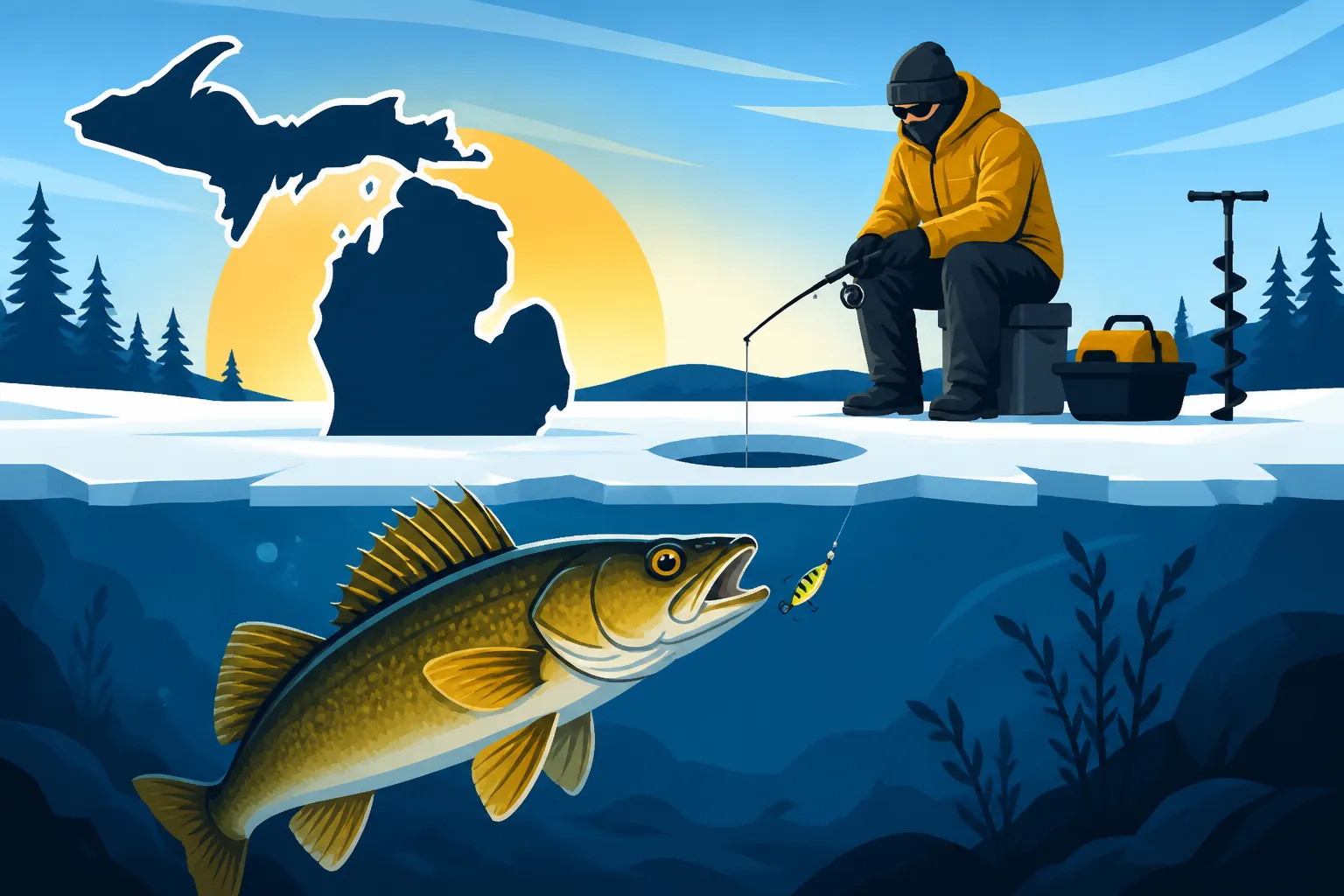
Walleye, with their distinctive glassy eyes and delicate, flaky white meat, are truly a prized catch here in Michigan, especially during the colder months. When the water temperatures drop, these fish don't just disappear; they often become more concentrated in certain areas, making them a fantastic target for ice anglers. They're typically found deeper during the day, hugging structure or bottom contours, but often move shallower during twilight hours – those magical low-light periods at dawn and dusk – to feed. This predictable feeding pattern makes them a thrilling challenge for ice anglers who are willing to brave the elements. There's nothing quite like the thump of a walleye on your line when you're perched on a bucket in the middle of a frozen lake, miles away from the chaos of summer.
Key Factors for a Successful Walleye Ice Fishing Lake
Not just any frozen lake will yield a bounty of walleye. The best Michigan lakes for ice fishing walleye share several crucial characteristics. Firstly, a healthy walleye population is paramount, often supported by natural reproduction or sustained stocking efforts by the Michigan Department of Natural Resources (DNR). Secondly, these lakes typically boast diverse underwater structure, such as deep humps, extensive flats, sharp breaks, rock piles, and submerged weed beds. Walleye relate closely to structure, using it for ambush points and cover, so understanding and locating these features under the ice is absolutely critical. Depth also plays a significant role; lakes with varying depths, offering both shallow feeding flats and deeper sanctuaries, tend to be more productive. Clear water can sometimes make them spooky, but good oxygen levels are always a plus. Finally, good public access, including well-maintained boat launches (that are accessible for ice shanties and gear) and ample parking, makes a huge difference, especially when you're hauling all your ice fishing gear.
Top Michigan Lakes for Hardwater Walleye Action
When you think about serious ice fishing for walleye in Michigan, a few legendary names immediately come to mind. These are the lakes that consistently produce fish, year after year, offering both quantity and quality for dedicated hardwater anglers.
Saginaw Bay: The Walleye Factory of Lake Huron
Without a doubt, Saginaw Bay stands as one of Michigan's — and frankly, the entire Great Lakes region's — most prolific walleye fisheries. As a sprawling, relatively shallow arm of Lake Huron, it's a massive, diverse system that produces an incredible abundance of walleye year-round, and winter is no exception. Ice anglers flock here from all over, drawn by the promise of consistent action.
The key to Saginaw Bay's success lies in its vast, nutrient-rich waters and extensive flats, which support an incredible forage base of baitfish like gizzard shad and alewives. This abundance of food allows walleye to grow quickly and reach impressive sizes. During the ice season, walleye can be found across many different areas of the bay, but some hotspots consistently produce. Near Linwood Beach, Monitor Bay, and various points around the inner bay, anglers often find success. Access points like Bay City State Park and various public launches along the shoreline become bustling communities of ice shanties once the ice is safe.
When targeting walleye on Saginaw Bay, anglers often employ a combination of jigging and tip-ups. For jigging, baits like Jigging Raps, spoons tipped with minnow heads, or soft plastics on lead head jigs are incredibly effective. Fishing these baits near the bottom, often in 8 to 20 feet of water, is a common tactic. Tip-ups are usually set with live minnows, such as emerald shiners or golden shiners, suspended just above the bottom. The bay's relatively shallow nature means that even in "deep" water, you're not always fishing extreme depths, making it accessible for a variety of setups. You'll want to check out our detailed guide on Saginaw Bay, Michigan, Walleye Fishing on Lake Huron for even more specific strategies and locations.
Houghton Lake: Michigan's Inland Giant
Nestled in the heart of the Lower Peninsula, Houghton Lake holds the title of Michigan's largest inland lake. This massive body of water, covering over 20,000 acres, is a renowned four-season fishery, and its ice fishing reputation for walleye is particularly strong. While it's relatively shallow overall, with an average depth of around 7.5 feet and a maximum depth of about 20 feet, it still offers excellent structure for winter walleye.
The draw of Houghton Lake for ice anglers is its consistent walleye population and the sheer amount of fishable water. Walleye often congregate around the numerous drop-offs, submerged weed lines, and transition areas between hard and soft bottom. Popular ice fishing areas include the flats off the North Shore, near the Middle Grounds, and around the mouth of the Cut River. The shallower nature of Houghton Lake means that light penetration can be a factor, and walleye are often more active during low-light conditions or even after dark.
Successful techniques on Houghton Lake mirror those used on other productive walleye ice fisheries. Jigging spoons, lipless crankbaits, and small jigging raps are staples, often tipped with a minnow head or a piece of wax worm to add scent and appeal. Tip-ups are also widely used, typically rigged with lively minnows suspended a foot or two off the bottom. Because of its size, having a good snowmobile or ATV is often beneficial for covering ground and finding fish on Houghton Lake. Many anglers will set up multiple holes, spreading out their tip-ups, and actively jig one or two holes nearby. Our Houghton Lake Fishing Guide: Michigan's Largest Inland Lake has more tips for year-round fishing, which can often translate to ice fishing success.
Lake St. Clair: Unexpected Winter Walleye Gem
While Lake St. Clair is globally celebrated for its smallmouth bass and muskellunge fishing during the warmer months, it might surprise some to learn that it offers a truly exceptional, albeit often overlooked, walleye ice fishery. Despite its shallow depths (average around 10 feet), the lake’s incredible fertility and vast size support a robust walleye population that becomes a fantastic target once the ice is safe.
The secret to Lake St. Clair's winter walleye success lies in the same fertile conditions that make it so productive for other species. The lake is essentially a massive, shallow basin with an abundance of baitfish, particularly gizzard shad. Walleye here often relate to subtle depth changes, channels, and weed edges, especially those deeper weed lines that hold green vegetation throughout the winter. Areas around Anchor Bay, Muscamoot Bay, and towards the Canadian border on the main lake are popular for ice anglers targeting walleye. Access is usually good from various public boat launches turned winter access points along the Michigan shoreline.
Ice anglers on Lake St. Clair find success using aggressive jigging techniques, often with larger spoons, Rapala Jigging Raps, or blade baits to call fish in. Tipping these lures with minnow heads or soft plastic trailers adds to their appeal. Due to the lake's sometimes murky water and current, vibrant colors like chartreuse, orange, and metallic finishes can be particularly effective. Tip-ups are also a common sight, baited with active minnows. The ice conditions on Lake St. Clair can be variable due to current and its size, so always prioritize safety and check local reports before venturing out.
Other Notable Walleye Ice Fishing Lakes
Beyond these superstars, Michigan boasts several other fantastic lakes where you can enjoy some excellent hardwater walleye fishing.
- Lake Gogebic (Upper Peninsula): This large, natural lake in the western Upper Peninsula is famous for its abundant yellow perch and northern pike, but it also supports a very healthy walleye population. Anglers here often find walleye in deeper basins and along drop-offs. It's a true wilderness experience, requiring a bit more preparation due to its remote nature and colder UP winters.
- Big and Little Bays de Noc (Upper Peninsula): Located on Lake Michigan in the Upper Peninsula, these bays offer exceptional ice fishing for walleye, particularly in the deeper sections and around structure. The vastness of these bays means there's always new water to explore, and they're known for producing trophy-sized fish.
- Lac Vieux Desert (Upper Peninsula/Wisconsin Border): While partially in Wisconsin, the Michigan side of Lac Vieux Desert is a known producer of walleye and also musky, with ice anglers finding success around various humps and points, particularly during low-light periods.
- Hubbard Lake (Northeast Lower Peninsula): A beautiful, deep, and clear lake, Hubbard offers a good walleye fishery. Ice anglers often target them along weed edges and structural elements in moderate depths. Success can often be found by staying mobile and drilling plenty of holes.
Essential Strategies for Ice Fishing Walleye on Michigan Lakes
Having the right gear and knowing the proven techniques can drastically improve your chances of success when chasing walleye through the ice. It's not just about drilling a hole and dropping a line; there's a real art and science to it.
Gear Up for Success: Rods, Reels, and Augers
For serious walleye ice fishing, your gear needs to be up to the task.
- Rods and Reels: You’ll want a medium to medium-heavy action ice fishing rod, typically 28 to 36 inches long. This length provides enough backbone to fight a good-sized walleye while still being manageable in a small ice shanty. Pair it with a smooth spinning reel in the 1000 to 2500 size range. Spool it with 6-10 lb test fluorocarbon or braided line with a fluorocarbon leader for sensitivity and stealth. This setup gives you the power to handle those big fish and the sensitivity to feel subtle bites, which walleye are famous for.
- Augers: A reliable ice auger is non-negotiable. Whether you opt for a hand auger for shallower, thinner ice, a powerful gas-powered model for thick ice and many holes, or the increasingly popular electric augers (like those from ION or Strikemaster), ensure it's sharp and well-maintained. A 6 to 8-inch hole is standard for walleye. Our guide on Best Ice Augers for Michigan Ice Fishing provides a deeper dive into choosing the right one.
- Electronics: A flasher or an ice fishing sonar unit (like those from Vexilar or Marcum) is a game-changer. It allows you to see your lure, detect fish approaching, and understand the depth and bottom structure in real-time. This instant feedback is invaluable for refining your presentation. A good GPS unit or a reliable app like the Michigan DNR Hunt Fish App can help you mark productive spots and navigate safely on large bodies of water.
Mastering Walleye Ice Fishing Techniques
Walleye can be finicky, so having a repertoire of techniques is crucial.
- Jigging: This is an active and effective method. Use lures like Rapala Jigging Raps, Swedish Pimples, or various ice spoons. Drop your lure to the bottom, then lift and drop it, varying the height and speed. Walleye often strike on the fall or when the lure is paused. Tipping your jig with a minnow head or a wax worm can add scent and entice wary fish. Experiment with different colors and sizes to see what the walleye prefer on any given day. Check out our Ice Fishing Techniques for Michigan Walleye for more detailed jigging strategies.
- Tip-Ups: These passive devices are fantastic for covering more water. Rig your tip-up with a live minnow (emerald shiners, golden shiners, or fatheads are excellent choices) hooked through the back or lips, suspended just above the bottom or structure. Spread your tip-ups out to cover different depths or areas, and keep an eye on those flags! When a flag goes up, approach quietly and set the hook with a smooth, firm pull once the fish has committed.
- Bait and Lure Choices: Live minnows are king for walleye through the ice. Dead stick setups (a rod resting over a hole with a live minnow) can also be highly effective. Artificial lures should mimic baitfish. Beyond Jigging Raps and spoons, blade baits (like a Silver Buddy or Vibrato) can be great for aggressive fish, creating a lot of vibration.
Safety First on the Ice
Ice fishing is incredibly rewarding, but it comes with inherent risks. Safety should always be your top priority.
- Ice Thickness: Never venture onto ice that is less than 4 inches thick for foot travel. For snowmobiles or ATVs, you need at least 5-7 inches, and for light vehicles, 8-12 inches. These are general guidelines; always err on the side of caution. Check local ice reports, talk to bait shops, and use an ice spud or auger to check thickness as you go.
- Buddy System: Always fish with a friend or let someone know exactly where you are going and when you expect to return.
- Essential Safety Gear: Carry ice picks, a throwable rope, a whistle, and wear a flotation suit or life vest. Dress in layers to stay warm and dry, and bring plenty of hot drinks. Be aware of changing weather conditions and listen for unusual sounds from the ice. For insights on When Does Ice Fishing Season Start in Michigan, you'll also find relevant safety tips.
Michigan Walleye Regulations and Best Practices
Michigan is committed to maintaining its fantastic fisheries, and that means anglers have a responsibility to know and follow the rules. This ensures that the thrill of catching walleye through the ice continues for generations to come.
Navigating Walleye Size and Bag Limits
Before you even hit the ice, make sure you're familiar with the current Michigan fishing regulations. Walleye specific rules can vary by lake or even within certain sections of a large body of water like Saginaw Bay. Generally, Michigan has a statewide 15-inch minimum size limit for walleye, but there are exceptions, including protected slot limits on some lakes where fish between certain sizes must be immediately released. The daily possession limit for walleye is typically five fish.
It's absolutely crucial to consult the latest Michigan Fishing Guide published by the DNR, which is updated annually. You can usually find a PDF version online or pick up a physical copy at bait shops and DNR offices. Our articles on Michigan Fishing Regulations Every Angler Should Know and Michigan Walleye Size and Possession Limits provide excellent resources to help you stay informed. Don't let a simple misunderstanding of the rules ruin your trip or result in a fine. A good resource for finding guides who know the local rules inside and out is FishingBooker, where many experienced captains offer ice fishing trips.
Conservation and Responsible Angling
Responsible angling goes beyond just following the rules; it's about being a good steward of our natural resources. Practicing catch and release, especially for larger, older walleye which are often important breeders, helps maintain healthy fish populations. If you plan to release a fish, handle it carefully, minimizing its time out of the water, and use proper tools like long-nose pliers for hook removal.
Dispose of your trash properly, including fishing line, which can be a hazard to wildlife. Consider using a spud bar to check ice thickness as you go, rather than relying solely on others' tracks. Finally, remember that your fishing license fees directly support the conservation efforts and fisheries management programs that make these incredible walleye opportunities possible. Understanding Where Michigan Fishing License Money Goes can make those fees feel like a small investment in a huge passion. You can learn more about securing your license through our Michigan Fishing License Guide for Residents and Nonresidents.
Here's a quick look at some of the best walleye ice fishing spots in Michigan:
| Lake / Location | Key Characteristics | Best Fishing Depths (Approx) | Common Techniques | Notes |
|---|---|---|---|---|
| Saginaw Bay | Vast, shallow, nutrient-rich, abundant forage | 8-20 feet | Jigging (spoons, Raps), Tip-ups | Known for high numbers, often trophy potential. Check ice carefully. |
| Houghton Lake | Michigan's largest inland lake, relatively shallow | 10-20 feet | Jigging (spoons, Raps), Tip-ups | Consistent action, good structure in a vast system. Night fishing productive. |
| Lake St. Clair | Shallow, fertile, robust ecosystem | 8-15 feet | Aggressive jigging, Tip-ups | Often overlooked for walleye, great action on subtle structure. |
| Lake Gogebic | Wilderness setting, deeper basins | 15-30+ feet | Jigging, Tip-ups (minnows) | Good for quality fish, colder UP conditions. |
| Bays de Noc | Great Lakes bays, diverse structure | 10-40+ feet | Jigging, Tip-ups | Excellent trophy potential. |
Always check current conditions and regulations before you go! For a broader view of winter opportunities, check out our Michigan Ice Fishing Guide and our comprehensive list of Best Ice Fishing Lakes in Michigan. Also, knowing Michigan Daily Bag Limits by Species is always a smart move.
Disclaimer
The information provided in this guide is for general informational purposes only and is not intended as legal or professional advice. Fishing regulations, ice conditions, and fish populations can change rapidly. Always consult the official Michigan Department of Natural Resources (DNR) regulations and local resources for the most current and accurate information before planning any fishing trip. Safety on the ice is paramount; never take unnecessary risks.