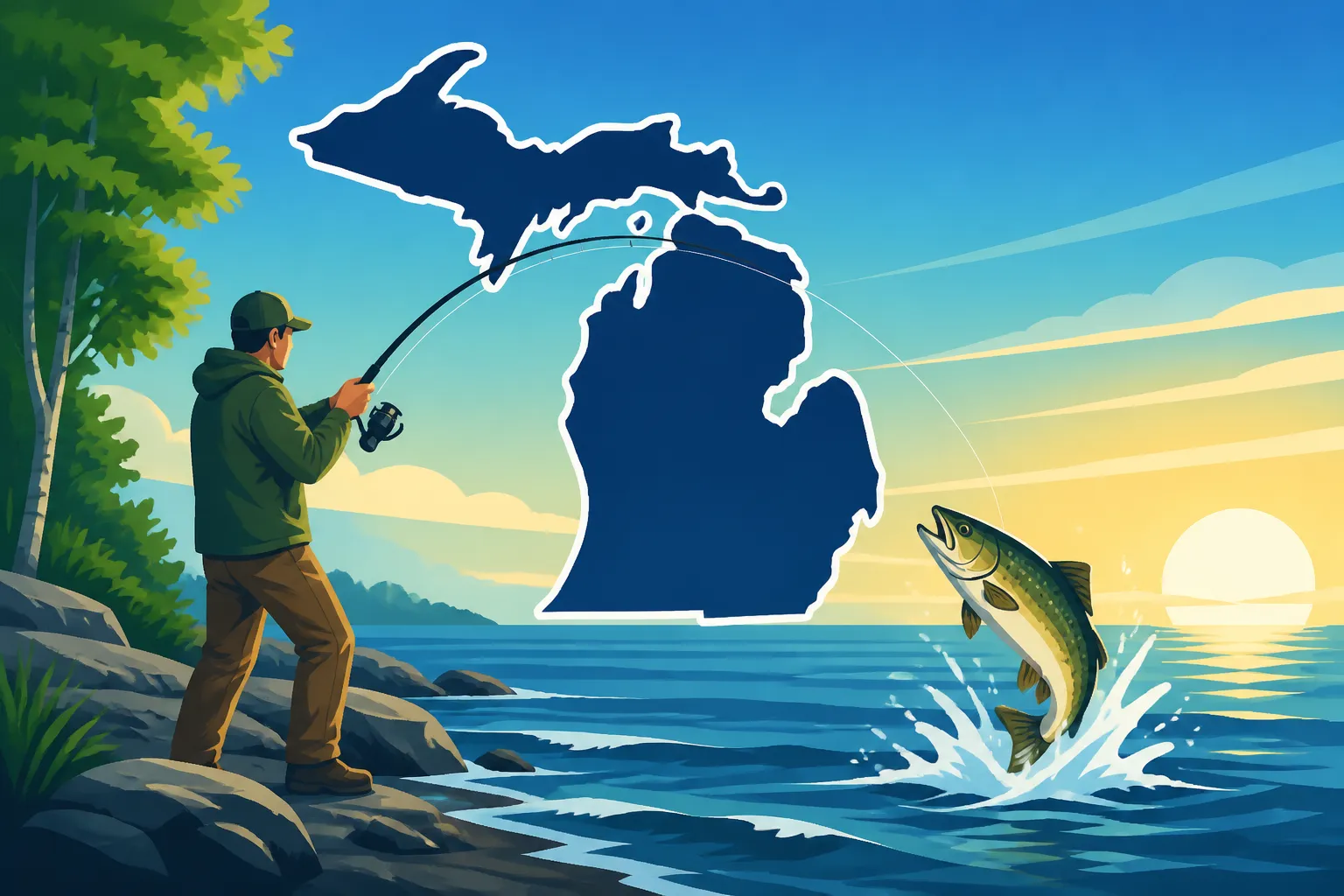
Does Michigan Have Good Shore Fishing on the Great Lakes?
Trying to enjoy the thrill of Michigan's Great Lakes fishing without owning a boat can feel like you're missing out on all the action, leaving many anglers wondering if hitting the shore is even worth their time. It's a common frustration, feeling limited to smaller inland waters or the occasional pier, but let me assure you, Michigan absolutely offers exceptional shore fishing opportunities on its vast Great Lakes coastline. This guide is here to shed light on those possibilities, providing you with the insights and confidence to tackle these magnificent waters right from the bank.
The Reality of Great Lakes Shore Fishing in Michigan
For many, the Great Lakes conjure images of vast, open water, powerful waves, and expensive boats equipped with all the latest gear. It's easy to assume that shore anglers are relegated to catching panfish or small bass in sheltered coves, far from the real "trophies" of these immense waters. However, that couldn't be further from the truth. Michigan's Great Lakes shores, including Lake Michigan, Lake Huron, and Lake Superior, are rich with diverse fish populations that move surprisingly close to land, offering fantastic opportunities for anglers willing to learn the ropes.
Accessibility and Variety of Species
One of the greatest advantages of shore fishing the Great Lakes in Michigan is the sheer accessibility. From bustling city piers and developed harbor walls to serene, undeveloped stretches of beach and rocky points, there are countless public access points. You don't need a boat, an expensive charter, or even a hefty tackle box to get started. Just a valid Michigan Fishing License Guide for Residents and Nonresidents, a rod, some basic tackle, and a willingness to explore. The variety of species you can target from shore is also impressive. We're not just talking about common panfish. Depending on the season and location, you can realistically target species like smallmouth bass, yellow perch, walleye, northern pike, and even migratory salmon and steelhead that stage near river mouths or cruise close to shore. It truly broadens your fishing horizons without requiring significant investment in gear or watercraft.
Many anglers find themselves drawn to the excitement of fishing for migratory species. During their runs, salmon and steelhead, which are essentially rainbow trout that migrate to the Great Lakes, move into rivers and stage near river mouths along the coast. This phenomenon brings these powerful fish within casting distance of shore anglers, particularly in the fall for salmon and spring for steelhead. Even lake trout, often considered a deepwater species, can be caught from shore in certain cold-water areas, especially in the spring or late fall when they move shallower. The accessibility combined with the potential for diverse and substantial catches makes Great Lakes shore fishing a unique and rewarding experience.
Common Misconceptions About Shore Fishing
One of the most persistent misconceptions is that shore fishing on the Great Lakes is merely a "last resort" for those without a boat, implying that the fishing is inferior or less exciting. People often believe that the "real" fishing happens miles offshore, that all the big fish are out of reach, or that you'll only ever catch tiny baitfish. This simply isn't true. While it's certainly a different experience than trolling offshore, shore fishing requires skill, patience, and local knowledge that can be just as, if not more, rewarding.
Another common myth is that you need specialized, heavy-duty surf fishing gear to cast far enough to reach fish. While long rods can be beneficial in some scenarios, many Great Lakes species feed surprisingly close to shore, especially during certain times of the day or year. Often, a standard medium-heavy spinning rod with enough backbone to handle a decent fish and cast moderate distances is all you need. Furthermore, the idea that shore fishing is somehow less challenging is also inaccurate. Identifying fish patterns, understanding current and structure from land, and adapting techniques for varying conditions are all complex skills that shore anglers hone. Knowing where to go, when to go, and what to use is paramount, turning a seemingly simple endeavor into a thoughtful and strategic pursuit.
Prime Great Lakes Shore Fishing Locations
Michigan's Great Lakes shoreline is incredibly diverse, offering a multitude of environments where fish gather and feed close to shore. Understanding these different types of locations is key to successful shore fishing. It's not just about finding any patch of water; it's about identifying the productive spots where fish naturally congregate.
Piers and Harbors Offering Easy Access
Piers and harbors are arguably the most popular and accessible spots for Great Lakes shore fishing, and for good reason. These structures provide easy access to deeper water without the need for a boat, acting as extended casting platforms that stretch into the lake. Often, breakwalls and harbor entrances create current breaks and concentrate baitfish, which in turn attract larger predators. Places like the piers in Ludington, Manistee, and Grand Haven on Lake Michigan, or the breakwalls of Port Huron on Lake Huron, are famous for their pier fishing for salmon. You'll often see anglers lined up shoulder-to-shoulder during peak runs, casting spoons, plugs, or spawn bags.
Beyond salmon and steelhead, piers and harbors are excellent spots for yellow perch, especially in spring and fall. Many harbors are also home to thriving populations of smallmouth bass, which relate to the rocky structures and deep water found there. Think about the bustling harbors of Holland or Muskegon Lake, where you can often find good numbers of perch and smallmouth right near the concrete. These locations are particularly great for beginners or families, as they often have amenities like parking, restrooms, and sometimes even bait and tackle shops nearby. Remember that specific regulations, like those covered in Michigan Fishing Regulations Every Angler Should Know, might apply to particular piers or harbor areas, so it's always wise to check. For a deeper dive into specific locations, check out our guide on the Best Lake Michigan Fishing Piers and Harbors.
River Mouths and Tributaries
River mouths and the lower stretches of tributaries that flow into the Great Lakes are absolute hotspots for shore anglers, especially when migratory species are on the move. These areas act as natural highways for fish like Chinook salmon, Coho salmon, and steelhead as they transition from the open lake to spawn upstream. The influx of fresh water, changes in current, and concentration of forage create irresistible holding areas for these powerful fish. The mouths of rivers like the Au Sable, Manistee, or Muskegon on Lake Michigan are legendary.
During the fall salmon runs and spring steelhead runs, these areas can be incredibly productive. Anglers often line the banks, casting long distances with heavy spoons, crankbaits, or various forms of natural bait like spawn bags. Even outside of these peak runs, river mouths can be excellent for other species. Walleye often congregate around these areas, particularly at night, drawn by the baitfish pushed out by the current. Northern pike and smallmouth bass also patrol these transitional zones, looking for an easy meal. Learning to read the water, identify current seams, and understand fish movement in these dynamic environments is crucial for success.
Secluded Beaches and Rocky Outcroppings
While piers and river mouths are popular, don't overlook the potential of more natural, undeveloped stretches of shoreline, including secluded beaches, rocky points, and bluffs. These areas might require a bit more walking or exploring, but they can offer solitude and excellent fishing for different species or during off-peak times. Sandy beaches, especially those with subtle drop-offs or submerged structure, can be fantastic for targeting yellow perch, smallmouth bass, and even walleye, particularly during low light conditions or at night.
Rocky outcroppings and points, common along parts of Lake Superior and sections of Lake Michigan, provide excellent habitat for smallmouth bass and even lake trout. These areas offer cover, ambush points, and often hold cooler water, making them attractive to certain species throughout the year. Fishing these spots often involves casting along the edges of submerged rocks, using lures that mimic baitfish or crawfish. While these areas might not always be teeming with fish like a busy pier, the quality of the catch and the peaceful atmosphere can be incredibly rewarding. It’s all about getting a bit adventurous and thinking outside the box, which can lead to incredible fishing experiences.
| Location Type | Primary Species Targeted | Best Season(s) | Typical Baits/Lures | Notes |
|---|---|---|---|---|
| Piers & Harbors | Salmon, Steelhead, Perch, Smallmouth | All year, peak for salmon/steelhead in fall/spring | Spoons, spawn bags, minnows, jigs, crankbaits | High accessibility, often crowded, deep water access |
| River Mouths/Tributaries | Salmon, Steelhead, Walleye, Pike | Fall (salmon), Spring (steelhead), Summer (walleye) | Spoons, crankbaits, spawn bags, artificial eggs | Dynamic currents, prime for migratory species |
| Secluded Beaches | Perch, Smallmouth, Walleye, Northern Pike | Spring, Summer, Fall | Worms, minnows, jigs, spinnerbaits | Good for panfish and predatory fish, often less crowded |
| Rocky Outcroppings/Points | Smallmouth Bass, Lake Trout, Walleye | Spring, Summer, Fall | Jigs, crankbaits, tube baits, spoons | Structure provides cover, cooler water, good for predators |
Essential Gear and Techniques for Great Lakes Shore Fishing
Successfully tackling the Great Lakes from shore doesn't require a fortune in specialized equipment, but having the right tools for the job can make a huge difference. Think about it: you're often casting into vast waters, potentially fighting strong currents and large fish. Your gear needs to be up to the task. Similarly, understanding the best techniques for different species and conditions is crucial.
Rods, Reels, and Line for Distance Casting
When it comes to rods for Great Lakes shore fishing, length is often your friend, especially when you need to cast over waves, reach distant seams, or keep your line above breakwall rocks. A rod in the 9- to 12-foot range, with a medium-heavy to heavy action, is often ideal. This length provides the leverage needed for long casts and the power to control larger fish. Many anglers opt for spinning setups because they are generally easier to cast long distances, especially with lighter lures. For inspiration on choosing the right equipment, you can refer to resources like Best Rod Length for Steelhead Fishing, which provides valuable insights for similar situations.
Pair your long rod with a reliable spinning reel in the 4000 to 6000 size range. Look for models with a smooth drag system, as fighting a chrome bright steelhead or a surging Chinook salmon will put your equipment to the test. A reel that can handle at least 200 yards of 10-15 lb test monofilament or fluorocarbon, or 20-30 lb braided line, is a good starting point. Braided line is particularly popular for shore fishing due to its thin diameter, incredible strength, and lack of stretch, which enhances sensitivity and casting distance. If using braid, always tie on a fluorocarbon leader of 6-12 lb test, depending on the target species and water clarity. This leader is less visible to fish and provides a bit of abrasion resistance around rocks. Choosing quality line can be the difference between landing a trophy and a heartbreaking break-off.
Baits and Lures for Great Lakes Species
The specific baits and lures you choose will largely depend on what species you're targeting and the time of year, but there are some versatile options that consistently produce for Great Lakes shore anglers. For salmon and steelhead, spoons are often king. Brands like Little Cleos, Dardevles, and Koho spoons in vibrant colors like orange, chartreuse, silver, and blue are highly effective, especially when cast far out and retrieved with a varying action. In river mouths or near piers, spawn bags (small mesh bags filled with cured fish eggs) or artificial egg imitations under a float can be incredibly productive for these migratory fish.
For walleye and smallmouth bass, jigs are a go-to. Jigs tipped with soft plastics like grubs, swimbaits, or creature baits in natural colors or bright fluorescent patterns can entice strikes. Crankbaits and jerkbaits, which imitate baitfish, are also excellent choices, particularly when fishing around rocky structure or submerged timber. For yellow perch, simple setups like a small hook with a piece of nightcrawler, a minnow, or a tiny jig under a bobber can lead to impressive catches. Always carry a variety, and don't be afraid to experiment with different colors and sizes until you find what the fish are keying in on. Sometimes, the fish are incredibly picky, and having options is your best bet to avoid going home empty-handed. Our guide on the Best Bait for Michigan Walleye offers more specific insights for that popular species.
Strategic Fishing Approaches
Shore fishing isn't just about casting and hoping; it involves strategic thinking. One fundamental approach is "fan casting," where you make casts to cover a wide arc of water in front of you, from left to right, covering different depths and potential holding areas. This helps you locate where the fish are actively feeding. Pay close attention to subtle changes in the bottom contour, current seams, and any visible structure like submerged rocks or logs, as these are prime ambush points for predatory fish.
Understanding the timing of your fishing is also a critical strategy. Low light conditions – dawn, dusk, and night – are often the most productive for many Great Lakes species, particularly walleye and salmon. Overcast days can extend these bite windows. Tides, though not as pronounced as ocean tides, do exist on the Great Lakes, primarily driven by wind (seiches), and these water level fluctuations can influence fish behavior and feeding patterns. Don't forget to incorporate principles from Shore Fishing Techniques for Michigan's Great Lakes into your strategy. If you're new to an area or want to learn from experienced professionals who understand these nuances, platforms like FishingBooker can connect you with local guides who specialize in Great Lakes fishing, even if you're primarily a shore angler, giving you insights into productive spots and techniques you might not discover on your own. Sometimes, a quick conversation or a day out with a guide can drastically accelerate your learning curve.
Maximizing Your Great Lakes Shore Fishing Success
Beyond gear and basic techniques, truly maximizing your success on Michigan's Great Lakes from shore involves a deeper understanding of fish behavior, environmental factors, and proactive preparation. This kind of knowledge is what separates an occasional catcher from a consistently successful angler.
Understanding Seasonal Patterns
The Great Lakes are dynamic environments, and fish behavior is heavily influenced by the changing seasons. In spring, as ice retreats and water temperatures begin to rise, many species move into shallower waters. This is an excellent time for targeting yellow perch, smallmouth bass, and walleye near river mouths and warmer bays. The spring also sees the start of the steelhead run, with fish staging and moving into rivers for spawning. The Michigan's Trout and Salmon Season on the Great Lakes often opens up prime opportunities for these prized catches.
Summer brings warmer surface temperatures, pushing some species deeper or to cooler areas, but it also offers fantastic opportunities for smallmouth bass and northern pike in rocky or weedy shorelines. Early mornings and late evenings are often the most productive. Fall is arguably the most exciting time for Great Lakes shore anglers due to the massive salmon runs. Chinook and Coho salmon congregate at river mouths and cruise near shorelines before their upstream migration. This is also when steelhead start to make their presence known, following the salmon. Finally, winter, while challenging due to ice, can still offer opportunities for ice fishing in protected bays and harbors, allowing anglers to target walleye and perch. Knowing when to target which fish will drastically improve your odds.
Safety Considerations and Regulations
Fishing the Great Lakes from shore can be an incredible experience, but safety should always be your top priority. The weather on the Great Lakes can change rapidly and dramatically. Always check the forecast before you go, and be prepared for sudden winds, rain, or even thunderstorms. Strong winds can create dangerous waves and make casting challenging, if not impossible. Dress in layers, wear appropriate footwear for potentially wet and slippery conditions, and consider a personal flotation device, even when shore fishing, especially if you're on a pier or near fast-moving water. Our guide on Life Jackets and Michigan Boating Safety Rules is a good resource, even for shore anglers, to understand the importance of PFDs in various water environments.
Beyond personal safety, it's crucial to be aware of and adhere to all Michigan Fishing Regulations Every Angler Should Know. This includes understanding possession limits, like Michigan's Combined Trout and Salmon Daily Limit, minimum size limits, and specific season dates for different species and bodies of water. The Michigan Department of Natural Resources (DNR) publishes an annual fishing guide that is an invaluable resource. You can often find a physical copy at bait shops or view the digital version online. Ignorance of the rules is never an excuse, and violations can lead to hefty fines or loss of fishing privileges. Remember to also be respectful of private property and other anglers, leaving no trace behind. If you want to keep track of your licenses and report your catches, the Michigan's DNR Hunt Fish App for Licenses and Reporting is an excellent tool to have on your phone.
Disclaimer
Fishing conditions and regulations in Michigan can change frequently. Always consult the latest Michigan Department of Natural Resources (DNR) fishing guide or website for the most current rules and information before heading out on your trip. This article is for informational purposes only and does not constitute legal advice.