What Size Motor for a Fishing Boat on Inland Lakes
Choosing the right motor size for your fishing boat on Michigan's vast and varied inland lakes can feel like trying to solve a complex puzzle, leaving many anglers scratching their heads about horsepower, boat type, and what's truly necessary. This guide aims to clear up that confusion, helping you understand the factors that go into selecting the perfect motor to power your inland lake fishing adventures, ensuring you get the most out of your time on the water without being over or underpowered.
Understanding Your Inland Lake Fishing Needs
Before you even start looking at horsepower numbers, the most crucial step is to really think about how you plan to fish and where in Michigan you'll be spending most of your time. Our state's inland lakes range from tiny, secluded ponds to sprawling bodies of water like Houghton Lake or Torch Lake, each demanding a different approach. What works for a quick trip to a local chain of lakes might be entirely inadequate for navigating choppy conditions on a larger lake, or vice versa.
Type of Fishing Activity
Your primary fishing methods will dictate a lot about your motor needs. Are you a dedicated troller, slowly pulling baits for walleye across deep flats? Or are you more of a bass angler, zipping from one weed bed to the next, making quick stops to cast? Maybe you prefer quiet panfish pursuits in calm coves, or you're just looking for reliable transportation to your favorite secret spot. Each activity places different demands on your engine.
For example, if trolling is your main game, you'll want a motor that can maintain very low speeds consistently without fouling plugs or overheating. This is where a smaller kicker motor might come into play, or a well-tuned main engine with excellent low-end control. On the other hand, if you're frequently covering long distances between fishing spots, you'll appreciate a motor with enough horsepower to get your boat on plane quickly and efficiently, saving you time and fuel. If you're often fishing shallow, weedy areas, a motor that can be easily trimmed up or an electric motor might be more suitable. Consider how much time you spend actively running versus slowly drifting or holding position. This initial assessment will narrow down your choices considerably.
Size and Type of Boat
The kind of boat you own or plan to buy is perhaps the single biggest determinant of motor size. A small aluminum Jon boat simply cannot handle the same horsepower as a 20-foot fiberglass bass boat, and trying to overpower it is not only dangerous but illegal. Michigan, like all states, has regulations on maximum horsepower for different boat types, often indicated on a Coast Guard capacity plate inside the vessel. Always adhere to this plate; it's there for your safety and to protect the integrity of the boat.
Think about the hull design: a flat-bottomed Jon boat will plane easily with less horsepower but won't handle chop well. A V-hull will cut through waves more smoothly but requires more power to get up on plane. Pontoon boats, with their broad, stable platforms, need a surprising amount of horsepower to move effectively, especially when loaded with family and gear. Kayaks and canoes, while typically human-powered, can often benefit from small electric motors for assisted travel, particularly on longer paddles or when fighting a headwind. Understanding the inherent design and limitations of your vessel is paramount. For larger boats, you'll also want to consider What Size Motor for the Great Lakes if you ever plan to venture beyond inland waters.
Typical Lake Conditions
Michigan boasts over 11,000 inland lakes, and their conditions vary wildly. A small, sheltered lake might remain glassy calm all day, while a large, open body of water like Mullett Lake or Houghton Lake can whip up significant waves with a stiff breeze. Fishing on these larger, more exposed lakes often demands more power and a boat capable of handling rougher water safely.
If you primarily fish smaller, calmer lakes, you might find that a lower horsepower motor is perfectly adequate. It will save you money on purchase, fuel, and maintenance. However, if you plan to venture onto some of our larger, more popular fishing destinations, especially those known for strong winds or boat traffic, you'll need enough power to navigate safely and comfortably. Being underpowered on a large lake in choppy conditions can be a genuinely unsettling experience. Think about the average depth as well; some lakes are very shallow, making prop strikes a constant concern, while others are deep and offer more clearance.
Horsepower Considerations for Inland Lakes
Once you've assessed your needs and boat type, you can start diving into the actual horsepower numbers. It's not always about having the biggest engine; it's about having the right engine for your specific setup and fishing style.
Smaller Lakes and Kayak/Canoe Accessories
For the smallest inland lakes, secluded ponds, or even just for quiet maneuvering on larger bodies of water, electric trolling motors are often the perfect solution. These are ideal for kayaks, canoes, small Jon boats, or as a secondary "kicker" motor on larger vessels. They offer silent operation, which is fantastic for sneaking up on wary fish, and they excel at precise boat positioning for casting or slow trolling. Many anglers find these indispensable for getting into those skinny water spots where a gas outboard just won't go. Brands like Minn Kota and Motorguide offer a wide range of thrust options, and you can often find great deals on these at Bass Pro Shops or on Amazon.
While these aren't measured in horsepower, their thrust rating (measured in pounds) is directly related to their power output. For canoes or kayaks, 30-55 lbs of thrust is usually plenty. For small Jon boats up to 12-14 feet, 50-70 lbs of thrust can provide decent propulsion and excellent control. Remember, battery life is a key consideration here, and having a good deep-cycle marine battery (or two!) is essential. These motors are perfect for those serene mornings chasing panfish or quietly stalking bass in a lily pad field.
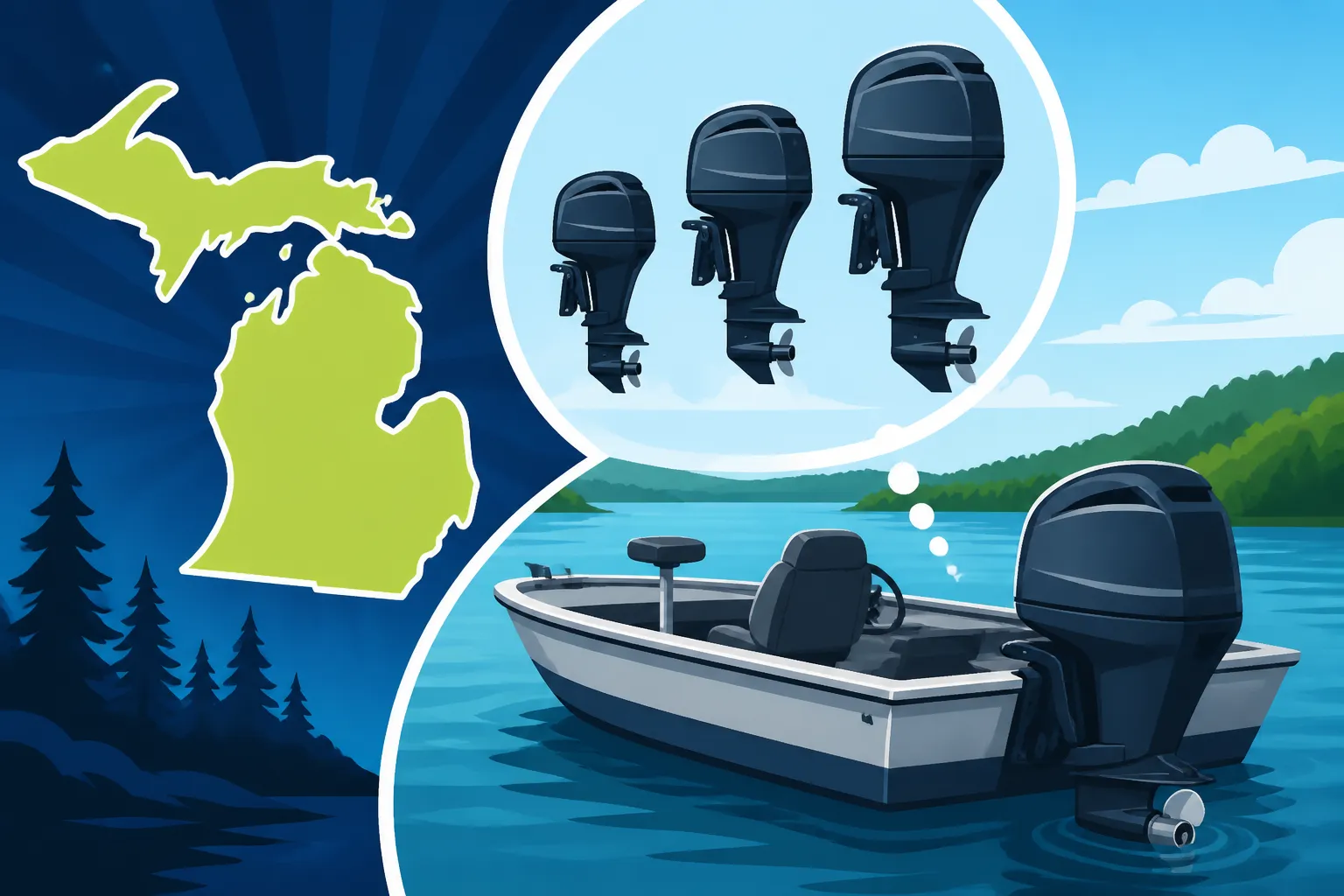
Mid-Sized Lakes and Smaller Fishing Boats (Outboards 5-25 HP)
If you're running a smaller aluminum fishing boat, a utility V-hull, or a smaller Jon boat (typically 12-16 feet) on mid-sized inland lakes, motors in the 5 to 25 horsepower range are often a sweet spot. These motors provide enough power to get most of these boats on plane (especially with lighter loads) and offer decent cruising speeds for covering moderate distances. They are generally fuel-efficient, relatively lightweight, and easy to maintain.
- 5-9.9 HP: Excellent for smaller Jon boats, inflatables, or as a reliable kicker motor on larger boats. They're great for slow trolling and maneuvering, and some smaller boats might even plane with just one or two people aboard. Perfect for smaller, less exposed lakes.
- 15-20 HP: A very popular choice for 14-16 foot aluminum boats. This range often provides enough grunt to plane quickly and maintain a comfortable cruising speed, even with a few passengers and gear. It's a versatile choice for many anglers fishing a variety of mid-sized Michigan inland lakes, offering a good balance of power and economy. You'll find that many of these engines are available in both tiller and remote steering options, providing flexibility depending on your boat's setup.
- 25 HP: For larger 16-foot aluminum boats or smaller fiberglass skiffs, a 25 HP engine can deliver solid performance. It will get you across the lake quickly and handle moderate chop better than smaller engines. This is a common maximum for many smaller boats and a reliable workhorse for many recreational anglers. For these engine sizes, you'll want to ensure you're using the right What Line Weight for Michigan Steelhead if you're also fishing those rivers.
Larger Inland Lakes and Multi-Purpose Boats (Outboards 25-75+ HP)
When you step up to larger inland lakes, bigger fishing boats (16-20+ feet), or multi-purpose craft like pontoon boats, you'll definitely need more horsepower. These lakes often demand quicker travel times, better rough-water performance, and the ability to carry more weight without sacrificing safety or speed. This is where motors ranging from 25 HP up to 75 HP (and sometimes even higher for dedicated bass boats or larger pontoons) come into play.
- 25-40 HP: This range is excellent for larger 16-18 foot aluminum boats, smaller fiberglass bass boats, or entry-level pontoons. They provide ample power for planing with multiple passengers and gear, good cruising speeds, and the ability to handle a bit more rough water. If you're frequently fishing lakes like Higgins Lake or Burt Lake, where you might encounter larger waves or need to cover significant distances, this range offers a great blend of capability and efficiency. Many manufacturers offer fuel-injected models in this range, providing better starting and fuel economy.
- 50-75 HP: These motors are powerful enough for 17-20 foot aluminum boats, mid-sized fiberglass multi-species boats, and most common pontoon boat applications. They offer strong hole shots, comfortable top speeds, and the confidence to navigate large, open water effectively. If your boat is often loaded with four or more people, a full livewell, and plenty of tackle, this horsepower range ensures you won't feel underpowered. They are also excellent for serious trolling, providing consistent low speeds when paired with the right prop.
- 75+ HP: For serious bass anglers running 18-20+ foot fiberglass bass boats, large multi-species rigs, or larger pontoons, you'll be looking at motors well above 75 HP. These high-horsepower engines are designed for speed, quick hole shots, and powering heavy loads. While less common for the casual inland lake angler, they are essential for competitive fishing or for those who demand maximum performance and speed on Michigan's biggest inland waters. Just remember that with increased horsepower often comes increased fuel consumption and purchase cost. When you're considering larger boats, you'll definitely want to know Michigan Boat Registration Requirements.
Factors Beyond Horsepower
While horsepower is often the first number people look at, it's far from the only factor in choosing the right motor. Several other considerations can significantly impact your fishing experience on Michigan's inland lakes.
Weight and Portability
The physical weight of the motor is an important consideration, especially if you plan to frequently remove the motor from your boat (e.g., for transport, security, or using it on multiple small boats). Smaller engines in the 5-20 HP range are often manageable for one strong person to lift, especially two-strokes or the newer lightweight four-strokes. As you move up in horsepower, motors become significantly heavier, often requiring a trailer hitch mount or an engine hoist to handle.
For car-top boats, canoes, or very small Jon boats, keeping the motor weight down is critical for easy loading and unloading. Even for boats on trailers, excessive stern weight from an oversized motor can affect trailering dynamics and boat performance. Always check the dry weight of any motor you're considering and compare it to your boat's transom rating and your personal ability to handle it.
Fuel Efficiency and Range
Nobody wants to spend more time at the gas pump than on the water. Fuel efficiency varies greatly by motor size, type (two-stroke vs. four-stroke), and how you operate it. Modern four-stroke outboards are generally more fuel-efficient than older two-strokes, especially at cruising speeds. However, pushing a boat that's underpowered will often lead to worse fuel economy as the engine constantly struggles to maintain speed.
Consider your typical fishing trips: are they short hops across a small lake, or do you plan long runs up a river system that feeds into a lake, or extensive trolling sessions? This will help you determine how important fuel capacity and efficiency are. Having a motor that sips fuel can save you a lot of money over a fishing season, especially with today's fluctuating gas prices. Knowing your boat's fuel tank capacity and your motor's average fuel burn will allow you to calculate your effective range, preventing those uncomfortable moments when you're wondering if you'll make it back to the launch.
Noise Levels and Electric Options
The sound an outboard motor makes can have a huge impact on your fishing experience, and frankly, on the fish themselves. Older two-stroke engines can be quite loud and smoky, which might not be ideal for serene mornings or sneaking up on fish in calm waters. Modern four-stroke outboards are significantly quieter and produce far fewer emissions, making for a much more pleasant experience for anglers and less disturbance to wildlife.
For ultimate quietness, nothing beats an electric trolling motor. These are virtually silent, allowing you to approach fish undisturbed. Many serious anglers will have both a gas outboard for primary propulsion and an electric trolling motor for stealthy maneuvering and precise boat control. If your focus is on fly fishing for trout on a quiet lake or targeting wary bass in shallow cover, the silence of an electric motor can be a huge advantage. They are also fantastic for slow, methodical trolling patterns. For more on this, check out Best Ice Fishing Techniques for Michigan Lakes where quiet operation is often key.
Legal Requirements and Safety
Michigan has specific boating laws and safety regulations that apply to all boaters, including anglers. While horsepower limits are usually dictated by the boat's capacity plate, it's always good practice to be aware of general boating laws. This includes having proper safety equipment onboard (life jackets, throwable flotation devices, fire extinguisher), understanding navigation rules, and avoiding reckless operation. If you're a younger boater, you might need a Michigan Boating Safety Certificate Requirements.
It's also important to consider the size of the prop relative to your motor and boat. An incorrectly pitched propeller can significantly hinder performance, fuel economy, and even put undue strain on your engine. Consult with a reputable marine dealer or expert to ensure you have the right prop for your setup. Furthermore, having a reliable motor is a safety feature in itself; breaking down in the middle of a large lake can quickly turn a fun day into a dangerous situation. Regular maintenance is key to reliable operation.
Making Your Final Motor Choice
With all these considerations in mind, how do you make that final decision? It's about weighing all the factors and finding the best compromise that fits your personal fishing style, your boat, and your budget.
Budgetary Realities
Let's be honest, budget plays a huge role in any significant purchase, and boat motors are no exception. New outboards can be a significant investment, with prices increasing dramatically with horsepower and features. Don't forget to factor in installation costs, controls, and perhaps even a new fuel tank or battery if upgrading. Maintenance costs also go up with larger, more complex engines.
Consider whether a new or used motor is right for you. A well-maintained used motor can be a fantastic value, but always have a qualified mechanic inspect it before purchase. Look for deals at local marine dealerships, or check online marketplaces. Sometimes, just a slight drop in horsepower can mean significant savings without a major sacrifice in performance. Think about the total cost of ownership, not just the sticker price.
Test Driving and Consulting Experts
Before making a final decision, if at all possible, try to test drive a boat with a similar motor size to what you're considering. This hands-on experience will give you invaluable insight into how the boat performs, how it feels at different speeds, and whether the power output meets your expectations. Most reputable dealers will offer this or have demo models.
Don't be afraid to talk to experienced anglers, marine mechanics, or sales staff at places like Bass Pro Shops or your local marine dealer. They often have real-world experience and can provide insights specific to Michigan's lakes and popular fishing boats. Join online fishing forums or local fishing clubs; these communities are often full of people eager to share their knowledge and experiences. Always remember that a Michigan fishing license is required for most anglers; you can learn more about this in our Michigan Fishing License Guide for Residents and Nonresidents.
Maintenance and Longevity
The lifespan and ongoing reliability of your motor are directly tied to proper maintenance. Regular oil changes, fuel filter replacements, spark plug checks, and lower unit lubrication are crucial for keeping any outboard running smoothly. Larger, more complex engines may have more components to maintain. Think about how comfortable you are with basic engine maintenance, or if you'll rely on professional service.
Opting for a well-known brand like Mercury, Yamaha, Honda, Suzuki, or Evinrude often means easier access to parts and certified mechanics. These brands also tend to hold their resale value better. A motor that is properly sized for your boat and used within its intended parameters will generally last longer and require fewer costly repairs. Remember, a reliable motor isn't just about convenience; it's a critical safety component when you're out on the water.
| Motor Type/HP Range | Typical Boat Size/Type | Primary Use Case | Pros | Cons |
|---|---|---|---|---|
| Electric Trolling Motor | Kayak, Canoe, Small Jon Boat, Kicker | Quiet maneuvering, precise positioning, slow trolling | Silent, no emissions, lightweight (motor) | Limited range, battery-dependent, slower |
| 5-9.9 HP Outboard | 10-14 ft Jon/Aluminum | Small lake cruising, kicker, panfishing | Portable, fuel-efficient, easy to maintain | Slower, limited planing, not for rough water |
| 15-25 HP Outboard | 14-16 ft Aluminum V-hull/Jon | Mid-sized lakes, general fishing, light trolling | Good power-to-weight, decent planing, versatile | Can be underpowered on large lakes with heavy loads |
| 25-40 HP Outboard | 16-18 ft Aluminum/Small Fiberglass, Pontoon | Larger inland lakes, faster travel, multi-species | Strong performance, good for small pontoons, reliable | Heavier, higher fuel consumption than smaller motors |
| 50-75 HP Outboard | 17-20 ft Fiberglass/Large Aluminum, Pontoon | Large lakes, heavier loads, serious fishing | Excellent performance, comfortable cruising, strong hole shot | Significant investment, higher fuel/maintenance |
| 75+ HP Outboard | 18-20+ ft Bass Boats, Large Pontoons | High-speed, heavy loads, competitive fishing | Maximum performance, speed, power | Very expensive, high fuel consumption, heavier |
Ultimately, the best motor size for your fishing boat on Michigan's inland lakes is a personal decision that balances power, budget, and how you genuinely intend to use your boat. Take your time, do your research, and don't hesitate to consult with experts to ensure you make a choice you'll be happy with for many fishing seasons to come. You can find many options for various motor sizes and types by browsing fishing and boating sections on Amazon or visiting local marine suppliers.
Disclaimer
This article is for general informational purposes only and does not constitute professional advice. Laws, prices and regulations vary by location and change over time. Consult a qualified professional for guidance on your specific situation.