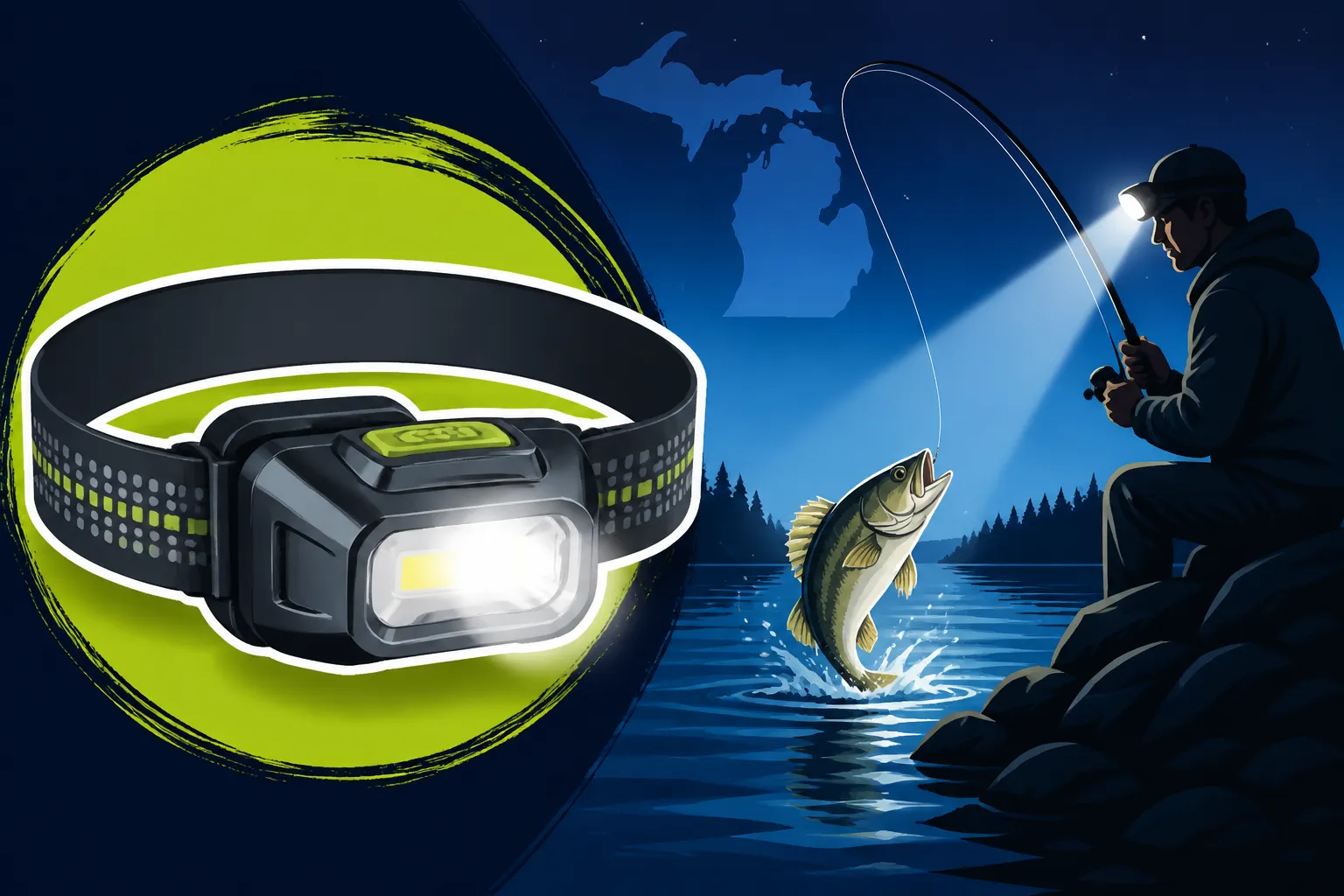
Best Headlamp for Night Fishing
There’s nothing quite like the tranquility and mystery of night fishing in Michigan. The crowds thin out, the air cools, and some of the biggest fish become more active. But let's be real, trying to tie a knot, re-bait a hook, or navigate a rocky shoreline in the dark can turn a peaceful evening into a frustrating, even dangerous, ordeal. This guide is all about helping you conquer the darkness, providing insights into choosing the best headlamp to make your nighttime angling adventures safer, more efficient, and ultimately, more enjoyable.
Why Night Fishing Demands a Good Headlamp
Picture this: you’ve just landed a decent walleye on the Saginaw Bay, and it’s thrashing on the deck. Your hands are full, the boat is rocking gently, and you need to get that hook out safely and quickly, but it’s pitch black. Or maybe you're out on an inland lake, shore fishing for brown trout, and suddenly realize your line is hopelessly tangled in a tree branch directly behind you. These are the moments where a reliable headlamp doesn't just come in handy; it becomes an absolute necessity.
The Dangers of Darkness on the Water
Fishing in low light or complete darkness brings a whole new set of challenges, and ignoring them can lead to some real headaches or worse. Uneven terrain, slippery rocks, hidden stumps, or unexpected waves can easily turn into a trip, a fall, or even an accidental dip in the chilly Michigan waters. Trying to maneuver a boat, set up an ice shanty, or simply walk back to your vehicle after a late-night bite can be genuinely hazardous without proper illumination. And let's not forget the sharp hooks, lures, and knives that are part of every angler's kit – trying to handle those by feel alone is a recipe for disaster. A headlamp keeps your hands free, allowing you to maintain balance, hold your rod, or manage your catch without fumbling for a flashlight.
Essential Tasks a Headlamp Simplifies
Think about all the little things you do without a second thought during daylight hours. Tying a complex knot, like a Palomar or uni knot, requires precision and good eyesight. Reaching into your tackle box for a specific lure or changing a tiny split shot suddenly becomes a monumental task in the dark. A headlamp makes these actions effortless. You can focus your light exactly where you need it, whether it’s on your hands, your tackle, or the path ahead. This isn't just about convenience; it’s about efficiency. The less time you spend fumbling in the dark, the more time you spend with your line in the water, which is, after all, why you're out there. Whether you're drift fishing Michigan rivers for steelhead or setting up tip-ups for a night of Ice Fishing Techniques for Michigan Walleye, a clear beam of light makes all the difference.
Key Features to Look For in a Night Fishing Headlamp
Choosing the right headlamp isn't just about grabbing the brightest one on the shelf. There's a delicate balance of features that cater specifically to the demands of night fishing. You need something robust, reliable, and tailored to the unique conditions you'll encounter.
Brightness and Beam Type
The brightness of a headlamp is measured in lumens. While a super-bright beam might sound appealing, you don't always need 1000 lumens, especially if you're trying not to spook fish. For most fishing tasks like tying knots, baiting hooks, or seeing a bobber up close, 100-300 lumens is often plenty. A higher lumen count is great for spotting distant markers, navigating a trail, or scanning the water, but it can also be overkill and drain your battery faster.
Beam type is also crucial. Some headlamps offer a focused spot beam, excellent for long-distance viewing. Others provide a wide flood beam, ideal for illuminating your immediate workspace or a broad path ahead. Many modern headlamps offer both, allowing you to switch between them. Consider your primary use: if you're mostly working close-up in a boat or an ice shanty, a flood beam is your friend. If you're walking along a riverbank in search of a prime Best Spots for Brook Trout on Lake Superior, a powerful spot beam will help you navigate safely.
Battery Life and Power Source
Nothing ruins a night fishing trip faster than a dead headlamp battery. Always check the advertised battery life, and remember that higher brightness settings will always consume power more quickly. Many headlamps run on standard AAA or AA batteries, which are easy to carry spares for. However, rechargeable lithium-ion batteries are becoming increasingly popular. They offer consistent power, are more environmentally friendly, and can be charged via USB, making them convenient if you have a power bank.
For extended trips, especially if you're planning a multi-day fishing excursion in Michigan's remote Upper Peninsula, a headlamp that uses easily replaceable batteries or has a very long-lasting rechargeable unit is essential. Some premium models even feature a battery pack worn on the back of your head or clipped to your belt, which distributes weight better and often allows for larger, longer-lasting batteries. When you're packing your Essential Gear for Michigan Steelhead Fishing, an extra set of batteries or a fully charged power bank should always be on your list.
Water Resistance and Durability
Michigan weather, especially near the Great Lakes, can be unpredictable. A sudden downpour, splashing from a lively fish, or even heavy dew can quickly incapacitate an unprotected electronic device. Look for a headlamp with an IPX rating, which indicates its water resistance.
- IPX4 (Splash resistant): Good for light rain or splashes.
- IPX7 (Waterproof for short immersion): Can be submerged in up to 1 meter of water for 30 minutes. This is generally a good standard for fishing, offering protection if you accidentally drop it in shallow water or encounter heavy rain.
- IPX8 (Submersible): Designed for continuous immersion.
Beyond water resistance, consider overall durability. Fishing gear takes a beating. A headlamp with a robust casing, shock-resistant design, and reliable switches will stand up better to accidental drops, bumps, and the general rigors of outdoor life. You don't want a flimsy plastic model failing you when you're 5 miles deep in the woods along the Au Sable River.
Comfort and Fit
You'll be wearing this headlamp for hours, so comfort is paramount. A good headlamp should feel secure without being too tight or bouncy. Adjustable elastic straps are standard, but look for ones with soft, breathable material. Some models include a top strap for added stability, especially useful if you're moving around a lot or wearing a hat. The lamp unit itself should be lightweight and balanced to prevent neck strain. Try it on, adjust it, and imagine wearing it for several hours, perhaps even under a hat or hood. A comfortable fit makes a huge difference in your overall experience when you're out chasing Michigan Walleye Fishing Techniques.
Red Light Mode: A Game Changer
This feature is often overlooked but is incredibly valuable for night fishing. A red light mode emits a dim, non-white light that offers several key advantages:
- Preserves Night Vision: Unlike bright white light, red light doesn't cause your pupils to constrict as much, meaning your eyes retain their natural night adaptation. When you switch off the red light, you won't be temporarily blinded.
- Less Spooky to Fish: Fish are less likely to be alarmed by red light compared to a sudden blast of white light. This is particularly important when you're trying to be stealthy for species like smallmouth bass or muskie.
- Reduced Bug Attraction: White light is a beacon for mosquitoes and other flying insects. Red light attracts far fewer bugs, making your time on the water much more pleasant, especially during Michigan's summer evenings.
Many reputable outdoor brands like those found at Bass Pro Shops or online through Amazon offer headlamps with a dedicated red light setting. It’s an absolute must-have feature for any serious night angler.
Top Considerations for Michigan Anglers
Michigan offers an incredible diversity of fishing experiences, from the vast Great Lakes to thousands of inland lakes and countless rivers. These varied environments mean specific considerations for your night fishing headlamp.
Dealing with Michigan's Diverse Weather
Anyone who fishes in Michigan knows the weather can change on a dime. A calm, clear evening can turn into a blustery, rainy night in a heartbeat. Your headlamp needs to be able to handle it all. We already discussed IPX ratings, but think about how cold can affect performance. Extreme cold can drastically reduce battery life, especially with alkaline batteries. If you plan on doing a lot of Michigan Ice Fishing Guide, look for headlamps designed for cold-weather performance, and always carry spare batteries close to your body to keep them warm. Fog, common on the Great Lakes, can also make bright white beams reflect back at you, impairing vision; a dimmer setting or a red light can sometimes cut through better.
| Feature | Recommended for Michigan Night Fishing | Why It Matters |
|---|---|---|
| Brightness (Lumens) | 100-300 lumens (primary tasks), up to 600+ (navigation) | Balances close-up work with long-distance visibility without blinding. Too bright can spook fish or attract excessive bugs. |
| Beam Type | Combination spot/flood | Versatility for various tasks: flood for rigging/tackle, spot for casting distance or identifying landmarks. |
| Battery Type | Rechargeable (USB-C preferred) with long life or easily replaceable standard batteries (AA/AAA) | Convenience for frequent use, easy charging in a vehicle, or readily available replacements for remote trips. Cold weather performance is key for winter. |
| Water Resistance | IPX7 or IPX8 | Crucial for Michigan's unpredictable weather, heavy dew, accidental drops in water, or splashes from fish. |
| Durability | Robust casing, shock-resistant | Fishing gear often takes a beating from drops, bumps, and general wear and tear in rugged outdoor environments. |
| Red Light Mode | Essential | Preserves night vision, less likely to spook fish, and significantly reduces attraction of biting insects like mosquitoes. |
| Comfort/Fit | Adjustable, breathable strap; lightweight and balanced design | You'll wear it for hours; a comfortable fit prevents distractions and neck strain, especially during active fishing sessions or long walks to fishing spots. |
| Max Run Time | At least 8-10 hours on medium setting | Ensures illumination throughout a full night of fishing without needing a battery change, offering peace of mind. |
Stealth for Spook-Prone Species
Many of Michigan's prized fish, like large brown trout, walleye, and even muskellunge, can be incredibly wary, especially at night. A sudden, bright white light can instantly send them darting away. This is where the red light mode truly shines, allowing you to see what you're doing without broadcasting your presence across the water. When you're fishing for How to Catch Walleye at Night in Michigan, subtle approaches often yield the best results.
Also, consider the beam's throw. While a powerful, far-reaching beam is great for navigation, using it indiscriminately when you're actively fishing can alert nearby fish. Learn to use the lowest effective brightness and direct your light downward or away from the water whenever possible. A headlamp with a dimmable feature on its white light mode also gives you more control.
Maintaining Your Headlamp for Longevity
A good headlamp is an investment in your night fishing success. Taking a few simple steps to maintain it will ensure it serves you well for many seasons to come. You want your gear to be reliable, just like knowing the Michigan Fishing Regulations Every Angler Should Know before you head out.
Battery Care and Storage
For headlamps with removable alkaline batteries, always take them out if you're storing the headlamp for an extended period. Batteries can corrode and leak, damaging the internal components. Store them separately in a cool, dry place. For rechargeable headlamps, aim to keep the battery at a moderate charge (around 50-70%) during long-term storage, rather than fully charged or completely drained, which can extend its overall lifespan. When you're getting ready for your next trip, perhaps planning to fish some Best Boats for Michigan Fishing, remember to fully charge your headlamp’s battery beforehand.
Cleaning and Inspection
After each night fishing trip, especially if your headlamp got wet or dirty, give it a quick wipe-down. Use a damp cloth to remove any mud, sand, fish slime, or saltwater residue. Pay particular attention to the battery compartment seals if it has removable batteries, ensuring they are clean and free of debris to maintain water resistance.
Regularly inspect the head strap for wear and tear – stretched elastic or frayed edges might mean it's time for a replacement. Check the hinges and switches to ensure they are operating smoothly. A dab of silicone grease on O-rings (if applicable) can help maintain their watertight seal. Keeping your headlamp clean and regularly inspected will prevent unexpected failures and keep you seeing clearly during those magical Michigan night bites. Whether you bought your headlamp from Bass Pro Shops or got a great deal on Amazon, proper care is key to making it last.
Disclaimer
This article is for general informational purposes only and does not constitute professional advice. Laws, prices and regulations vary by location and change over time. Consult a qualified professional for guidance on your specific situation.